Procida
Procida: Italy's 2022 Capital of Culture, colourful Marina Corricella, Il Postino film locations, and how to reach the most authentic island near Naples.
From Naples: Procida Daily Tour
Quick facts
- Ferry from Naples
- ~35 min hydrofoil from Molo Beverello, €15–18
- Island size
- 4.1 km² — smallest inhabited island near Naples
- Population
- ~10,000 permanent residents
- Best months
- May–June and September
- Day trip
- Doable; 5–6 hours on island is comfortable
- Crowd level
- Lower than Capri; authentic local atmosphere
| Where | Bay of Naples, ~35 min hydrofoil from Molo Beverello |
| Cost | €15–18 hydrofoil return; most sights free to walk |
| Time needed | 1 day is enough; 1 night for the evening atmosphere |
| Getting there | Ferry/hydrofoil from Naples, Ischia, or combined tours from Sorrento |
| Best time | May–June and September |
Procida is the smallest and least visited of the three inhabited islands in the Bay of Naples. At 4.1 km², it barely registers on a map compared to Ischia (46 km²) or Capri (10 km²). Yet it has a disproportionate cultural presence: the backdrop for Massimo Troisi’s 1994 film “Il Postino”, Italy’s designated Capital of Culture for 2022, and consistently cited as the most authentic island day trip from Naples. That reputation is deserved, though it is changing — the 2022 designation brought significant attention and more visitors than the island was accustomed to.
What Procida actually is
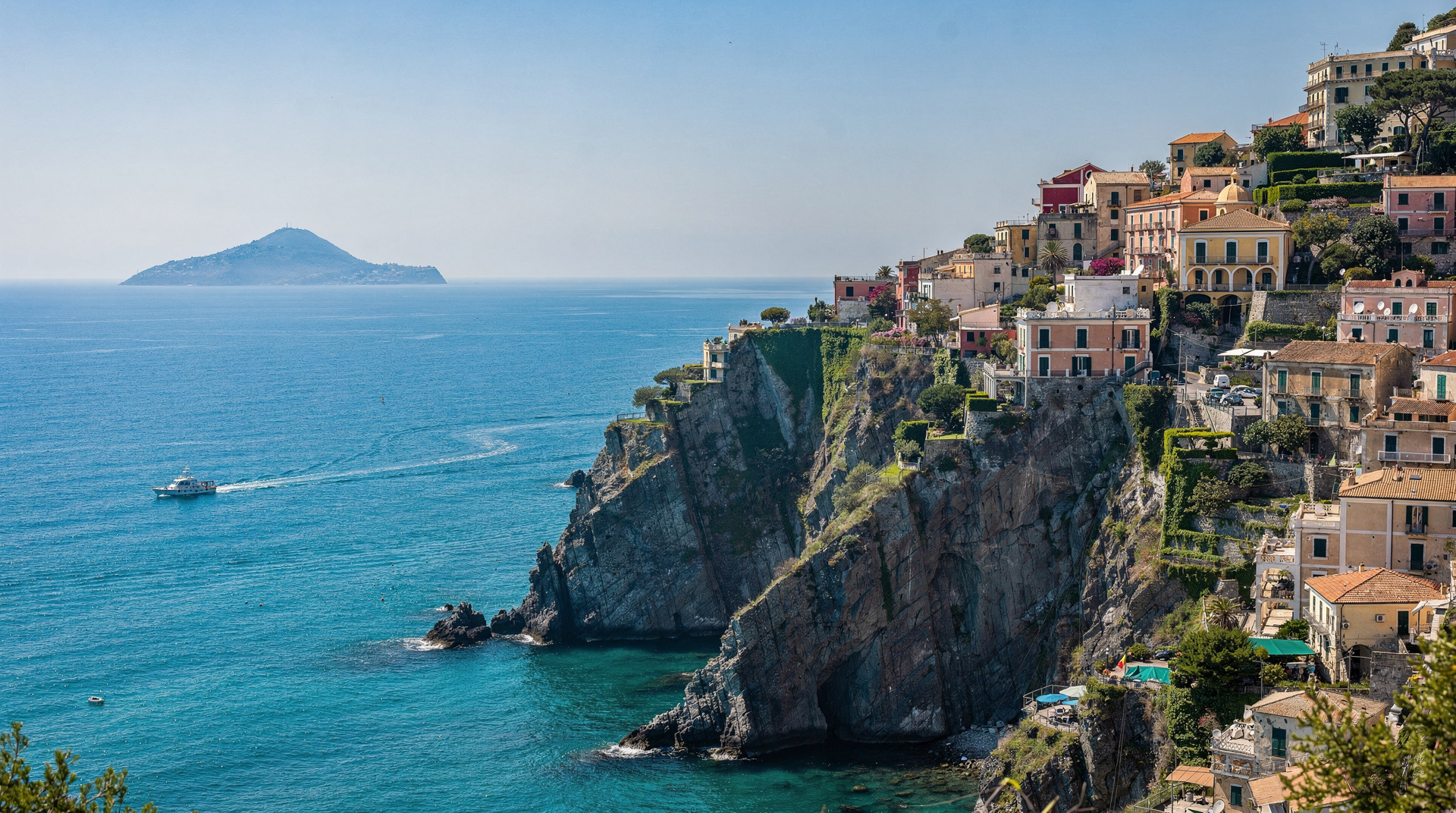
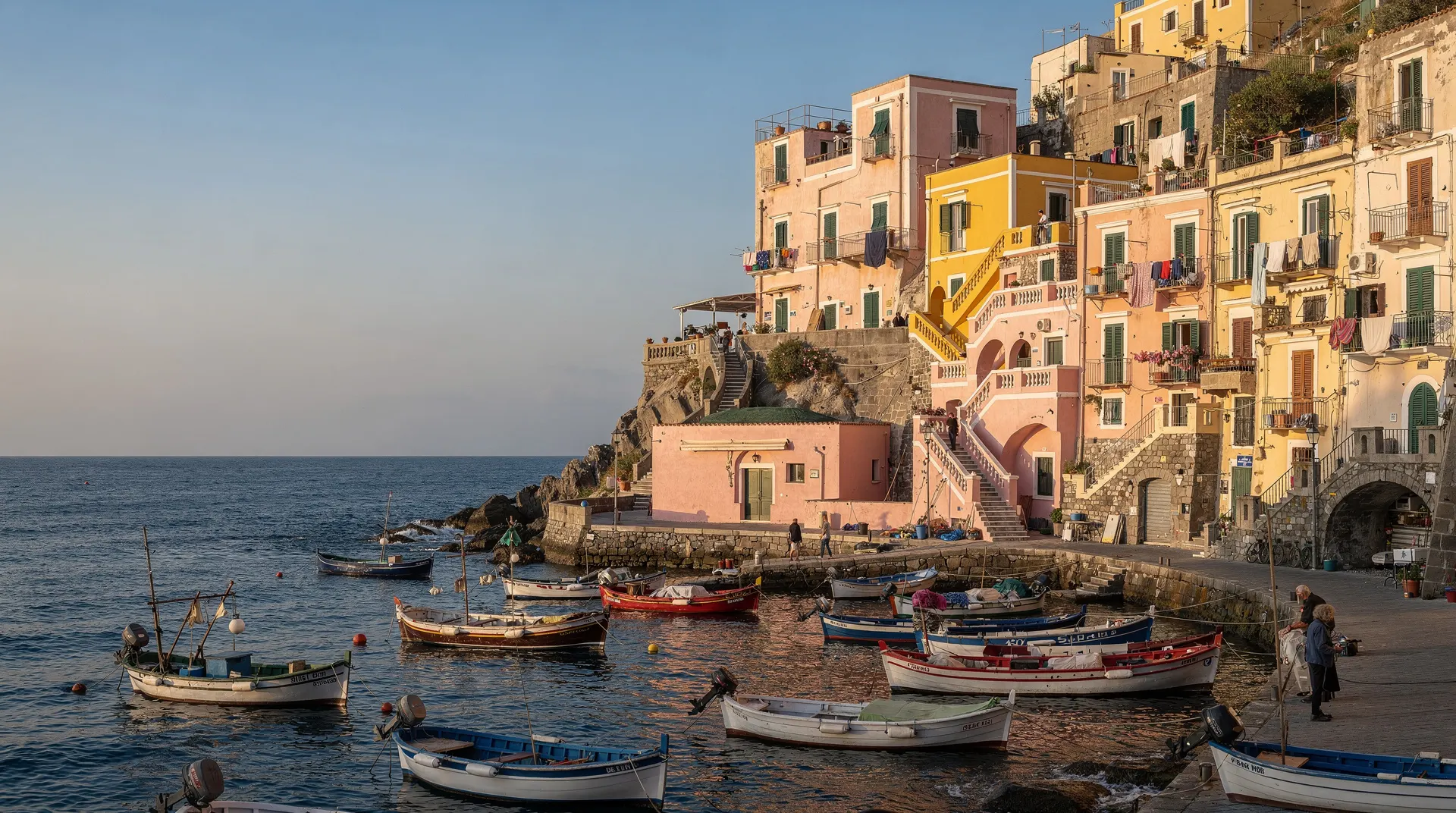
The island’s character is built on its fishing and seafaring history. The coloured facades of Marina Corricella — stacked yellow, pink, orange, and terracotta buildings above a crescent harbour — have appeared in international travel photography long before the Capital of Culture award. They are genuinely as photogenic as advertised, and more importantly, they are not a reconstruction or a tourist invention: these are real buildings, mostly former boat storage warehouses converted to residences over centuries.
The island is flat, walkable, and small enough that you can cover its main points in half a day on foot. There are no major museums, no landmark ruins, no upscale boutiques. The draw is atmosphere and fishing village authenticity — a quality that is becoming increasingly rare on Mediterranean islands.
Getting to Procida
From Naples (Molo Beverello): Hydrofoils take about 35 minutes. Cost €15–18 one-way. Ferries (slower) take 60–70 minutes and cost €12–14. Operators include Caremar, SNAV, and Medmar. The ferries from Naples guide covers the departure terminals.
From Ischia: A short 20-minute ferry hop connects the two islands. If you are already on Ischia, visiting Procida as a quick extension is straightforward. Several combined day tours do exactly this.
From Sorrento: No direct regular ferry. Combined day trips from Sorrento (by organised boat) visit both Ischia and Procida, typically spending 2–3 hours on Procida. See the Ischia day trip guide for context.
Ferry frequency is significantly lower than Capri or Ischia routes — typically 4–8 daily crossings from Naples depending on season. Check the schedule before planning your day. In winter the service reduces further.
Marina Corricella
The defining sight on Procida. The harbour is sheltered on the north-eastern coast of the island and was historically used as a base for local fishing fleets. The buildings date from the 17th–19th centuries. What makes it visually exceptional is the density and colour: three to five storeys of housing stacked directly above the waterfront, separated by narrow external staircases, with boats on the water below. Early morning (before 9am) or late afternoon (after 5pm) provides the best light and fewest people.
The Procida fishing cooperative runs a small fish market at the port most mornings. Buying from it requires knowing what to do with the fish — but watching it is part of the local texture.
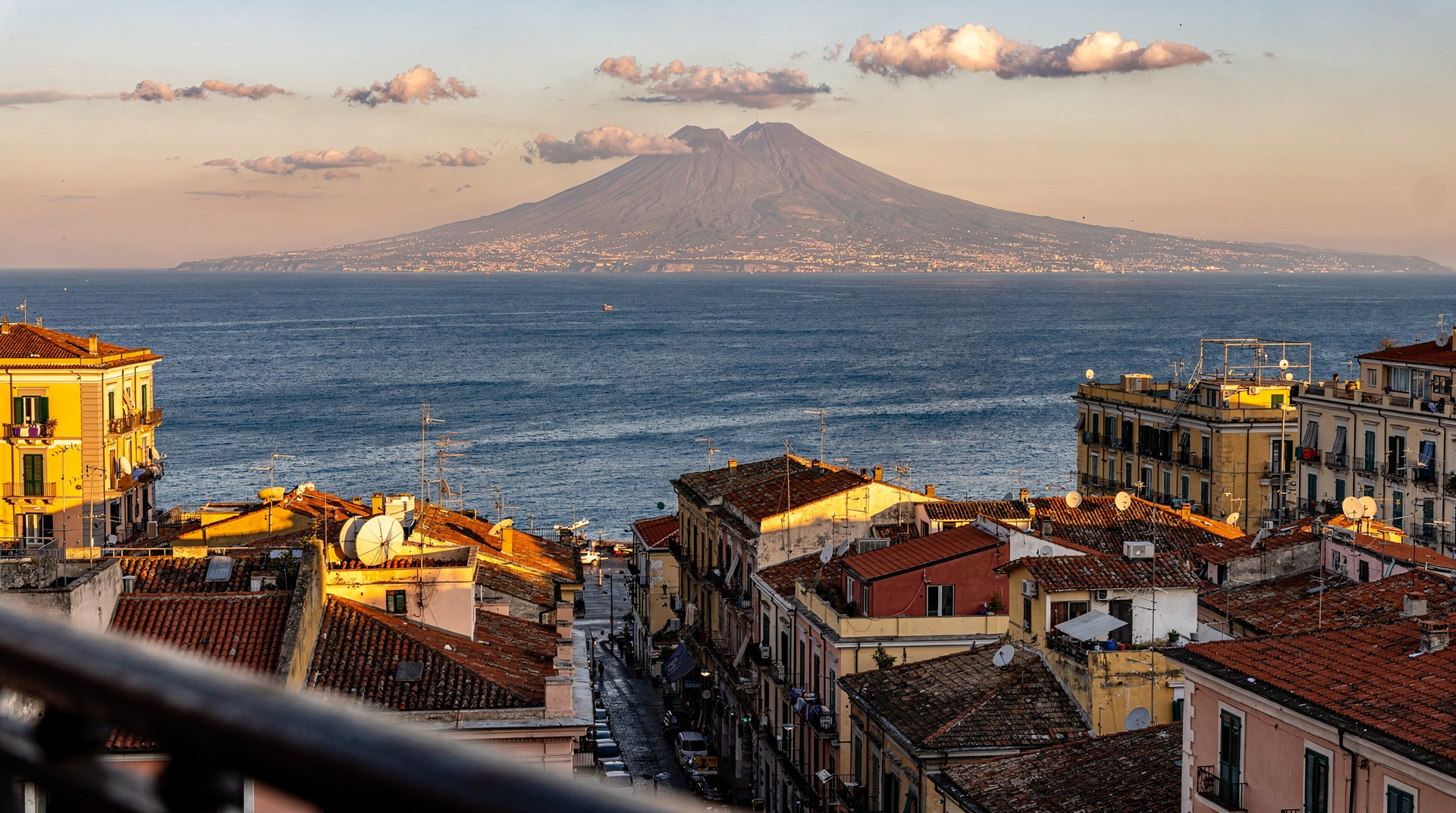
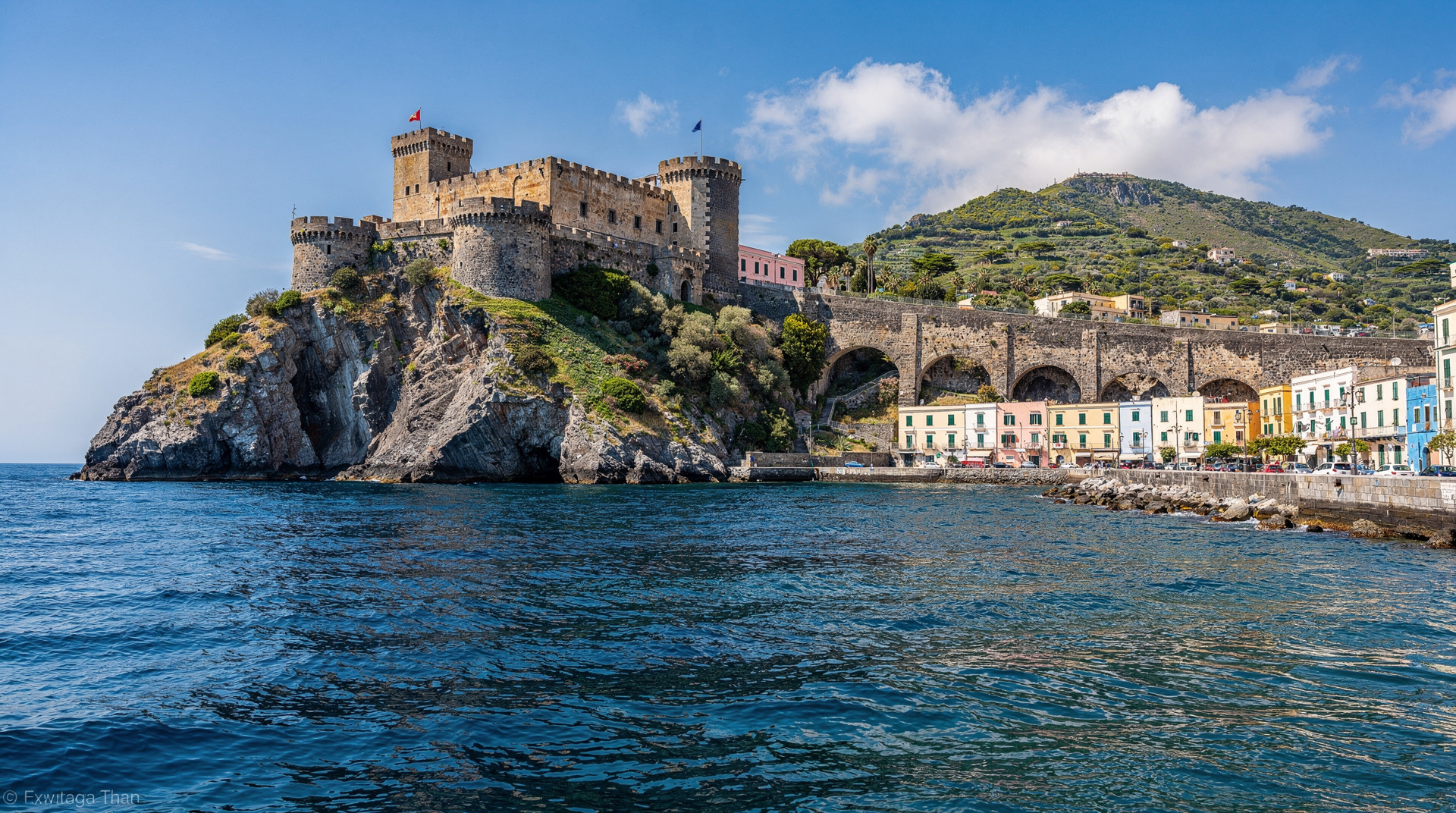
From the ridge above Corricella, the Terra Murata viewpoint provides a different perspective. The Terra Murata is the old fortified village on the island’s highest point (about 90 metres), with a 16th-century abbey and a prison that operated until 1988. The views from the walls cover both the harbour below and the Gulf of Naples toward Naples and Vesuvius.
Il Postino and the island’s film history
“Il Postino” (1994, directed by Michael Radford, starring Massimo Troisi and Philippe Noiret) was filmed substantially on Procida. The film depicts a fictional version of Pablo Neruda’s exile in which a local postman befriends the poet. Troisi died 12 hours after filming ended due to heart failure, which added a profound dimension to the film’s reception.
The specific locations from the film are recognisable to anyone who has seen it: the red house above Marina Corricella (though the interior scenes were filmed in a studio), the winding streets of the island’s interior, and the harbour steps. The island’s tourist office produces a film location map. However, the genuine reason to go is not as a film pilgrimage destination — it is that the film captured something real about the island’s character that is still present.
Beaches
Procida has several small beaches. Chiaiolella (west side, near the Porto Chiaiolella marina) is the main beach — sandy, calm, with rental facilities. This side of the island faces the open sea and can be windier. Spiaggia della Silurenza and Spiaggia Ciraccio are adjacent and quieter. Pozzo Vecchio (east coast) was used in Il Postino filming and has coarse sandy access.
None of Procida’s beaches are remarkable by regional standards — the Amalfi Coast has more dramatic settings and Ischia has longer strands. The beaches here are pleasant local spots, not destinations in themselves.
Eating on Procida
The island’s signature dish is insalata di limoni — sliced local lemons dressed with olive oil, garlic, and herbs. Procida lemons (a specific local variety, Procida oval lemon) are intensely fragrant and less acidic than standard. They appear in desserts, limoncello, and as a direct side dish in a way rarely seen elsewhere.
Ristorante Crescenzo (Chiaiolella): Long-established seafood restaurant with terrace directly over the marina. Local fish, good pasta con ricci (sea urchin), reasonable prices by island standards — pasta courses at €14–18.
La Conchiglia (Corricella): Terrace setting directly above the harbour. The view is excellent; the food is honest rather than exceptional. Lunch only on most days.
Bar dal Cavaliere (Marina Grande): Good coffee and pastries, where locals actually eat breakfast. The sfogliatelle are often better than what you find in tourist cafes.
What to do beyond the harbour
Terra Murata walk: The path from Marina Corricella up to the old fortified village takes about 20–25 minutes. The abbey of San Michele Arcangelo is partly open to visitors — the ceiling frescoes are worth the small entry fee. The prison (closed in 1988) can be seen from outside; guided tours have been offered in recent years.
Cycling: The island is flat enough that bicycle rental is genuinely practical. Several shops near Marina Grande rent basic bikes for €10–15/day. A full circuit of the island takes about 1.5 hours at a leisurely pace.
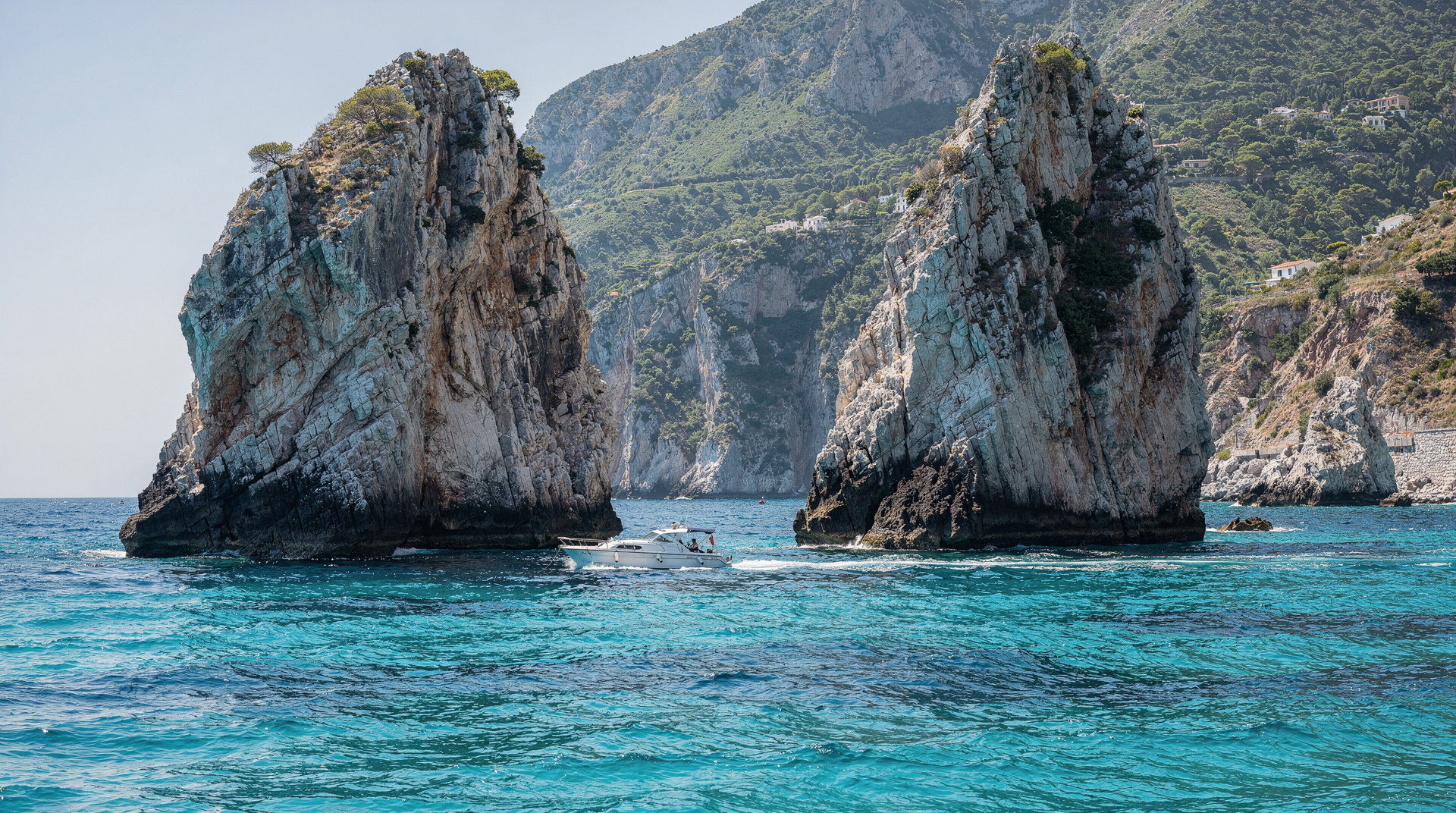
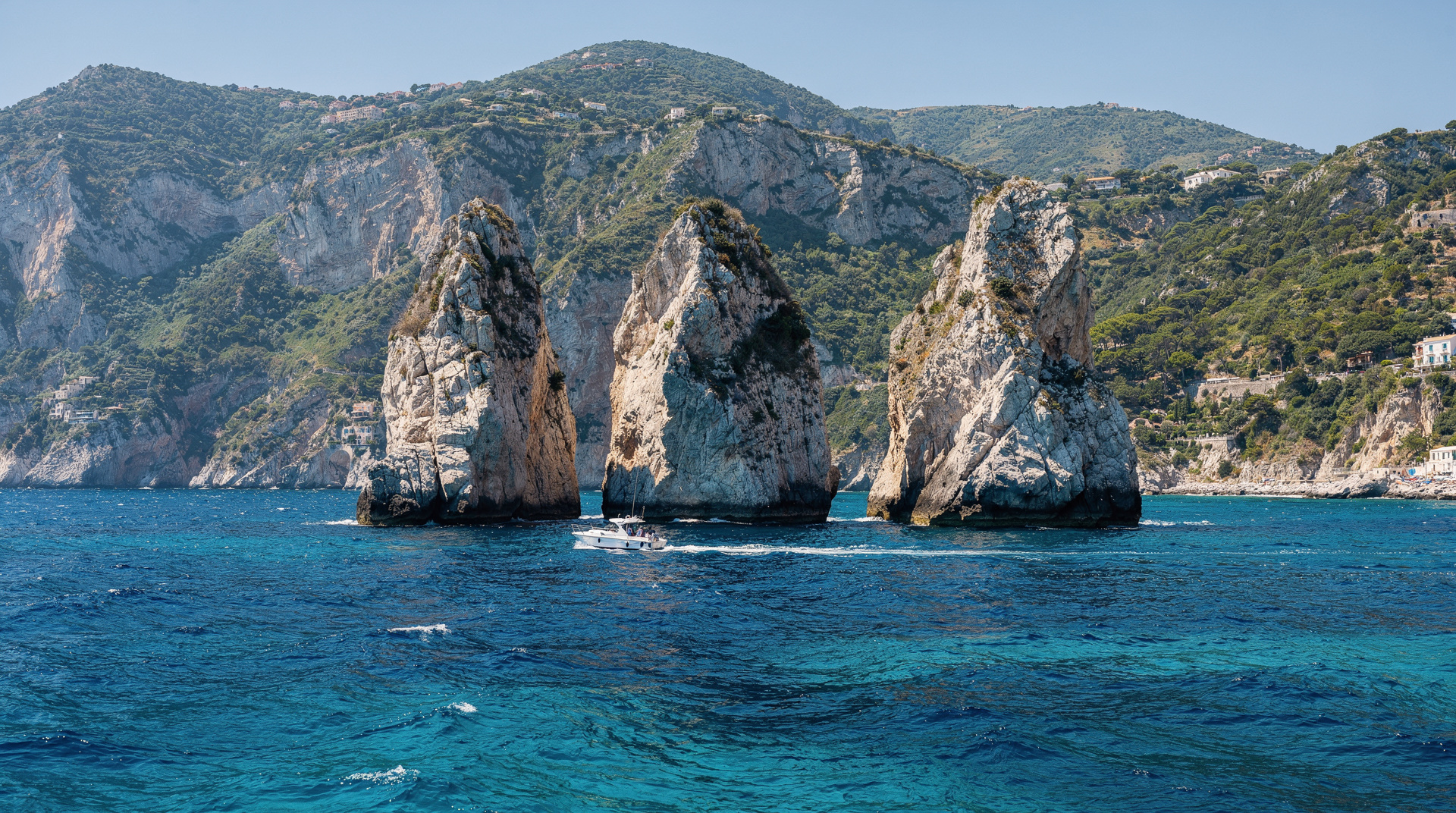
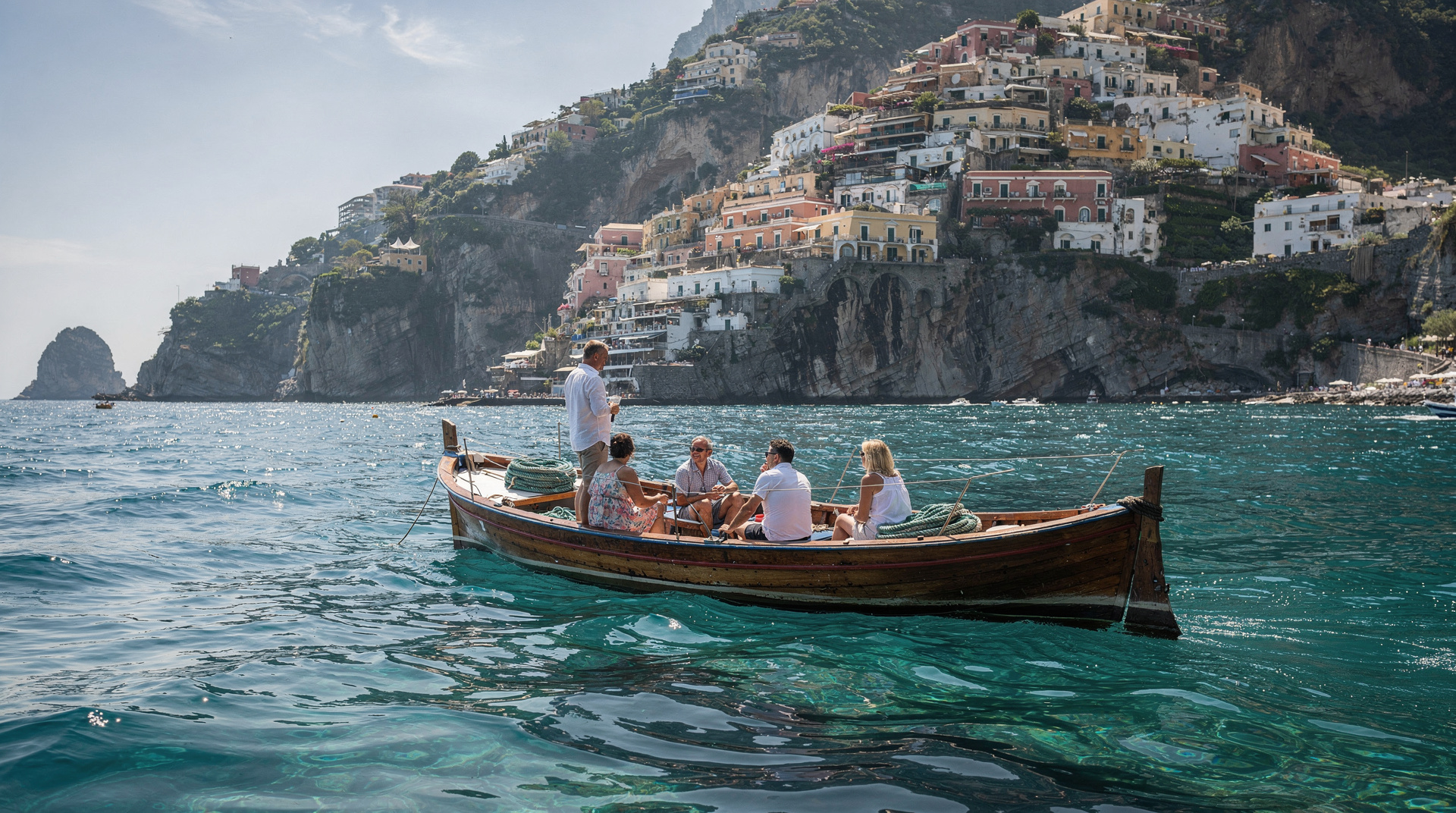
Boat trip: The island’s small coastline is best seen from the water. Small local boats offer short circuits that show the sea caves and less-accessible coves.
Procida boat tour with snorkelling and underwater photosDay trip logistics
A day trip works well for most visitors. The ferry schedule from Naples typically allows arrival by 10–11am and departure from Procida by 5–6pm — that is 6–7 hours, enough to walk Marina Corricella, visit Terra Murata, eat lunch, and spend time at a beach. The return ferry in late afternoon fills up in summer; have your ticket in advance.
The island has no luggage storage facilities. Travel light.
Procida guided day tour from NaplesFood culture on Procida
The island’s food scene is small and unpretentious. Beyond the lemon dishes already mentioned, the local fishing heritage means fresh seafood is straightforward and well-priced by Italian island standards.
Octopus (polpo) is the island’s other signature ingredient — preserved and dressed in olive oil as polpo affogato, or served with local pasta. Several small restaurants near Marina Grande do this well at €12–16 for a main course.
Insalata di riso Procidana is a rice salad version unique to local trattorie, using local lemons, capers, and preserved tuna. Simple, good in summer.
Babà al rum appears everywhere in Campania, but several Procida bakeries make a reliably good version — the yeast cake soaked in rum syrup is best bought at a local pasticceria rather than a souvenir shop.
For drinks: the island’s few bars on the Marina Grande waterfront are genuinely local hangouts. An espresso at a bar costs €1–1.20; no tourist premium. The aperitivo hour (6–8pm) is the most social time to be on the waterfront.
A comfortable day-trip route
For visitors arriving on the mid-morning hydrofoil, a workable sequence is: land at Marina Grande and walk directly to Marina Corricella (10 minutes) while the light is still good and before the day’s heat builds; spend 45–60 minutes there, including a coffee at one of the harbour bars; climb to Terra Murata (20–25 minutes uphill) for the abbey and the elevated view; come back down for lunch at Ristorante Crescenzo or La Conchiglia; then either rent a bicycle for a leisurely 1.5-hour loop of the island or walk to Chiaiolella beach for a swim before the return ferry. This covers the island’s genuine highlights without rushing, and leaves buffer time for the ferry queue, which can be slow in July and August.
Travellers who prefer a guided structure over self-navigating can book a local tour that covers the same ground with a driver and commentary, useful if time on the island is limited to a half-day connection between Naples and Ischia.
The island in numbers
Procida is home to roughly 10,000 permanent residents in 4.1 km² — a density of about 2,400 people per km², comparable to a moderately dense European suburb. This density is what gives the island its character: it is not a resort island where temporary populations define the space. People actually live here year-round, fish here year-round, send children to school here year-round.
The ferry connection to the mainland means residents travel regularly to Naples for shopping, healthcare, and work. The island is not isolated. But it maintains a distinctly separate pace from the mainland and from the more tourist-oriented islands. The morning scene at Marina Corricella — fishermen checking nets, residents buying bread, a conversation between neighbours in Neapolitan dialect — is not performed for visitors.
Seasonal differences worth knowing
Procida changes character noticeably between seasons. In July and August, Marina Corricella’s photogenic steps and narrow lanes get genuinely crowded around midday, and the beaches at Chiaiolella fill with families. April, May, September, and early October offer the same colours and architecture with a fraction of the visitors, cooler walking temperatures for the Terra Murata climb, and shorter waits at harbour restaurants. Winter (November–March) sees most restaurants and some accommodation close, ferry frequency drop significantly, and the island revert to something closer to its pre-tourism rhythm — worth considering only for travellers specifically seeking that quiet, off-season atmosphere rather than a full day of activities.
The Capital of Culture 2022 legacy
Procida held the Italian Capital of Culture designation for 2022, the first island to receive it. The award produced visible results: new murals and public art installations remain around the island, the ferry infrastructure was improved, and several cultural spaces (the former prison at Terra Murata, the Graziella cultural centre) received renovation investment. The designation also brought a significant spike in visitor numbers in 2022 that has partially normalised since.
The award’s framing around the theme “La Cultura non isola” (“Culture does not isolate”) reflected Procida’s position as a genuine community rather than a tourist set piece. Whether this framing gets diluted as visitor numbers grow is a question local residents are actively discussing.
Practical information
Accommodation: Limited but exists. Small B&Bs and apartments are the main options; budget €70–110 for a room in season. There are no large hotels. Booking well in advance for July–August is essential.
Mobile coverage: Good across most of the island.
ATMs: Available near Marina Grande. Not as many as on larger islands — bring adequate cash.
Capital of Culture 2022 legacy: The award brought infrastructure improvements, cultural installations, and a spike in visitor numbers that has partially stuck. The island is more geared toward tourism than it was five years ago, though it remains far less tourist-saturated than Capri.
Practical logistics for a day trip
The ferry from Naples departs from Molo Beverello. Walk through the main terminal building, follow signs for Procida (not Ischia — check carefully, as Ischia ferries also depart from the same area). Tickets can be bought at the Caremar or Medmar windows on-site, or booked online.
On the island, the main orientation point is Marina Grande (the main port where ferries arrive). From here:
- Marina Corricella: 10-minute walk east along the waterfront, then up a short flight of steps.
- Terra Murata: 25-minute walk uphill from Corricella, or take the local bus (EAV line) from Marina Grande.
- Chiaiolella beach: 20-minute walk southwest, or local bus.
The island has a local EAV bus service; single tickets cost €1.20. The routes cover the main settlements. A day of walking covers the island’s highlights without needing to take the bus at all, as the maximum distance from Marina Grande to Chiaiolella on foot is about 2.5 km.
No official tourist information office operates on Procida. The municipality’s website (comune.procida.na.it) has current event information.
Procida and the sea: snorkelling and diving
The waters around Procida are not the famous clear blue of Capri’s southern coast, but they are genuinely clean and the marine ecosystem is healthy. The eastern coast, sheltered from the prevailing winds, has several small coves where the seabed is rocky and fish populations are good for snorkelling.
A small number of boat operators on Procida offer snorkelling and diving excursions — typically half-day trips to the sea caves on the northern and eastern coasts. These are small, informal operations rather than large dive schools. Expect to pay €30–50 per person for a guided snorkelling excursion with equipment.
Procida sea view snorkelling tourThe boat trip from Marina Grande to the sea caves (Grotta della Chianura on the eastern coast) can also be done informally by negotiating with local fishing boat owners at the harbour — prices are variable but typically €15–25 for a short circuit.
Frequently asked questions about Procida
Is Procida worth visiting?
Yes, particularly if you have already done Capri or if you prefer authentic atmosphere over tourist spectacle. It is the most genuinely local of the three Bay of Naples islands. If you have only one day for islands and want dramatic scenery and the Blue Grotto, Capri is the more efficient choice. See best island near Naples.
How long does the ferry take from Naples?
About 35 minutes by hydrofoil from Molo Beverello. The slower ferry takes about 60–70 minutes. Ferries run 4–8 times daily depending on season.
Is Procida better for a day trip or an overnight stay?
A day trip is enough — the island is small and walkable in a few hours. An overnight stay is pleasant if you want to experience the evening atmosphere (very quiet, very local), but it is not necessary to see the main sights.
Where was Il Postino filmed on Procida?
The main locations are Marina Corricella and the roads leading up to Terra Murata. The Pozzo Vecchio beach was used for the scene where Mario teaches Neruda to walk as if in love. The island’s tourist office map identifies the key spots.
Can I visit Procida and Ischia in the same day?
Yes — combined organised tours cover both islands from Naples or Sorrento. Alternatively, take the ferry to Ischia and a short hop to Procida separately. This makes for a long day but is doable. See Ischia day trip guide for the logistics.
What is the crowd situation like on Procida?
Significantly calmer than Capri. Even in peak summer, the island never reaches the saturation level of Capri. The 2022 Capital of Culture designation increased visitors, but the island’s limited accommodation and ferry capacity naturally cap the number.
Top experiences
Bookable activities with verified prices and instant confirmation on GetYourGuide.