Naples
Complete guide to Naples, Italy — centro storico, pizza, metro art stations, day-trip logistics, safety tips, and the best neighbourhoods to stay in.
Naples: Walking Tour of the Historical Center
Quick facts
- Getting there
- Alibus from Capodichino airport, 5 € — 15–30 min to Piazza Garibaldi
- Train from Rome
- Frecciarossa / Italo, ~1 h 10 min, Napoli Centrale
- Currency
- Euro. Cards widely accepted; keep cash for street food
- Language
- Italian official; Neapolitan dialect; English in tourist areas
- Safety reality
- Pickpockets on Circumvesuviana; Scampia is far off the tourist map
- Best time
- May, September–October (mild, manageable crowds)
Naples divides opinion before most visitors even land. That reputation — noisy, chaotic, vaguely dangerous — is decades out of date and largely the product of misread statistics and sensational journalism. The city that greets you today is one of the most densely interesting places in southern Europe: a UNESCO-listed historic centre, the world’s finest collection of Greco-Roman antiquities, the birthplace of the pizza margherita, and a transit hub that puts Pompeii, the Amalfi Coast, Capri, and Ischia all within easy reach.
This guide lays out what Naples actually is, what it costs, how to move around it safely, and how to plan your days without wasting time on things that underdeliver.
| Where | Southern Italy, capital of Campania, on the Bay of Naples |
| Cost | Budget 60–160 €/day depending on style |
| Time needed | 2–3 days for the city; 4–7 days to add day trips |
| Getting there | Alibus from Capodichino airport (5 €) or Frecciarossa from Rome (~1h10) |
| Best time | May, September–October |
What kind of city is Naples, really?
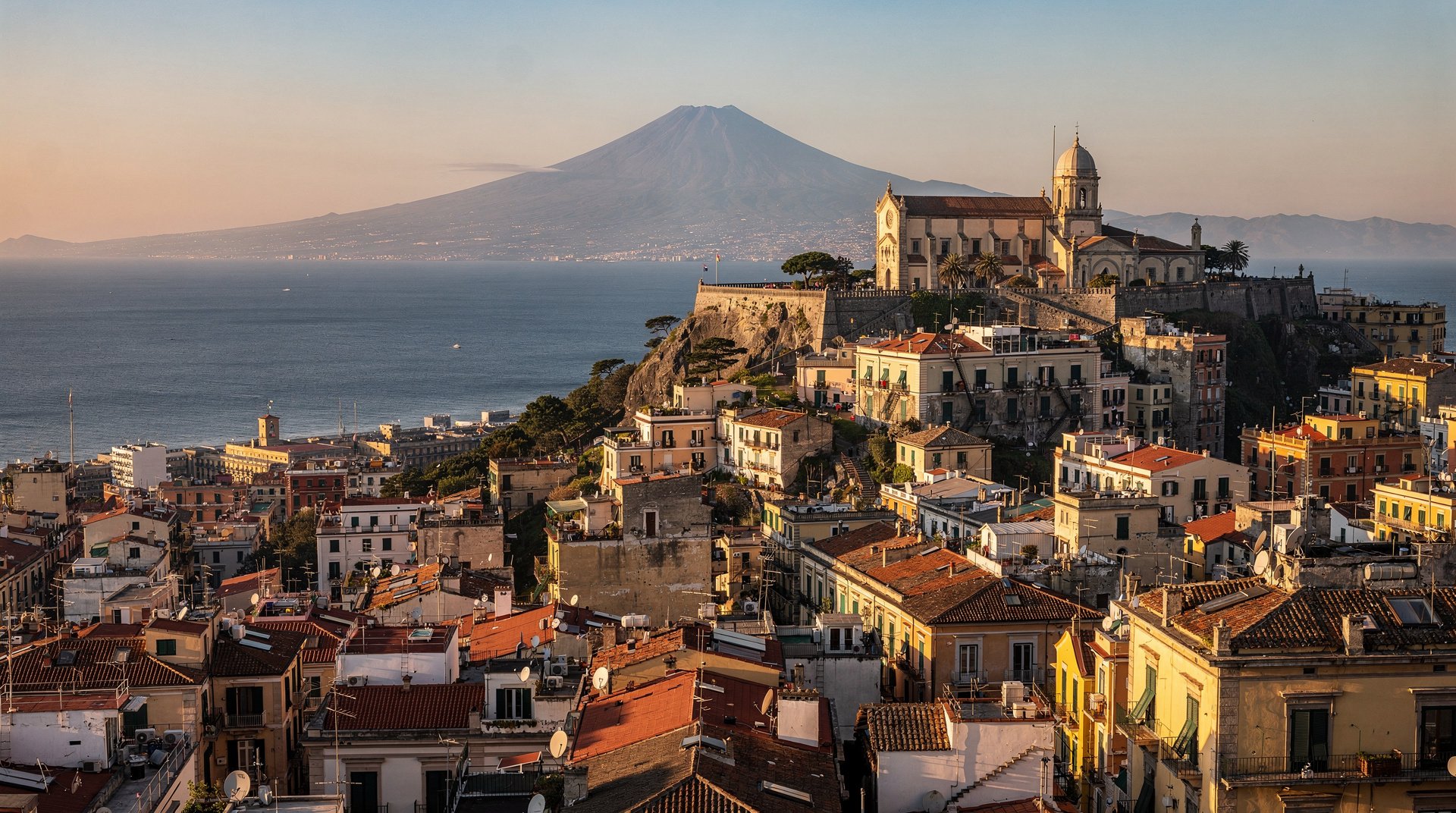
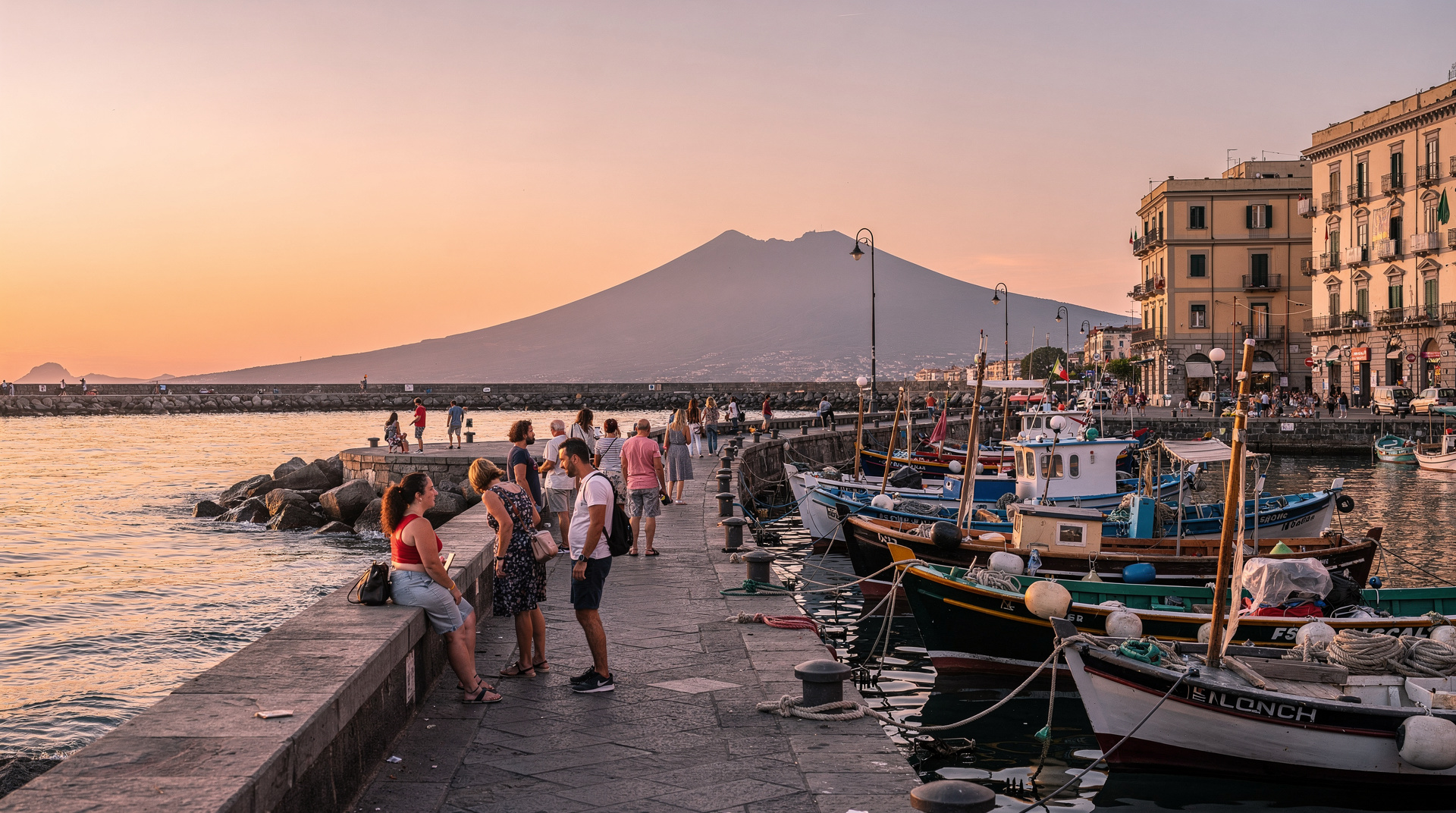
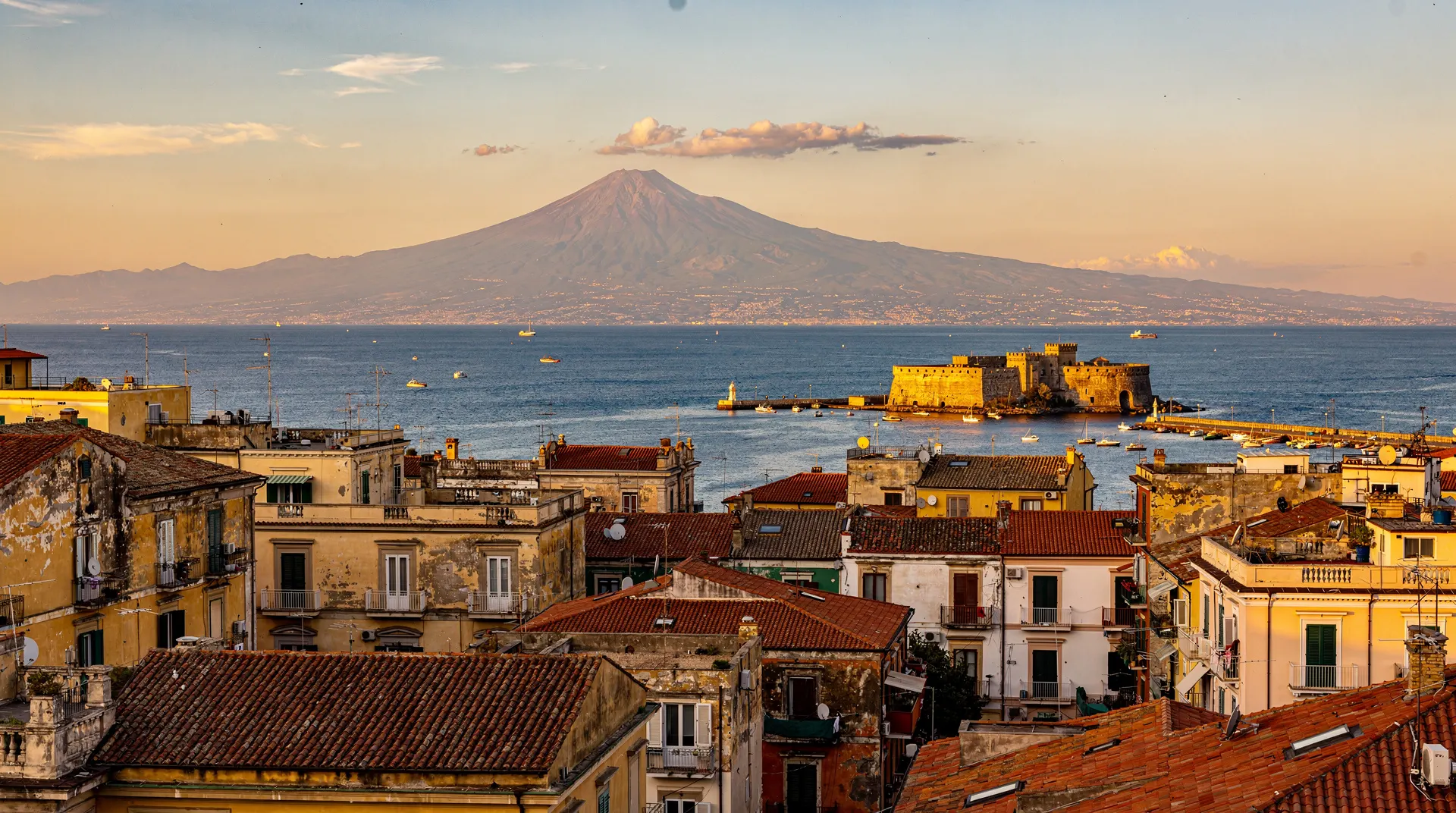
Naples (Napoli in Italian) is Italy’s third-largest city and the capital of Campania. It sits on a bay between the Tyrrhenian Sea and Mount Vesuvius — a volcano that last erupted in 1944 and remains active. The city has been continuously inhabited for roughly 2,800 years, which is why walking through the centro storico feels like stratigraphy: Greek foundations below Roman streets below medieval churches below Baroque palaces.
The scale is immediately legible from an aerial photograph. The historic centre, inscribed on the UNESCO World Heritage list in 1995, forms a rough grid laid out by Greek colonists in the 5th century BC. Decumano Maggiore (corso Umberto I) and Spaccanapoli cut across it like two parallel blades. The catacombs run beneath. Three hills rise around the flat core: Vomero to the west, Posillipo to the coast, and Camaldoli further inland.
The metropolitan logic
If you are using Naples as a base for Campania — which is the most practical and cost-effective way to visit the region — you want to be in the centro storico or Chiaia for the combination of walking distance to sights and easy metro/Circumvesuviana access. Sorrento is a popular alternative base for the Amalfi Coast and Capri, but it is 50 km away and involves an early-morning train connection every day. Most travellers who spend a week in Campania split their time: a few nights in Naples, then move to Sorrento or a coastal town.
Centro storico and Spaccanapoli
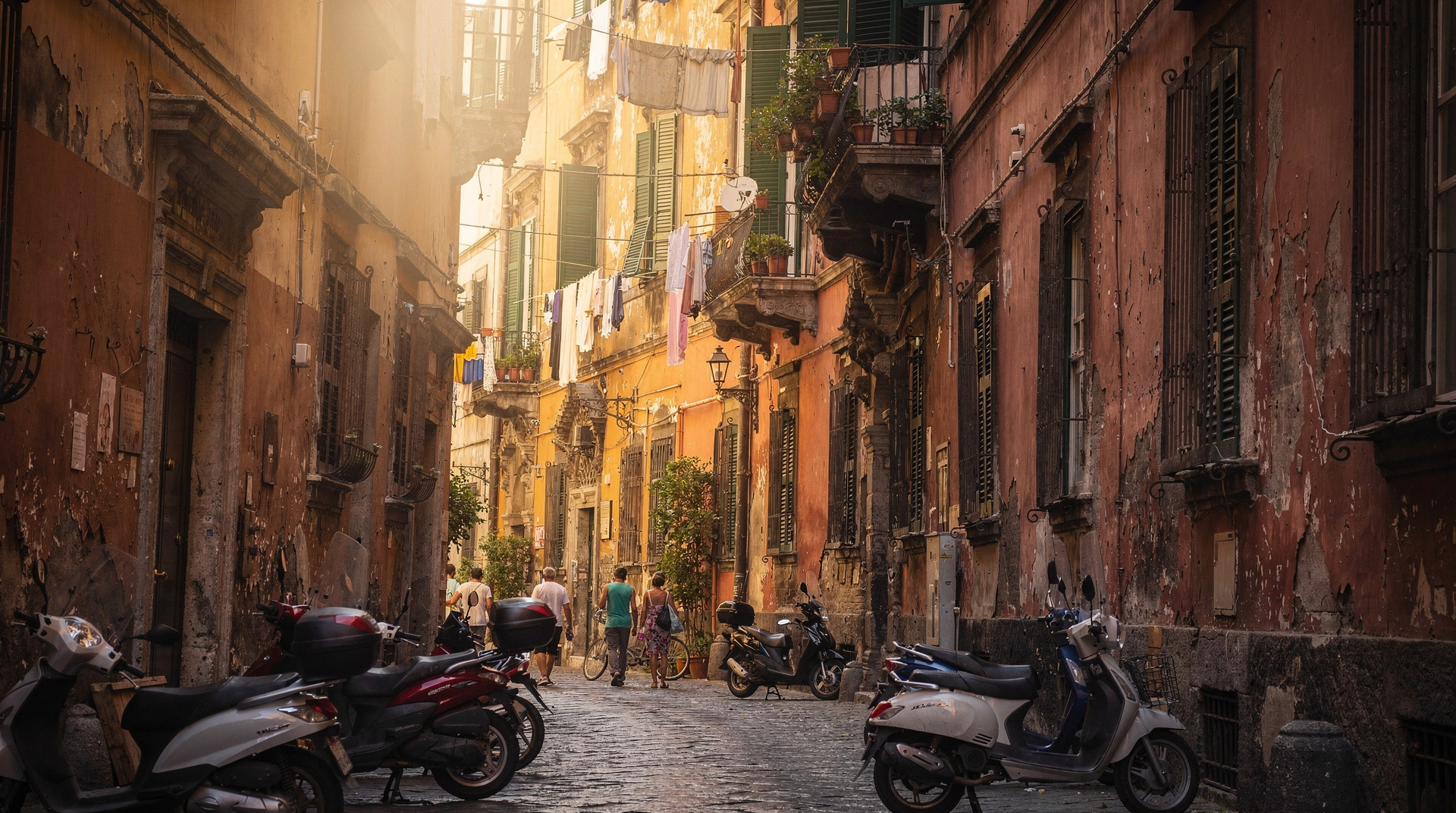
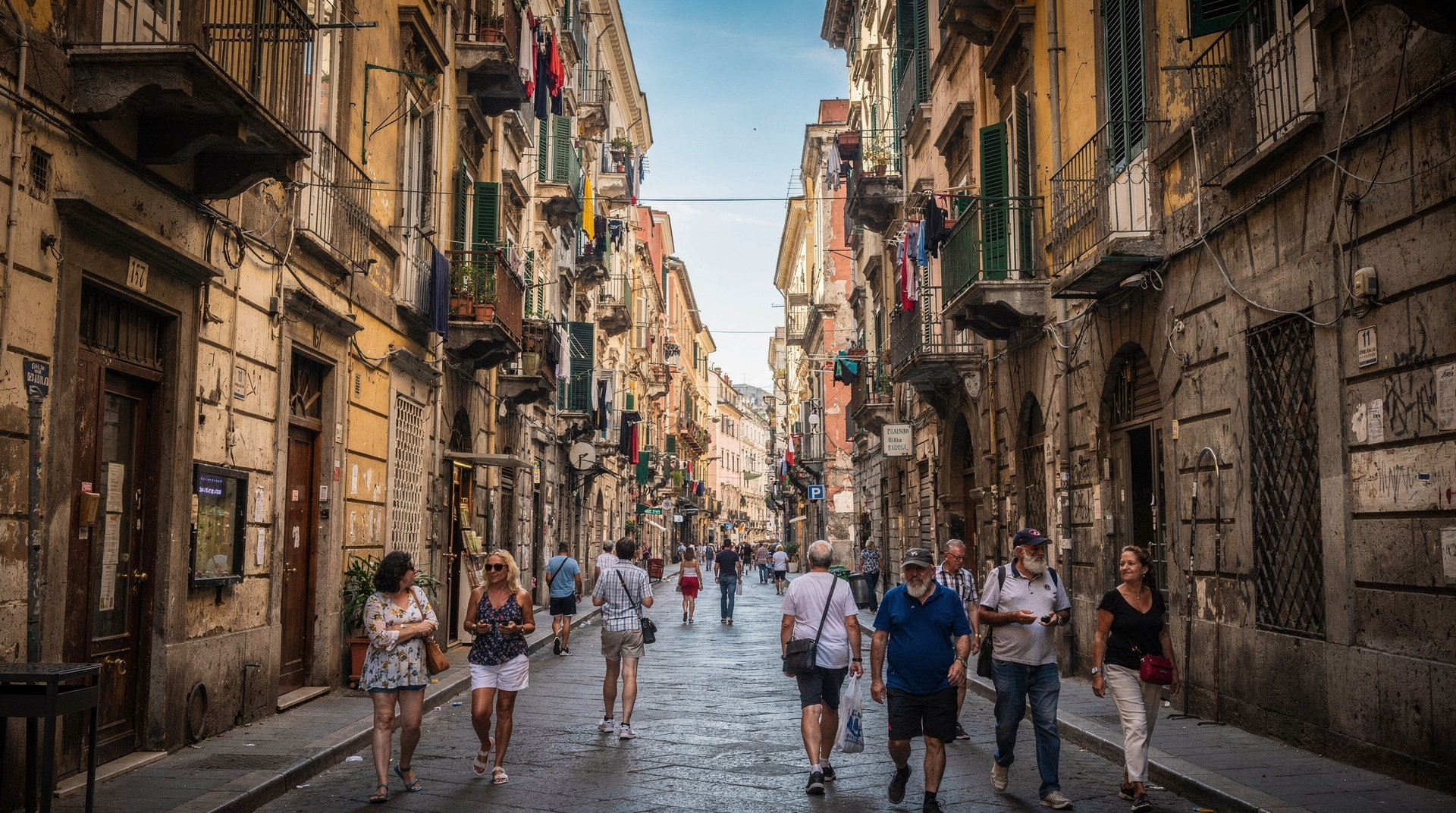
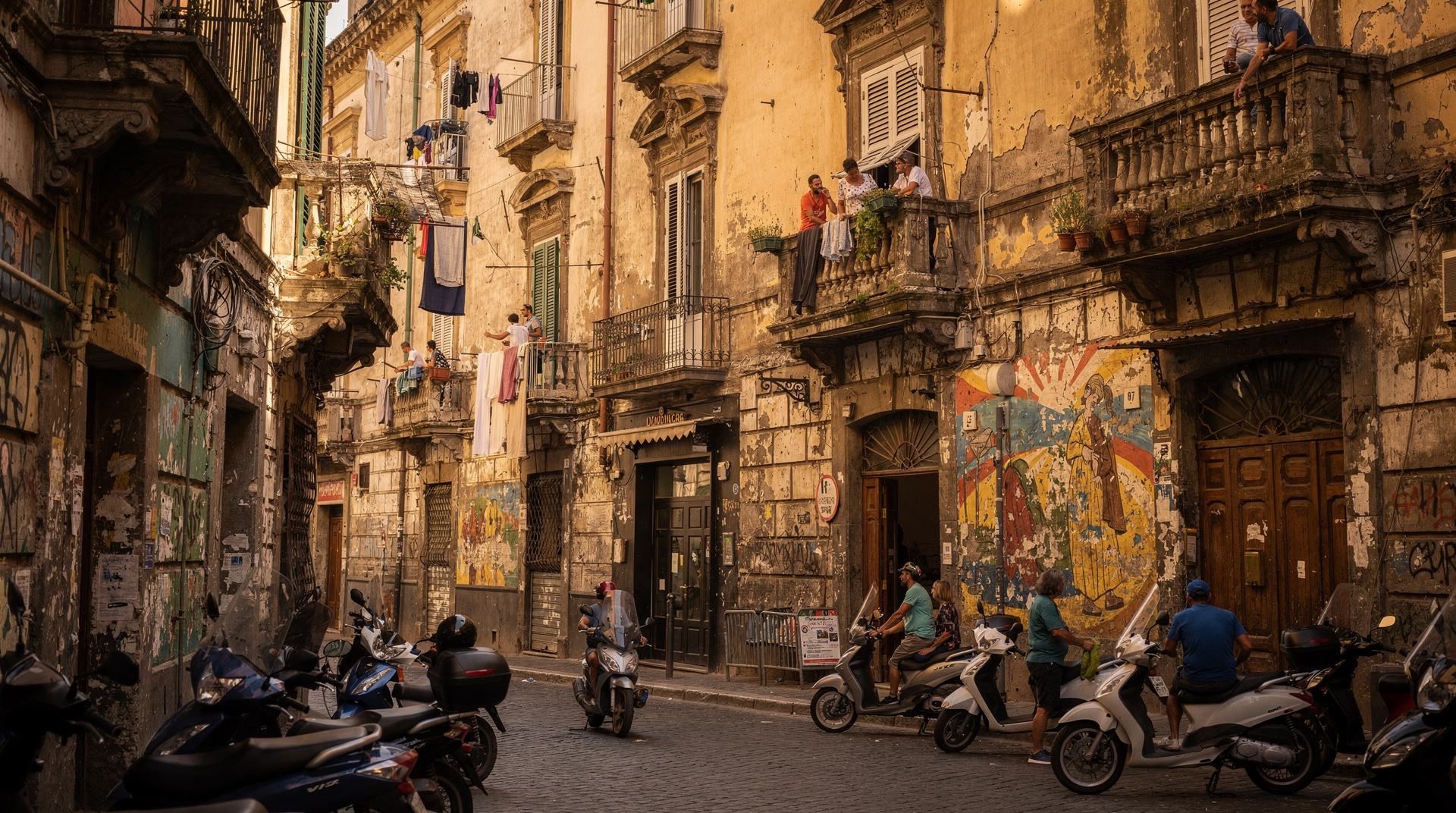
The UNESCO core is dense, noisy, and extraordinary. The street grid follows the original Greek plan (the plateia/stenopoi system), meaning the lanes are narrow, shaded, and sometimes indistinguishable from alleyways. The main artery, Spaccanapoli, literally “splits Naples” — stand at the Certosa di San Martino viewpoint on the Vomero hill and you can see it as a perfectly straight incision across the city.
The essential checklist for the centro storico:
Cappella Sansevero. The funerary chapel of the Sangro di San Severo family contains the Cristo Velato (Veiled Christ), an 18th-century marble sculpture by Giuseppe Sammartino in which the veil appears to have been draped wet over the body. It is technically astonishing and genuinely moving. Entry is timed; book ahead. Via Francesco De Sanctis 19, ~10 €.
Napoli Sotterranea. The Greek-Roman aqueduct tunnels below Piazza San Gaetano are the most approachable underground tour in the city. Two hours, small group, candle-lit passages. About 15 €. See also Galleria Borbonica and the catacombs guide for alternative underworlds.
The Duomo (Cattedrale di Santa Maria Assunta). The Cathedral of Naples holds the relics of San Gennaro, the city’s patron saint. The blood liquefaction miracle — the dried blood allegedly turns liquid on three feast days — draws enormous crowds. The underground archaeological area beneath the church exposes Greek and Roman structures.
San Gregorio Armeno. The street of the presepi (nativity scene) workshops is active year-round, not just at Christmas. Artisans here still hand-carve figures in the tradition established centuries ago. Current-events figures — politicians, footballers — appear alongside the traditional shepherds. For more, see the presepi guide.
Guided walking tour of the centro storico with a local guideThe Museo Archeologico Nazionale (MANN)
The National Archaeological Museum is, without qualification, the most important collection of Greco-Roman antiquities in the world. The Farnese collection (Hercules, the Farnese Bull), the mosaics from Pompeii (the Alexander Battle mosaic, the Cave Canem floor), the Secret Cabinet of erotic objects, and an entire floor of finds from Pompeii and Herculaneum — the collection requires three to four hours to do it justice. Entry is around 18 €; the Campania Artecard (which also covers transport) makes good financial sense if you plan to visit two or more museums. See the MANN guide and Artecard review for details.
Small-group guided tour of the MANN with expert archaeologistThe metro art stations (Toledo and beyond)
The Linea 1 stations are a civic arts project with no real equivalent in Europe. Toledo station, designed by Oscar Tusquets Blanca, descends 50 metres beneath Via Toledo with a mosaic cone that moves from deep blue seabed to sky — it was voted the most beautiful metro station in Europe by the Daily Telegraph. Other standout stations: Municipio (archaeological excavations visible below), Università (Daniel Buren geometric grids), Dante (Jannis Kounellis installation), and Materdei (Domenico Bianchi murals). All are free to enter on a standard transit ticket (1,20 €, valid 90 min). The metro art guide covers all stations with opening times.
Getting around Naples
Linea 1 metro is the main tourist artery, connecting Piazza Garibaldi (Napoli Centrale) through the historic centre (Dante, Università), under Via Toledo, and up toward Vomero (Vanvitelli). Tickets cost 1,20 € for 90 minutes, valid across metro, bus, and funicular.
Three funiculars connect the flat city to the Vomero hill: Centrale (from Via Toledo), Chiaia (from Piazza Amedeo), and Montesanto (from Piazza Montesanto). The Mergellina funicular runs to the lower Posillipo slope. All run on standard ANM tickets.
Taxis. Licensed taxis (white) have fixed rates from the airport (around 25 €) and fixed rates for some destinations; always confirm the rate before getting in or insist on the meter. Taxis in Naples have a known history of overcharging tourists who don’t ask. Rideshare apps (FreeNow, Uber Black) are available.
Walking. The centro storico is largely flat and best explored on foot. Traffic is chaotic — do not expect drivers to yield at crossings; make eye contact and walk with confidence.
Circumvesuviana. This regional rail network runs from Napoli Centrale (lower level, Garibaldi station) along the Bay of Naples to Pompeii (30 min, 3,30 €), Herculaneum (15 min, 2,60 €), and Sorrento (70 min, around 4,50 €). Trains run roughly every 30 minutes. Important caveats: trains are frequently delayed, often overcrowded, un-airconditioned in summer, and have a persistent pickpocket problem — keep bags on your lap and phones in a front pocket. For a more comfortable option, the Campania Express (seasonal, April–October) is a dedicated tourist service with assigned seating and climate control. See full Circumvesuviana guide.
Day trips from Naples
The city’s geographic position makes it one of the best travel bases in Europe. Within 30–90 minutes:
- Pompeii (30 min by Circumvesuviana, 3,30 €) — allow a full day. Book skip-the-line tickets in advance, especially June–August. See the Pompeii day-trip guide.
- Herculaneum (15 min, 2,60 €) — smaller, better preserved, shaded. The better choice if you have limited energy. See Herculaneum vs Pompeii.
- Mount Vesuvius (combine with Pompeii; bus from Pompeii Scavi station). See Vesuvius guide.
- Capri (45–50 min by hydrofoil from Molo Beverello, around 21–24 €). See Capri day trip.
- Ischia (50 min by hydrofoil). Thermal spas, volcanic beaches, quieter than Capri. See Ischia guide.
- Amalfi Coast (via Sorrento, total ~2 h from Naples). See Amalfi Coast from Naples.
For the islands, ferries leave from Molo Beverello (fast hydrofoils for passengers) and Calata Porta di Massa (slower car ferries). Do not confuse the two ports — they are 300 metres apart but serve different services. See ferries guide.
Food: what Naples actually tastes like
Naples invented the pizza margherita (the story goes: created in 1889 for Queen Margherita of Savoy by Raffaele Esposito at Pizzeria Brandi). The AVPN (Associazione Verace Pizza Napoletana) certifies authentic Neapolitan pizza; look for the certification plaque. A margherita at a neighbourhood pizzeria costs 5–7 €; tourist-area prices run higher.
Essential eating beyond pizza:
- Pizza a portafoglio (folded street pizza) — 2–3 € from a street counter on Via dei Tribunali or Piazza Garibaldi
- Cuoppo — a paper cone of fried seafood or vegetables, 4–6 €
- Sfogliatella — flaky pastry shells (riccia) or soft shell (frolla) filled with ricotta and candied peel; 1,50–2 € at a bar, or 3 € at famous spots like Pasticceria Attanasio near the train station
- Pastiera (Easter) and babà (rum-soaked yeasted cake, year-round)
- Espresso — 1–1,20 € at the bar, up to 3 € if seated. Do not tip; it is not expected.
For a systematic food walk, see Naples street food guide and the pizza guide.
Street food tour with a local guide — 6 tastingsSafety: the data vs the reputation
Naples has a security reputation disproportionate to its actual crime statistics. Campania records roughly 3 thefts per 1,000 inhabitants — below Milan (7) and well below Rome (14) or Barcelona. The relevant risks are:
Pickpockets. Concentrated on the Circumvesuviana line, at Napoli Centrale / Garibaldi station, and on Via Toledo near the “gladiator” scam artists (men in costumes who demand payment for a photo). Use a front-zip bag or neck wallet on the train.
Taxi overcharging. Always state your destination and confirm the fixed rate before entering. The airport-to-centre fixed rate is 25–28 € regardless of traffic.
Restaurants near major sights. Restaurants on Piazza del Gesù Nuovo or immediately adjacent to tourist attractions sometimes present inflated menus, obscure the “cover charge” (coperto 2–4 € per person), or add water/bread you didn’t order. Check the price list, which must by law be displayed at the entrance.
Neighbourhoods to avoid. Scampia and Secondigliano (northern suburbs, relevant to Gomorrah fans) are far from anything a tourist would visit. Forcella and Quartieri Spagnoli are fine by day; take a taxi after midnight. Chiaia, Posillipo, Vomero, and the Lungomare are consistently safe at all hours.
For a detailed analysis, see Is Naples safe? and Scams to avoid.
Where to stay
Centro storico / Piazza Garibaldi area — maximum walking access, noisiest, most authentic. Good mid-range hotels exist; avoid the very cheapest options directly on Piazza Garibaldi.
Chiaia — the city’s most comfortable residential neighbourhood. Quieter, elegant, 15 min walk to the historic centre. Higher average prices but good value boutique hotels. See the Chiaia guide.
Vomero — calm, residential, cooler in summer (higher altitude). Funicular access means you’re 7 minutes from Via Toledo. Good for families. See the Vomero guide.
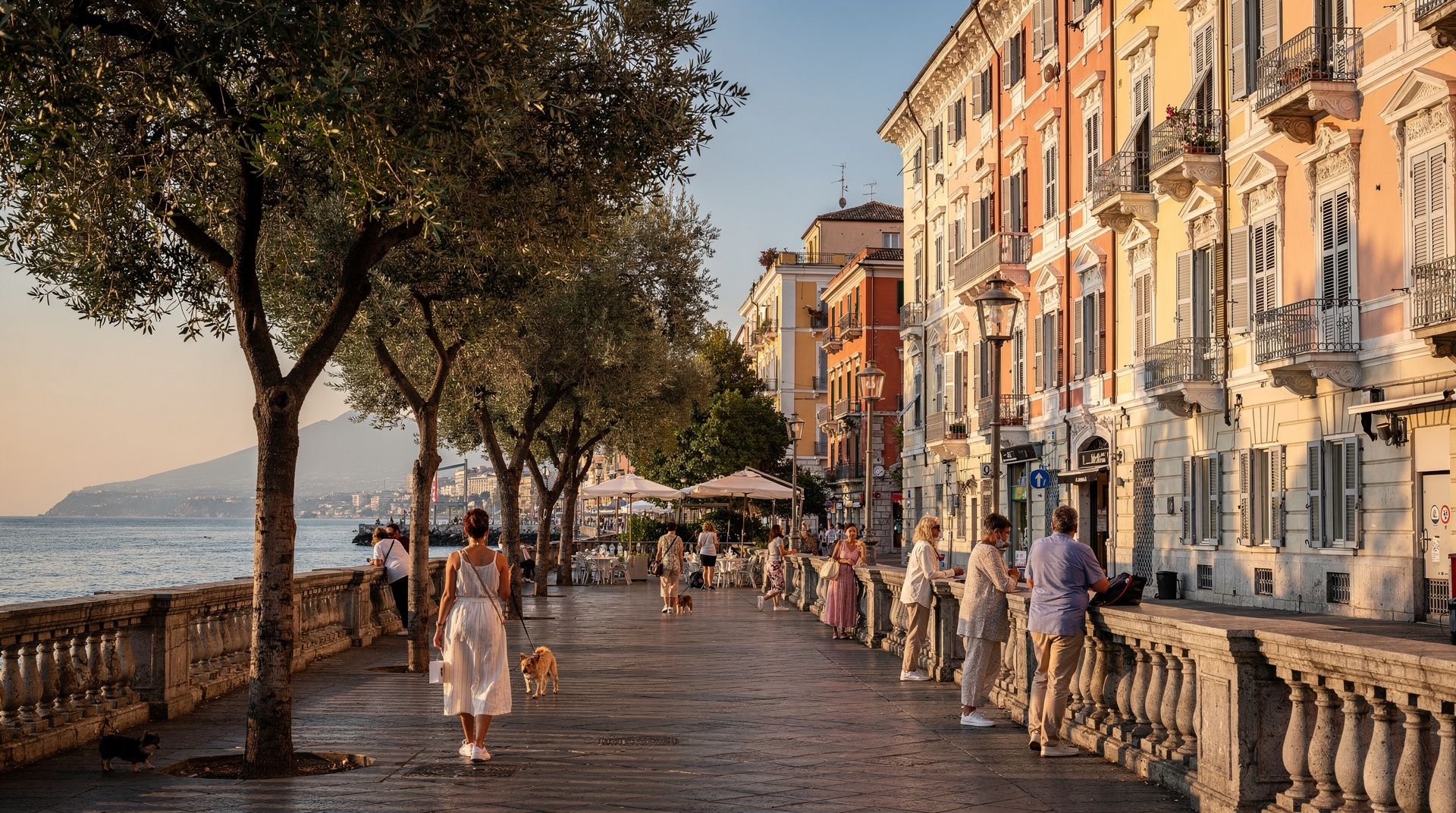
Lungomare — front-row Castel dell’Ovo views; slightly removed from the historic core. A short walk to Chiaia. See the Lungomare guide.
For a full breakdown, see best areas to stay in Naples and where to stay: Naples vs Sorrento.
Budget
Naples is, by Italian standards, good value. A realistic daily budget:
- Budget traveller (hostel/cheap hotel, street food + one sit-down meal, one paid attraction): 60–80 €/day
- Mid-range (3-star hotel, two restaurant meals, two–three attractions including MANN): 120–160 €/day
- Comfort (4-star, taxis, restaurant dinners, guided tours): 220 €+ /day
The Campania Artecard (3-day: 32 € adult, includes public transport + 2 free museum entries + discounts; 7-day: 40 €) makes sense if you plan to visit MANN, Pompeii, and Capodimonte. See Campania Artecard guide.
A pizza margherita at a neighbourhood pizzeria: 5–6 €. Espresso at the bar: 1,20 €. A half-litre carafe of house wine: 5–8 €.
How many days do you need?
- 2 days: centro storico (Spaccanapoli, Cappella Sansevero, Sotterranea), MANN, pizza walk, Toledo metro. A compressed but coherent visit.
- 3 days: adds Vomero, Castel Sant’Elmo, Lungomare, Capodimonte or Certosa di San Martino.
- 4–5 days: one full day Pompeii + Vesuvius, one island day trip (Capri or Ischia). This is the ideal Naples-only configuration.
- 7 days: add the Amalfi Coast (2–3 days). Classic routing: Naples → Pompeii day trip → island day trip → base-swap to Sorrento → Amalfi Coast days. See perfect Campania week.
Naples through history: a compressed timeline
Understanding a little of Naples’ layered history sharpens almost every sight in the city. The Greeks founded Neapolis (“new city”) around 470 BC, on the site of an even older settlement called Parthenope. The Romans absorbed it in 326 BC and used it as a fashionable resort town for the imperial elite — many wealthy Romans, including emperors, kept villas along the bay, which is part of why Pompeii and Herculaneum, both effectively suburbs of ancient Naples, are so close by.
After Rome’s fall, Naples passed through Byzantine, Norman, Angevin (French), Aragonese (Spanish), and Bourbon rule before Italian unification in 1861 — each leaving an architectural and culinary layer still visible today. The Spanish Quarters take their name from the Spanish garrison housed there under Habsburg rule; the extravagant Baroque churches of the centro storico date largely from the Spanish viceroyalty; the grand 18th-century palaces (Capodimonte, Caserta) reflect Bourbon ambitions to rival Versailles.
This history of successive foreign rule, rather than continuous independent development, explains a lot about Naples’ character: a city that absorbed influences without ever being defined by a single ruling culture, producing a hybrid identity — visible in language (Neapolitan dialect draws on Spanish, French, and Greek elements), food, and religious practice — found nowhere else in Italy.
Naples’ neighbourhoods compared
| Neighbourhood | Character | Best for |
|---|---|---|
| Centro storico / Spaccanapoli | Dense, noisy, historic | First-time visitors, walking access to sights |
| Chiaia | Elegant, residential | Comfort, quieter evenings, boutique hotels |
| Vomero | Calm, hilltop, cooler | Families, escaping summer heat |
| Lungomare / Santa Lucia | Seafront, hotel strip | Views, evening walks, ferry access |
| Piazza Garibaldi area | Busy, transit hub | Budget stays with strong walking access (avoid the very cheapest options) |
Festivals and annual events
Naples’ calendar is genuinely built around religious and civic festivals rather than tourist events, which makes timing a visit around one worthwhile if your dates allow it. San Gennaro’s feast days (the Saturday before the first Sunday in May, 19 September, and 16 December) draw large crowds to the Duomo for the blood liquefaction ritual — arrive early if you want to witness the ceremony itself rather than just the crowds outside.
Christmas in Naples runs from early December through Epiphany (6 January) and centres on San Gregorio Armeno’s presepi workshops, which stay open late and add temporary stalls; Piazza del Plebiscito hosts a large public Christmas market and tree. Maggio dei Monumenti (May) opens normally-closed historic buildings and palaces to the public with extended hours, a genuinely good reason to time a visit for early May. See the Naples events calendar for a full year-round list, and Naples at Christmas for the December specifics.
Practical information
Airport. Naples Capodichino (NAP) is 7 km from the centre. Alibus (Line 3S) runs to Piazza Garibaldi and Molo Beverello every 15–20 minutes, 5 €, 15–30 minutes depending on traffic. A taxi costs around 25 € (fixed rate). No metro connection as of 2026 (under construction). See Naples airport to city guide.
ZTL. The centro storico ZTL (Centro Antico) restricts private vehicles 9h–17h on weekdays. Do not drive a rental car into Naples centre — signs are easy to miss and fines start at 200 €. See ZTL and driving guide.
Language. Basic Italian phrases open doors immediately. English is widely spoken in hotels, tourist-facing restaurants, and ticketing offices; less so in local bars and backstreet shops. The Neapolitan dialect is distinct — locals code-switch fluently.
Connectivity. Free Wi-Fi in most hotels and cafes. An Italian SIM card (TIM, Vodafone, Iliad) costs 10–20 € for a month of data.
Naples underground tour — tunnels and ancient cityFrequently asked questions about Naples
Is Naples worth visiting if you only have one day?
One day works if you focus: centro storico, Cappella Sansevero, pizza lunch, Toledo metro. Skip the museums — MANN alone deserves three hours. The one-day Naples itinerary gives a tight but realistic schedule.
How do I get from Naples to Pompeii?
Circumvesuviana from Napoli Garibaldi station to “Pompei Scavi - Villa dei Misteri” stop, about 30 minutes, 3,30 €. Trains run every 30 minutes. For a more comfortable option in high season, take the Campania Express (seasonal, limited stops, assigned seating). See getting to Pompeii from Naples.
Which neighbourhood is best for first-time visitors?
Chiaia for comfort and safety with easy access to the historic centre; centro storico for immersion and walking access. Avoid booking the absolute cheapest accommodation near Piazza Garibaldi — it is the least pleasant part of the centre.
Is it safe to walk around Naples at night?
Yes, in the tourist and middle-class zones (Chiaia, Piazza del Plebiscito, Via Toledo, Lungomare, Vomero). After midnight in Quartieri Spagnoli or near Garibaldi station, take a taxi or use a rideshare app. See the safety guide.
How much does a pizza in Naples cost?
A margherita at a local pizzeria (not on a tourist square) costs 5–7 €. Pizza a portafoglio (folded, street-counter style) costs 2–3 €. At historic pizzerias like Da Michele or Sorbillo on Via dei Tribunali, expect a queue; the pizzas are worth it.
Can I visit Naples without a car?
Comfortably. The metro, funiculars, and ferries cover every destination in this guide. A car is useful for self-driving the Amalfi Coast SS163, but brings serious complications in Naples itself (ZTL fines, parking costs). See getting around Naples.
What is the Campania Artecard and is it worth it?
A 3-day card costs 32 € and includes free public transport in the Naples area plus 2 free museum entries (MANN, Pompeii, Capodimonte, etc.) plus 50 % off subsequent entries. It pays for itself if you visit MANN plus one other major site within three days. See the Artecard guide.
What are the worst tourist traps in Naples?
Restaurants immediately adjacent to Piazza del Gesù Nuovo with laminated picture menus; unlicensed “gladiators” on Via Toledo demanding payment for photos; taxi drivers without meters at the airport; and overpriced limoncello liqueur miniatures near tourist sights. See tourist traps to avoid.
Is there a good time to visit Naples around a festival?
Early May, for Maggio dei Monumenti, when many normally-closed historic buildings open to the public with extended hours. December (San Gregorio Armeno’s presepi season and the Piazza del Plebiscito Christmas market) is also a genuinely festive time to visit, if colder and busier.
How long has Naples existed as a city?
Continuously inhabited for roughly 2,800 years, founded by Greek colonists around 470 BC as Neapolis on the site of an older settlement, Parthenope. The centuries of Roman, Byzantine, Norman, Angevin, Aragonese, and Bourbon rule that followed are why the historic centre reads like layered strata rather than a single architectural style.
Top experiences
Bookable activities with verified prices and instant confirmation on GetYourGuide.