Naples pizza guide
Naples: Authentic Neapolitan Pizza Making Class
Duration: 2h
What is authentic Neapolitan pizza?
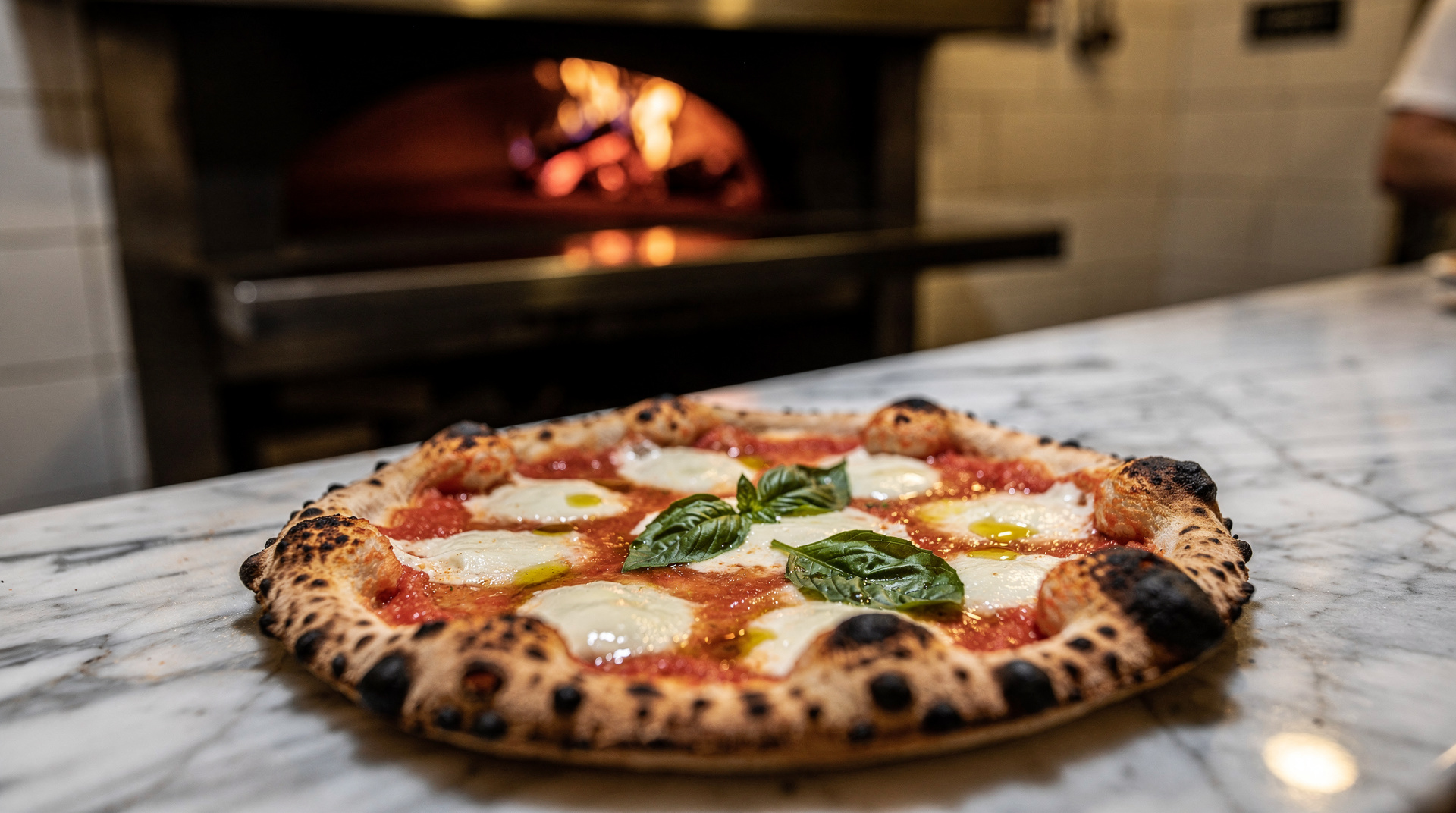
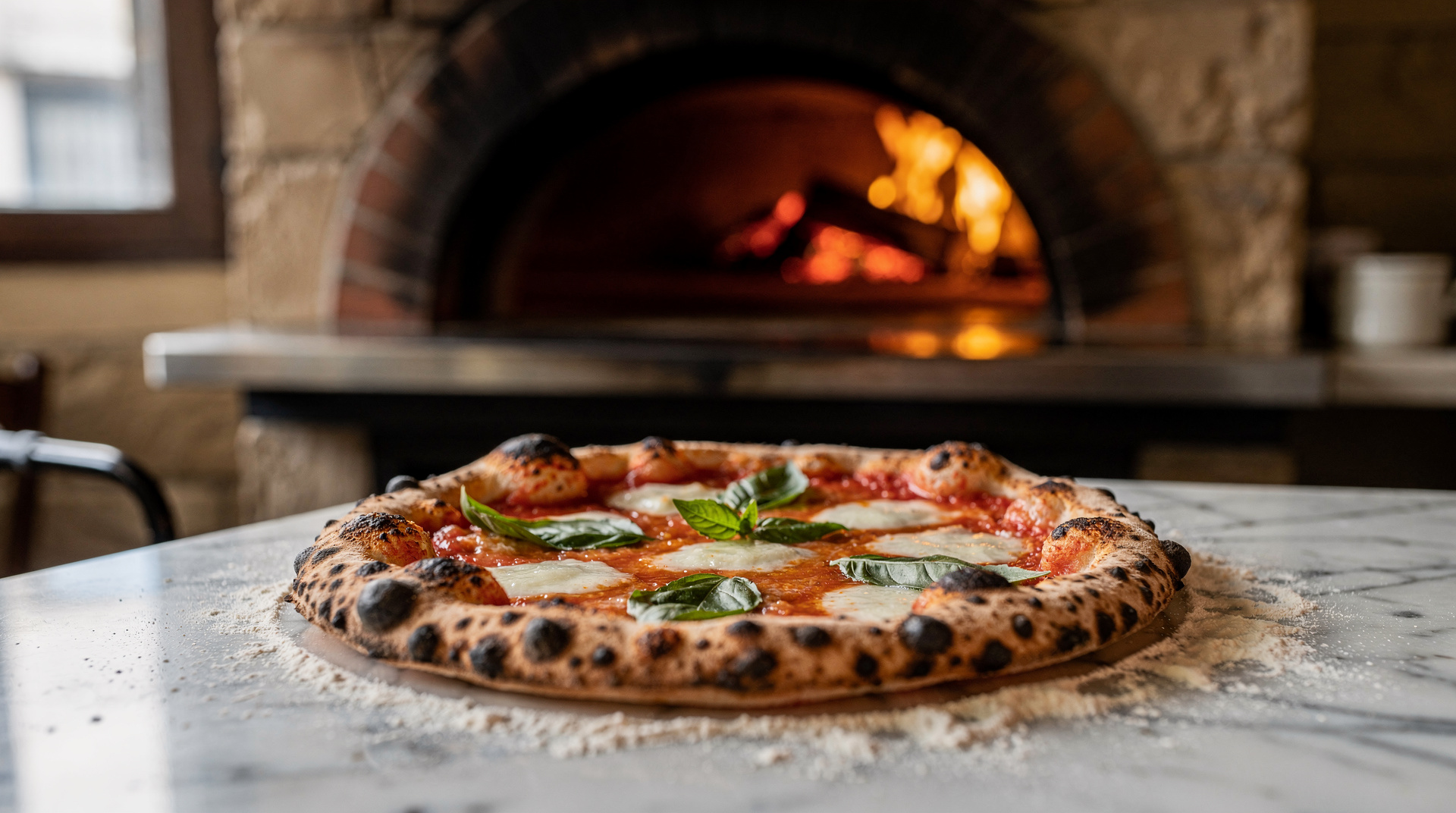
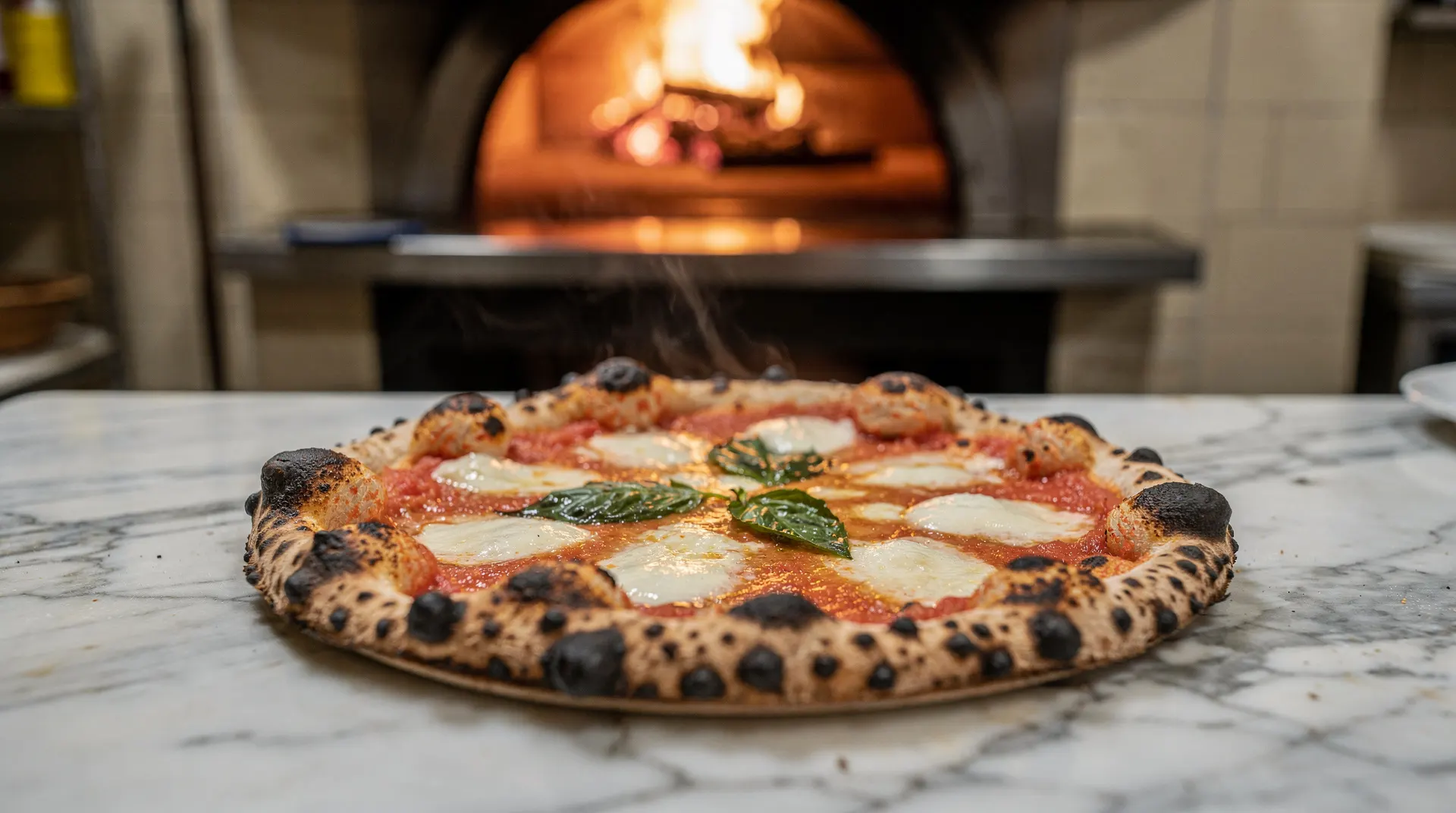
Authentic Neapolitan pizza (verace pizza napoletana) is certified by the AVPN. It uses '00' flour, San Marzano tomatoes, fior di latte or buffalo mozzarella, and is cooked in a wood-fired oven at 430–480°C for 60–90 seconds. The result is soft, wet in the centre, and charred at the crust edges. The two canonical versions are Margherita and Marinara.
| Classic order | Margherita, around €5–9 |
| Vegan option | Marinara, around €4–7 |
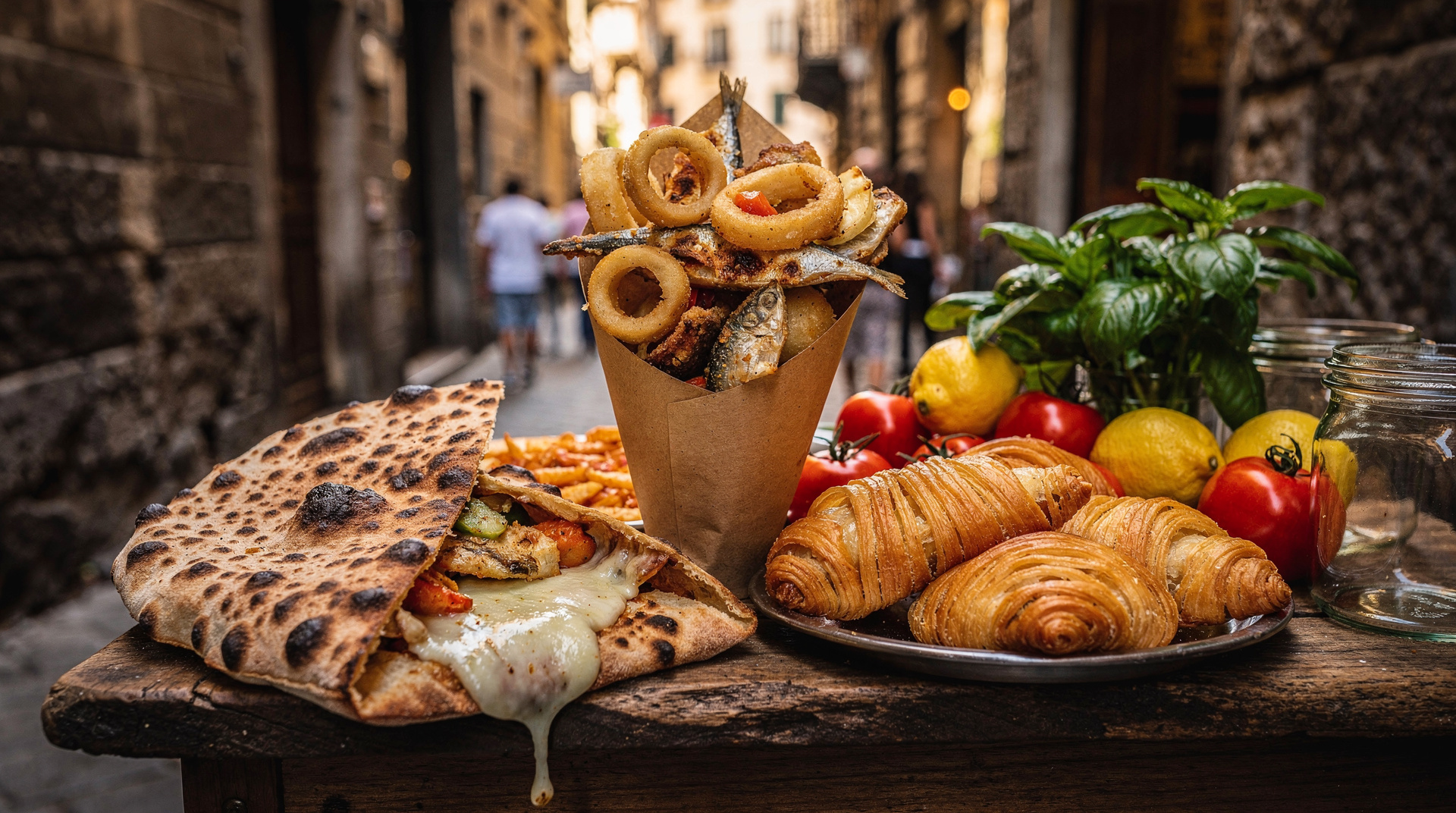
| Street version | Pizza a portafoglio, around €2–3 |
| Look for | AVPN certification, wood-fired oven, leopard-spotted crust |
| Avoid | Gas-oven “authentic” claims, tourist-area menus at €14–22 |
A 2,000-year history in a 90-second bake
Naples has been eating flatbreads topped with olive oil and garlic since at least the time of the Roman Republic. The tomato arrived from the Americas in the 16th century. By the 18th century, street vendors (pizzaioli) were feeding the city’s poor from portable ovens. The Margherita story — Queen Margherita di Savoia, pizzaiolo Raffaele Esposito, Pizzeria Brandi, 1889 — is of uncertain historical authenticity, but it is the founding myth the city chose to keep.
What is not myth is the technical standard that emerged over the following century. In 1984, a group of Neapolitan pizzerias and producers codified the rules as the Associazione Verace Pizza Napoletana (AVPN) and successfully registered Neapolitan pizza-making as a UNESCO Intangible Cultural Heritage in 2017. The rules exist because the thing they describe is genuinely specific — a set of techniques that produces a pizza unlike anything made anywhere else.
The two canonical pizzas
Margherita
Tomato (San Marzano DOP), fior di latte mozzarella or buffalo mozzarella DOP, fresh basil, extra virgin olive oil. Named for its colours matching the Italian flag. Cost at traditional pizzerias: €5–9. The version with buffalo mozzarella is sometimes listed as Margherita DOC and costs €2–4 more.
The technical challenge in a Margherita is restraint: too much cheese and the pizza becomes heavy; too much tomato and the base goes soggy. The best Margheritas have a sauce that is slightly acidic, a cheese that is gently melted rather than fully run, and a crust with visible char.
Marinara
Tomato (San Marzano DOP), garlic, dried oregano, extra virgin olive oil. No cheese, no basil. It predates the Margherita by at least a century — the name comes not from “mare” (sea) but from the marinaros, the fishermen and sailors who ate it as a preserved-ingredient meal. Cost: €4–7. Vegan.
The Marinara is harder to make well than it appears. Without cheese to mask flaws in the tomato or dough, every element is exposed. A great Marinara has bright, slightly sweet tomato, fragrant garlic slices, and crust with enough structural integrity to fold. This is the pizza Da Michele considers their flagship.
The dough: what actually matters
Flour: Italian ‘00’ (doppio zero), milled to a fine consistency with 11–12% protein. This produces an extensible, soft dough that stretches by hand without tearing.
Fermentation (lievitazione): The most important variable. Standard fermentation is 8–12 hours; serious pizzerias use 24–48 hours at controlled temperatures (around 18°C). Longer fermentation means the sugars are partially consumed by yeast, producing a lighter, more digestible pizza with more complex flavour. Cramping fermentation with too much yeast produces a pizza that looks similar but sits heavier.
Hydration: 55–65% (water to flour ratio). Higher hydration produces a softer, more open crumb structure. 50 Kalò at Mergellina (cited by many food critics as producing the best dough in Naples) uses 65–70% hydration with extended fermentation.
Stretching: by hand only. A wooden rolling pin compresses the gas bubbles in the dough and produces a denser base. Hand stretching — the characteristic circular motion that also serves as performance — preserves the air structure.
The oven: 60–90 seconds at 430–480°C
A traditional Neapolitan wood-fired oven (forno a legna) runs at 430–480°C at the cooking surface. The pizza cooks in 60–90 seconds. At this temperature, the base chars on contact while the water in the tomato and mozzarella rapidly steams, producing the wet, soft centre. The cornicione (crust edge) puffs and blisters.
This is not achievable in a domestic oven (which typically reaches 250–280°C) or in most commercial electric ovens. The specific combination of high floor temperature, high dome temperature, and wood-fire radiant heat produces a result that cannot be replicated without the correct equipment.
Gas ovens are explicitly prohibited by AVPN rules. Several modern pizzerias use certified electric ovens designed to reach equivalent temperatures — a technically acceptable but philosophically contested compromise.
Pizza fritta: the street predecessor
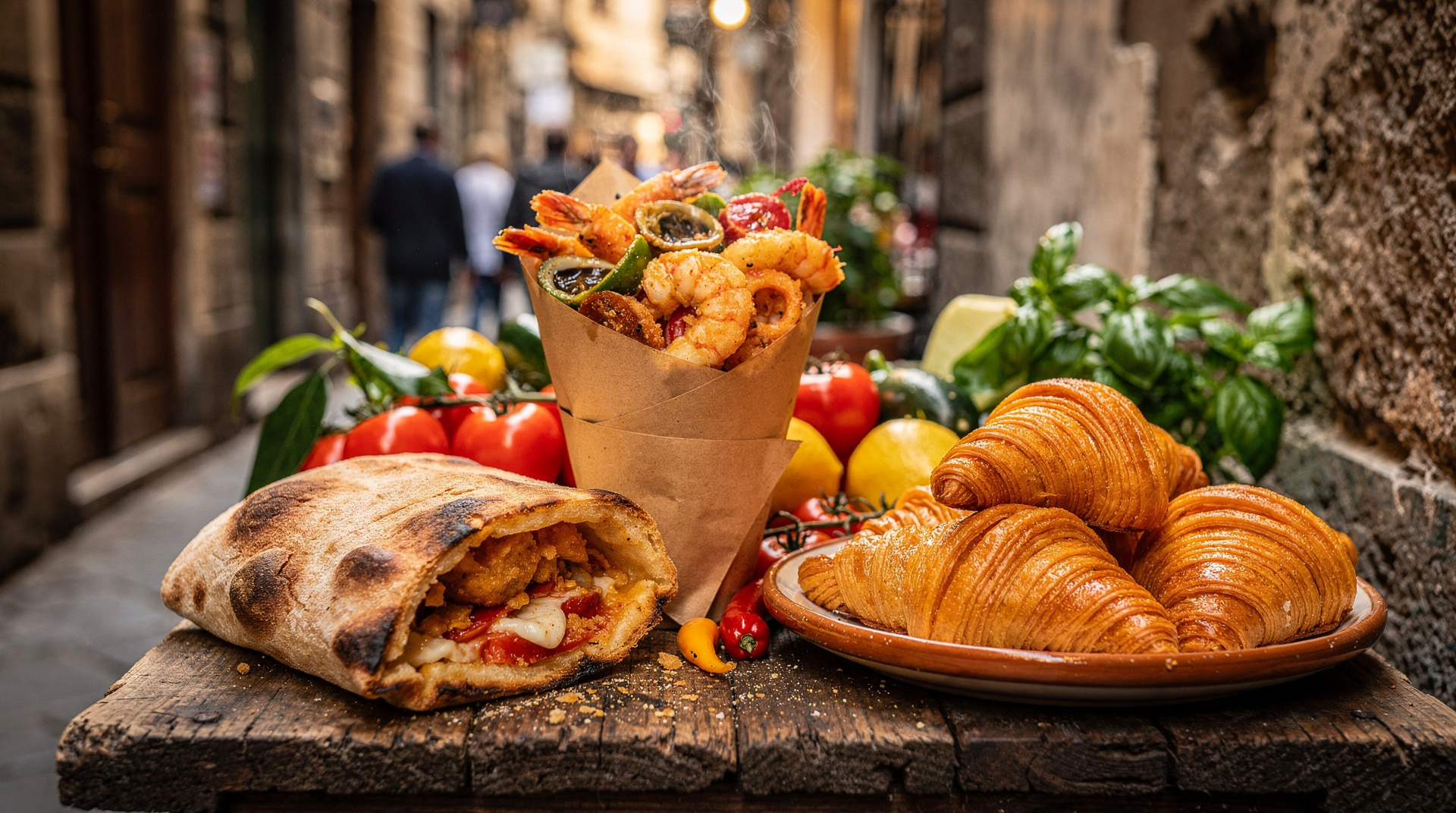
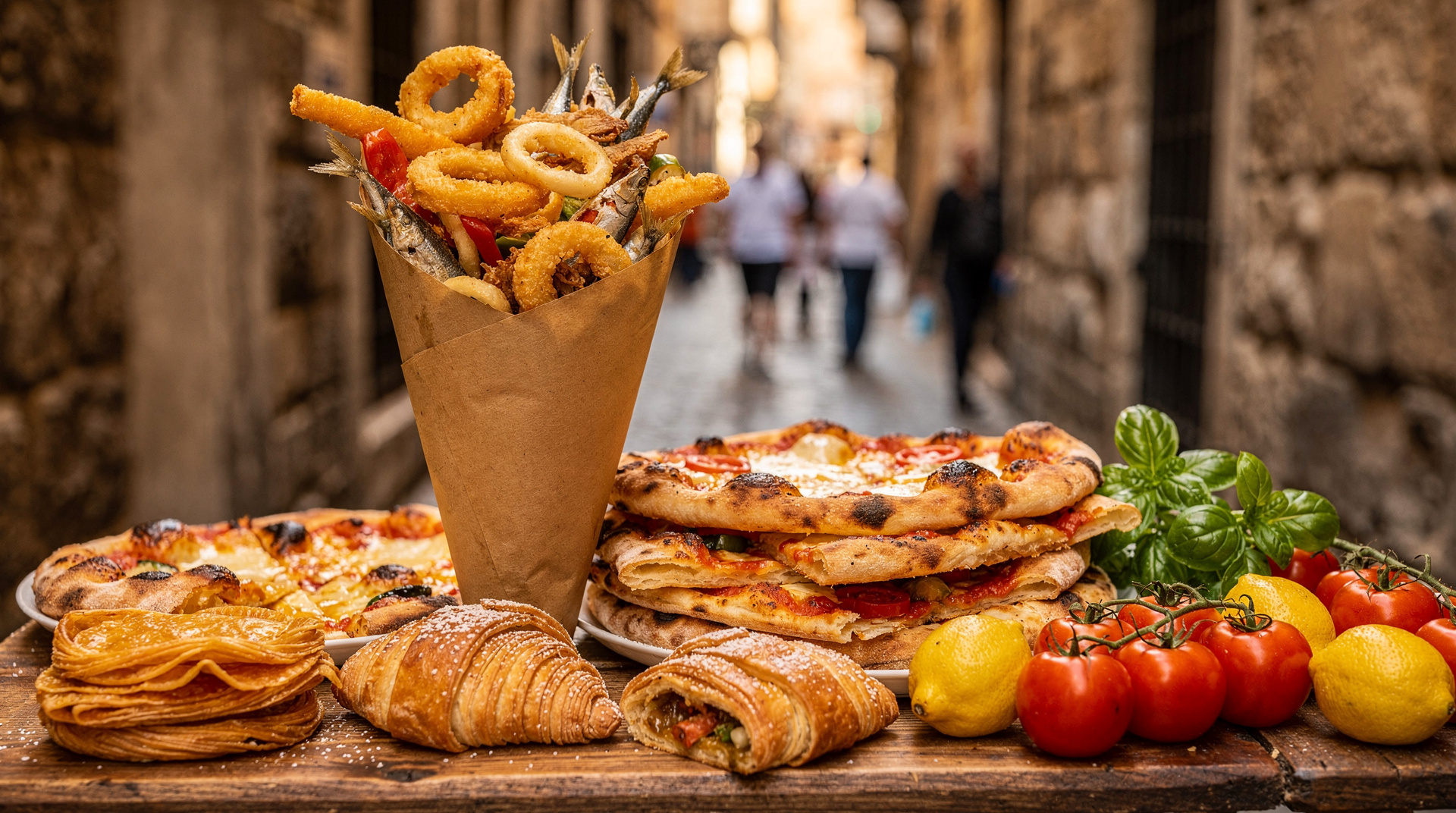
Before wood-fired ovens were in every backstreet, Naples had lard cauldrons. Pizza fritta — fried pizza — was the dominant street food of 19th-century Naples and is still made by the best traditional addresses.
The most common form is the calzone fritto: dough filled with ricotta, salami, cicoli (dried pork crackling), and smoked provola cheese, then deep-fried until golden-brown outside and molten inside. Cost: €2.50–4.
Sophia Loren famously sold pizza fritta from a street cart in Vittorio De Sica’s 1954 neorealist film L’oro di Napoli. Starita a Materdei, where filming took place, still makes it and displays the original photos.
For context on the full range of Neapolitan street food, see the Naples street food guide.
AVPN certification: what it means in practice
The AVPN now certifies over 900 pizzerias in 50 countries. In Naples, most serious traditional pizzerias are certified. The certification requires:
- Specific flour, tomato (San Marzano DOP), and cheese (fior di latte Agerola or buffalo mozzarella DOP) sourcing
- Hand-stretched dough only
- Wood-fired oven only
- Specific cooking temperatures and times
- Pizza diameter maximum 35 cm
Certification does not guarantee the best pizza you will eat — a certified pizzeria can still have inconsistent staff or poor-quality tomatoes. But the absence of AVPN certification at a pizzeria claiming “authentic Neapolitan pizza” in Naples is worth noting.
The full registry is searchable at veracepizzanapoletana.com.
Where the science meets the street
The where to eat pizza in Naples guide covers specific addresses and queue strategies. The short version: Da Michele (Via Cesare Sersale 1) and Sorbillo (Via dei Tribunali 32) represent the traditional centre; 50 Kalò (Mergellina) represents the dough-science wing; Concettina ai Tre Santi (Rione Sanità) is the neighbourhood option with more creative toppings.
For a structured tour covering multiple styles in a few hours:
Naples pizza and beyond — guided tasting tourPizza-making classes: technique vs experience
Classes run by certified pizzaioli teach the real process — proper dough handling, hand stretching, sauce application, and oven management. They are not primarily tourist entertainment; the best classes send you away with skills that are actually transferable.
The pizza making class guide assesses what to look for. Key distinction: classes that occur in an actual working pizzeria oven are more authentic than hotel-kitchen sessions. Classes range from €45–75 per person including wine and the pizza you make.
2-hour pizza class with a Neapolitan chef — hands-onRegional variations and dishonest claims
Pizza romana: thin, crispy base, cooked at lower temperatures for longer. Structurally different from Neapolitan — the base holds its shape when lifted, unlike the Neapolitan version which folds immediately. Neither is better; they are different products.
Pizza Napoletana in the rest of Italy: variable. Many Italian cities have decent Neapolitan-style pizzerias. Most suffer from slightly lower oven temperatures (electric rather than wood) and shorter fermentation.
“Neapolitan-style” outside Italy: increasingly competent, particularly in the UK, US, and Australia, where AVPN-certified ovens are now imported. Still not the same — water chemistry, flour sourcing, and atmospheric humidity all affect the dough in ways that are difficult to replicate.
Claims of “authentic Naples pizza” at a restaurant that cannot specify AVPN certification, San Marzano tomato sourcing, and wood-fired temperature are marketing language.
Neighbourhood by neighbourhood
Pizza quality in Naples correlates loosely with neighbourhood, though the best addresses reward a specific walk more than a specific district.
| Area | What to expect |
|---|---|
| Centro storico / Via dei Tribunali | Highest density of famous names — Sorbillo, Di Matteo — expect queues |
| Spaccanapoli | Traditional counters, pizza a portafoglio culture |
| Rione Sanità | Concettina ai Tre Santi — creative, less queue pressure |
| Mergellina | 50 Kalò — dough-science focus, higher price point |
| Piazza Garibaldi / station area | Avoid — see restaurant-traps-naples |
For where exactly to eat pizza in each area, see where-to-eat-spaccanapoli alongside the addresses guide linked above.
What a pizza tour covers
A structured food tour in the centro storico typically includes a pizza a portafoglio stop, a pizza fritta taste, a sit-down pizza at a named address, and often includes street snacks and coffee. It also provides neighbourhood context, history, and the kind of knowledge about what distinguishes a good pizzeria from a tourist-grade one that would otherwise take several visits to acquire.
Naples food walking tour with 8+ tastingsBudget summary
| What | Price range |
|---|---|
| Pizza Margherita, sit-down | €5–9 |
| Pizza a portafoglio (street) | €2–3 |
| Pizza fritta | €2.50–4 |
| Pizza with buffalo mozzarella | €9–16 |
| Tourist-area pizza (avoid) | €14–22 |
The Naples food budget guide covers this and all other food categories with practical daily budget calculations.
Frequently asked questions about Neapolitan pizza
What are the official rules for Neapolitan pizza?
The AVPN specifies ‘00’ flour dough, San Marzano DOP tomatoes, fior di latte or buffalo mozzarella DOP, wood-fired oven at 430–480°C, cooking time 60–90 seconds, maximum 35 cm diameter. Gas ovens are not permitted.
How is pizza fritta different from baked pizza?
Pizza fritta is filled dough (ricotta, salami, cicoli, provola) deep-fried in lard. It predates wood-fired pizza as the dominant Naples street food. Starita a Materdei is the reference address.
What is pizza a portafoglio?
A full pizza folded into quarters for street eating. Price €2–3. Sold at counter windows at traditional pizzerias. Eating while walking is standard.
What is the cornicione?
The raised outer crust edge. It should be puffy, unevenly charred (leopard-spotted), with internal air bubbles. A flat or pale cornicione indicates poor fermentation or too-low baking temperature.
Is buffalo mozzarella better than fior di latte?
Different. Buffalo is richer and wetter — can make the centre more liquid. Fior di latte melts more evenly and has a cleaner flavour. Both are AVPN-permitted; fior di latte is the more common default.
Why is the pizza wet in the middle?
Intentionally so — a product of 90-second high-temperature cooking and fresh tomato sauce. The base is fully baked and the crust edges are charred. A dry, crispy result would require a Roman-style bake.
What does AVPN certification mean?
Certified pizzerias follow specific sourcing, technique, and equipment rules. Not a guarantee of the best pizza, but absence of certification at a place claiming “authentic Neapolitan pizza” is worth noting.
Frequently asked questions about Naples pizza
What are the official rules for Neapolitan pizza?
How is pizza fritta different from baked pizza?
What is pizza a portafoglio?
What is the cornicione?
Is buffalo mozzarella better than fior di latte?
What is the 00 flour difference?
Why is the pizza wet in the middle?
Top experiences
Bookable activities with verified prices and instant confirmation on GetYourGuide.