Spaccanapoli
Walk Spaccanapoli — Naples' ancient straight street, medieval churches, pizza a portafoglio, street art, and the pulse of everyday Neapolitan life.
The Best of Naples Private Walking Tour
Quick facts
- Official names
- Via Benedetto Croce (west), Via San Biagio dei Librai (east)
- Length
- ~1.5 km from Piazza del Gesù Nuovo to Piazza Nicola Amore
- Metro access
- Dante (Line 1) at the western end; Università (Line 1) mid-route
- Best for
- Walking, street food, churches, photography, neighbourhood life
- Crowd peak
- 11h–14h daily; quietest before 9h and after 17h
| Where | Historic centre, ~1.5 km, Metro Dante or Università (Line 1) |
| Cost | Free to walk; €2–6 for churches/chapel; €2–6 for street food |
| Time needed | 15 min end-to-end walk; 3–4 hours with stops and sights |
| Getting there | Metro Line 1, or 15-min walk from Napoli Centrale |
| Best time | Before 10:00 or 16:00–19:00; avoid midday in July–August |
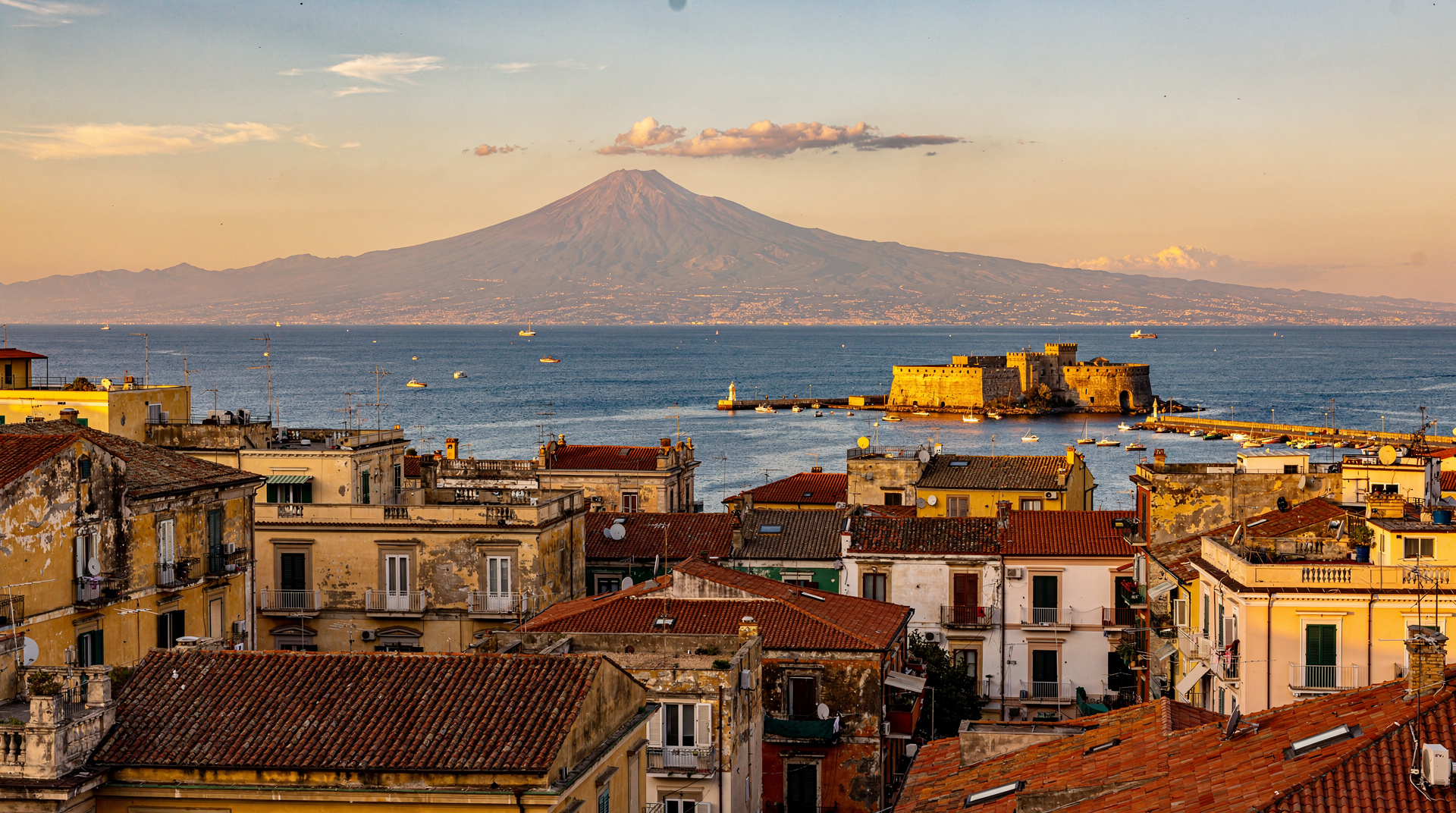
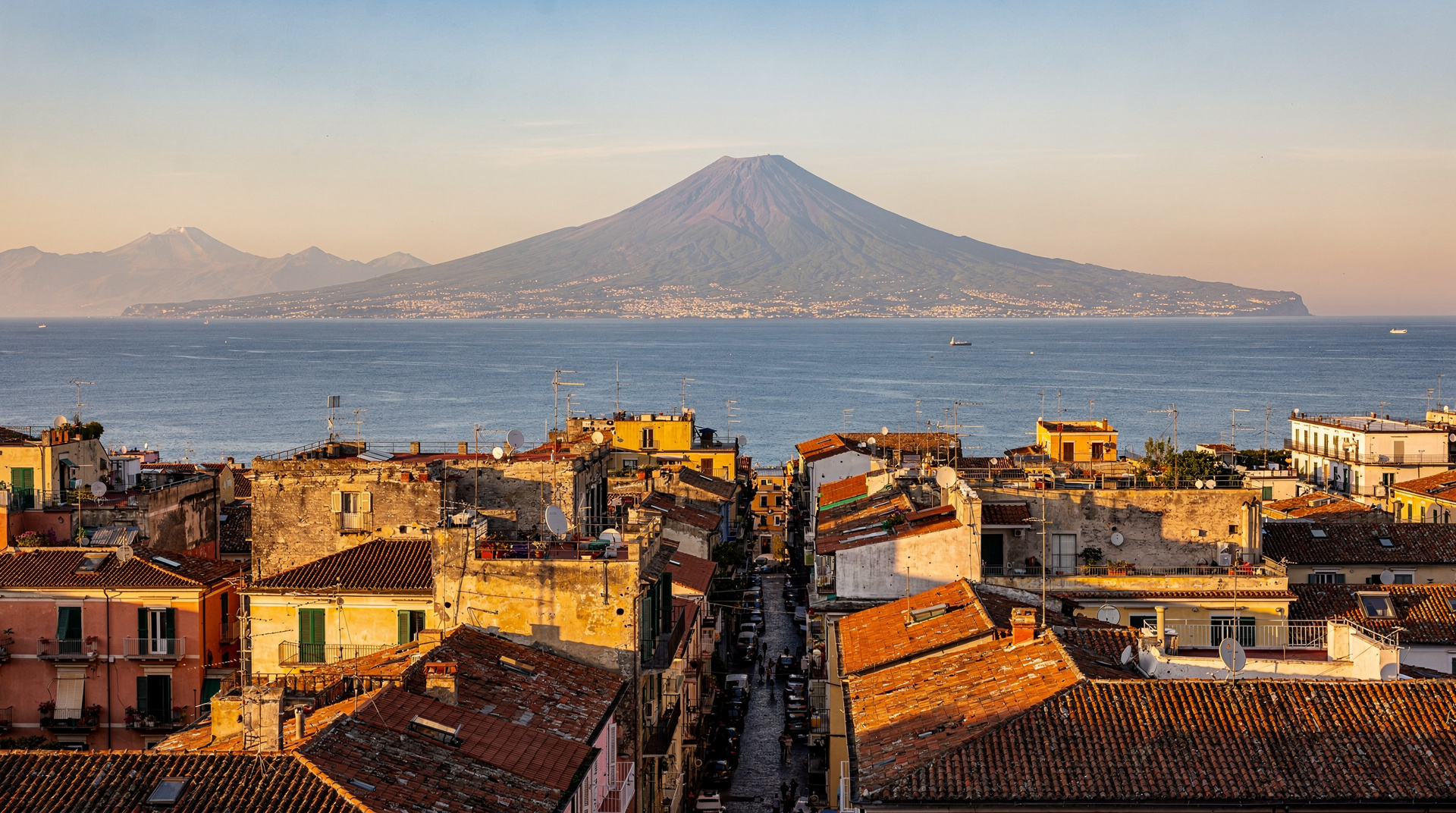
Stand on the Vomero hill at the Castel Sant’Elmo and look south. Below you, cutting through the dense fabric of Naples like a straight incision, you can see it: a single lane running east to west without deviation, splitting the historic centre in two. This is Spaccanapoli — “Naples-splitter” — a name the locals use for a street that doesn’t appear on any official map under that name. Formally it is Via Benedetto Croce in its western section and Via San Biagio dei Librai further east, but no one who lives here calls it that.
A street built on a Greek blueprint
The Romans laid their city of Neapolis (which inherited its layout from Greek founders of the 5th century BC) on a three-artery plan: three parallel east-west roads, the decumani, crossed by a grid of narrower north-south lanes. Spaccanapoli is the southern decumano, the lowest of the three. The geometry is so exact that the street has deviated less than 30 metres from its original line over 2,500 years. The buildings on either side have been demolished and rebuilt dozens of times; the road itself has not moved.
This means that walking Spaccanapoli is, literally, walking a Greek street.
Walking the street west to east
The most logical approach is to start at the western end near Piazza del Gesù Nuovo and walk east.
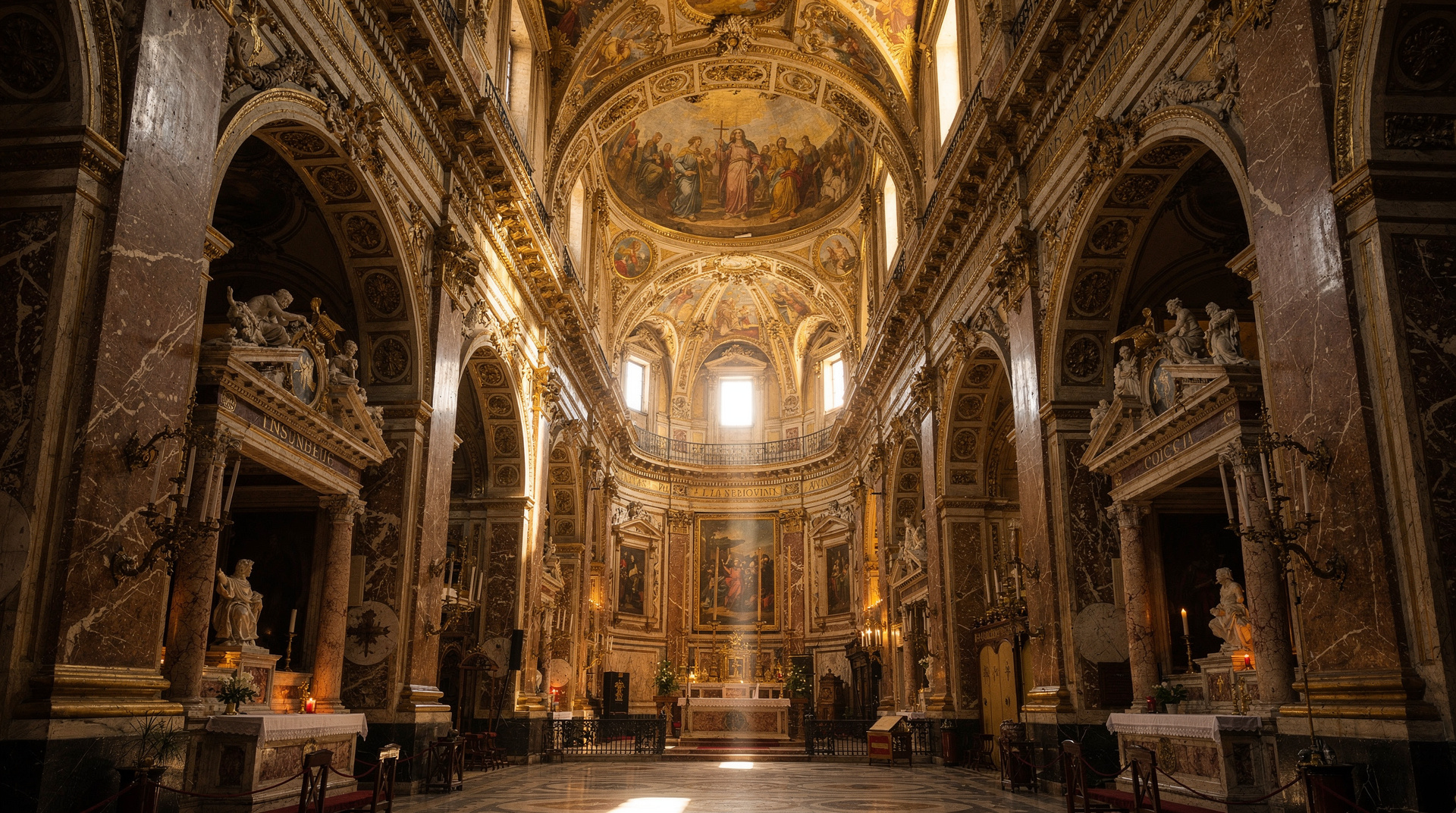
Piazza del Gesù Nuovo. The square anchors the western end. The Guglia dell’Immacolata (1747), a soaring Baroque obelisk, stands in the middle. The Gesù Nuovo church fronts it — an unusual facade of diamond-rusticated dark tufa, originally a Renaissance palace. The interior is unexpectedly Baroque and elaborate. A warning: the piazza restaurants with laminated photo menus are among the worst-value in Naples. Eat here at your peril; prices are elevated and quality is not.
Santa Chiara. Just west of the piazza. The Gothic church was rebuilt after WWII bombing destroyed most of the interior; the important part is the majolica-tile cloister behind it — 72 columns and benches covered in hand-painted 18th-century tiles depicting pastoral and mythological scenes. One of the most photogenic spaces in Naples. Entry to the cloister around 6 €.
San Domenico Maggiore. A few hundred metres east, dominating a small piazza of the same name. The Gothic interior contains Aragonese royal tombs and a painting by Caravaggio. Thomas Aquinas lived and lectured in the adjacent convent. The piazza outside is a useful reference point: the Obelisco di San Domenico (1658) marks it.
Cappella Sansevero. Turn right (south) from Piazza San Domenico Maggiore into Via de Sanctis. The chapel is 50 metres along. The Veiled Christ marble by Sammartino (1753) is in here — easily the most technically demanding sculpture in Naples. Entry is ticketed and timed; book ahead or arrive right at opening. See the full Sansevero guide.
Via San Biagio dei Librai. This is the eastern continuation of Spaccanapoli after the name change. The street narrows slightly and becomes more residential / commercial: hardware shops, bookbinders, presepi suppliers. More authentic, fewer tourists.
San Gregorio Armeno. Turn right off Via San Biagio at the short connecting lane. San Gregorio Armeno — the presepi street — connects the two main decumani. Artisan workshops line it; year-round production of nativity figures. See presepi guide.
Monte di Pietà. Back on Via San Biagio, this is the former pawn shop and charitable institution of the Spanish viceroys — a Renaissance courtyard with a notable doorway and free entry. Often completely empty of tourists.
The eastern end. Via San Biagio becomes Via Vicaria Vecchia and eventually meets Piazza Nicola Amore at the eastern edge of the historic centre. The architecture becomes more mixed and the tourist infrastructure thinner.
Walking tour — Spaccanapoli, Sansevero, and the old town with a local guideStreet food on Spaccanapoli
The street is lined with counter-service food stops. Prices and quality vary; the general rule is to avoid anything with a printed photo menu in multiple languages and seek out places where the clientele is mostly local.
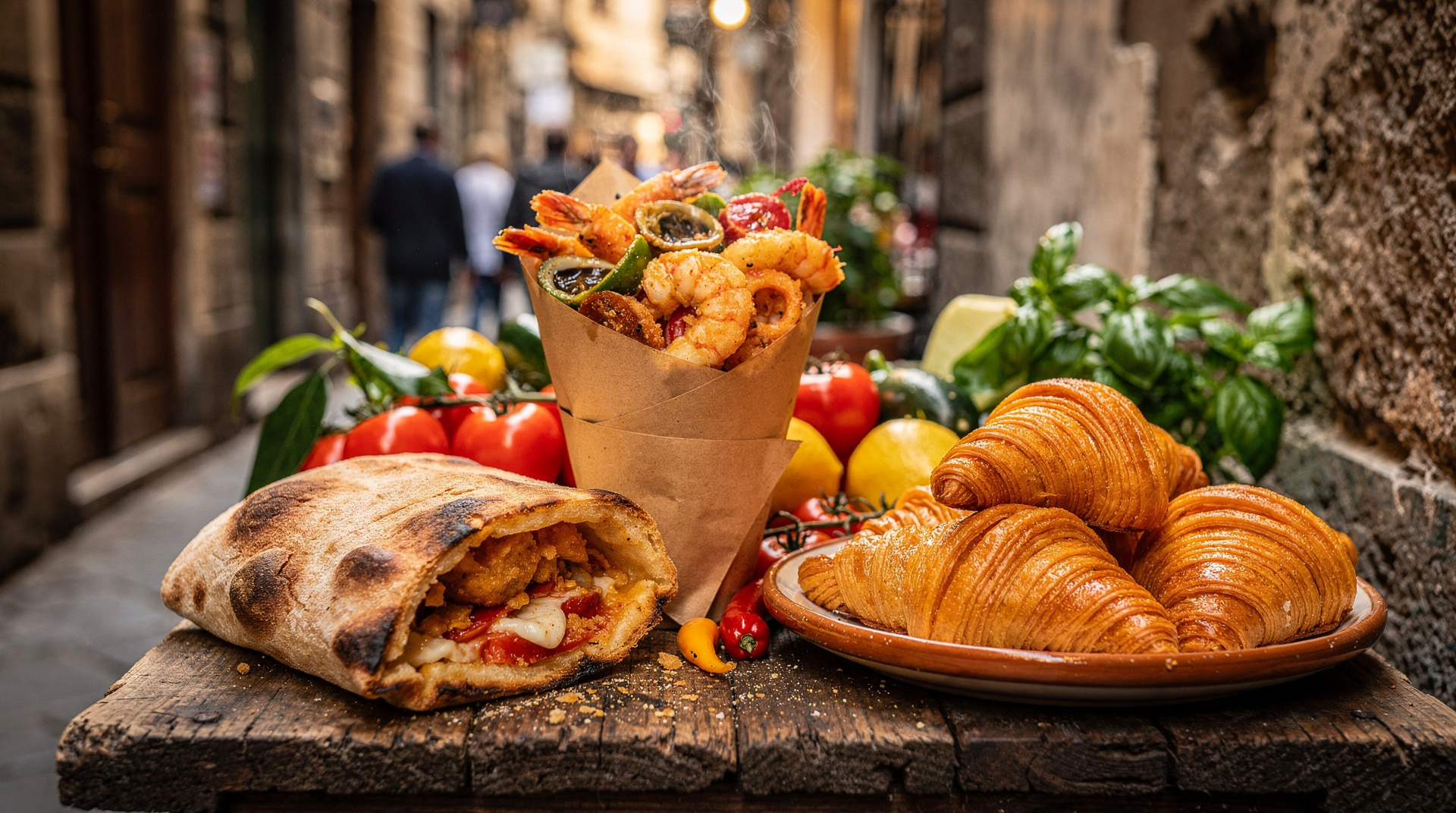
Pizza a portafoglio. The folded street pizza — a disc of Neapolitan pizza folded twice into a quarter-circle, eaten while walking — is the defining Spaccanapoli food. Cost: 2–3 €. Counters are scattered the length of the street; the concentration is higher near Piazza del Gesù Nuovo.
Friggitorie. Fried food counters selling cuoppo (mixed fry in a paper cone), frittatine (fried pasta ovals), zeppole (fried dough), and other variants. A cuoppo costs 4–6 €. Friggitoria Fiorenzano (Piazza Montesanto) is a well-known example slightly west of the main street.
Sfogliatella. Pastry shops on and around Spaccanapoli sell sfogliatella riccia (flaky) and frolla (softer); around 1,50–2 € each. Pasticceria Scaturchio on Piazza San Domenico Maggiore is one of the known names — also sells rum babà, pastiera, and strong espresso.
For the full picture, see Naples street food guide and where to eat Spaccanapoli.
Street food tour with local guide — 6 tastings in the historic centrePhotography notes
The narrow lane traps and concentrates light in the morning and late afternoon. Best conditions: before 9h in summer (long shadows, minimal crowds, occasional delivery mopeds creating atmosphere rather than obstruction); 16h–18h in spring and autumn (warm directional light from the west). The elevated viewpoint at Castel Sant’Elmo gives the famous aerial view; no good photography of the street itself is possible from the ground because it is too narrow to get distance.
For a curated list of viewpoints, see best photo spots Naples.
Deeper into the streets: exploring off the main axis
The blocks between Spaccanapoli and Via dei Tribunali (the parallel decumano one block north) are some of the most interesting in Naples for aimless walking. A few specific destinations worth finding:
Supportico Lopez. A small underground passage/bookshop-bar hybrid off Via Benedetto Croce that has become a quiet neighbourhood institution — the kind of place where you can sit with a coffee and local people are actually reading rather than posing for photos.
Piazza Bellini. A short walk north from Via Benedetto Croce (through Piazzetta Nilo), this square is named for the Sicilian composer Vincenzo Bellini and has a pleasant mix of bars with outdoor seating and the exposed remains of the Greek walls visible in the excavations at the square’s centre. Evening aperitivo is pleasant here.
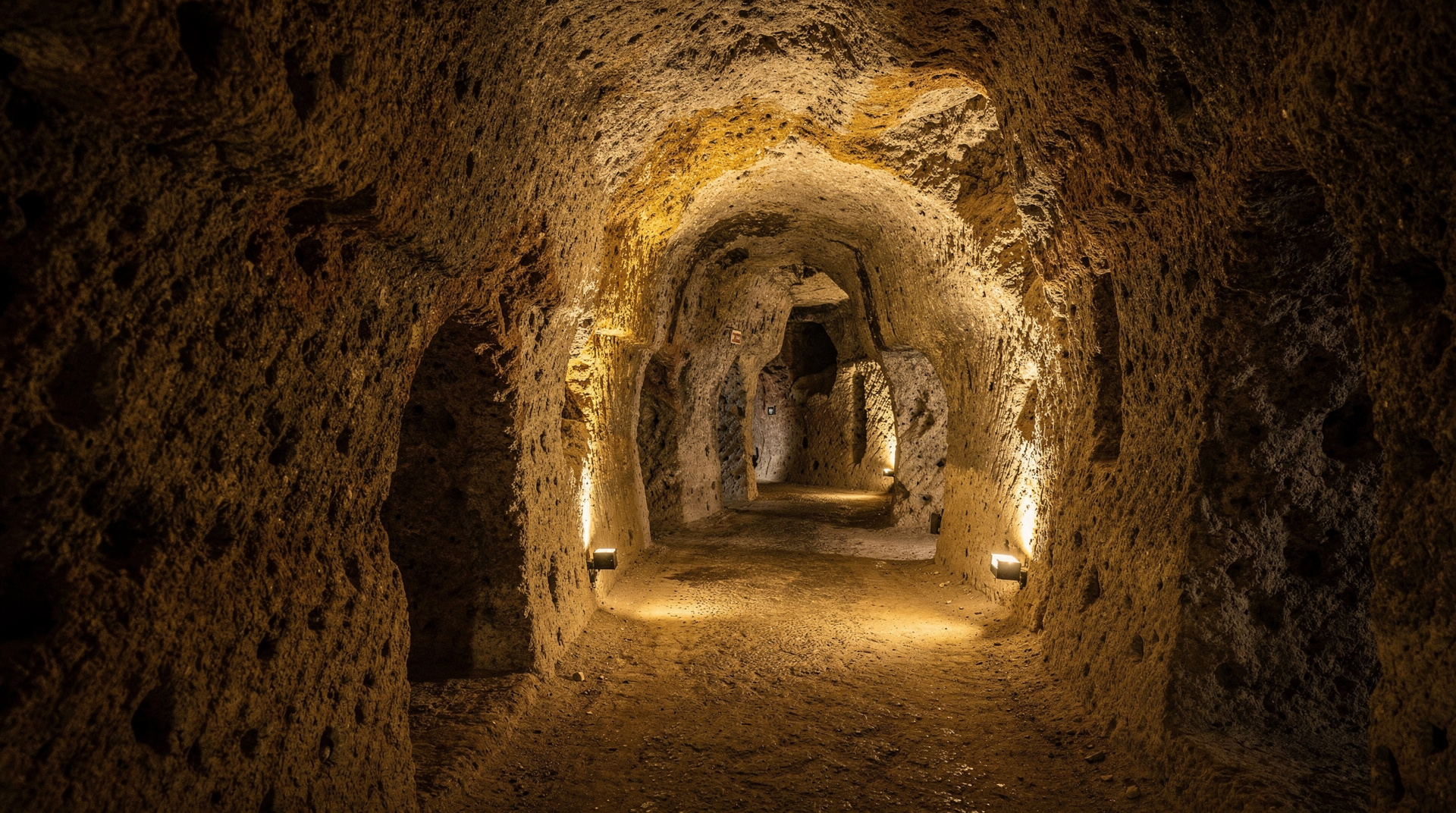
The Fontanelle Cemetery. A 15-minute walk north from the upper decumano (Via dei Tribunali), the Cimitero delle Fontanelle is a large cave in the Materdei hill that was used to store some 40,000 skeletal remains from plague and cholera epidemics. The practice of capuzzella — adopting and praying to individual skulls — developed here in the 17th century. The cemetery is free to visit and unlike anything else in Naples. See the underground Naples guide for context.
Piazzetta del Nilo. Where Via Nilo crosses the Spaccanapoli axis: a Roman sculpture of the Nile as a reclining figure (later reinterpreted as “the body of Naples”) sits in a small niche. This is a quiet corner often missed by visitors focused on the larger monuments.
Pizza on Via dei Tribunali
One block north of Spaccanapoli, Via dei Tribunali is the street that serious Neapolitans argue about most when it comes to pizza. The two main protagonists:
L’Antica Pizzeria da Michele (Via Cesare Sersale, technically a cross-street): founded 1870, serves only margherita and marinara. No reservations. The queue is managed by a numbering system. Arrive before noon or after 15h to minimise waiting. Price: 5–7 €.
Sorbillo (Via dei Tribunali 32): a larger, more commercially oriented operation with a famous name and a long queue. Also excellent; also typically a 30–60 min wait in high season. Branches have opened in Milan and Tokyo, which tells you something about its trajectory. The original Naples location remains the reference.
The honest answer: both pizzas are excellent and both queues are real. If time is short, buy pizza a portafoglio (folded) from a counter — the street-food format is closer to the historic working-class experience than a sit-down pizzeria anyway.
The neighbourhood around Spaccanapoli
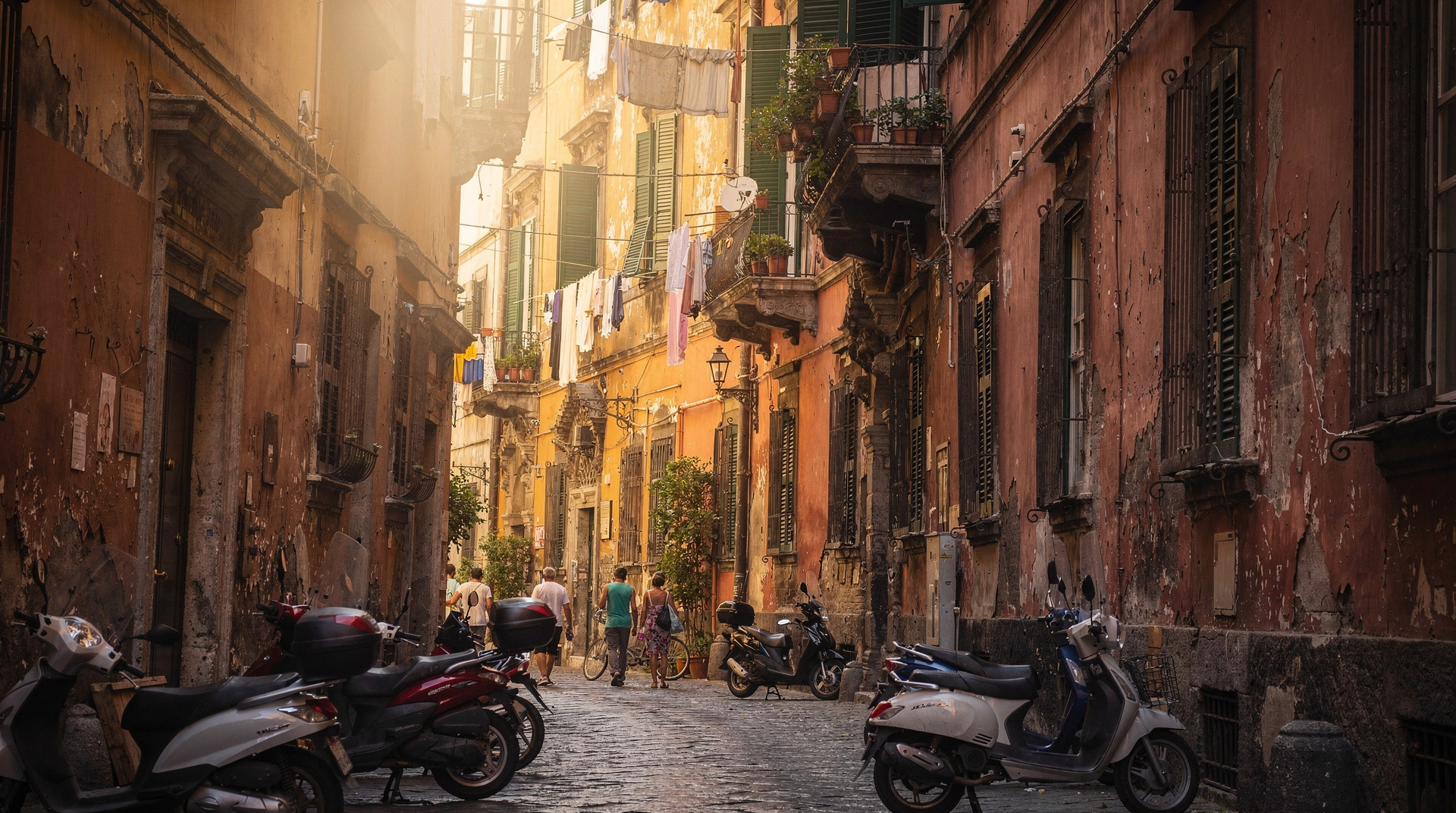
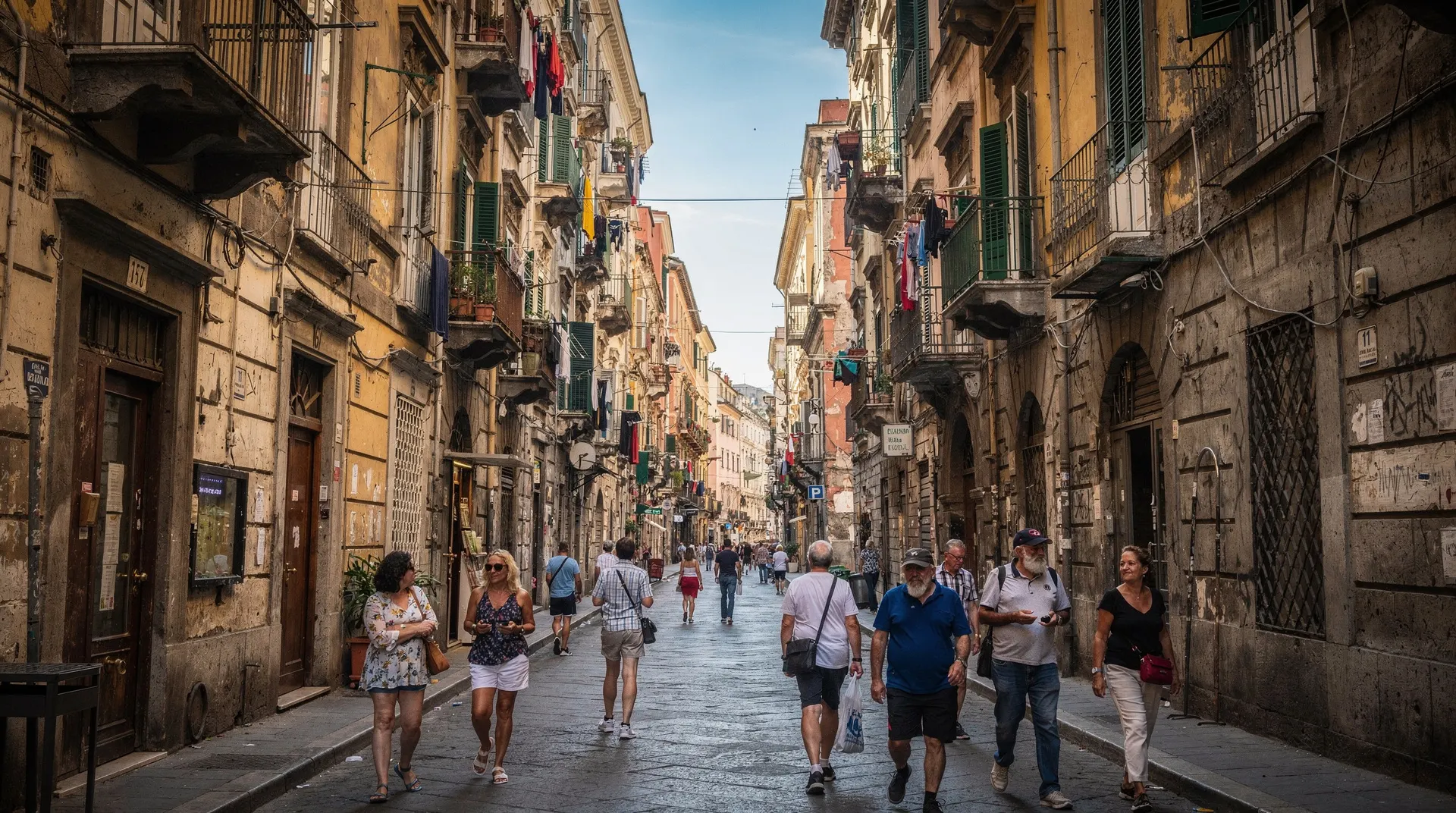
The blocks to the north and south of Spaccanapoli are the most densely inhabited parts of the historic centre. These are working-class residential streets in many sections — washing hanging from windows, scooters parked in doorways, the kind of urban fabric that has been there, in one form or another, for centuries.
The Rione Sanità neighbourhood is a short walk north of the upper decumano (Via dei Tribunali) — less polished, more authentic, and the location of the Catacombs of San Gennaro.
The centro storico page covers the wider neighbourhood including the MANN, Sotterranea, and the Duomo.
Maradona’s Naples: shrines on Spaccanapoli
Diego Maradona, who played for SSC Napoli 1984–1991 and is credited with transforming the club from a mid-table team to back-to-back Serie A champions (1987, 1990), occupies a religious dimension in Neapolitan culture that goes beyond football. Informal shrines — photographs, flags, candles, handwritten prayers — appear throughout the historic centre. On and around Spaccanapoli, look for the tifo displays on Via Benedetto Croce and the concentrated shrine on Via San Biagio dei Librai near the Piazzetta Nilo intersection.
The large official Maradona mural is in the Quartieri Spagnoli to the west of Via Toledo — a painted portrait by Mario Filardi on Via Emanuele de Deo. It has become a pilgrimage point; expect other tourists and local football fans. For cultural context, see Maradona and Naples.
The bookshops of Spaccanapoli
The eastern section of Via San Biagio dei Librai was historically the street of booksellers and bookbinders (librai = booksellers). Several second-hand and academic bookshops survive, alongside workshops still producing handmade books, marbled paper, and bookbinding. These are genuinely functioning artisan businesses, not tourist shops, though they welcome browsers. Prices for antique prints and maps are lower here than in comparable shops in Rome or Florence.
Practical information
Getting there. Metro Line 1 to Dante (western end) or Università (central). From Piazza Garibaldi / Napoli Centrale, walk west along Via dei Tribunali (parallel to Spaccanapoli, one block north, roughly 15 min) or take the metro.
When to visit. Morning (before 10h) for calm and photography; late afternoon (16h–19h) for the neighbourhood at its most animated — kids out of school, aperitivo hours, locals shopping. Midday in July–August is unpleasant due to heat and crowds; the narrow lanes have no shade.
What not to do. Do not eat at the restaurants on Piazza del Gesù Nuovo without checking the prices displayed at the entrance (required by law). Do not respond to men who approach you with bracelets, maps, or requests to pose for photos — standard tourist-zone hustle.
What Spaccanapoli looks like at different times of day
The street’s character shifts markedly through the day. Early morning (before 09:00) belongs to deliveries — mopeds loaded with crates, shopkeepers rolling up shutters, church bells from Santa Chiara and San Domenico Maggiore marking the hour with almost no tourists in sight. By late morning the churches and Cappella Sansevero fill with the first tour groups, and the street-food counters start their main service.
Midday in summer is the least comfortable window: heat trapped between the buildings, minimal shade, and the heaviest foot traffic. From 16:00 the pace shifts again as local families come out for the passeggiata, aperitivo starts at the bars around Piazza Bellini, and the street’s residential character becomes more visible than its tourist one. Choosing which version of Spaccanapoli to see is really a choice about which time of day to walk it.
Exploring side streets: what you find off-axis
The real texture of Spaccanapoli reveals itself when you step off the main axis. The lanes running north toward Via dei Tribunali and south toward Via Santa Chiara are short and varied:
Via San Gregorio Armeno (northward from near Piazzetta Nilo): the presepi street covered above, but worth noting that the lane itself is lined with workshops where you can watch carvers at work. Some workshops accept custom commissions; an individually made figure takes 4–6 weeks.
Via Nilo (connecting the two decumani): a short lane with the Roman Nile sculpture at one end and good examples of 18th-century stucco facades. Several small art galleries have opened here over the last decade.
Vico San Domenico Maggiore (south of the piazza): quieter, more residential, several Baroque doorways with ornate iron gate-work visible.
Piazzetta Rodinò (a small square off Via San Biagio): almost always empty of tourists. A bar, a tabaccheria, a few chairs outside. The square has a medieval tower fragment and laundry on the windows above. This is the average day in the historic centre, not the Instagram version.
Coffee culture on Spaccanapoli
The coffee bar on Spaccanapoli operates according to the same rules as everywhere in Naples. A few clarifications for first-time visitors:
Caffè normale = small espresso. This is the default. Caffè macchiato = espresso with a small amount of hot milk. Ask: “un macchiato caldo”. Caffè americano = espresso diluted with hot water (closer to filter coffee but not the same). Available on request. Marocchino = espresso with cocoa powder and milk foam. Popular in the morning.
Standing at the bar (al bancone) is significantly cheaper than sitting (al tavolo). In most Spaccanapoli bars, al bancone espresso costs 1–1,20 €; sitting at a table can cost 2–4 €. The law requires the difference to be posted. For the cultural context, see Naples coffee culture.
A half-day walking route
For a first pass at Spaccanapoli, a workable order runs west to east: start at Piazza del Gesù Nuovo before 09:30 for photos without crowds, visit the Santa Chiara cloister, continue to San Domenico Maggiore and detour south to Cappella Sansevero for a pre-booked timed slot, then continue east on Via San Biagio dei Librai toward San Gregorio Armeno for the presepi workshops. Break for pizza a portafoglio or a friggitoria stop somewhere along the way rather than scheduling a sit-down lunch, and finish with coffee al bancone before doubling back or continuing toward the eastern end near Piazza Nicola Amore. Allow 3–4 hours for this pace with stops; a direct walk without any detours takes only 15 minutes.
Visitors combining Spaccanapoli with Napoli Sotterranea or the MANN should treat the street itself as a morning activity, since the underground tour and museum both have their own fixed opening and closing rhythms that work better scheduled for the early afternoon once the street’s monuments are covered.
Shopping on and around Spaccanapoli
Beyond the presepi on San Gregorio Armeno, several types of shopping are worth noting:
Antique prints and maps. Via San Biagio dei Librai and adjacent lanes have several dealers in old prints, lithographs, and maps — specifically Neapolitan and Campanian subjects. Prices are negotiable and generally lower than in tourist-facing antique shops in Rome.
Religious objects. Via dei Tribunali and its side streets have shops supplying churches and convents — candles, vestments, sacred images, wooden ex-votos. These are functioning commercial suppliers, not souvenir shops, though they welcome retail customers.
Ceramics. Vietri-style glazed ceramics (from the village of Vietri sul Mare on the Amalfi Coast, where the tradition originated) are sold throughout the historic centre. On Spaccanapoli specifically, several shops stock authentic hand-painted pieces alongside factory-produced approximations; price and the presence of individual variation in the painting are the main indicators.
Frequently asked questions about Spaccanapoli
What does “Spaccanapoli” mean and where exactly is it?
The nickname means “Naples-splitter” — it describes how the street cuts the historic centre in half. The official name changes along its length: from west to east, Via Benedetto Croce, then Via San Biagio dei Librai, then Via Vicaria Vecchia. The section most tourists walk runs from Piazza del Gesù Nuovo to Via Duomo, about 800 metres.
Is Spaccanapoli safe?
Yes, by Naples standards and by any European city standard during the day. Normal urban precautions apply — bag across the body, phone in a pocket. The main risk is mopeds on the road; pedestrian space is minimal in places.
How much time should I allow for walking Spaccanapoli?
A direct walk end-to-end takes about 15 minutes. Allow 3–4 hours if you want to visit Cappella Sansevero, look into Santa Chiara, browse San Gregorio Armeno, and stop for food. Add more if you combine with Napoli Sotterranea (2 hours).
What is the difference between Spaccanapoli and Via dei Tribunali?
They are parallel streets about 150 metres apart. Spaccanapoli is the southern decumano; Via dei Tribunali (also called Decumano Maggiore) is the central one. Both are historic, both are worth walking. Via dei Tribunali has a higher concentration of pizzerias; Spaccanapoli has more of the set-piece monuments (Santa Chiara, San Domenico, Sansevero nearby).
Are the churches free to enter?
Most are free, including Gesù Nuovo, San Domenico Maggiore, and San Gregorio Armeno church. Santa Chiara charges for the cloister (around 6 €). Cappella Sansevero is a ticketed private chapel (~8–10 €).
Can I visit Spaccanapoli without a guide?
Entirely. The self-guided walking tour has a step-by-step route. A guided tour adds context — the history of specific churches, the social history of the neighbourhood — that isn’t obvious from looking at the buildings.
Top experiences
Bookable activities with verified prices and instant confirmation on GetYourGuide.