Naples street food guide
Naples: Street Food Experience With 6 Stops
Duration: 2h
What is the best street food in Naples?
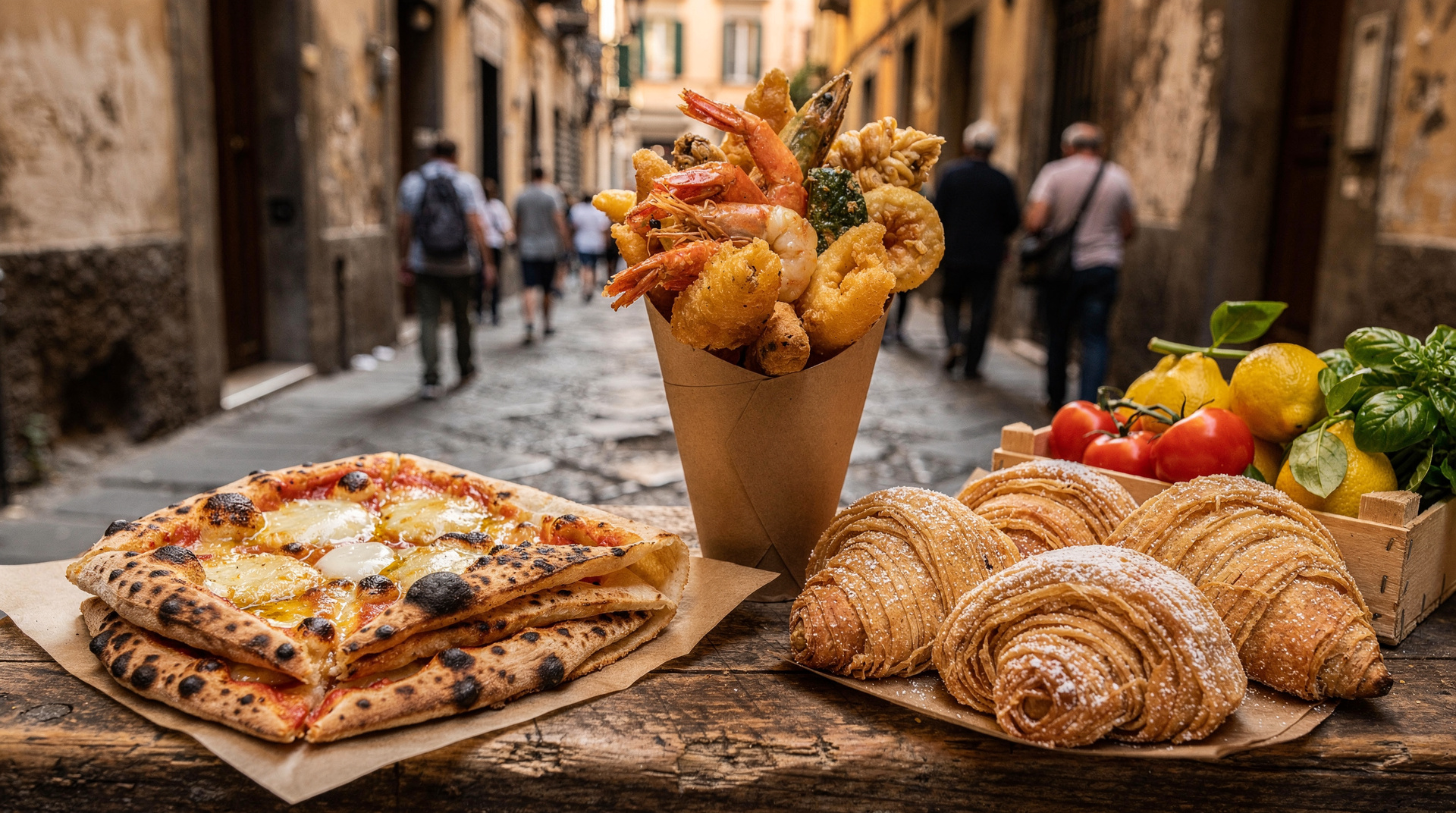
The essential Naples street food list — pizza a portafoglio (folded pizza, €2–3), cuoppo (fried seafood or vegetables in a paper cone, €4–6), sfogliatella (ricotta-filled pastry, €2–2.50), frittatina di pasta (fried pasta fritter, €2–3), and babà al rum (rum-soaked sponge, €2–3). All available within a 15-minute walk of the centro storico.
| Must-try | Cuoppo di mare, around €5–6 |
| Cheapest bite | Crocchè, around €1–1.50 each |
| Best area | Via dei Tribunali and Spaccanapoli |
| Best market | Pignasecca, near Piazza Montesanto |
| Full circuit cost | around €12–15 for a complete lunch |
Why Naples has the best street food in Italy
That claim is argued by every Italian city, but Naples has a specific structural advantage: it has been feeding itself cheaply in public for 400 years. The Bourbon court produced refined pastry; the port produced cheap seafood; poverty produced inventive frying. The result is a street food culture with genuine depth — specific items, specific technique, specific vendors who have been doing this for generations.
The centro storico (Spaccanapoli and Via dei Tribunali) is the densest concentration. But the market areas — Pignasecca, Porta Nolana, Porta Capuana — offer the less tourist-adjacent version of the same tradition.
This guide covers the essential items, their variations, the best addresses, and the honest price range for each.
The fried essentials
Cuoppo
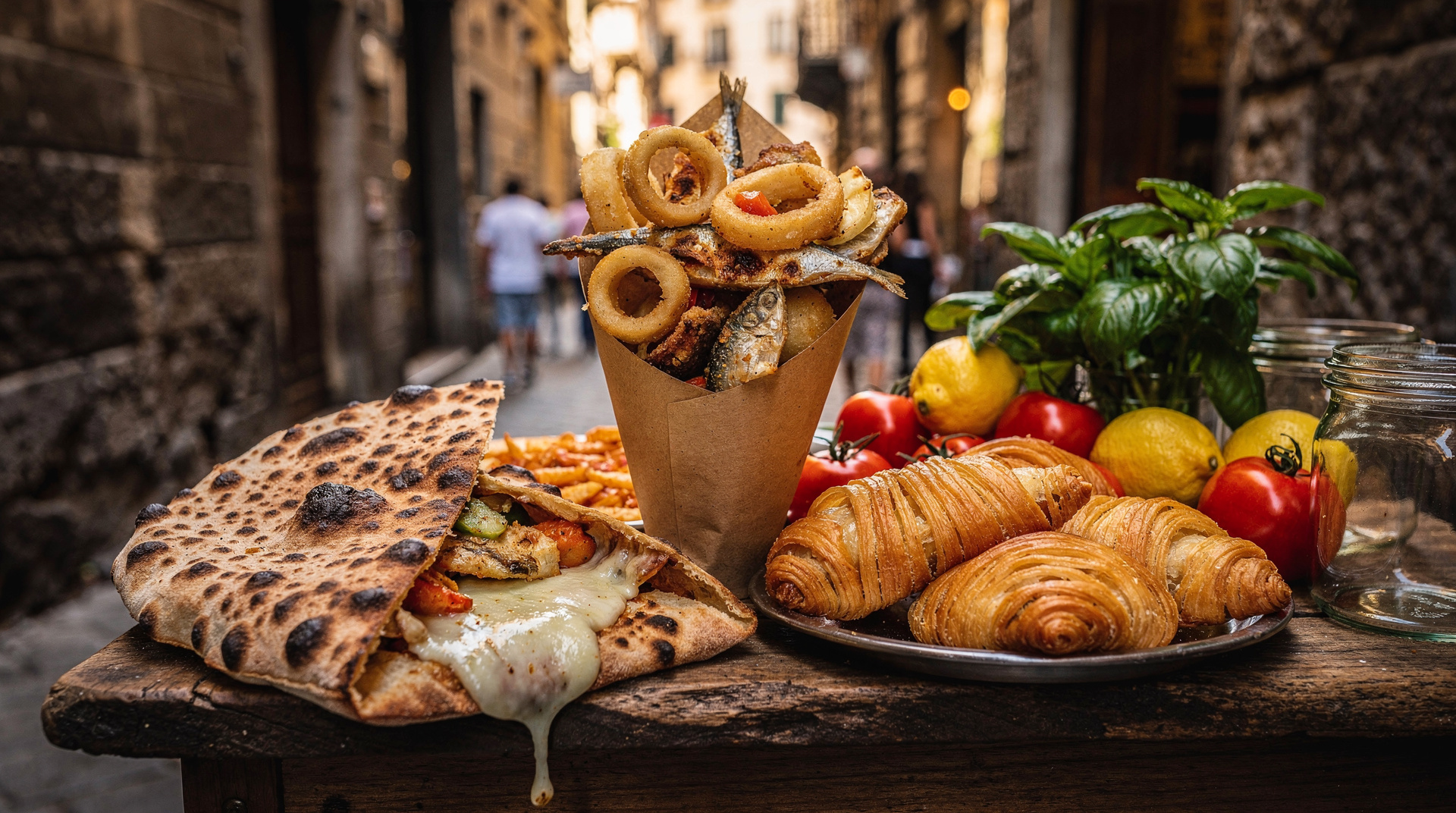
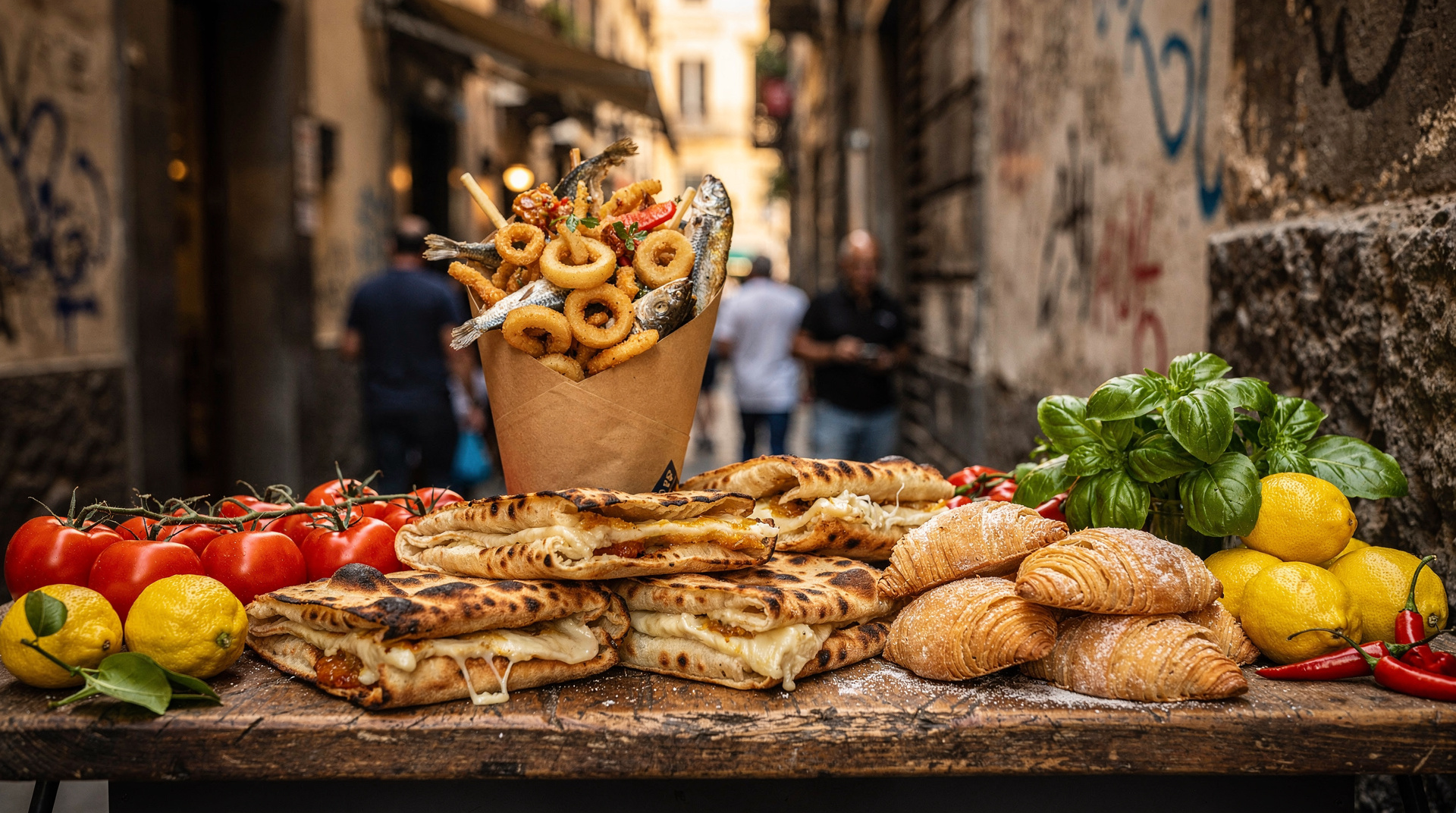
The cuoppo (Neapolitan: “cone”) is the signature format of Neapolitan street frying. A paper cone, typically 25–30 cm, filled with small fried items. Two main versions:
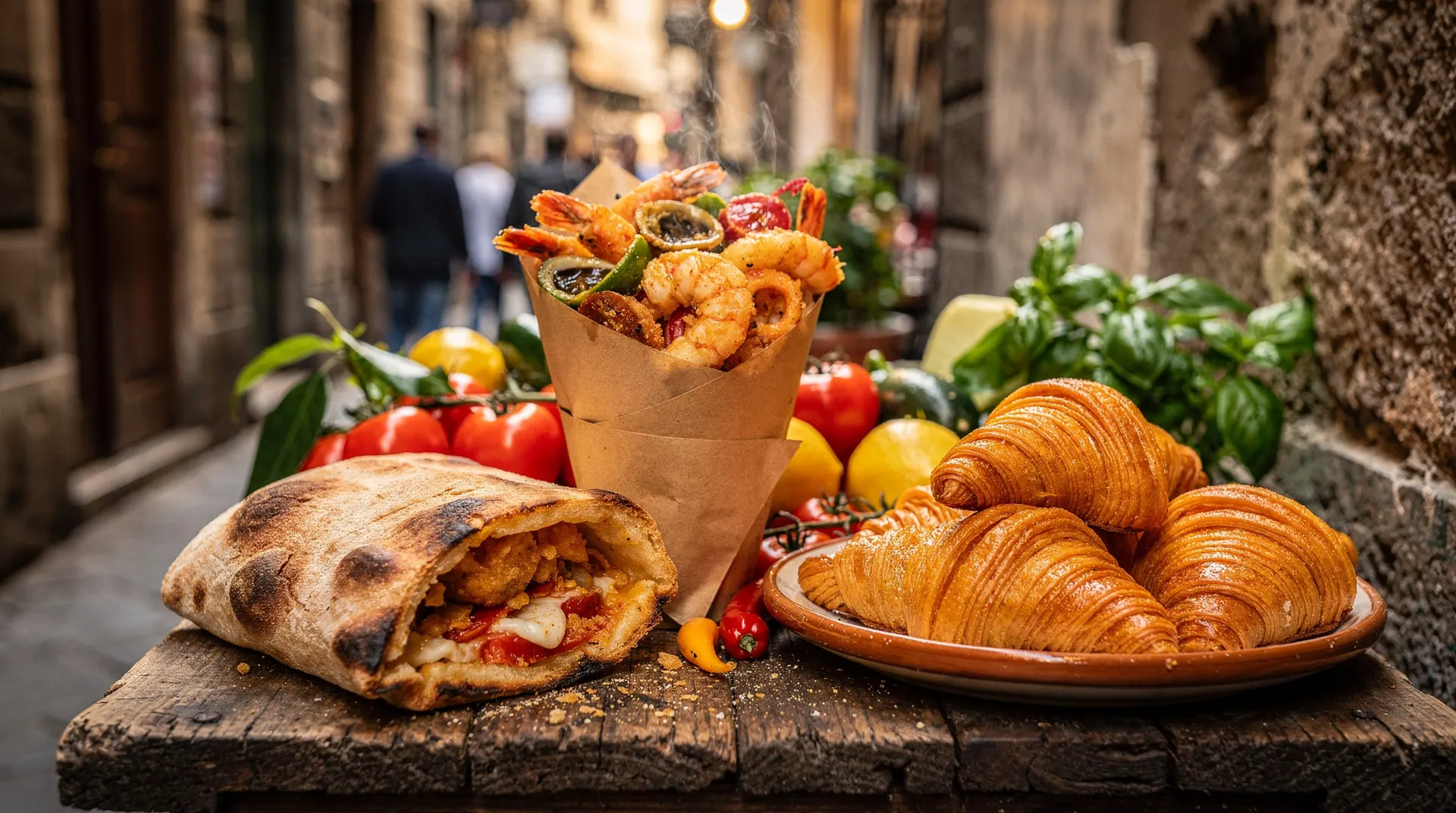
Cuoppo di mare (seafood): tiny squid rings (paranza), small shrimp, anchovy fillets, sometimes a fried mussel or two. Crispy, light-battered, eaten immediately. Price: €5–6 for a full portion.
Cuoppo di terra (land): fried vegetables — zucchini flowers, cauliflower, eggplant — plus potato croquettes (crocchè), fried dough balls (zeppoline), and panzarotti (small fried mozzarella-and-tomato parcels). Price: €4–5.
The crocchè deserves its own mention: a potato croquette filled with smoked provola and sometimes a small piece of salami, deep-fried. Cost: €1–1.50 each. One of the most reliably good items in any Naples friggitoria.
Best cuoppo address: Friggitoria Fiorenzano (Piazza Montesanto 1) — open since 1897, operated by the same family. Arrive at opening time (around 12:00); the freshest items sell out by 14:00.
The full guide to fried street food is at cuoppo and fried street food.
Pizza a portafoglio
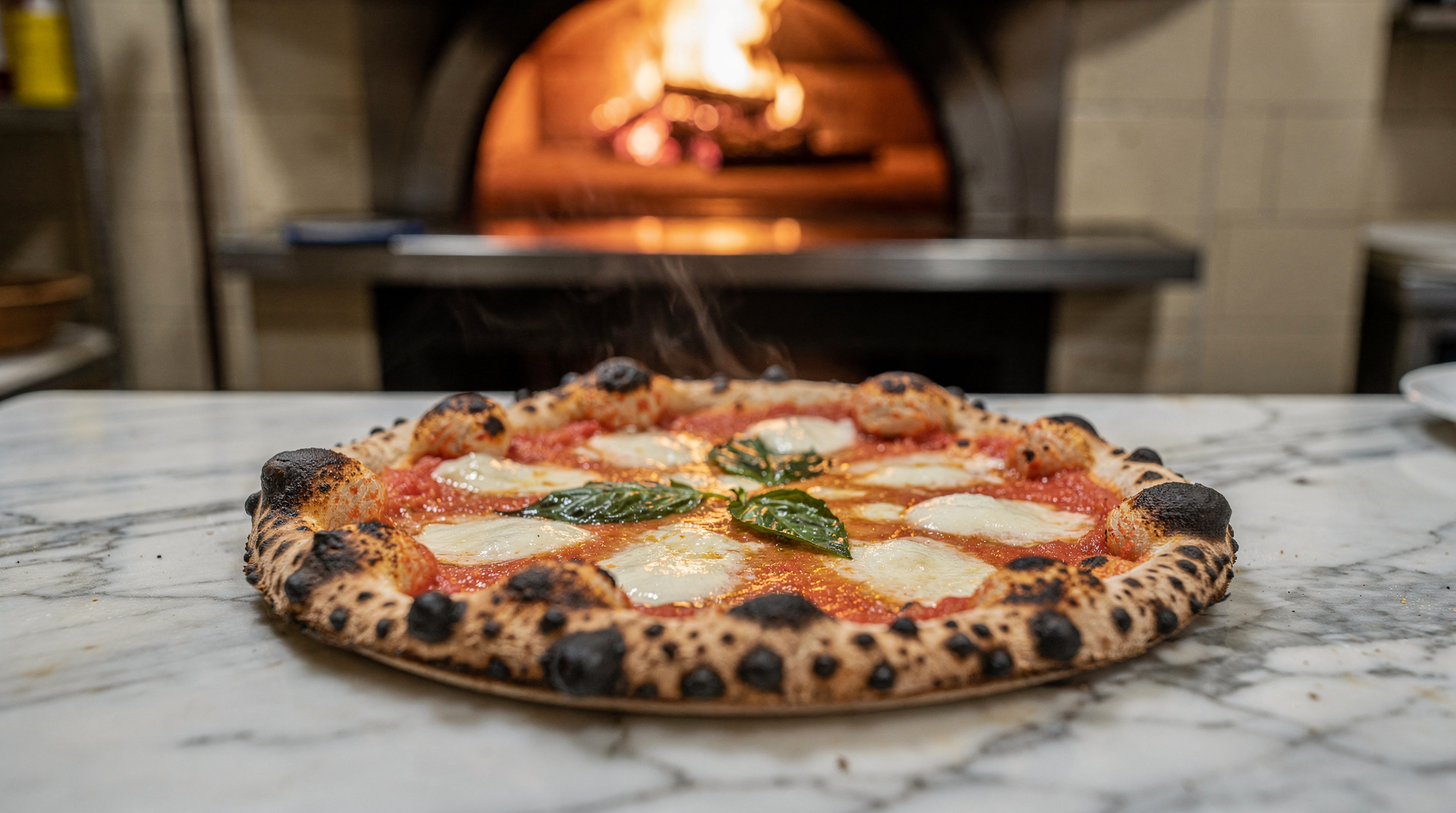
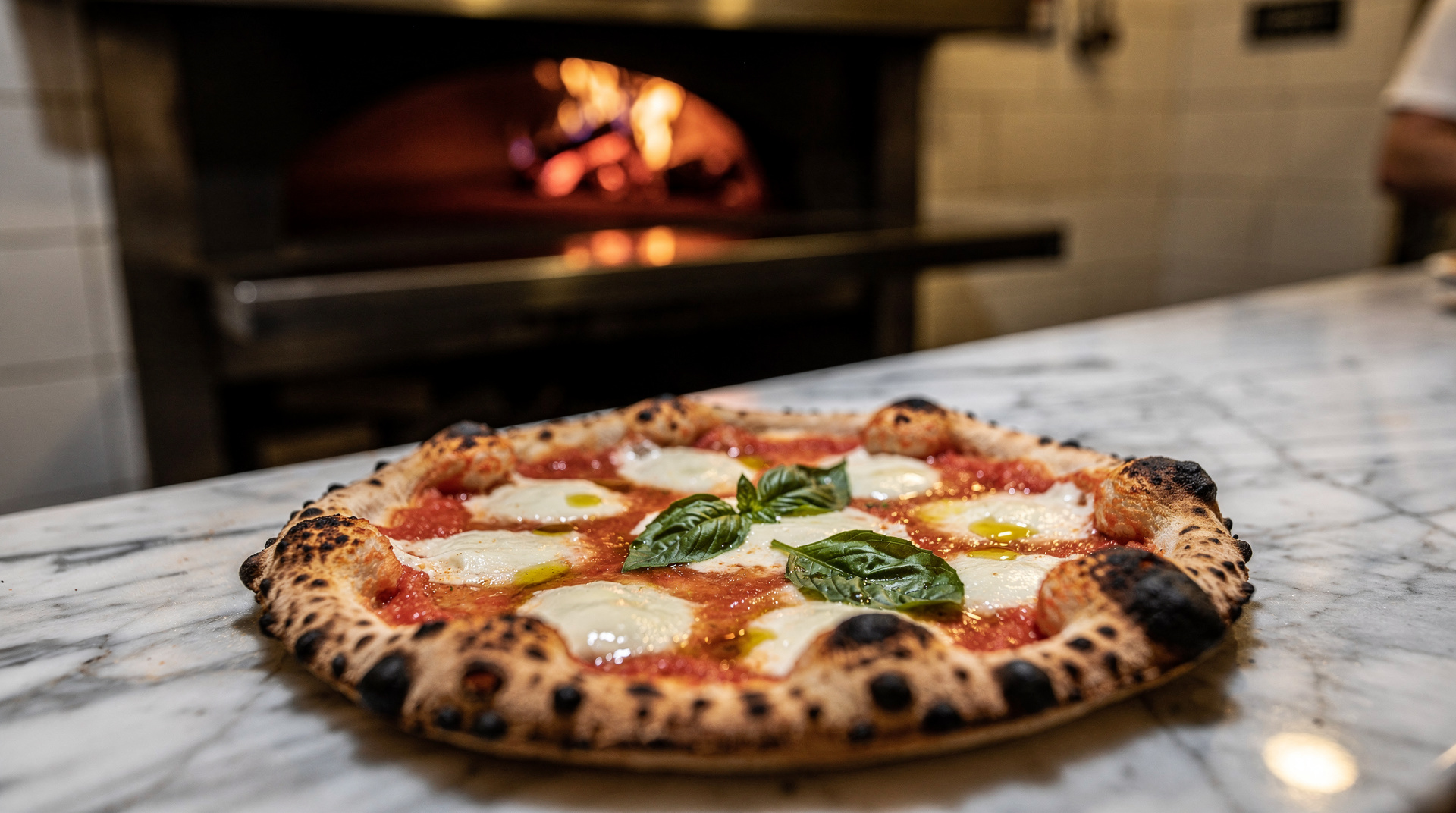
A full pizza folded into quarters for street eating — see the Naples pizza guide for the full context. Price: €2–3. Available at counter windows at most pizzerias along Via dei Tribunali. Di Matteo (Via dei Tribunali 94) has the best window counter; Port’Alba near Piazza Dante is a historic option.
Pizza fritta
Deep-fried pizza dough filled with ricotta, salami, cicoli (pork crackling), and provola. A heavier item than the cuoppo — one is typically enough. Price: €2.50–4. Starita a Materdei (Via Materdei 27) is the reference address; several friggitorie along Spaccanapoli also sell it in smaller format.
Frittatina di pasta
Round deep-fried fritter of pasta bound with béchamel, sometimes with ragù, peas, or ham. An excellent way to use leftover pasta that became its own institution. Price: €2–3. Look for it at any friggitoria window — quality is most consistent at the high-turnover addresses.
Scagliozzi
Fried polenta triangles, golden and crispy outside, soft inside. Price: €1–1.50 each. Less widely found than other items but present at traditional friggitorie and at the Pignasecca market. Slightly salty, often served plain — a useful counterpoint to the richer fried items.
The sweet essentials
Sfogliatella
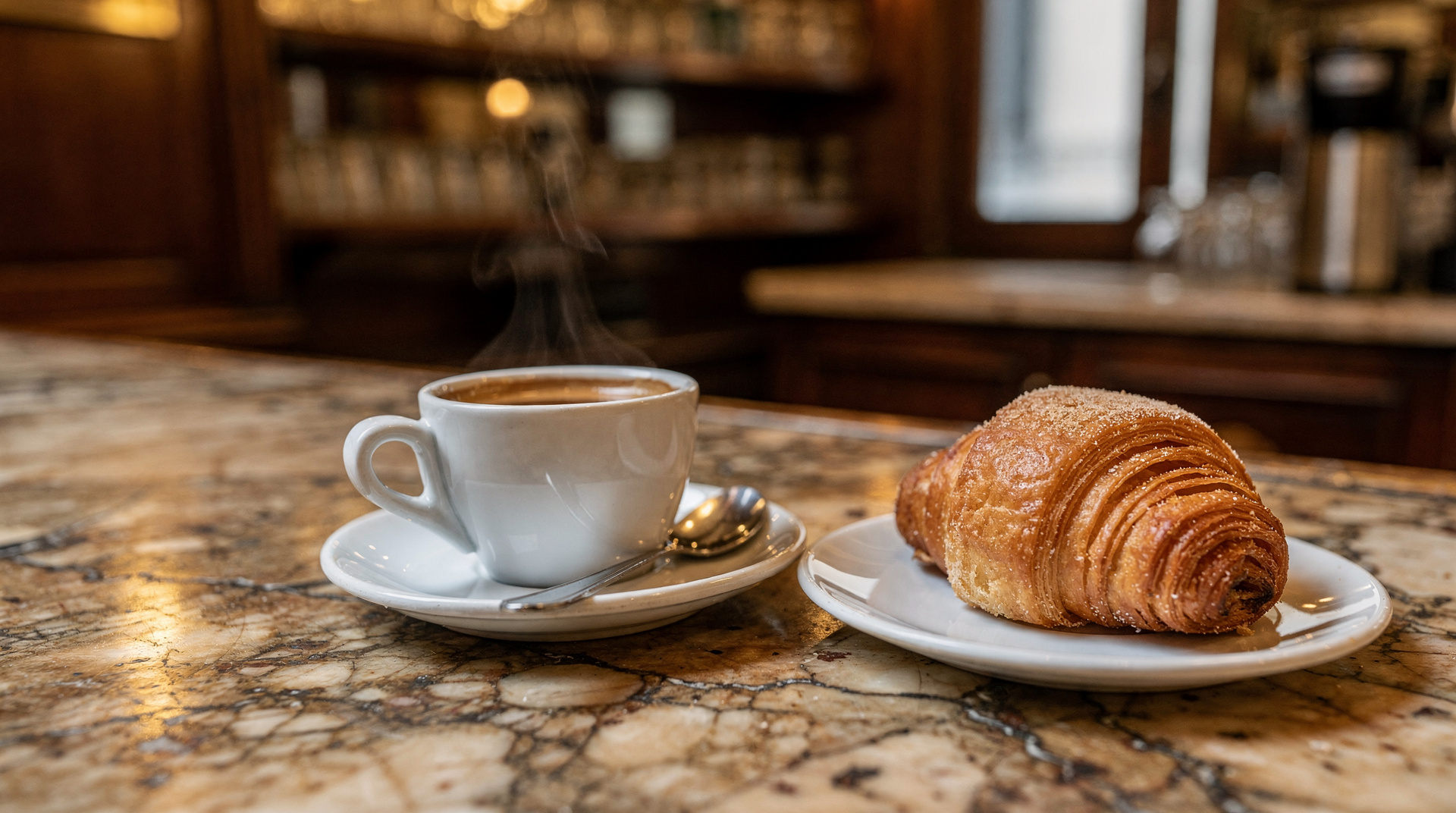
The sfogliatella is Naples’ most technically demanding pastry. The riccia version has a shell of hundreds of paper-thin pastry leaves brushed with lard — it takes 2–3 days to produce from scratch — filled with sweetened semolina, ricotta, candied citrus peel, and cinnamon. It shatters when bitten. The frolla version has a short pastry shell, same filling, easier to make.
Price: €2–2.50 for riccia; €1.50–2 for frolla. Eaten warm, just out of the oven, the riccia is outstanding. Cold and several hours old, it is mediocre — the pastry becomes chewy instead of shattering.
Pintauro (Via Toledo 275) has made sfogliatelle since 1785. Open from 08:00; the first batch comes out around 08:30. Get there before 10:00 for the best version. The sfogliatella guide has a full breakdown of Naples’ pastry landscape.
Babà al rum
A yeast-leavened sponge soaked in rum syrup. Neapolitan origin story involves the Bourbon court and a French pâtissier, but the babà is now so thoroughly local that Neapolitans use it as an all-purpose term of admiration (sei ‘nu babà — you’re a babà, meaning you’re wonderful).
A good babà is rum-forward without being alcoholic, slightly sweet, with a dense elastic crumb that holds the syrup without becoming soggy. Price: €2–3. Found at every bar and pasticceria. Better quality at dedicated pasticcerie than at tourist-facing cafés.
Pasticceria Scaturchio (Piazza San Domenico Maggiore 19, Spaccanapoli area) is one of the benchmark addresses.
Taralli napoletano
A ring-shaped biscuit made from lard, 00 flour, black pepper, and almonds — boiled briefly, then baked. Warm, crunchy, savoury-sweet. Sold at bars and bread shops rather than at street stalls. A bag costs €1.50–2. The texture and seasoning are specific to Naples and quite different from the smaller, oil-based Pugliese tarallo.
Zeppole di San Giuseppe
Deep-fried choux pastry rings filled with pastry cream and topped with a sour cherry (amarena). Traditionally associated with the feast of San Giuseppe (19 March) but available year-round at most pasticcerie. Price: €2.50–4. The baked version (zeppola al forno) is lighter; the fried version is the original.
The markets
Pignasecca market, Montesanto
The Pignasecca is a working-class market in the Quartieri Spagnoli area, open daily from early morning to around 15:00. Fruit, vegetables, fish, meat, and several frying stalls. More local than tourist-facing. Friggitoria Fiorenzano (see above) is adjacent. The area also has several small alimentari selling DOP products — buffalo mozzarella, San Marzano tomatoes, salami — at prices roughly 30–40% below tourist-area shops.
Porta Nolana fish market
Near the Porta Nolana Circumvesuviana station, the fish market operates early mornings (06:00–13:00) and is where Naples restaurants buy their fish. Several friggitorie on the surrounding streets sell fresh-fried paranza and cuoppo di mare. Higher quality than the centro storico equivalents for seafood specifically. The market is functional and not staged for tourism — worth seeing on its own terms.
Porta Capuana market
East of the Spaccanapoli axis, near the old city gate. More local, less documented in tourist guides. Good for street food of the simpler, no-frills kind — particularly pasta and chickpea soup from vendors operating from small window stalls.
See the Naples food markets guide for a full breakdown.
A one-day street food itinerary
If you only have one day to eat your way through Naples, this order minimises backtracking and matches items to when they’re best (pastries fresh in the morning, seafood fried fresh at lunch):
- 08:30 — Sfogliatella at Pintauro (Via Toledo), still warm from the oven
- 10:30 — Coffee break with taralli near Piazza Dante
- 12:00 — Cuoppo di mare at Friggitoria Fiorenzano (Piazza Montesanto), just as the first batch comes out
- 13:00 — Pizza a portafoglio at Di Matteo (Via dei Tribunali)
- 16:00 — Babà at Scaturchio (Spaccanapoli)
- Evening — Pizza fritta at Starita a Materdei, or a sit-down dinner pizza — see where-to-eat-pizza-naples
This pairs naturally with the naples-walking-tour-self-guided route, since most of these stops sit along the same axis. For a broader single day covering food and sights together, see naples-in-one-day-guide.
Guided street food tours
A solo visit to the centro storico will find all of these items, but a guided tour adds context that takes several visits to acquire independently. The best tours cover 5–8 stops, include full portions rather than small tastes, and spend meaningful time explaining the technique and history behind each item.
Naples street food tour — 6 stops including pizza, cuoppo, and pastriesThe evening tours combine street food with wine or spritz — a different pace from the daytime version:
Naples by night — street food and wine walking tourWhere to eat: the street-by-street breakdown
Via dei Tribunali (Decumanus Maximus): highest density of pizza a portafoglio windows, pizza fritta, and friggitorie. Quality is consistently higher between Piazza Dante and Via Duomo; drops east of Via Duomo approaching Piazza Garibaldi.
Via Spaccanapoli (Via Benedetto Croce / Via San Biagio dei Librai): sfogliatelle at Pintauro (Via Toledo corner, technically just off the street), babà at Scaturchio, frittatine and cuoppo at multiple small friggitorie.
Via Toledo: the main shopping street. More expensive for sit-down food but still has good window options for sfogliatella and taralli. Avoid the tourist cafés with chairs outside — they charge €5–6 for a cappuccino.
Quartieri Spagnoli (Spanish Quarter): the grid of streets west of Via Toledo. Less-discovered friggitorie, excellent small alimentari. The further you go from Via Toledo, the more local the experience. The Spaccanapoli guide covers navigation.
Budget: what street food actually costs
| Item | Price |
|---|---|
| Pizza a portafoglio | €2–3 |
| Pizza fritta | €2.50–4 |
| Cuoppo di mare (small) | €4–5 |
| Crocchè (each) | €1–1.50 |
| Frittatina di pasta | €2–3 |
| Sfogliatella riccia | €2–2.50 |
| Babà al rum | €2–3 |
| Espresso at bar (standing) | €1–1.20 |
| Taralli (bag) | €1.50–2 |
A full street food circuit — pizza a portafoglio, cuoppo di mare, sfogliatella, espresso — costs approximately €12–15 and constitutes a complete and excellent lunch. The Naples food budget guide has day-by-day budget examples.
Frequently asked questions about Naples street food
What is a cuoppo?
A paper cone filled with small fried items. The di mare version has squid, shrimp, and anchovy. The di terra version has fried vegetables, croquettes, and dough fritters. Cost €4–6.
What is the difference between sfogliatella riccia and frolla?
Riccia has a flaky shell of hundreds of layered pastry leaves — crispy and shattering. Frolla has a short pastry shell — softer. Same filling (semolina, ricotta, candied citrus, cinnamon). Riccia is the benchmark.
What is a frittatina di pasta?
A round deep-fried fritter of pasta bound with béchamel, sometimes with ragù or peas. Price €2–3. Found at friggitorie throughout the centro storico.
What is taralli napoletano?
A ring-shaped biscuit made from lard, flour, black pepper, and almonds. Warm and crunchy. Sold at bars and bread shops for €1.50–2 per bag. Different from Pugliese tarallo.
Where is the best street food in Naples?
Via dei Tribunali and the Spaccanapoli axis have the highest density. Friggitoria Fiorenzano at Piazza Montesanto is the best friggitoria. Porta Nolana for the best seafood frying. Pintauro on Via Toledo for sfogliatelle.
Is Naples street food safe to eat?
Yes — high-volume friggitorie with fresh oil and constant turnover are reliably safe. Avoid stalls with clearly old items sitting out uncovered.
Can I do a guided street food tour?
Yes — worth it for a first visit. Good tours cover 5–8 stops in 2–3 hours with context and access to better vendors. Prices typically €45–70 including all tastings.
What is the babà?
A rum-soaked yeast sponge, spongy and sweet. Sold at every bar and pasticceria in Naples. A good babà costs €2–3.
Frequently asked questions about Naples street food
What is a cuoppo?
What is the difference between sfogliatella riccia and frolla?
What is a frittatina di pasta?
What is taralli napoletano?
Where is the best place to eat street food in Naples?
What is the babà?
Is Neapolitan street food safe to eat?
Can I do a guided street food tour?
Top experiences
Bookable activities with verified prices and instant confirmation on GetYourGuide.