Sfogliatella and Neapolitan pastries
Naples: Coffee Tasting Experience with Sfogliatelle Pastry
What is a sfogliatella and where do I get one?
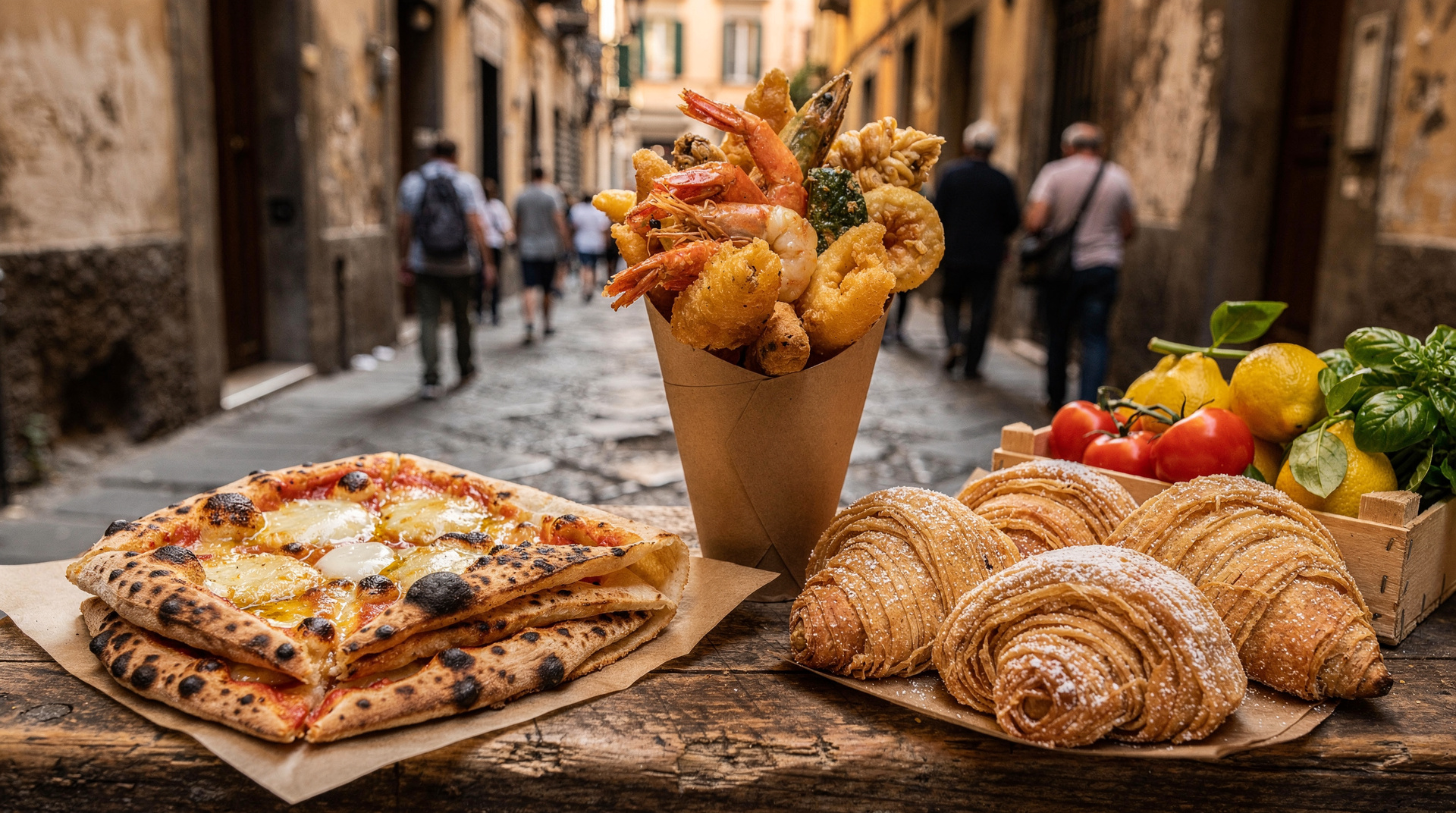
Sfogliatella is a shell-shaped pastry with hundreds of flaky layers (riccia version) or a short pastry shell (frolla version), filled with sweetened semolina, ricotta, candied citrus peel, and cinnamon. Cost €2–2.50 for riccia, €1.50–2 for frolla. Best address is Pintauro on Via Toledo (since 1785) — get there before 10:00 for the first warm batch.
| Must-try | Sfogliatella riccia, warm, before 10:00 |
| Cost | Around €1.50–6 per item |
| Best address | Pintauro, Via Toledo (since 1785) |
| Timing | Ovens run 08:00–10:30; go early for the first batch |
| Pairing | Espresso, around €1–1.20 standing at the bar |
The pastry capital that nobody talks about
Paris gets the press. Naples has the substance. Neapolitan pastry is the product of several centuries of competing culinary influences — Arab spice routes (cinnamon, candied citrus), Bourbon court refinement, Franciscan convent kitchens (where pastiera was allegedly created), and the same cucina povera ingenuity that produced street food from leftover pasta. The result is a repertoire that most visitors don’t fully explore because the pizza conversation crowds it out.
This guide covers the complete Neapolitan pastry canon, where to find the best examples, and what to look for in quality. The sfogliatella guide starts below; the coffee culture guide covers the drink that accompanies all of this.
The sfogliatella
The sfogliatella is the most technically demanding item in the Neapolitan pastry repertoire. Its production is a two-to-three-day process that creates a result unlike anything in French or northern Italian pastry — a shell-shaped cone made from hundreds of paper-thin layers of pastry, stiff enough to hold its shape, delicate enough to shatter on the first bite.
Sfogliatella riccia
The word riccia means “curly” or “layered” — referring to the hundreds of leaf-thin pastry layers (sfoglie) that make up the shell. The process:
- A rope of dough is made from flour, lard, and a little water, then stretched and rolled extremely thin
- The sheet is coated with lard and rolled into a very tight cylinder (the original “scroll”)
- Individual slices are cut from the cylinder and each slice is pressed into a cone shape — the layers spread out at the edges
- The filling is inserted: sweetened semolina, sheep’s ricotta, candied orange peel, candied citron peel, cinnamon, sometimes a hint of vanilla
- The cone is sealed and baked in a hot oven
The result: a roughly 10 cm pastry that weighs almost nothing, has a visible layered structure at the edges, and produces a sharp, papery crack when bitten. The interior is dense, fragrant, and slightly warm. Cold, it becomes chewy — the lard in the layers firms up. This is why eating it warm matters.
Price: €2–2.50 per piece.
Sfogliatella frolla
Frolla means “short pastry.” The frolla uses the same filling but encased in a soft, round short-crust shell rather than the layered structure. It is rounder, slightly larger, and easier to produce at scale. The flavour is similar; the texture is completely different — no shattering, just a soft bite.
Price: €1.50–2 per piece.
Neither is objectively superior — they serve different moments. The riccia is the experience to seek out; the frolla is the everyday version.
Where to eat sfogliatella in Naples
Pintauro (Via Toledo 275, near Piazza Trieste e Trento): operating since 1785 — not in continuous operation under the same family, but in the same space and tradition. The first batch of sfogliatelle comes out of the oven around 08:30–09:00. Arrive before 10:00 for the warm version. Price and quality are both excellent. It is a small, standing-room counter — no tables. This is the benchmark address.
La Sfogliatella Mary (Galleria Umberto I, ground floor): more central and more tourist-accessible. Quality is good; it is usually the most convenient option for visitors staying in the Piazza del Plebiscito area.
Pasticceria Carraturo (Via Tribunali area, near Porta Capuana): further east in the centro storico, less documented in tourist guides, and consistently regarded by locals as among the best for sfogliatelle ricce specifically.
Gran Bar Riviera (Riviera di Chiaia 183): the Chiaia neighbourhood option — smarter setting, slightly higher prices, excellent quality.
Babà al rum
The babà is the other great emblem of Neapolitan pastry. A yeast sponge (similar to brioche in structure) baked in a cylindrical mould, then soaked in rum syrup until fully saturated. The result is dense, sweet, and noticeably rum-forward without being alcoholic. Sold at every bar and pasticceria in Naples.
A good babà: holds its shape despite being saturated, has a slightly tacky exterior from the syrup, and a crumb that is elastic rather than crumbly. An inferior babà — too much syrup that has made the sponge soggy, or not enough rum that makes it essentially a plain cake — is identifiable by the texture.
Price: €2–3 plain; €3–4 with pastry cream or whipped cream filling.
Best addresses: Pasticceria Scaturchio (Piazza San Domenico Maggiore 19, in the Spaccanapoli zone) is frequently cited. Gran Bar Riviera (Chiaia) for the neighbourhood option.
Pastiera napoletana
The pastiera is a closed tart associated with Easter but available year-round in Naples. The filling is a mixture of ricotta, cooked wheat berries (grano cotto — soft, chewy, with a slightly nutty flavour), eggs, sugar, orange flower water (acqua di fiori d’arancio), candied orange peel, and candied citron. The shell is short pastry, typically decorated with a lattice of pastry strips on top.
Two characteristics distinguish a good pastiera from a mediocre one: first, the orange flower water should be present but not overwhelming — it should be floral, not synthetic. Second, the tart needs to rest for 2–3 days after baking before eating — freshly baked pastiera is structurally unstable and flavourally undeveloped.
Price: €4–6 per slice; a whole tart is €18–30 depending on size.
Best address: Pasticceria Scaturchio is the most frequently cited. Pasticceria Mennella (various branches) also reliable.
Zeppole di San Giuseppe
Choux pastry rings (or small mounds) filled with pastry cream and topped with an amarena cherry in syrup. The fried version is the original — a deep-fried choux ring that is simultaneously crispy outside and filled with rich cream. The baked version is lighter and more commonly available outside the Campania region.
Traditional feast date: 19 March (Feast of San Giuseppe). Now available year-round in Naples at most pasticcerie.
Price: €2.50–4 depending on size and filling.
Seasonal and traditional pastries
Struffoli (Christmas): tiny fried dough balls, honey-coated, piled in a mound and decorated with candied citrus peel and coloured sugar. Sweet, sticky, and celebratory — less interesting out of the festive context. Available from early December.
Roccocò (Advent): hard, ring-shaped almond biscuits spiced with black pepper, candied citrus, and cloves. They are very hard — meant to be soaked in wine or liqueur before eating. A traditional food of the Nativity novena period.
Susamielli (Advent): S-shaped honey and spice biscuits, softer than roccocò, also associated with the Christmas season.
Mustacciuoli: rhomboid-shaped spiced biscuits covered in dark chocolate glaze. Sold year-round in Naples and throughout Campania.
The morning pastry ritual
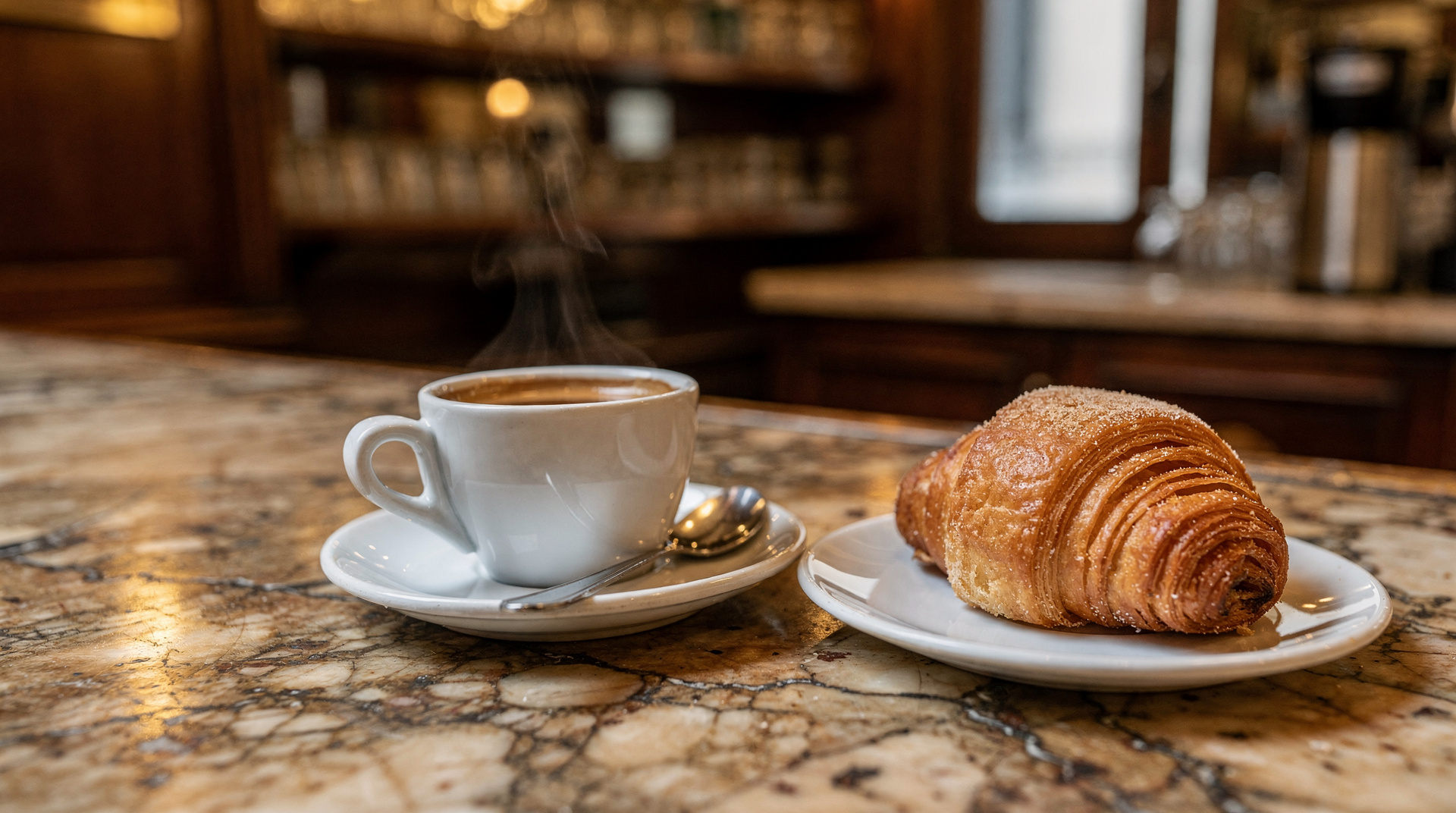
In Naples, the morning involves coffee and something sweet. The full sequence: espresso at a bar (€1–1.20 standing), with a sfogliatella, a cornetto (the Italian croissant, softer and less buttery than French), or occasionally a piece of pastiera.
The combination of sfogliatella riccia and espresso for approximately €3.50 total is one of the better food value propositions available anywhere in Europe. See the Naples coffee culture guide for the coffee side of the ritual.
A guided morning experience covering coffee and sfogliatelle in the traditional Naples style:
Naples coffee and sfogliatelle morning experience Naples coffee and pastries walking tourBudget summary
| Item | Price |
|---|---|
| Sfogliatella riccia | €2–2.50 |
| Sfogliatella frolla | €1.50–2 |
| Babà al rum | €2–3 |
| Pastiera (slice) | €4–6 |
| Zeppola di San Giuseppe | €2.50–4 |
| Cornetto (plain) | €1–1.50 |
| Struffoli (small bag) | €4–6 |
The Naples food budget guide has day-budget examples incorporating these items.
Frequently asked questions about Naples pastries
What is the difference between sfogliatella riccia and frolla?
Riccia has hundreds of paper-thin lard pastry layers — it shatters on bite. Frolla has a soft short pastry shell. Same filling (semolina, ricotta, candied citrus, cinnamon). Riccia is the technically demanding original.
Should I eat sfogliatella warm or cold?
Warm, always. The pastry is crispy and shattering when fresh from the oven; it becomes chewy within a few hours. Go to Pintauro on Via Toledo before 10:00 for the first batch.
What is pastiera napoletana?
A ricotta and wheat berry tart with orange flower water, candied citrus, and short pastry shell. Associated with Easter but available year-round. Needs 2–3 days of rest after baking to develop properly.
What is a babà al rum?
Yeast sponge soaked in rum syrup. Dense, sweet, rum-forward. Sold at every bar and pasticceria in Naples. Cost €2–3.
Are there pastries associated with specific times of year?
Struffoli at Christmas, zeppole di San Giuseppe in March (but available year-round), pastiera at Easter (but available year-round). Roccocò and susamielli are Advent biscuits.
What is the difference between a pasticceria and a bar?
A pasticceria makes pastries from scratch and has the full range. A bar serves coffee and basic pastries. For the best sfogliatella, go to a dedicated pasticceria rather than a café.
Are there notable pasticcerie besides Pintauro?
Scaturchio (babà, pastiera), Moccia (Chiaia), Gran Bar Riviera (Chiaia), Carraturo (Tribunali area), La Sfogliatella Mary (Galleria Umberto I).
Building a pastry crawl into your day
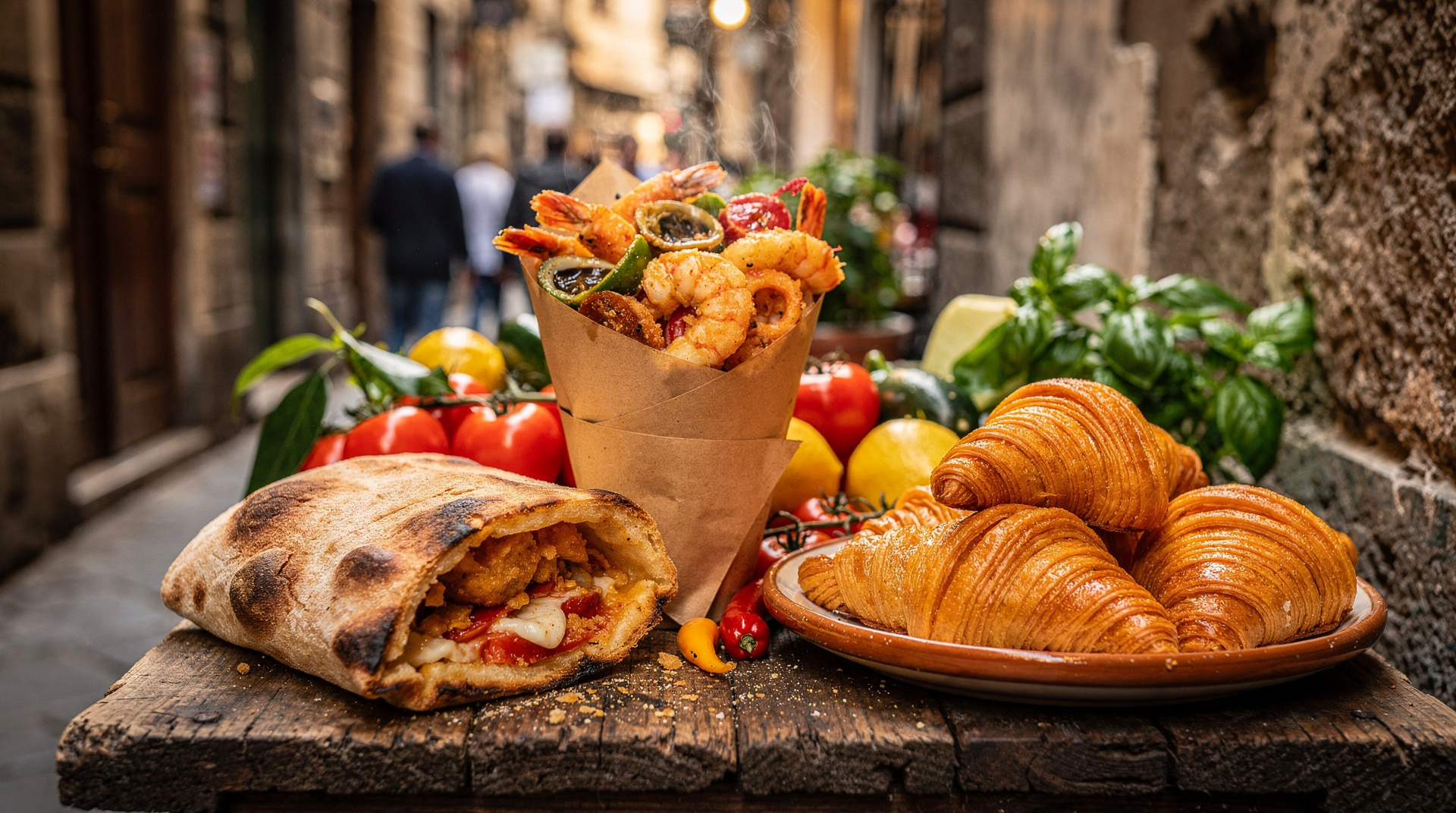
Naples’ pastry culture rewards grazing rather than one big sit-down stop. A realistic morning route: coffee and a warm sfogliatella riccia at Pintauro on Via Toledo, a slice of pastiera or a babà at Scaturchio near Spaccanapoli if your walk takes you through the historic centre, and a mid-morning cuoppo of fried snacks if you are near the street food guide’s recommended stalls. None of these stops needs a reservation or more than 10–15 minutes, which makes them easy to fold into a longer sightseeing day rather than treat as a separate outing.
If pastry is a genuine priority rather than an incidental stop, a guided tasting tour covers several addresses with context you would not get walking in cold — useful if you only have one morning and want the highlights without researching addresses yourself.
Naples food tour with 8 tastingsFor the wider context of how pastry fits into the rest of Naples’ food culture, best food tours in Naples compares the pastry-focused options against broader street food and market tours.
Frequently asked questions about Sfogliatella and Neapolitan pastries
What is the difference between sfogliatella riccia and frolla?
Should I eat sfogliatella warm or cold?
What is pastiera napoletana?
What is a babà al rum?
Are there pastries associated with specific times of year?
What is the difference between a pasticceria and a bar in Naples?
Are there any notable pasticcerie besides Pintauro?
Is there a vegan sfogliatella?
Top experiences
Bookable activities with verified prices and instant confirmation on GetYourGuide.