Best food tours in Naples
Naples: Food Tour with 8+ Tastings of Pizza, Wine & More
Is a food tour in Naples worth it?
For a first visit, yes — a good food tour covers 6–8 stops across the centro storico in 2–3 hours, provides context that would otherwise take multiple visits to acquire, and gives you access to vendors that are easy to miss. The best tours cost €50–70 per person and include full portions, not tastings. Skip tours that include a restaurant sit-down meal — that time is better spent independently.
| Best overall | Street food walking tour, 6–8 stops |
| Best for technique | Pizza-making class |
| Best atmosphere | Evening food and wine tour |
| Typical cost | around €45–90 per person for 2–3 hours |
| Group size to look for | 6–10 people, avoid uncapped groups |
| Book ahead by | 3–7 days in peak season, longer for small-group |
What a food tour actually achieves
Naples has some of the most concentrated and distinctive food culture in Italy, and almost none of it is visible from the main tourist circuit without guidance. Knowing that the crocchè at Friggitoria Fiorenzano (Piazza Montesanto 1, operating since 1897) are better than the ones at the more central tourist-adjacent friggitorie requires either prior research or a guide who has been eating their way through the city for years.
A good food tour compresses that knowledge into 2–3 hours. It takes you to Fiorenzano and to Di Matteo and to Pintauro in a logical sequence, explains why each address is significant, and ensures you are tasting items at the correct temperature and in the right order. For a first visit to Naples, it is genuinely more efficient than independent exploration.
The caveat: not all food tours are good. This guide identifies the types that deliver on their promise and the signals that separate a quality operator from a mediocre one.
Street food walking tours
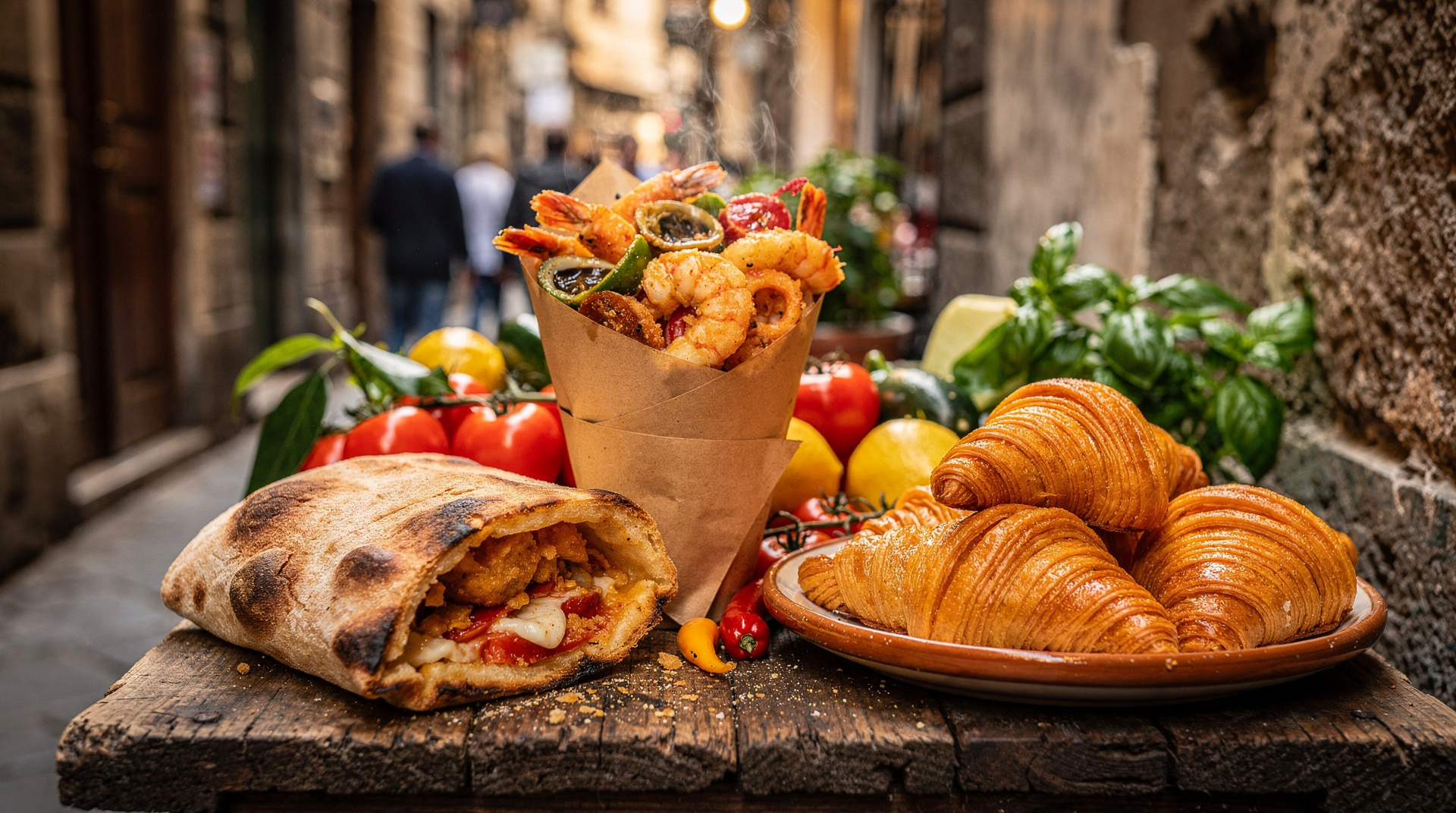
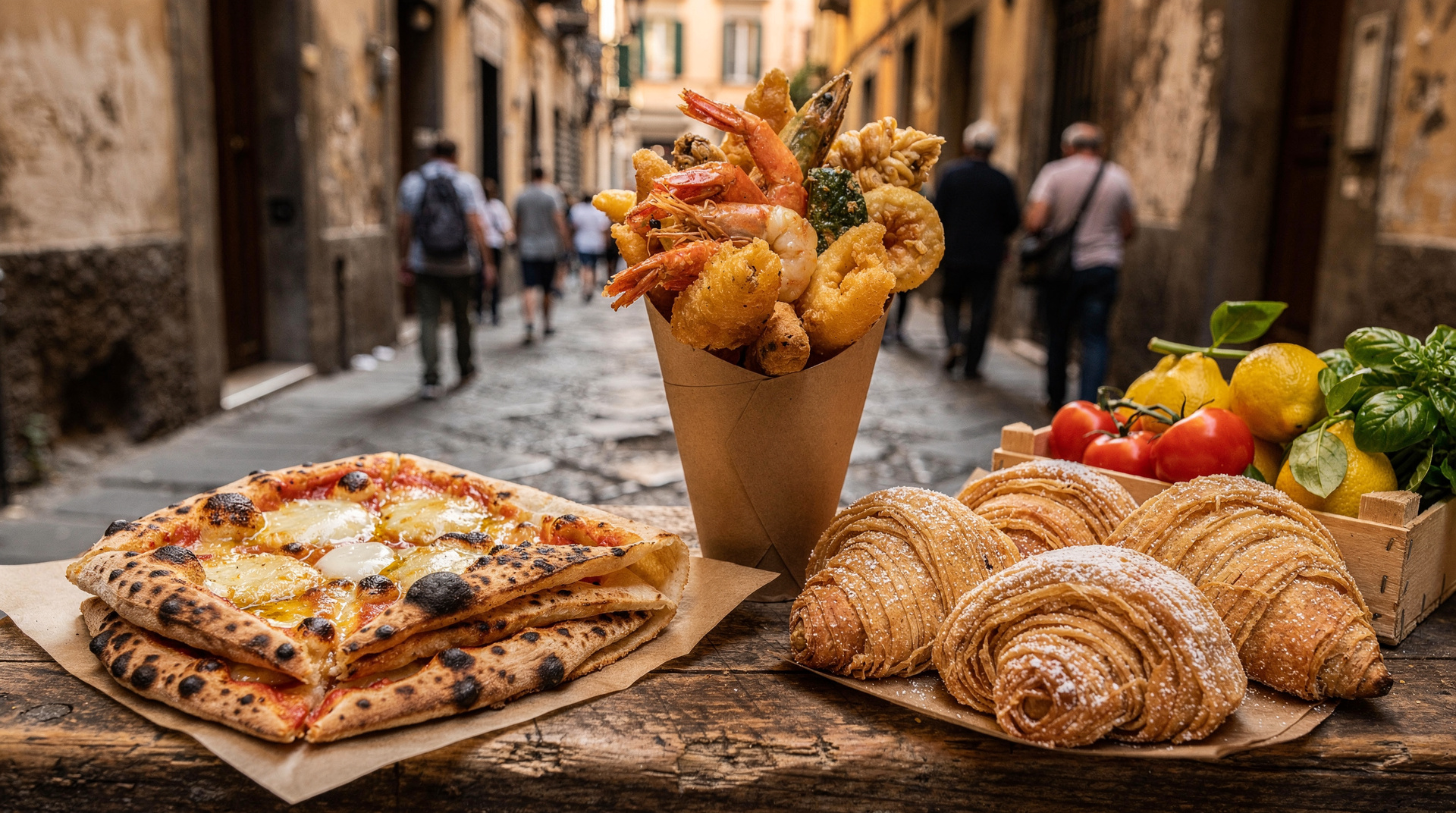
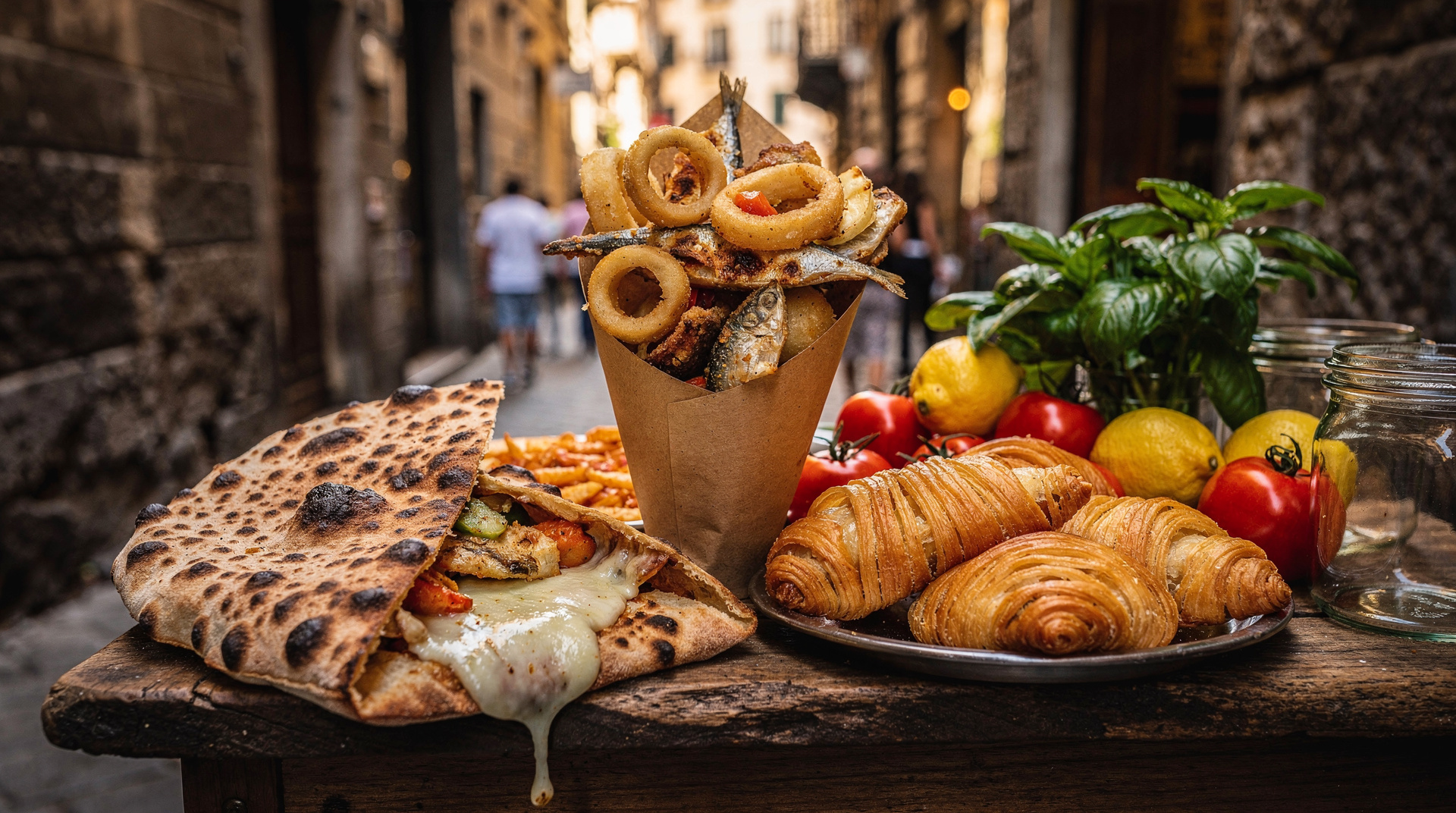
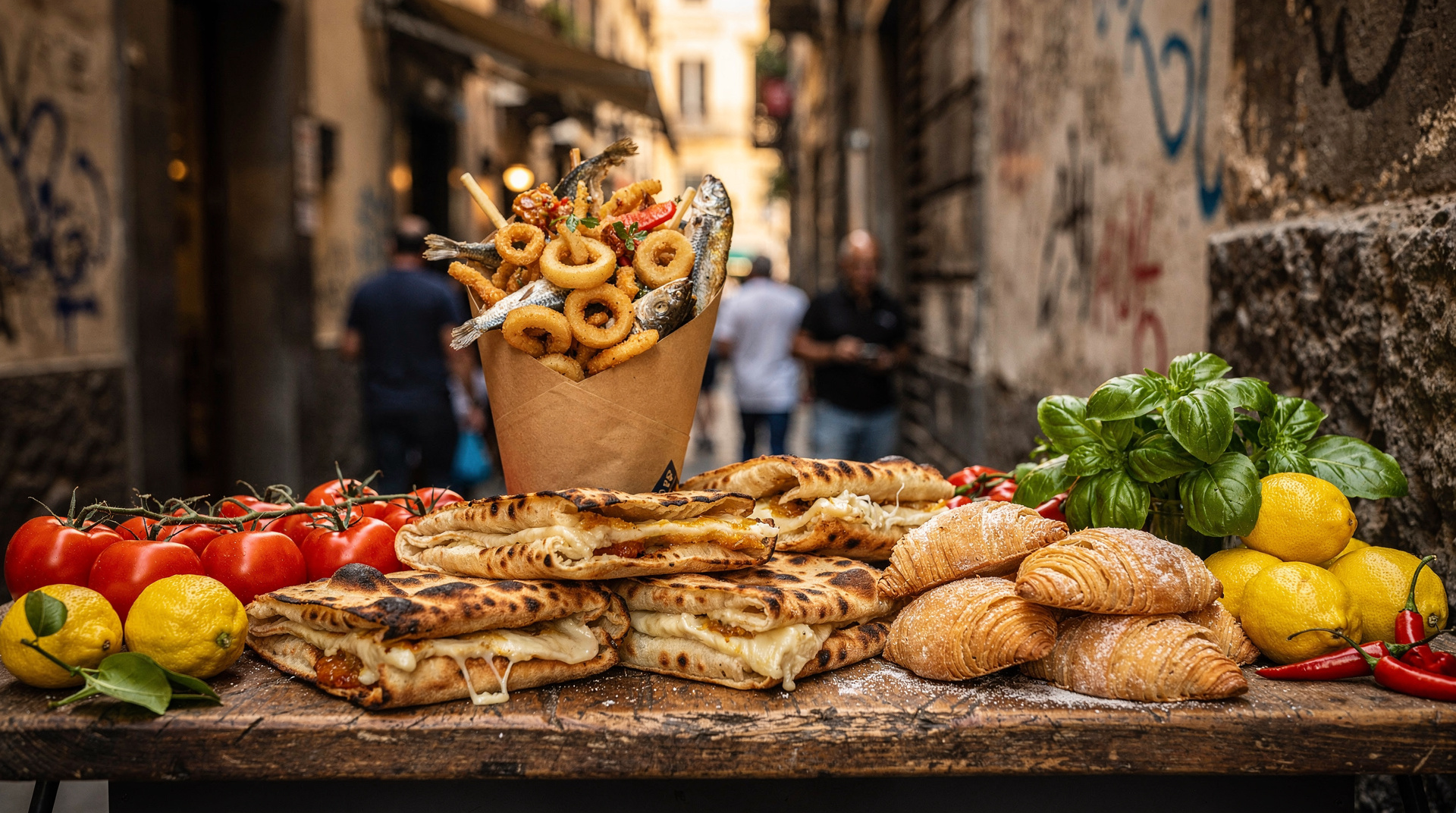
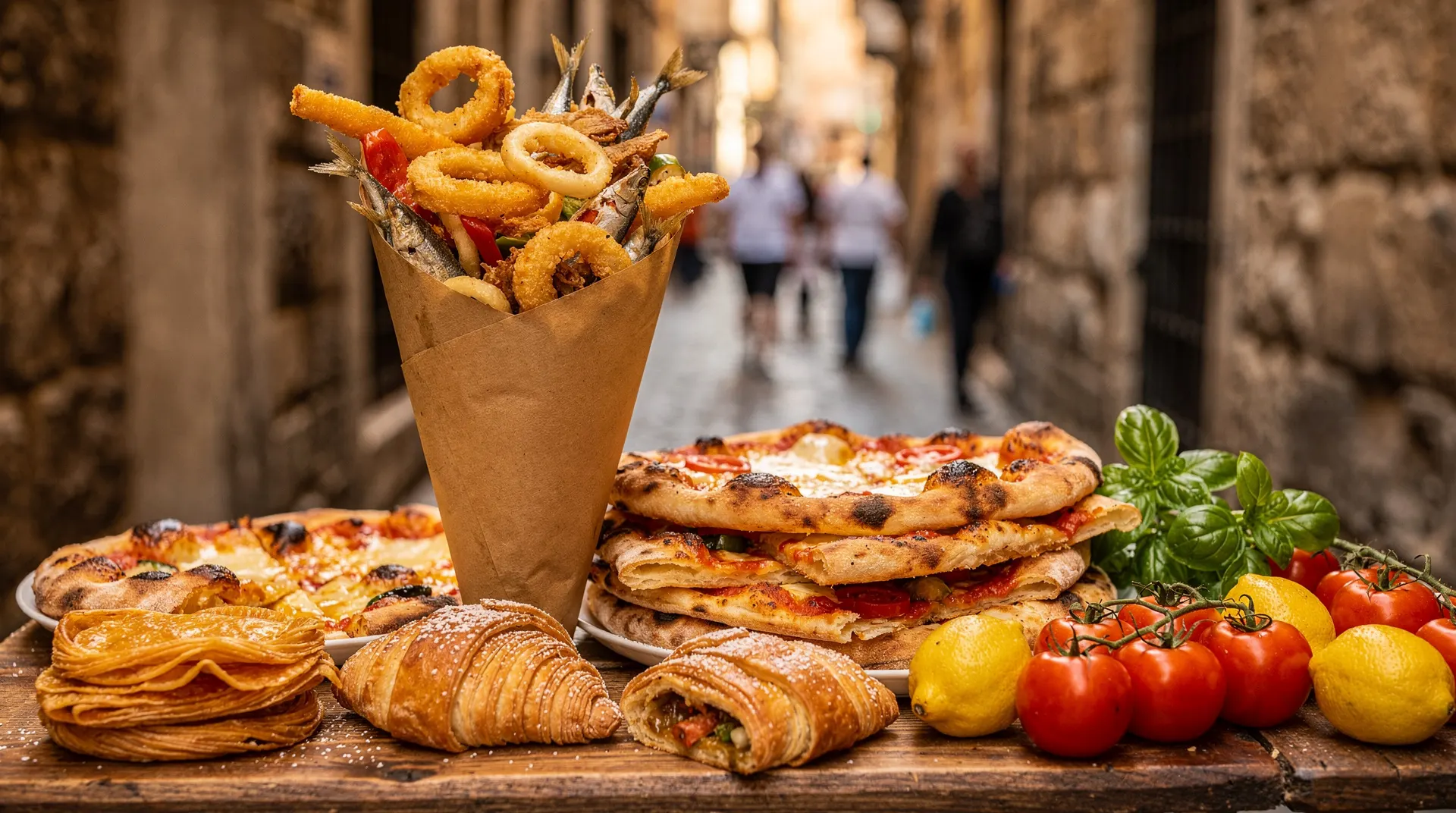
The most common and generally most useful format. A guide leads a group through the centro storico over 2–3 hours, stopping at 6–8 addresses covering the range of Naples street food — pizza a portafoglio, cuoppo, pizza fritta, sfogliatella, espresso, and typically a couple of additional items depending on the operator.
What to look for in a street food tour
Full portions, not tastings. The best operators give you a full pizza a portafoglio, not a half or a quarter. A cuoppo di mare should be a full cone, not a few items on a napkin. Tours that describe “tastings” at each stop tend to leave you unsatisfied and spending money at restaurants afterward.
Context and storytelling. The food is only half the value. The other half is understanding — why is this pizzeria better than the one next door? What is the AVPN standard and which vendors here meet it? What is the social history of the caffè sospeso? A guide who explains these things transforms the experience from eating-on-the-move into something more lasting.
Local vendor relationships. Good guides have genuine relationships with their vendors — they are known and welcomed, not anonymous tourists with a booking. This results in better service, fresher items, and occasionally behind-the-scenes context.
Small group size. Groups larger than 12 are unwieldy in the narrow streets of the centro storico and create awkward dynamics at small vendor windows. The sweet spot is 6–10 people. Tours that don’t mention group size caps are typically running maximum groups.
A well-regarded option with 8+ tastings and a genuine food focus:
Naples food tour — 8 tastings with local guideA tour specifically built around the street food circuit with six defined stops:
Naples street food tour — 6 stops through the centro storicoThe centro storico is too dense to cover on foot in one sitting and too tight for a car: a private food tasting tour by vintage Vespa is the format that matches the streets it crosses.
Pizza and food combination tours
Some tours specifically combine pizza culture with the broader food landscape — a pizza a portafoglio stop, a visit to a working pizzeria to see the oven and the dough, and then continuing through the street food circuit. These are more educational for visitors specifically interested in pizza technique and are a good alternative if the pizza-making class is not available.
Evening food and wine tours
Best for: visitors who prefer walking in the evening (cooler in summer, more atmospheric year-round), those who want to combine food and wine in a single session, and anyone who has already done a daytime food tour and wants a different register.
What they cover: similar food stops to the daytime tour but with wine or spritz stops added, and often a different neighbourhood itinerary that includes the lungomare (waterfront) or Chiaia area alongside the centro storico. The pace is slower and more convivial.
A reputable evening option combining street food and wine:
Naples by night — food, wine, and street food evening walkMarket tours
The market-focused tours visit one or two of Naples’ working food markets — typically Pignasecca and/or Porta Nolana — and combine the market experience with street food stops and ingredient explanations. These tours run in the morning (07:00–10:30) to catch the markets at their best and are more educational than eating-focused.
Good for: visitors interested in cooking, those who want to understand where Naples restaurants source their ingredients, food professionals, and anyone who finds the market culture as interesting as the restaurant culture.
For more on Naples’ food markets, see the food markets guide.
Expert-guided food experiences
The highest-end food tours use genuine food experts — food historians, former restaurant professionals, or guides with specific academic or professional expertise in Neapolitan cuisine. These tours cost more (€80–120 per person) but provide a genuinely different level of knowledge.
One of the more reputable options with an expert food guide format:
Naples food tour with expert guide — deep-dive into Neapolitan cuisineVespa and Fiat 500 food tours
A category of tour that combines the vehicle experience with food stops — touring the city by vintage Vespa or Fiat 500 with food stops along the route. These tours are longer (3–4 hours), cover more ground geographically, and are more expensive (€80–130 per person).
The food quality and quantity is typically lower than a dedicated walking food tour — the vehicle is the main attraction, and the food is secondary. Worth it if the Vespa or Fiat 500 experience appeals; not the best choice if food is the primary focus.
What food tours do not cover well
Sit-down restaurant dining. Food tours that include a restaurant sit-down meal (lunch or dinner) as part of the itinerary tend to lose momentum at that point. The restaurant component adds cost, requires everyone to order simultaneously, and reduces the time available for street food exploration. Better to do food tours for street food and plan restaurant dining separately.
Wine and Campania regional produce. Food tours focused on the centro storico necessarily focus on street food and pizza. For wine — Lacryma Christi, Falanghina, Aglianico — the relevant context is the Campania wine guide and the Vesuvius vineyard experiences. These are genuinely different territory.
Long cooking classes. A 3-hour pizza making class is not a food tour. They share some DNA but serve different purposes. The pizza making class guide covers that category separately.
Booking and practical information
Booking timing: the best food tours book out 3–7 days in advance in peak season (July–August and Easter). Booking 2–3 weeks ahead during this period is not excessive. Shoulder season (May–June, September–October) is typically easier but the best small-group tours still fill.
Cancellation policy: reputable operators offer free cancellation up to 24 hours before. Be cautious of operators with 48–72 hour cancellation policies, which are designed to protect revenue from weather changes.
Meeting points: most tours meet at a central landmark (Piazza del Gesù Nuovo, Piazza Bellini, or a specific street in the centro storico). Allow 10 minutes to find the exact meeting point.
What to wear: comfortable walking shoes — the centro storico has cobblestones and uneven surfaces. The streets are narrow and the eating is standing; smart shoes are impractical.
Dietary restrictions and food tours
Naples street food is genuinely challenging for some dietary restrictions — fried food dominates the classic circuit, cheese and dairy appear constantly (fior di latte, ricotta in the sfogliatella), and gluten is unavoidable in pizza, fried pizza dough, and most pastries. Vegetarians are well served — nearly every classic stop (margherita pizza a portafoglio, most fried items, sfogliatella) is meat-free by default.
Vegans have a harder time — the dairy in pizza and pastries and the egg in some fried batters rule out much of the standard circuit; message the operator in advance and ask specifically which stops can be adapted, since some tours have vegan alternatives ready and others don’t. Gluten-free travelers should be direct with operators before booking — a handful of specialist bakeries and pizzerias in Naples now offer certified gluten-free versions of the classics, but a standard street food tour will not accommodate this without prior arrangement, and substituting stops on the day rarely works well logistically.
Anyone with a shellfish allergy should flag it clearly, since the cuoppo di mare (fried seafood cone) is a fixture of nearly every street food tour itinerary and substitutions are usually available if requested ahead of time rather than on the spot.
Do-it-yourself alternative
A self-guided food circuit covering the essential stops can be done without a guide — the Naples street food guide has the addresses and what to order at each. The main trade-off is context and efficiency — you will eat the same items but understand less about why they matter, and you may make navigational errors (wrong neighbourhood, wrong time of day).
The where to eat pizza in Naples guide covers the pizza-specific addresses. The sfogliatella and pastries guide covers the pastry circuit. Combined, these three guides constitute a self-directed food tour over approximately half a day.
Comparing the main tour types
| Type | Duration | Cost | Best for |
|---|---|---|---|
| Street food walking tour | 2–3 hours | around €45–90 | First-timers wanting a broad overview |
| Pizza-making class | 2–2.5 hours | around €45–75 | Learning technique, hands-on experience |
| Evening food and wine | 3 hours | around €55–80 | Cooler pace, wine pairing |
| Market tour | 3–3.5 hours | around €50–75 | Cooking-focused travelers, ingredient sourcing |
| Expert-guided deep dive | 3+ hours | around €80–120 | Repeat visitors, food professionals |
Budgeting a food-focused day
A food tour is usually best treated as most of a meal rather than a snack before dinner — arriving hungry and skipping a separate lunch or dinner afterward makes the €50–90 cost feel proportionate. If food is a trip priority beyond a single tour, the Naples on a food budget guide covers stretching a food-focused itinerary across several days without repeating the same stops, and the best restaurants in Naples guide is the natural next step for evenings not spent on a tour.
Coffee deserves its own moment even on a tour-heavy day — most street food tours include one espresso stop, but the Naples coffee culture guide explains the etiquette (drink standing at the bar, pay first at some places) that a rushed tour stop doesn’t always cover.
Frequently asked questions about Naples food tours
Is a food tour in Naples worth it?
For a first visit, yes — it compresses knowledge that would take multiple independent visits to acquire, ensures you eat at the better vendors, and provides context for why each item is significant. Best tours cost €50–70 for full portions over 2–3 hours.
What does a Naples street food tour include?
Typically 6–8 stops — pizza a portafoglio, cuoppo, crocchè, pizza fritta, sfogliatella, espresso, babà. Total food is roughly a full meal’s worth.
What is the difference between a food tour and a pizza class?
Food tour = walking, multiple vendors, passive tasting with guided commentary. Pizza class = hands-on dough-making, technique-focused, 2–2.5 hours in a kitchen. Both are worthwhile but serve different purposes.
How much do food tours cost in Naples?
Standard group tours €45–65. Small-group (max 8) tours €70–90. Pizza making classes €45–75. Evening food-and-wine tours €55–80.
What should I not eat before a Naples food tour?
Nothing substantial for 3–4 hours before. Good tours provide a full meal’s worth of food — arriving hungry is both practical and respectful to the operator.
Are evening food tours different from daytime ones?
Similar food content but with wine or spritz stops, a more relaxed pace, and a different atmosphere. Good choice in summer when daytime heat makes walking uncomfortable.
Can children do Naples food tours?
Yes — street food tours work well for ages 7+ because of the varied stops and manageable portions. Pizza-making classes are also family-friendly. Some evening wine-focused tours are adult-only.
Frequently asked questions about Best food tours in Naples
What does a Naples street food tour include?
What is the difference between a food tour and a pizza class?
How much do food tours cost in Naples?
How small are the groups on Naples food tours?
What should I not eat before a Naples food tour?
Are evening food tours different from daytime ones?
Can children do Naples food tours?
Are there market-focused food tours?
Top experiences
Bookable activities with verified prices and instant confirmation on GetYourGuide.