Naples coffee culture
Naples: Coffee Tasting Experience with Sfogliatelle Pastry
What makes Naples coffee different from the rest of Italy?
Neapolitan espresso is typically darker-roasted and extracted slightly longer than northern Italian espresso — the result is a stronger, more bitter cup with a thicker crema. The ritual matters as much as the product — standing at the bar, paying €1–1.20, drinking in 2–3 minutes. The caffè sospeso tradition (prepaying a coffee for someone who cannot afford one) is uniquely Neapolitan.
| Standing espresso | around €1–1.20 |
| Where to go | Caffè Mexico, Gran Caffè Gambrinus |
| Ritual | order at the bar, drink standing, 2–3 minutes |
| Sospeso | ”is there a suspended one?” — pay-it-forward tradition |
| Avoid | tourist terraces charging €5–6 |
The argument for Naples
The Italian coffee argument is unresolvable, which is part of its appeal. Trieste claims the highest per-capita consumption. Milan’s Lavazza dominates commercial roasting. Rome exports the image. Naples produces what a statistically significant number of Italian food professionals, coffee researchers, and Italian grandmothers insist is the best espresso in Italy.
The evidence is at least circumstantial: the tradition is older (the Gambrinus opened in 1860, but coffee arrived in Naples via the Ottoman trade routes in the 17th century), the rituals are more codified (the caffè sospeso, the bar counter protocol, the specific roast profile), and the emotional attachment is more intense. Neapolitans abroad describe missing “il caffè di Napoli” in a way that Roman or Milanese expats rarely speak about their respective cities’ coffee.
Whether or not it is objectively the best — a claim that cannot be adjudicated — it is genuinely distinctive, and understanding what makes it distinctive makes the experience more meaningful.
The Neapolitan espresso: what is actually different
The roast
Neapolitan coffee uses a darker roast than northern Italian espresso — what the specialty coffee world calls “dark” or “Vienna” roast. The beans develop oils on the surface (visible as a slight sheen) and the flavour profile shifts toward dark chocolate, smoke, and a more pronounced bitterness. Caffeine content per bean actually decreases with longer roasting, but the stronger flavour compensates.
The dominant blend in Naples is the robusta-heavy mix — robusta beans produce more crema (the foam layer), more caffeine per volume, and more bitterness than arabica. Many Naples roasters use 30–50% robusta versus the arabica-dominant blends of northern Italian and specialty coffee. This is not inferior — it is a deliberate stylistic choice producing a specific result.
The grind and extraction
The Neapolitan grind is typically finer than northern Italian, and the dose (amount of coffee used per shot) is slightly higher. The extraction time is 25–30 seconds. The result: a shorter, stronger shot with a thick, dark crema that leaves a pronounced mark on the inside of the ceramic cup.
The cup itself matters — Neapolitan bars insist on pre-heated ceramic espresso cups, which are stored on a heated plate on top of the machine. A cold cup is considered disrespectful to the coffee.
The water
Naples’ municipal water (from the Campanian Apennines) is moderately soft with a mineral content that is — according to one school of coffee science — optimal for espresso extraction. The claim has been debated since the 1990s; the data is inconclusive but the correlation between the water and the result is noted by visiting coffee professionals consistently enough to be worth mentioning.
The ritual
Understanding the ritual makes the experience significantly better.
At the bar counter: Walk up to the bar, make eye contact with the barista (barman in Italian), and say “un caffè” (or “un espresso,” which is understood but technically redundant in Naples). You can pay before or after — both customs exist. The coffee arrives in 30–45 seconds.
Drink while standing, while hot. Espresso cools in approximately 3 minutes. The flavour at 65–70°C is different from the flavour at 40°C. Neapolitans drink in 2–4 sips, at the bar, and leave. The total transaction time is under 5 minutes.
The glass of water: Many bars in Naples offer a small glass of water with the espresso. This is not to drown the coffee — it is to drink first, clearing the palate for the espresso to follow. The water comes after if you need to moderate the bitterness.
Sugar: personal preference. There is no cultural rule about adding sugar to espresso in Naples (unlike in some northern Italian cities where the third sip without sugar is considered the measure of a quality coffee). Many Neapolitans drink it unsweetened; many add a spoonful. Do what you prefer.
Caffè sospeso: the suspended coffee
The caffè sospeso (suspended coffee) is a uniquely Neapolitan institution. A customer pays for two coffees and drinks one — the second is “suspended” at the bar. Another customer who cannot afford coffee comes in, asks “c’è un sospeso?” (is there a suspended one?), and is served without payment.
The practice has no exact documented origin but is described in 19th-century Neapolitan literature and is strongly associated with the post-World War II period of extreme poverty when it became an organised form of solidarity. It was practised quietly in many bars without being formalised — the kind of institution that existed before anyone thought to name it.
In the 21st century, the sospeso has become internationally known (it was written about in the New York Times and spread to coffee culture discussions globally), and some Naples bars now formalise it with a chalkboard counting how many sospesi are available. The caffè sospeso is still practised in traditional bars in the centro storico, though tourist attention has made some operators self-conscious about it.
The tradition is mentioned here not as a novelty to observe but as a window into the social function of the Neapolitan bar — which is a neighbourhood institution, not merely a place to buy a drink.
The best bars in Naples
Gran Caffè Gambrinus
Piazza Trieste e Trento 1 / Via Chiaia 1
Established in 1860, the Gambrinus is the architectural and historical flagship of Neapolitan café culture. The interior is Belle Époque — marble, gilded mirrors, frescoed ceilings, display cases of pastries. It was closed by Mussolini in 1938 because it had become a meeting point for anti-fascist intellectuals; it reopened in 1945 and has not changed materially since.
The espresso is excellent. The price at the bar is €1.50 (slightly more than the neighbourhood average because of the address). Sitting down: €5–6. The sit-down experience is worth doing once for the room — the pastries are good, the service professional. For daily coffee, you stand at the bar.
Caffè Mexico
Piazza Garibaldi 72 (main branch), also Via Dante 86
No interior to speak of. Fluorescent lighting, a utilitarian bar counter, a queue at peak hours, and what many Naples coffee specialists regard as the best espresso in the city. The roast is dark, the crema thick, the cup pre-heated to the correct temperature. Price: €1.20 at the bar.
The Piazza Garibaldi branch is near the train station — not the most appealing neighbourhood context, but the coffee is not affected by the surroundings. The Via Dante branch is in a slightly more comfortable area. Both are worth the queue.
Bar San Domenico
Piazza San Domenico Maggiore, Spaccanapoli area
Adjacent to the church and next door to Pasticceria Scaturchio. A traditional neighbourhood bar with excellent espresso and pastries from Scaturchio. Used primarily by locals — students from the nearby university, residents of the Spaccanapoli zone. No tourist premium.
Caffè Letterario Intra Moenia
Piazza Bellini 70
A cultural café-bar in the bohemian Piazza Bellini area — part coffee bar, part bookshop, part performance space. The espresso is good; the appeal here is the setting and the crowd (literary, arts-adjacent, local). It is the address for a late-morning coffee with reading material rather than the two-minute stand-at-the-bar experience.
The coffee and pastry combination
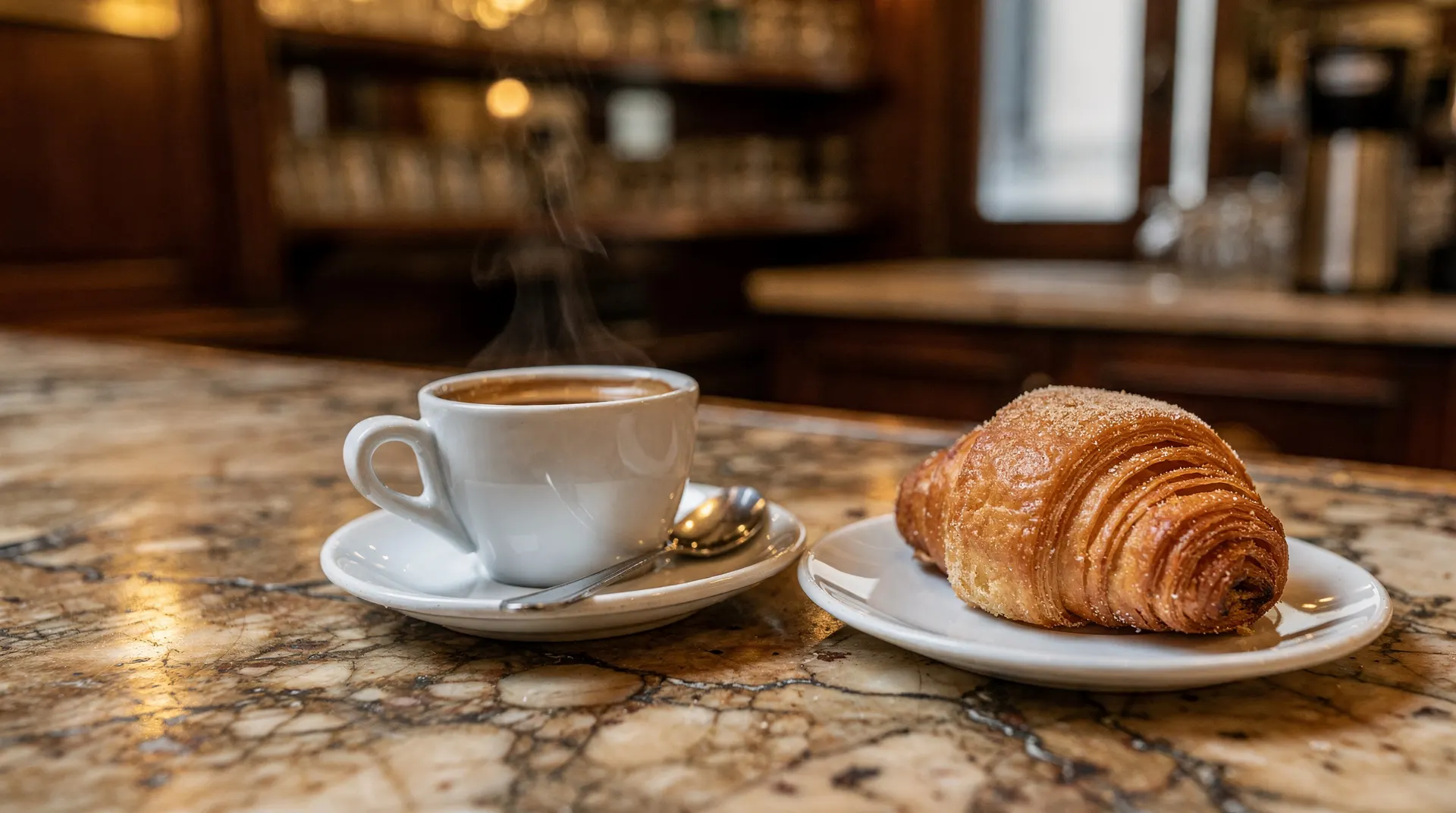
The traditional morning pairing: espresso (€1.20) and a sfogliatella (€2–2.50). Total: €3.20–3.70. One of the most efficient food experiences in Italy by any objective measure — extraordinary quality at a price that is not available anywhere else in western Europe for comparable items.
The practical sequence: arrive at a pasticceria with a bar counter (Pintauro on Via Toledo is the benchmark), order the espresso, receive the sfogliatella warm from the oven, eat standing, drink standing, leave. Do it again the next morning.
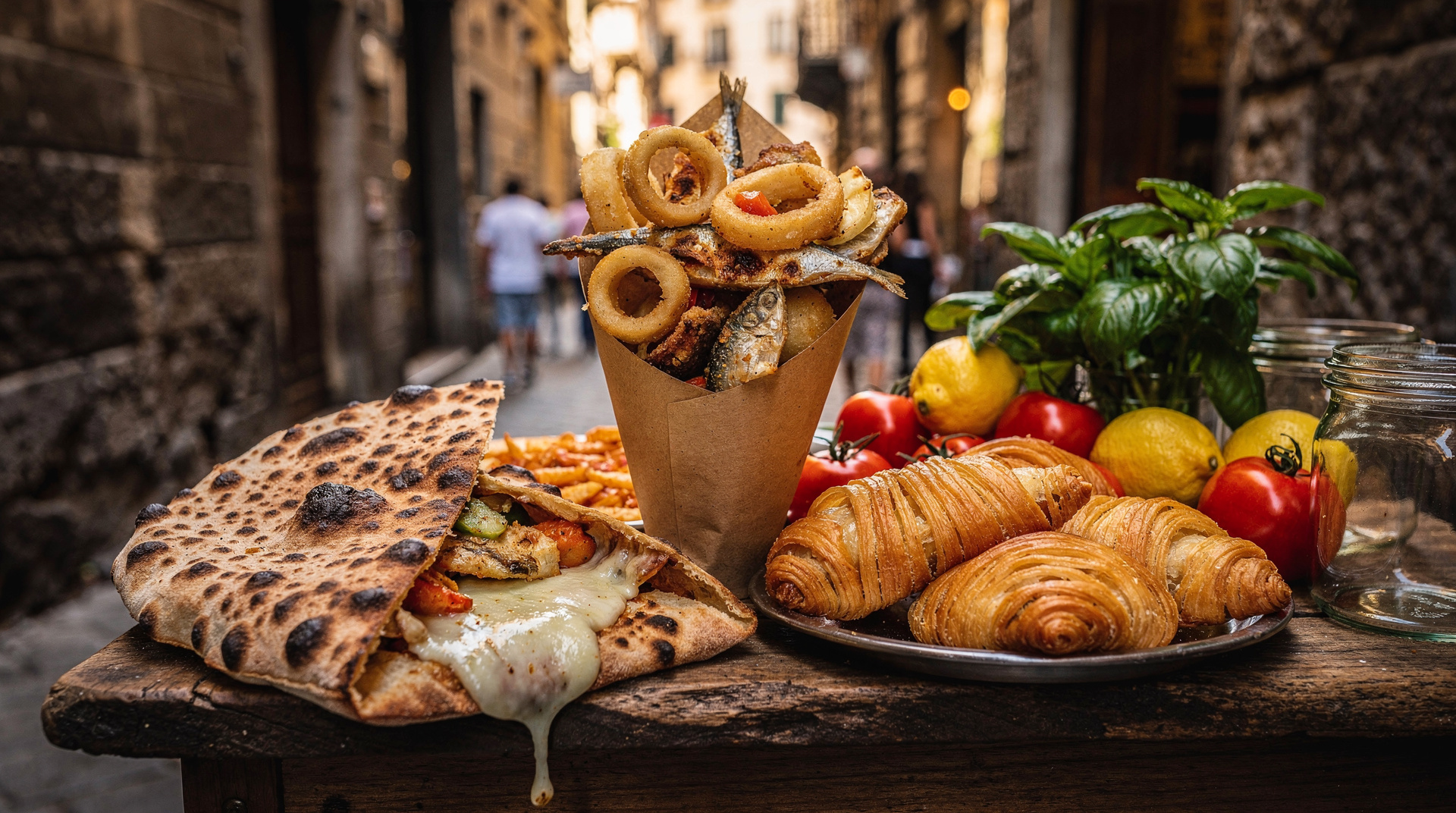
Naples coffee and sfogliatelle morning walking experienceA slightly broader morning experience covering coffee, pastry, and street food context:
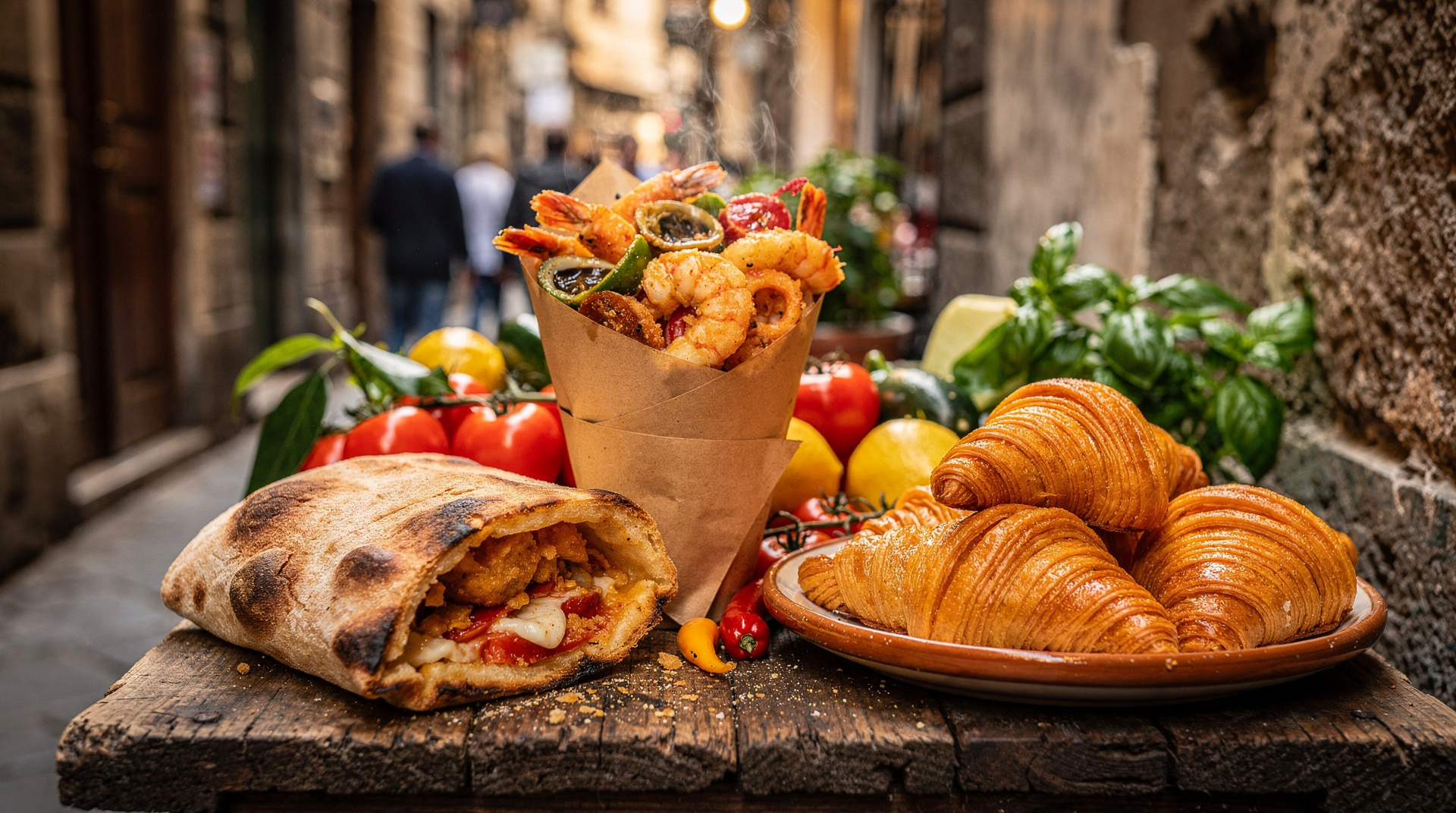
Naples coffee and pastries neighbourhood walkPrices: what you should and should not pay
| Setting | Espresso price |
|---|---|
| Standing at traditional bar (standard) | €1–1.20 |
| Bar counter at historic café (Gambrinus) | €1.50 |
| Sitting at traditional bar | €2.50–3.50 |
| Tourist-area terrace (Piazza Plebiscito) | €5–6 |
| Hotel lobby or cruise-adjacent café | €5–8 |
If you are paying more than €1.50 for a standing espresso, you have made a navigational error. If you are paying more than €2 for a standing espresso, you are in a tourist-facing establishment that treats its espresso as a commodity and charges accordingly.
The Naples food budget guide covers this and similar price distortions across all food categories.
Coffee culture as social behaviour
Naples has perhaps the most elaborate coffee etiquette of any Italian city. A few practical notes:
Bringing the macchina napoletana home: the traditional Neapolitan coffee maker is the cuccumella (a pot-and-lid device predating the Moka) that brews in the lower chamber and drips through to the upper. You will see them in vintage shops and some homes. The result is a filtered brew, not a pressurised espresso — different from bar coffee.
Espresso vs coffee (caffè): ordering “un caffè” in Naples means espresso — a single, short shot. There is no confusion about this. Ordering “an American coffee” will get you a blank look or, at tourist-facing bars, a double espresso with hot water poured into it.
Neapolitan vs Moka: the Moka pot (Bialetti) is a national Italian institution but not the specific Naples tradition. The cuccumella and the bar espresso machine are the Neapolitan reference points.
Frequently asked questions about Naples coffee
How much does an espresso cost in Naples?
€1–1.20 standing at the bar. Sitting at a table: €2.50–4. Tourist terraces: up to €6. Pay the bar price — quality is identical to the sitting version.
What is caffè sospeso?
A Neapolitan tradition — pay for two coffees, drink one, the second is “suspended” for someone who cannot afford it. Still practised at traditional bars throughout the centro storico.
What is the difference between Neapolitan and northern Italian espresso?
Darker roast, more robusta in the blend, finer grind, slightly higher dose. Stronger, more bitter, thicker crema. Served with a glass of water to clear the palate first.
What is the correct way to drink espresso in Naples?
Stand at the bar, drink while hot (2–3 sips, under 3 minutes), drink the water first if offered.
Can I order a cappuccino in the afternoon?
Technically yes, but locals consider milky coffee drinks (cappuccino, caffelatte) a morning-only option. After midday, espresso or macchiato are the expected choices.
What is the best bar in Naples for coffee?
Gran Caffè Gambrinus (historic, beautiful, €1.50 at bar) and Caffè Mexico (functional, considered the best espresso, €1.20) are the two benchmark addresses.
Does Naples have a specialty coffee scene?
Yes, small and growing — 188 Degrees Coffee and Caffe di Giada serve filter and pour-over. But the traditional espresso bar model remains dominant.
Buying beans to take home
If you want to recreate the flavour profile at home, buy roasted beans or ground coffee directly from a Naples roaster rather than a supermarket blend — Kimbo and Passalacqua are the two most widely available Naples-founded brands, sold in sealed bags at most supermarkets and alimentari, and both use the darker, robusta-leaning roast the city is known for. Smaller independent roasters near Piazza Bellini and in the Chiaia area sell single-origin and house blends in smaller quantities, usually with a grind option for a Moka pot rather than an espresso machine (since few visitors are travelling with a home espresso machine). A 250g bag runs roughly €4–8 depending on the roaster, and vacuum-sealed bags travel well in checked luggage.
Building a coffee route through the centro storico
Because bar coffee is cheap and fast, the most rewarding way to experience Naples coffee culture is not one destination but a route — three or four bars over a morning, each a few minutes apart. A workable version: Bar San Domenico for the first espresso and a Scaturchio pastry, a walk through Spaccanapoli toward Piazza Bellini, a second stop at Caffè Letterario Intra Moenia for the setting, and a finish at Gran Caffè Gambrinus for the room even if you’ve already had your quota of caffeine for the morning.
This kind of grazing route works because no single stop costs more than a couple of euros and no stop takes more than ten minutes — it’s the opposite of a sit-down breakfast, and it fits naturally into a walk through the centro storico.
How coffee fits into the wider food culture
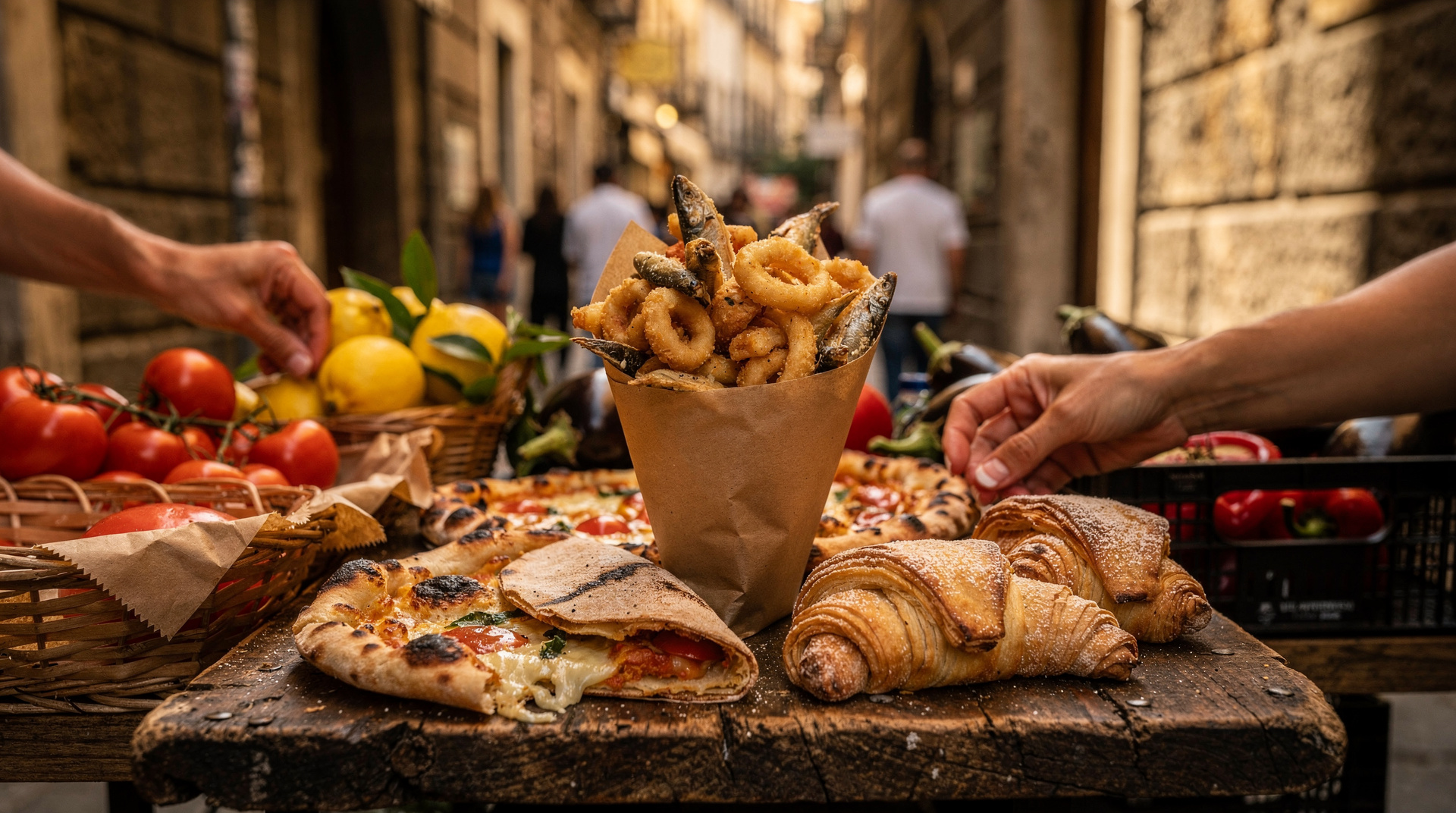
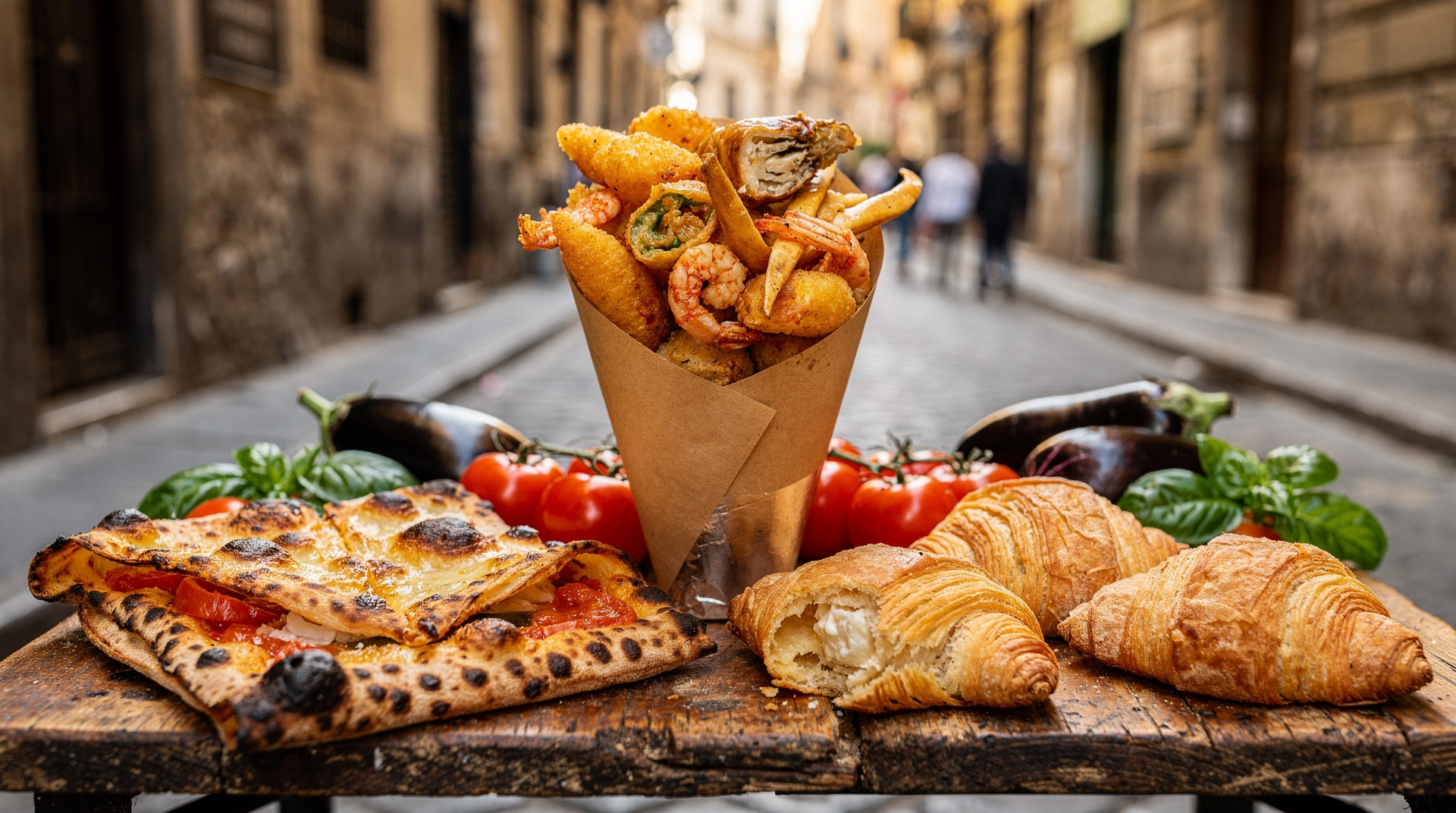
Coffee in Naples is inseparable from the pastry counter next to it, and both are inseparable from the city’s street food identity — the same bars that pull a €1.20 espresso often sell the frittatina, the arancino, or the taralli that make up the rest of a Neapolitan breakfast or mid-morning stop.
For the fuller picture of what surrounds the coffee ritual, the sfogliatella and pastries guide and the Naples street food guide cover the food side in depth, and the Naples food markets guide shows where the same ingredients — coffee beans included — get sold at the source. If you’d rather have all of this explained by a guide instead of pieced together bar by bar, a structured food-and-coffee tour covers the same ground with context built in.
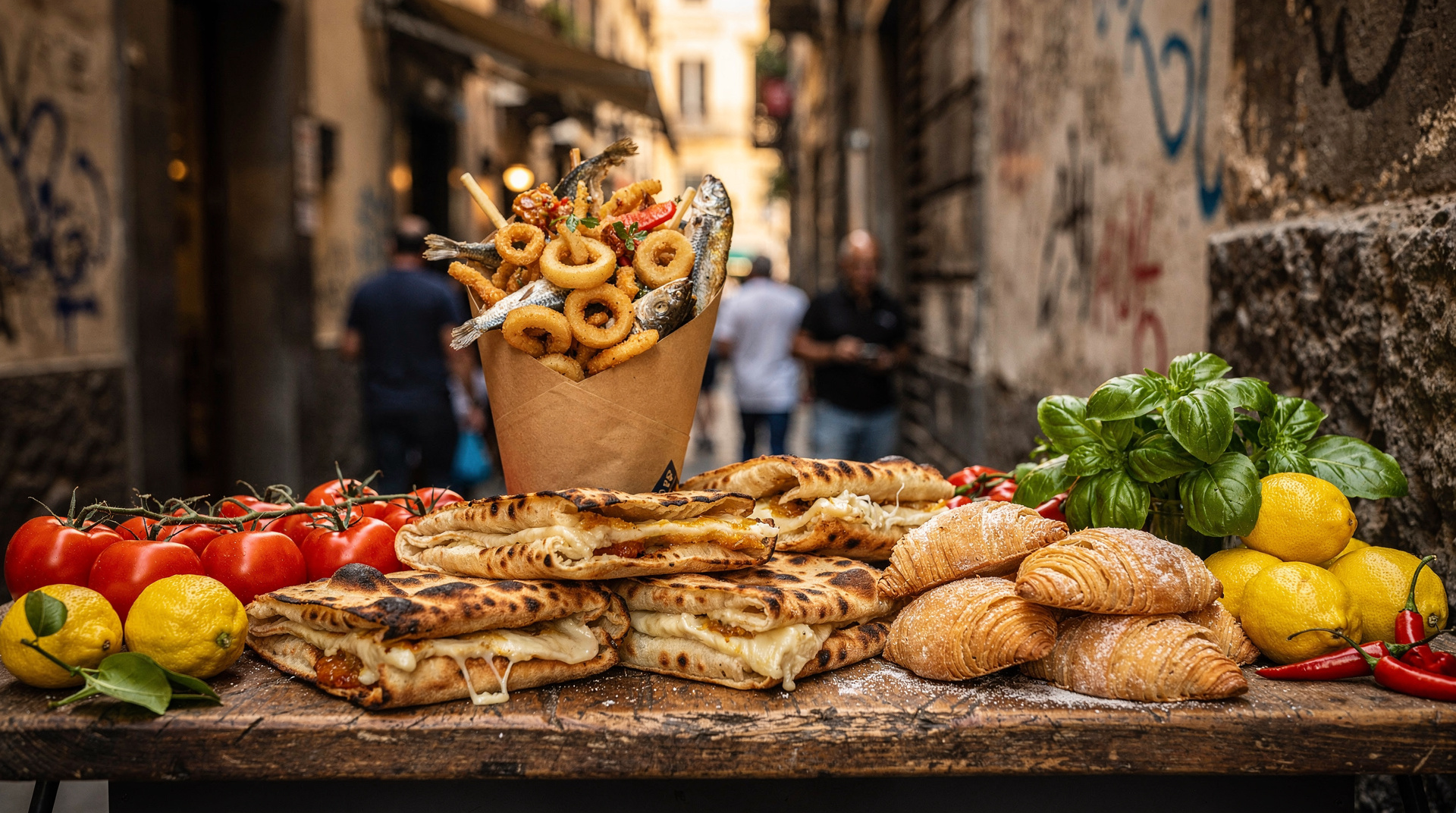
Naples food tasting walk with 8 stops, coffee includedFrequently asked questions about Naples coffee culture
How much does an espresso cost in Naples?
What is caffè sospeso?
What is the difference between Neapolitan and northern Italian espresso?
What is the correct way to drink espresso in Naples?
What is caffè macchiato?
Can I order a cappuccino in the afternoon in Naples?
What is the best bar in Naples for coffee?
Does Naples have a specialty coffee scene?
Top experiences
Bookable activities with verified prices and instant confirmation on GetYourGuide.