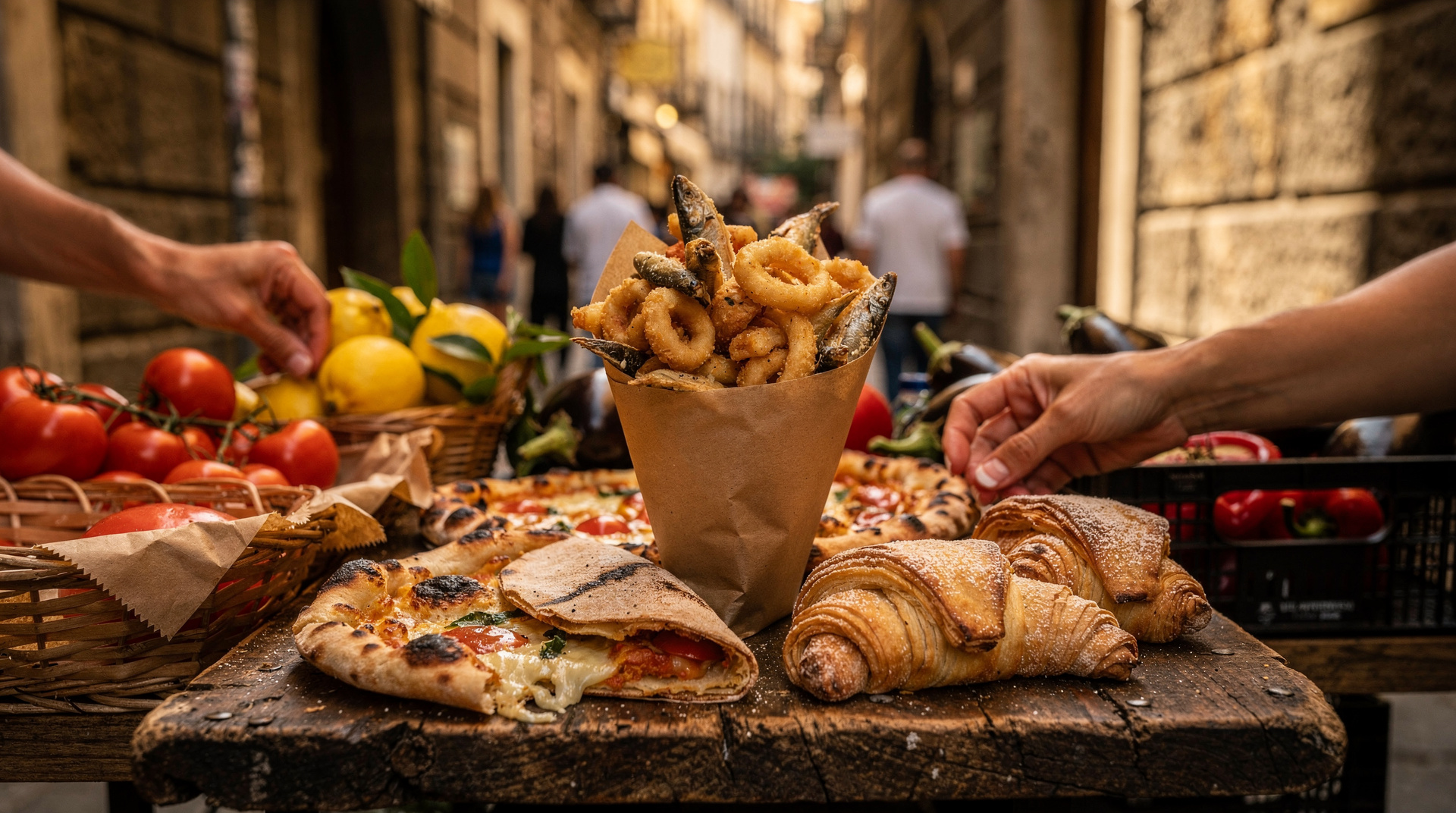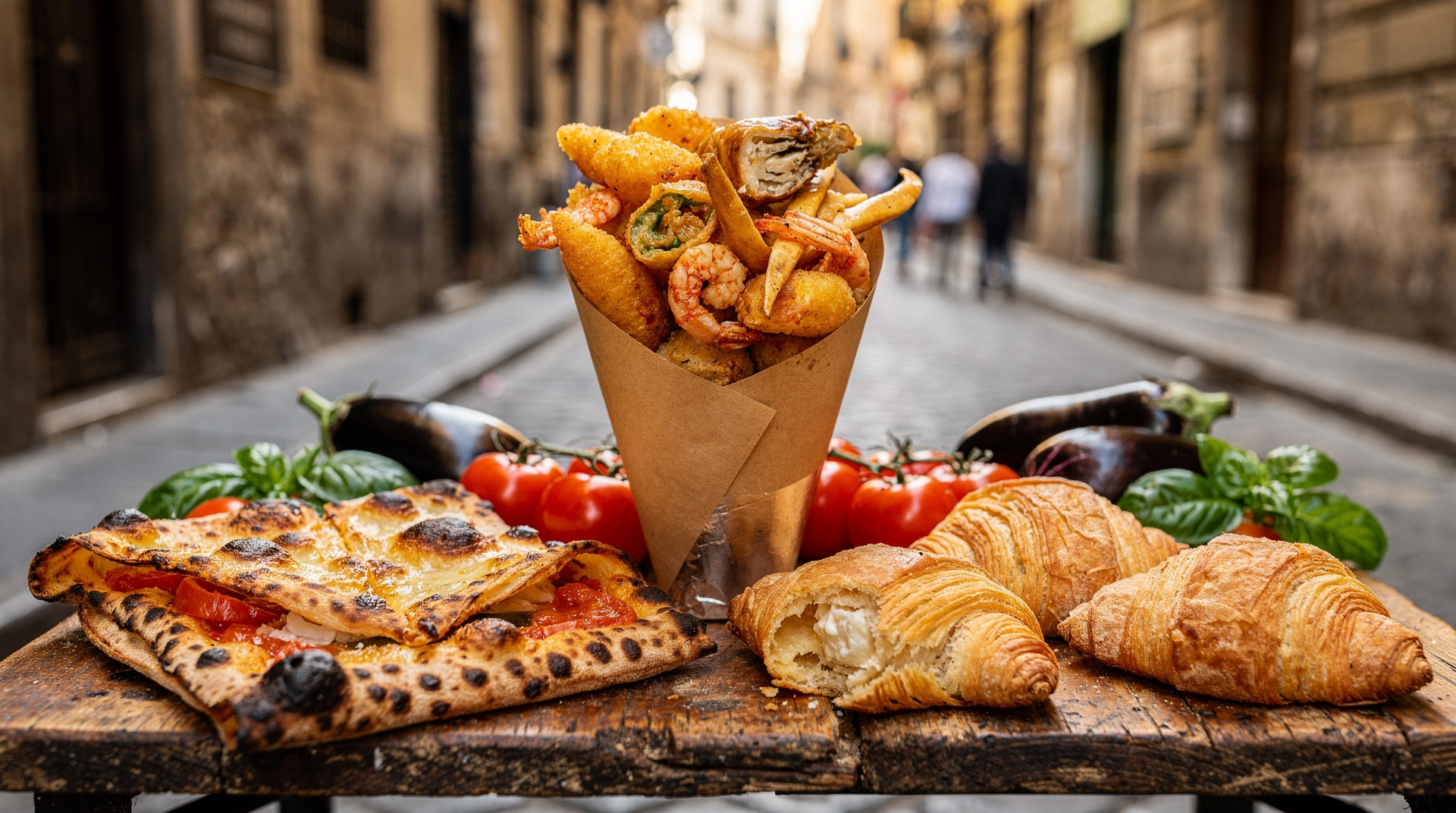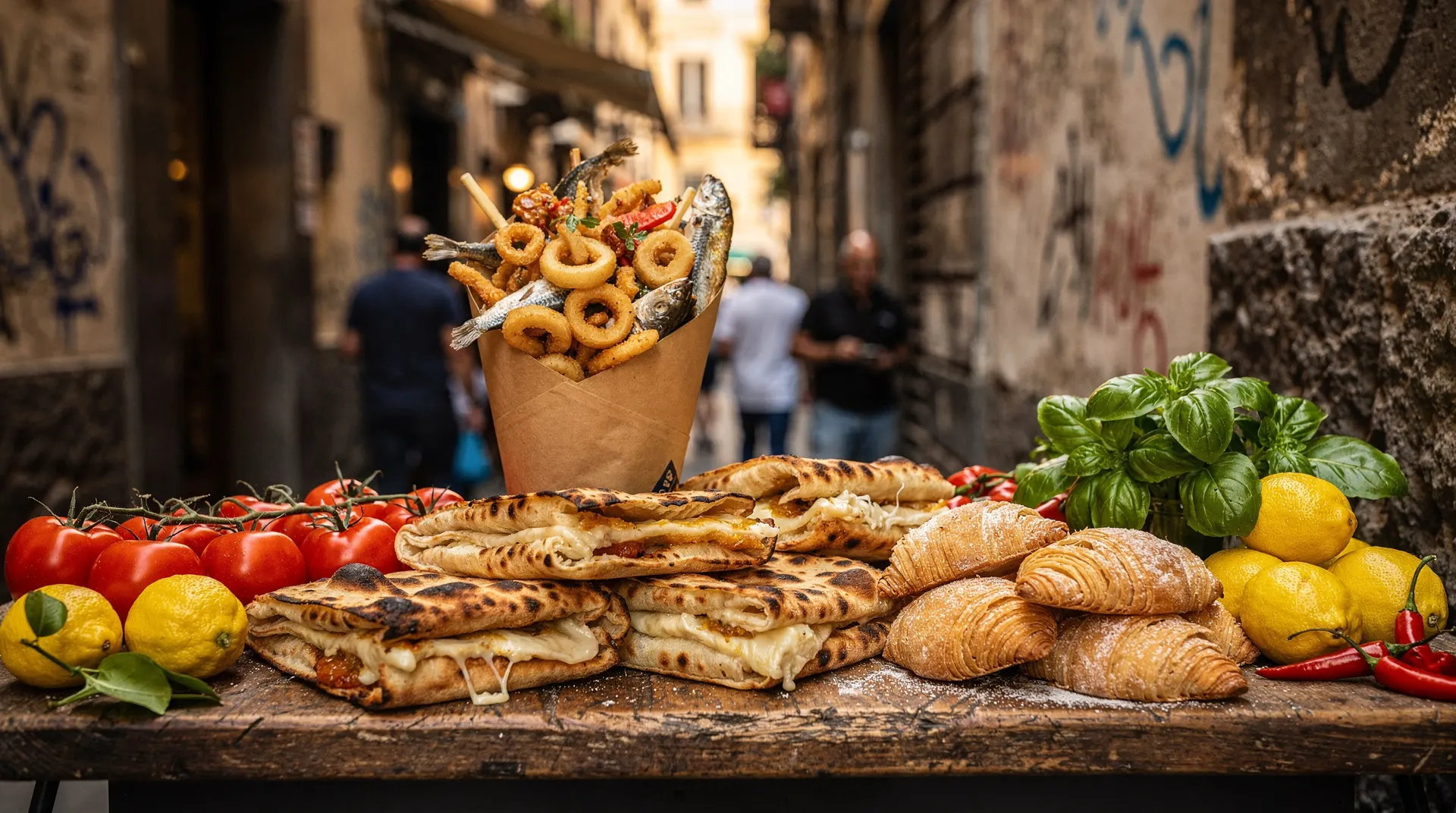
Naples food markets
Naples: City and Street Food Market
What is the best food market in Naples?
Pignasecca (Quartieri Spagnoli/Montesanto) is the most central and most accessible daily food market — fruit, vegetables, fish, and several friggitorie stalls. Porta Nolana fish market (open mornings until 13:00) is the best for fresh seafood. Both are functioning neighbourhood markets, not tourist attractions, which keeps prices honest.
A city that still buys its food daily
Naples is not a supermarket culture. The majority of traditional Neapolitan households still buy fresh produce, fish, and meat from market vendors — a daily or near-daily routine that is deeply embedded in the city’s social fabric. The markets are where restaurants source their ingredients, where grandmothers argue over tomato prices, and where the actual food culture of the city is visible without tourist staging.
For visitors, the markets offer a different Naples from the archaeological museums and pizza queues — more chaotic, more authentic, and considerably cheaper. This guide covers the four main food markets, their specific character, and what to look for at each.
| Most central market | Pignasecca (Quartieri Spagnoli) |
| Best for fresh fish | Porta Nolana, mornings until 13:00 |
| Typical hours | around 07:00–14:00/15:00 |
| Payment | cash preferred, small notes |
| Savings vs tourist-area shops | around 20–40% |
Pignasecca market — the most accessible
Location: Piazza Montesanto and Via Pignasecca, Quartieri Spagnoli
Hours: Monday–Saturday 07:00–15:00; Sunday 07:00–13:00
Getting there: Montesanto funicular/metro, exit onto Piazza Montesanto
The Pignasecca is the market most conveniently located for visitors staying in the centro storico or Chiaia area. It operates on Via Pignasecca and the surrounding streets in the Quartieri Spagnoli — the densely-packed working-class neighbourhood west of Via Toledo.
The market is entirely functional and not staged for tourism. There are no cafés selling Neapolitan souvenirs alongside the tomatoes. The vendors are local, the clientele is local, and the prices reflect that.
What to buy at Pignasecca
Seasonal produce: tomatoes (San Marzano varieties and local Roma tomatoes) in summer, broccoli rabe (friarielli — the essential Neapolitan side vegetable, slightly bitter, sautéed with garlic and chilli) year-round, escarole (a bitter green used in traditional pasta e scarola soup), and local peppers. Prices: tomatoes €1.20–1.80 per kg (versus €3–4 at tourist-area shops).
Fish: several fish vendors along Via Pignasecca sell clams, mussels, and small fish for considerably less than the tourist-area seafood restaurants. Purchasing seafood for cooking is the main purpose; eating raw clams from market vendors is not recommended.
DOP products: several small alimentari on the market perimeter sell buffalo mozzarella DOP (from Caserta or Paestum), San Marzano canned tomatoes, and Campanian extra virgin olive oil at prices 20–40% below the tourist-area equivalents. Buffalo mozzarella: €3–4 per 250g ball (versus €5–7 in tourist-facing delis near the major sights).
Gragnano pasta: multiple vendors and shops sell pasta di Gragnano IGP — a genuinely superior pasta produced in the Lattari mountains near the Amalfi coast. The rough bronze-die extrusion creates a surface that holds sauce significantly better than smooth-die commercial pasta. Look for the IGP label and the town name on the package. Cost: €2.50–5 for 500g.
Friggitoria Fiorenzano
The reason many food writers visit Pignasecca specifically: Friggitoria Fiorenzano (Piazza Montesanto 1) has been operating since 1897 and produces the best cuoppo and crocchè (potato croquettes) in the area. The friggitoria window opens around 11:30–12:00. The oil is fresh and changed regularly, the items are cooked to order at peak hours, and the cuoppo di mare (seafood cone, €5–6) is consistently cited by Naples food professionals as a benchmark. Arrive before 13:30 for the freshest items.
For the full guide to this style of food, see cuoppo and fried street food.
Porta Nolana fish market — the serious seafood option
Location: Piazza Nolana and adjacent streets, near the Porta Nolana Circumvesuviana station
Hours: Monday–Saturday 06:00–13:00; Sunday closed or very limited
Getting there: Porta Nolana Circumvesuviana station, or a 15-minute walk east from Via dei Tribunali
Porta Nolana is where Naples’ seafood industry begins each morning. This is not a tourist market — it is a working wholesale and retail fish market that feeds the city’s restaurants and households. The atmosphere is loud, fast-moving, and functional.
Arriving at 07:00–08:00 gives the best picture: fishmongers setting up stalls, boxes of the morning’s catch being sorted, competitive pricing as vendors try to sell quickly before the day heats up. Species depend on the season and the catch: typically clams (vongole veraci), mussels (cozze), various small fish, octopus (polpo), and squid.
The streets surrounding Porta Nolana have several friggitorie that open at 07:30–08:00 and sell fresh-fried paranza (mixed small fish) and seafood cuoppo from the morning catch. This is the freshest version of the cuoppo di mare available in Naples — the fish was in the sea the night before. Price: €5–6 for a substantial portion.
Practical note: the area around Porta Nolana station has a higher concentration of street thieves than the tourist centre — keep bags closed and phones in pockets. The market itself is safe; the station immediate area requires normal urban awareness.
Porta Capuana market — the neighbourhood original
Location: Piazza Capuana and Via Carbonara, east of the centro storico
Hours: Monday–Saturday 07:00–15:00
Getting there: 20-minute walk from Piazza del Gesù Nuovo, or taxi
Porta Capuana is the least-visited of the main markets by tourists and perhaps the most authentic. It operates in the shadow of the 15th-century city gate — the impressive Porta Capuana arch still stands — and serves the working-class neighbourhood between the centro storico and the train station.
The market specialises in general produce, small cuts of meat, and street food vendors with small window operations selling pasta, chickpea soup (pasta e ceci), and fried items. The prices are the lowest of the four main markets; the crowds are almost entirely local.
Less documented in travel guides, which keeps the experience more genuine. Worth visiting if you are already in the eastern part of the centro storico (near Catacombs of San Gennaro or the Fontanelle cemetery).
Mercato di Antignano — the Vomero residential market
Location: Piazza degli Artisti and Via Antignano, Vomero
Hours: Monday–Saturday 07:00–14:00
Getting there: Centrale funicular or Chiaia funicular to Vomero, 5-minute walk
The Vomero is Naples’ affluent hilltop residential district — a neighbourhood of wide boulevards, apartment buildings, and a strong local commercial life that mostly ignores tourism. The Antignano market serves this population.
The product quality tends to be higher than the markets in the lower city — the vendors know their clientele has high standards and sufficient income. Prices reflect this (somewhat higher than Pignasecca) but the produce is often better. Particularly good for local cheeses, cured meats from the Campanian hill towns, and the seasonal produce that the Vomero’s better trattorias source here.
For the neighbourhood context, see the Vomero guide.
What to buy to take home
The Neapolitan market circuit is an excellent place to purchase edible gifts or pantry supplies:
Taralli napoletani: ring-shaped biscuits (lard, flour, black pepper, almonds). Sold in bags by weight at market vendors, cheaper than tourist shops. Keep for 2–3 weeks.
Pasta di Gragnano IGP: superior pasta, widely available in markets and alimentari, and legitimately superior to what you can find outside Campania. Paccheri, rigatoni, and spaghetti from Gragnano are the standard formats.
San Marzano DOP tomatoes (canned): the reference variety for pizza sauce and ragù. Available at alimentari throughout the markets; look for “D.O.P.” on the label. Generic “San Marzano-style” from outside the DOP zone is much cheaper but not the same product.
Limoncello: the lemon liqueur is a Sorrento specialty but widely sold in Naples. Avoid the cheapest tourist-area bottles. Better quality is available at alimentari and market shops for €8–15 per bottle.
Colatura di alici: an aged anchovy fish sauce from Cetara (Cetara destination guide) — the descendant of the Roman garum. Intense, salty, used in small quantities to dress pasta or vegetables. Available at specialist alimentari in the markets. A 100ml bottle costs €8–15.
A market-focused food tour
Several guided food tours incorporate market visits alongside street food — useful context for understanding what you are looking at and why.
The best food tours in Naples guide assesses the options. The key distinction is between tours that walk through a market as a background element versus those that actually stop to taste, explain, and buy from vendors.
Budget guide to market prices
| Item | Market price | Tourist-area price |
|---|---|---|
| Buffalo mozzarella (250g) | €3–4 | €5–7 |
| San Marzano tomatoes (canned, DOP) | €1.80–2.50 | €3.50–5 |
| Gragnano pasta (500g) | €2.50–5 | €5–8 |
| Cuoppo di mare | €5–6 | €8–10 |
| Crocchè (potato croquette) | €1–1.50 | €2–3 |
| Seasonal vegetables (per kg) | €1–2 | €3–5 |
See the Naples food budget guide for day-by-day budget planning.
Practical tips for visiting Naples markets
Go in the morning. Best selection, freshest produce, most active atmosphere. After 13:00, produce is picked over and some stalls have closed.
Bring cash. Many market vendors are cash-only. Small denominations (€5, €10 notes) make transactions easier and avoid change negotiation.
Do not photograph vendors without asking. The instinct to photograph is understandable but can be perceived as invasive by market workers who are at work. A smile and a raised camera usually gets a nod; most vendors are used to it, but asking is respectful.
Prices are not negotiable in the same way as a souk. Some vendors will offer slightly lower prices on larger quantities or at end-of-day, but the aggressive bargaining model does not apply. The prices are already low.
Frequently asked questions about Naples food markets
What are the main food markets in Naples?
Pignasecca (Montesanto, daily, general produce), Porta Nolana (east, mornings, fish), Porta Capuana (east, daily), Mercato di Antignano (Vomero, daily).
What time do Naples markets open and close?
Most open at 07:00–08:00 and wind down by 14:00–15:00. Porta Nolana fish market starts at 06:00 and finishes by 13:00. Arrive in the morning for best selection.
Are prices at Naples markets cheaper than supermarkets?
For fresh produce, fish, and local DOP specialties — yes, typically 20–40% lower. Buffalo mozzarella at Pignasecca: €3–4 per 250g versus €5–7 at tourist-area delis.
Can I buy local products to take home?
Yes — taralli napoletani, Gragnano pasta IGP, San Marzano DOP canned tomatoes, limoncello, colatura di alici all travel well.
Is it safe to eat from market stalls?
Generally yes. High-turnover friggitorie with fresh oil are reliable. Avoid cooked items that have been sitting out for visible periods in hot weather.
What is Gragnano pasta?
Pasta produced in the Lattari mountains near the Amalfi coast, with IGP status. Bronze-die extrusion creates a rough surface that holds sauce better. Considered superior to commercial pasta.
What a first-time visitor notices at a Naples market
The first thing most visitors notice at Pignasecca or Porta Nolana is the noise level — vendors call out prices and the day’s specials, regulars banter with stallholders they’ve known for years, and the whole street operates at a volume that can feel overwhelming for the first ten minutes and then simply becomes the atmosphere.
The second thing is scale relative to expectation: these are not curated farmers’-market stalls with artisanal signage, but dense, functional commercial streets where the produce crates spill onto the pavement and the fish is laid out on ice rather than styled for photographs. Neither is a flaw — it’s the actual texture of how Naples eats, and it’s part of why the markets feel more genuine than almost any other stop on a typical itinerary.
Building a market visit into your Naples morning
The most efficient way to see a Naples market is to treat it as the start of a walking morning rather than a separate outing. Pignasecca sits a few minutes from Spaccanapoli and the wider centro storico, so a 45-minute market browse followed by a coffee and a walk into the historic centre uses the same morning window that most visitors spend queuing for a single attraction.
If your accommodation is nearer Chiaia or the Lungomare, Antignano on the Vomero is the better fit — reachable by the same funicular you’d use for the Castel Sant’Elmo viewpoint, so the two combine into one hillside morning. Either way, arriving before 09:00 gets you the best produce and the calmest atmosphere, well before the late-morning rush.
Markets versus a guided food tour
Visiting a market independently costs nothing beyond what you buy and rewards visitors who like to browse without a schedule. The trade-off is context — without local knowledge, it’s easy to walk past a genuinely exceptional stall or miss why a particular vendor matters. A guided market-and-tasting tour solves this directly: an English-speaking local walks the same stalls, explains what’s being sold and why, and usually includes tastings that would be awkward to arrange solo (asking a fishmonger for a taste is not standard practice). For a first Naples visit or a shorter stay where efficiency matters more than unstructured wandering, this is often the better use of a morning.
Naples street food and market walking tourFrequently asked questions about Naples food markets
What are the main food markets in Naples?
What time do Naples markets open and close?
Are prices at Naples markets cheaper than supermarkets?
Can I buy local products to take home from Naples markets?
Is it safe to buy and eat raw street food from market stalls?
Are there supermarkets in Naples for basics?
What is the Pignasecca market specifically known for?
What is Gragnano pasta and where do I buy it?
Top experiences
Bookable activities with verified prices and instant confirmation on GetYourGuide.