Cetara
Cetara is the Amalfi Coast's fishing village, home to colatura di alici (DOP anchovy extract) and fresh tuna. Honest guide with real food finds.
From Salerno: Amalfi Coast Tour with Boat Excursion
Quick facts
- Population
- ~2,200 residents
- Specialty product
- Colatura di alici (DOP anchovy extract)
- Distance from Amalfi
- ~18 km east
- From Salerno by bus
- ~25 minutes (SITA 5001)
- From Amalfi by bus
- ~35 minutes (SITA)
- Seasonal tuna fishing
- June–July (mattanza de-regulated)
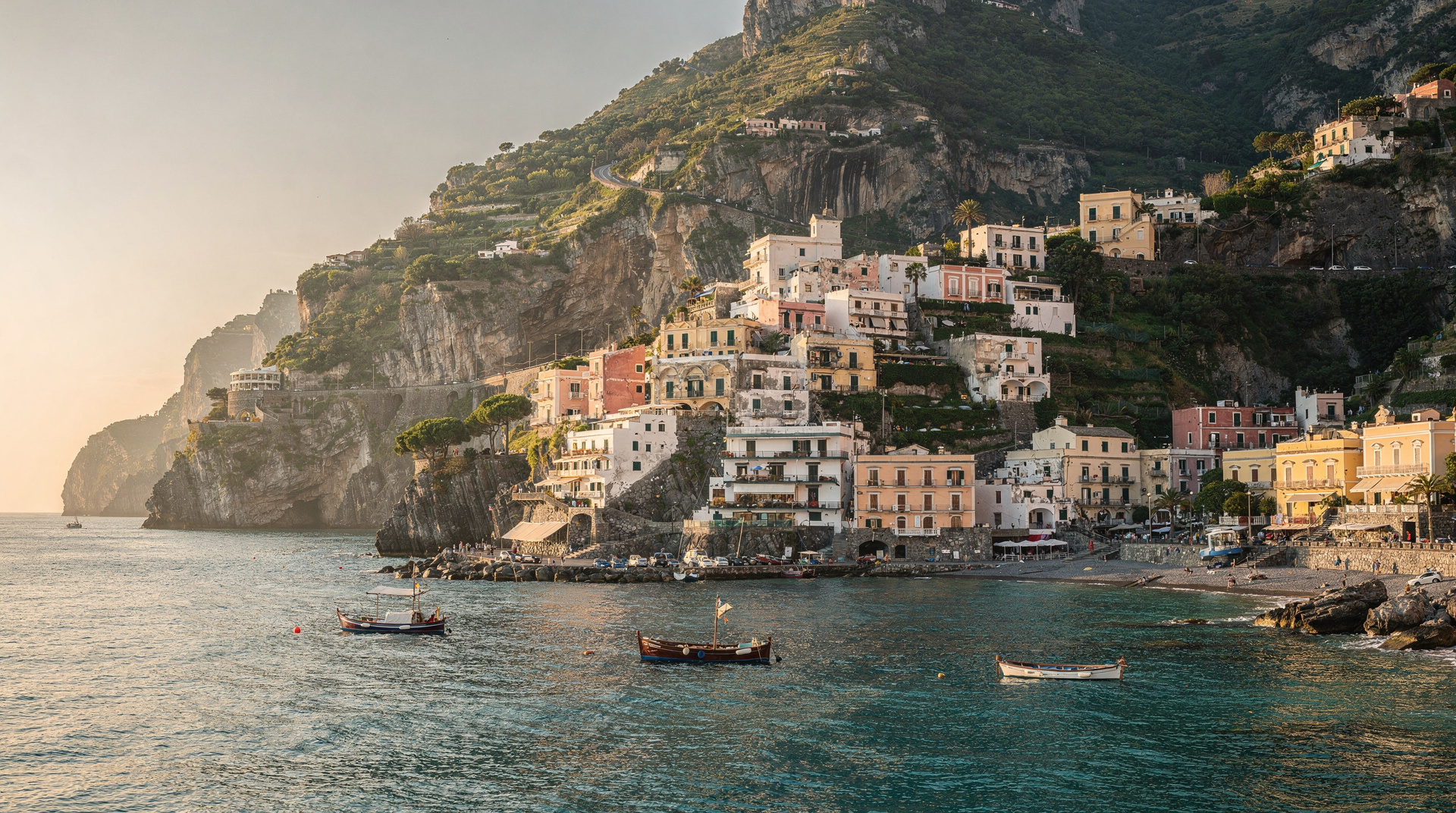
The Amalfi Coast’s eastern end receives a fraction of the visitors that descend on Positano and Amalfi town. Cetara, 18 km east of Amalfi, is the reason the eastern stretch deserves attention. It is a working fishing village where the boats go out at night for anchovies and return in the morning, where the restaurants cook what the harbour brings in rather than what tourists order, and where a fermented fish sauce with Roman precedents is still produced using methods that have not changed in centuries.
| Where | 18 km east of Amalfi, eastern end of the coast |
| Cost | Lunch around €14–€22; colatura di alici €15–€30/100ml |
| Time needed | Half a day, combined with Vietri sul Mare or Salerno |
| Getting there | SITA bus from Salerno (~25 min) or Amalfi (~35 min) |
| Best time | June–July for tuna and fresh anchovy season; many restaurants close in winter |
Cetara is not undiscovered — Italian food journalists have been writing about it for years — but it remains genuinely off the standard tourist circuit. No tour buses. No scheduled stops on the Amalfi Coast day-trip itineraries. The village piazza has one café and two shops. The restaurants are full of Italian food tourists who made the journey specifically for the food, and that tells you most of what you need to know.
Colatura di alici: what it is and why it matters
Colatura di alici is a clear, amber-coloured anchovy extract produced by a slow fermentation process. Fresh anchovies (acciughe), caught from the bay of Cetara between June and July when the fish are at peak fat content, are layered with coarse sea salt in wooden barrels (terzigni, traditionally chestnut). The barrels are sealed with a wooden disc (tompagno) weighted with stones, pressing the fish as they ferment. Over 2–3 years the liquid released by the fish percolates slowly through the barrel and is drawn off through a small hole at the bottom.
The result is concentrated, translucent, intensely flavoured. A few drops replace salt entirely in a dish and add a deep umami layer — not fishy in the way that tinned anchovies are fishy, but savoury and complex. It is used sparingly on pasta (classically spaghetti aglio olio e colatura, a Christmas Eve dish in Cetara), on bruschetta, with grilled vegetables, or in vinaigrette.
The connection to ancient Rome is real: garum, the fermented fish sauce used throughout the Roman world, was produced by nearly identical methods. An amphora of Cetaran garum was found in Pompeii, 60 km to the north. The colatura is effectively a direct continuation of the Roman production tradition.
Since 2020, colatura di alici di Cetara has had DOP (Protected Designation of Origin) status — only colatura produced in Cetara can use the name. Bottles cost €15–€30 for 100 ml depending on producer and age. A 3-year colatura from a small producer (Delfino, Nettuno, or Vincenzo Doria) is worth buying here rather than in Amalfi’s souvenir shops, where the markup is higher and provenance less clear.
The fishing village
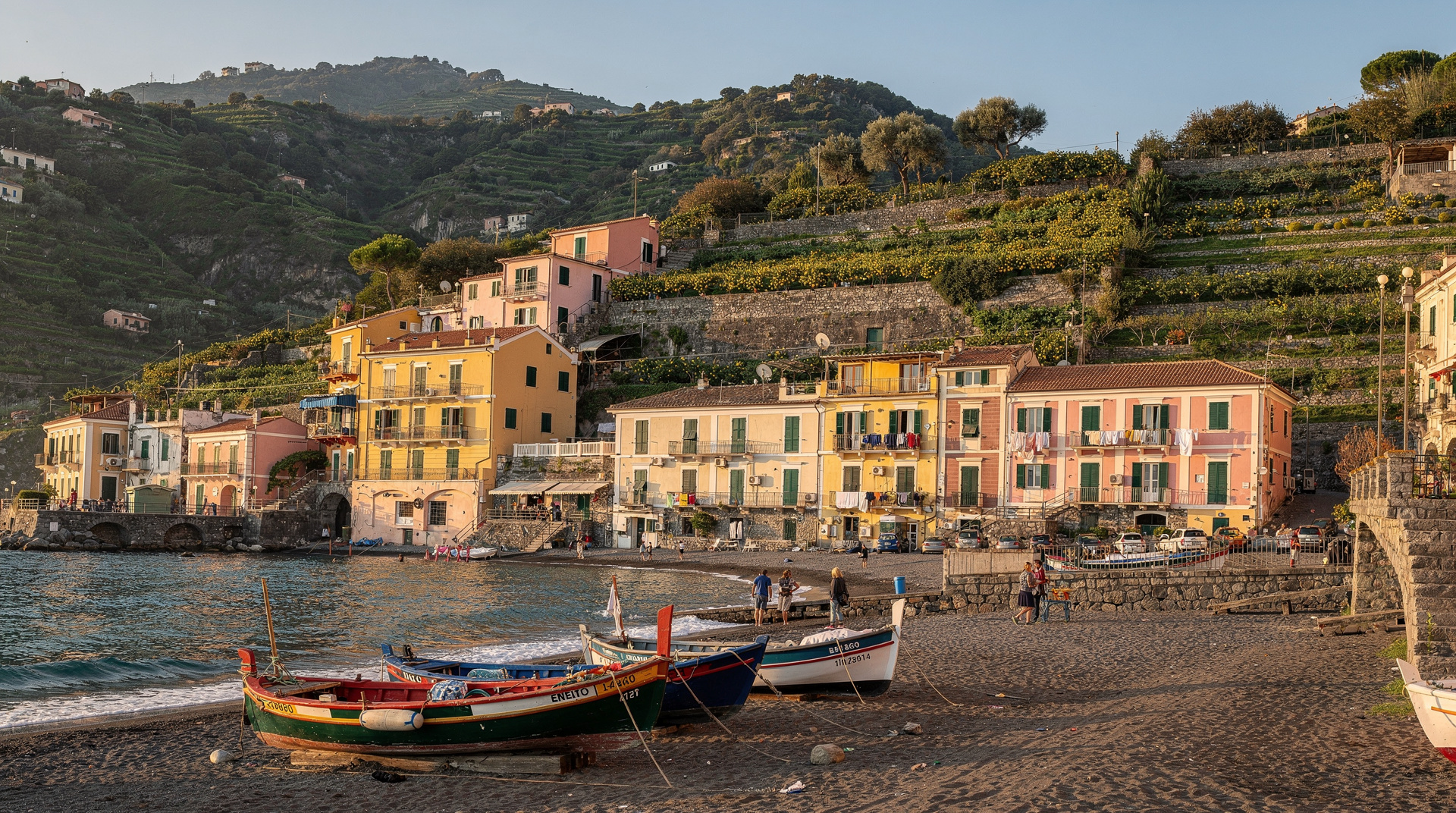
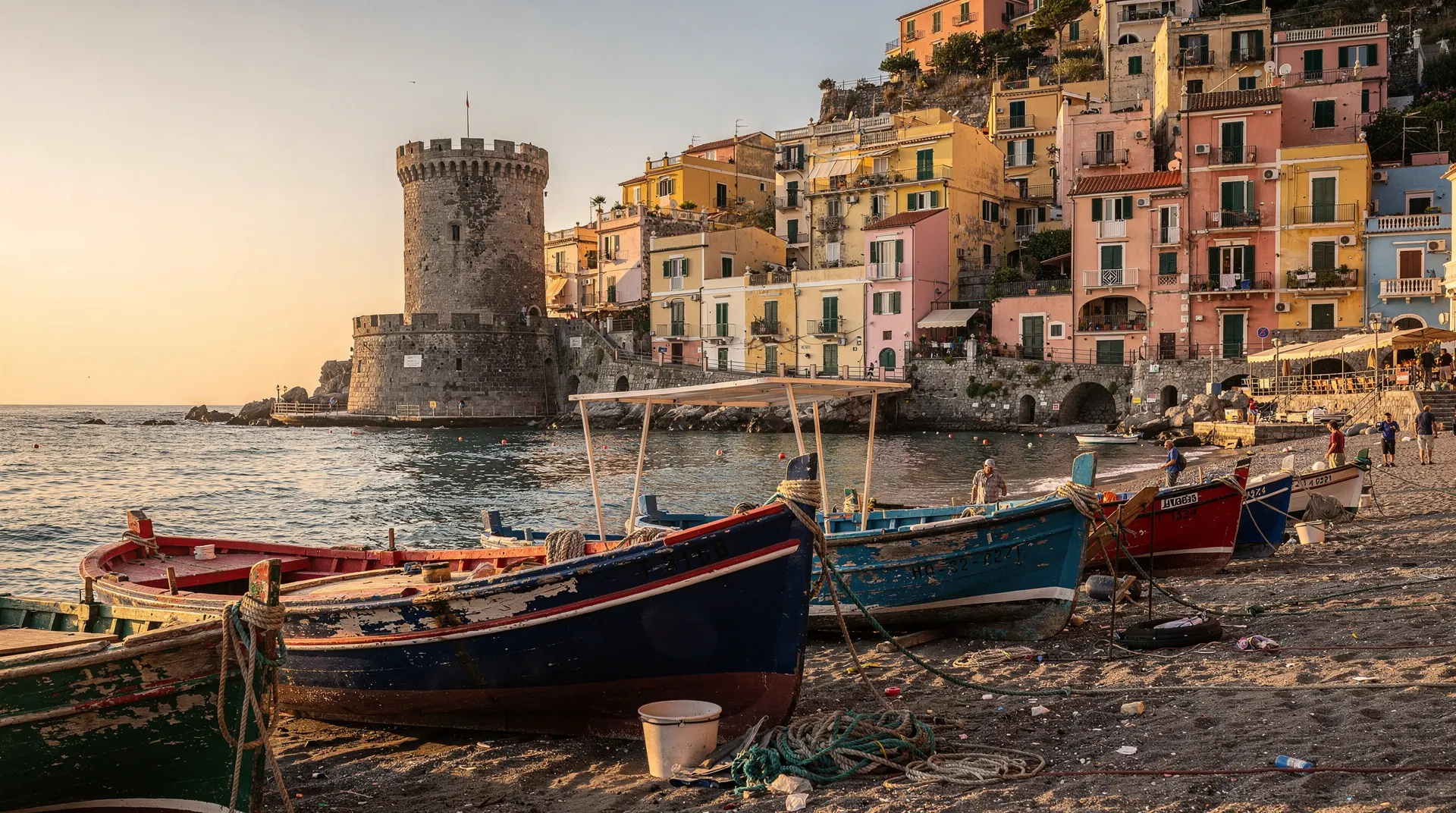
The harbour at Cetara is still working: small wooden fishing boats (gozzi), nets drying in the sun, the smell of salt water and diesel at the right time of morning. The tonnara (bluefin tuna trap fishing operation) has historical roots here going back centuries, though the full mattanza (the traditional mass tuna harvest) no longer operates in the regulated form it once did. Tuna fishing continues in smaller scale through June–July, and fresh tuna appears on restaurant menus in season at prices well below what you would pay in Naples or Rome.
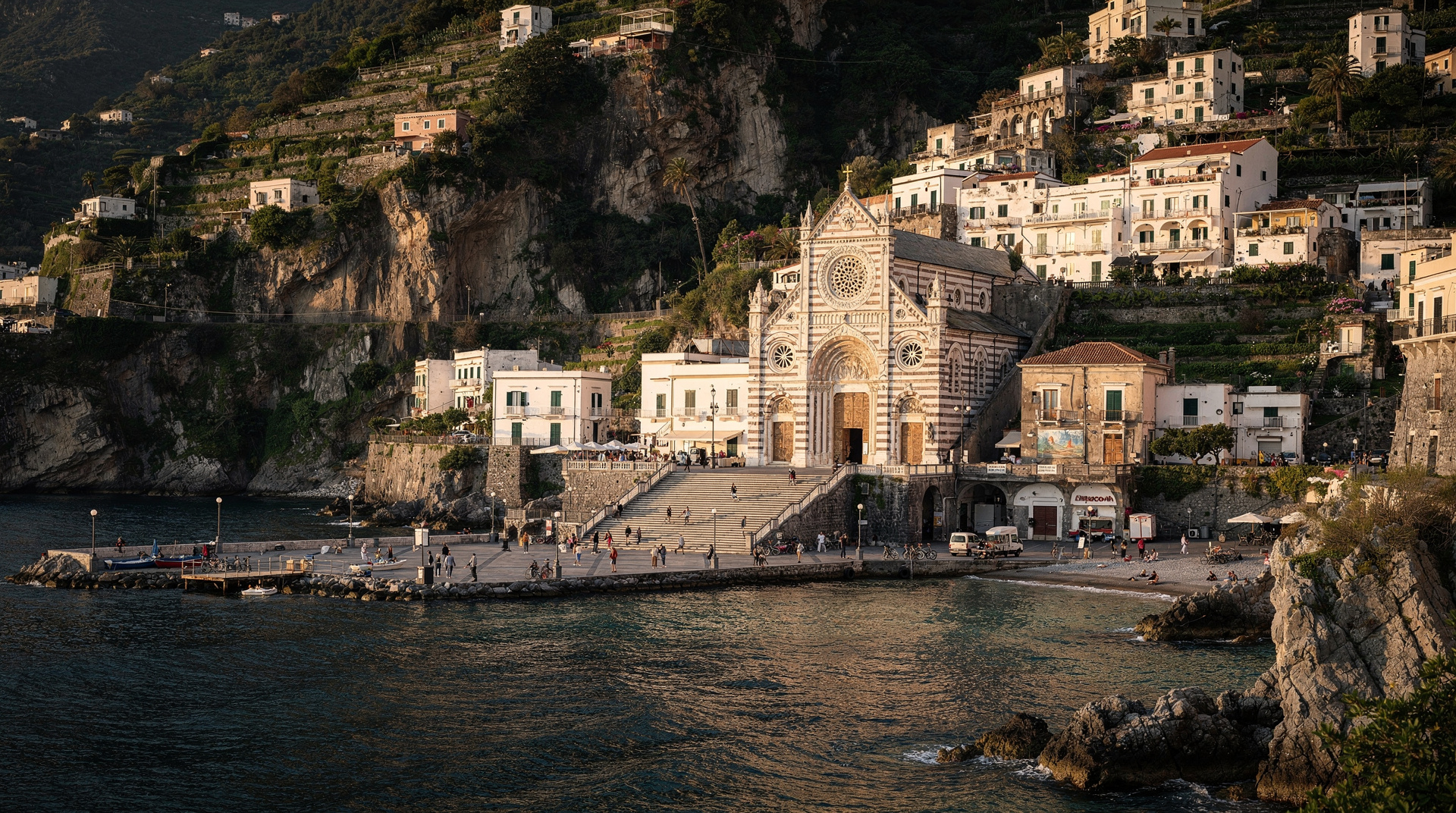
The small Saracen tower at the harbour entrance (Torre Saracena) dates from the 16th century, built as a watchtower against Ottoman raids. It is not open to visitors but provides the characteristic image of the village that appears on every food magazine feature about Cetara.
Restaurants: where to eat in Cetara
The concentration of serious fish restaurants per capita in Cetara is unusually high for a village this size. The following places are established, use local fish, and do not adjust their menu for tourist tastes.
Acqua Pazza (Corso Umberto I 38): the most celebrated restaurant in the village, founded by the Giordano family in 1990. The menu centres on local fish prepared simply — the house spaghetti alla colatura is the benchmark dish (€16–€18), grilled fresh tuna with capers and olives (when in season, €22–€26). Reserve in advance; closed Tuesday.
Al Convento (Piazza San Francesco): in the former convent, more formal setting, extensive anchovy menu. The antipasto della casa includes six preparations of local anchovies (marinated, fried, under salt, in oil, in colatura). For the full anchovy education: €18 for the antipasto, €15 for the pasta, €20 for the main.
Trattoria La Perla (near the harbour): simpler, lower prices, used by fishermen and locals. Daily specials are on a chalk board. Mixed fried fish plate €14, pasta e fagioli with cozze (mussels) €12. No reservations, tables turn fast at lunch.
For a more casual option, the small bar on the piazza serves the morning catch in fried panini form (alici fritte, totanetti fritti) — a €4 sandwich that beats anything at the Amalfi tourist restaurants.
Walking food tour on the Amalfi Coast including traditional tasting stopsGetting to Cetara
By SITA bus from Amalfi or Salerno
SITA bus from Amalfi east to Cetara: approximately 35 minutes. From Salerno, the SITA 5001 bus reaches Cetara in about 25 minutes and runs more frequently than the western-coast services. Salerno is reachable from Naples by Frecciarossa in 35 minutes (from €9 in advance), making the Naples → Salerno → Cetara route competitive with the SS163 approach.
By car
The SS163 passes through Cetara. The alternating plate-number restriction applies on this section (even plates even dates, odd plates odd dates, 10:00–18:00 June–September). A small car park on the seafront charges €3–€4/hour. Arriving early morning (before 10:00) avoids the restriction and finds parking easily.
By boat from Salerno or Amalfi
Seasonal boat services connect Cetara to Salerno (30–35 minutes) and Amalfi. This is the most atmospheric arrival and allows you to see the village from the water before landing.
Easy boat excursion along the Amalfi Coast from SalernoThe beach
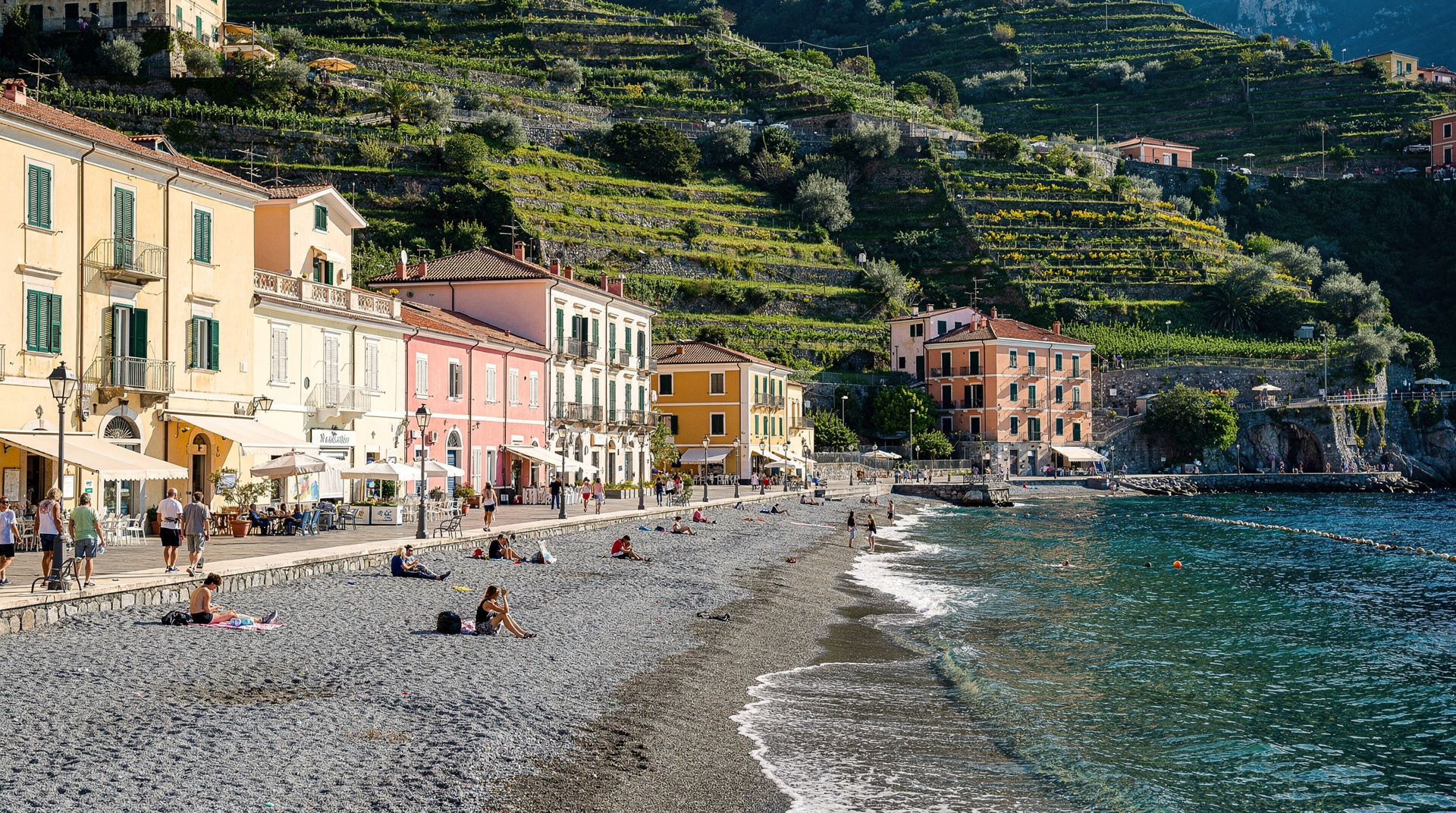
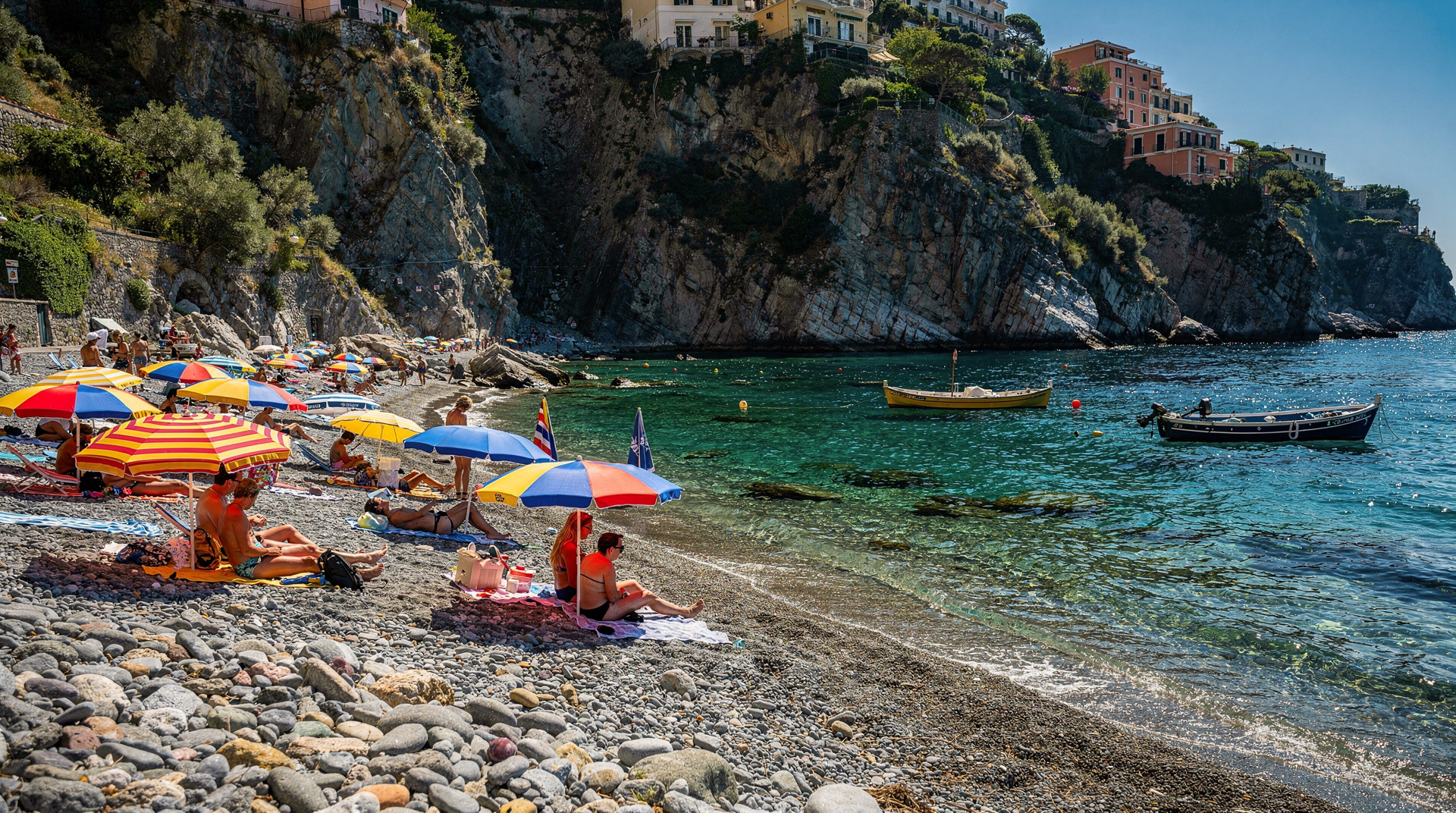
Cetara’s beach is a small crescent of grey pebble between the fishing harbour and the Saracen tower. It is quieter than any beach west of Maiori, has no organised beach club infrastructure (a few plastic chairs belonging to the adjacent bar), and the water is clean. This is not a destination beach but a pleasant by-product of visiting a fishing village. The snorkelling around the tower base has good fish populations.
Buying colatura: producer recommendations
If buying colatura di alici in Cetara, look for:
Delfino Battista (Via Largo Marina): family operation, several generations of production. Sells directly from the facility. Their 24-month colatura (€18 for 100 ml) is cleaner and less intensely saline than some competitors.
Nettuno (Via Lungomare 9): cooperativa anchovy producer, both salted anchovies and colatura. The cooperative model means smaller margins and honest pricing.
Salernitano market in Salerno: Salerno’s main market (just off Corso Garibaldi) stocks multiple Cetara producers at market prices — slightly cheaper than buying in the village itself.
Colatura spoils slowly and travels well; a sealed bottle in checked luggage is fine. It keeps at room temperature for 2–3 years after opening (refrigerate after opening).
Combining Cetara with Vietri sul Mare
Vietri sul Mare, 4 km east, is the Amalfi Coast’s ceramics capital — every hand-painted plate and cup in the coast’s souvenir shops is either made here or imitates what is made here. The two towns combine naturally in a half-day from Salerno: arrive at Cetara for a late lunch (arrive noon, eat by 13:00, leave by 15:00), take the bus 15 minutes east to Vietri for ceramics shopping, then bus back to Salerno. A logical endpoint if you are travelling Naples → Salerno → Amalfi Coast before returning.
The anchovy fishing season and the tuna connection
Cetara’s fishing industry operates on two main calendars: the anchovy season (spring–early summer, when the fish move inshore in the warmer water) and the bluefin tuna season (June–July, when large tuna follow the anchovy shoals northward through the Tyrrhenian).
The anchovies used for colatura di alici are caught specifically in the first weeks of June, when the fish reach peak fat content before spawning. Professional fishermen from Cetara use lampara boats (small vessels with powerful underwater lights) to attract anchovy schools at night. The catch is landed in the early morning, processed the same day into the salt barrels that begin the 2–3 year fermentation cycle, or cleaned and sold fresh to the coast’s restaurants.
The tuna fishing has a more complex history. Bluefin tuna (Thunnus thynnus) populations in the Mediterranean collapsed in the late 20th century due to overfishing, and the traditional Cetaran mattanza — a complex trap-fishing technique using elaborate nets set across tuna migration routes — became economically unviable. The technique requires large crews and considerable equipment; as tuna populations declined and regulations tightened, the full mattanza was discontinued. Smaller-scale tuna fishing continues using longlines and traditional gozzi, producing the fresh tuna (June–July) that appears on Cetara restaurant menus as tonno fresco — different from the farmed bluefin marketed elsewhere and genuinely worth ordering in season.
The Torre Saracena and coastal defence history
The defensive tower at the harbour entrance — the Torre Saracena — was built in 1480 under Aragonese rule as part of the coastal watchtower network protecting the Gulf of Salerno from Ottoman and Barbary Coast raids. At its peak the network comprised 339 towers along the Campanian coast, allowing signals (smoke by day, fire by night) to relay warnings from Sicily to Naples in a matter of hours.
Cetara was raided multiple times in the 16th century; a 1544 raid by the Ottoman admiral Hayreddin Barbarossa reportedly carried away most of the coastal population as slaves. The tower provided warning rather than serious defence — its walls are 2 metres thick at the base but the garrison was small. The tower is not open to visitors but is structurally intact and prominently visible from the harbour, where it frames the entrance to the cove.
This history of external threat and coastal vulnerability is shared by all Amalfi Coast towns and is part of why the settlements are compressed at the base of cliffs rather than spread along accessible beaches — defensibility was a design constraint until the 19th century.
Colatura di alici in Italian cuisine: beyond the Cetara shop
Colatura is not widely known outside specialist food circles in Italy, but it has been growing in recognition since the early 2000s when several prominent Italian chefs began incorporating it into restaurant menus. Davide Scabin (Torino) and Heinz Beck (Rome) helped bring it to national attention. Slow Food included it in the Presidio di prodotti tradizionali (Ark of Taste) catalogue.
The canonical home recipe — spaghetti aglio, olio, peperoncino e colatura di alici — is traditionally eaten in Cetara and throughout the Cilento on Christmas Eve (the Catholic vigilia di Natale requires avoiding meat). The dish is technically simple but depends entirely on the quality of the colatura: inferior product (made quickly, from lower-quality fish) produces a flat, excessively salty result. The 2–3 year Cetara DOP version produces a sauce with genuinely complex character — the difference is comparable to vinegar versus aged balsamic.
If you are buying colatura to cook with at home, ask the producer how long the current batch was aged. A 24-month product (the DOP minimum) is the standard; 36-month barrels exist and are the most prized.
Practical information
Opening hours: Cetara’s restaurants typically open for lunch from 12:30 and dinner from 20:00. Many close on Tuesday. In December–February, several establishments close entirely. Verify current hours before making a special journey.
Cash: the village is small enough that some establishments still prefer cash. Bring €50–€100 in notes.
Language: English is spoken at the established restaurants (they receive enough Italian food journalists to handle international visitors) but the village bar and market stalls function in Italian.
Photography: the morning harbour scene (07:00–08:00) when boats return with the overnight catch is the best photographic window. By 10:00 the harbour has resumed its normal quiet state.
Other preserved and fermented seafood on the coast
Colatura di alici is the best-known product from Cetara but not the only preserved-fish tradition on this stretch of coast. Salted anchovies (alici sotto sale) — packed whole in coarse salt in terracotta or wooden containers for at least three months — are sold alongside colatura in the village’s shops and are the base ingredient the colatura itself is drained from.
Marinated anchovies (alici marinate), quick-cured in vinegar or lemon juice rather than long-fermented, are a lighter, more immediately approachable product for visitors who find colatura’s intensity off-putting. Both travel well and are worth buying alongside a bottle of colatura if you want the fuller range of what Cetara’s fishing tradition produces, rather than just the headline item. The Naples food markets guide covers where else in the region to find high-quality preserved fish if Cetara itself isn’t on your itinerary.
Cetara vs Amalfi and Positano restaurants: a value comparison
| Cetara | Amalfi | Positano | |
|---|---|---|---|
| Typical pasta with seafood | €14–€18 | €16–€22 | €20–€28 |
| Menu adapted for tourists | Rarely | Often, near the Duomo | Almost always near the beach |
| Fish source | Local boats, same day | Mixed | Mixed, often further afield |
| Booking needed in season | Recommended for Acqua Pazza | Recommended | Essential |
The pattern holds across the whole coast: the further east you go from the Positano-Amalfi tourist core, the closer the menu gets to what the harbour actually lands that morning, and the lower the price for comparable quality.
A day combining Cetara with Salerno
For visitors based in Naples without a car, the cleanest way to see Cetara is a Naples–Salerno–Cetara day: Frecciarossa to Salerno (35 min from €9), a look at Salerno’s own historic centre and cathedral if time allows, then the SITA 5001 bus 25 minutes east to Cetara for a late lunch, followed by the return bus and train. This avoids the SS163’s plate restrictions entirely and is considerably less time-consuming than approaching from Amalfi or Positano on the western end of the coast. See getting around Campania by train for the wider rail network this relies on.
Salerno to Amalfi Coast day cruise, passing CetaraFrequently asked questions about Cetara
What is colatura di alici and how is it used?
A fermented anchovy extract produced in Cetara under DOP rules since 2020, made by slow-salting fresh anchovies in chestnut barrels for 2–3 years. It is used in very small quantities (a tablespoon per pasta serving) as a salt and flavour substitute — deeply savoury, not raw-fish tasting. The classic dish is spaghetti aglio, olio, peperoncino e colatura (Christmas Eve in Cetara). See food-markets guide for context on southern Italian preserved fish traditions.
Is Cetara worth the trip from Naples?
As a standalone destination, it requires about half a day. The trip is most logical as part of an eastern Amalfi Coast half-day (Cetara + Vietri) accessed via Salerno, or as an add-on to a multi-day Amalfi Coast stay. The food quality is genuinely different from the tourist restaurants west of Amalfi — if food is your priority, the journey is clearly worth it.
What is the best time to visit Cetara for food?
June and July for fresh anchovies and tuna. September–October for the bottled colatura purchased fresh from the new season’s barrel. The restaurants serve good fish year-round, but the seasonal products are the reason to time a visit.
Is there a beach in Cetara?
A small pebble beach adjacent to the harbour, quiet and unorganised. Not a destination beach but pleasant for a swim. The main draw is the village and its food, not the beach.
How authentic is Cetara compared to the rest of the Amalfi Coast?
More authentic than Positano, Amalfi town, or Ravello in terms of being a functioning community that exists for reasons other than tourism. The fishing industry, the colatura production, the morning harbour, and the restaurants that serve what was caught that day all reflect a genuine economy. This does not mean it is “undiscovered” — Italian food media has written about Cetara extensively — but it has not been built for tourism in the way the western villages have.
Can I visit Cetara without a car or as a day trip from Naples?
Yes. The most practical route is Naples–Salerno by Frecciarossa (35 min), then the SITA 5001 bus to Cetara (25 min). No car is needed, and the total one-way journey from central Naples runs about 90 minutes door to door.
Top experiences
Bookable activities with verified prices and instant confirmation on GetYourGuide.