Minori
Minori is the Amalfi Coast's city of taste — home to De Riso pastry, sfogliatella Santa Rosa, a free Roman villa, and almost no tourist crowds.
Amalfi Coast: Cooking Class with Local Typical Dishes
Quick facts
- Population
- ~2,800 residents
- Specialty pastry
- Sfogliatella Santa Rosa (origin here)
- Key sight
- Roman Villa (1st century AD)
- From Maiori
- 5 minutes on foot
- From Amalfi by bus
- ~20 minutes (SITA)
- Key pastry shop
- Salvatore De Riso
| Where | Amalfi Coast, 5-minute walk east of Maiori |
| Cost | Roman villa free; De Riso pastries €3–8; beach free |
| Time needed | Half day; easily combined with Maiori |
| Getting there | SITA bus from Amalfi (~20 min) |
| Best time | Year-round for food; April–October for the beach |
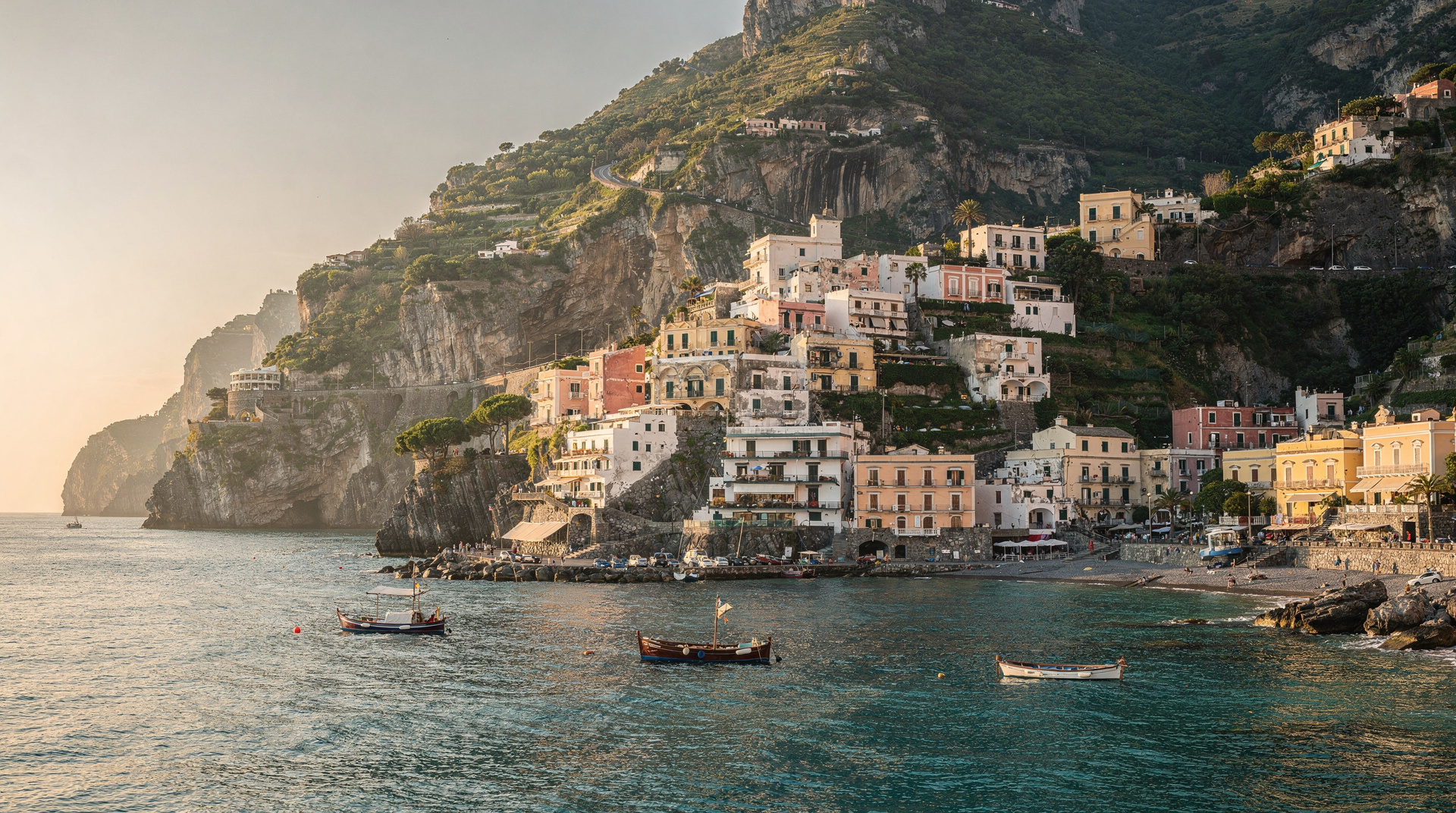
Minori calls itself the “Città del Gusto” — city of taste — a self-designation that sounds like tourism spin until you look at the evidence. The town produced the sfogliatella Santa Rosa, the direct ancestor of Naples’ most famous pastry. It is home to Salvatore De Riso, a pastry chef with a national following whose shop draws serious buyers from across Italy. It has a partly excavated Roman villa with intact floor mosaics open to the public at no charge. And it sits five minutes on foot from Maiori in a location that almost no tour groups reach. The combination of genuine gastronomy, archaeology, and complete absence of tourist infrastructure makes Minori the coast’s best-value stop.
Sfogliatella Santa Rosa: the origin story
The sfogliatella that Neapolitans queue for at Attanasio and Scaturchio was invented not in Naples but in Minori. In the 17th century, the convent of Santa Rosa — on the hill above Conca dei Marini, between Praiano and Amalfi — produced a pastry made from leftover semolina pasta dough stuffed with cream, dried fruits, and nuts, shaped into a curved shell. This was the santa rosa, and it spread from the convent to Naples by the early 19th century, where Pasquale Pintauro refined it into the version now sold citywide.
The original santa rosa is still made on the Amalfi Coast and differs from the Neapolitan sfogliatella in key ways: it uses leavened rather than flaky pastry, has a cream filling with a greater proportion of ricotta and citron, and is topped with icing and a sour cherry. In Naples the sfogliatella riccia (crispy, shell-shaped) is dominant; the original santa rosa is now more a local speciality than a widely known product.
Minori’s connection to this history is that several pastry producers in the town (and just east in Maiori) maintain the older tradition. The Salvatore De Riso patisserie on the Corso Vittorio Emanuele is the most famous.
Salvatore De Riso
De Riso is a pastry chef and author who built a national reputation from this small coastal town. His delizia al limone — a dome-shaped sponge soaked in lemon cream with a lemon cream filling, using the sfusato amalfitano lemon cultivar grown on the coastal terraces — is widely cited as the definitive version of the dish. The cake became a kind of Amalfi Coast emblem.
The shop on the main street (Corso Vittorio Emanuele) is the original location. It is not hidden and not cheap: a delizia al limone costs €5–€8 per slice, a whole tart €35–€55. Pastries (sfogliatella santa rosa, babà, torta ricotta e pera) in the €3–€5 range. The counter display includes seasonal items — profiteroles with local hazelnut cream in autumn, Easter colomba, Christmas panettone — made to a quality well above standard patisserie.
If you are travelling the Amalfi Coast and care about food, this is worth 20 minutes of your itinerary.
Cooking class in Minori learning traditional Amalfi Coast dishesThe Roman villa: Villa Marittima
A 1st-century AD Roman maritime villa was discovered under Minori’s town centre during construction work in 1932 and excavated over subsequent decades. The site (Via Camaione, Antiquarium di Minori) is partially open to visitors — free entry — and contains an intact cryptoporticus (a roofed subterranean gallery used as a cool summer walkway), floor mosaics in black and white tesserae, and a large nymphaeum (decorated fountain room) with original fresco fragments still visible.
The villa is believed to have belonged to a wealthy Roman family connected to the imperial court. Its scale suggests high status: the portion excavated is only a fraction of the original structure, which extends under surrounding buildings. The attached museum has finds from the site including amphorae, marble fragments, and everyday domestic objects.
Visiting hours vary seasonally; check locally. The site is typically open 09:00–13:00 and 16:00–18:00 in summer. A visit takes 30–45 minutes. This is the only significant Roman site directly on the Amalfi Coast between Pompeii and Paestum, and its obscurity is disproportionate to its quality.
The beach and town centre
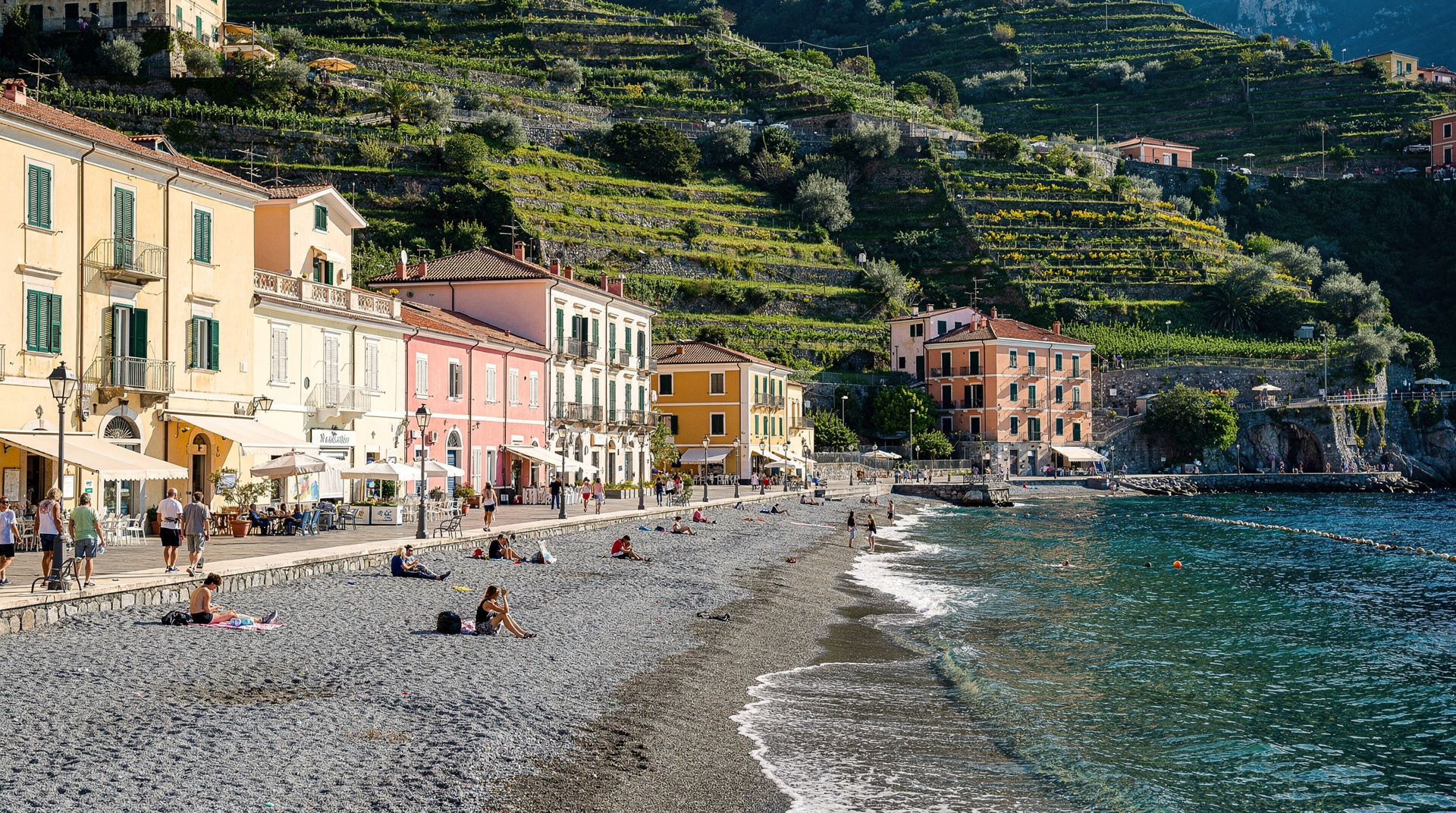
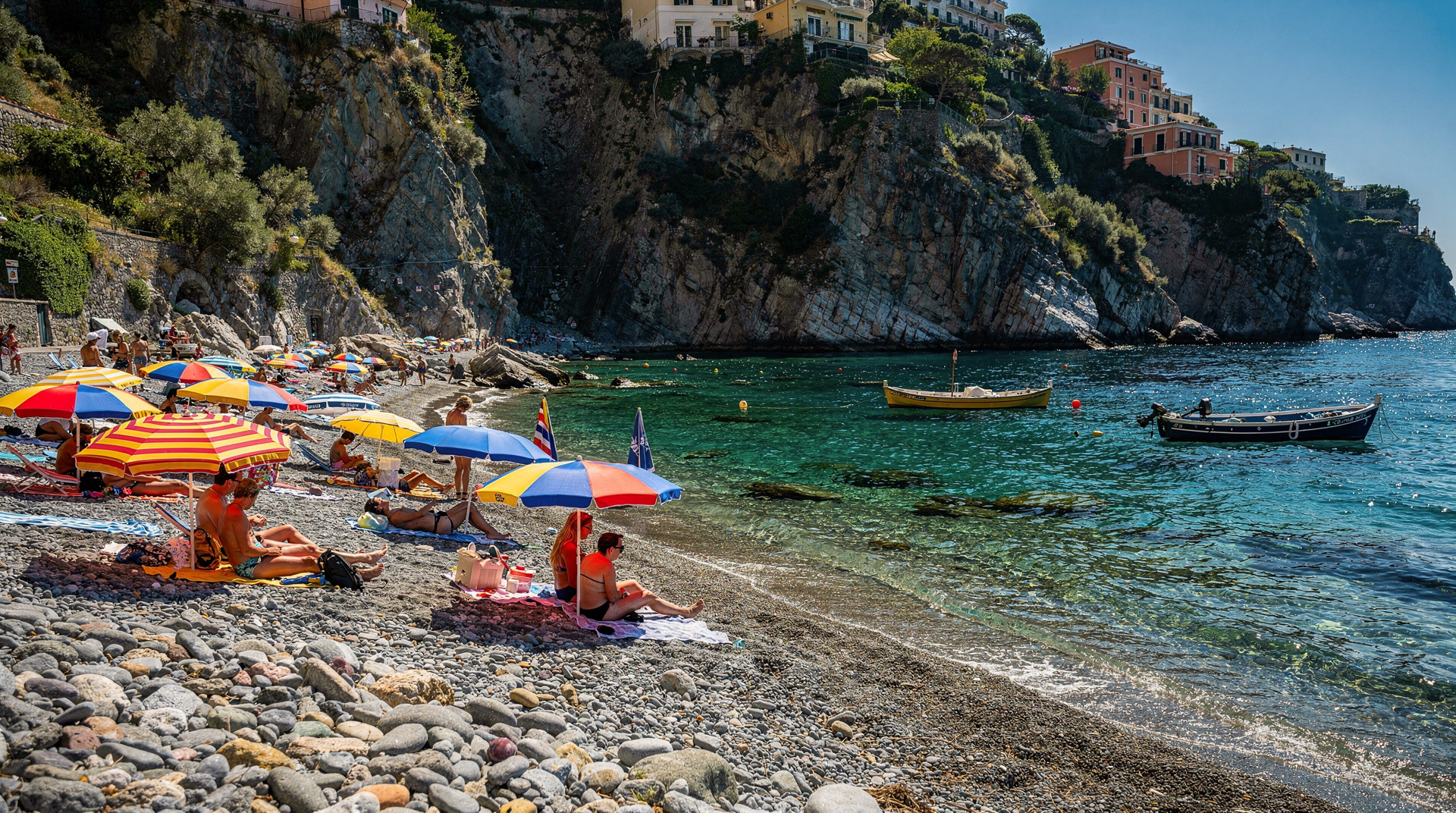
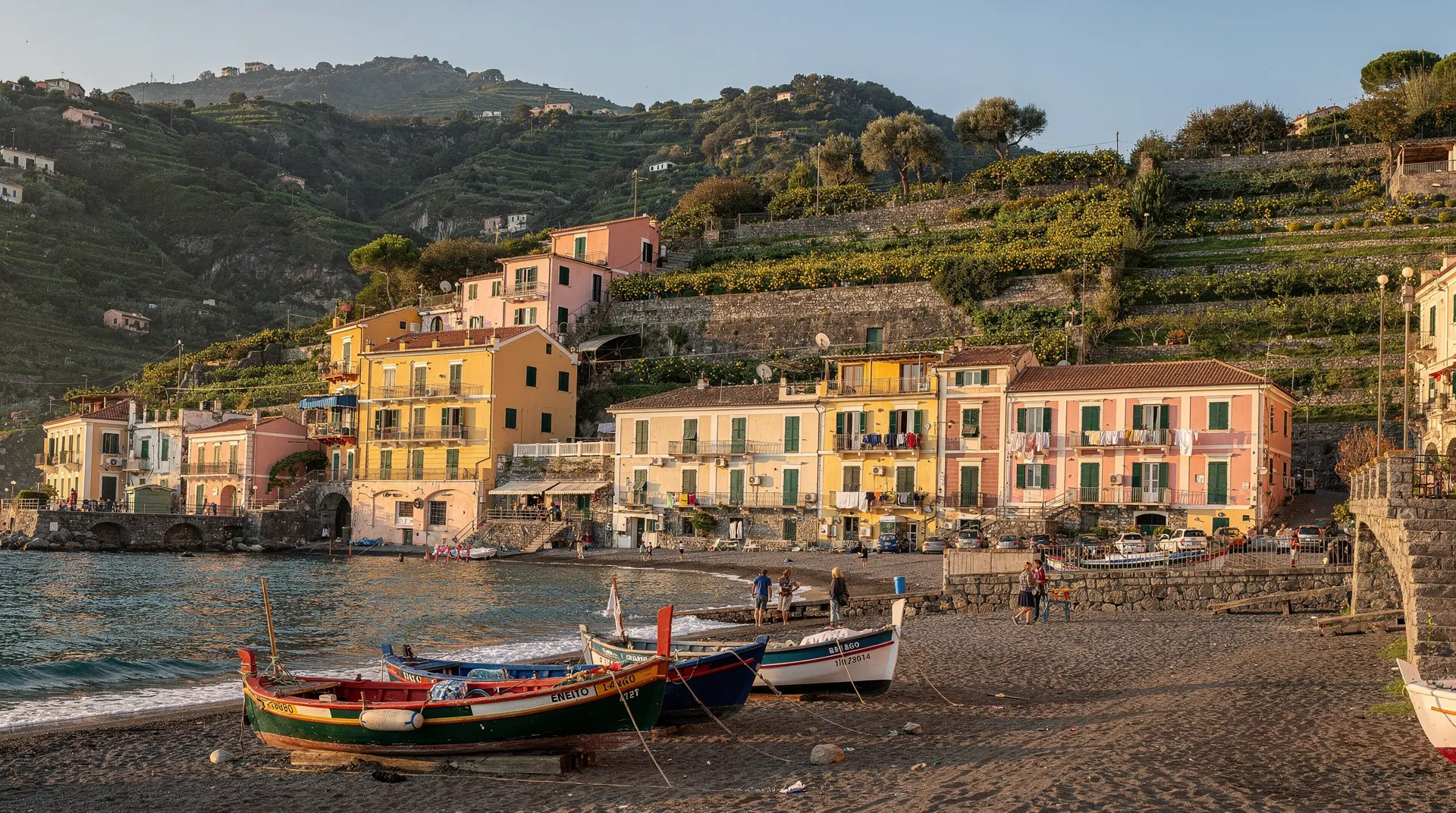
Minori’s beach is similar to Maiori’s — dark sand and fine pebble, with a free public section — but shorter and slightly narrower. It is sufficient for swimming and sunbathing in a town that has no beach club ambitions. The Lungomare Santa Trofimena (the seafront promenade) is a pleasant evening walk with low-key bars and gelaterie.
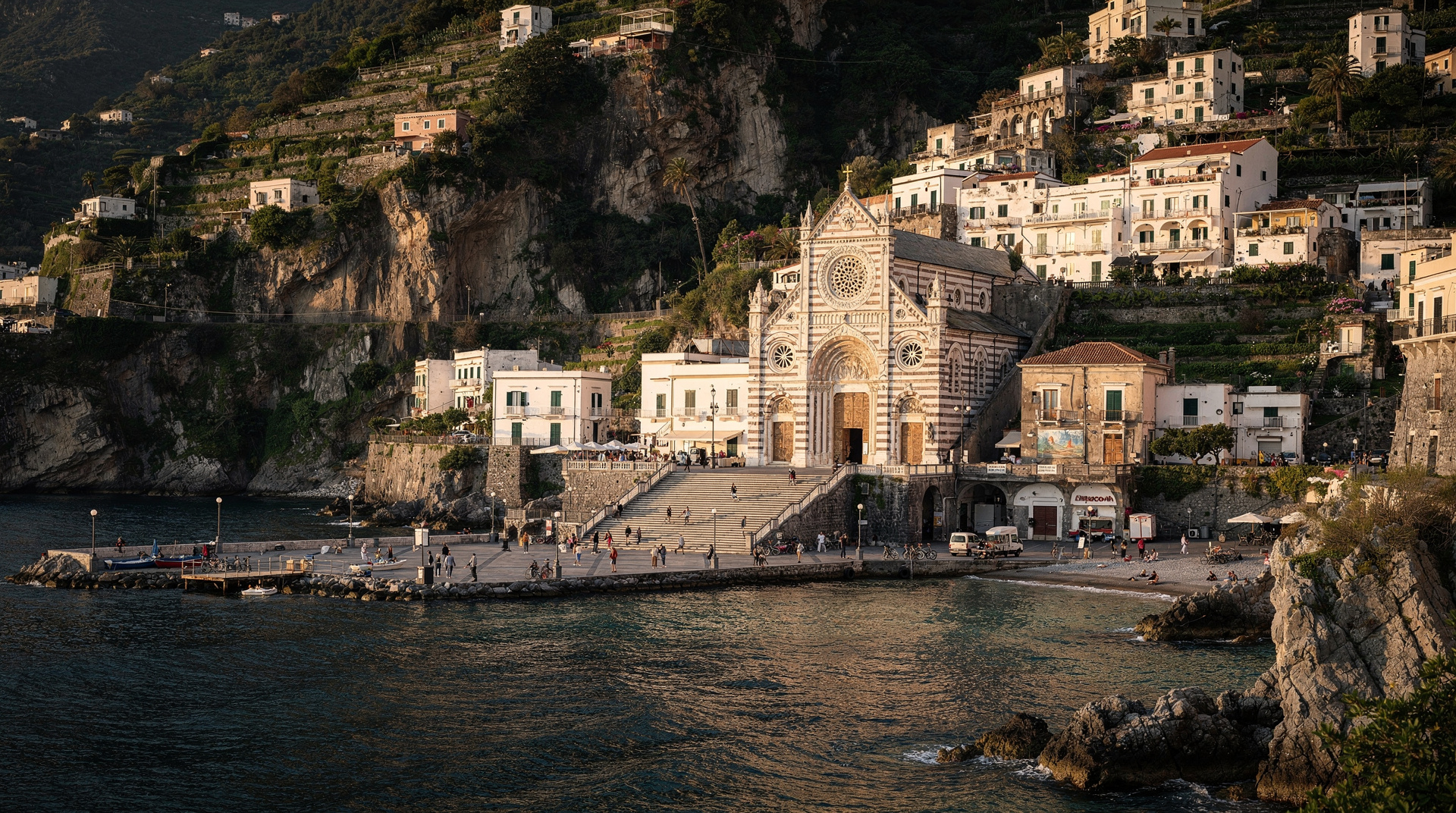
The old town climbs steeply from the seafront. The Basilica di Santa Trofimena (patron saint of Minori) is worth a quick visit: an 18th-century structure with a silver reliquary of the saint and a crypt housing an older medieval chapel. The feast of Santa Trofimena (5 July) is celebrated with a procession that carries the reliquary through the streets — one of the more genuine popular festivals on the coast.
Connecting Minori with Maiori and Amalfi
Minori and Maiori are 600 metres apart on foot — a flat five-minute walk along the seafront. Combining the two in a half-day is logical: arrive at Maiori by SITA bus from Amalfi or by ferry from Salerno, walk to Minori for the Roman villa and a pastry at De Riso, walk back to Maiori for lunch, and return by bus.
From Minori to Amalfi by SITA bus: about 20 minutes, €1.30.
Ceramics and artisan crafts
Minori has a small but genuine ceramics tradition, part of the same broader Campanian majolica culture that made Vietri sul Mare famous a little further along the coast. Several small workshops in the old town produce hand-painted tiles, plates, and decorative pieces using traditional yellow, blue, and green glazes depicting lemons, fish, and coastal scenes. Prices are noticeably lower than in the dedicated ceramics towns because Minori isn’t marketed as a ceramics destination, even though the quality of the better workshops is comparable.
A hand-painted tile typically costs €8–15; a decorative plate €20–40 depending on size and the artist’s reputation. Buying directly from a workshop rather than a general souvenir shop usually means a fairer price and a genuine local product rather than an imported reproduction — ask whether pieces are made on-site if authenticity matters to you.
Local food beyond De Riso
Ristorante Gambardella (Lungomare Santa Trofimena): family restaurant on the seafront, known for pasta e patate (pasta with potato and provola, a classical Neapolitan recipe), spaghetti al pomodoro fresco (fresh tomato, basil, local olive oil), and grilled fish. Lunch for two with wine approximately €45–€55.
La Brace (Via Amendola, five minutes from the beach): pizza and grilled meat, less formal than the seafront restaurants, used by local families. Margherita €7, pizza con provola e salsiccia €10.
The local version of the sfogliatella santa rosa is available at multiple bakeries along the Corso. Prices are lower than De Riso (€2–€3 per piece) and quality is respectable, though the De Riso version remains the definitive reference.
Cooking class on the Amalfi Coast: mozzarella, pasta, and tiramisuThe sfusato amalfitano lemon: context for the food
The lemons used in Minori’s pastries, and throughout the Amalfi Coast’s cuisine, are a specific cultivar: the sfusato amalfitano, a large, elongated lemon with a thick fragrant peel and relatively low acidity compared to commercial Sicilian or Spanish varieties. It has been grown on the steep terraced hillsides of the Amalfi Coast for at least six centuries, trained on pergolas to protect the fruit from the cliff winds.
The sfusato is not particularly good for juice (the yield is lower than Sicilian lemons) but the peel is exceptional — intensely aromatic, high in essential oil content, less bitter. This makes it ideal for limoncello (lemon liqueur) and the lemon creams used in the delizia and in sfogliatella fillings. It also means the candied peel used in traditional pastries has a flavour depth that commercial candied peel cannot replicate.
The lemon terraces above Minori and Maiori are maintained — with difficulty — by a handful of agricultural families. The terraces require significant hand labour and the economics are marginal. Several have been abandoned in recent decades; the dry-stone walls and pergola frames are visible as ruins on the hillside above the town. The IGP designation (Limone Costa d’Amalfi IGP) provides some market protection for Amalfi Coast lemons.
When De Riso labels a product “con limoni di Minori” or “sfusato amalfitano IGP,” he is referring to fruit from these terraces, grown within sight of the shop. That specificity is the basis of the premium.
Connecting with the Ravello Festival circuit
Minori occasionally serves as an overflow base for Ravello Festival visitors. The festival concerts at Villa Rufolo sell out quickly; accommodation in Ravello does too. Minori, 20 minutes east by bus and bus-transfer, offers B&B rates significantly lower than Ravello hotel rates while remaining on the same coast road.
A practical festival-week itinerary: stay in Minori for two nights, take the SITA bus to Amalfi (20 min), connect to Ravello (20 min) for the evening concert, return to Minori by taxi (€30–€40 from Ravello to Minori). The total transport cost for two evenings at the festival is around €60–€80 — less than the single-night premium of staying in Ravello.
Walking above Minori: the terraced hillside trails
Above Minori and Maiori, the hills are threaded with paths that once connected the lemon terraces and chestnut groves to the coastal towns. These paths are less maintained than the marked trails in the Lattari mountains above Positano and Praiano, but several are still passable and give access to abandoned agricultural landscapes that most visitors never see.
A 2-hour circular walk from Minori climbs through the Reginna Minore valley, past the ruins of abandoned terraces and pergola frameworks for lemon cultivation, to a ridge with views of both the sea and the inland valleys toward Ravello. This walk requires a map or GPS track (downloadable from the Parco Regionale dei Monti Lattari website) and proper footwear. It is not technically difficult but the paths are overgrown in sections and the junctions are unmarked.
The Valle dei Mulini above Amalfi, sometimes included in organised hiking tours, is 30 minutes by SITA bus from Minori and is the more accessible hiking alternative in the same general area.
Minori as a food-focused Amalfi Coast stop
For a trip structured around food rather than beaches and monuments, Minori is a logical anchor point. Within a 30-minute bus radius: Cetara for the colatura di alici and fresh fish (25 min east); Amalfi for the coastal dining scene and the Cloister of Paradise (20 min west); Ravello for the Tramonti DOC wines available at village cantinas (40 min via Amalfi); Maiori for the weekly market and basic provisioning (5 min east on foot).
Adding a cooking class in Minori itself — using the local anchovies, sfusato lemons, and pasta traditions — combines the food context with the production experience. The classes typically cover three dishes (pasta, secondo, dessert), use market-sourced ingredients, and run 3–4 hours.
Cooking class on the Amalfi Coast: mozzarella, pasta, and tiramisuMinori’s beach in practice
Compared to Maiori next door, Minori’s beach is genuinely secondary — shorter, slightly narrower, and without the same reputation. That is precisely why it stays calmer even in August: most beach-focused visitors walk the five minutes to Maiori instead, leaving Minori’s own strip of dark sand and pebble noticeably less crowded. The free public section is easier to find space on here than at almost any comparably accessible beach on the coast.
Water quality is good, and the seafront promenade (Lungomare Santa Trofimena) makes a genuinely pleasant place for an early evening walk with limited crowds, gelato in hand, before or after dinner.
A short walking route through Minori
For visitors with an hour or two, a simple loop covers the town’s essentials without backtracking:
- Start at the Roman Villa (Antiquarium) on Via Camaione — 30–45 minutes for the mosaics and cryptoporticus.
- Walk to the Basilica di Santa Trofimena on the main square — 15–20 minutes including the crypt.
- Corso Vittorio Emanuele — the main pedestrian street, with the De Riso patisserie roughly at its midpoint.
- Lungomare Santa Trofimena — finish at the seafront for a coffee or gelato with sea views.
This loop takes 2–2.5 hours at an unhurried pace and covers everything in this guide except the cooking class and the hillside walking trails, which require a separate half-day.
Practical information
Getting there: SITA bus from Amalfi to Minori, approximately 20 minutes, €1.30. Seasonal ferries connect Minori to Salerno and Amalfi. No major car park — most visitors park in Maiori and walk.
Toilets: public facilities near the beach, seasonal operation.
Market: a weekly Wednesday morning market on the seafront sells local produce, lemons, and household goods. Genuinely oriented toward residents rather than tourists.
High season behaviour: Minori remains relatively uncrowded even in August. The De Riso shop has a queue on summer weekends — arrive before 10:00 or after 17:00 to avoid the wait.
Frequently asked questions about Minori
What is sfogliatella Santa Rosa?
The original version of the sfogliatella, invented in the convent of Santa Rosa near Conca dei Marini in the 17th century. It uses leavened dough (not flaky pastry), a richer cream filling with citron and ricotta, and is topped with icing and a sour cherry. The Neapolitan sfogliatella riccia developed from this recipe. See sfogliatella and pastries guide for more detail.
Is the De Riso shop worth visiting?
For anyone interested in southern Italian pastry and dessert, yes. The delizia al limone is a genuine regional benchmark and the shop is one of the few on the Amalfi Coast that makes the case for local produce (sfusato amalfitano lemons, local hazelnuts) as premium ingredients rather than tourist decoration. Prices are high but the quality is real.
Is the Roman villa in Minori worth seeing?
Yes, especially if you find the more visited sites at Pompeii and Herculaneum interesting. The in-situ mosaics and the intact cryptoporticus give a vivid sense of Roman coastal luxury at a site that almost no general tourist visits. Entry is free; budget 30–45 minutes.
How do you combine Minori with the rest of the Amalfi Coast?
The most logical combination is Minori + Maiori in a half-day (walk between them in 5 minutes), reached by SITA bus from Amalfi. For a full day, add Atrani (20 minutes by bus west, or add it during the Amalfi visit) and the Valle delle Ferriere walk above Maiori.
Does Minori have accommodation?
Yes. Small B&Bs and holiday apartments are available at lower prices than Positano or Amalfi. As a base, Minori offers authentic local atmosphere and practical access to the coast by bus and (seasonal) ferry. A good option for travellers who want to cook for themselves with local market produce.
Is the Basilica di Santa Trofimena worth visiting?
The basilica is worth 20 minutes for the crypt and the silver reliquary of Santa Trofimena, a 3rd-century martyr whose cult has been practised on the Amalfi Coast since at least the 9th century. The lower crypt contains the medieval chapel — architecturally more interesting than the 18th-century nave above it. Entry is free; open for visitors outside Mass hours (usually 09:00–12:00 and 16:00–19:00).
What are the best local souvenirs to buy in Minori?
Colatura di alici from Cetara (sold in Minori shops), sfusato amalfitano IGP lemons or lemon products (De Riso sells jarred lemon cream and candied peel), and local limoncello at the smaller producers rather than the souvenir-shop brands. Hand-painted ceramics from Minori’s artisan workshops are less marketed than those in Vietri but of comparable quality at similar prices.
How does Minori’s food scene compare to Cetara?
Different focus: Cetara is about fish — specifically anchovy, colatura, and fresh tuna in season — with a fishing-port culture that shapes its restaurants. Minori is about pastry, pasta, and the intersection of domestic Campanian cooking with the coast’s agricultural produce. A full Amalfi Coast food itinerary would include both: Minori for pastry and Roman archaeology, Cetara for fish and colatura. The two are 25 minutes apart by bus.
How do I get to Minori from Naples?
Naples Centrale → Sorrento by Circumvesuviana (~65 min, €4.50) → SITA bus east toward Amalfi/Salerno, stop at Minori (~70 min from Sorrento, ~€3). Total approximately 2.5 hours. Alternatively: Naples → Salerno by Frecciarossa (35 min, from €9) → SITA bus west to Minori (~60 min). The Salerno approach is faster and more comfortable in summer when the Circumvesuviana is overcrowded.
Is Minori’s beach worth visiting instead of Maiori’s?
Only if you specifically want fewer people — Minori’s beach is shorter and narrower than Maiori’s longer, more famous strip. Most visitors treat the two as a single beach-and-food half-day: swim wherever there’s space, then walk the five minutes between them for food and sights.
How much time do I need for the Roman villa in Minori?
30–45 minutes for a thorough look at the mosaics, cryptoporticus, and nymphaeum. It is compact compared with Pompeii or Herculaneum but rewards unhurried attention precisely because there are rarely other visitors competing for the same sightlines.
Top experiences
Bookable activities with verified prices and instant confirmation on GetYourGuide.