Best beaches on the Amalfi Coast: honest rankings and what to expect
From Positano: Half-Day Amalfi Coast Boat Tour & Snorkeling
What are the best beaches on the Amalfi Coast?
For scenery: Spiaggia Grande in Positano (gravel, expensive loungers, extraordinary backdrop). For quiet: Arienzo or Santa Croce near Amalfi (boat access only). For local character: Atrani beach (free, no frills) or Cetara. Most Amalfi Coast beaches are gravel or pebble, not sand.
| Best overall | Spiaggia Grande, Positano — for the view, if you accept the price |
| Best water quality | Arienzo or Santa Croce — boat-access coves |
| Best for families | Maiori — widest, flattest, calmest |
| Best free option | Atrani — local, unpretentious, no lido premium |
| Typical lido cost | around €20–35 per person/day for two loungers + umbrella |
| Sand or gravel | Almost entirely gravel/pebble, except Maiori |
What Amalfi Coast beaches are actually like
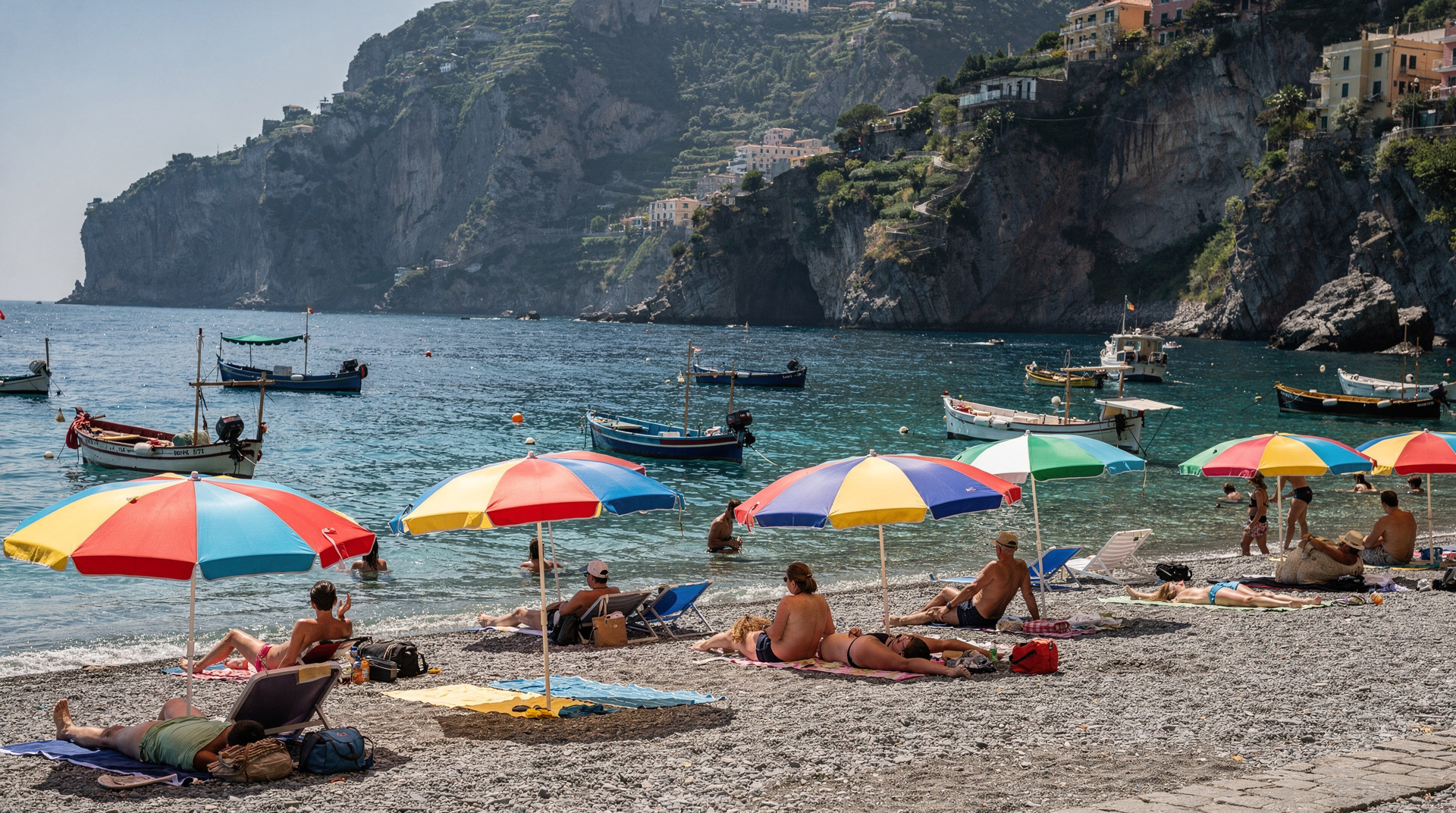
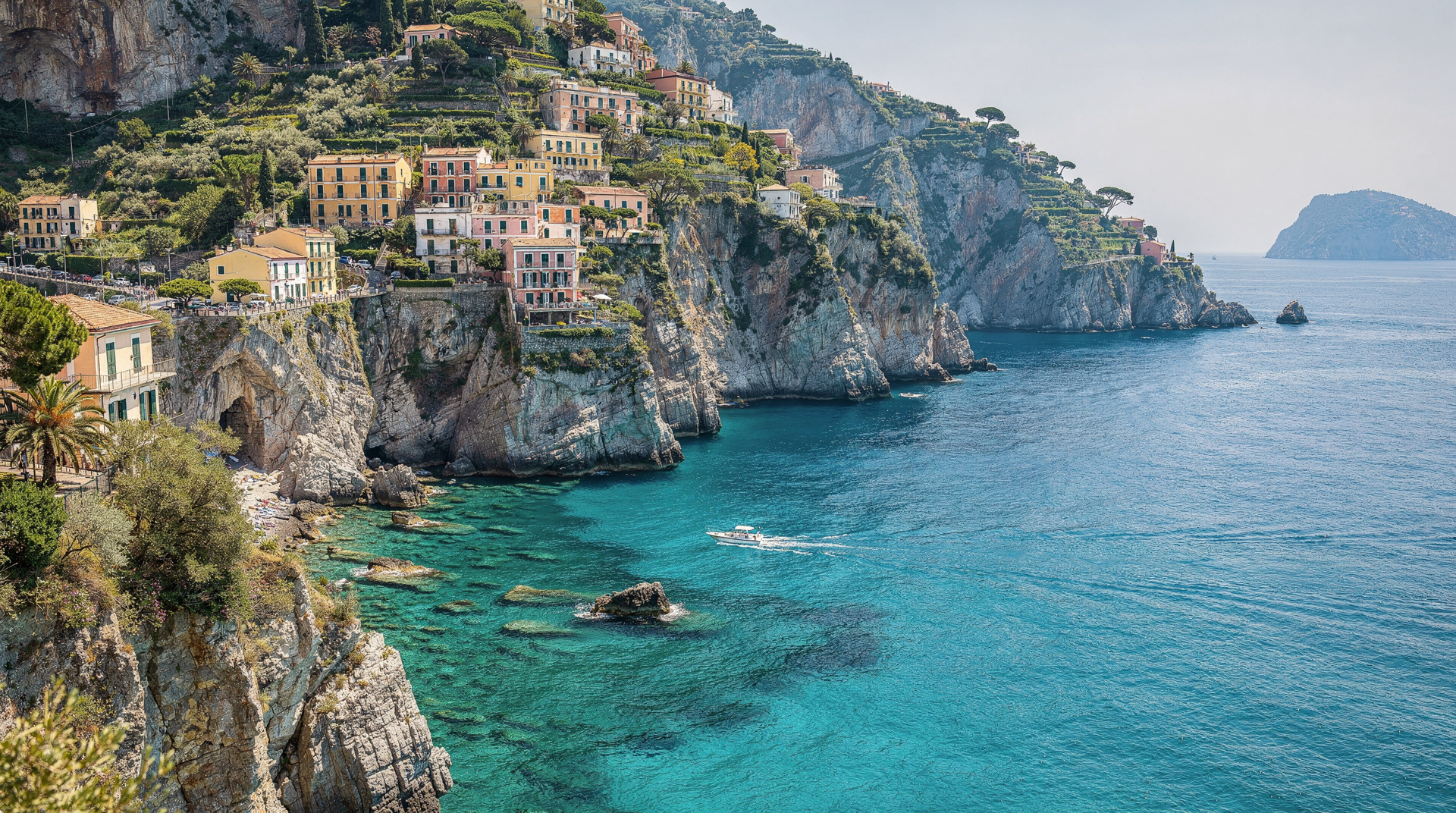
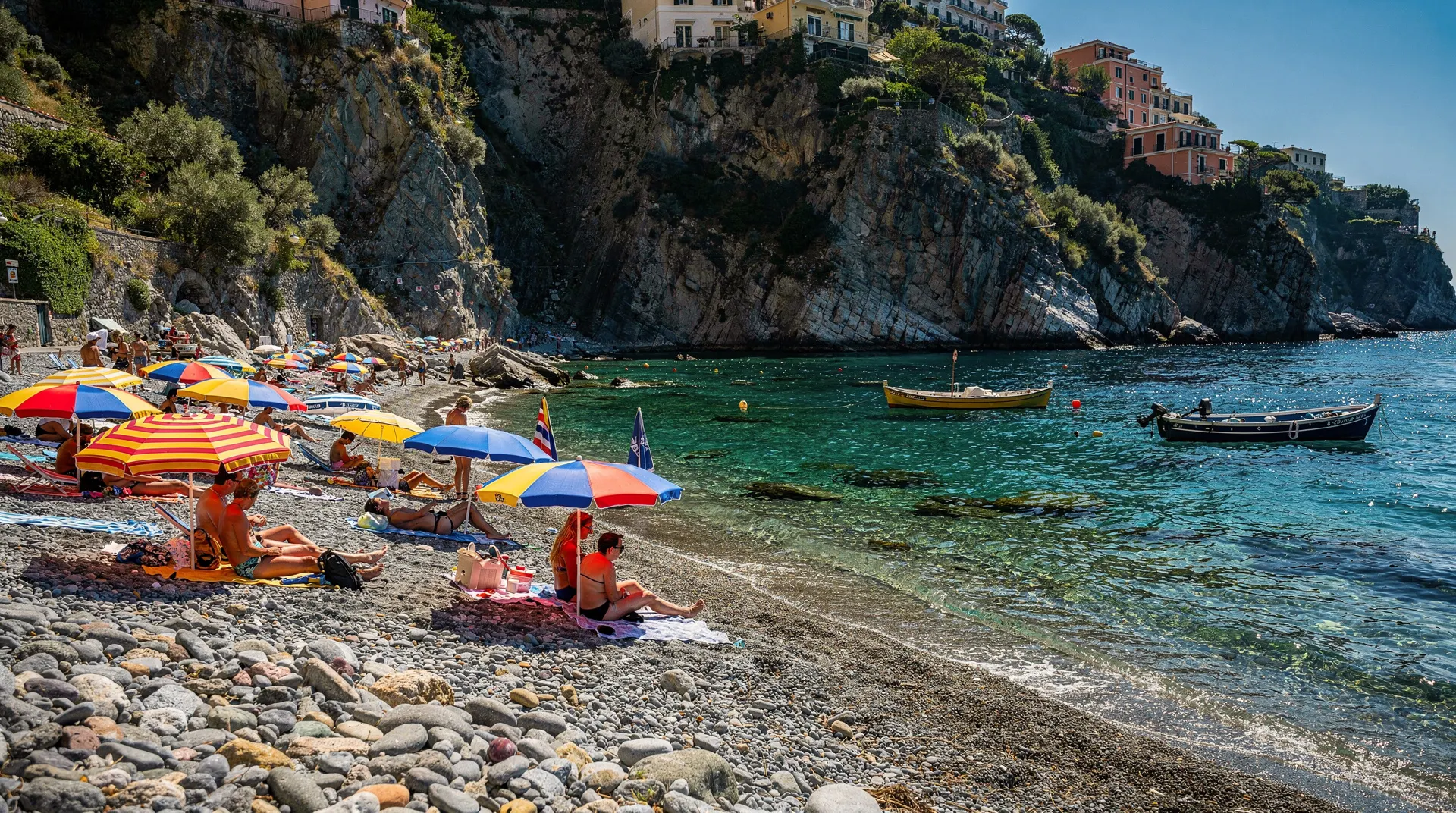
The first thing to set right: this is not the Caribbean. Amalfi Coast beaches are narrow strips of dark grey volcanic gravel at the base of dramatic cliffs, separated by rocks, accessible by steep paths or stairs, and in peak summer, packed with people paying €25–35/day to rent a chair and umbrella from a private lido operation.
This is not a criticism — the setting is extraordinary and the water genuinely clear. But arriving with expectations of wide sandy beaches and finding a 40-metre strip of grey gravel behind a row of deck chairs is a common disappointment. Knowing what each beach offers before you go saves time and money.
The best beaches for solitude and water quality on the Amalfi Coast are the ones you can only reach by boat.
The main beaches, ranked by type
Spiaggia Grande, Positano
For: Spectacular backdrop, lively atmosphere, accessible. Against: Expensive, crowded, gravel not sand.
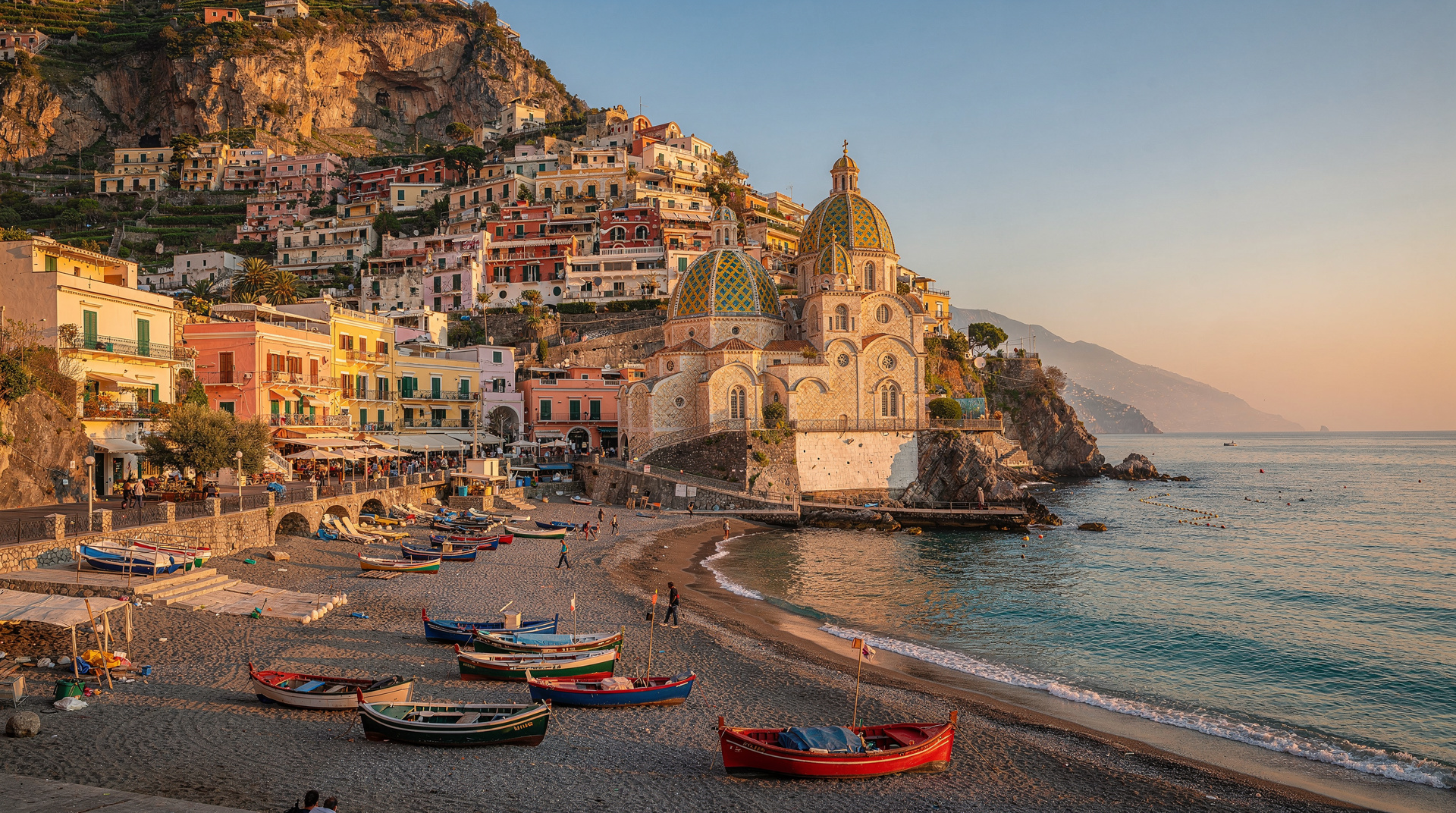
Positano’s main beach is about 300 metres of dark volcanic gravel, framed by the cliff-stacked town rising above it. The visual is genuinely famous. The reality at midday in August: most of the beach is covered with private lido chairs (€25–35/person/day), a narrow free section at each end fills by 9:30, and the water is churned by boat traffic from mid-afternoon.
The beach is at its best early morning (before 9:00, when the light is soft and the chairs are empty) and evening. For swimming, mornings are also calmer.
Free section: both ends of the beach. The eastern end (near the ferry dock) is slightly larger and better positioned for arriving late.
Fornillo, Positano
For: Less crowded than Spiaggia Grande, more local character, same dramatic setting. Against: Smaller, still charges for loungers at the main areas.
A 10-minute walk west from Spiaggia Grande along the coastal path (Via Positanesi d’America), Fornillo is the second beach in Positano. Proportionally less dominated by private lido operations. The walk itself is good — the path clings to the cliff with views back to Spiaggia Grande.
Marina di Praia, Praiano
For: Small, very clear water, relatively uncrowded, accessible by steps from the road. Against: Very small (about 50 metres), limited facilities, steep approach.
Praiano’s small harbour beach is one of the coast’s better-kept secrets — clear water in a tight rocky cove, with a bar, a restaurant, and a much smaller crowd than Positano. Reached by a signed path from the SS163. The water here is consistently cited as the coast’s clearest outside the boat-only coves.
Arienzo, Positano
For: Crystal-clear water, secluded, excellent snorkelling. Against: Accessible by water taxi only (€5–8 each way) or a very long steep path.
About 1 kilometre east of Spiaggia Grande, Arienzo is a small cove reached mainly by water taxi from Positano’s main beach. The water is turquoise-clear and relatively undisturbed by boat traffic. There is a beach bar and a small number of lounger rentals, but no large lido operation. One of the best swimming spots on the coast.
Fiordo di Furore
For: One of the most dramatic landscapes in Italy, exceptional cliff setting. Against: Tiny beach, extremely crowded in summer, reached by 300+ steps.
The Fiordo di Furore (Fjord of Furore) is a narrow gorge between Conca dei Marini and Furore where a stream meets the sea. The beach at the base is perhaps 20–30 metres of gravel, enclosed by vertical basalt walls. It hosts the annual High Diving World Cup each summer. The descent involves 300+ steep steps from the road. Alternatively, reach it by boat.
In peak summer, the tiny beach is oversubscribed by 10:00. Go early (before 8:30) or by boat in the afternoon after day-trippers have left.
Snorkelling boat tour: Positano and Amalfi CoastSanta Croce, Amalfi
For: Very secluded, excellent water quality, beautiful approach. Against: Boat-access only or a long, steep, unmarked path from the road.
Located 1.5 kilometres west of Amalfi town, Santa Croce is a cove beach of around 60 metres with no lido operations and no roads — accessible only by boat (water taxi from Amalfi, €5–10 each way) or a rough descending path from the Pogerola area above. The water is among the coast’s cleanest, the setting is dramatic, and the absence of commercial infrastructure means you need to bring everything you need for the day.
Atrani
For: Genuinely local atmosphere, free beach, no tourist premium. Against: Small, basic facilities.
Atrani is the smallest municipality on the coast, directly east of Amalfi (10-minute walk along the shore). The beach is a small arc of gravel fronted by a piazza with a bar. No private lidos. No tourist pricing. The espresso at Bar Eden (on the piazza) costs what an espresso should cost. Almost entirely absent from most day-trip itineraries, which is its principal virtue.
Marina d’Amalfi (Amalfi town beach)
Small gravel strip next to the ferry pier. Functional for a quick swim but not the reason to come to Amalfi. The private lido operations here charge similar prices to Positano for inferior views.
Maiori beach
For: The coast’s widest beach (about 600 metres), mixed sand and gravel, genuinely flat. Against: Less visually spectacular than western beaches, more commercial in an ordinary way.
Maiori is an eastern coast town with the largest beach on the Amalfi Coast — wide enough to have a genuinely free section without the cramped competition of Positano. The town is less touristic, the restaurants are priced for locals (seafood €12–18/person), and the atmosphere is normal Italian seaside rather than premium coastal resort.
Cetara
A small fishing village east of Maiori, famous for colatura di alici (anchovy sauce). The beach is a working harbour beach with a small lido section. The real reason to visit Cetara is the excellent seafood restaurants (Acquapazza, La Ciummarella), not the beach.
Boat-access beaches: the hidden coves
The most genuinely beautiful swimming spots on the coast are accessible only by sea — either by water taxi, hired boat, or boat tour. These include:
- Grotta dello Smeraldo approach beaches (near Conca dei Marini)
- Cala di Mitigliano (near Massa Lubrense, technically Sorrentine Peninsula)
- Various unnamed coves between Positano and Praiano
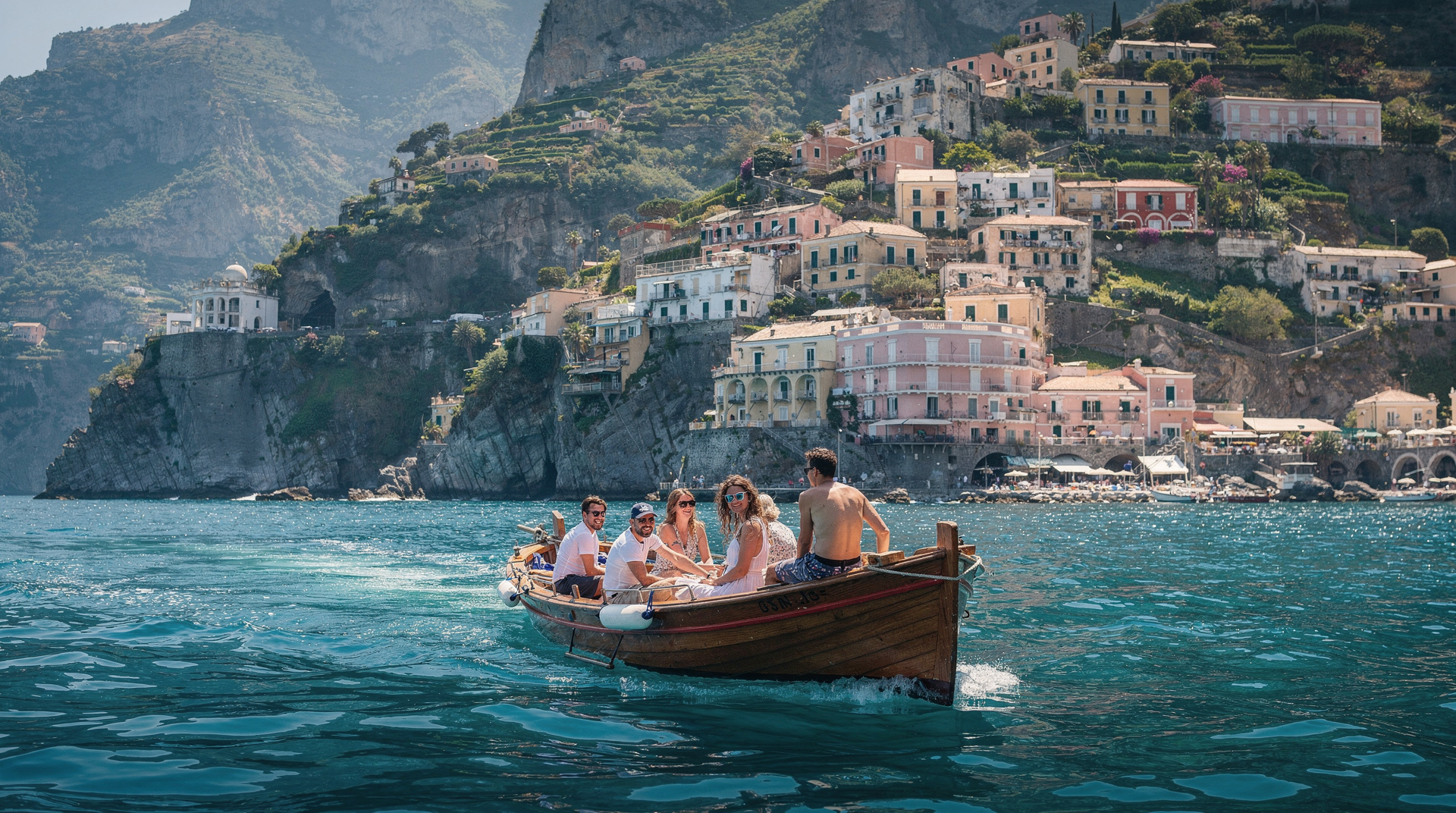
A half-day boat hire from Positano or Amalfi (€80–130 for a small motorboat) gives access to these beaches at your own pace. Alternatively, join a coastal boat tour.
Amalfi Coast snorkelling and boat tour from PositanoWhat to bring
For any Amalfi Coast beach:
- Footwear: water shoes are genuinely useful on the gravel and for walking on rocks into the sea. Optional but recommended.
- Sun protection: the cliff reflection amplifies UV on beach days. Factor 50 is not excessive.
- Cash: beach bars and lido operations are largely cash-only. The nearest ATM may be in Amalfi or Positano town.
- Water: bring extra. Buying water from a beach bar costs €3–4 per bottle.
- Snorkel and mask: worth bringing if you swim. The water off rocky coves is clear with sea life visible to 5–8 metres depth.
On lounger costs: The private lido operations rent chairs and umbrellas at roughly €20–35 per person. The difference in comfort between a rented lounger and lying on the gravel is significant. The difference in comfort between a first-row chair (close to the water, more expensive) and a third-row chair is minor. If you’re paying, the cheapest option in the lido is usually adequate.
Getting to the beaches without a car
Most visitors reach Amalfi Coast beaches by SITA bus, ferry, or on foot from wherever they’re staying, and this is genuinely the easier option — parking on the SS163 in summer is scarce and expensive, and the road itself is not relaxing to drive with a beach bag in the back. Ferries connect Amalfi, Positano, Salerno, and Sorrento in season (roughly Easter to October) and are the fastest way to combine two beach towns in one day without the traffic.
The SITA bus runs the full coast road but gets extremely crowded at peak times in July–August; standing room only is common. See the Amalfi Coast bus (SITA) guide for routes and timing, and the Amalfi Coast by boat guide for ferry schedules and water-taxi options.
If you’re staying in Naples rather than on the coast itself, a beach day is a long one — realistically a full day trip rather than a half-day, given the Circumvesuviana or coach transfer to Sorrento or Positano first. The best beaches near Naples guide covers closer alternatives if a full Amalfi transfer isn’t worth it for a single swim.
Choosing a beach for your priorities
| Priority | Best pick | Why |
|---|---|---|
| Iconic photo | Spiaggia Grande, Positano | The classic cliffside-town backdrop |
| Clearest water | Arienzo or Marina di Praia | Less boat traffic, rockier seabed |
| Lowest cost | Atrani | No lido premium, free access |
| Widest sand-mixed strip | Maiori | Only genuinely spacious beach on the coast |
| Most dramatic scenery | Fiordo di Furore | Fjord walls, but tiny and crowded |
| Easiest with kids | Maiori | Flat approach, calm water, space to spread out |
Staying on the coast rather than day-tripping from Naples makes an early start at the quieter beaches realistic — the where to stay on the Amalfi Coast guide breaks down Positano versus Amalfi versus Praiano as a base. For comparing the coast to nearby alternatives, the Amalfi Coast towns compared guide and Capri day trip guide cover the other classic Bay of Naples swimming options.
Frequently asked questions about Amalfi Coast beaches
When is the sea warm enough to swim?
The Tyrrhenian Sea reaches comfortable swimming temperature from June (approximately 21–22°C). July–August is peak warmth (24–26°C). September is often the best combination of warm water and reduced crowds (23–25°C). By November the temperature drops to 18–19°C — possible but not pleasant.
Are there jellyfish?
Mauve stinger jellyfish (Pelagia noctiluca) appear periodically in the Tyrrhenian, usually in warm, low-wind summer conditions. Local beach bars and harbour offices typically put up flags when jellyfish are present. Check before swimming if the sea looks unusually churned near the surface.
Are Amalfi Coast beaches family-friendly?
The main beaches (Spiaggia Grande, Fornillo, Maiori) have calm water and supervised areas, making them suitable for children. The gravel surface is less comfortable for toddlers than sand. Maiori has the flattest approach and widest beach, making it the most practical family option.
Can I visit multiple beaches in one day?
Yes, if using a boat or water taxi. By road, the narrow SS163 and distances involved mean visiting more than two beaches by land is time-consuming. A half-day boat hire covers 4–5 coves efficiently. See Amalfi Coast by boat.
Frequently asked questions about Best beaches on the Amalfi Coast: honest rankings and what to expect
Are there sandy beaches on the Amalfi Coast?
How much does it cost to use a beach on the Amalfi Coast?
Which beach is best for swimming?
Can I reach beach coves by boat?
What is the Fiordo di Furore?
Top experiences
Bookable activities with verified prices and instant confirmation on GetYourGuide.