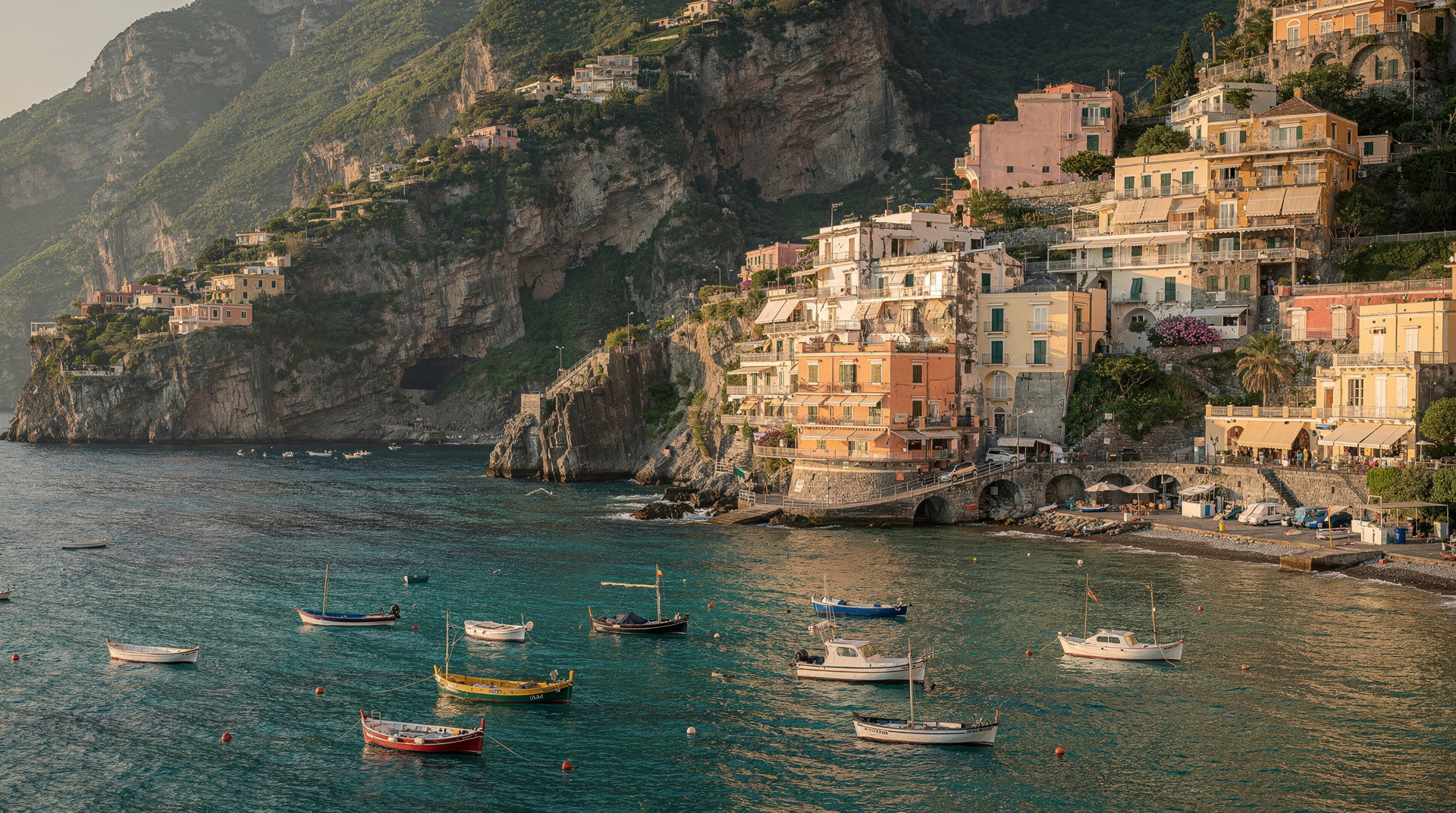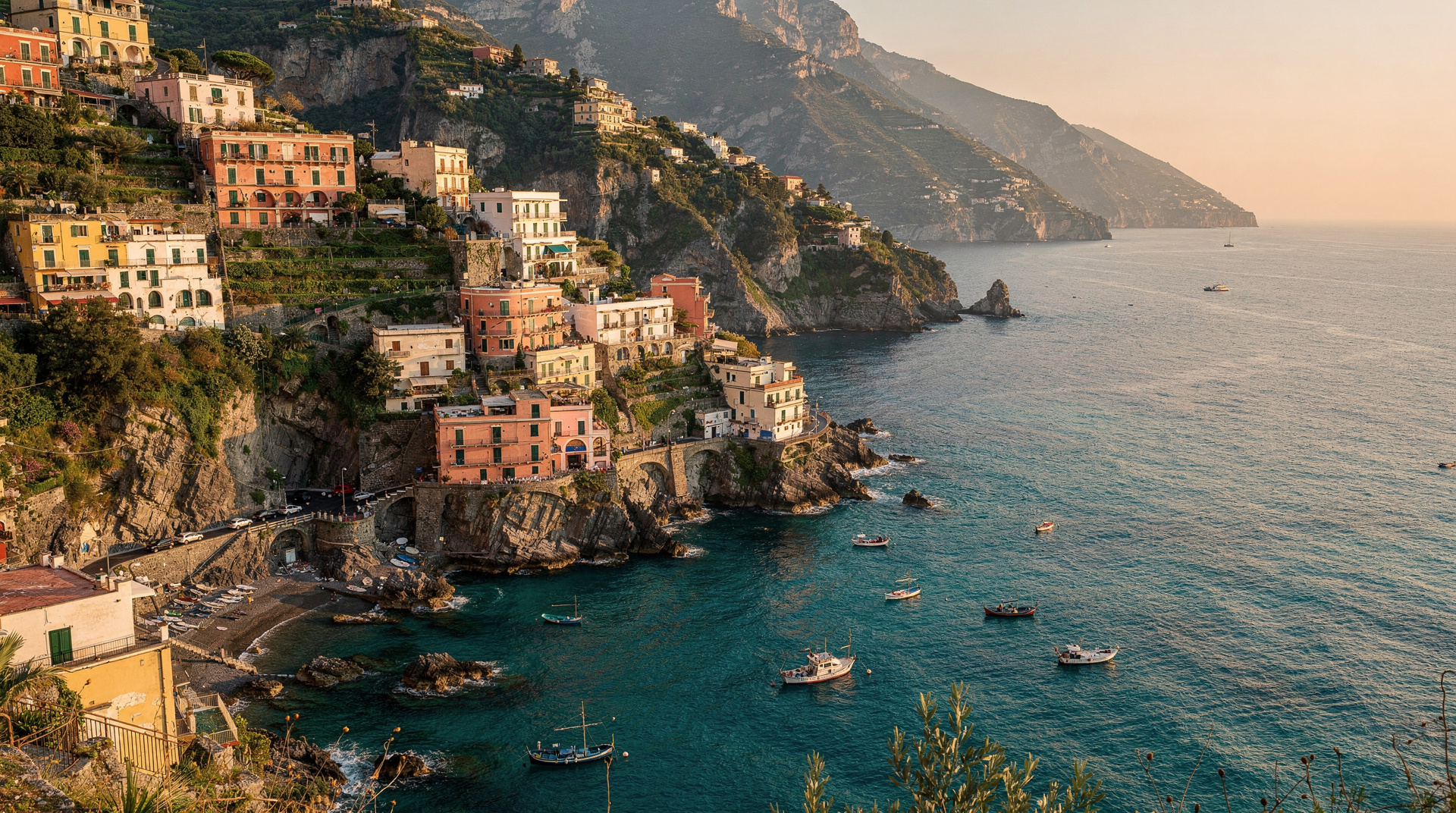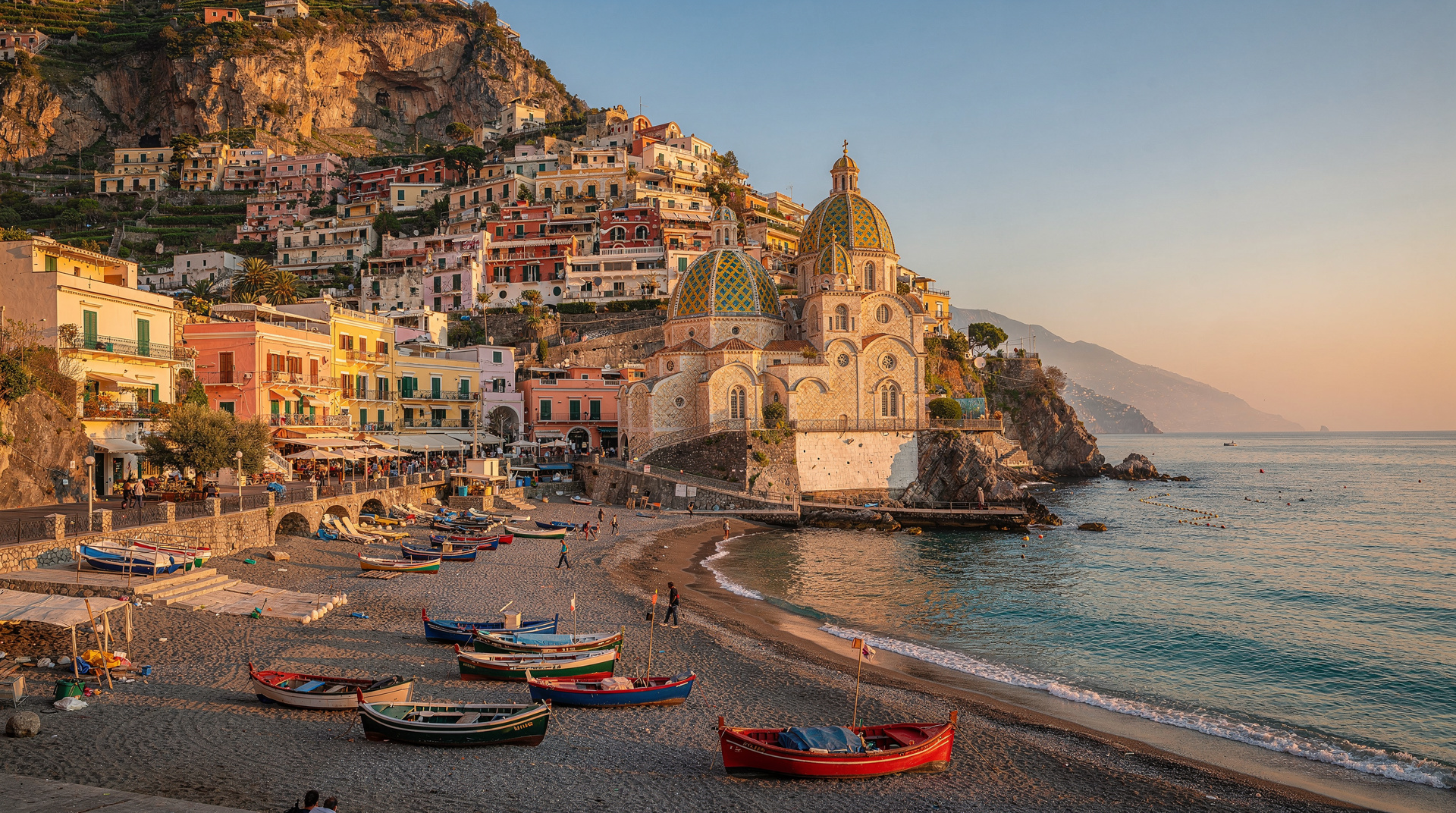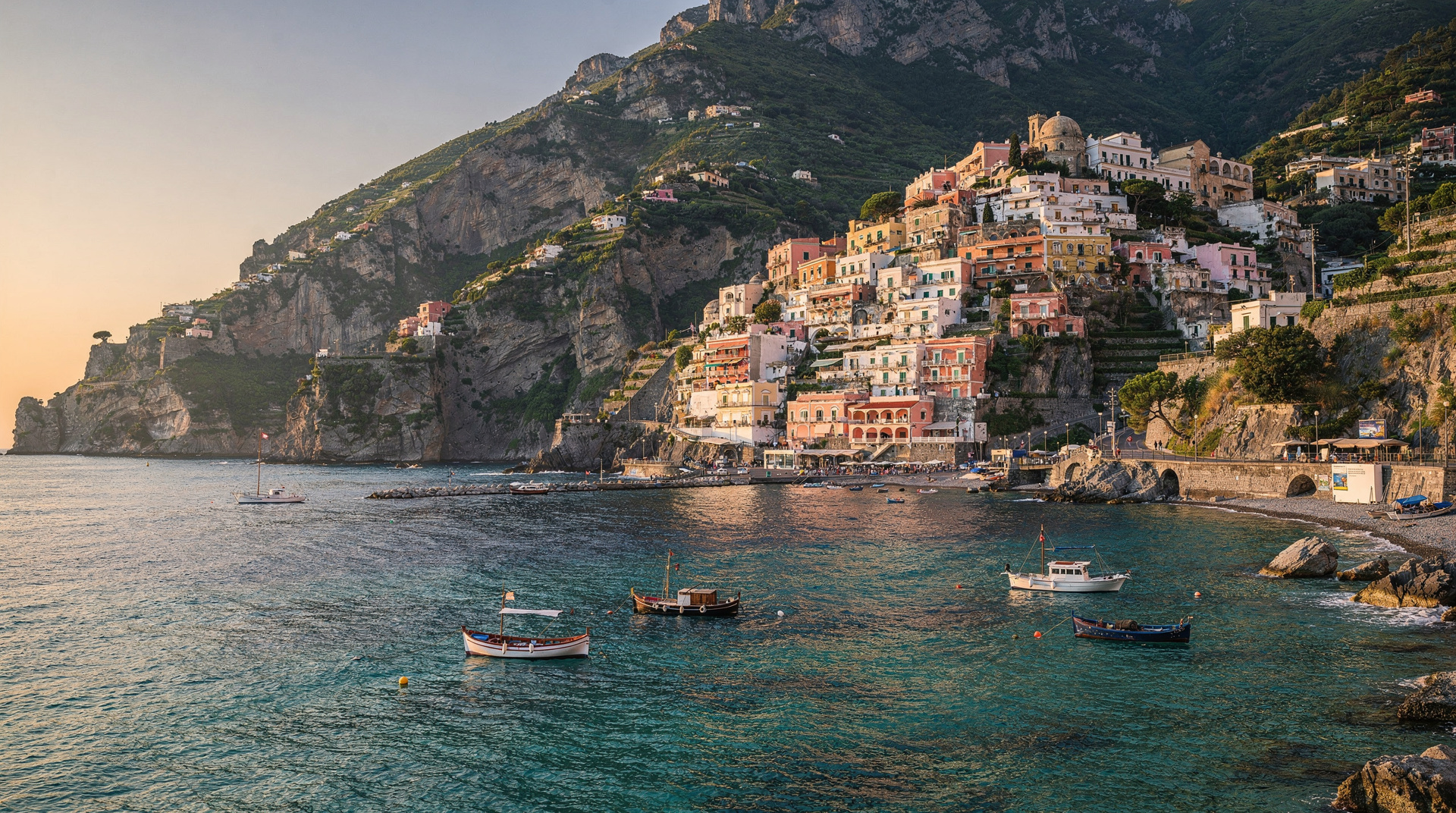
Where to stay on the Amalfi Coast: honest base choices for every budget
From Sorrento: Positano, Amalfi & Ravello Private Day Trip
Where is the best place to stay on the Amalfi Coast?
Amalfi town is the best all-round base: central location, widest price range, best ferry and bus connections. Positano is the most glamorous but most expensive. Sorrento (not on the coast itself) is the best budget base with the most transport connections. Praiano offers the best value on the coast itself.
The base question: what you are actually deciding
The choice of where to stay on the Amalfi Coast is really two separate questions:
- Do you want to be on the coast itself or outside it?
- Within the coast, which town suits your combination of budget, mobility needs, and priorities?
The first question matters because staying in Sorrento or Naples and day-tripping is a fundamentally different experience — and often better value — than staying on the coast itself. The second question matters because the towns are genuinely different in character, price, and practicality.
| Where | Positano, Amalfi, Praiano, Ravello, or the eastern towns; Sorrento off-coast |
| Cost | Around €80–450/night depending on town and season |
| Getting there | SITA bus, ferry, or private transfer from Naples/Sorrento |
| Best time | May–June or September for lower prices and fewer crowds |
| Booking | 2–3 months ahead for July–August in Positano or Amalfi |
Amalfi Coast bases compared
| Town | Price range/night | Best for | Main trade-off |
|---|---|---|---|
| Amalfi town | €100–250 | Most visitors, transport hub | Crowded midday |
| Positano | €180–450+ | Couples, glamour | Highest cost, many stairs |
| Praiano | €80–160 | Value on the western coast | Fewer restaurants, no ferry |
| Ravello | €140–350 | Peace, culture, gardens | No beach, one bus link |
| Maiori/Minori | €60–130 | Budget, wide beach | Less dramatic scenery |
| Sorrento (off-coast) | €90–200 | Naples + Pompeii + coast combo | 45–60 min bus each way |
Staying on the Amalfi Coast vs. staying outside
The case for staying on the coast
- Waking up to the view. The early morning light on the coast — before day-trippers arrive — is substantially different from the midday version. If you are staying in Positano, you can be at the Spiaggia Grande before 8:00 when the beach is nearly empty.
- Evening access. From 19:00 onwards, the coastal towns empty of day-trippers. The restaurants are quieter, the piazzas feel different, and the atmosphere is calmer. This evening access is not available to day-trippers from Naples or Sorrento.
- Flexibility on timing. You can linger at a sunset viewpoint, accept a dinner reservation at a specific restaurant, or take a morning swim before the beach fills.
The case for staying outside
- Cost. Staying in Sorrento at comparable quality costs 30–50% less than Positano. Staying in Naples costs even less.
- Transport. Sorrento has Circumvesuviana trains to Naples and Pompeii — useful if you want to do the coast and the archaeological sites. Naples has the widest transport network.
- No coast traffic stress. Leaving the coast in the evening when traffic is moving isn’t a problem when you’re not in it.
Our honest recommendation: For a trip focused primarily on the coast (3+ days), staying on the coast — specifically in Amalfi town or Praiano — is worth the premium. For a broader trip covering Naples, Pompeii, and the coast, Sorrento as a hub makes more sense. See Naples vs Sorrento as a base.
Base options on the coast
Amalfi town: best all-rounder
Price range: €100–250/night mid-range.
Why it works: Central location on the coast. Ferry connections to both Positano (west) and Salerno (east). SITA bus connections to Ravello (30 min) and both directions along the SS163. Flat waterfront — the only major town on the coast without significant stair navigation. Multiple price levels in accommodation and restaurants.
Who it suits: Most visitors, especially those coming for 2–3 nights. Families. Anyone who wants transport flexibility. Anyone who values access to Ravello and the Valle delle Ferriere walk.
The downside: Day-trippers arrive in volume from 10:00–17:00 and the Piazza Duomo becomes very crowded. Slightly less picturesque than Positano.
Positano: most glamorous
Price range: €180–450/night mid-range to luxury; some properties at €500–900+.
Why it works: The view. The atmosphere. The access to the Path of the Gods above. The feeling of a complete world in a vertical cliff town.
Who it suits: Couples, honeymoons, visitors for whom budget is secondary to experience.
The downside: Cost. Stairs. The tourist-commercial saturation of the main streets. Large luggage is a genuine problem.
Praiano: best value on the western coast
Price range: €80–160/night.
Why it works: Midway between Positano and Amalfi with good SITA bus connections both ways. Marina di Praia harbour beach is excellent. Accommodation is genuinely less expensive than either neighbour. The viewpoints from the main road are among the coast’s best. Far fewer tourists than either Positano or Amalfi.
Who it suits: Budget-conscious travellers who still want the western coast. Couples who want Positano-adjacent scenery without Positano prices. Divers (the underwater reserve here is one of the coast’s best).
The downside: Fewer restaurant and service options than Amalfi. No ferry connection from Praiano itself.
Ravello: most peaceful
Price range: €140–350/night standard; Belmond Villa Cimbrone €400–700+.
Why it works: Completely different character from the beach towns. Quietest of the major destinations. Two great gardens. The Ravello Festival. Spectacular views from 350 metres.
Who it suits: Couples, solo travellers, anyone who prioritises peace and culture over beach access.
The downside: No beach. One bus connection (to Amalfi). Very quiet evenings in a limited way. The Belmond property is extraordinary but at a price that requires specific prioritisation.
Eastern coast towns (Maiori, Minori)
Price range: €60–130/night.
Why it works: Local character without tourist pricing. Maiori has the coast’s best beach by width. Minori has the Roman villa ruins and local pastry. Both have normal Italian restaurant pricing.
Who it suits: Budget travellers who want beach access over scenery. Families. Anyone willing to trade some aesthetic drama for significantly lower costs.
The downside: Less scenically dramatic than the western coast. Fewer international tourists means the infrastructure is less geared toward English-speaking needs.
Staying in Sorrento
Sorrento is not on the Amalfi Coast — it is on the Sorrentine Peninsula, at the junction of the Bay of Naples and the Bay of Salerno. But it functions as the primary transit hub for the coast: Circumvesuviana from Naples (70 min), SITA buses to the coast departing from in front of the train station, ferry connections to Capri and the islands.
Price range: €90–200/night mid-range. Budget from €40–70/night in smaller B&Bs and residences.
Sorrento has its own town appeal: a pleasant clifftop old centre, a good limoncello-buying experience (see Limoncello in Sorrento), cooking classes, and the coastal cliffs. It is not as spectacular as the Amalfi Coast proper but the views across the Bay of Naples toward Vesuvius are excellent.
For the Sorrento as a base discussion, the key decision is: how much time do you want to spend on the SITA bus? If you’re going to the coast 2 days out of 3, the 45 minutes each way (90 min/day) adds up. If you’re doing the coast for 1 day and Pompeii/Naples for others, Sorrento works well. See also the direct Sorrento vs Amalfi Coast base comparison if Naples itself is also on your shortlist.
A private-driver alternative to basing on the coast
If juggling SITA bus timetables and ferry schedules across multiple bases sounds like more logistics than you want to manage, a private full-day tour from Naples or Sorrento covering Positano, Amalfi, and Ravello removes the transport planning entirely — useful if you’re staying in Naples or Sorrento for the whole trip and want one dedicated day on the coast rather than committing to a coast-based hotel.
Private full-day tour: Positano, Amalfi and Ravello from NaplesA shared full-day option from Sorrento covers similar ground at a lower price if a private driver isn’t essential for your trip.
Full-day Amalfi Coast tour from SorrentoIf you’re driving yourself instead, read the driving the Amalfi Coast SS163 guide before you commit a car to your base choice — parking in Positano and Amalfi in peak season is a genuine headache that a coast-based hotel with its own parking (rare and worth confirming) solves.
Booking practicalities
Booking platforms: Booking.com and Airbnb both have good coverage of the Amalfi Coast. For smaller B&Bs and family-run properties, booking directly by email (found via the property’s own website) often gets a marginally better price and more flexible cancellation terms.
Check-in logistics for Positano: Before booking, ask any Positano property: how far from the road is the entrance, and is there vehicle access? Many properties require guests to descend significant stairs from the nearest road access point. Some hotels send a porter to collect luggage from the road. Clarify this before you arrive with bags.
ZTL and parking: Properties within the ZTL in Amalfi and Positano town centres can register your vehicle plate for access during your stay. Ask in advance.
Half-board: Many hotels on the coast offer half-board (dinner included) — this can be good value since the hotel restaurant is often one of the better options in small towns, and the savings versus restaurant dining are real. Worth considering for Ravello properties in particular.
Frequently asked questions about where to stay
Should I book the Positano property with the view or the cheaper one inland?
The view from a Positano hotel terrace is genuinely extraordinary — worth paying for if your budget allows. The cheapest properties in Positano (still €120+ in summer) are typically on the upper road without sea views. If budget is constraining, Praiano gives a comparable cliff-and-sea setting at 40–50% of Positano’s accommodation cost.
How many nights should I spend on the Amalfi Coast?
Two nights minimum to have a genuine experience (one day dedicated to the western coast, one to Ravello or the eastern coast). Three nights is comfortable. Four to five nights allows walking, beach days, and boat trips. See Naples and Amalfi Coast 5-day itinerary.
Is August too busy to enjoy staying on the coast?
August is the most crowded and most expensive month, but the evenings (19:00 onwards) are beautiful — the day-trippers leave, the towns quiet down, the seafood restaurants are at their liveliest, and the sea is at its warmest. Staying on the coast in August means experiencing both the manic midday and the serene evening. Day-trippers from Naples or Sorrento only get the midday version.
What is the best area to stay for the Ravello Festival?
Staying in Ravello itself during Festival weeks is the ideal — you can walk to concerts and avoid evening bus complications. Book 4–6 months in advance for concert weeks. The alternative is Amalfi town, 30 minutes by bus. Staying in Positano (70+ minutes from Ravello) is awkward for evening concerts.
Frequently asked questions about Where to stay on the Amalfi Coast: honest base choices for every budget
Is it better to stay in Sorrento or on the Amalfi Coast?
What does accommodation cost on the Amalfi Coast?
Is there any budget accommodation on the Amalfi Coast?
Should I book in advance?
What is an agriturismo and is it a good option?
Is Ravello a good base or just a day trip?
Top experiences
Bookable activities with verified prices and instant confirmation on GetYourGuide.