Sorrento guide — what to see, do, eat, and realistically expect
Sorrento: 2-Hour Walking Tour
Duration: 2h
Is Sorrento worth visiting?
Yes — it is a genuinely pleasant town with good food, dramatic views over the bay, and a well-preserved historic centre. But it is also heavily touristic and some areas exist primarily to extract money from visitors. The best Sorrento experience comes from avoiding the souvenir-strip and spending time in the Marina Grande fishing village, the old town lanes, and the clifftop gardens.
Is Sorrento worth visiting? Yes. It has genuine character — a real old town, excellent food, dramatic bay views, and a good transport position. The main risk is spending your entire time on the tourist strip and leaving disappointed. Get off Corso Italia and the experience improves immediately.
| Where | Sorrentine Peninsula, ~65–70 min from Naples |
| Cost | €120–250/night double; lunch €15–22 |
| Time needed | 1 full day, ideally 1–2 nights |
| Getting there | Circumvesuviana or Campania Express from Napoli Centrale |
| Best time | May, June, September, October |
The honest case for Sorrento
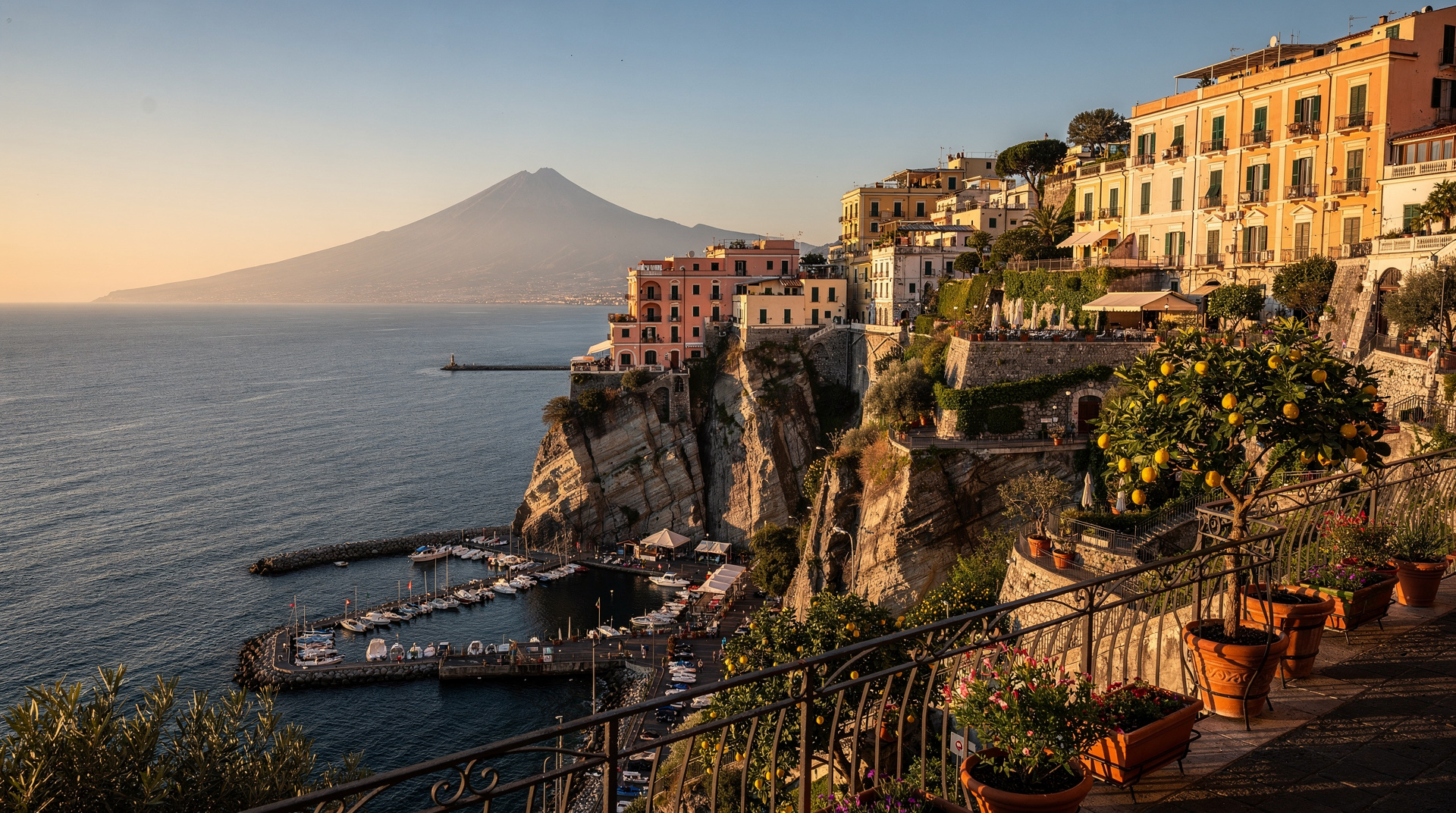
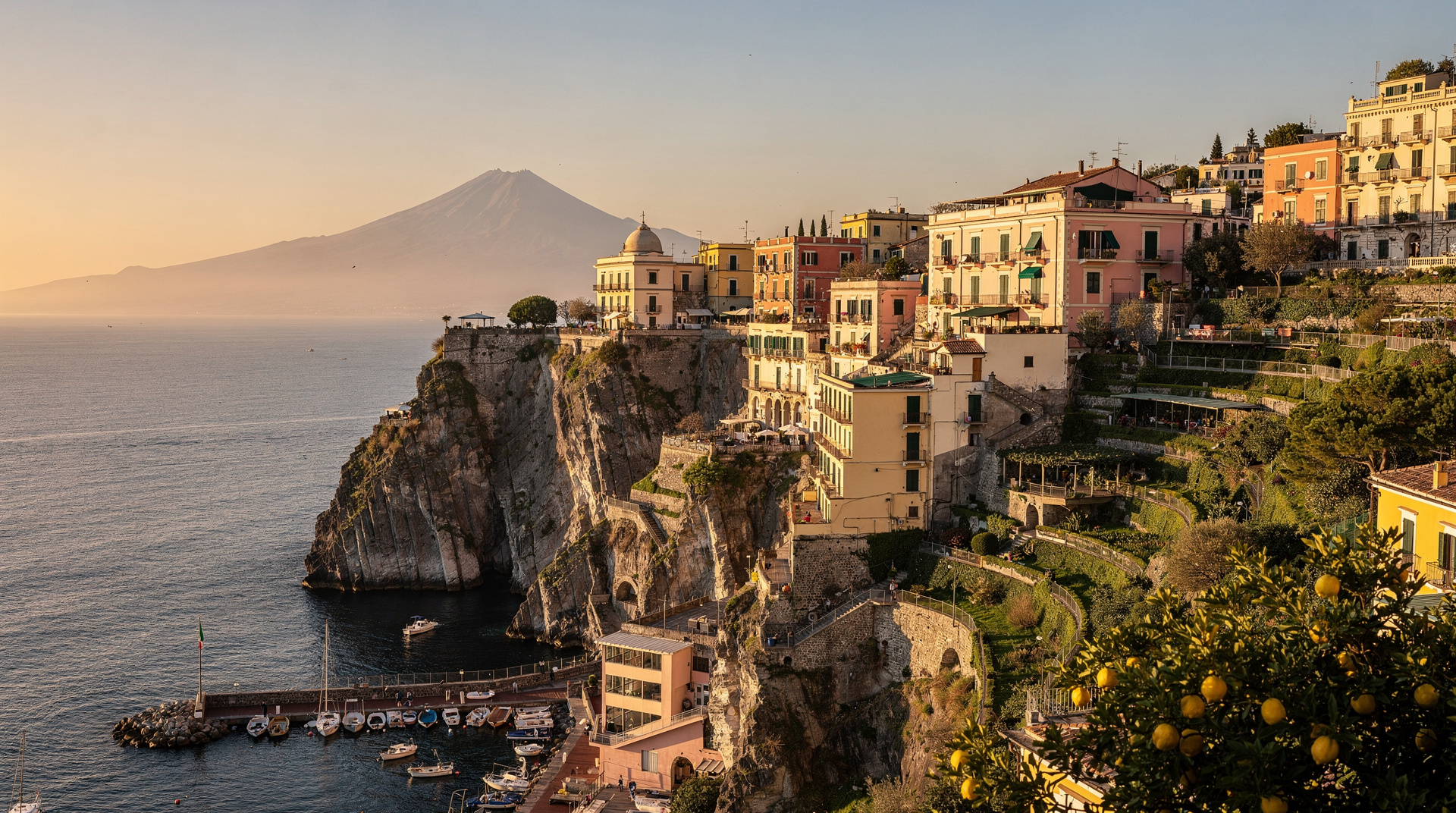
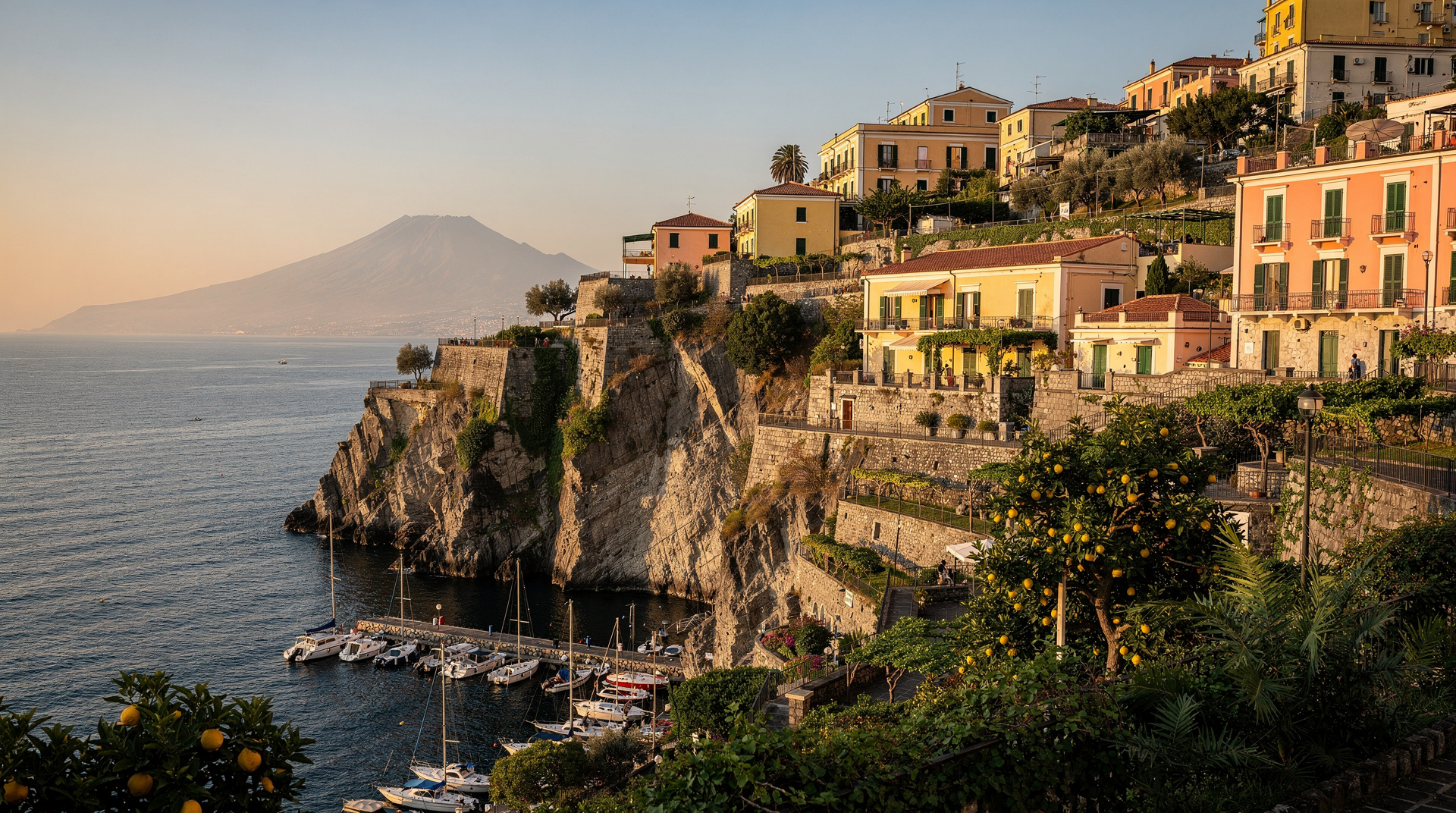
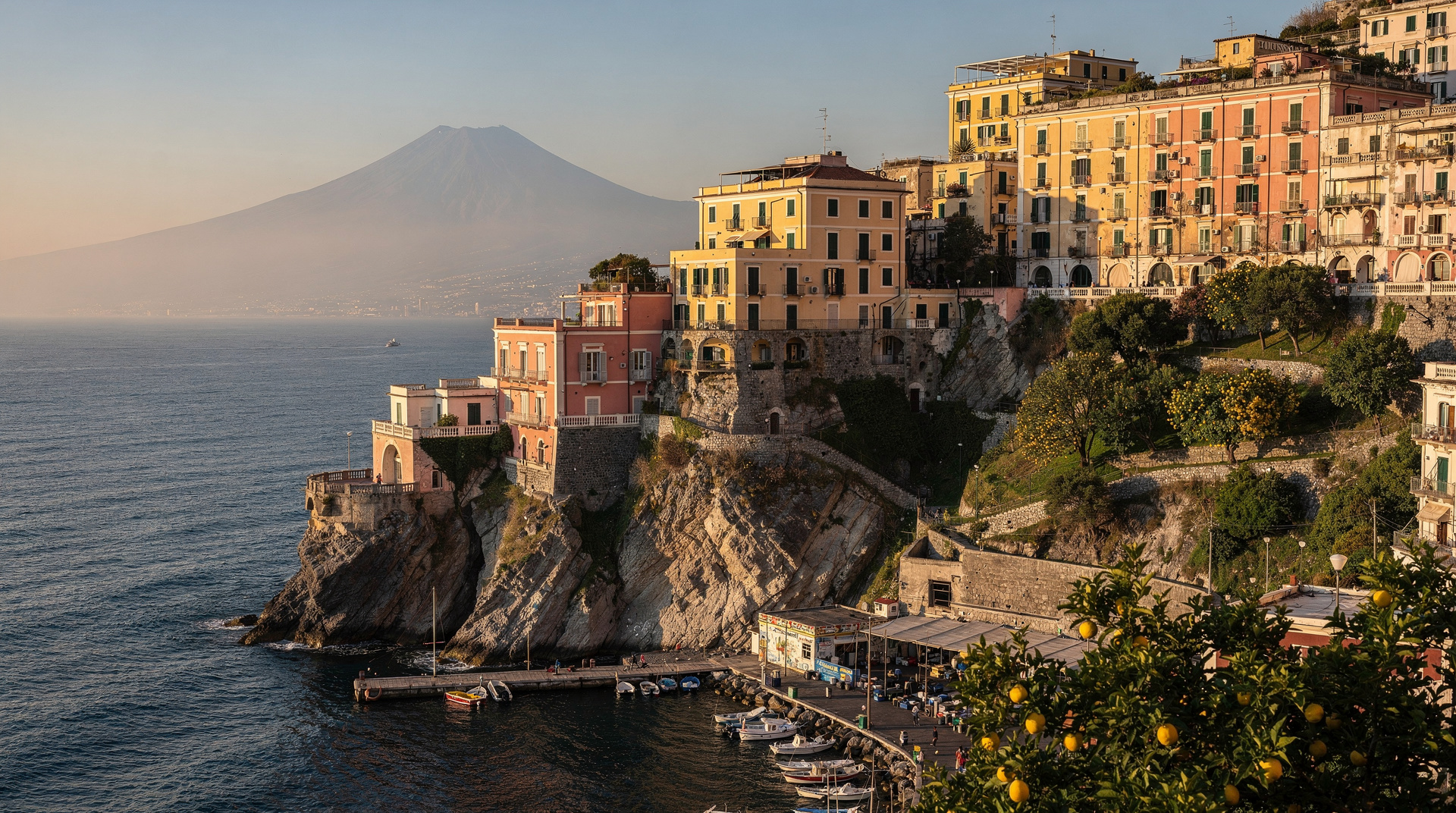
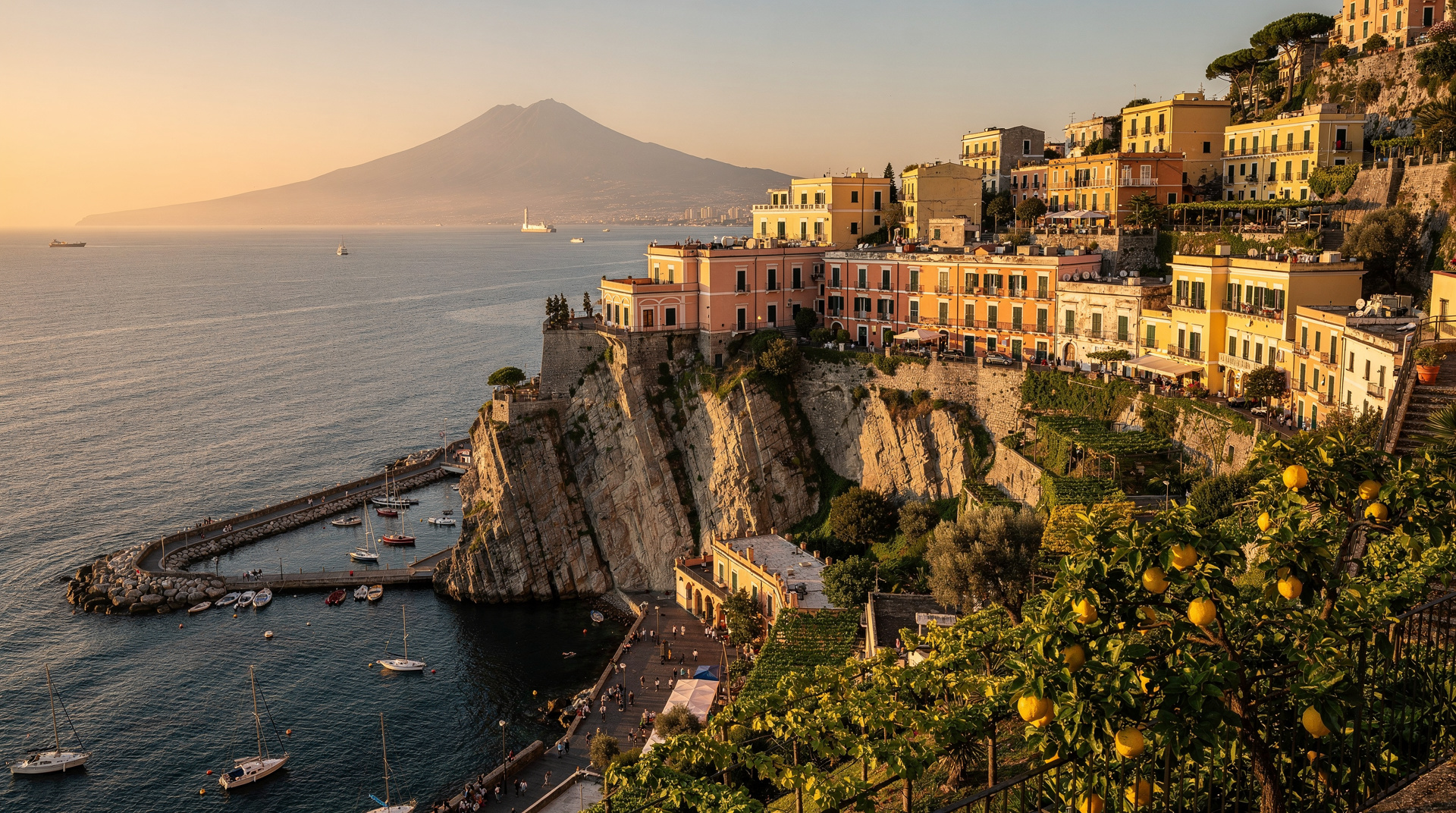
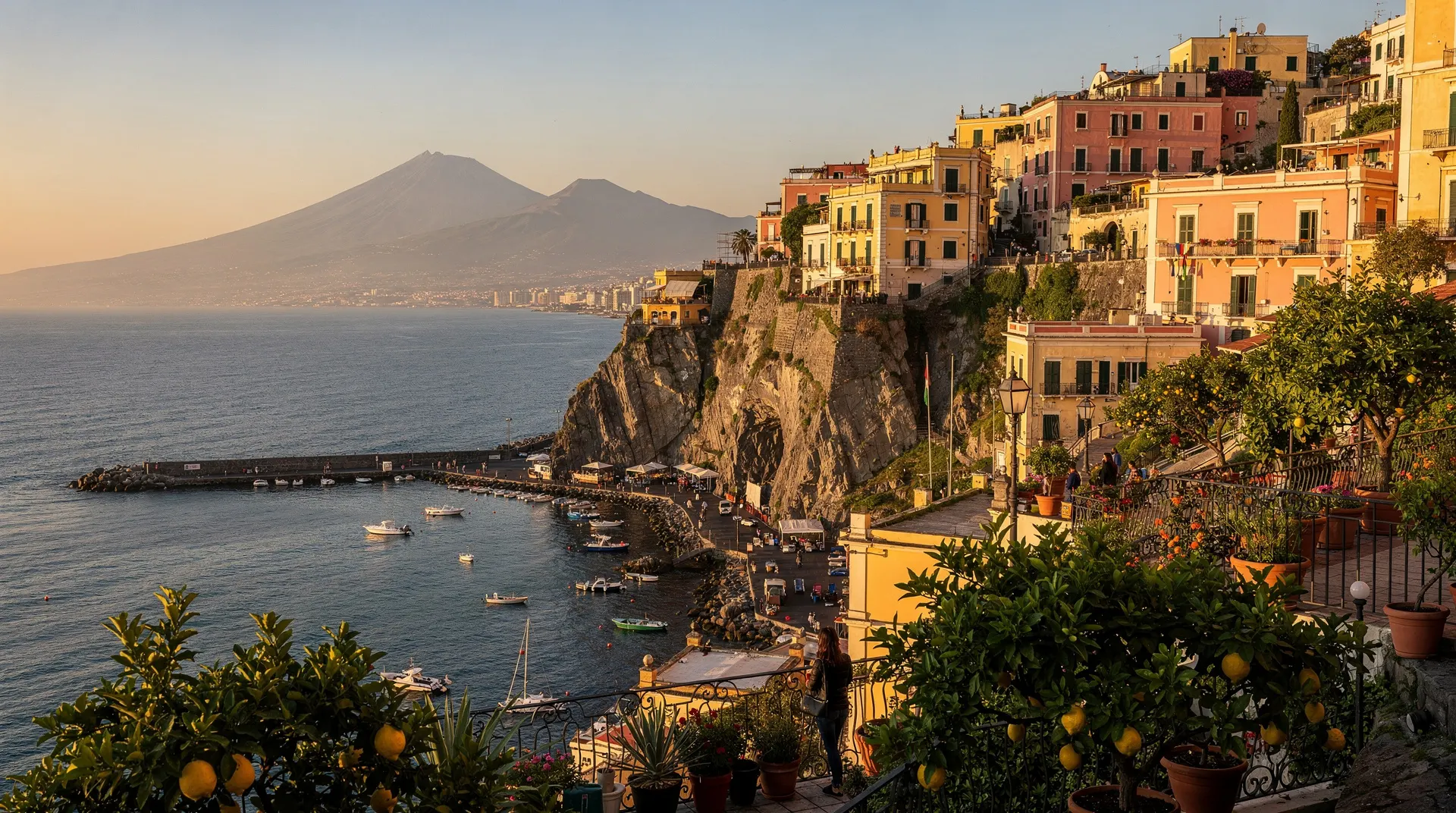
Sorrento sits on a tufa cliff above the southern shore of the Bay of Naples, looking directly across at Vesuvius and Naples. The position is dramatic — the town appears from the sea as a collection of white and ochre buildings balanced on the cliff edge above a deep blue bay. From the town, the view back towards Vesuvius and Naples is one of the finest coastal panoramas in Italy.
The town itself has been receiving international visitors since the 18th century Grand Tour, and the tourism infrastructure reflects this long relationship — good hotels, many restaurants, proficient English, well-worn sightseeing circuits. It is also, consequently, somewhat polished for visitor consumption in the areas near the main piazza and the ferry port.
The real Sorrento — smaller, more residential, less commercially intense — is a short walk from Piazza Tasso into the old town, where the narrow lanes of the historic centre run between medieval buildings, family-run pasticcerie, and intarsia woodcraft workshops that have operated in the same family for generations.
Arriving in Sorrento
By Circumvesuviana — the train from Naples arrives at Sorrento station, which is the line’s terminus and sits at the top of the cliff above the town. From the station, Via Correale leads into the centre in about 5 minutes on foot. To reach Marina Piccola (the ferry port for Capri), allow 15 minutes — steep steps or the town lift descend to the harbour level.
By bus from the Amalfi Coast — SITA buses connect Sorrento with Positano (roughly 1 hour), Amalfi, and points in between. The bus station is in front of the Circumvesuviana terminus, making connections straightforward. SITA buses are the standard way to travel the coastal road without a car.
By ferry — from Naples Molo Beverello in summer, some hydrofoils stop at Sorrento before continuing to Capri. Check schedules.
What to see in Sorrento
Villa Comunale and the clifftop gardens — the most famous view in town. A public garden at the cliff edge on Via Luigi de Maio, with benches, shade trees, and an unobstructed view across the bay to Vesuvius. Free entry, open daily. The best time is late afternoon when the light turns golden and the volcano takes on different colours. The adjacent Villa Comunale church has a modest cloister worth a look.
Sedile Dominova — a 15th-century loggia at the corner of Via San Cesareo, originally a meeting place for the Sorrento nobility. Now used as a social club by local retired men, who play cards inside under the vaulted frescoed ceiling. The exterior is distinctive — ask locals where it is rather than following signs to “old town” which can take you anywhere.
Marina Grande fishing village — not the ferry port (Marina Piccola) but a separate small harbour on the western side of the cliff, accessible by a long staircase down from Piazza della Vittoria. The fishing village here is one of the most genuine things about Sorrento — painted boats, nets drying, a couple of trattorie that serve fresh grilled fish to both tourists and locals. Lunch here is significantly better value than in the main town. The afternoon light on the coloured houses is excellent for photographs.
Museo Correale di Terranova — a regional museum in an 18th-century villa on the eastern edge of town, with Neapolitan ceramics, decorative arts, and a good collection of intarsia woodwork. Entry around €10. The garden has a view of the bay. Two hours is enough.
Piazza Tasso — the central square and social hub, ringed with cafés, restaurants, and shops. Lively in the evening during the passeggiata. The northern side has views down into the gorge of the Vallone dei Mulini (a dramatic natural ravine partly occupied by an old mill ruin, visible from a vantage point at the edge).
Intarsia woodcraft workshops — Sorrento is famous for marquetry — intricate inlaid wood pictures in geometric and pictorial designs. Bottega d’Arte on Via Luigi de Maio and Gargiulo & Jannuzzi (the oldest firm, established 1863) are the most established. Prices start around €30 for small pieces; quality varies widely. Buy from a workshop that makes on site, not a souvenir shop that imports from outside.
Where to eat
Marina Grande — the old fishing village is the best area for a sit-down lunch. Il Delfino and Trattoria da Emilia are long-standing family restaurants with direct harbour views, fresh grilled fish, and generous pasta portions at around €15–22 for a main course.
Bar Ercolano — on Piazza Tasso, a traditional Sorrento bar for coffee and pastries. The sfogliatella and cornetto at the bar is the standard breakfast. Avoid sitting down if you want bar prices (standing is around €1.20–1.50 for coffee; seated adds a service charge).
Pizzeria da Franco — on Via degli Aranci near the station, this is a cash-only neighbourhood pizzeria frequented by locals who are not interested in sea views or tourist ambience. The pizza is excellent and a full meal costs around €10–14.
What to avoid — the row of restaurants along Corso Italia between Piazza Tasso and the station exists primarily to intercept arriving visitors before they discover anything better. Prices are high, quality is variable, and the menus are designed for people who have not yet oriented themselves. Walk two minutes into a side street and prices drop by 30%.
Limoncello and local products
See our dedicated limoncello-sorrento guide for a full account of what genuine Sorrento limoncello is, how it is made, and where to buy it. The short version: good limoncello from small producers costs €12–18 for 500ml and is made from sfusato Sorrento lemons with a clean, fragrant character. The bottles sold from tourist stalls on the main street for €8 are not the same product.
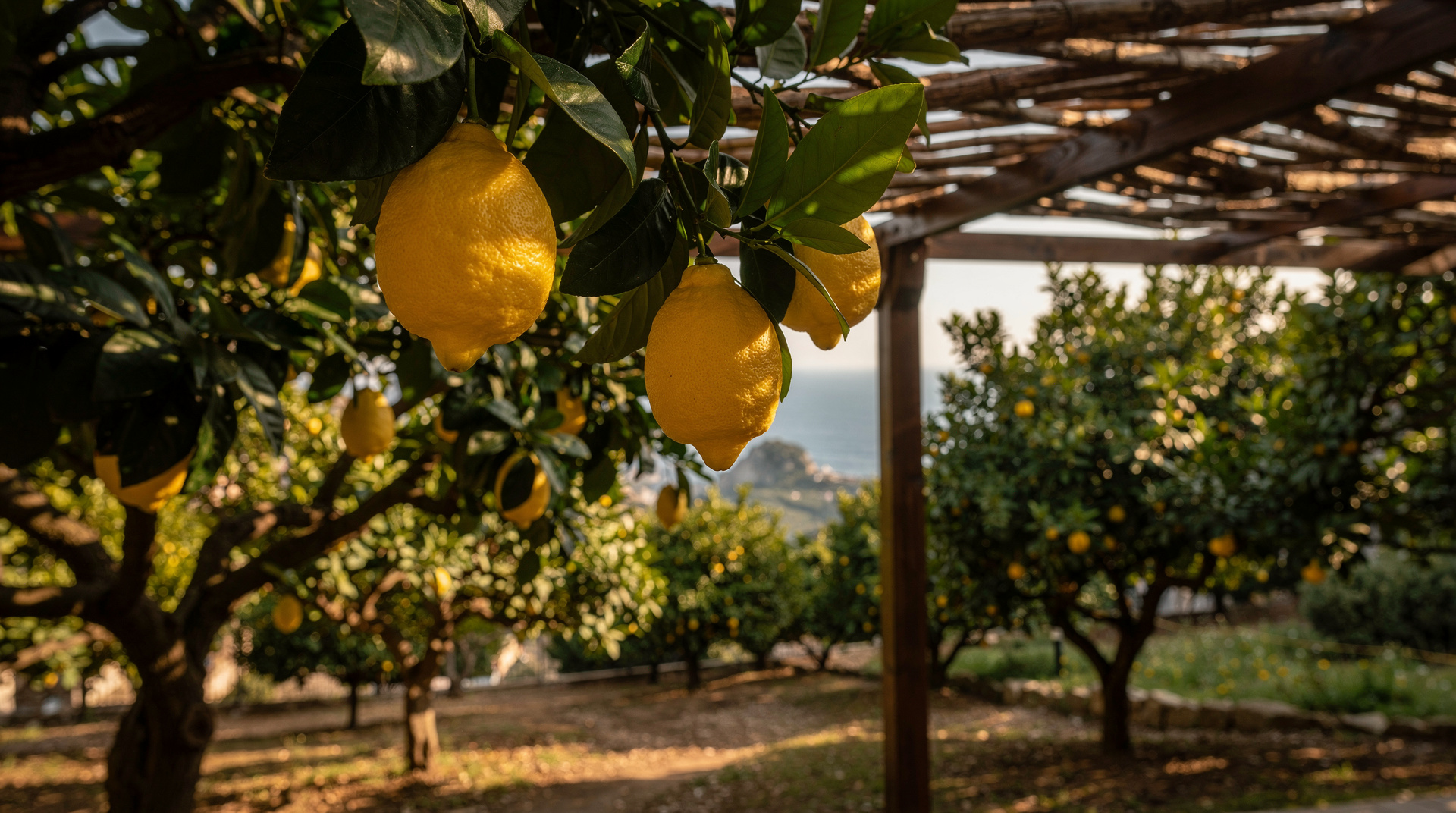
The lemon groves around Sorrento are visible throughout the peninsula — terraced trees draped in characteristic netting to protect the large fragrant fruit from falling. Several farms and gardens offer tours and tastings (some included in cooking classes).
Cooking classes and experiences
Sorrento has a strong cooking class tradition. Several operators run classes in lemon groves, in traditional kitchens, and on farms. These are good value and a genuine way to understand the local food culture:
Sorrento cooking class in a lemon groveFor a guided walking tour that combines the old town with local food tastings:
Sorrento sunset walking tour with limoncello tastingEvening in Sorrento
The passeggiata — the Italian tradition of evening walking and socialising — runs along Corso Italia and around Piazza Tasso from around 6–9pm in summer. Sorrento does this well: the scale of the town is right, the street is closed to traffic for part of its length, and the density of cafés and gelato shops supports long, slow walking with stops.
For a more deliberately local evening, head to Bar Ercolano on the Piazza or to the wine bar on Via Padre Reginaldo Giuliani (no tourist-facing name, just a wooden door and the sound of conversation inside — this is standard for Italian neighbourhood bars).
Dinner is served from 7:30–8pm onwards. In high season, reservations are worth making for better restaurants; walk-ins are fine at the more casual spots.
Sorrento as a base
Many visitors to the region use Sorrento as an overnight base rather than Naples, because it provides easy ferry access to Capri and bus access to the Amalfi Coast. For a discussion of this strategy see sorrento-as-a-base.
The short version: Sorrento as a hub works very well for Capri + Amalfi Coast combinations. It is less suitable as a base if Naples itself is your primary interest (the Circumvesuviana is 65–70 minutes each way).
Frequently asked questions about Sorrento
Is Sorrento better than the Amalfi Coast?
They are different experiences. Sorrento is a town with good hotel infrastructure, restaurants, transport links, and daily life — it functions as a place. The Amalfi Coast (Positano, Amalfi, Ravello) offers more dramatic coastal scenery but less practical infrastructure and higher accommodation prices. For a first-time visitor who wants easy access to both, Sorrento as a base with day trips to the coast is the most efficient combination. See sorrento-vs-amalfi for more detail.
What is the best view in Sorrento?
The Villa Comunale garden at sunset is the classic answer. From the Piazza della Vittoria on the cliff edge, the view extends directly to Vesuvius with Naples to the left and the beginning of the Sorrento peninsula to the right. On clear evenings (more common in spring and autumn) the volcano is outlined precisely against the sky. From the clifftop restaurants above Marina Grande, the view includes the bay and the fishing village below.
Is Sorrento walkable?
The historic centre is entirely walkable and compact — the main sights are within 15–20 minutes on foot of the central Piazza Tasso. The descent to Marina Grande requires effort (long stairs, no elevator). The descent to Marina Piccola (ferry port) is via steps or a street-level route. If you have mobility concerns, the main centre is manageable but the harbour access is challenging.
What is the best month to visit Sorrento?
May and October are near-perfect — the lemons are being harvested in spring, the sea is warm enough in October for swimming, crowds are well below summer peak, and the light has that particular golden quality of the shoulder season. June and September are also excellent. July and August are crowded and hot; prices peak; the main streets can feel overwhelmed.
Are there good beaches in Sorrento?
Sorrento itself has rocky shorelines rather than sandy beaches. Marina Grande and Marina Piccola have small bathing areas with lido access (sun-bed hire around €15–20). The best beaches in the area are on Ischia or further along the Amalfi Coast (Positano’s beaches, though small, are scenic). Sorrento is not primarily a beach destination.
How do I get from Sorrento to the Amalfi Coast?
SITA buses depart from the bus station in front of the Circumvesuviana terminus. Sorrento to Positano takes approximately 1 hour; to Amalfi approximately 1.5–2 hours. Buses run every 30–60 minutes in season. In summer the road (SS163) has peak-hour restrictions on cars, but buses run throughout. Buy tickets at the tobacco shop (tabaccheria) near the bus station rather than from the driver. See amalfi-coast-bus-sita for full details.
Sorrento walking tour with local guideThe history of Sorrento in brief
Sorrento (ancient Surrentum) was first settled by the Oscans and later by Greek colonists in the 6th century BC. Roman writers including Virgil and Tacitus mention the town; it was a favoured summer resort for wealthy Romans who valued the sea air and the distance from Rome. Several Roman villas were built on the clifftops around the modern town, and some of their terraced foundations are still visible.
After Rome, Sorrento passed through Byzantine, Lombard, Norman, and later Aragonese control. The Norman influence is visible in the cathedral (duomo) with its Gothic-Romanesque nave, rebuilt several times but retaining elements from the 11th century foundation. The town was wealthy enough in the medieval period to maintain trade with the eastern Mediterranean and to produce fine intarsia woodwork that was exported as far as Spain and North Africa.
The modern tourist history begins with the 18th-century Grand Tour. Sorrento became a standard stop for northern Europeans making the traditional Italian journey, valued as a base for visiting Pompeii (then being excavated) and Herculaneum, and for experiencing the Bay of Naples panorama. Hotels specifically designed for international visitors opened from the 1780s onward, including the Albergo Tramontano (still operating, where Goethe and Byron both stayed).
The arrival of the Circumvesuviana railway in 1948 (the current route; earlier private lines preceded it) connected Sorrento to Naples in a reliable way for the first time and transformed it from an exclusive resort into a broadly accessible destination.
Sorrento’s local craft traditions
Intarsia marquetry — inlaid woodwork in geometric and pictorial designs is Sorrento’s most distinctive local art form. The tradition dates to at least the 15th century, when Sorrento workshops were producing decorative furniture and small objects for export. The technique uses thin veneers of differently coloured woods (walnut, olive, lemon, rosewood, maple) cut to shape and inlaid into a base of local walnut. Geometric patterns (parquet-style) are the most traditional; pictorial scenes of the bay and local life developed later as a tourist-facing product. The best contemporary intarsia workshops include Gargiulo & Jannuzzi (established 1863, still producing on Via Luigi de Maio) and several smaller family operations on Via San Cesareo.
Lace and embroidery — Sorrento also has a tradition of handmade lace (merletto) though this has become rarer as commercial production from outside the region dominates. A few artisans still produce by hand — ask at the market on Piazza Lauro.
Ceramics — not a specifically Sorrento tradition (Amalfi Coast and Vietri sul Mare are the regional ceramics centres), but local shops sell decent work from regional producers. The characteristic majolica patterns (bright blues, yellows, and greens on white backgrounds depicting fish, lemons, and geometric borders) are authentic to the Amalfi Coast tradition if not specifically to Sorrento.
Sorrento for solo travellers and remote workers
Sorrento suits solo travellers reasonably well despite its resort character — the town is small enough to navigate confidently alone, safe at all hours in the main tourist area, and the passeggiata culture makes casual social contact easy without requiring it. A growing number of visitors combine a Sorrento stay with remote work, drawn by decent hotel wifi, a scenic setting for video calls, and the ability to work mornings and explore afternoons.
The practical limitation is the time difference for anyone working with teams outside Central European Time, and the fact that the most atmospheric cafés (with sea views) are not always the most reliable for a stable connection — ask specifically about wifi speed if remote work is part of your trip, rather than assuming a hotel’s marketing claims hold up in practice.
How to spend 48 hours in Sorrento
A practical two-day framework:
Day 1 in Sorrento:
- Morning: Old town walk (Via San Cesareo, Sedile Dominova, cathedral cloister)
- Midday: Descent to Marina Grande for lunch
- Afternoon: Villa Comunale gardens and Piazza della Vittoria for the sunset view
- Evening: Passeggiata on Corso Italia, dinner in the old town
Day 2 from Sorrento:
- Full day on Capri (early ferry from Marina Piccola, Monte Solaro chairlift, Anacapri lunch, evening return)
Or substitute Day 2 with the Amalfi Coast (SITA bus to Positano and Amalfi). Both work perfectly from Sorrento. See sorrento-as-a-base for a longer multi-day planning framework.
Sorrento with limited mobility or reduced fitness
Visitors with limited mobility or reduced fitness should plan around Sorrento’s two-level layout deliberately rather than discovering the challenge on arrival. The historic centre itself — Piazza Tasso, Via San Cesareo, the cathedral, the Museo Correale — is flat or gently sloped and manageable for most visitors, including wheelchair users on the main paved streets, though some side lanes have uneven cobbles.
The descent to Marina Grande and Marina Piccola is the genuine obstacle: long staircases with no lift alternative at Marina Grande, and a mix of steps and a steep road at Marina Piccola. A local taxi can reach both harbour levels by road for around €8–12, which is the practical workaround for visitors who cannot manage the stairs but still want to see the fishing village or catch the Capri ferry. Hotels near the cliff edge sometimes have private lift access to their own beach clubs — worth asking about specifically when booking if mobility is a concern.
Shopping beyond limoncello and intarsia
Sorrento’s shopping goes further than the two obvious souvenirs. Leather goods — sandals, belts, and small bags made locally or in nearby Positano and Capri workshops — are sold from a handful of ateliers on Via San Cesareo, with prices well below Capri’s leather shops for comparable quality.
Ceramics from Vietri sul Mare, the Amalfi Coast’s pottery town, are widely stocked in Sorrento shops even though they are not made locally; look for hand-painted majolica with visible brushwork rather than the machine-printed imitations common on the main tourist strip. Local food to bring home — vacuum-packed San Marzano tomatoes, dried pasta from Gragnano, and jars of lemon marmalade travel well and are sold at reasonable prices in the Via San Cesareo food shops, cheaper and more authentic than the airport departure lounge equivalents.
Getting oriented on arrival
First-time visitors sometimes find Sorrento’s layout confusing because the town sits on two distinct levels — the clifftop where the station, Piazza Tasso, and most hotels sit, and the harbour level down at Marina Grande and Marina Piccola. There is no need to walk the connecting stairs more than necessary: a local bus service (small orange buses) runs between the station area and both marinas roughly every 20–30 minutes, useful with luggage or in the heat.
Free town maps are available from the tourist information office just off Piazza Tasso (Via Luigi De Maio), and are worth picking up on arrival since street signage in the old town lanes is inconsistent. For the fuller regional picture and how a Sorrento visit fits alongside Naples, Pompeii, and the coast, see how many days in Naples.
Frequently asked questions about Sorrento guide — what to see, do, eat, and realistically expect
How much time should I spend in Sorrento?
What is Sorrento famous for?
Is Sorrento expensive?
How do I get to Sorrento from Naples?
Are the Sorrento lemons and limoncello good?
What are the best things to do in Sorrento?
Top experiences
Bookable activities with verified prices and instant confirmation on GetYourGuide.