Things to do in Sorrento — beyond the souvenir shops and tourist traps
Secret Walks of Sorrento with Local Guide
Duration: 2h
What are the best things to do in Sorrento?
Walk to Marina Grande fishing village for lunch, take the cliff path to the Villa Comunale gardens for the Vesuvius view, visit the Sedile Dominova in the old town, take a cooking class in a lemon grove, and use the town as a base for Capri and the Amalfi Coast. Avoid spending too much time on Corso Italia — the town is more interesting a few streets back.
Best things to do in Sorrento: walk to Marina Grande for lunch (the fishing village below the cliff), take the cliff path for the Vesuvius view, wander the old town, take a lemon grove cooking class, and watch the passeggiata at Piazza Tasso in the evening. Skip the souvenir strip and go two streets back.
| Where | Sorrento historic centre and Marina Grande |
| Cost | Free walking + €0–80 for classes/tours |
| Time needed | Half a day minimum, ideally a full day |
| Getting around | Entirely walkable; taxi for the climb back from Marina Grande |
| Best time | Morning for the old town, late afternoon for the cliff view |
Start where most tourists don’t: the old town in the morning
Sorrento’s historic centre — roughly bounded by Via San Cesareo, Via Giuliani, and the area around Piazza Sant’Antonino — is at its best before 10am, when the light is low and the streets are mostly empty except for bakeries opening, the vegetable market setting up, and locals walking to work.
Via San Cesareo in particular is worth an unhurried morning walk. The street is lined with food shops (the alimentari here stock fresh local mozzarella, preserved lemons, dried pasta, and regional wines at realistic prices) and with craft workshops where intarsia marquetry is made and sold. The woodwork — geometric inlays of different-coloured local woods depicting landscapes, still-lifes, and classical scenes — is a Sorrento speciality. The best pieces come from family workshops that actually make them, not from stalls that import from elsewhere. Prices start at around €25–30 for small items.
Sedile Dominova — the 15th-century loggia where Sorrento’s nobility once met. Now it functions as a social club for retired local men who play cards inside. The frescoed ceiling, the tiled bench, and the unpretentious daily life happening within it are more interesting than most paid attractions.
Marina Grande: the fishing village worth the descent
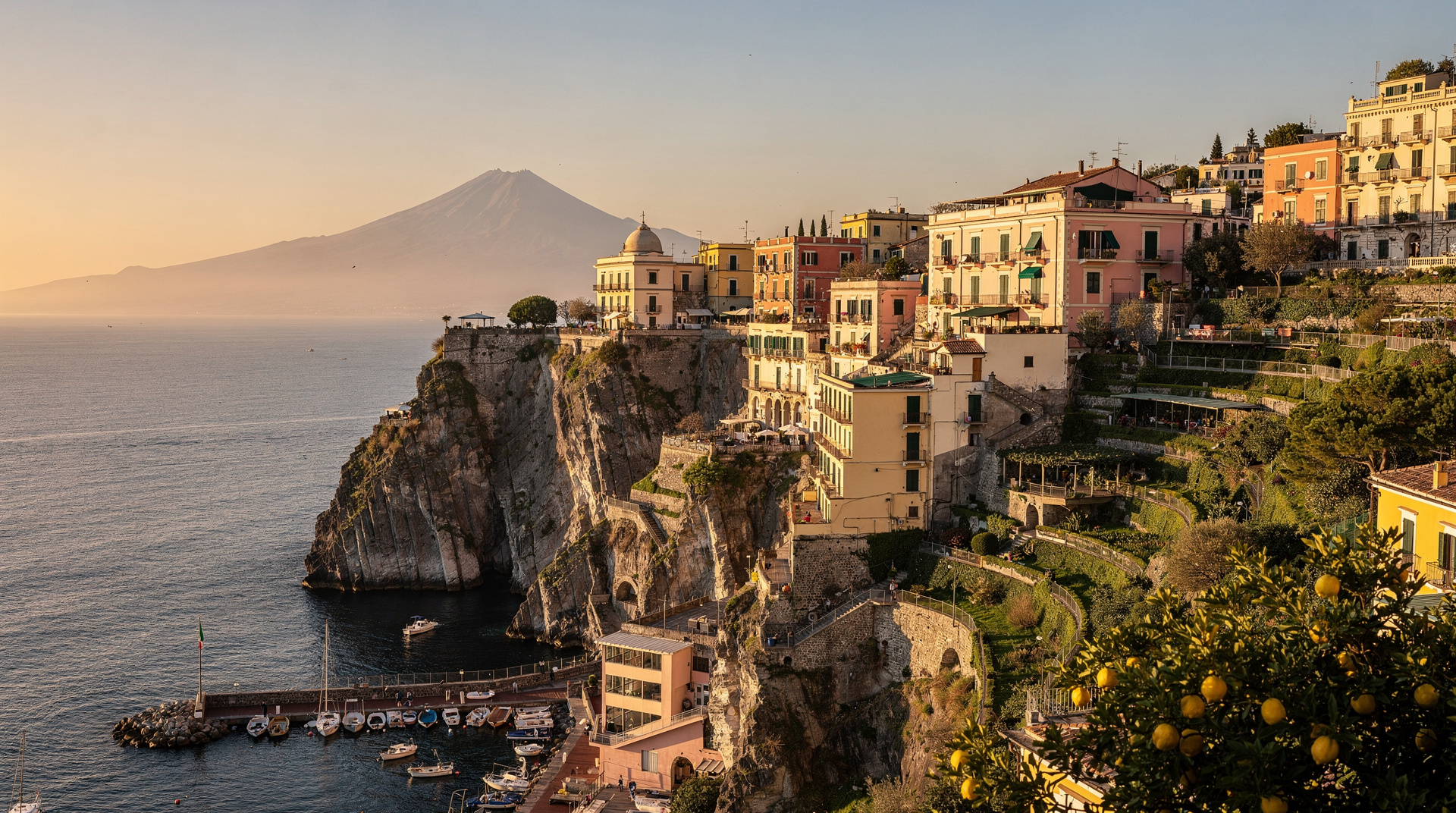
Marina Grande is not the ferry port (that is Marina Piccola) but the original fishing harbour on the western side of the cliff. It is accessible from Piazza della Vittoria via a long staircase down the cliff face — allow 10 minutes down, 15 minutes back up.
The village at the bottom is the most genuine thing about Sorrento. Coloured houses crowd the narrow strand. Fishing boats are pulled up on the small beach. A couple of tratttorie serve lunch that was literally in the sea this morning. The atmosphere is completely different from the tourist town on the cliff above — more relaxed, more local, and significantly cheaper.
Trattoria da Emilia has been serving grilled fish and pasta at the water’s edge for decades; a full meal with house wine costs around €25–30 per person. Il Delfino is similar in quality and price. Both fill up by noon; arrive early or be prepared to wait.
The descent is not suitable for mobility-impaired visitors (steep stairs, no lift). If going down before lunch, consider that the return climb in afternoon heat can be strenuous.
The cliff walk and Villa Comunale gardens
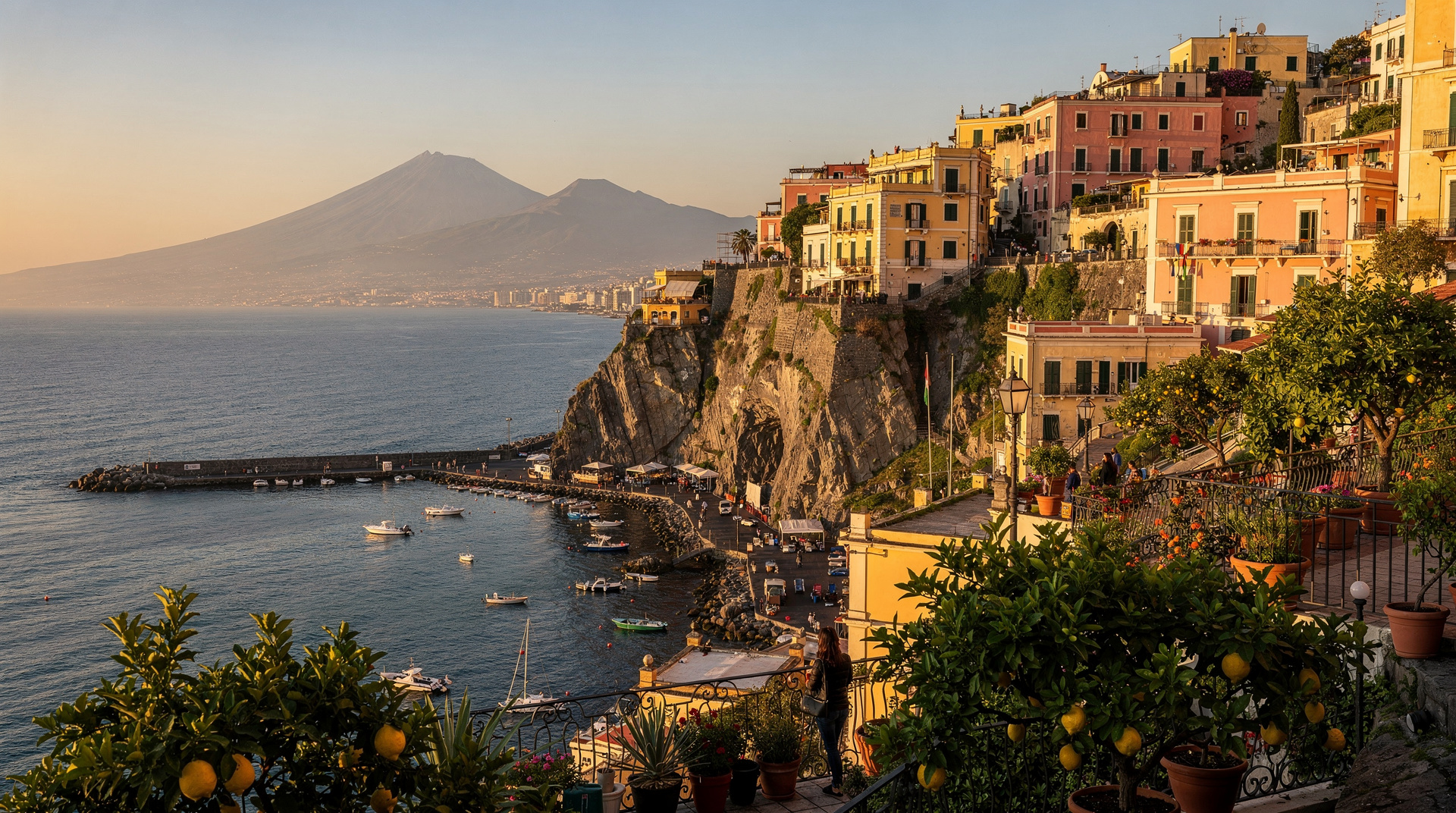
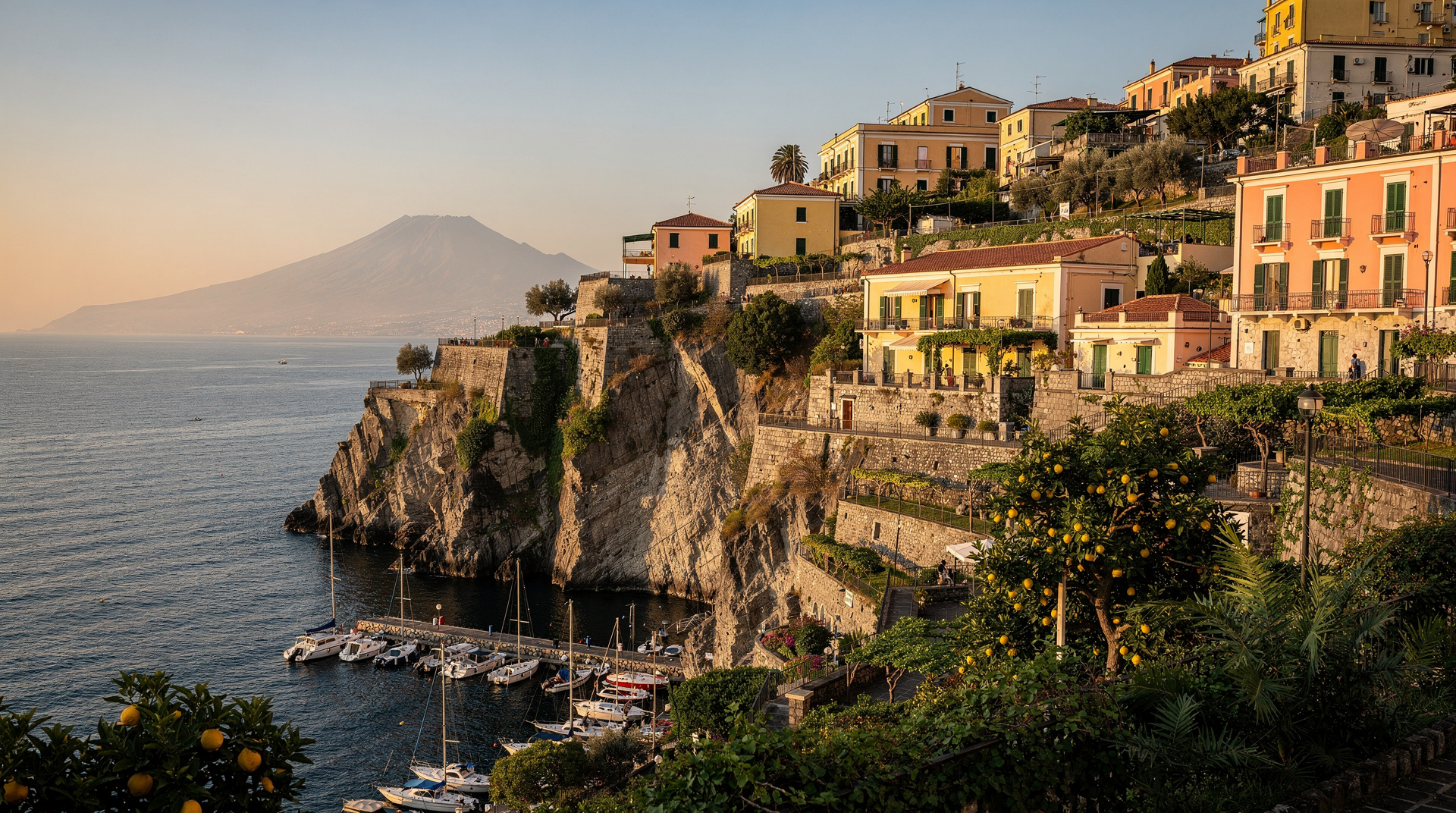
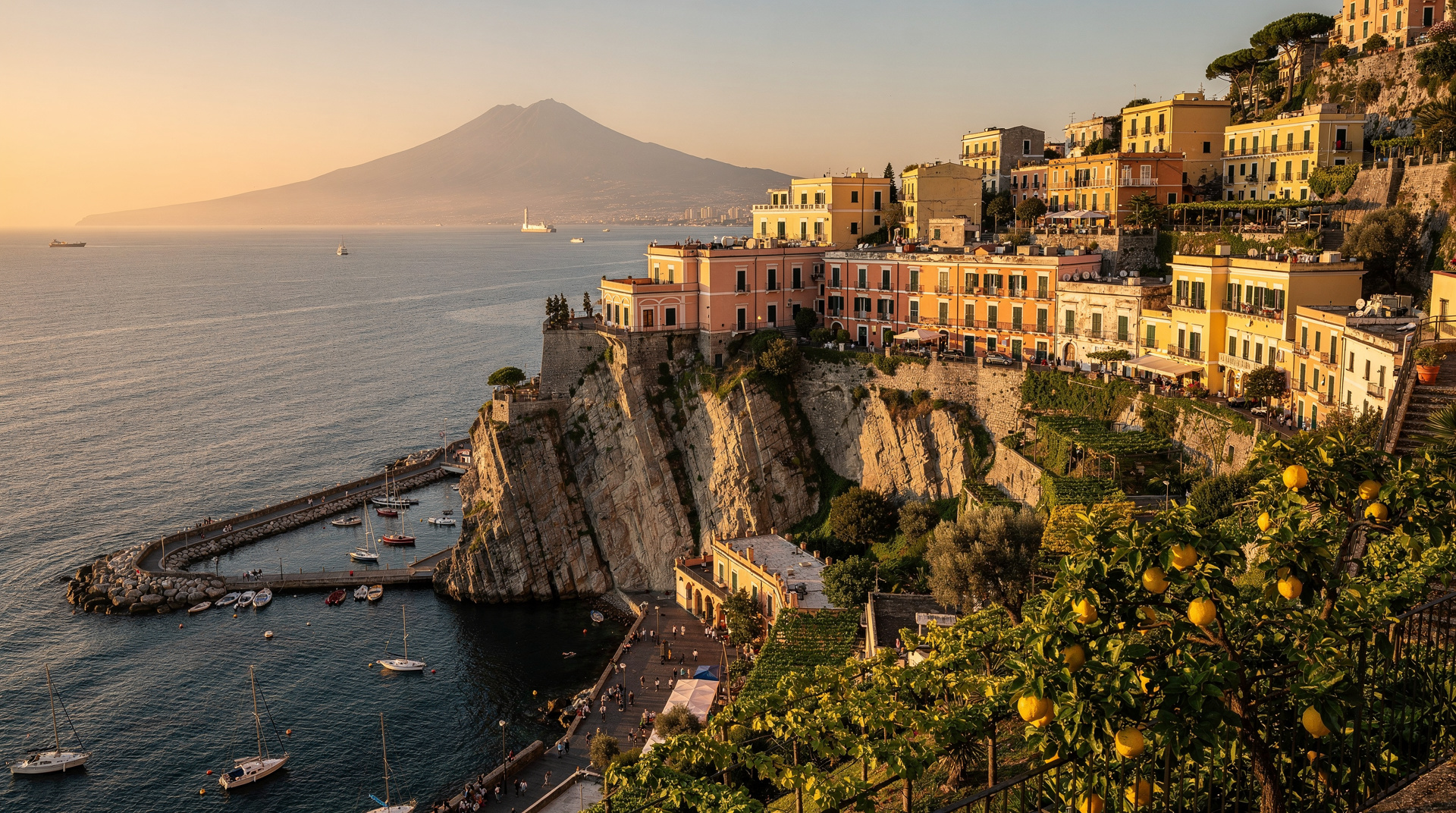
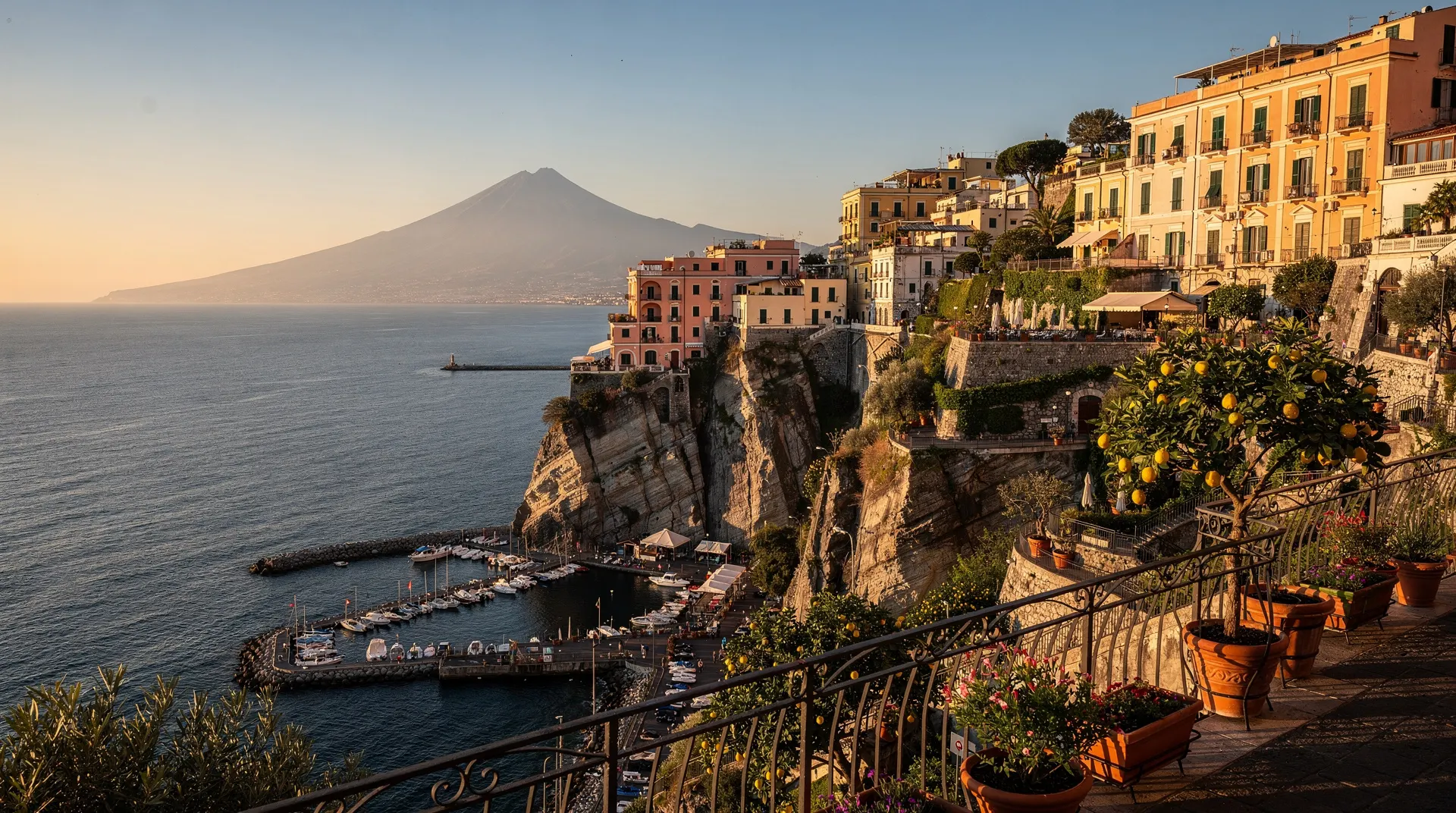
Via Luigi de Maio runs from the main piazza towards the cliff edge, ending at the Villa Comunale park and the church of San Francesco. The park itself is small — a formal garden with bougainvillea, benches, and a narrow terrace — but the view over the rail is extraordinary: the entire bay, Vesuvius directly opposite, Naples visible to the left, the Sorrento peninsula stretching to the right.
This is the view that made Sorrento famous among 18th and 19th-century travellers, and it has not diminished. The best time is late afternoon (4–6pm in summer) when the light turns orange and the shadows lengthen across the water. The restaurant terraces that overhang the cliff in this area charge premium prices for the view; the public park gives the same view for free.
Lemon groves, cooking classes, and limoncello
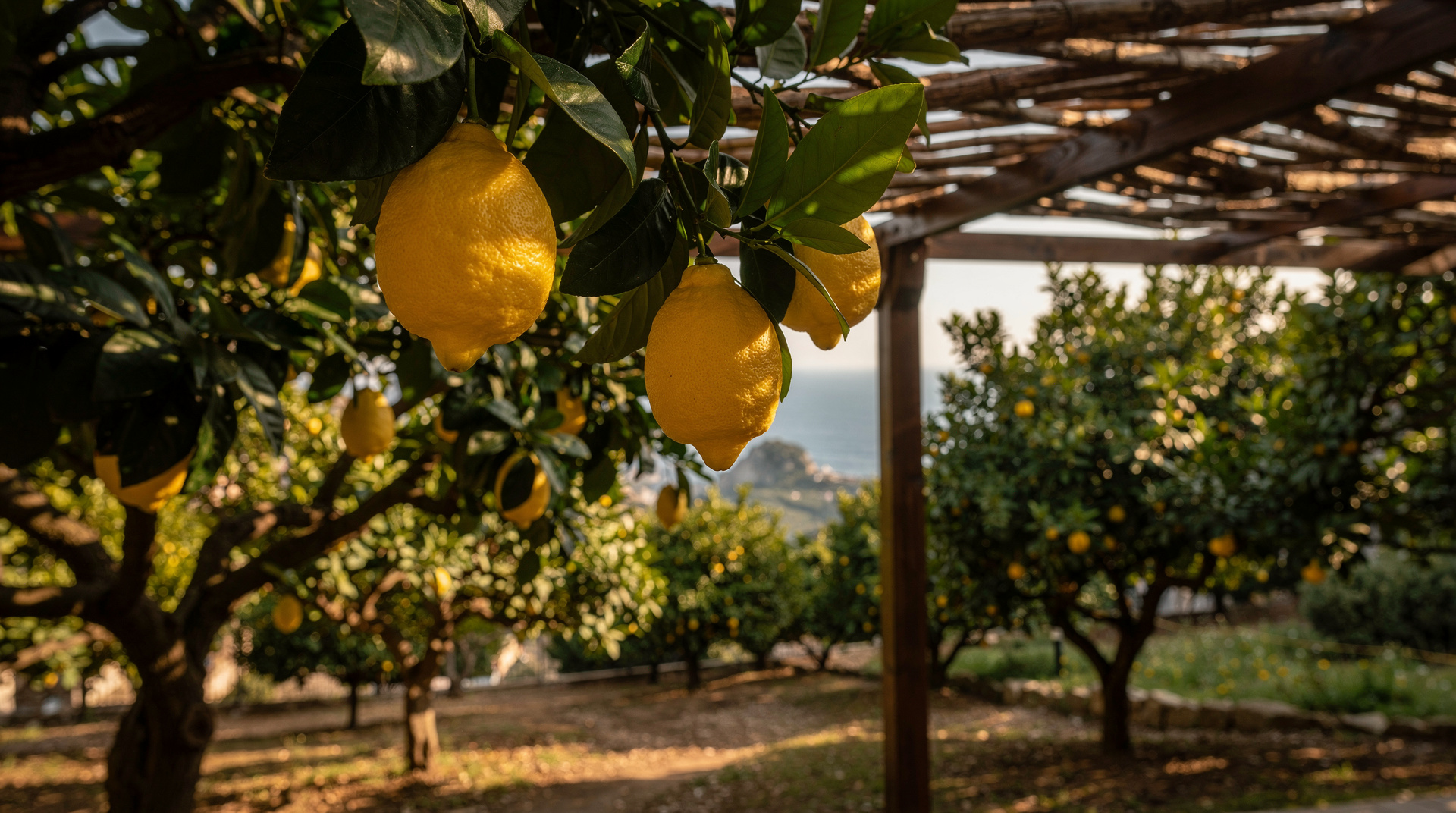
The terraced lemon groves visible on hillsides around Sorrento grow the sfusato Sorrento lemon — a large, fragrant variety with thick aromatic peel and relatively little acidic bite. These lemons are the raw material for Sorrento’s limoncello and for a local cuisine that uses lemon zest, lemon cream, and preserved lemons more broadly than anywhere else in Italy.
Several operators run cooking classes in working lemon groves on the hills above the town. A typical class (3 hours) covers 3–4 dishes using local ingredients, including a lemon-based dessert. Cost: €60–80 per person. The best classes involve a guide walking you through the grove before cooking begins.
Sorrento cooking class with lemon grove experienceFor a standalone limoncello-making session:
Limoncello-making class in SorrentoFor the full story on limoncello quality and where to buy the real thing, see limoncello-sorrento.
Walking tours of the old town
Sorrento’s compact historic centre rewards a guided walk for visitors who want context beyond what they can observe independently. A good guide covers the Greek and Roman origins of the town, the Norman and medieval layers visible in the street plan, and the cultural significance of the intarsia woodwork tradition.
Sorrento secret walks with a local guideAn evening alternative:
Sorrento night walking tour with surprise stopsBoat trips and water activities from Marina Piccola
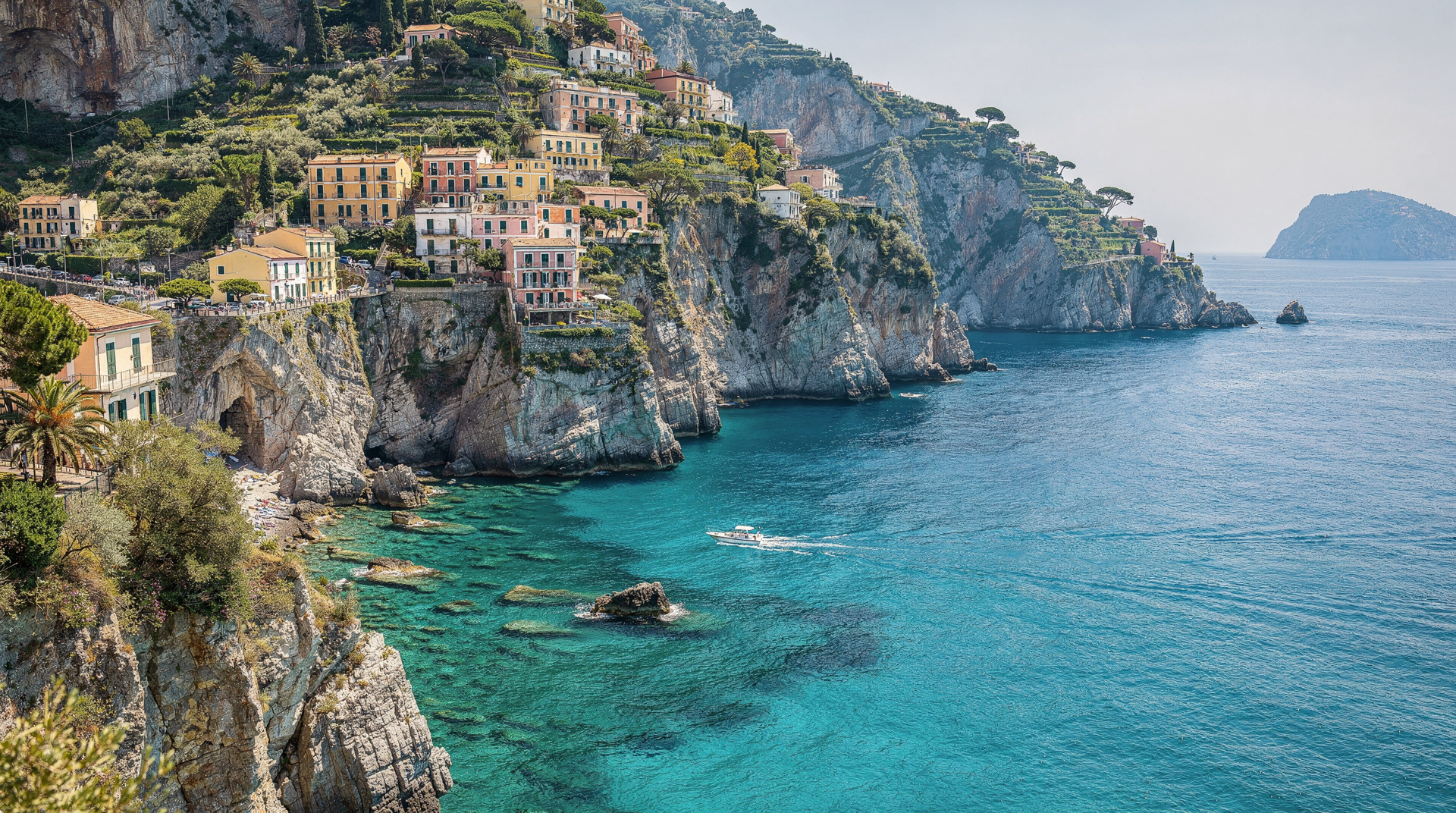
Marina Piccola (the ferry port) is also the departure point for private and group boat trips along the Sorrento coast and to Capri. The coastline between Sorrento and Massa Lubrense on the western tip of the peninsula is dramatic — sea caves, the clear water of the Marina di Puolo, and the rocky promontories of Capo di Sorrento where Roman villa remains are visible in the sea.
Kayaking is possible from several outfitters near the waterfront, typically renting kayaks for €15–20 per hour or €50–60 per day. No experience is needed for the sheltered sections near Marina Grande; the more exposed coastal paddling requires calm conditions.
Swimming from the Marina Piccola lido (sun beds around €15–20 per person) or Marina Grande beach is the most accessible water activity without booking a tour.
A half-day plan for visitors with only a few hours
If your time in Sorrento is limited to a single morning or afternoon rather than a full day, prioritise ruthlessly rather than trying a condensed version of everything. Start with the old town walk along Via San Cesareo (30–40 minutes), which delivers the highest density of genuine Sorrento character per minute spent. Follow it with the Villa Comunale cliff view (15 minutes), which is free and unmissable regardless of time constraints.
If you have even one more hour, the descent to Marina Grande is worth the stair climb for lunch or a coffee at the water’s edge — skip the Museo Correale and any cooking class on a genuinely short visit, since both require a minimum of 1.5–2 hours to be worthwhile rather than rushed. This trimmed sequence covers the essential Sorrento experience in under two hours total, leaving the rest of the day free for Capri or the Amalfi Coast.
The Museo Correale di Terranova
On the eastern edge of the old town (Via Correale, 5 minutes from Piazza Tasso), this regional museum occupies a 17th-century villa with a good collection of Neapolitan decorative arts — majolica, glass, inlaid furniture, and topographical paintings of the bay from the 18th and 19th centuries. The garden terrace has views towards the sea.
Entry around €10. Allow 1.5 hours. Not an essential visit for a short trip, but worthwhile for visitors interested in regional history and decorative arts.
Day trips from Sorrento
Sorrento’s position makes it one of the best transport hubs in Campania. Within reach:
Capri — 20–25 minute ferry from Marina Piccola. The shortest crossing to the island. See capri-from-naples-vs-sorrento.
Positano and Amalfi Coast — SITA bus from the station forecourt. Positano about 1 hour; Amalfi about 1.5–2 hours. See amalfi-coast-guide.
Pompeii — Circumvesuviana train from Sorrento to Pompeii Scavi stop. Journey about 30 minutes, €2.60. See pompeii-complete-guide.
Path of the Gods — bus from Sorrento to Agerola/Bomerano (the start of the trail). See path-of-the-gods-guide.
Naples — Circumvesuviana to Napoli Garibaldi. 65–70 minutes, €3.30.
What to skip in Sorrento
The souvenir stalls on Corso Italia — these sell mass-produced limoncello, ceramic goods, and lemon-printed merchandise, most of which is made outside the region and unrelated to authentic Sorrentine craft. If you want genuine local products, go to a workshop or a specialist food shop.
The first row of harbour restaurants at Marina Piccola — immediately above the ferry terminal, these exist to catch arriving visitors. Prices are high, menus are tourist-facing, and better food is available within a short walk.
Guided bus tours of the Amalfi Coast from Sorrento — these are expensive relative to taking the SITA bus independently and offer less flexibility. Unless you specifically want a guide’s commentary, the independent bus option is more practical and significantly cheaper. See amalfi-coast-bus-sita.
Frequently asked questions about things to do in Sorrento
Is there a market in Sorrento?
A small daily market runs on Via San Cesareo selling fruit, vegetables, and local food products. A weekly market (usually Tuesday) on Piazza Lauro brings more stalls selling clothing, household goods, and some food products. Neither is a tourist spectacle — they are working local markets, which is precisely what makes them worth a brief visit.
Can I visit Sorrento and the Amalfi Coast in the same day?
Yes, with an early start. Take the SITA bus from Sorrento to Positano in the morning (arrive before the beach crowds), continue to Amalfi for lunch, and return to Sorrento by late afternoon. This covers the highlights without a car and without spending a fortune. The bus ride along the Amalfi Coast road is itself an experience.
What is the best restaurant in Sorrento?
No single restaurant dominates, but consistently well-reviewed options include Inn Bufalito (bufala mozzarella specialities, Via Fuorimura), Il Buco (creative regional cuisine, Via II Rampa Marina, the most ambitious kitchen in town at €60–80 per person), and the simpler Da Emilia at Marina Grande (fresh fish at fair prices). For everyday value, Pizzeria da Franco near the station is the local standard.
Is Sorrento better than Positano?
Different rather than better or worse. Sorrento has better transport, more accommodation variety, and functions as a real town rather than a resort. Positano is more scenically dramatic and has a stronger beach culture, but is more expensive and has less practical infrastructure. For a base, Sorrento is more efficient. For pure visual experience, Positano is more striking.
How far is the Path of the Gods from Sorrento?
The trailhead is at Bomerano (near Agerola), about 1 hour by bus from Sorrento. SITA buses connect Sorrento to Agerola with a transfer. Several guided operators run transfers from Sorrento directly to the trailhead. See path-of-the-gods-guide for the full hiking guide.
Evening activities beyond the passeggiata
Beyond the standard evening walk described elsewhere in this guide, Sorrento has a handful of activities that suit visitors wanting something more structured than an unplanned stroll. A handful of restaurants run occasional live acoustic music evenings in summer, usually posted on a chalkboard outside rather than advertised in advance — worth checking as you pass rather than pre-booking.
Sunset boat trips from Marina Piccola, typically an hour to ninety minutes along the coast toward Capo di Sorrento, give a genuinely different perspective on the cliffs than any land-based viewpoint, with the added appeal of watching the town’s lights come on from the water. For a quieter evening, the Vallone dei Mulini viewpoint on Via Fuorimura is atmospheric after dark, when the ravine’s vegetation and the old mill ruin are lit only by ambient street light from above.
The Sorrento walking circuit: a self-guided route
If you want a structured way to see the main sights on foot, this circuit takes approximately 2.5–3 hours at a relaxed pace and covers the essential Sorrento without requiring a guide.
Start at Sorrento station (or Piazza Tasso if you are already in town). Walk east along Corso Italia past the local shops — note the difference between the tourist-facing shops near the station and the more Italian-facing shops (pharmacy, hardware, clothes) further along.
Via San Cesareo — turn right at the cathedral and descend into the old town on Via San Cesareo. The street narrows progressively as you walk east, lined with food shops, liqueur producers, and intarsia woodcraft workshops. The smell of lemon and almond pastries from the corner pasticceria is worth stopping for.
Sedile Dominova — at the junction of Via San Cesareo and Via Giuliani, the 15th-century loggia with its card-playing retired men is one of the most genuinely local sights in the town. Pause for a few minutes.
Piazza Sant’Antonino — the main basilica and adjacent square, with a fountain that has a whale-bone as one of the components (a reminder of Sorrento’s early maritime history). The church interior is worth a quick look.
Via Giuliani and Via degli Aranci — these parallel lanes lead back towards the main street through a more residential part of the old town. Pizzeria da Franco is on Via degli Aranci.
Piazza Tasso — back to the central square for a coffee. Bar Ercolano on the piazza serves excellent granita in summer.
Via Luigi de Maio — head south from Piazza Tasso towards the cliff. Pass the Villa Comunale garden (stop for the Vesuvius view), continue to the Piazza della Vittoria at the cliff edge.
Descent to Marina Grande — from Piazza della Vittoria, the staircase descends to the fishing village. This is the most physically demanding part of the walk. Allow 30 minutes for the descent, harbour visit, and ascent back up (or take a taxi back up for around €8).
This circuit covers everything essential in Sorrento in a single morning. Return by early afternoon and you have the rest of the day free for a day trip by bus or ferry.
Shopping in Sorrento: what is worth buying
Beyond limoncello (covered in detail in limoncello-sorrento), Sorrento has a few other local products worth seeking:
Intarsia woodwork — marquetry in geometric patterns, citrus-grove scenes, and classical landscapes. Made from local woods (olive, walnut, lemon, citrus). A small genuine piece (10x15 cm) starts at around €30 from a workshop. Avoid the cheap flat magnets sold in tourist shops — these are printed, not inlaid. The giveaway is the weight and the depth of the colour variations.
Sandals — Sorrento has a tradition of handmade leather sandals (infradito and sandali artigianali). Several cobblers on side streets near the main piazza will make custom sandals to measure in 30–60 minutes for around €30–50. This is a genuine local craft and a practical souvenir.
Local olive oil — the hills around Sorrento grow a variety of small-fruited olive particularly suited to the volcanic soil. The oil is fruity and moderately peppery. Sold in good alimentari on Via San Cesareo. Look for frantoio (cold-press) designations and local farm names rather than generic brands.
Preserved lemons — sfusato lemons preserved in salt or oil are a Sorrentine speciality that travels well. Used in pasta, fish dishes, and as a condiment, they are genuinely different from supermarket preserved lemons and impossible to replicate at home without access to the specific variety. Jars run €4–8 from specialist food shops.
Photography spots worth knowing about
Sorrento offers more distinctive photo opportunities than the obvious Villa Comunale viewpoint, though that one remains the best single shot for the classic bay-and-volcano composition. The Marina Grande waterfront, especially in the hour after sunrise when the fishing boats are still out and the light is soft, produces far less generic images than the crowded late-afternoon cliff view. The narrow lane intersections around the Sedile Dominova have good architectural framing if you catch them without the surrounding foot traffic, which usually means before 9am.
For a genuinely uncrowded angle on the bay, the path along Via Capo toward Punta del Capo (covered above) gives sea views from an angle few day-trip photographers reach, with the added bonus of ancient Roman ruins in the foreground. Avoid the temptation to only shoot from the most popular viewpoint — a five-minute walk in any direction from Piazza Tasso usually finds a less-photographed version of the same view.
Activities for a rainy or off-season day
Sorrento’s appeal is largely outdoor, but the town has enough covered options that a poor-weather day is not wasted. The Museo Correale galleries stay fully indoors and dry. A cooking or limoncello-making class is unaffected by weather and often more enjoyable with rain outside the window. The intarsia workshops along Via San Cesareo welcome browsers regardless of conditions, and watching a craftsman inlay a design is genuinely absorbing. Outside the shoulder months, several restaurants and cafés also extend quieter, more personal service once the peak day-tripper crowds thin out — an underrated reason to visit Sorrento in November or March rather than only in summer.
Frequently asked questions about Things to do in Sorrento — beyond the souvenir shops and tourist traps
Is Sorrento worth a full day?
What is the best free activity in Sorrento?
Are the Sorrento cooking classes worth the money?
What water activities are available near Sorrento?
Is there a night life in Sorrento?
What is the Vallone dei Mulini?
What day trips can I do from Sorrento?
Top experiences
Bookable activities with verified prices and instant confirmation on GetYourGuide.