Limoncello Sorrento — what it actually is, how it's made, and where to buy the real thing
Sorrento: Limoncello Making & Tasting Experience
Duration: 1h
What is special about Sorrento limoncello?
Sorrento limoncello is made from sfusato lemons grown on the Sorrentine peninsula — a large, fragrant variety with thick aromatic peel. When made well, it tastes clean and intensely citrusy. The difference from mass-market limoncello is significant. Expect €12–18 for 500ml from a quality producer.
Sorrento limoncello: made from sfusato lemons with thick, intensely aromatic peel. When made honestly — lemon peel macerated in pure alcohol, clean sugar syrup — the result is a different drink from supermarket versions. Budget €12–18 for 500ml from a Via San Cesareo producer. The €6 tourist-stall bottles are not the same product.
| Where | Via San Cesareo, Sorrento old town |
| Cost | Around €12–18 for 500ml from a quality small producer |
| Avoid | Corso Italia market stalls and shops beside the ferry terminal |
| Best time to buy | Any time — production runs year-round from stored maceration batches |
| Bring home | Checked luggage, wrapped; hand luggage limited to 100ml |
What limoncello actually is
Limoncello is a lemon liqueur made by macerating lemon peel in pure grain alcohol, then diluting the infused spirit with a sugar syrup. That is the entire recipe. Three ingredients: peel, alcohol, sugar. There is no cooking, no fermentation, no ageing. The quality of the finished product depends almost entirely on the quality of the lemons.
In Sorrento and along the Amalfi Coast, the lemon in question is the sfusato — an elongated, thick-skinned variety with intensely fragrant peel that is rich in essential oils. The oils are what give limoncello its flavour. A sfusato lemon’s peel is more aromatic per square centimetre than a standard supermarket lemon, which is why the limoncello made from it tastes different.
Good Sorrento limoncello, served at around 8–10°C from the freezer, tastes of concentrated lemon peel — clean, bright, intensely citrusy, with no artificial sharpness or cloying sweetness. You can taste the specific lemon variety, which is unlike any other.
Bad limoncello — which is what many tourists bring home — tastes of sugar syrup with artificial lemon flavouring. It is made from lemon essence or low-grade peel, diluted aggressively, and sweetened to mask the lack of genuine aroma.
The sfusato lemon
Sfusato sorrentino (Sorrento variety) and sfusato Amalfitano (Amalfi variety) are regional cultivars in the same botanical family. The name means “spindle-shaped” in Italian — the lemon’s distinctive elongated form.
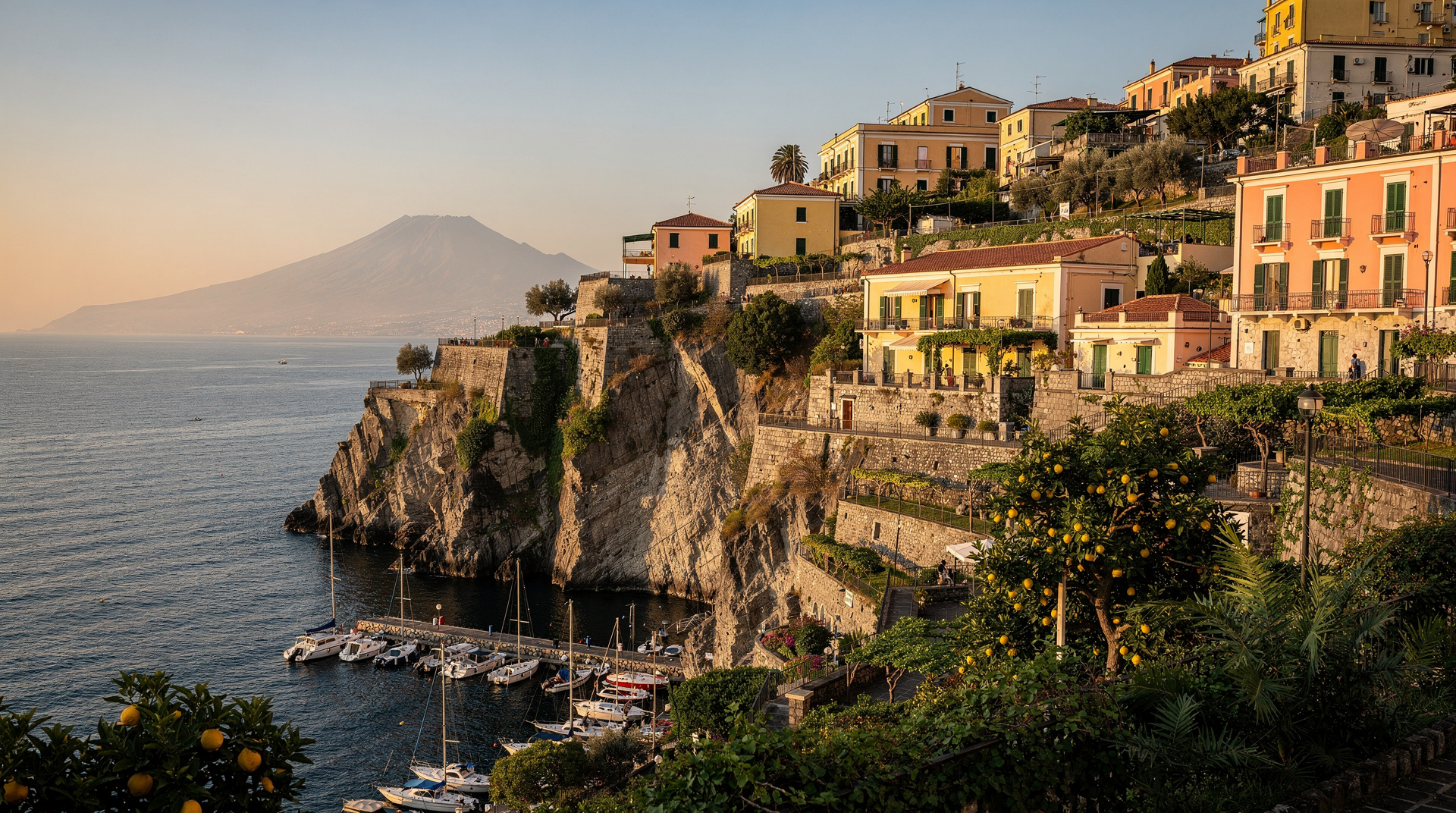
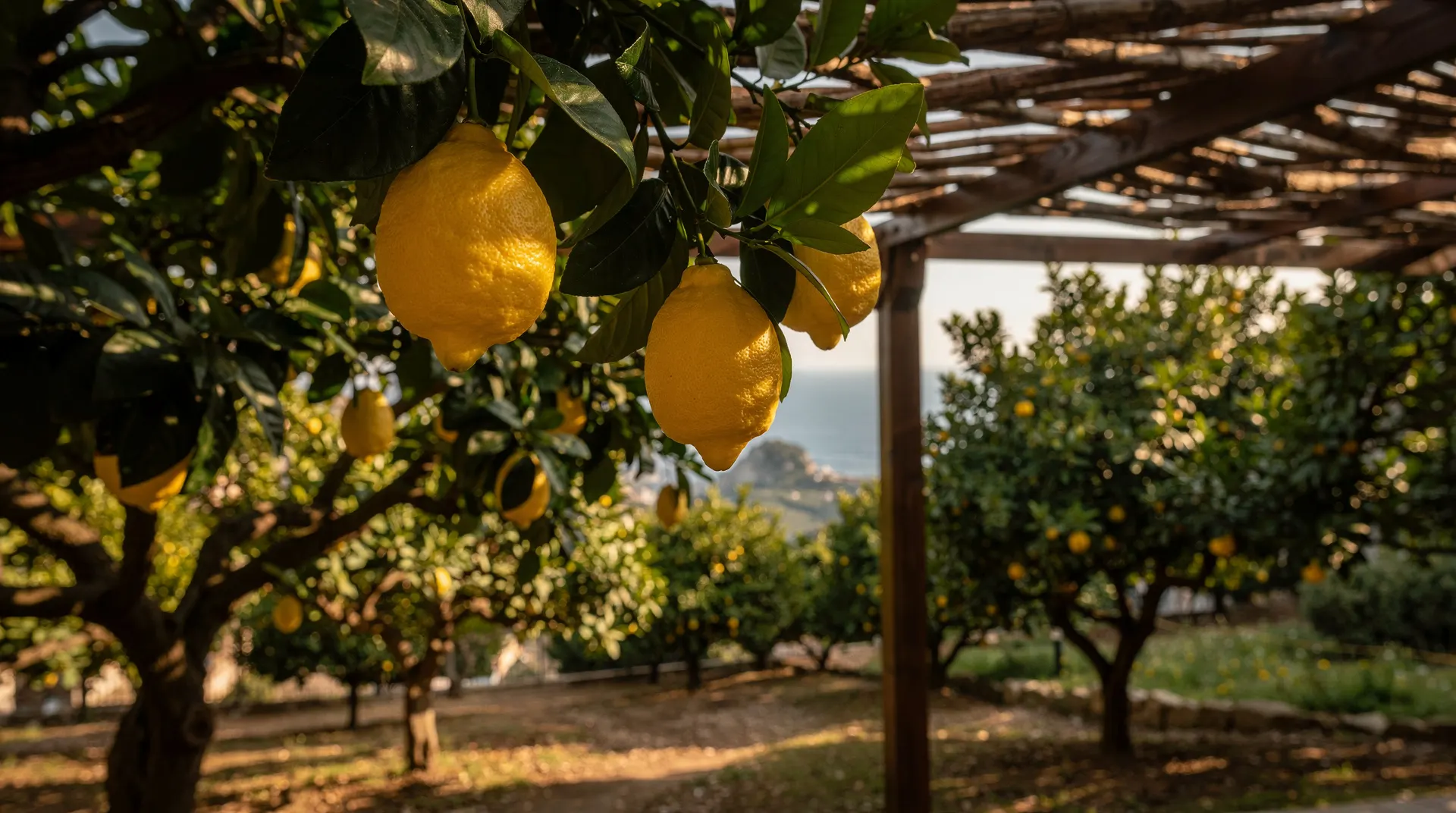
The trees grow on steeply terraced hillsides above the coast, supported by pergola structures (pagliarelle) made from chestnut poles. The pergola system shades the fruit from direct sun, preventing over-ripening and concentrating the peel’s essential oils. Growing on volcanic soil adds mineral complexity to the flavour.
The harvest runs primarily from February to October. The largest, most aromatic fruits come in spring. Summer fruits tend to be juicier; winter fruits have the highest peel oil concentration.
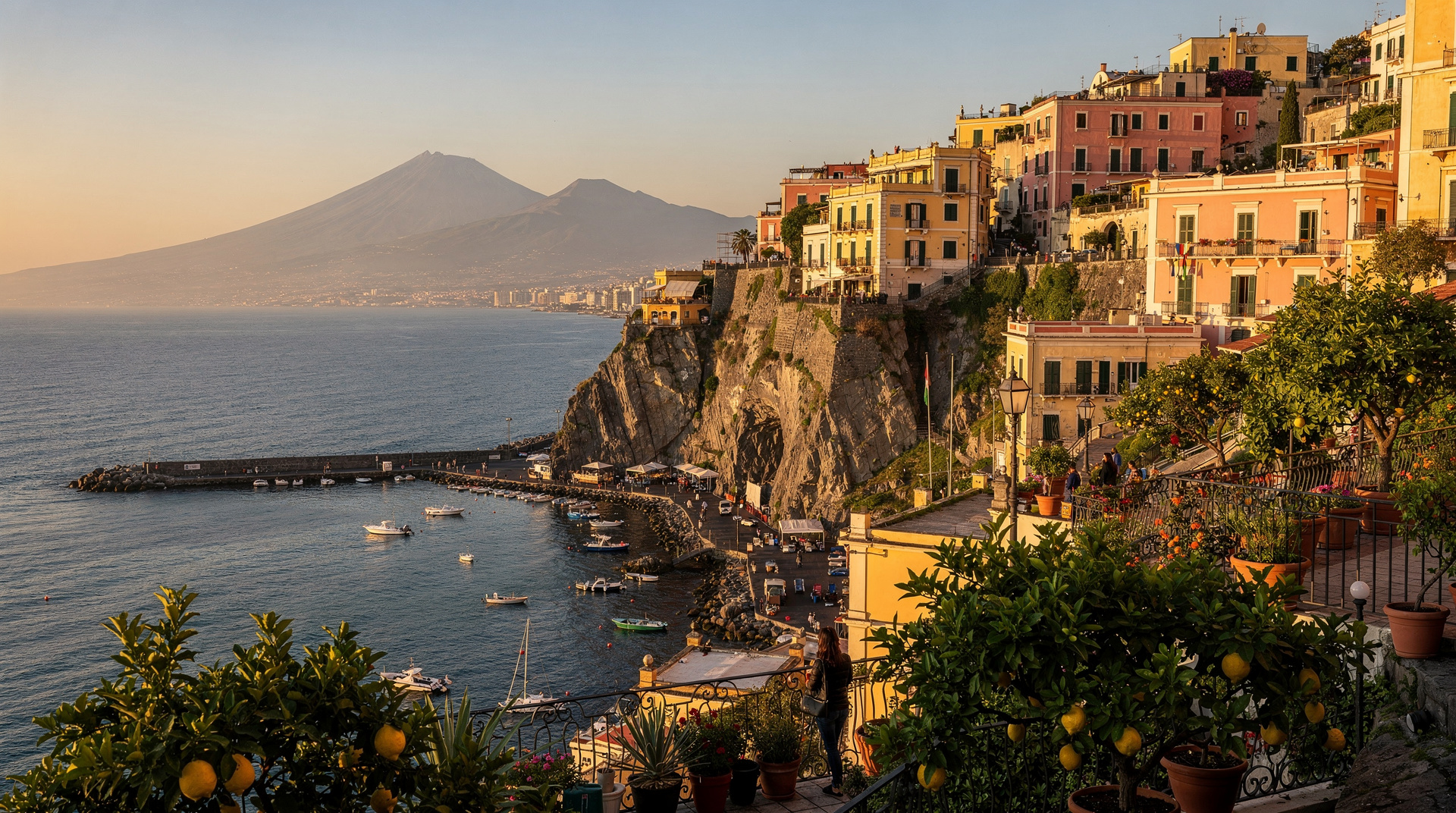
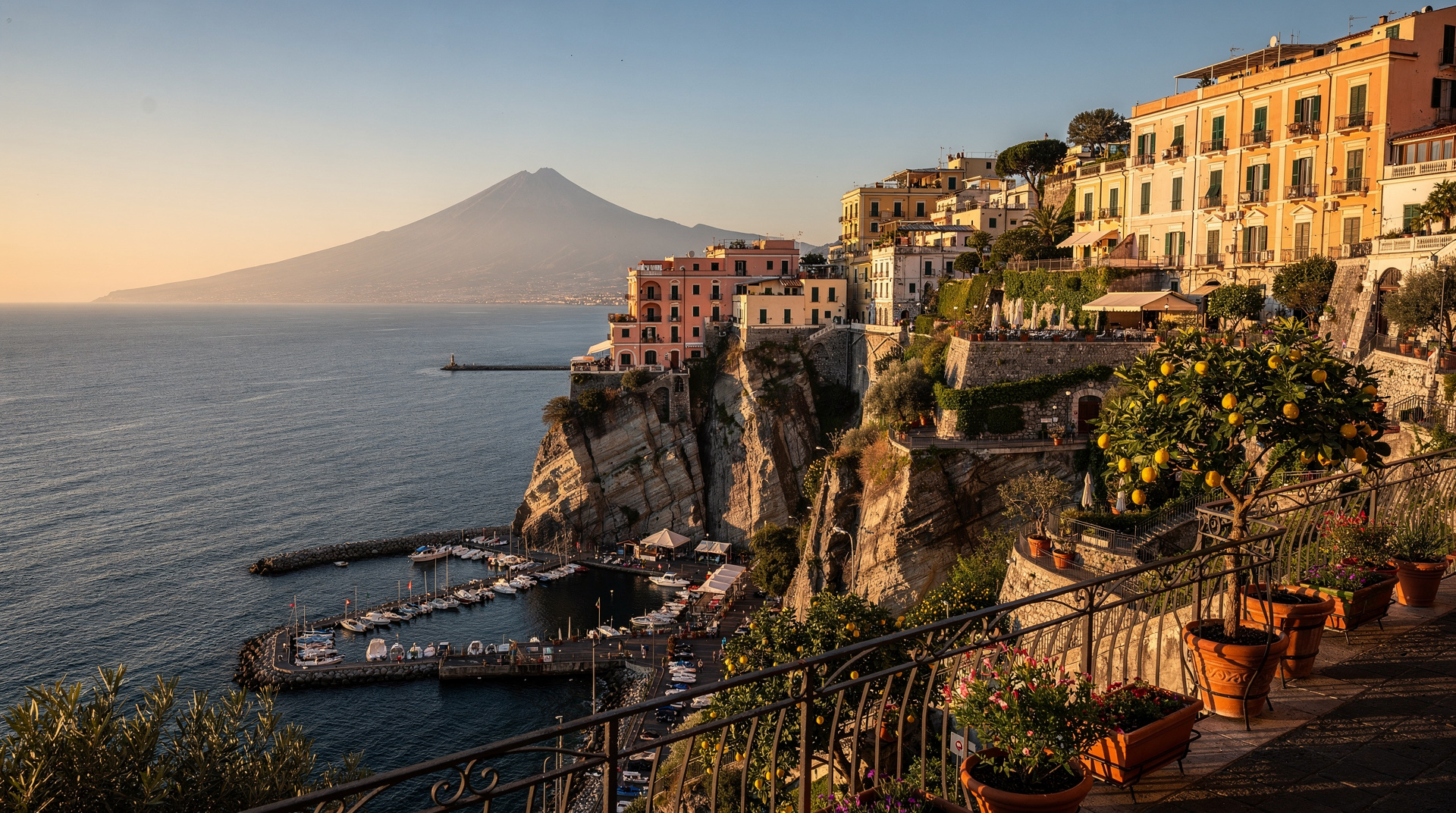
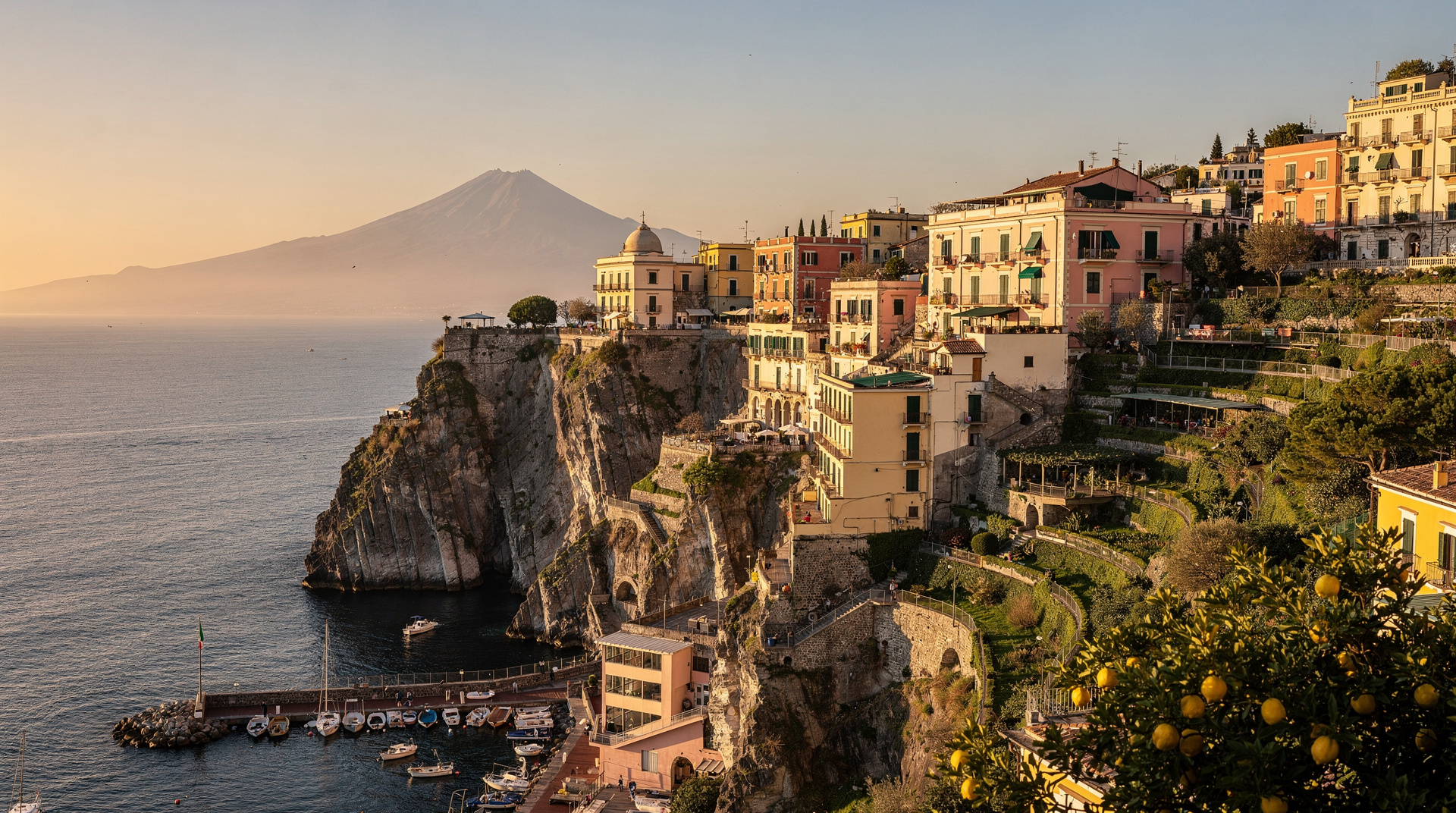
You can see these lemon groves throughout the Sorrento peninsula — the distinctive dark green foliage and netting visible on every hillside above the coast road. Several farms offer tours, most combined with a cooking class.
How limoncello is made
The basic process takes 2–4 weeks:
1. Peel extraction — the outer peel (zest) is removed from fresh sfusato lemons, avoiding the white pith which is bitter. Done by hand in traditional production; by machine in industrial production. Hand-peeled zest retains more intact oil cells.
2. Maceration — the peel is submerged in food-grade pure grain alcohol (95% ABV in Italy) for a minimum of one week, often longer. The alcohol draws the essential oils from the peel cells. The mixture turns bright yellow as the oils are extracted.
3. Filtration — the macerated alcohol is filtered to remove peel solids.
4. Dilution — cold water is mixed with sugar to create a syrup, which is combined with the lemon-infused alcohol. The ratio determines the final ABV (traditionally 26–30%) and sweetness.
5. Bottling — the finished limoncello is bottled, usually with a minimum resting period of a few days for the flavours to integrate.
Industrial producers abbreviate every step and use lemon essence rather than fresh peel maceration. The cost reduction is enormous. The result is recognisable as “limoncello” in the same way that instant coffee is recognisable as “coffee.”
The colour is a useful, imperfect clue: genuine sfusato-based limoncello tends toward a slightly cloudy, natural yellow rather than the uniform, almost fluorescent yellow of some mass-market bottles, which often use added colouring alongside essence. Colour alone is not proof either way, but combined with taste and price it helps narrow down what you are looking at.
Where to buy genuine limoncello in Sorrento
Via San Cesareo is the best street for quality limoncello. This is the old town’s main shopping lane, running from the cathedral square towards the Marina Grande cliff. Several producers have shops here where the maceration jars are visible and staff can explain the production process.
Limonoro (Via San Cesareo 49) — one of the most established small producers, with visible production equipment and the option to taste before buying. The basic 500ml bottle runs around €14–16.
Profumi della Costiera (multiple old town locations) — produces limoncello and related lemon products. Consistent quality at reasonable prices.
La Valle dei Mulini — near the Vallone dei Mulini viewpoint, a small producer with a particularly good crema di limone alongside the standard limoncello.
Gargiulo & Jannuzzi — primarily known for intarsia woodcraft, but also stocks a curated selection of regional food products including limoncello from small producers.
What to avoid: the market stalls along Corso Italia and the shops immediately adjacent to the ferry terminal. These stock primarily bottles of nationally distributed limoncello (Luxardo, Villa Massa, Pallini) at tourist prices. These brands are not bad, but they are widely available in Italian supermarkets at lower prices and are not specifically Sorrentine products.
Tasting before buying
Most quality producers offer a small taste before purchase — a thimble-sized pour is standard practice. If a shop refuses to let you taste, move on.
When tasting, serve temperature matters. A good limoncello at room temperature can seem aggressively sweet. The same limoncello at 8°C reveals its lemon character fully. Ask if they have a cold sample; most producers keep a bottle in the fridge for tasting.
Taste for: intensity of lemon aroma on the nose, clean finish without artificial sharpness, sweetness that does not overwhelm, and a consistency that coats the glass without being syrupy. If it tastes mainly of sugar or has a sharp chemical edge, it is industrial or cut with inferior neutral spirit.
How much limoncello to buy
For a household that enjoys a digestivo occasionally, a single 500ml bottle lasts a long time — it is served in small pours (25–30ml) and keeps indefinitely in the freezer. Buying two bottles is common: one to open at home relatively soon, one as a longer-term supply or a gift. For gifting multiple people, buying 4–6 smaller bottles (200–350ml, where available) from the same producer spreads the cost and the luggage weight more evenly than fewer large bottles.
If you are travelling onward within Italy before flying home, note that some producers will vacuum-wrap or box bottles for transit on request — worth asking if you have several weeks of travel ahead and are worried about breakage.
Limoncello-making classes
Several Sorrento operators run 1–2 hour sessions where you make your own limoncello from fresh sfusato lemons. These are genuinely educational and give you a better understanding of the product than any amount of shopping.
Limoncello-making class in SorrentoFor a broader lemon grove experience including cooking:
Sorrento cooking class in a citrus groveFor a combined local food and wine experience that includes limoncello alongside other regional products:
Sorrento lemon, olive oil, and wine lunch experienceRelated lemon products
Crema di limone — a thick, sweet lemon cream made from limoncello base plus egg yolks and cream. Used as a pastry filling and for spreading on toast. Richer and more dessert-like than limoncello. Good for bringing home if you enjoy lemon desserts.
Delizia al limone — Sorrento’s local dessert pastry. A dome of sponge cake soaked in lemon syrup, filled with lemon cream, glazed in lemon glaze. Sold in virtually every pastry shop. At its best from Fauno Bar on Piazza Tasso or from the pastry counter at Pasticceria La Primavera on Via San Cesareo. Around €3–4 per piece.
Lemon marmalade — genuinely better than standard marmalade due to the sfusato’s aromatic peel. Sold in small-producer shops for €5–8 per jar. Look for producers who use only peel, juice, and sugar without added pectin or preservatives.
Limoncetta — a lower-alcohol lemon liqueur (around 12–15% ABV) made as a lighter aperitivo alternative to limoncello. Less common but worth trying if you find straight limoncello too strong.
How to bring limoncello home safely
500ml bottles fit easily in a standard suitcase wrapped in a T-shirt and plastic bag as a precaution against breakage. Two 500ml bottles per person is the practical limit for a suitcase without excessive weight.
If flying with carry-on only, the 100ml EU rule means you cannot carry a full bottle through security from the departure gate. Options: buy at the Naples airport duty-free post-security (Moncaini Wines and others stock good regional products), or ship home (some producers offer this).
Comparing regional digestivi
While in Sorrento, it is worth trying other regional liqueurs that are less tourist-marketed:
Nocino — walnut liqueur made in September from unripe green walnuts, dark and complex with a bittersweet character. Less commercial than limoncello and a more interesting digestivo for people who enjoy herbal liqueurs.
Mirto — Sardinian myrtle berry liqueur, increasingly produced in Campania. Deep purple, berry-forward, slightly tannic. Goes well with cheese.
Falernum — not the Caribbean version, but a Campanian wine-based liqueur with ancient roots. Hard to find but worth asking about at specialist liqueur shops.
Finocchietto — wild fennel liqueur, anise-forward and herbal, more common in southern Campania and Calabria but occasionally found in Sorrento’s better liqueur shops. A useful comparison for visitors who find limoncello too sweet and want something drier and more aromatic instead.
See campania-wine-guide for a broader overview of the region’s alcoholic production.
Frequently asked questions about Sorrento limoncello
Is there a IGP or DOP designation for Sorrento limoncello?
Limoncello di Sorrento has an IGP (Indicazione Geografica Protetta) designation, which means it can only be labelled as such if it is produced in the defined Sorrento area using sfusato sorrentino lemons. This designation controls the geographical origin but not the artisanal quality of production — industrial producers within the designated area can still use the IGP label. The designation is a useful minimum guarantee but not a full quality indicator.
What percentage alcohol should limoncello be?
Traditionally 26–30% ABV. Many commercial versions are 25% or slightly below. Homemade and artisanal versions sometimes go up to 32–35%. Below 25% tends to indicate excessive dilution; above 35% can taste spirit-forward rather than citrus-forward. The 26–30% range is the sweet spot for serving very cold.
How long does limoncello last once opened?
Indefinitely in the freezer (the alcohol content prevents freezing). At room temperature, a opened bottle remains good for 2–3 years. The colour may fade slightly over time, but the flavour remains stable. Keep away from light and heat.
Can I make limoncello from regular lemons at home?
Yes, but the result is different. Standard supermarket lemons have thinner, less aromatic peel with fewer essential oils. The finished product will be recognisably limoncello but lacking the depth and fragrance of the sfusato version. If you want to try making it, use unwaxed organic lemons — the wax coating on standard lemons transfers to the alcohol during maceration.
Is it worth buying limoncello in Sorrento vs buying it at the airport?
For genuine artisanal production, yes — you cannot find small Sorrento producers in airport retail. For branded mid-range limoncello (Villa Massa, which is actually good and from nearby Sant’Agnello), the airport duty-free sometimes has it at comparable prices. The specific advantage of buying in Sorrento is access to micro-producers who do not distribute beyond the local area.
The lemon grove experience: more than just limoncello
The sfusato lemons and the terraced groves they grow on are worth experiencing beyond what ends up in a bottle. Several farms around Sorrento and Meta di Sorrento (the agricultural area inland from the resort town) offer guided walks through the terraces with explanations of the growing methods, harvesting, and the history of citrus cultivation on the peninsula.
The characteristic structure of these groves — low dry-stone walls supporting terraces, chestnut-pole pergolas draped with nets to shade the developing fruit — is ancient in design and specific to this part of the Italian coast. The same system has been used since at least the 16th century. Walking through a working lemon grove in April or September (the main harvest periods) produces an intensity of fragrance from the peel’s volatile oils that is genuinely extraordinary.
Several cooking class operators include the grove walk as a preamble to the class. This is recommended for anyone who wants to understand the product rather than just taste it at the end. The connection between the specific microclimate of these volcanic hillsides, the centuries-old grove architecture, and the flavour in your glass is clear when you have seen the growing context.
Pairing limoncello with food
Limoncello is traditionally served as a digestivo — at the end of a meal, very cold, in a small frozen ceramic or glass cup. This is the classical and correct use.
However, limoncello has culinary uses that are underexplored by non-Italian visitors:
Delizia al limone — the signature Sorrento pastry filled with lemon cream and glazed in lemon glaze. The cream uses crema di limone as its base, which contains limoncello. The best examples have a pronounced limoncello character that balances the sweetness.
Limoncello spritz — a summer aperitivo increasingly common in Sorrento bars. Two parts Prosecco, one part limoncello, splash of soda, ice, lemon slice. Refreshing and local.
Seafood marinade — a small amount of limoncello with olive oil and local herbs as a marinade for grilled prawns or white fish. The alcohol evaporates during cooking; the lemon flavour and sugars caramelise slightly. More common in domestic kitchens than in tourist-facing restaurants.
Cake and tart glaze — lemon tarts using limoncello-flavoured glaze rather than standard lemon curd are common in Sorrento pastry shops. The higher aromatic quality of the sfusato peel produces a different glaze character from standard lemon tarts.
Visiting the lemon groves: practical information
Several farms and gardens with sfusato lemon terraces are accessible from Sorrento town without a car:
La Zagara — a farm on the hill above Sorrento with terraced groves and a simple bar selling fresh-squeezed lemonade and limoncello tastings. Access by a 20-minute walk from Piazza Tasso or by taxi (€8–10).
Masseria di Sant’Angelo — a working farm at Sant’Agnello (immediately east of Sorrento) that produces olive oil, lemons, and wine. Guided tours by appointment (ask your hotel to book); includes tasting. About 15 minutes by taxi from Sorrento centre.
For a structured grove experience combined with cooking, see things-to-do-sorrento for cooking class recommendations that include lemon grove visits.
Comparing Sorrento with Amalfi Coast limoncello
| Sfusato Sorrentino (Sorrento) | Sfusato Amalfitano (Amalfi) | |
|---|---|---|
| Lemon size | Large, elongated | Similar, slightly variable by micro-area |
| IGP status | Limoncello di Sorrento IGP | Limoncello Costa d’Amalfi IGP |
| Where to buy well | Via San Cesareo producers | Amalfi and Ravello old-town shops |
| Price range | €12–18 / 500ml | Broadly similar, slightly higher in Positano and Ravello |
| Honest take | Quality depends on producer, not the town | Quality depends on producer, not the town |
If your itinerary includes both, taste in each place rather than assuming one town is objectively better — the Amalfi Coast guide covers the towns where you are most likely to find good small producers along the coast road.
Sorrento as your lemon-country base
If limoncello and the citrus groves are a real interest rather than a single souvenir stop, basing yourself in Sorrento for a few nights makes more sense than a day trip from Naples. It puts you within walking distance of Via San Cesareo, close to several grove-tour operators, and well positioned for day trips to Capri, Positano, and Amalfi without repeating the Circumvesuviana journey each day. See Sorrento as a base for how this compares logistically to staying in Naples or on the Amalfi Coast itself, and getting to Sorrento for the train and ferry options from Naples.
Frequently asked questions about Limoncello Sorrento — what it actually is, how it's made, and where to buy the real thing
Where is the best place to buy limoncello in Sorrento?
How much should good limoncello in Sorrento cost?
What makes sfusato lemons different?
How is limoncello made?
Can I bring limoncello home on a plane?
Is Sorrento limoncello better than Amalfi limoncello?
What other lemon products are worth buying in Sorrento?
Are cooking classes a good way to learn about Sorrento lemons?
Can I ship limoncello home instead of carrying it?
What size bottle should I buy as a gift?
Top experiences
Bookable activities with verified prices and instant confirmation on GetYourGuide.