Pompeii complete guide: everything you need to plan your visit
Pompeii: Skip-the-Line Guided Tour with Expert Archaeologist
Duration: 2-3h
How much time do you need at Pompeii and what does it cost?
Plan 3–4 hours minimum for a meaningful visit. Standard entry costs €18 (EU students 18–25 pay €9, EU under-18 free). Add €15–40 for a licensed guide or audioguide. The site opens at 9:00 and last entry is typically 17:30 (winter 15:30).
| Where | Pompei Scavi station, 30 min by Circumvesuviana from Naples |
| Cost | €18 standard entry, or €22 combined with Herculaneum/Oplontis |
| Time needed | 2 hours (highlights) to 6 hours (full site) |
| Getting there | Circumvesuviana or Campania Express from Napoli Garibaldi |
| Booking | Advance recommended June–September and weekends |
What Pompeii actually is (and why it still surprises people)
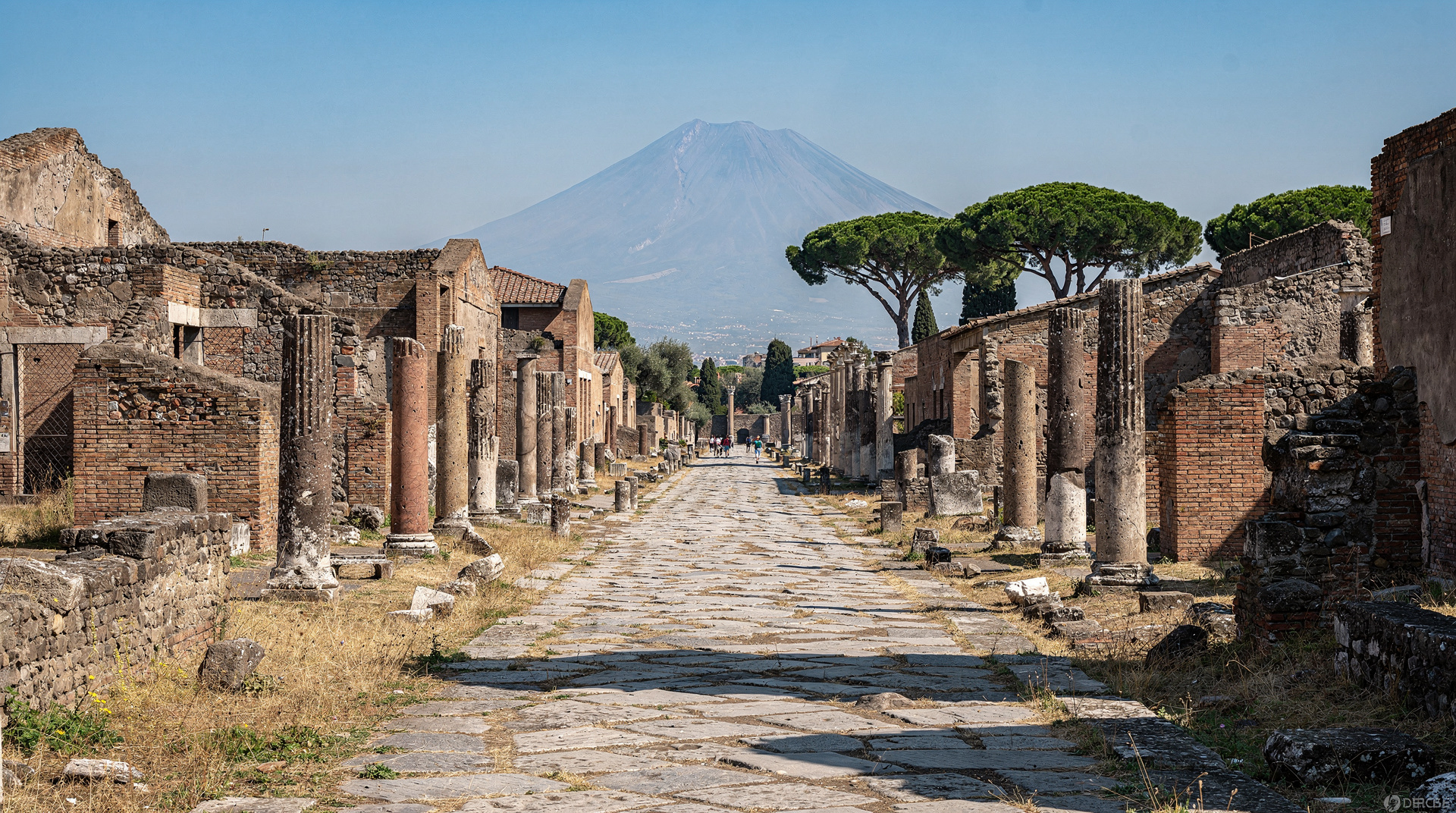
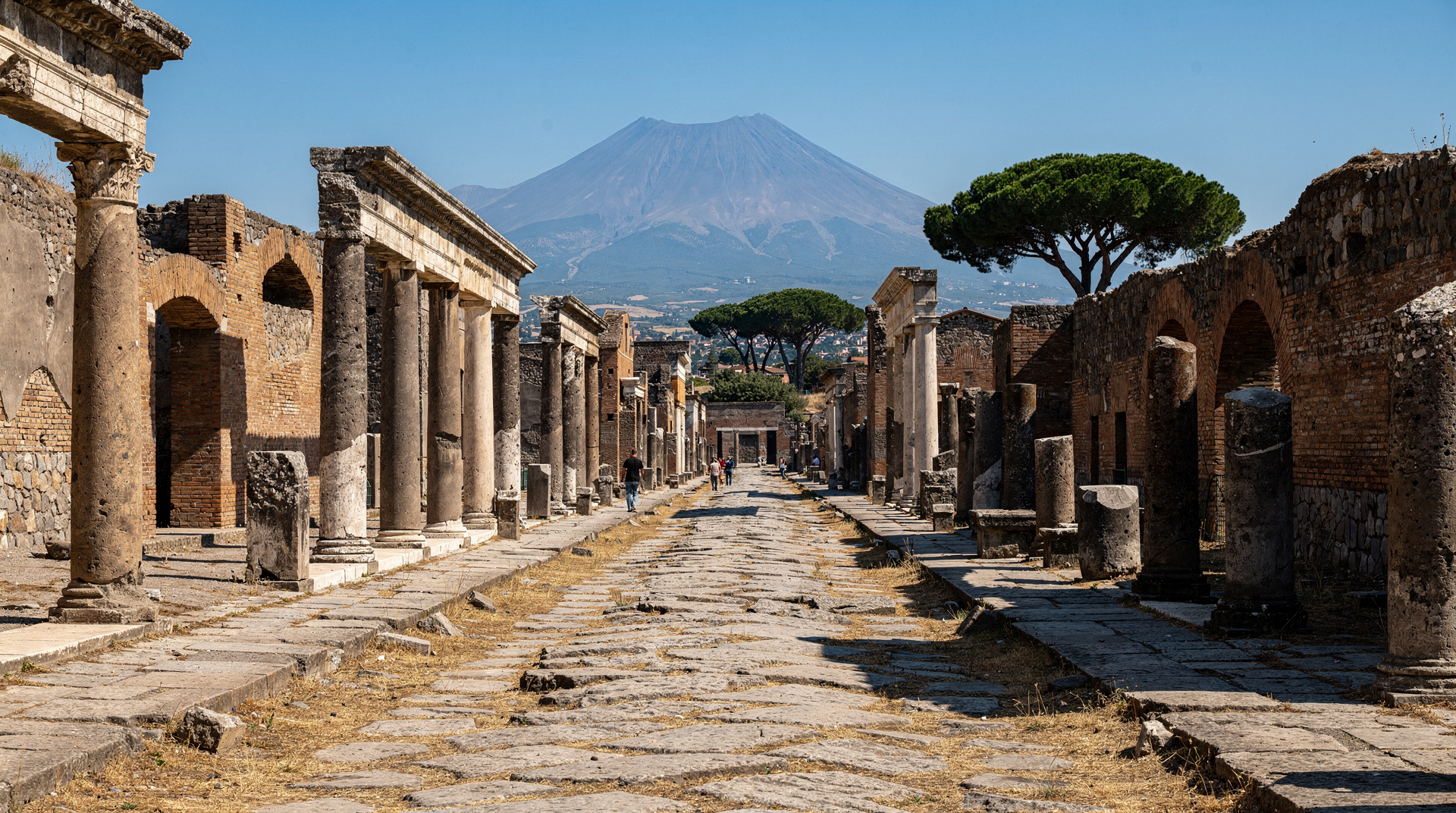
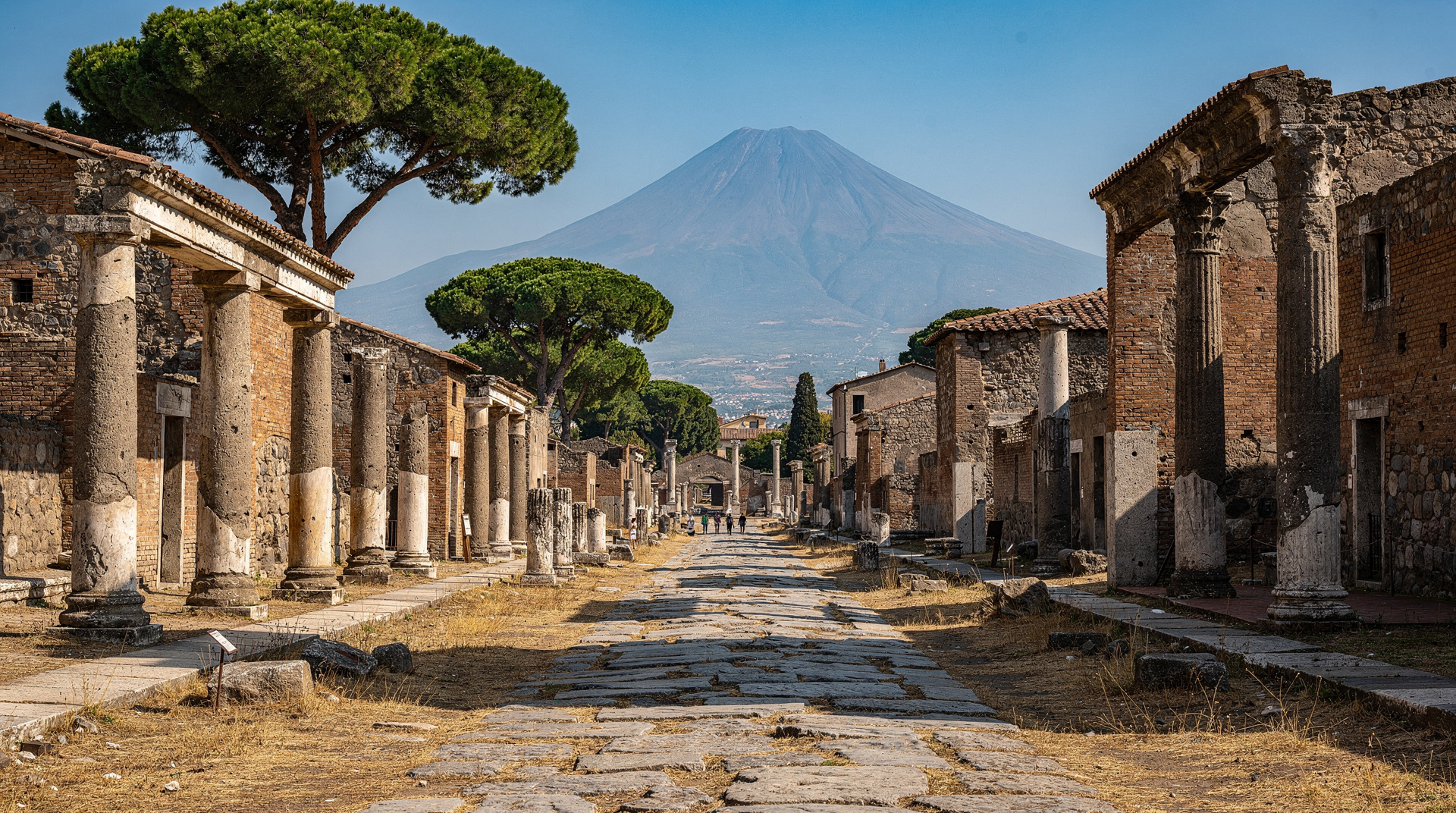
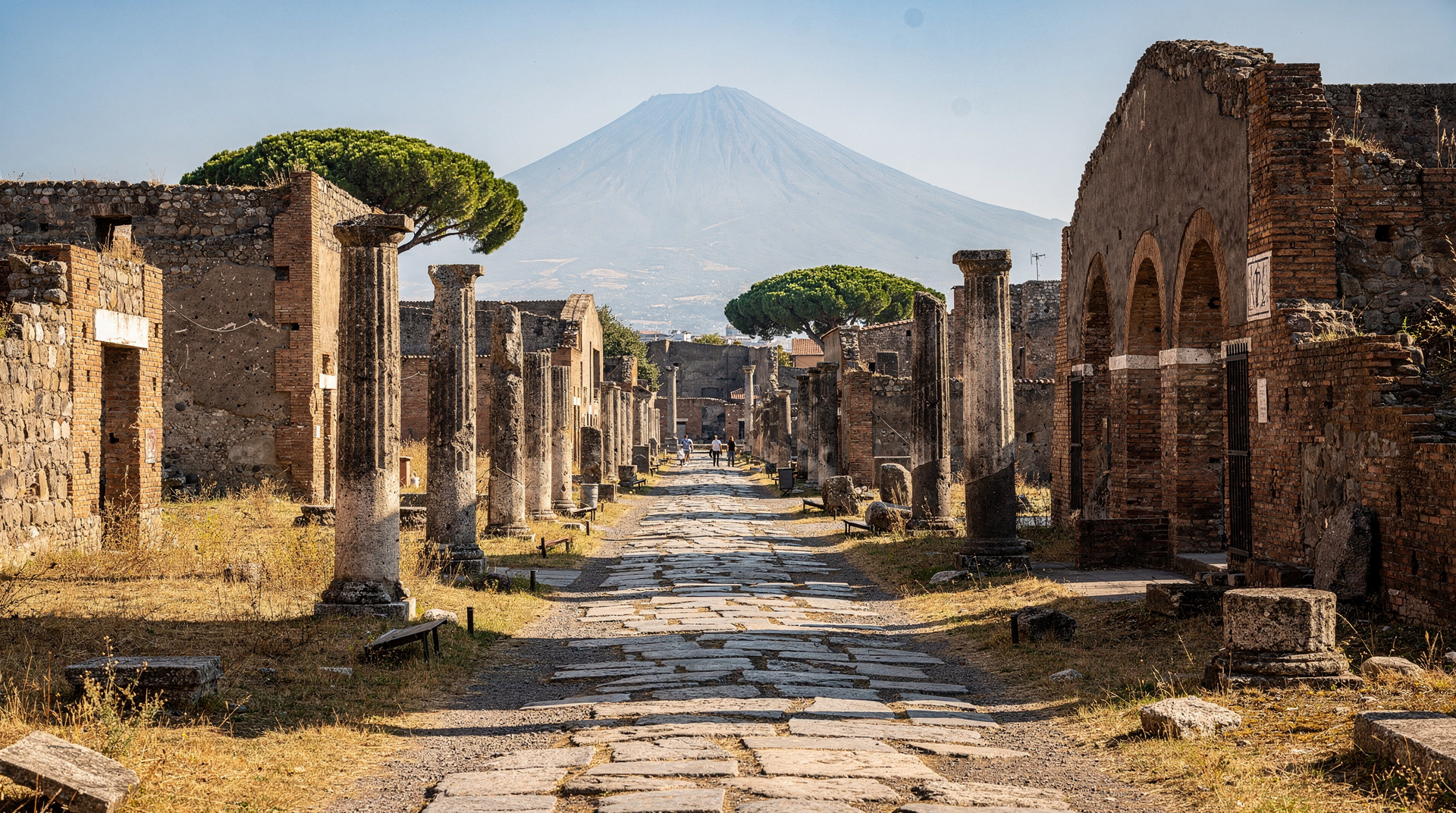
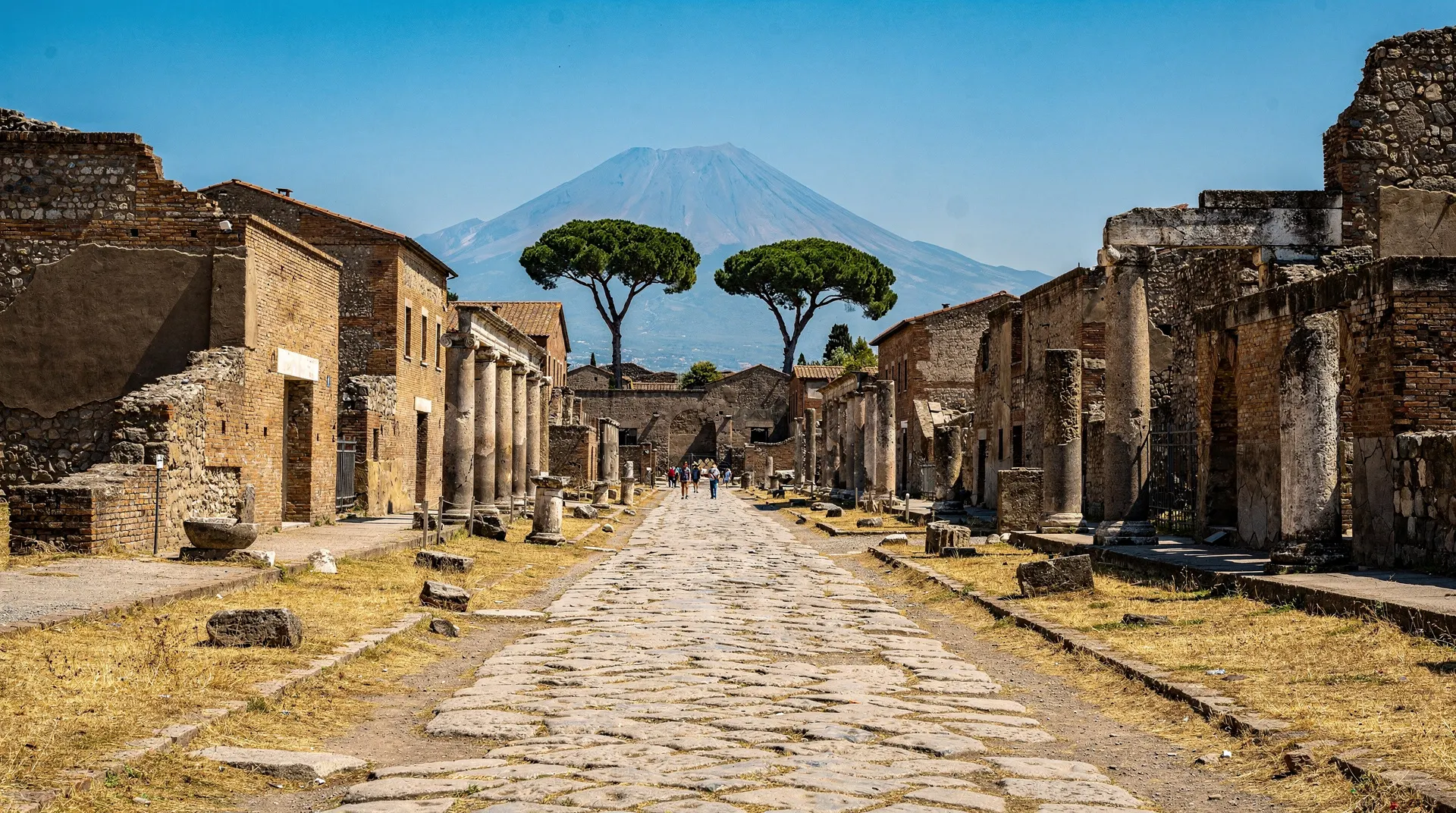
Pompeii is not a museum. It is a Roman city of roughly 11,000 inhabitants, buried under four to six metres of volcanic ash and pumice when Vesuvius erupted on 24 August (or possibly 23 October, as a recent inscription suggests) in 79 AD. The site covers 66 hectares — about the size of 90 football pitches — with only about two-thirds excavated. Streets, bakeries, brothels, temples, gardens, and fast-food counters (thermopolia) are all still here, largely where they fell.
What surprises most visitors is the sheer scale. You can spend half a day and still not see the House of the Vettii, the Villa of the Mysteries, the amphitheatre, the Forum, and the Garden of the Fugitives in one loop without rushing. This guide helps you build a realistic itinerary based on how much time you actually have.
Essential logistics before you go
Opening hours: 9:00–19:00 (last entry 17:30) from April to October. 9:00–17:00 (last entry 15:30) from November to March. Closed on 1 January and 25 December.
Ticket prices (2026): Standard adult €18. EU citizens aged 18–25 €9. EU citizens under 18 free. Non-EU students (with ID) do not receive the concession price — that discount is EU-only. The combined Pompeii + Herculaneum + Oplontis ticket (valid 3 days) costs €22. The Campania ArteCard 7-day pass (€32) includes free Pompeii entry plus discounts on other sites and free transit in Naples.
What to bring: Water (at least 1.5 litres per person in summer), hat, high-SPF sunscreen, and comfortable closed-toe shoes. There are water refill fountains inside the site. The single café near the Forum is overpriced; bring snacks. Photography is free throughout.
How to get there
The most practical option for most visitors is the Circumvesuviana train from Napoli Garibaldi (the lower “Piazza Garibaldi” level of the main station). Take any train toward Sorrento and exit at Pompei Scavi – Villa dei Misteri. Journey time is approximately 30 minutes; single ticket costs €3.30. Trains run roughly every 30 minutes from around 6:00 to 22:00.
The Circumvesuviana is crowded, rarely air-conditioned, and is a known pickpocket zone — keep bags in front and zipped. The Campania Express runs seasonally (typically April to October) on the same line but with guaranteed seats, air conditioning, and fewer stops. It costs around €12 one-way from Naples. Worth it in peak summer.
By car: park at one of the signposted lots near the Porta Marina entrance (around €5/day). Do not drive into the centre of Pompeii town.
Round-trip transfer from Naples with skip-the-line entry includedGetting your tickets right
The official booking portal is ticketone.it (search “Pompeii”). You can also book through the Parco Archeologico di Pompei website directly. Book at least 2–3 days in advance during summer; the site caps daily visitors and the queue for walk-ins can be 45–75 minutes.
Skip-the-line doesn’t always mean no queue — it means you bypass the ticket purchase line. You still queue briefly to scan your ticket at the turnstile. Arrive 15 minutes before your entry slot.
Small-group guided tour with skip-the-line entry from NaplesGuided tour vs self-guided: an honest take
Go guided if: you have no background knowledge of Roman history, this is your only visit to Pompeii, or you have limited time (2 hours). Without context, a room full of pottery and charred timber is just… a room.
Go self-guided if: you’ve read up beforehand, you want to linger at specific sites, or you’re travelling with children who need flexibility. Download the free Pompeii Sites app (works offline) or rent an audioguide at the entrance (€8).
A licensed archaeologist-guide (look for the official badge and regional licence) costs €80–120 for a private group of up to 8 people, or €15–25 per person for a shared small-group tour. Avoid the unlicensed touts who approach you outside the Porta Marina gate.
Archaeologist-guided visit with priority accessThe best route through the site
The site has three main entrances: Porta Marina (most popular, closest to the station), Piazza Anfiteatro, and Piazza Esedra. Entering through Porta Marina and exiting via Piazza Anfiteatro (or vice versa) gives a natural linear path.
Compact 2-hour route (highlights only):
- Porta Marina → Forum (temples, basilica, and plaster casts)
- Via dell’Abbondanza (main shopping street)
- Brothel (Lupanare) — busiest, queue early or late
- Stabian Baths (thermae)
- House of the Tragic Poet (Cave canem mosaic)
- Exit via Porta Marina
Half-day 4-hour route: All of the above, plus:
- House of the Vettii (finest interior frescoes; sometimes closed for restoration — check ahead)
- Villa of the Mysteries (outside the main gate, 10-minute walk west; extraordinary Dionysian frieze, worth the detour)
- Garden of the Fugitives (most moving plaster casts, near the Amphitheatre)
- Amphitheatre (oldest surviving Roman amphitheatre, 80 BC)
Full-day 6-hour route: Everything above, plus the Grande Palaestra (gymnasium), the House of the Faun (large atrium, famous mosaic copy), and lunch break.
The plaster casts: where to find them
There are about 86 plaster casts on display at Pompeii. The most accessible clusters are:
- Garden of the Fugitives (near the Amphitheatre entrance) — 13 casts in situ, the largest group
- Forum Granary (near the main Forum) — several casts plus amphora collection
- House of the Cryptoporticus — a small group, including a dog
The casts of the dog with the collar (House of Orpheus) and the guard dog are frequently photographed but are not always accessible depending on restoration work. Check the official “Today’s Openings” board at the entrance.
What gets over-hyped (and what genuinely delivers)
Over-hyped: The Brothel (Lupanare). It’s a tiny building with crude erotic frescoes above the doors. Interesting historically; not worth waiting 20 minutes in a queue. Go early morning or late afternoon.
Under-appreciated: The Villa of the Mysteries, which many visitors skip because it requires a 10-minute walk outside the main compound. The nearly 17-metre-long painted frieze depicting Dionysian initiation rites is astonishing and far less crowded than anything near the Forum.
Genuinely delivers: The Garden of the Fugitives. However prepared you think you are, the casts of people who died trying to flee is affecting in a way no photograph communicates.
How much time do you actually need?
| Route | Time | Covers | Best for |
|---|---|---|---|
| Compact | 2 hours | Forum, Via dell’Abbondanza, Lupanare, Stabian Baths | Layovers, tight cruise-port schedules |
| Half-day | 4 hours | Above + House of the Vettii, Villa of the Mysteries, Garden of the Fugitives, Amphitheatre | Most first-time visitors |
| Full-day | 6 hours | Above + Grande Palaestra, House of the Faun, a proper lunch break | Repeat visitors, archaeology enthusiasts |
If you’re combining Pompeii with Herculaneum or Vesuvius on the same day, the compact or half-day route is realistic; trying to do the full 6-hour route alongside another site leaves you exhausted and rushing both. See Pompeii and Vesuvius same day and Herculaneum vs Pompeii for how to plan a combined day properly.
Accessibility at Pompeii
Pompeii is a genuine challenge for wheelchair users and anyone with limited mobility — the site is 66 hectares of original Roman paving, much of it uneven basalt cobblestones with the deep ruts worn by ancient cart wheels. That said, the Archaeological Park has made real efforts: a dedicated accessible route covers roughly 3km of the most significant areas (the Forum, Via dell’Abbondanza’s main stretch, and several of the larger houses) via ramps and adapted pathways, avoiding the worst of the rutted stone.
Request the accessible-route map at the entrance, and note that some individual buildings — particularly smaller houses with raised thresholds — remain inaccessible regardless of the route taken. Staff at the Porta Marina and Piazza Anfiteatro entrances can point you to the current accessible path, which is periodically adjusted as different excavation and restoration areas open and close.
After Pompeii: what to combine
- Herculaneum — better preserved, smaller, doable the same day if you start early
- Mount Vesuvius — crater hike from the car park; 30 minutes by bus from Pompeii town
- Oplontis (Villa Poppaea) — Roman villa 15 minutes away, almost always quiet
- Naples — back to the city in 30 minutes by Circumvesuviana for dinner
For a structured same-day combination with Vesuvius, see Pompeii and Vesuvius same day.
Frequently asked questions about Pompeii
Is Pompeii worth visiting with kids?
Yes, especially for older children (8+). The plaster casts and the scale of the city tend to genuinely capture children’s attention. For families with young children, see the dedicated Pompeii with kids guide with practical logistics on strollers, rest stops, and age-appropriate routes.
How crowded does Pompeii get?
Peak season (July–August) sees up to 15,000–20,000 visitors per day. Arriving at opening (9:00) dramatically reduces congestion. By 11:00 the Forum is packed. October and April are significantly quieter. Early November through February is the least crowded period.
Are there lockers at Pompeii?
Yes, there are left-luggage lockers near the Porta Marina entrance. Cost is €3–4 per bag. Useful if you’re continuing to Sorrento or the Amalfi Coast after your visit.
Can I eat inside the site?
There is one bar-café near the Forum (expensive, mediocre). Most visitors eat outside the gates in the surrounding town of Pompei, which has several decent affordable restaurants on Via Sacra. Bring your own snacks and water to avoid the captive-market prices.
Is there a combined ticket for Pompeii and the Naples Archaeological Museum?
Not currently as a single purchase, but the Campania ArteCard covers both, plus other sites. The MANN (Naples Archaeological Museum) houses the most important finds from Pompeii, including the Alexander Mosaic — visiting it before or after Pompeii adds substantial context.
What should I skip at Pompeii?
The “Secret Cabinet” (Gabinetto Segreto) in the MANN museum is worth seeing, but that’s in Naples. At the site itself: the main souvenir stalls outside the gate are overpriced; the restaurant at the Porta Marina entrance charges two to three times Pompei town prices for average sandwiches. Skip the tour touts at the station who claim their guide is “the only official one” — licensed guides operate with a regional badge and will not approach you aggressively.
What is the difference between Pompeii and Pompei?
Pompeii (two i’s) is the ancient Roman city and archaeological site. Pompei (one i) is the modern town around it. The train station is “Pompei Scavi” (scavi = excavations). The municipality is Comune di Pompei.
Frequently asked questions about Pompeii complete guide: everything you need to plan your visit
Do I need to book Pompeii tickets in advance?
Is a guided tour worth it at Pompeii?
How do I get to Pompeii from Naples?
Can I bring a stroller to Pompeii?
What is the dress code at Pompeii?
Are the bodies at Pompeii real?
Can I visit Pompeii and Herculaneum in one day?
Is the Campania ArteCard worth it for Pompeii?
Top experiences
Bookable activities with verified prices and instant confirmation on GetYourGuide.