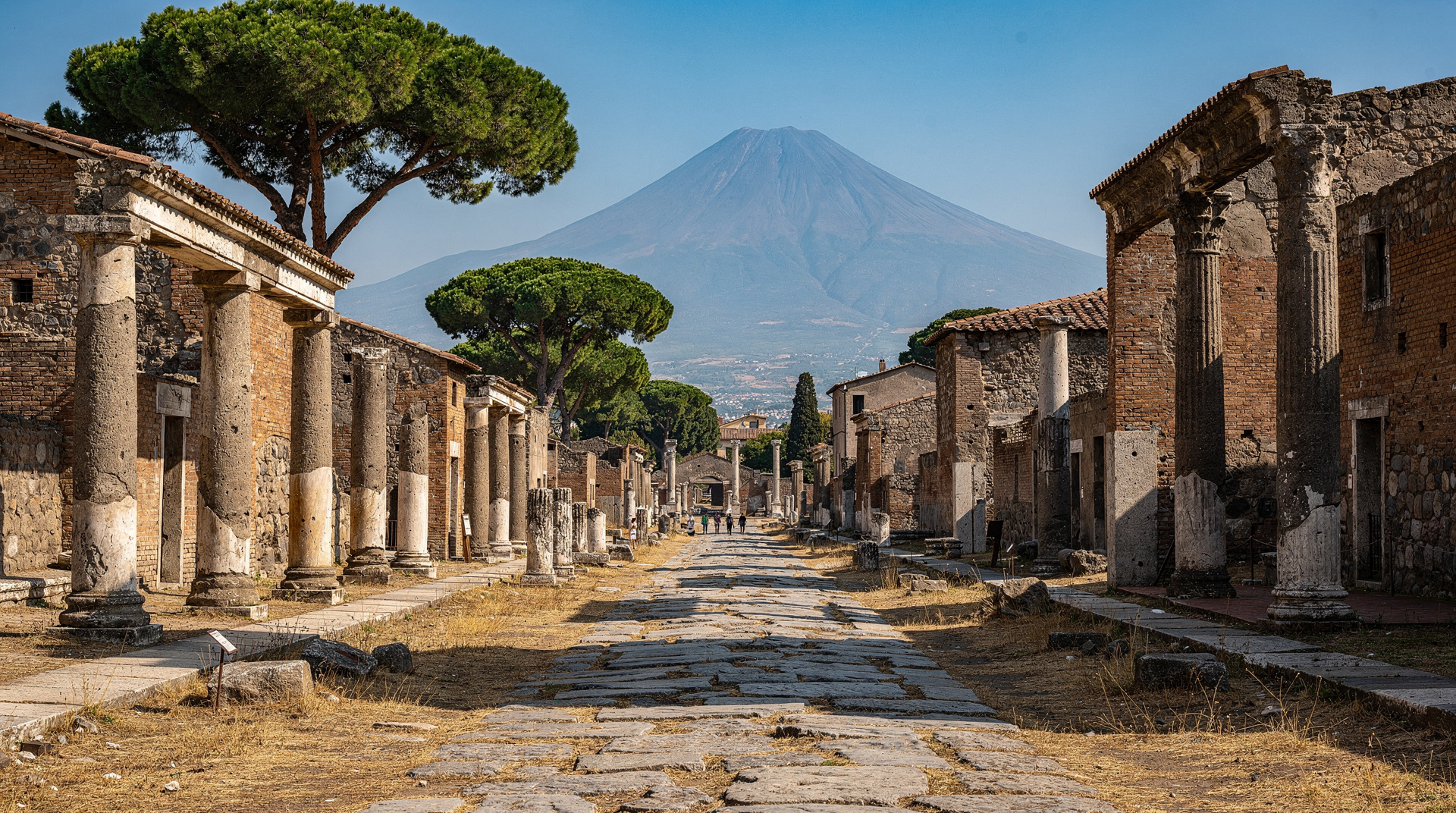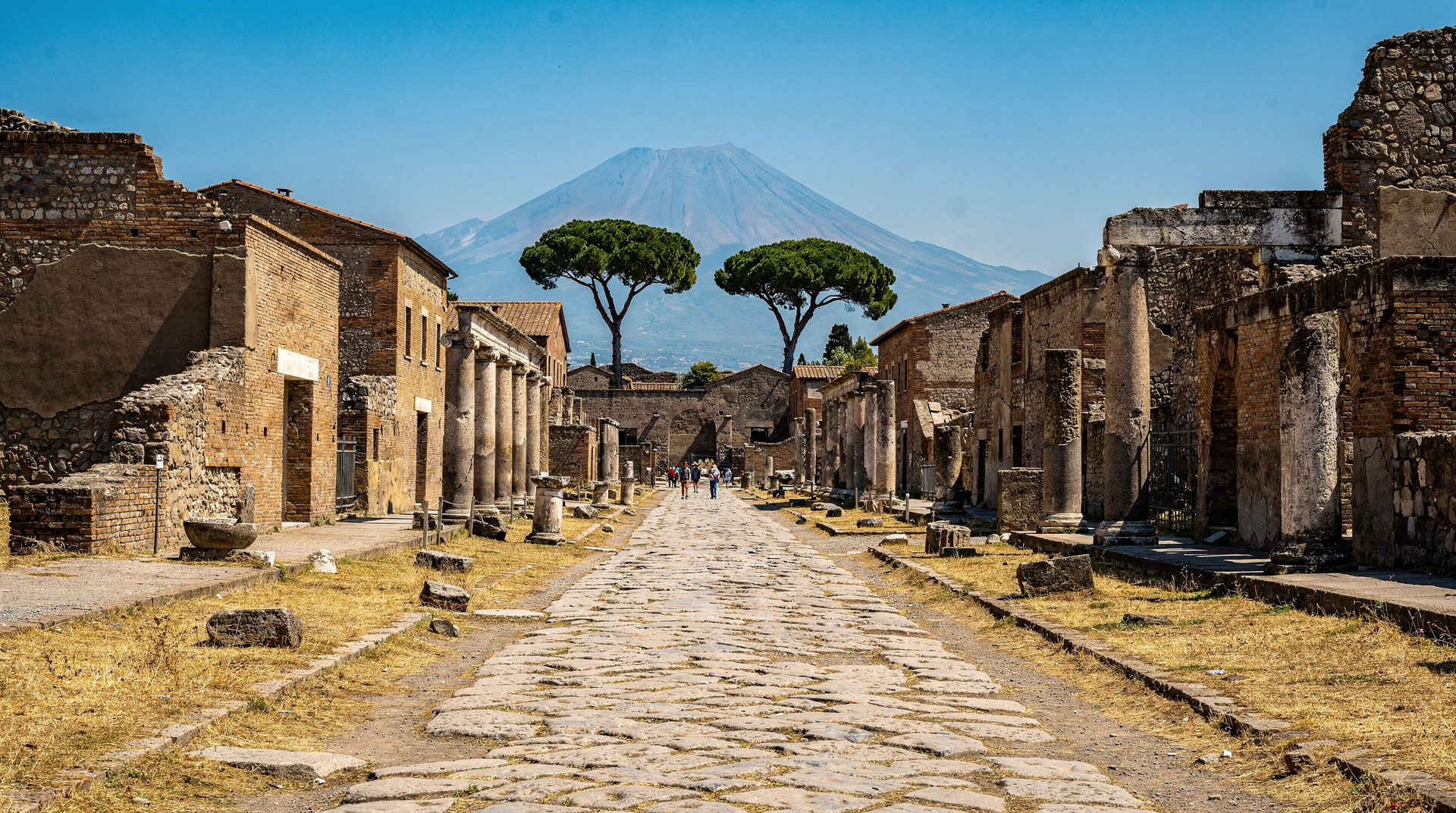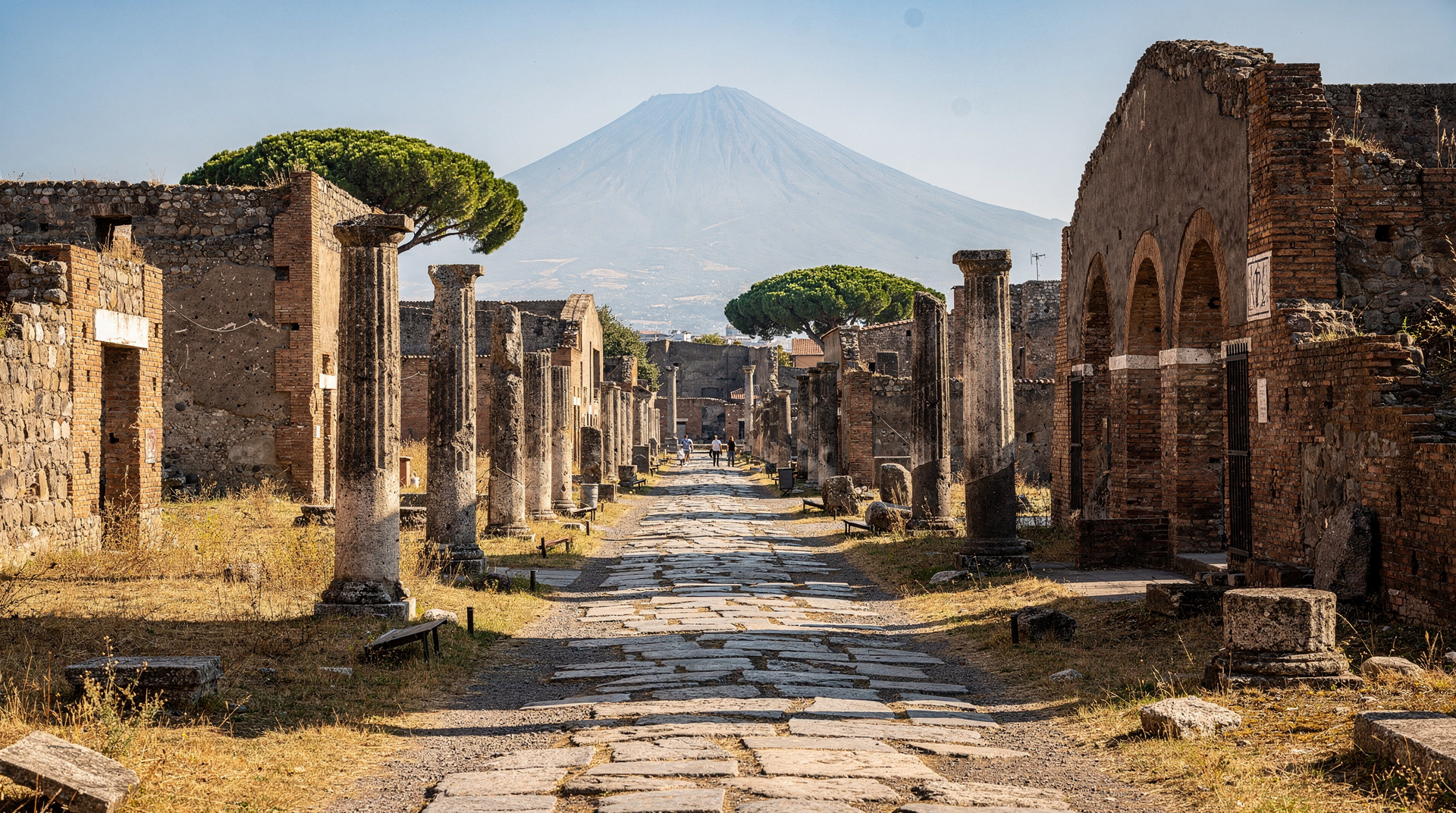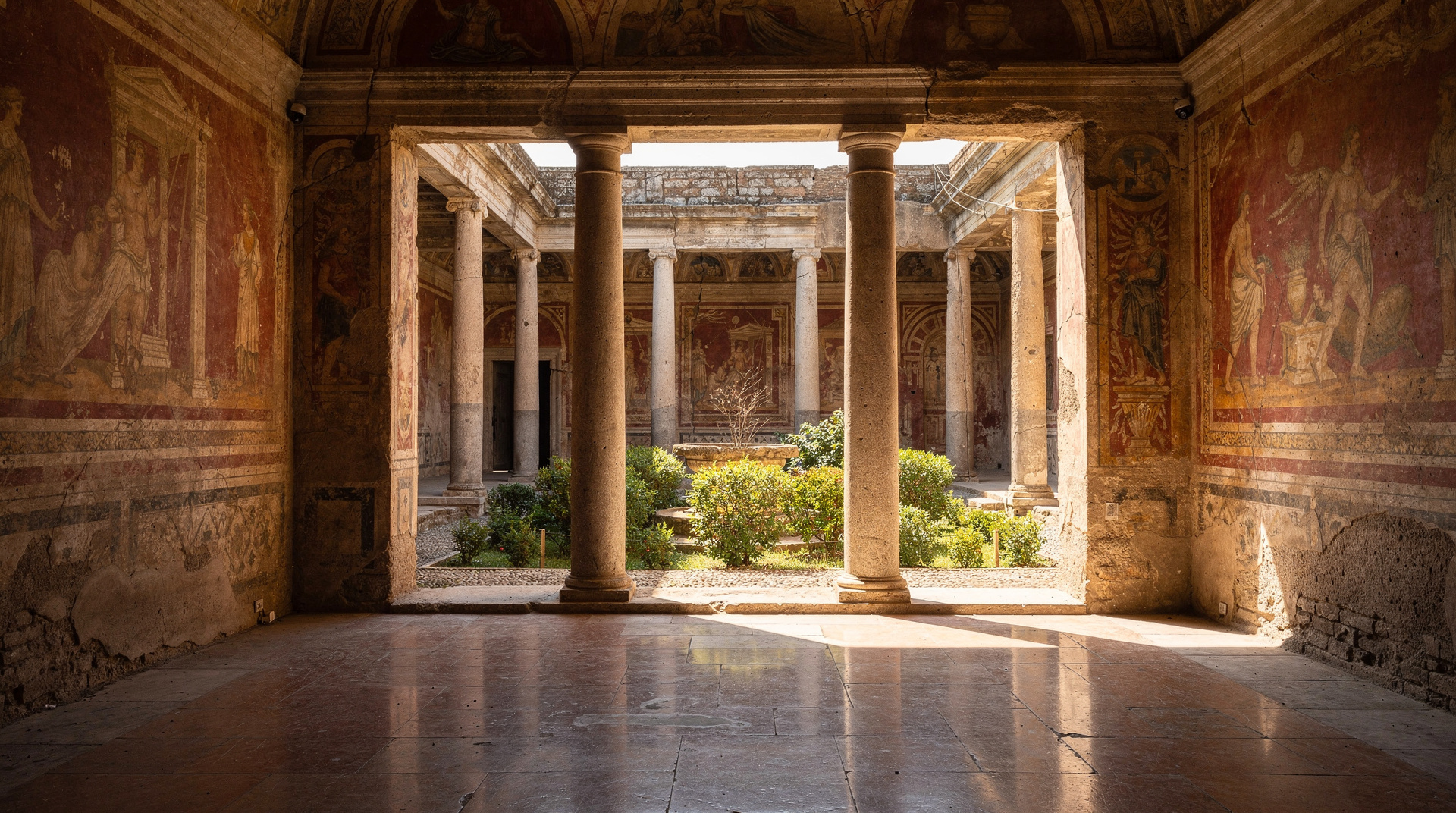
Herculaneum guide: what to see, tickets, and how to plan your visit
Herculaneum: Tickets & Tour with a Local Archaeologist
Duration: 2h
Is Herculaneum worth visiting and how long does it take?
Yes — many archaeologists consider it better preserved than Pompeii. Allow 2–2.5 hours. Entry costs €11 (€5.50 for EU students, free for EU under-18). The combined ticket with Pompeii and Oplontis is €22 and valid 3 days. Take the Circumvesuviana to Ercolano Scavi station.
Why Herculaneum is a different experience to Pompeii
Pompeii is the famous one. Herculaneum is the better one — at least for understanding what a Roman city actually looked and felt like.
| Where | Ercolano Scavi, 15 min from Naples by train |
| Cost | around €11 entry, €22 combined with Pompeii |
| Time needed | 2–2.5 hours |
| Getting there | Circumvesuviana from Napoli Garibaldi |
| Best time | Morning, before Pompeii crowds arrive on the same line |
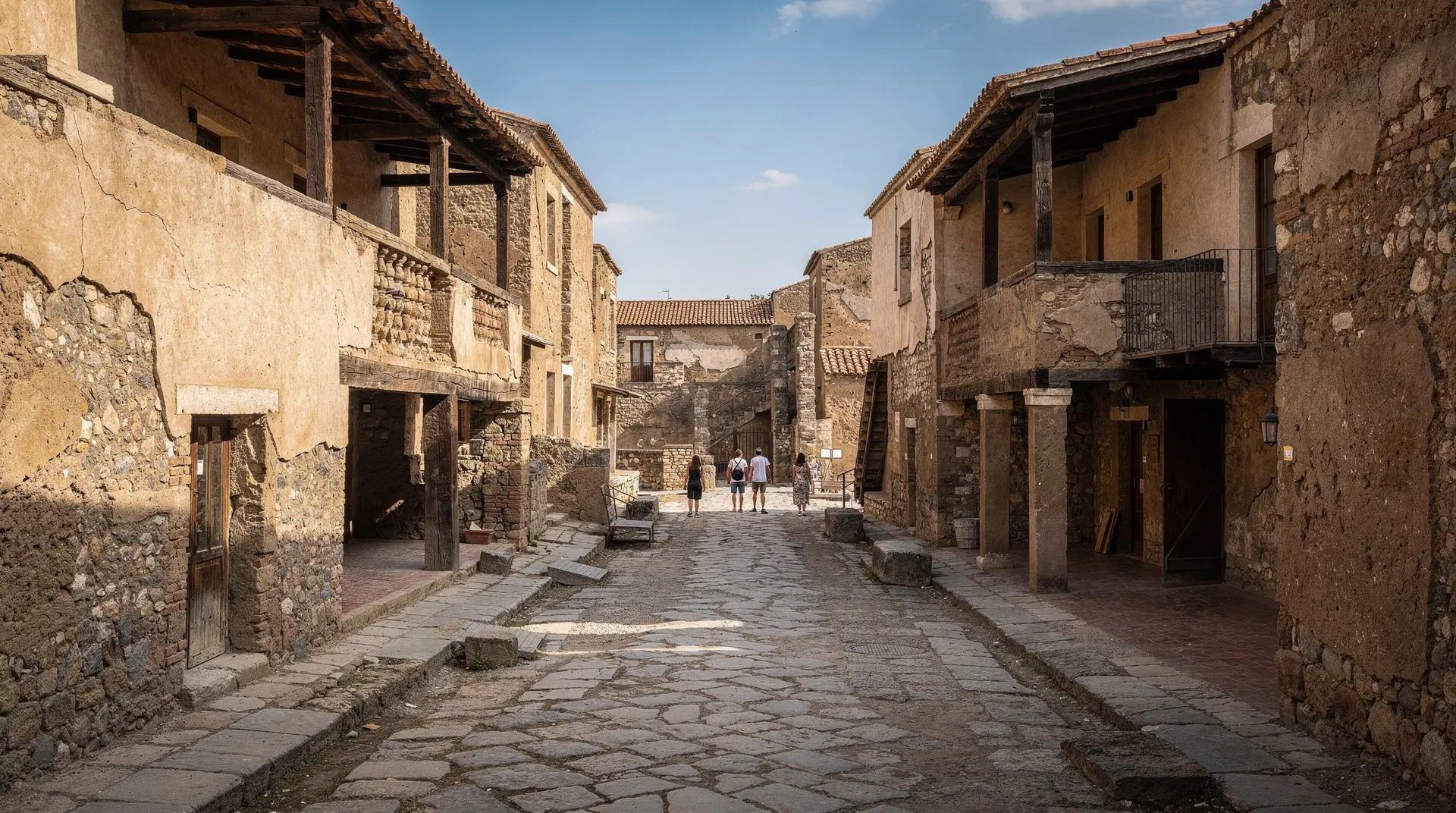
The difference comes down to how each was buried. Pompeii was covered in dry ash and pumice that preserved building outlines but allowed organic material (wood, fabric, food) to decompose over centuries. Herculaneum was buried by pyroclastic surges — superheated flows of gas and volcanic material travelling at 100 km/h. These flows carbonised everything they touched, sealing it in place. The result: wooden doors still on their hinges, wooden furniture upstairs in houses, food in storage jars, a carbonised library of philosophy and poetry, and 300 skeletal remains of people who sheltered in boat storage arches at the old shoreline.
Herculaneum is smaller than Pompeii (the excavated area is about 4.5 hectares versus Pompeii’s 66). That’s not a weakness — it means the highlights are denser, the visit takes 2 hours rather than 4, and the site is far less crowded. For visitors with limited time in Campania, this density is a genuine advantage: you see fewer buildings but come away with a sharper sense of Roman domestic life than a rushed 90-minute dash through Pompeii would give.
Getting to Herculaneum
By Circumvesuviana: From Napoli Garibaldi (lower-level Garibaldi platforms), take any train toward Sorrento. Exit at Ercolano Scavi — the second stop after Naples, approximately 15 minutes. Ticket: €2.60 single. The station to the site entrance is a 500-metre downhill walk on Corso Resina.
By Campania Express (seasonal): More comfortable, air-conditioned, same stops, approximately €12 from Naples. Runs April–October.
By car: From the A3 motorway, take the Ercolano exit. Parking is available near the entrance for approximately €3–5/day.
For the full logistics of the Circumvesuviana line — ticket machines, platform-finding, and what to expect on the train itself — see the Circumvesuviana guide. If Pompeii is also on your itinerary, the getting to Pompeii from Naples guide covers the same line one stop further south.
Tickets and opening hours
Opening hours: 9:00–19:30 in summer (April–October), last entry 17:30. 9:00–17:00 in winter (November–March), last entry 15:30. Closed Tuesdays.
Standard adult entry: €11. EU citizens 18–25: €5.50. EU citizens under 18: free.
Combined ticket (Pompeii + Herculaneum + Oplontis + Stabiae): €22 valid for 3 consecutive days. This is the best-value approach — adding Herculaneum to Pompeii costs only €4 more than Pompeii alone.
Campania ArteCard: The 7-day ArteCard (€32) covers free entry to two sites including Herculaneum, plus discounts and Naples transit.
Book tickets on ticketone.it or at the gate. Walk-up tickets are generally available — Herculaneum rarely reaches capacity. But booking online saves 5–10 minutes in queue.
Herculaneum skip-the-line entry with priority accessWhat to see at Herculaneum
The ancient shoreline and boat storage arches
Before excavation in the 20th century, the ancient shoreline was buried under metres of volcanic rock. In 1981, archaeologists discovered approximately 300 skeletal remains huddled in the boat storage arches (fornici) on the beach below the town — people who had survived the initial eruption but died when a subsequent pyroclastic surge hit at around midnight on 25 August 79 AD.
The skeletons are still there, in the positions they died, visible through barriers. This is Herculaneum’s equivalent of Pompeii’s plaster casts — and arguably more viscerally affecting because you’re seeing actual bone. The proximity to the ancient harbour adds context: these people were likely waiting for rescue boats that never came.
Casa del Bel Cortile (House of the Beautiful Courtyard)
One of the most complete surviving examples of a Roman townhouse in the world. The upper floor is partially intact, which is almost impossible to find at Pompeii. Look for the original wooden staircase (carbonised, but structurally intact), the carved wooden screens on the upper level, and the marble-lined garden courtyard.
Casa dei Cervi (House of the Stags)
The most luxurious house in the excavated section, named after two marble sculptural groups of stags being attacked by hounds found in the garden (copies now in situ; originals at MANN). The terrace of this house would have faced the sea — now buried metres below. The garden dining room and the elaborate wall decorations show the level of wealth in this coastal town.
The Samnite House
One of the older buildings in Herculaneum, dating from the Samnite period before Roman colonisation. The upper gallery is unusually preserved, giving a rare sense of multi-storey Roman domestic architecture. The black and white mosaic flooring in the atrium is in excellent condition.
The Suburban Baths
The finest public baths in Herculaneum, at the edge of the excavated site near the ancient shoreline. Unusually, they were open to both sexes (some Roman baths had separate male and female sections; these did not). The original mosaic floors, plastered walls, and the intact brick arching over the caldarium (hot room) are among the best-preserved Roman bath elements anywhere.
The entrance vestibule has an extraordinary painted ceiling with mythological scenes and a mosaic floor that is perhaps the most technically accomplished piece of stonework visible at either Herculaneum or Pompeii.
The Carbonised Furniture
Several houses in Herculaneum still contain their original wooden furniture — carbonised but structurally intact. The Casa del Tramezzo di Legno (House of the Wooden Screen/Partition) has a room dividing screen of two wooden panels, still standing. The Casa dell’Albergo has storage furniture. This is unique in the Roman world.
Herculaneum guided tour with archaeologistGuided vs self-guided at Herculaneum
Both work, but the guided option adds more at Herculaneum than at Pompeii. The reason: the details at Herculaneum are subtle. A good guide knows to point out carbonised grain in storage jars, to explain why the multi-storey structures survived when Pompeii’s did not, and to describe what the VR reconstructions show about original colour and furnishing.
The official audioguide (€6, available at the entrance) is functional but not exceptional. For a self-guided visit, the Herculaneum Research Project’s free app (Herculaneum Conservation Project, download before arrival) is excellent and includes 3D reconstructions.
If you’re combining Herculaneum and Pompeii in one day, consider hiring a guide for Herculaneum (2 hours, more expensive per hour but gives more return) and self-guiding Pompeii in the afternoon with the app.
Herculaneum vs Pompeii: the key differences
| Herculaneum | Pompeii | |
|---|---|---|
| Area | 4.5 ha (excavated) | 66 ha |
| Visit time | 2–2.5 hours | 3–5 hours |
| Crowds | Rarely crowded | Packed in summer |
| Organic preservation | Outstanding (wood, food, skeletons) | Limited |
| Ticket | €11 | €18 |
| Context without guide | More difficult | More accessible |
For a full comparison, see Herculaneum vs Pompeii.
Combining Herculaneum with other sites
Best same-day combinations:
- Herculaneum + Pompeii: Take the Circumvesuviana one stop south from Ercolano Scavi to Pompei Scavi. Start at Herculaneum (9:00–11:30), then Pompeii afternoon (12:30–16:00). Use the combined €22 ticket.
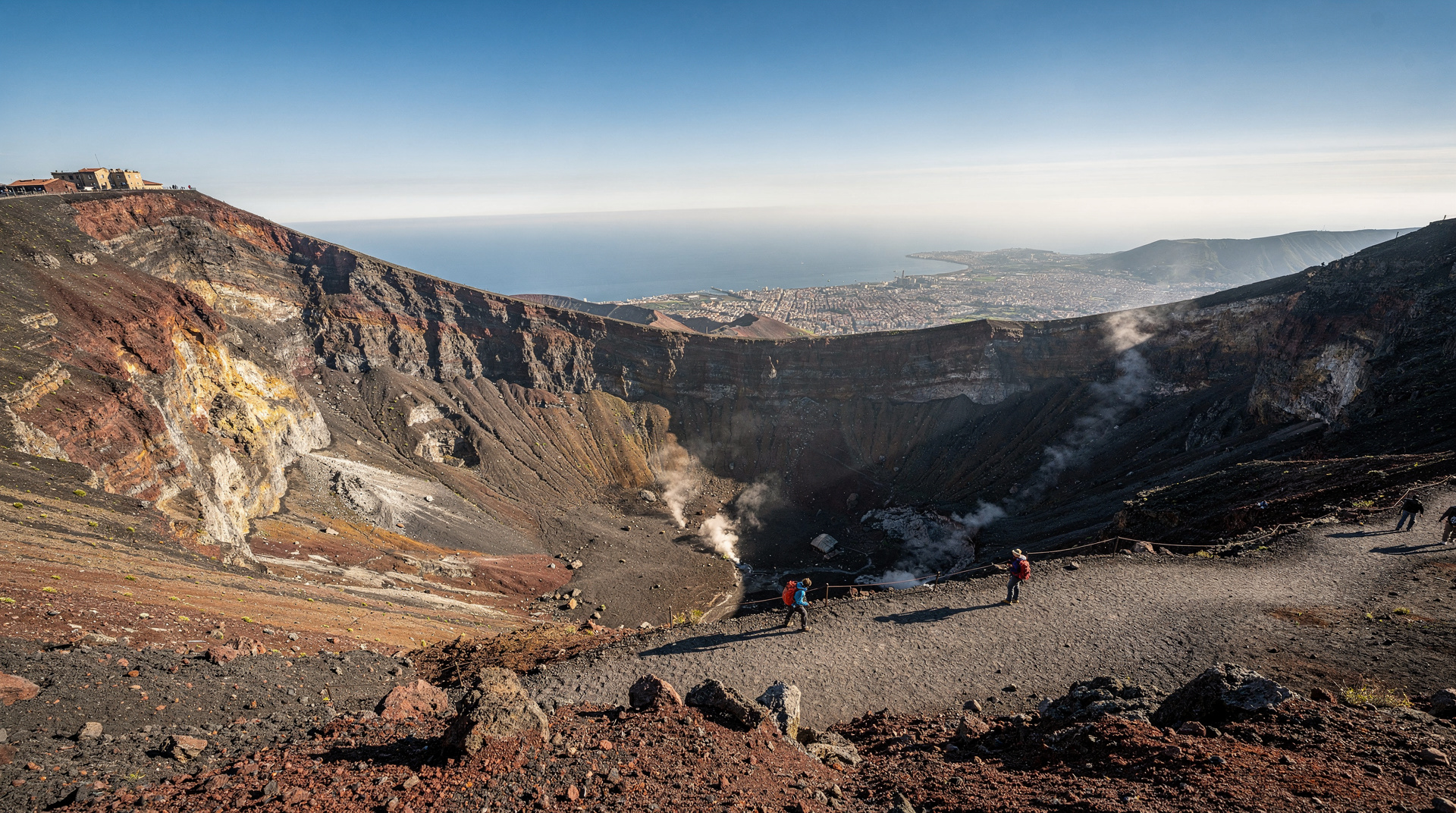
- Herculaneum + Vesuvius: Take a bus from Ercolano toward the Vesuvius car park. Journey approximately 30 minutes by local bus (ask at the Ercolano station).
- Full day: Herculaneum + Vesuvius + Pompeii: Ambitious but doable with early starts. The logical order is Herculaneum → Vesuvius → Pompeii (or reverse). See ancient Campania itinerary.
Practical details
Lockers: Available at the entrance. €2–3 per bag.
Toilets: Near the entrance and at one point in the site. Clean.
Food: There are no cafés inside the site. The town of Ercolano has bars and restaurants near the station — have lunch there before or after your visit. Don’t expect good food at tourist-strip prices immediately outside the gate.
Photography: Free throughout. Flash prohibited in some areas.
Accessibility: The site has steep descending access to the excavation level from the modern town. There is a lift/ramp for wheelchair access. Inside, the main paths are paved but uneven. Some houses have raised thresholds.
Weather: Herculaneum is more sheltered than Pompeii (partly below modern street level, with some covered areas) and cooler on hot days. Still bring water and sun protection.
Best time of day: Arrive at opening (9:00) if possible — even though Herculaneum rarely feels crowded, the earliest slot gives you the best light for photography in the boat storage arches and the coolest temperatures for walking the paved paths. Late afternoon (after 16:00) is the second-best option, when tour groups have largely moved on to Pompeii or back to Naples.
Combining with a viewpoint over the excavation: Before descending into the site, the modern town of Ercolano has a terrace area near the entrance that gives a partial overview of the excavated area sunk well below current street level — a useful visual before you’re down among the houses, showing just how much material the eruption deposited above the ancient town.
Frequently asked questions about Herculaneum
Does Herculaneum have plaster casts like Pompeii?
No — Herculaneum has actual skeletal remains in the boat storage arches, not plaster casts. The rapid carbonisation of Herculaneum preserved bone rather than leaving the hollow shapes that were later filled with plaster at Pompeii.
Is the Villa of the Papyri open to visit?
Most of it is not. Some of the excavated sections accessible from the main site allow you to see into the Villa’s underground spaces. The portable finds — scrolls, bronze statues, the “Drunken Faun” — are in the MANN in Naples.
What other sites pair well with Herculaneum?
Beyond the obvious Pompeii and Vesuvius combinations, Oplontis — the villa complex at Torre Annunziata believed to have belonged to Nero’s wife Poppaea — is covered by the same combined ticket and is far less visited than either Pompeii or Herculaneum, making it a good third stop for visitors with more than a day in the area.
The Mount Vesuvius guide covers the volcano that buried all three sites, useful context if you’re building a full Bay of Naples itinerary. If you want the complete plan for seeing all three sites well, see the ancient Campania itinerary and, before travelling, check Pompeii tickets explained if that site is also on your list — the combined ticket rules are the same for Herculaneum.
Can I visit Herculaneum alone (without a tour group)?
Yes. Self-guided visits with the app or audioguide work well. The site is significantly less crowded than Pompeii, so you’ll never feel pressured or rushed by tour groups.
Is the Herculaneum Research Project VR worth the extra cost?
The VR experience (available seasonally, check the site for current availability and pricing) is genuinely impressive for showing what the buildings originally looked like. If it’s available during your visit and you have 15 minutes, it adds context that verbal explanations struggle to convey.
How does Herculaneum fit into a Naples day trip?
Ercolano Scavi is 15 minutes from Napoli Garibaldi by Circumvesuviana. A morning at Herculaneum (9:00–12:00) and an afternoon in Naples at the MANN (which houses Herculaneum’s most important portable finds) is a logical and rewarding combination.
Frequently asked questions about Herculaneum guide: what to see, tickets, and how to plan your visit
Why is Herculaneum better preserved than Pompeii?
What is the most impressive thing at Herculaneum?
How do I get to Herculaneum from Naples?
Can I visit Herculaneum and Pompeii in the same day?
Is the Virtual Reality experience at Herculaneum worth it?
Are there fewer crowds at Herculaneum than Pompeii?
What is the Villa of the Papyri?
Top experiences
Bookable activities with verified prices and instant confirmation on GetYourGuide.