Herculaneum vs Pompeii: which Roman site should you visit?
From Naples: Pompeii and Herculaneum Tour
Should I visit Herculaneum or Pompeii — or both?
Both if possible, using the combined €22 ticket. If you can only choose one: Pompeii for scale and the famous plaster casts (allow 3–4 hours); Herculaneum for superior preservation, fewer crowds, and organic material including actual wooden furniture and skeletal remains (allow 2 hours). First-time visitors often find Herculaneum more immediately impressive.
Two volcanic disasters, two different preservation stories
| Pompeii | around €18, 3–5 hrs, 30 min from Naples |
| Herculaneum | around €11, 2–2.5 hrs, 15 min from Naples |
| Combined ticket | around €22, valid 3 days, both sites + Oplontis |
| Getting there | Circumvesuviana from Napoli Garibaldi |
| Best time | 9:00 opening for either, especially in summer heat |
Both Pompeii and Herculaneum were destroyed by the eruption of Vesuvius in 79 AD. Both have been partially excavated and are open to visitors today. But they are profoundly different experiences — and the difference traces back to how each was buried.
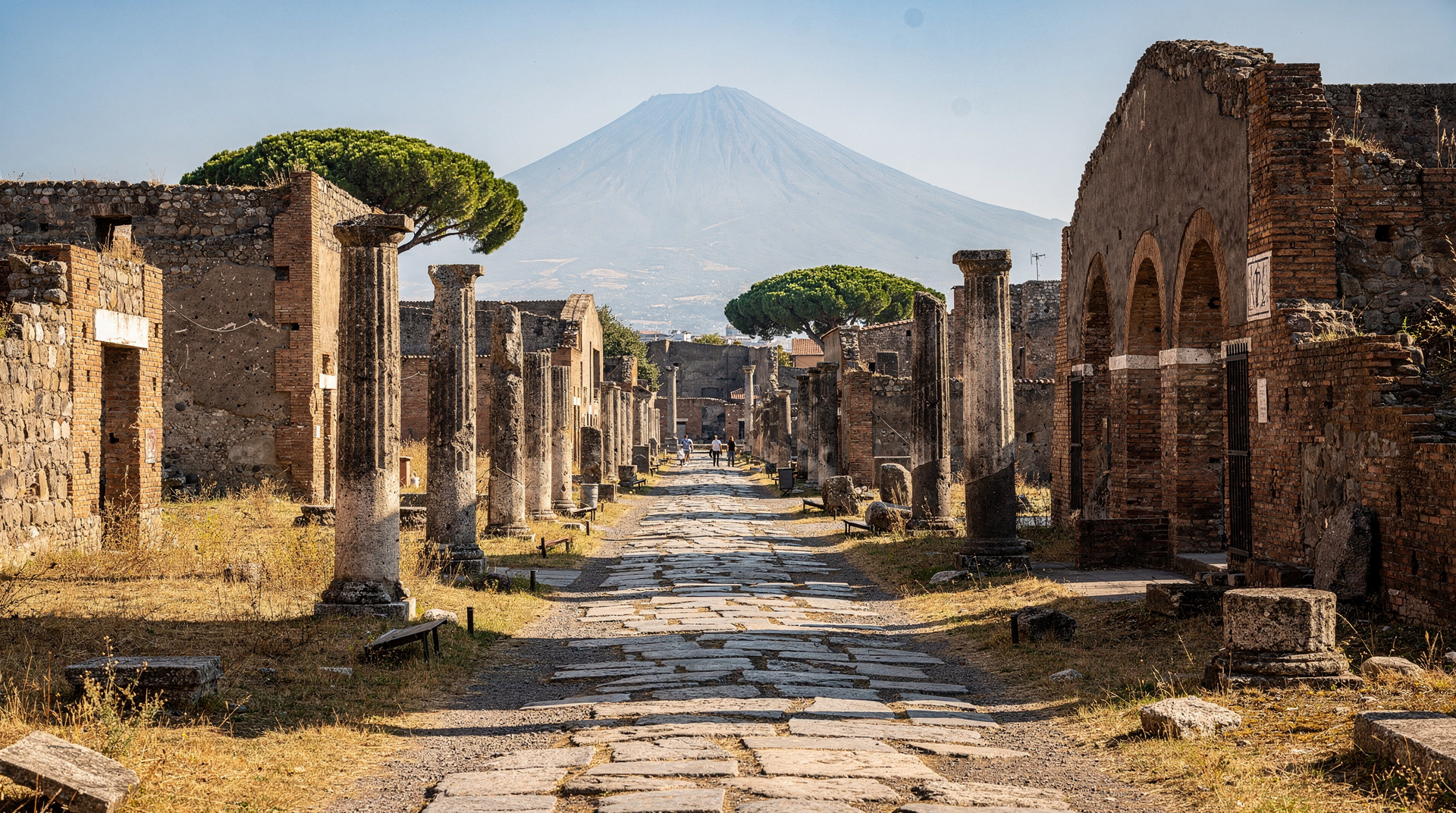
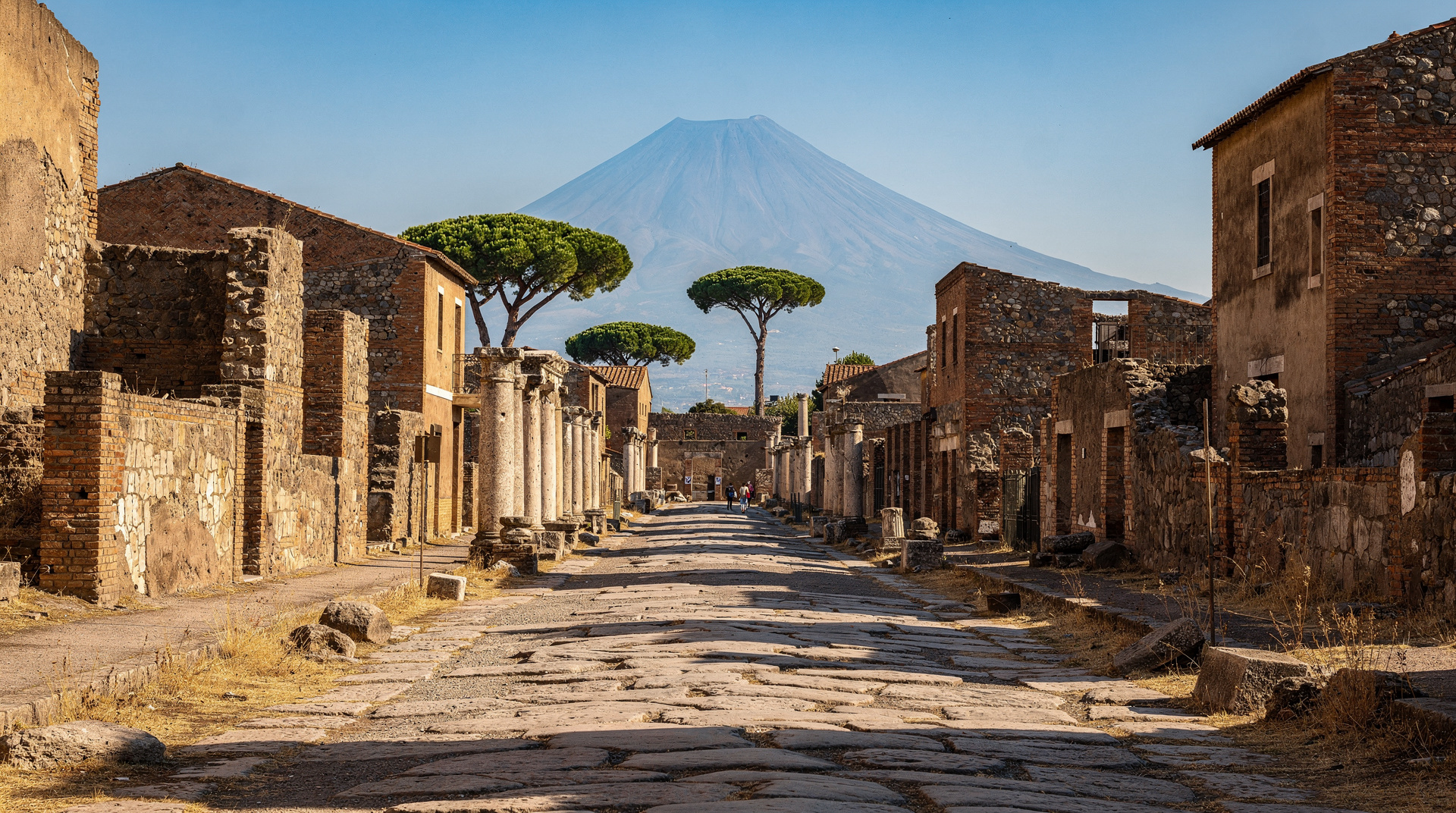
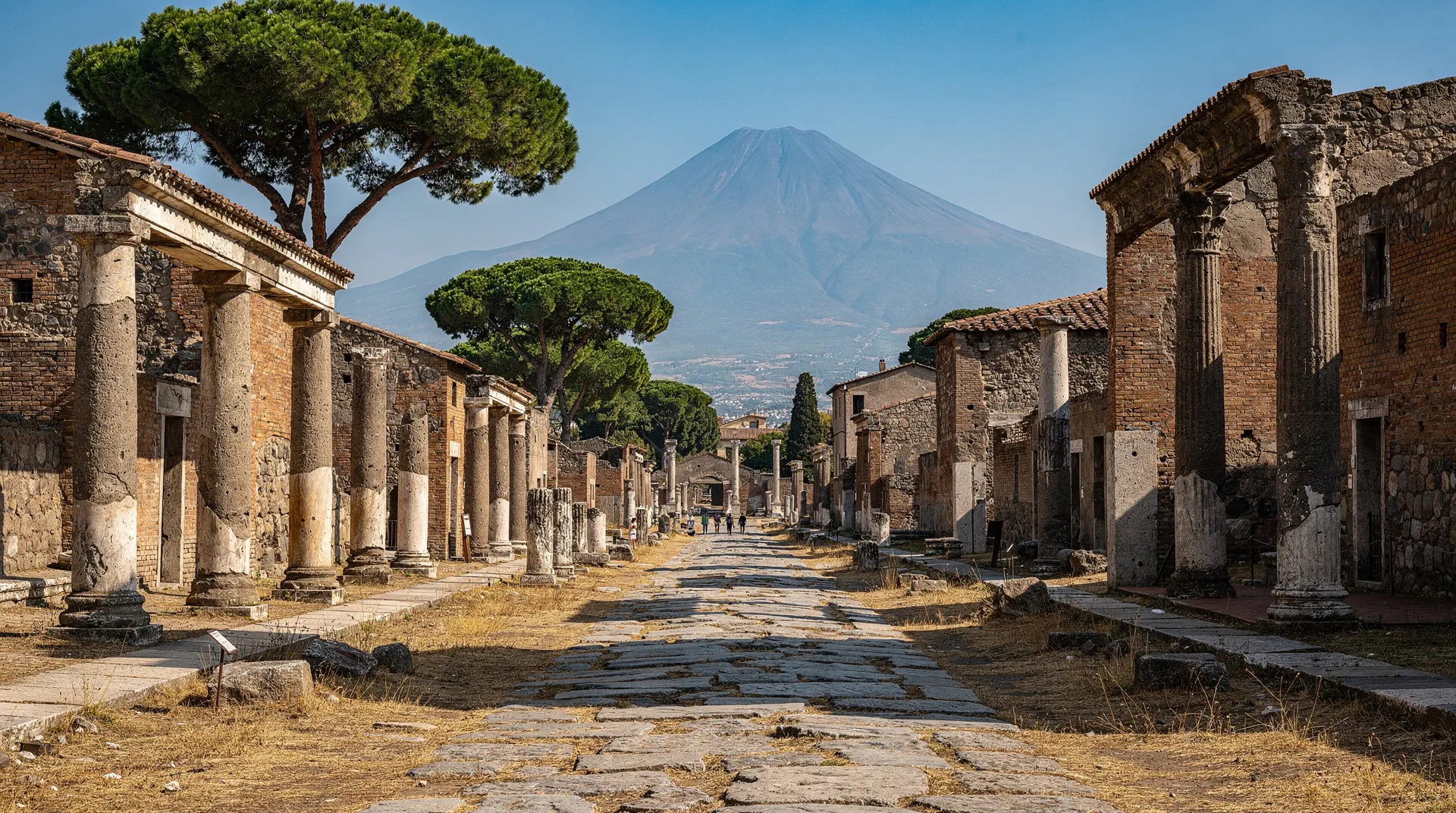
Pompeii was covered by a layer of volcanic ash and pumice — porous, dry material that preserved the outlines of buildings and, through plaster casting techniques, the shapes of bodies. But it allowed most organic material (wood, fabric, food) to decompose over 1,900 years. The result is a vast, legible city grid with mostly stone and brick buildings.
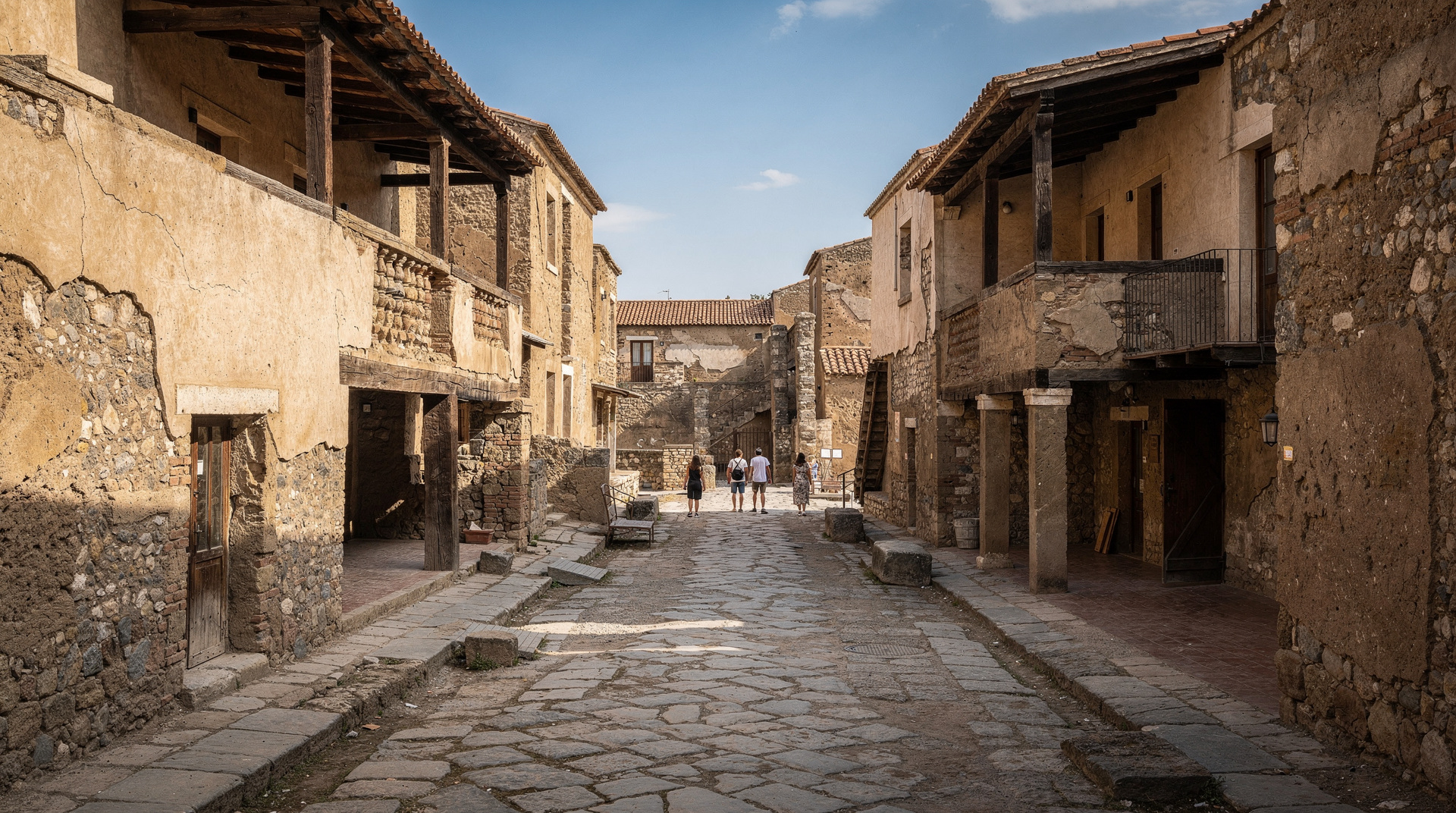
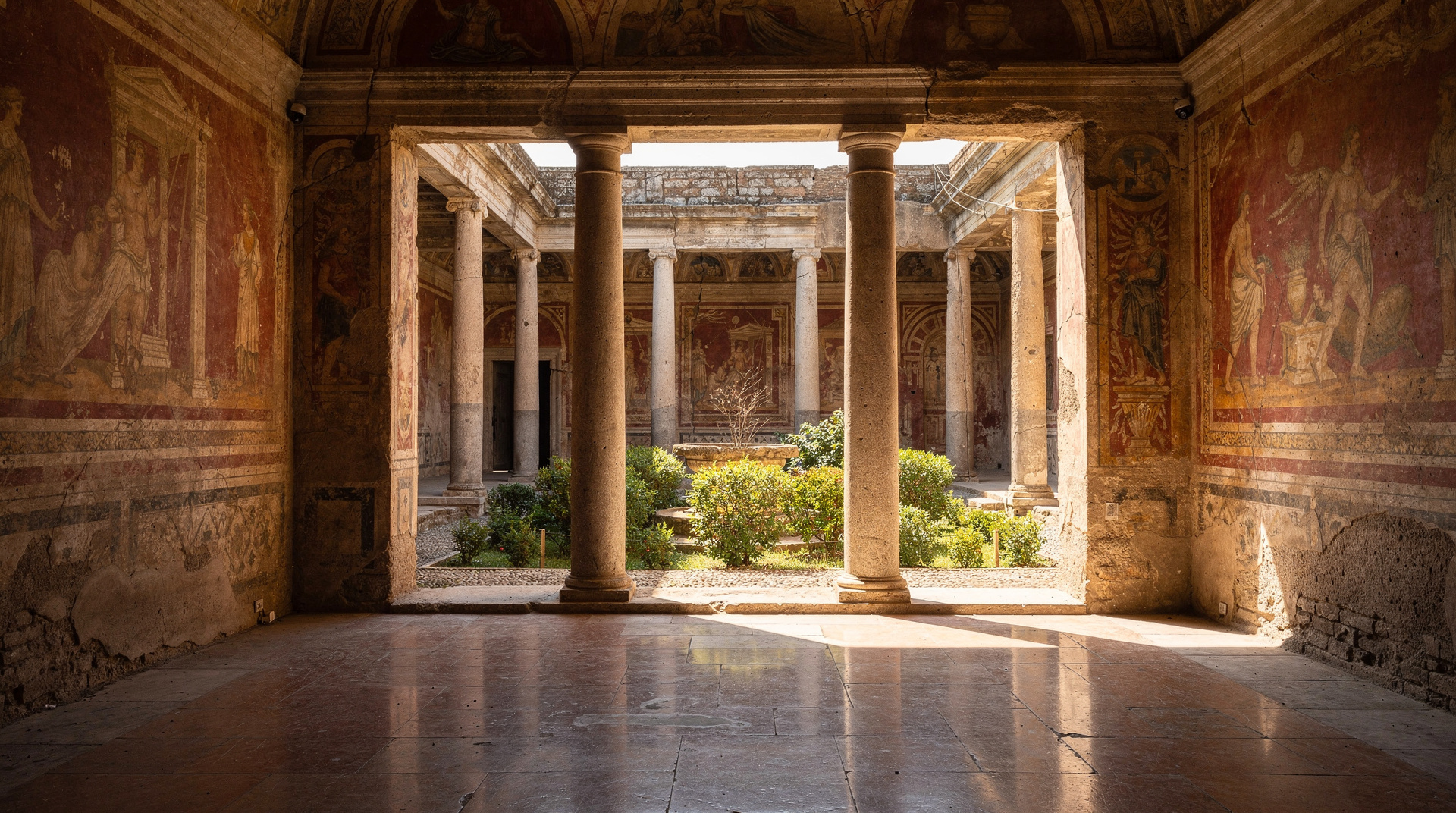
Herculaneum was hit by pyroclastic surges — superheated flows of gas, ash, and rock that moved at 100 km/h and temperatures above 300°C. Everything organic was instantly carbonised. The result is preserved wooden furniture, doors still on their hinges, carbonised food in storage jars, fabric, and the extraordinary Villa of the Papyri library of papyrus scrolls. Two-storey buildings are still standing.
Understanding this difference is the key to choosing between them — everything else in this guide, from crowd levels to which building type you’ll find most memorable, traces back to this single geological fact about how each town died.
The case for Pompeii
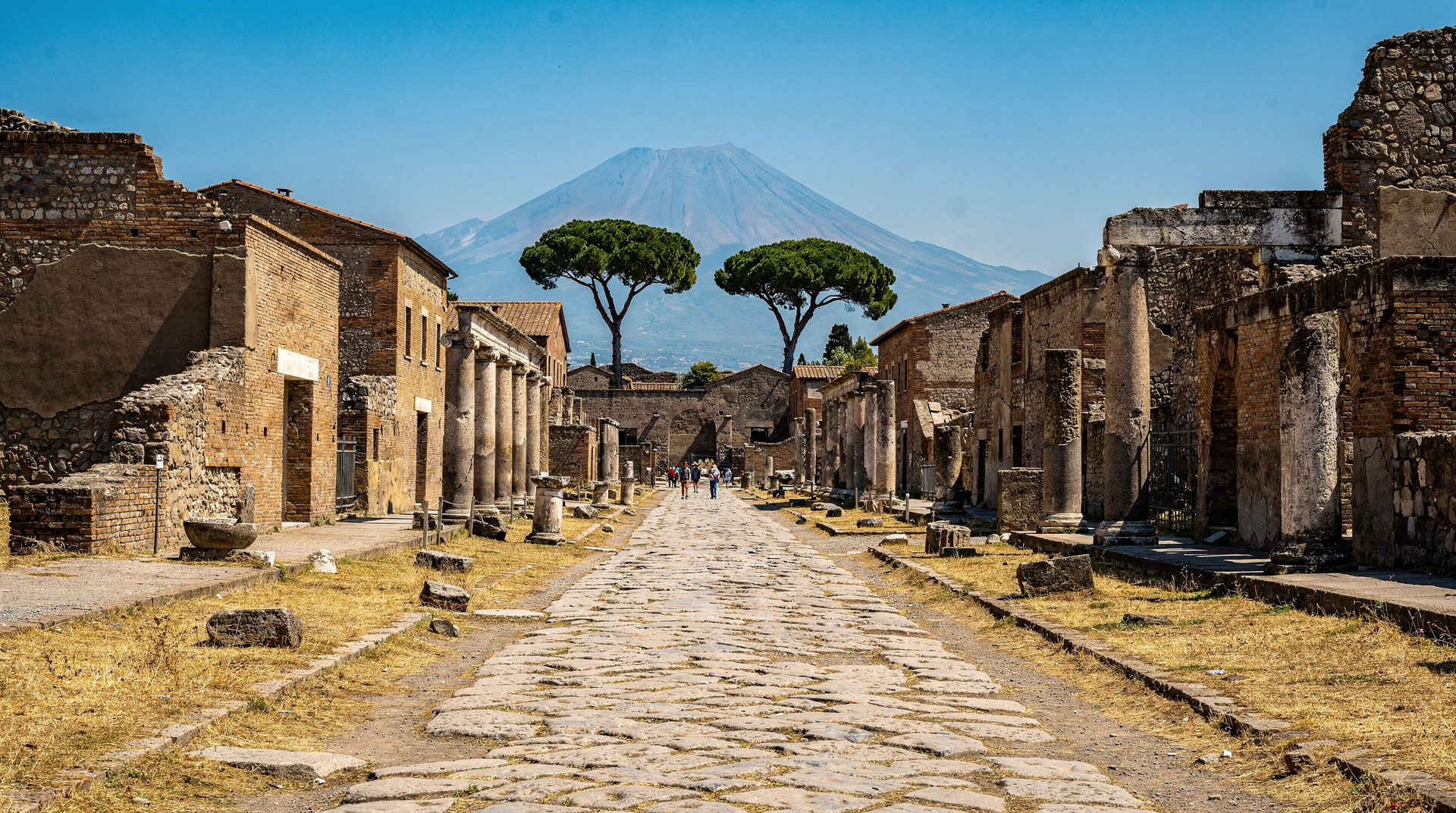
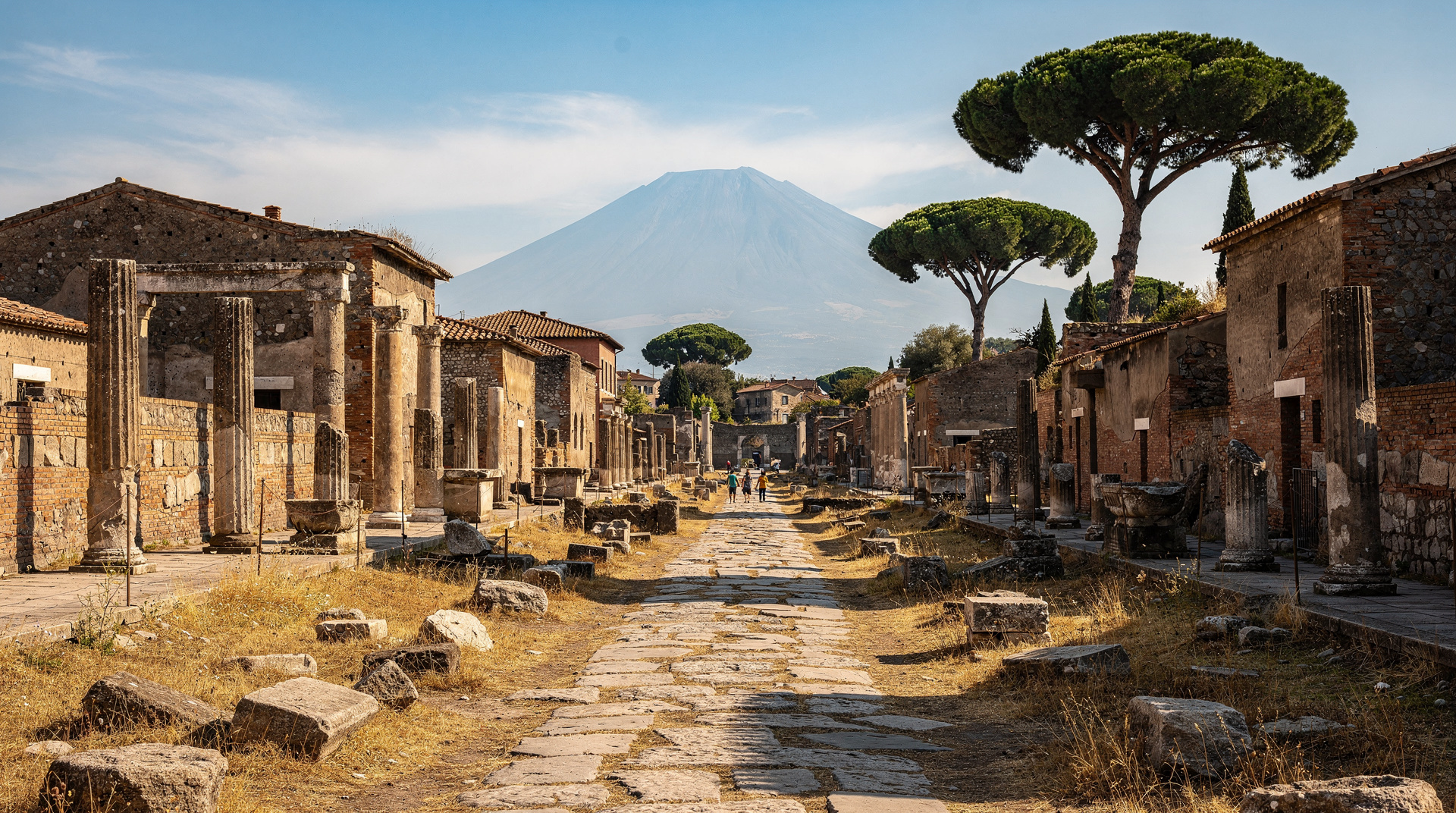
1. Scale. Pompeii’s 66 excavated hectares contain an entire Roman city — temples, baths, the Forum, a large theatre, an amphitheatre, dozens of identifiable house types, multiple brothels, and scores of thermopolia (street food counters). The sheer size communicates something about Roman urban life that Herculaneum’s 4.5 hectares cannot.
2. The plaster casts. The 86 plaster casts of people (and animals) who died in the eruption are Pompeii’s most affecting feature. The Garden of the Fugitives — 13 casts of a family group, including children — is unlike anything else in the Roman world. These are not reconstructions; they are the exact postures of real people who died in 79 AD.
3. Legibility. The Forum, the main street (Via dell’Abbondanza), the bakeries, the theatre — these are immediately readable even without a guide. The sheer variety of building types keeps first-time visitors engaged for a full day.
4. The Villa of the Mysteries. Just outside the main walls, this building contains the most significant surviving Roman fresco cycle — an approximately 17-metre painted frieze depicting Dionysian rites. It is extraordinary.
5. Cultural prominence. Pompeii is one of the most visited archaeological sites in the world. If you are going to understand this cornerstone of Roman history and archaeology, you need to visit it.
Combined Pompeii and Herculaneum tourThe case for Herculaneum
1. Organic preservation. This is the decisive argument. At Herculaneum you can see wooden furniture, wooden doors, and (in the case of the Casa del Tramezzo di Legno) original wooden room dividers, still standing after 2,000 years. At Pompeii, every wooden element is long gone. This changes the experience entirely — buildings at Herculaneum feel inhabited in a way that brick-and-mortar Pompeii rarely does.
2. Upper floors. Several buildings at Herculaneum retain their upper storeys — something almost completely absent at Pompeii. The Casa del Bel Cortile has an intact staircase and upper gallery. This allows you to understand how Romans lived vertically, not just on the ground floor.
3. The skeletal remains. In the boat storage arches on the ancient shoreline, approximately 300 skeletal remains of people who died during the pyroclastic surge are displayed in their final positions. Unlike Pompeii’s plaster casts, these are actual bone — excavated since 1981 and studied intensively since then.
4. Crowd levels. Herculaneum receives about 10% of Pompeii’s visitors. In peak summer, you can often stand in a significant building entirely alone. At Pompeii in July, the Brothel has a 20-minute queue and the Forum is shoulder-to-shoulder with tour groups.
5. The Suburban Baths. The thermal complex at the edge of the excavated area has some of the most technically accomplished Roman mosaic and fresco work visible at either site — and is rarely crowded.
6. Efficiency. A 2-hour visit to Herculaneum covers the highlights comfortably. Pompeii requires 3–4 hours minimum and rewards a full day.
Side-by-side comparison
| Factor | Pompeii | Herculaneum |
|---|---|---|
| Area excavated | 66 hectares | 4.5 hectares |
| Visit time | 3–5 hours | 2–2.5 hours |
| Annual visitors | ~3.5 million | ~350,000 |
| Standard entry | €18 | €11 |
| Organic preservation | Limited | Outstanding |
| Plaster casts | Yes (86) | No (skeletal remains instead) |
| Building height | Ground floor only | Several multi-storey |
| Best for | Scale, casts, variety | Preservation, wood, quiet |
| Distance from Naples | 30 min by train | 15 min by train |
Who should choose Pompeii
- First-time visitors to Campania who want the “full” Roman city experience
- Anyone specifically interested in the plaster casts
- History enthusiasts who want to spend a full day exploring
- Visitors comfortable with large crowds
- Families with older children (10+)
Who should choose Herculaneum
- Visitors with limited time (Herculaneum works as a half-day; Pompeii does not)
- Anyone travelling with young children who need a shorter, more manageable walk
- Visitors who want the most impressive visible preservation (wood, multi-storey buildings)
- People who dislike crowded sites
- Anyone who has already seen Pompeii and wants to compare
Doing both: the most practical approach
The combined €22 ticket (valid 3 days) covering Pompeii, Herculaneum, Oplontis, and Stabiae is the logical choice if you have time.
One-day combination: Ercolano Scavi at 9:00 → Herculaneum visit 9:00–11:30 → Circumvesuviana to Pompei Scavi (15 minutes) → lunch in Pompei town → Pompeii 13:00–16:30 → return to Naples by 17:30.
This is a long day. You will see Pompeii’s highlights but not everything. If you have two days, dedicate one to each site.
Private guided tour of both Pompeii and HerculaneumThe MANN connection
The Naples Archaeological Museum (MANN) is essential context for both sites. It houses:
- The Alexander Mosaic from Pompeii (original)
- Bronze statues from the Villa of the Papyri at Herculaneum
- The “Secret Cabinet” of erotic art from Pompeii
- The Herculaneum Papyri (carbonised scrolls)
- Frescoes removed from both sites for conservation
If your schedule allows, visiting MANN before the sites gives you a mental map of what you’ll see. Visiting after gives you the context to understand what you just experienced.
The visitor experience: what nobody tells you
At Pompeii
Walking through Pompeii is disorienting in a specific way: the sheer scale means you’ll make decisions that feel arbitrary at the time. You’ll turn right down an alley and find a remarkable house, then turn left and find a blank courtyard. Without a map or guide, the randomness feels like the site itself is incomplete — but it’s actually a reflection of how cities work. Not every building is remarkable.
The crowds add to this. In summer, Via dell’Abbondanza is a slow procession. The Brothel queue seems incongruous next to the gravity of the plaster casts 500 metres away. The Forum at noon in July is genuinely unpleasant. Managing this requires accepting that the “quiet contemplative experience” of Pompeii exists only before 10:00 or in the peripheral zones.
What endures: the moment you round a corner and the Villa of the Mysteries frieze is in front of you, empty and vivid at 9:45 in the morning. Or when you stand in the Garden of the Fugitives and the scale of the 13 plaster casts makes everything else recede. These moments justify everything.
At Herculaneum
Herculaneum operates differently. The site is small enough that you always know approximately where you are. The multi-storey buildings give it a vertical dimension that changes how you read the space — you look up as well as around. The carbonised wood gives certain rooms a sense of inhabitation that Pompeii rarely achieves.
The peculiar quality of Herculaneum is its intimacy. The site is below modern street level — you descend into the excavation. Modern apartment buildings ring the excavation on three sides. The contrast between 2,000-year-old Roman streets and 1970s Italian social housing is visually jarring but somehow appropriate: Ercolano is still a city.
The boat arches are Herculaneum’s emotional centre. Standing at the ancient shoreline, looking at the skeletal remains in the storage arches, you’re at the edge of what the site communicates. Pompeii’s plaster casts are famous; Herculaneum’s skeletal remains are rarer and, for many visitors, more affecting.
Planning days: Herculaneum and Pompeii in sequence
If you have two separate days available, the ideal sequence is:
Day 1: Herculaneum + MANN Morning: Ercolano Scavi by 9:00, Herculaneum until noon (2.5 hours). Lunch in Ercolano. Afternoon: Circumvesuviana to Naples (15 minutes), metro to Museo station, MANN (3 hours, closes 19:30). The MANN houses the best portable finds from Herculaneum — the Hercules statue, bronze busts from the Villa of the Papyri, the original carbonised papyrus scrolls. Doing MANN immediately after Herculaneum creates the strongest connections.
Day 2: Pompeii + Vesuvius Morning: Pompei Scavi by 9:00, Pompeii (3.5–4 hours). Exit before 13:00. Afternoon: EAV bus to Vesuvius, crater hike and rim circuit (2.5 hours). Return to Naples by 18:30.
This two-day structure is arguably the best introduction to the Roman eruption sites that the region offers.
What each site teaches you that the other can’t
It’s worth being explicit about what you actually learn at each, since “which is better” undersells how different the lessons are. Pompeii teaches you about a Roman city as a functioning system — the bakeries, the water distribution via street fountains, the graffiti advertising elections and gladiator fights, the sheer variety of a real urban population going about ordinary business. It’s civic and social.
Herculaneum teaches you about a Roman household as a physical, inhabited space — what a dining room actually looked like with its furniture, how a family stored food, what an upper floor felt like to stand on. It’s domestic and material. Visitors who do both often describe the combination as understanding the Roman world from the outside in at Pompeii, and from the inside out at Herculaneum.
A note on repeat visits
For travellers who have already done Pompeii on a previous trip to Italy, Herculaneum is the better use of limited return time — it offers something genuinely new rather than a repeat of a site already seen, and its smaller scale makes it easy to fit into a partial day alongside other Naples sightseeing. Conversely, first-time visitors to Campania who skip Pompeii entirely in favour of Herculaneum sometimes regret it later; Pompeii’s scale and cultural weight are hard to substitute, even if Herculaneum is arguably the more interesting site on its own terms.
Frequently asked questions about Herculaneum vs Pompeii
Which site should I visit if I only have one day?
Pompeii. It is more famous, more comprehensive, and more of a “bucket list” site for most visitors. But if you’ve been to Pompeii before, Herculaneum will give you something entirely different.
Is Oplontis worth adding to an Herculaneum/Pompeii day?
Oplontis (Villa Poppaea) is 15 minutes from Pompeii by Circumvesuviana (Torre Annunziata station). It’s quiet, remarkable, and covered by the combined ticket. If you’re using the €22 combined ticket, adding Oplontis costs nothing except travel time. It’s a 90-minute addition to the day.
Do tour guides cover both sites in the same tour?
Some full-day tours include both. See best Pompeii tours for operators who combine the two. A typical combined tour runs 6–7 hours and includes a licensed guide at both sites.
Is Herculaneum accessible by disability?
The entry ramp/lift from the modern street level to the excavation level handles wheelchairs and buggies. Inside the site, the main paths are paved but uneven. The boat arches on the shoreline require a flat walk from the main site. Most significant buildings are accessible with reasonable terrain management.
Which site is best in August?
Neither, ideally — the heat in July and August is brutal at both. But Herculaneum is more bearable: its lower elevation and partial covered areas provide more shade. If visiting in August, either site is best at 9:00 sharp, before the heat peaks.
Booking logistics for whichever you choose
Whichever site — or both — you settle on, the ticket and timing decisions matter as much as the choice itself. See Pompeii tickets explained for the current booking system and skip-the-line options, and the getting to Pompeii from Naples guide or the standalone Herculaneum guide for the transport specifics to each site individually. If you’re set on combining Pompeii and Vesuvius rather than Herculaneum, Pompeii and Vesuvius same day has the realistic timing for that pairing instead.
Frequently asked questions about Herculaneum vs Pompeii: which Roman site should you visit?
Which site is better preserved?
Which is more crowded?
Which is better for children?
Can you do both sites in one day?
Which is closer to Naples?
Which site has a better audioguide or app?
Which is better value for money?
Top experiences
Bookable activities with verified prices and instant confirmation on GetYourGuide.