Mount Vesuvius guide: everything you need to plan the crater hike
From Naples: All-Inclusive Mount Vesuvius Half-Day Tour
How hard is the Vesuvius hike and how long does it take?
The hike from the car park (1000m elevation) to the crater rim (1281m) is 30–45 minutes up, 20–30 minutes down on a well-maintained gravel path. Difficulty is moderate — the gradient is steady and the surface is loose volcanic gravel. No technical skill required. The crater entry ticket costs €15. Allow 2–3 hours total at the mountain.
What Vesuvius actually is
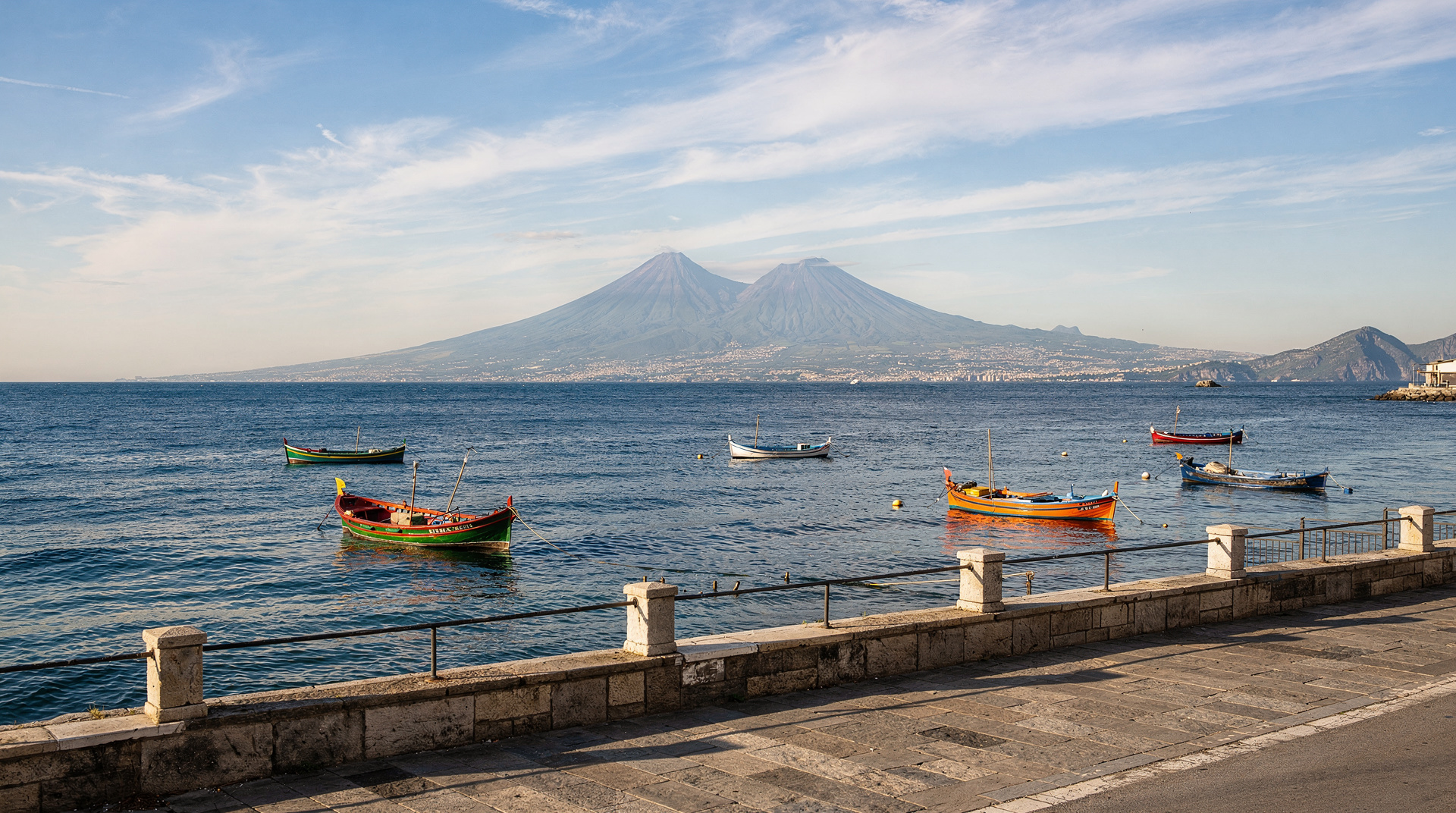
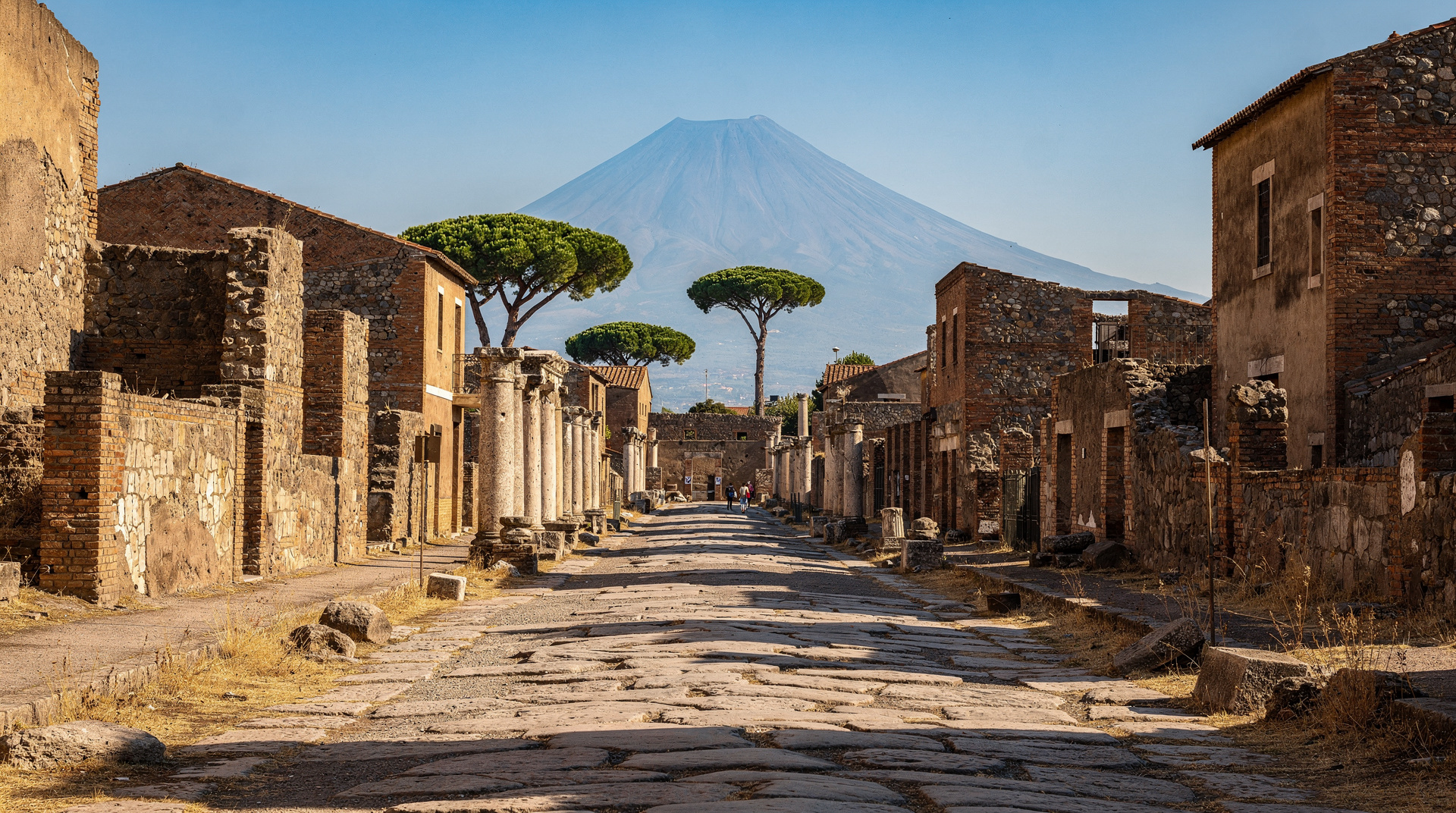
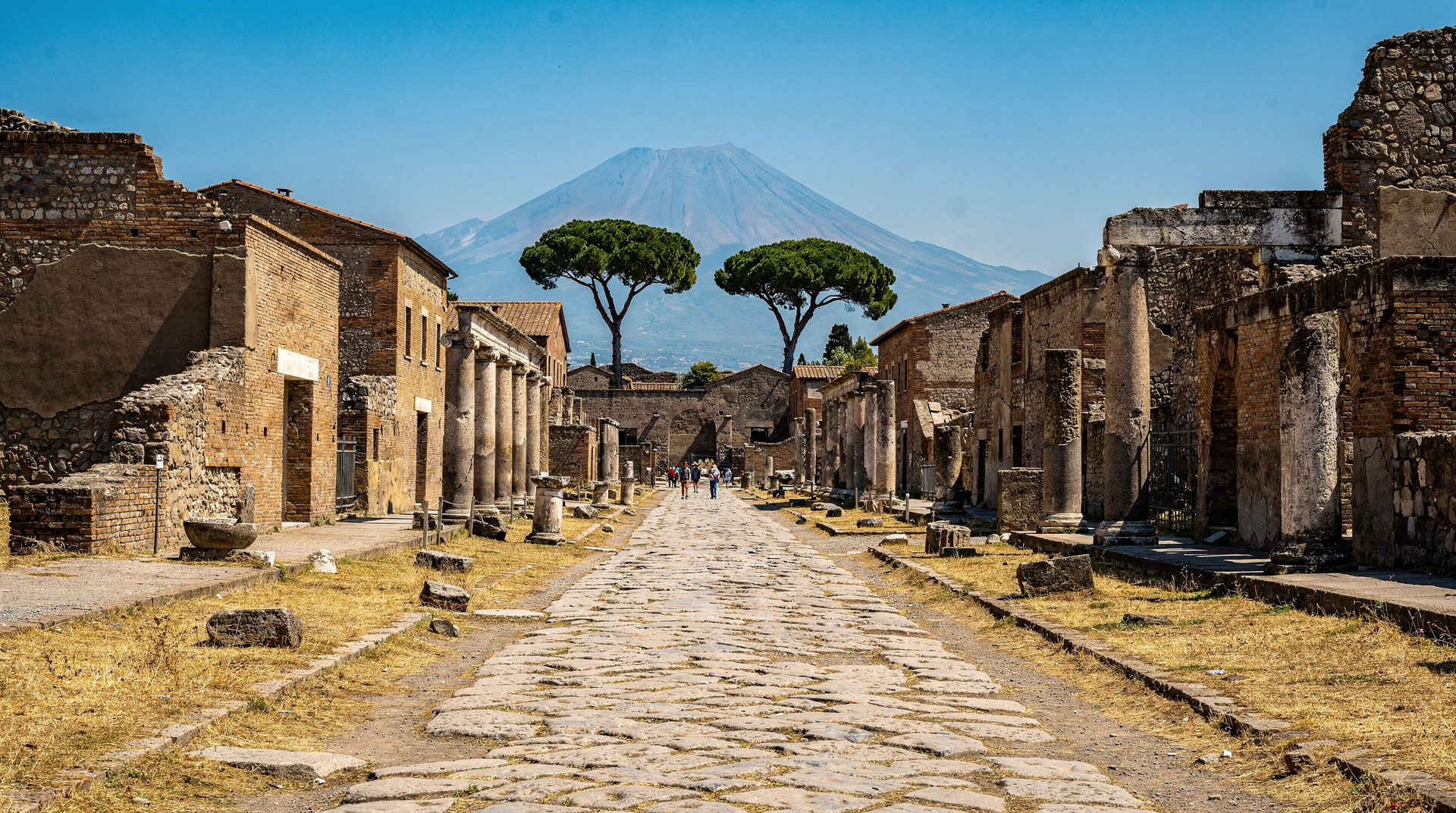
Vesuvius (Vesuvio) is a complex stratovolcano on the eastern shore of the Bay of Naples, consisting of the main cone (Gran Cono) inside a caldera formed by an earlier, larger volcano called Monte Somma. The two form a horseshoe shape visible from Naples — the higher, more conical peak is Gran Cono (1281 metres); the older broken caldera wall to the north is Monte Somma.
It is the only volcano on mainland Europe to have erupted within the last century. The last eruption was in 1944, during World War II, when lava flows destroyed several towns and Allied aircraft at an airstrip. Before that, eruptions occurred in 1906, 1872, 1631, and periodically through earlier centuries. The famous 79 AD eruption that destroyed Pompeii, Herculaneum, and Oplontis was one of many in a long eruption history.
Vesuvius is currently at giallo (yellow) alert level — the standard elevated monitoring status for an active volcano. Visiting the crater is safe and routine. Approximately 700,000 people visit per year.
| Where | Quota Mille car park, on the Vesuvius road above Ercolano/Torre del Greco |
| Cost | €15 crater ticket, plus €3 parking or transport from Pompeii/Naples |
| Time needed | 2–3 hours total, including the hike and rim circuit |
| Getting there | EAV bus 5001 from Pompei Scavi, or guided tour from Naples |
| Best time | Morning, April–May or September–October |
The crater hike: what to expect
Starting point: The Quota Mille car park and bus terminus at approximately 1000 metres elevation. This is where all hikers start — there is no path from sea level.
The path: A well-maintained gravel and stone path of approximately 600 metres horizontal distance rising 281 metres vertical to the rim. Time: 30–45 minutes at a moderate pace. Loose volcanic gravel makes the descent slightly tricky — take it steadily.
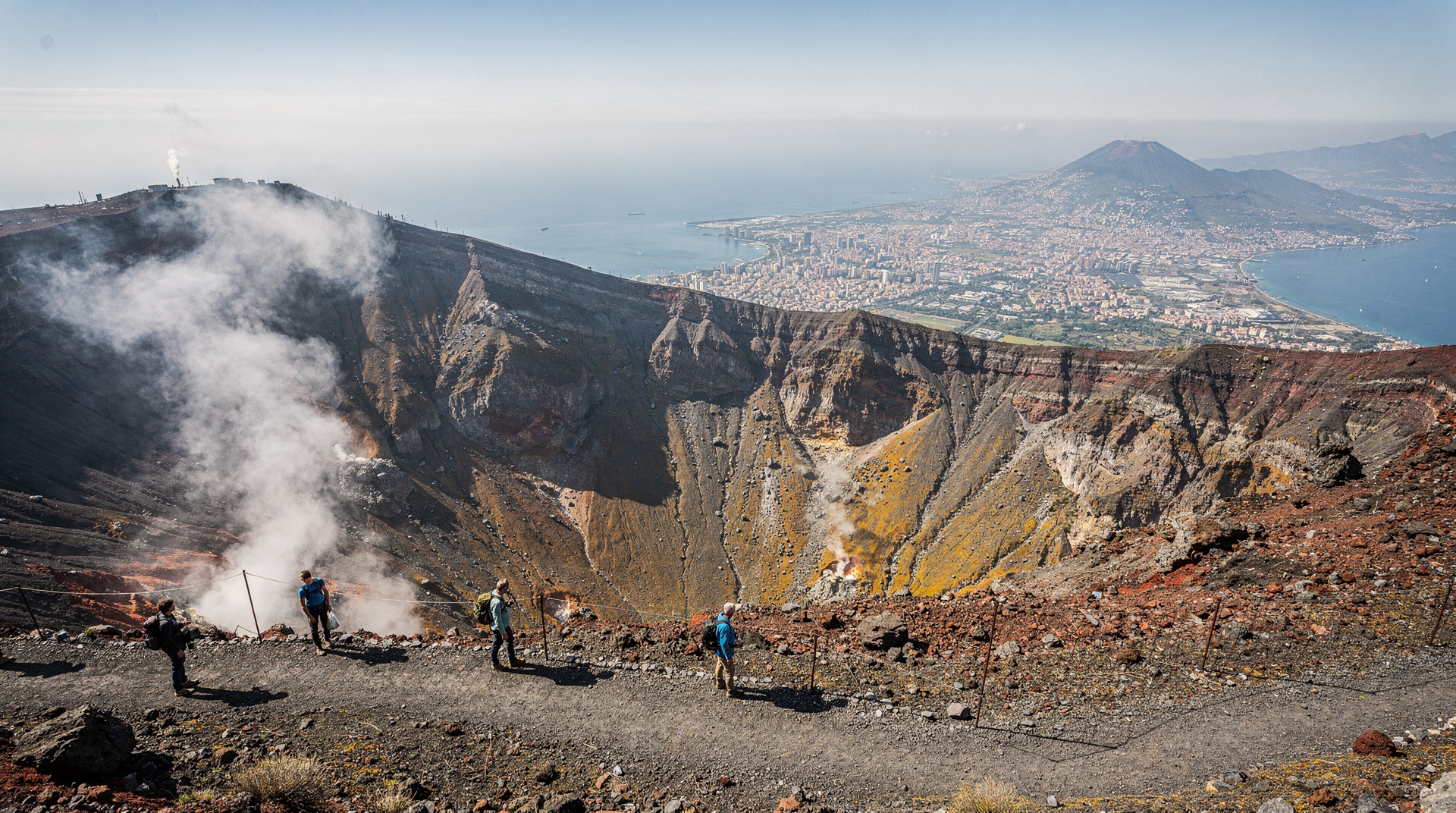
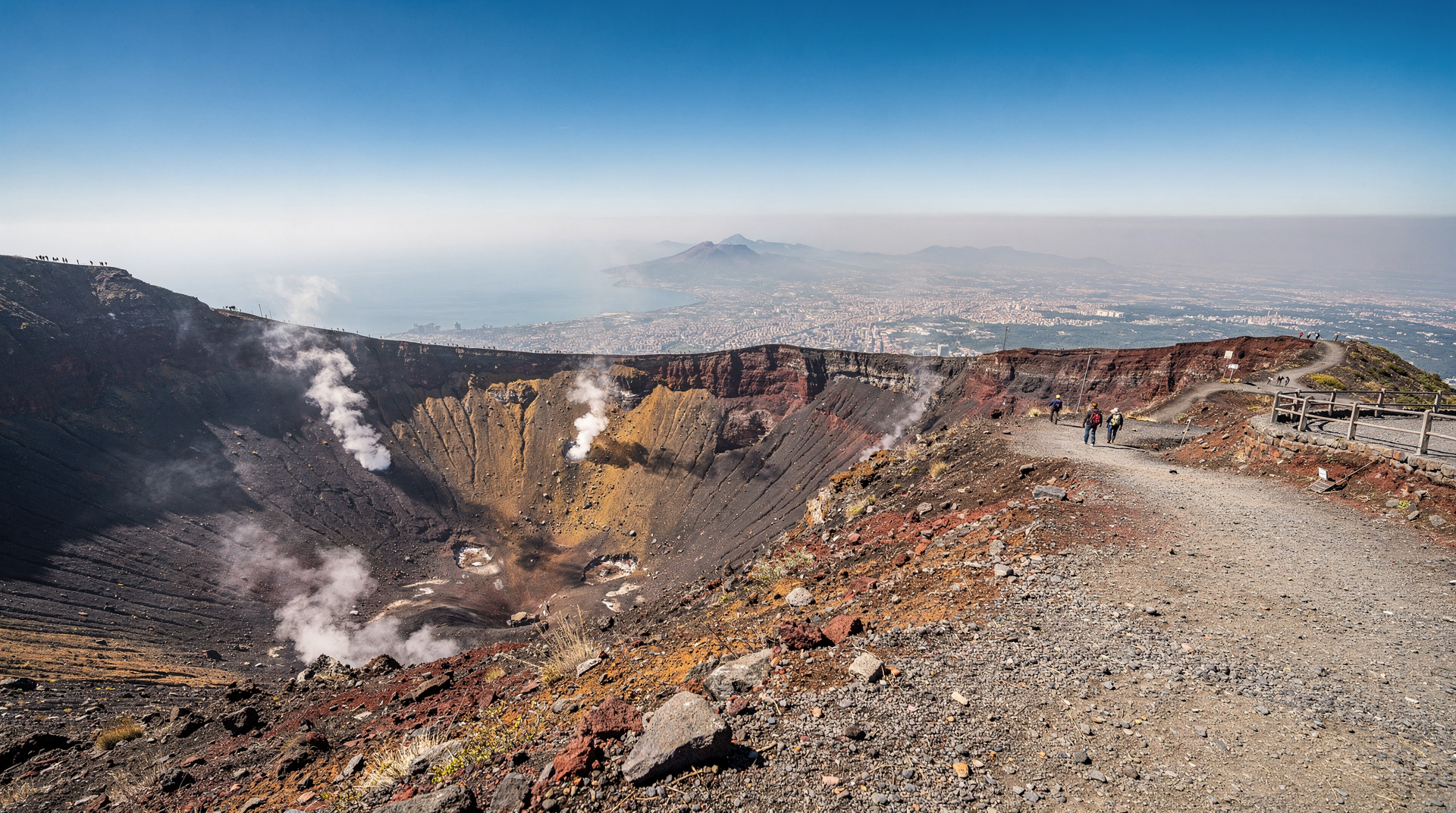
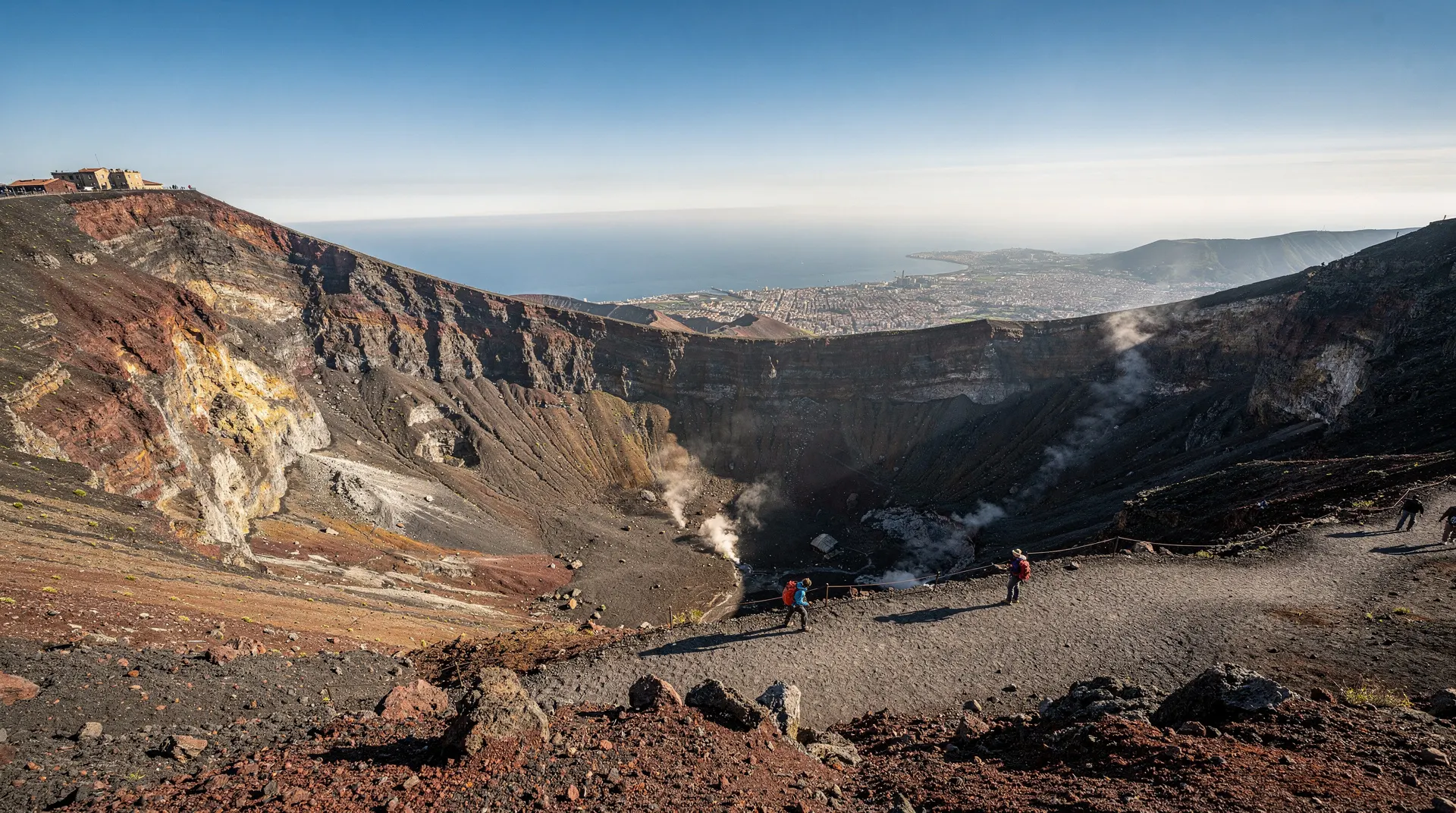
The crater rim: Once at the rim, a signposted trail runs around the crater perimeter. The full circumference is approximately 1.8 km. Allow 45 minutes to an hour for the full circuit. Views change significantly as you move around — at certain points you look down into the fumarole zones; at others the entire Gulf of Naples spreads to the south.
Crater interior: Access inside the crater is not permitted. You remain on the rim.
Fumaroles: At several points along the eastern rim, you’ll see and smell hydrogen sulphide (sulphur gas) from fumaroles — active vents. The smell is distinct. Concentrations are low and not dangerous for the brief exposure during a rim walk.
Altitude: At 1281 metres, the summit is noticeably cooler than Naples (typically 5–8°C cooler). Bring a layer even in summer. Strong winds at the summit are common — a windproof layer is more useful than a thick coat.
Tickets and access
Crater access ticket: €15. Purchased at the ticket booth at the Quota Mille car park. This covers the hike from the car park to the crater rim and the full rim circuit.
What’s not included: Transport to the car park. Guides (optional, available on site).
Opening hours: 9:00–17:00 most of the year. 9:00–16:00 in winter (November–February). Last entry 1.5 hours before closing.
Closures: The crater closes for orange/red meteorological alerts (wind, lightning), heavy rain (path becomes dangerous), and occasional maintenance. See Vesuvius closures and weather for full detail on how closures work and how to check.
Vesuvius with round-trip transport and crater entryHow to get to Vesuvius
From Pompeii: Take the EAV bus 5001 from outside Pompei Scavi station to the Quota Mille car park. Journey time approximately 30 minutes. Cost approximately €3. Buses run multiple times daily in summer, less frequently in winter. Check the current schedule at eavsrl.it.
From Naples (Herculaneum route): Circumvesuviana to Ercolano Scavi, then bus up the Vesuvius road. Several local bus services and taxi options operate from Ercolano.
From Naples (direct tour): Many operators run guided tours with minibus directly from central Naples, including transport to the car park and back. This is the most convenient option if you’re not combining with Pompeii.
By car: Drive the SS18 toward Torre del Greco, then follow signs for Vesuvio/Parco Nazionale. The road up to the Quota Mille car park (Via Vesuvio) is narrow and steep. Parking at the car park costs €3. The road is accessible to standard cars; motorhomes and large vehicles are restricted.
For detailed transport logistics, see getting to Vesuvius.
Vesuvius all-inclusive tour from Naples with transportWhat to wear and bring
Footwear: Closed-toe shoes or light hiking shoes are essential. Trainers/sneakers work. Sandals are dangerous — the loose volcanic gravel shifts underfoot. The descent in particular requires grip.
Clothing: A light windproof jacket or fleece. Even in August, the summit temperature is 5–10°C lower than Naples. Wind is frequent; on some days it’s strong enough to make the rim circuit uncomfortable without a windproof layer.
Water: At least 1 litre per person. There are no water sources on the mountain after the car park. There’s a small bar at the Quota Mille car park.
Sun protection: High altitude means more intense UV. Hat and SPF 50 are relevant even on slightly overcast days.
Trekking poles: Not required but useful for the descent on loose gravel, especially for older visitors or those with knee concerns.
Guided tours vs independent hiking
Independent hiking is the default at Vesuvius. The path is clear, rangers are present, and the hike is straightforward. For a standard crater visit, you don’t need a guide.
Guides add value if: You want detailed geological commentary (the crater wall’s coloured banding tells the history of different eruptions), specific eruption history, or you want to understand the 79 AD event in geological terms from the crater edge. A good guide standing at the rim and explaining what happened below (Pompeii, Herculaneum, the pyroclastic flows) is compelling.
The most efficient option for a Pompeii + Vesuvius day: a guided combo tour from Naples with transport to both sites. See Pompeii and Vesuvius same day for logistics.
Full-day Pompeii and Vesuvius combo from NaplesThe Vesuvius National Park
Vesuvius sits within the Parco Nazionale del Vesuvio, established in 1995. The park encompasses the volcano and its lower slopes, including the Valle del Gigante, the Cognoli di Ottaviano nature reserve, and a substantial area of endemic vegetation.
The park has additional hiking trails beyond the main crater route — a longer circular path around the Monte Somma caldera wall, forest paths through ancient holm oak and chestnut woodland, and the “Gran Cono” approach from the Herculaneum side. These are less-visited and require more planning but offer the mountain without the tourist density of the Quota Mille approach.
See Vesuvius National Park for details on park trails and ecology.
The Lacryma Christi wine experience
The lower slopes of Vesuvius produce a distinctive DOC wine called Lacryma Christi (Tears of Christ), made from grapes grown in volcanic soil. The combination of mineral-rich soil and the hot, dry microclimate produces wines — both red (Aglianico) and white (Coda di Volpe, Falanghina) — with a distinctive volcanic mineral quality.
Several wineries operate on the Vesuvius slopes and offer tours and tastings, some combined with organised Pompeii/Vesuvius tours. See Lacryma Christi and Vesuvius wine for detail.
Vesuvius in the context of Naples’ volcanic geology
Vesuvius is only part of the story of the volcanic landscape around Naples. The Campi Flegrei field, on the opposite side of the city, is a separate and in some respects more actively monitored system, and the two together shape everything from the local wine and tomatoes to the tufa stone the historic centre is built from. See Naples and volcanoes for the fuller picture of how the city coexists with this geology, and getting to Pompeii from Naples if you’re planning to combine the hike with the archaeological sites at the volcano’s base.
Frequently asked questions about Mount Vesuvius
Is Vesuvius going to erupt soon?
Vesuvius is an active volcano and will erupt again at some undetermined future point. Geologists monitor it continuously but cannot predict timing. The current yellow alert status reflects monitoring activity consistent with a dormant active volcano, not imminent eruption. The last eruption was 1944 — eight decades ago.
How high is Vesuvius and is the hike difficult for older visitors?
At 1281 metres, the summit is not particularly high by alpine standards. The hike from the car park (1000m) to the rim (1281m) gains 281 metres over approximately 600 metres horizontal distance. This is a moderate gradient. Older visitors without significant mobility limitations manage it routinely. The loose gravel descent is the main physical challenge — take it slowly.
Can I see inside the crater?
Yes, from the rim. The crater is approximately 500 metres in diameter and 300 metres deep. The interior walls show distinct banding from different eruption layers. You cannot descend into the crater.
Is the crater path accessible for people with mobility impairments?
The gravel path is not suitable for wheelchairs. The Quota Mille car park area has viewpoints toward Vesuvius and the Gulf of Naples that are accessible without the hike, but the crater rim itself requires walking the path.
What is the best time of day to hike Vesuvius?
Morning: best visibility (before summer haze builds), cooler temperatures, fewer visitors. Try to be at the car park by 9:00–10:00. By midday in summer the summit is packed with tour groups.
Can I visit Vesuvius without hiking to the crater?
Yes, though the crater itself is the main reason most visitors come. The Quota Mille car park has its own views across the Gulf of Naples and toward the crater cone, accessible without the path. For anyone unable to manage the gravel hike, this still offers a sense of the volcano’s scale, and the Vesuvius National Park has lower-elevation trails through woodland that avoid the steep gravel section entirely.
Frequently asked questions about Mount Vesuvius guide: everything you need to plan the crater hike
Do you need a guide to hike Vesuvius?
Can the Vesuvius crater close without warning?
How much does it cost to visit Vesuvius?
Is it worth hiring a guide at Vesuvius?
What is the view from Vesuvius like?
When is the best time of year to visit Vesuvius?
Is Vesuvius dangerous to visit?
Can I combine the Vesuvius hike with Pompeii in one day?
What happens if I book a ticket and the crater is closed on the day?
Top experiences
Bookable activities with verified prices and instant confirmation on GetYourGuide.