Pompeii with kids: what works, what doesn't, and how to prepare
Pompeii: 2-Hour Guided Tour with an Archaeologist
Duration: 2h
Is Pompeii suitable for children and what age works best?
Pompeii works well for children aged 7 and up. The scale, the plaster casts of people and animals, and the visible daily life details (bakeries, street counters, mosaics) genuinely hold children's attention. Under 5s will mostly need to be carried over cobbles. Book a family-friendly guided tour to keep engagement high.
The honest family assessment
Pompeii with children is genuinely rewarding — but the experience depends heavily on age and preparation. A 10-year-old who’s read a little about Roman history will be captivated. A tired 3-year-old being carried over cobbles in 32-degree heat in August will be miserable, and so will their parents.
This guide helps you match the visit to your family’s age range, manage the logistics honestly, and focus on what actually works for children rather than what sounds good in a marketing description.
| Best age | 7+ for full engagement |
| Time needed | 90 min (ages 3–6) to 3–4 hrs (teens) |
| Entry cost | free EU under 18 (ID required), around €18 non-EU |
| Stroller | works on main paths, struggles at house thresholds |
| Best time | 09:00 opening, done by noon in summer |
| Guide | family-paced private tour recommended under 10 |
Age by age: what to expect
Under 3: Pompeii is not designed for very young children. The terrain is uneven basalt cobbling with significant gaps between stones. Strollers are functional on the main Via dell’Abbondanza but impractical in most houses and side streets. Carry a baby in a structured carrier. There are no changing facilities in the site.
Ages 3–6: The physical reality is demanding — most of the site requires walking on uneven surfaces for extended periods. The plaster casts can distress young children if not framed carefully. If you’re visiting with this age group, keep it to 90 minutes maximum, focus on visual highlights (the dog mosaic, the Forum area), and have snacks and water ready at all times.
Ages 7–10: This is when Pompeii starts to pay off. Children this age have enough stamina and curiosity to absorb 2–3 hours. The plaster casts, the visible bakery counters (thermopolia), the graffiti scratched on walls, and the scale of the streets click into place at this age. A family-oriented guide helps enormously.
Ages 11–14: Pompeii works well for this group, especially with some pre-trip context. The Brothel (Lupanare) is a legitimate historical site and most parents handle it by describing it honestly — it’s part of Roman economic and social life, not a detour. The archaeological detective element (what was this building? what happened here?) appeals to this age.
Ages 14+: Treat them like adult visitors with a shorter attention span. Download the Rick Steves audio tour on their phone and let them self-guide sections while you walk together.
The key kid-friendly highlights
The plaster casts: The most affecting element of Pompeii for children of almost any age. The Garden of the Fugitives (near the Amphitheatre entrance) has 13 casts in situ — a family of adults and children who died together. The Forum Granary has additional casts including a famous dog. Prepare children in advance: these are real human shapes, not models.
The thermopolia (street food counters): At least 80 of these have been identified at Pompeii. They look like modern snack bars, with counter slots for food containers. Children immediately understand what these were — “it’s like a takeaway.” One particularly well-preserved example was excavated on Via di Nola (opened after 2020 excavations).
The Cave canem mosaic: At the House of the Tragic Poet, the famous “Beware of the Dog” mosaic is set into the floor at the entrance. Children love finding it. It’s near the Forum, easy to add to any route.
The Amphitheatre: The oldest surviving Roman amphitheatre (80 BC, predating the Colosseum). Children can stand in the arena, sit in the tiered seats, and grasp what happened here without a lengthy explanation. The scale is immediately comprehensible.
The bakeries: Several bread ovens (pistrini) are preserved with their stone grinding wheels intact. The charred loaves found in these bakeries are displayed at the MANN in Naples. Children respond well to “this is where they made bread 2,000 years ago — the oven still has marks on the walls.”
Private 2-hour guided tour — ideal pace for families with childrenGuided vs self-guided with kids
Recommended: guided tour for families. A good family-oriented guide paces the walk for children, uses storytelling rather than lecture, and knows which buildings are open. The difference between a knowledgeable guide saying “this was a fast-food counter — Roman workers couldn’t cook at home because most apartments had no kitchens” and you saying “look, a counter” is significant.
For children under 10, a 2-hour private tour (€80–120 for the group, regardless of ages) is more appropriate than a standard 3.5-hour small-group tour. The guide can adjust pace and content on the fly.
For families with teenagers, a small-group tour (€15–25 per person) works well and costs less.
If you go self-guided with children, use the Pompeii Sites app (free, works offline) and the Rick Steves audio tour. Download both before arrival.
Private 3-hour family-paced guided tourThe stroller reality
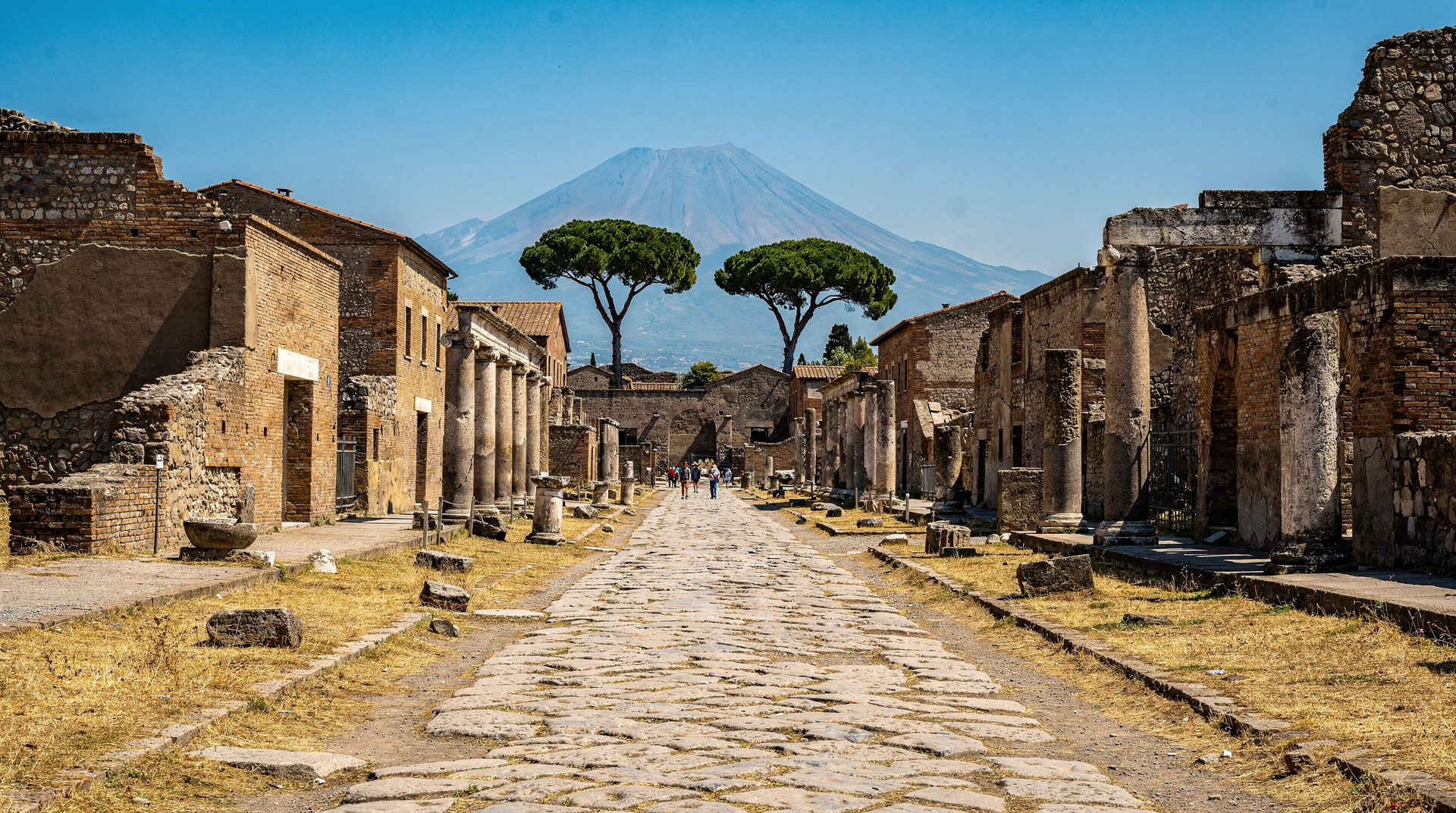
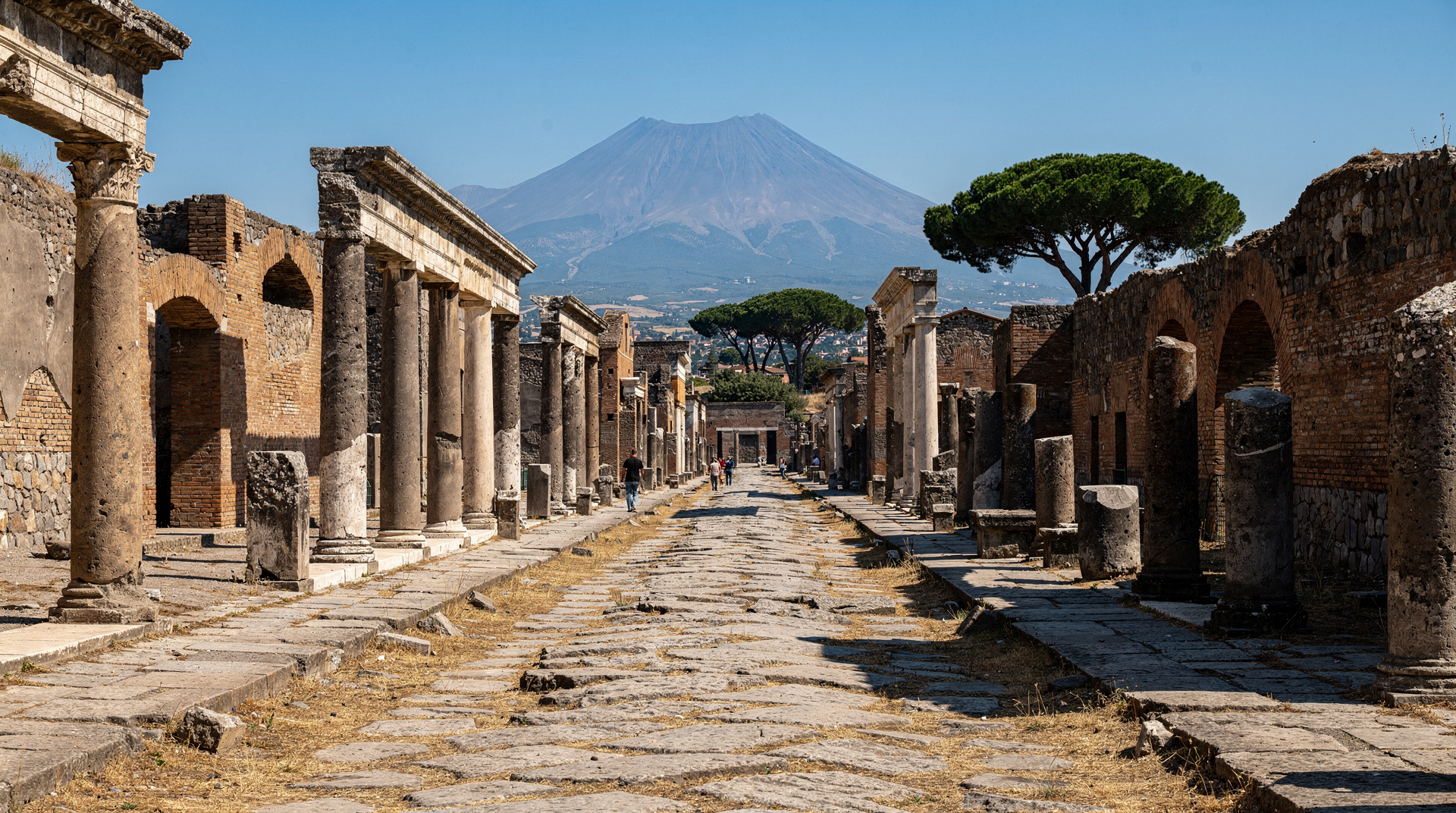
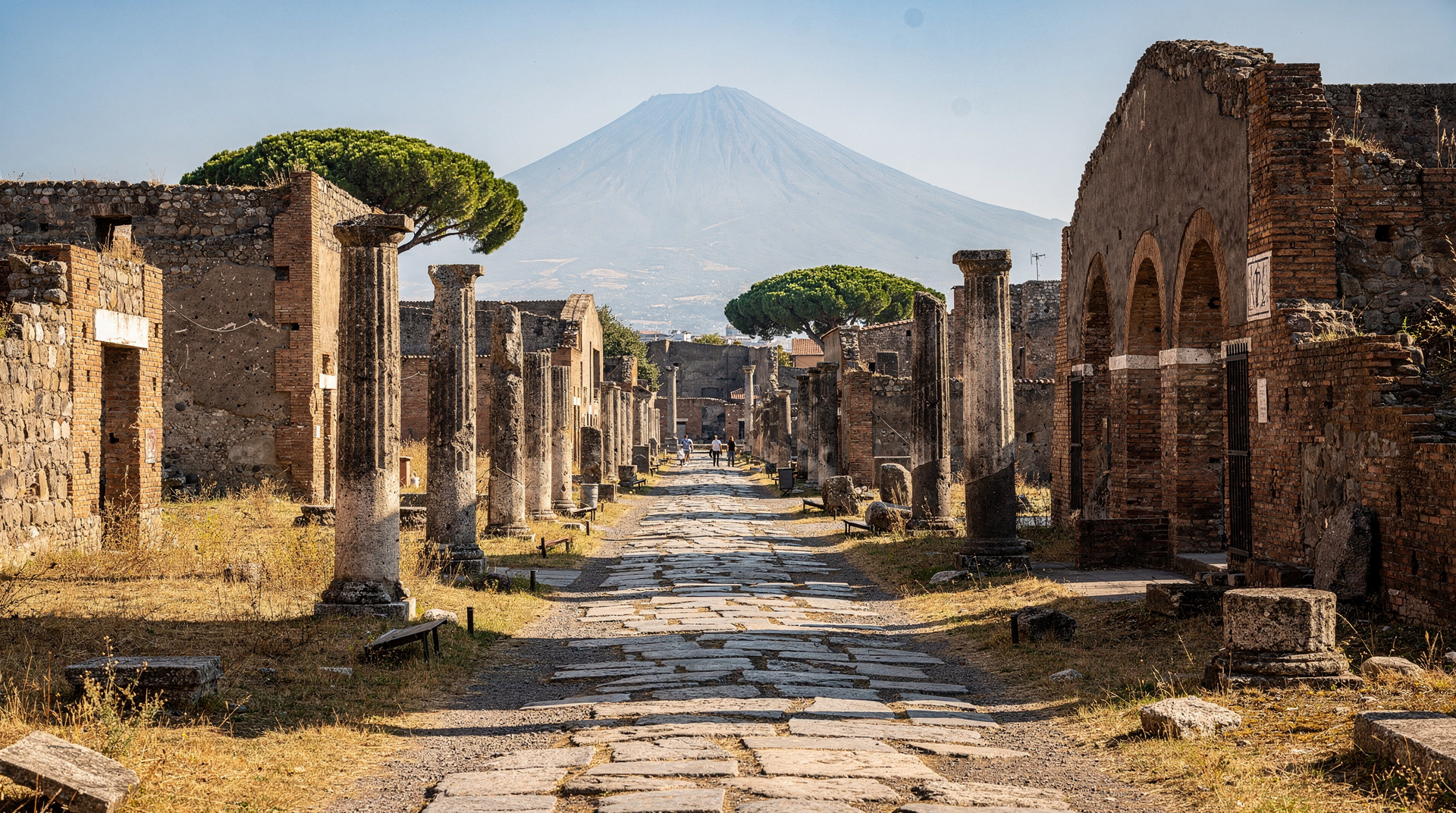
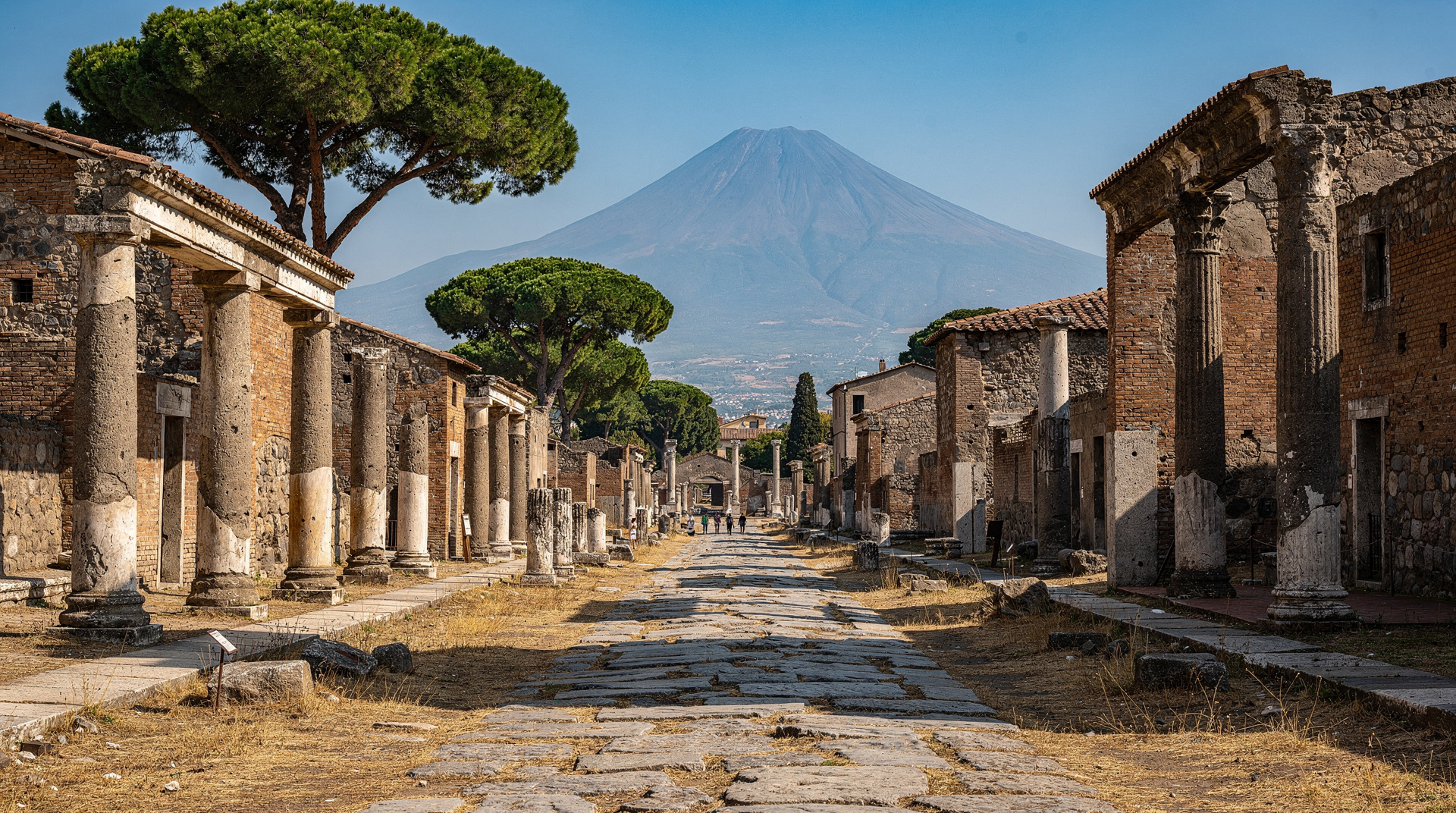
The main paths at Pompeii — Via dell’Abbondanza, the Forum, Via di Nola — are paved in large basalt stones (selce vulcanica) with gaps of 2–4 cm between them. An umbrella stroller with solid wheels (not thin spokes) can manage these paths with effort. The stepping stones used to cross streets (visitors walked between them; carts rolled in the gaps) are impassable with a stroller.
Most houses have step thresholds — typically one or two large stone steps at the entrance. You will lift any stroller over these each time.
Baby carrier is better. A structured baby backpack carrier is easier than any stroller for the full 66-hectare site. If your child still naps and you need a stroller for that, bring both and park the stroller while you carry inside houses.
Managing heat with children
Pompeii in July and August peaks at 35–38°C with minimal shade. Most of the site is open sky. Children overheat faster than adults. See Pompeii in summer: heat tips for full detail.
For families specifically:
- Arrive at 9:00 and aim to finish by noon. The afternoon is brutal.
- Pack at least 750ml water per child plus 1.5L per adult.
- There are water fountains (nasoni) inside the site — bring refillable bottles.
- Sun hats are essential, not optional. Wide-brimmed, not a cap.
- Apply sunscreen before entry — the on-site shop charges €12 for a tube.
- The Forum area has essentially no shade. Don’t linger there in the heat of the day.
- The Casa del Menandro and some indoor spaces offer brief shade relief.
Practical family logistics
Tickets: EU children under 18 are free. Bring EU passports or identity cards. At the ticket window or turnstile, they may ask for proof of age and EU citizenship.
Lockers: €3–4 per bag at the Porta Marina entrance. Drop heavy items before entering.
Toilets: At the main entrances and near the Forum. Clean, free. Bring wet wipes for young children.
Food: The on-site café charges €4–5 for mediocre sandwiches. Bring snacks for children. After the visit, Pompei town has several family-friendly restaurants within a 5-minute walk of the gate. Ristorante Il Principio on Via Lepanto has a proper children’s menu.
Getting there with children: The Circumvesuviana from Napoli Garibaldi is cheap (€3.30 each way) but crowded and often without air conditioning. Keep children’s bags on laps and supervise closely. The Campania Express (seasonal, ~€12 per person) is air-conditioned and has reserved seats — worth the premium for family travel.
Managing a mixed-age family group
Many families visiting Pompeii span a wide age range in one trip — a 4-year-old and a 12-year-old rarely want the same pace or content. The practical fix is to split the visit rather than force one itinerary on everyone: one parent takes younger children on a short, high-impact loop (Forum, Amphitheatre, one set of plaster casts, done in 60–90 minutes), while the other stays longer with older kids for the fuller route including the Lupanare and House of the Vettii if ages allow.
If you’re travelling as a single-parent or single-guide group, a private guide who can read the room and adjust pace in real time is worth the extra cost specifically for this reason — a fixed small-group tour can’t slow down for a tired 5-year-old without frustrating everyone else in the group.
Small-group archaeologist-led tour, good for older children and teensPreparing kids before you go
A short amount of preparation changes the visit more than almost anything you do on the day. For children 7+, a simple explanation of what Pompeii is and what happened in 79 AD — a picture book, a short documentary clip, or even five minutes of conversation at breakfast — means they arrive already curious rather than needing everything explained cold.
For teenagers, letting them read a paragraph on the Lupanare or the eruption’s death toll beforehand tends to produce more engagement than shielding them from the subject matter, since Pompeii’s appeal to this age group is largely the honest, sometimes dark, human history. If you want a broader sense of what else in the site holds attention beyond the family-specific highlights covered here, Pompeii highlights: what to see is a useful cross-reference for planning which extra stops to add for older children.
Combining with tickets and transport planning
Sorting tickets and transport before you arrive removes a significant source of on-the-day stress with children in tow. See Pompeii tickets explained for the current EU-under-18 rules and the combined ticket that adds Herculaneum for a small supplement — useful if you’re doing both sites with kids across a longer Campania stay. For the train journey itself, getting to Pompeii from Naples has platform-level detail on the Circumvesuviana that goes beyond the summary in this guide, including which carriages tend to be less crowded at peak family-travel times.
What to do after Pompeii with children
- Herculaneum — smaller, better preserved, and has a stunning carbonised wooden furniture collection. More manageable than Pompeii with children. One stop west on the Circumvesuviana.
- Naples Archaeological Museum (MANN) — air-conditioned. Houses the actual objects from Pompeii. Children can match what they saw at the site (the dog, the bread, the frescoes) with the real objects here.
- Napoli Sotterranea — the underground Naples tour is suitable for children 5+ and is naturally cool — a relief after Pompeii heat.
Frequently asked questions about Pompeii with kids
Will the plaster casts upset young children?
Some children are briefly unsettled; most find them fascinating rather than frightening. Prepare them in advance with a simple factual explanation. The most distressing to some children is the cast of a dog — the curved back position is recognisable. Most children accept this as historical rather than graphic.
Is there a kids’ audioguide at Pompeii?
Not officially. The standard audioguide (€8) and the Pompeii Sites app are designed for adults, but a parent can summarise the key points at each stop. For engaged older children (10+), the Rick Steves audio tour works well without modification.
How far is the walk from the train station to the entrance?
From Pompei Scavi train station to the Porta Marina entrance: approximately 400 metres, 5-minute walk. Flat. No significant obstacles. There is a slight incline toward the gate.
Can children climb on structures at Pompeii?
No climbing on any ancient structures. This is enforced by site staff. The Amphitheatre seating is accessible (you can sit in the stone seats) but not for climbing. Staff will intervene if children run on frescoed floors or touch mosaics.
Is Pompeii or Herculaneum better for families with young children?
For families with children under 10, Herculaneum is generally more manageable: it is smaller (2-hour visit vs 3–4 at Pompeii), better preserved (more dramatic visual impact per square metre), and less physically taxing. Pompeii is better for older children who can handle the scale.
Frequently asked questions about Pompeii with kids: what works, what doesn't, and how to prepare
Is Pompeii free for children?
Can you bring a stroller to Pompeii?
How do you explain the plaster casts to children?
Are there family-specific guided tours of Pompeii?
What is the best time of day to visit Pompeii with kids?
Are there playgrounds or rest areas for children at Pompeii?
Can teenagers enjoy Pompeii?
Top experiences
Bookable activities with verified prices and instant confirmation on GetYourGuide.