Pompeii in summer: heat tips and how to survive a July or August visit
Pompeii: Fast Track Entrance Ticket with Audio Guide
Is it worth visiting Pompeii in July or August despite the heat?
Yes, but with specific preparation. Arrive at 9:00 opening, visit for 3–4 hours, and leave by noon before peak heat (35–38°C, feels hotter in exposed ruins). Bring at least 1.5 litres of water per person, a hat, and SPF 50 sunscreen. The site has almost no shade — this is not optional advice.
The heat reality at Pompeii
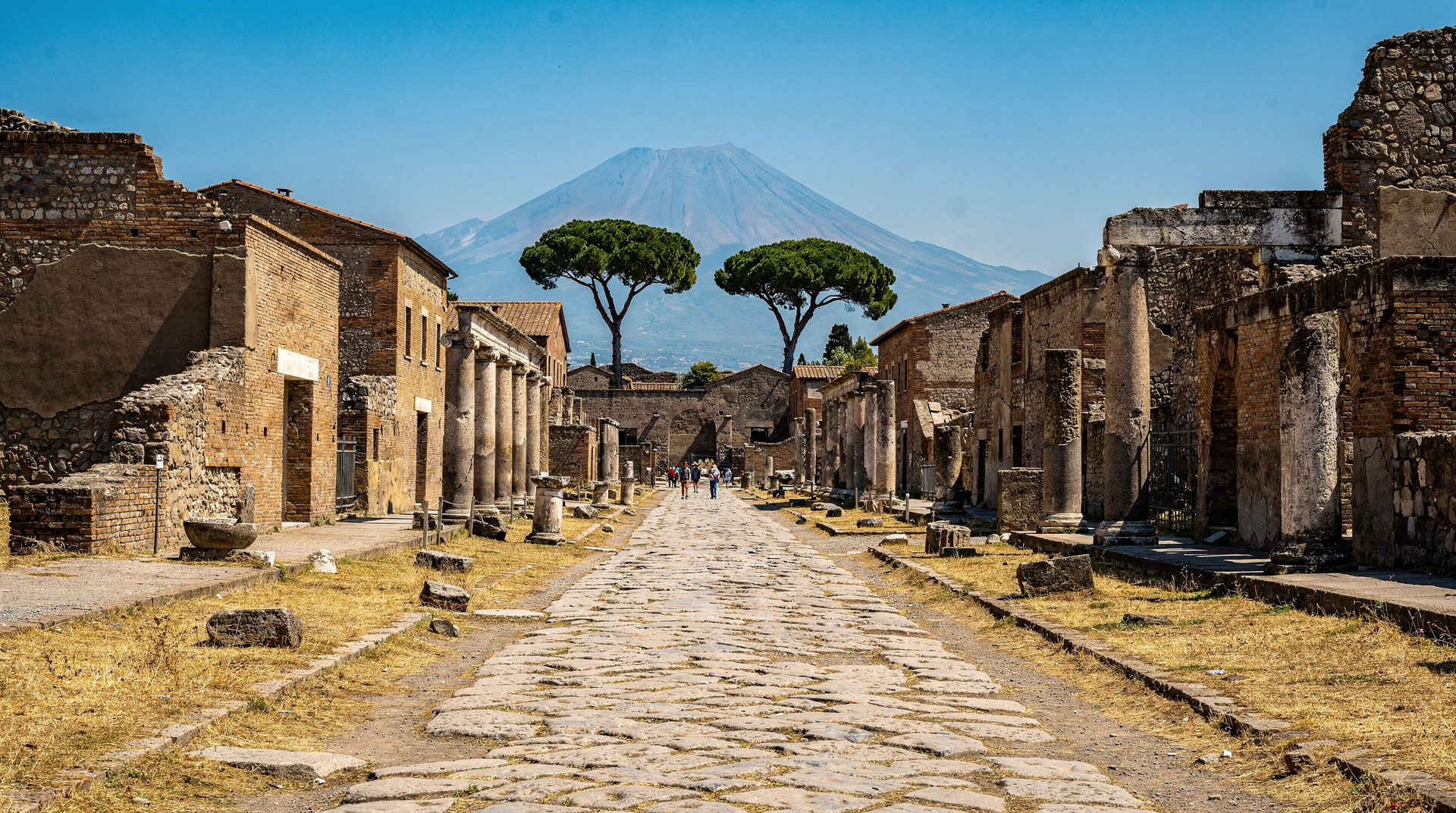
Let’s be direct: Pompeii in July and August is hot in a way that’s difficult to fully appreciate until you’re standing in the Forum at noon in 36°C heat with black basalt stones reflecting solar radiation at you from every direction.
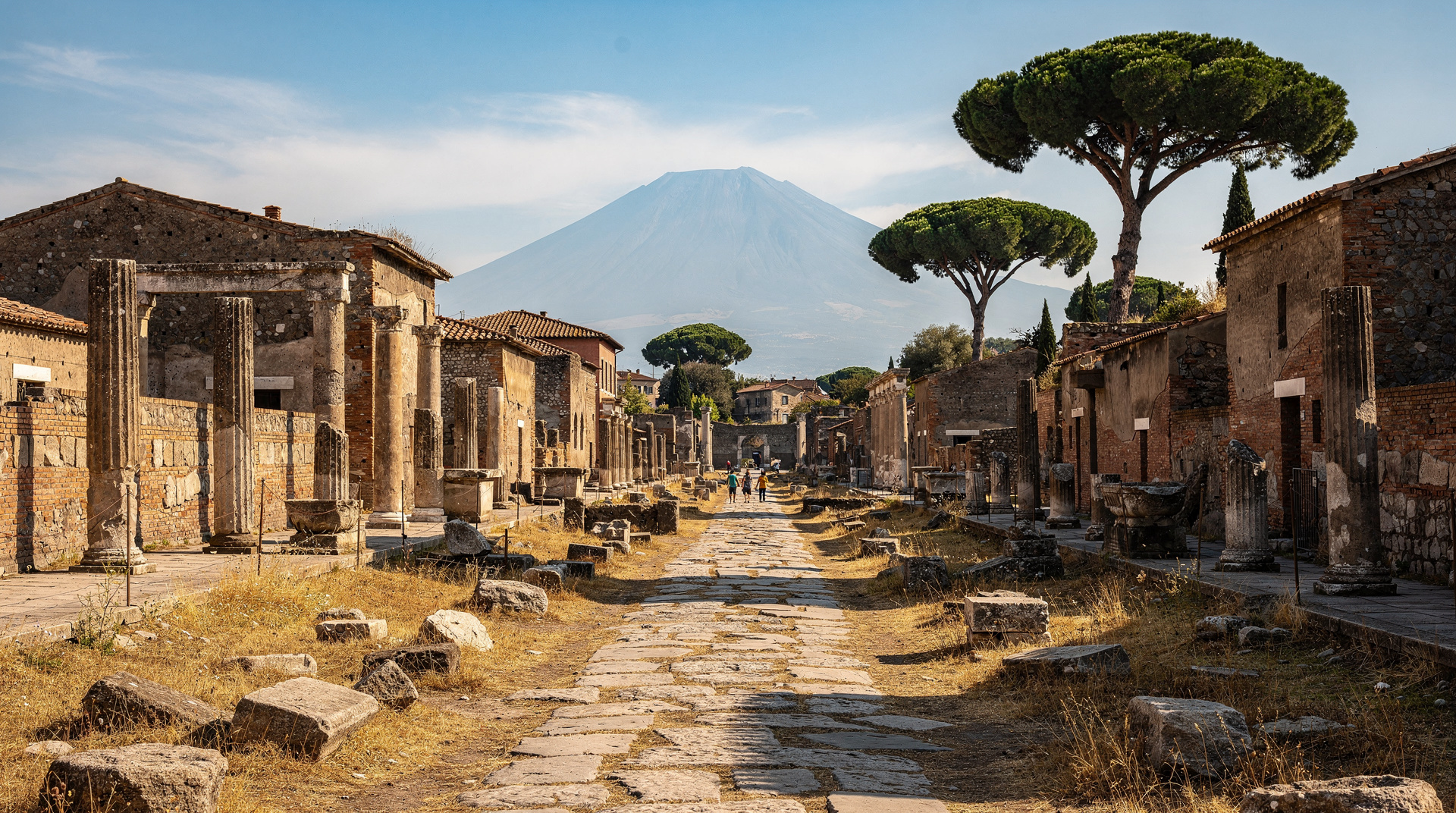
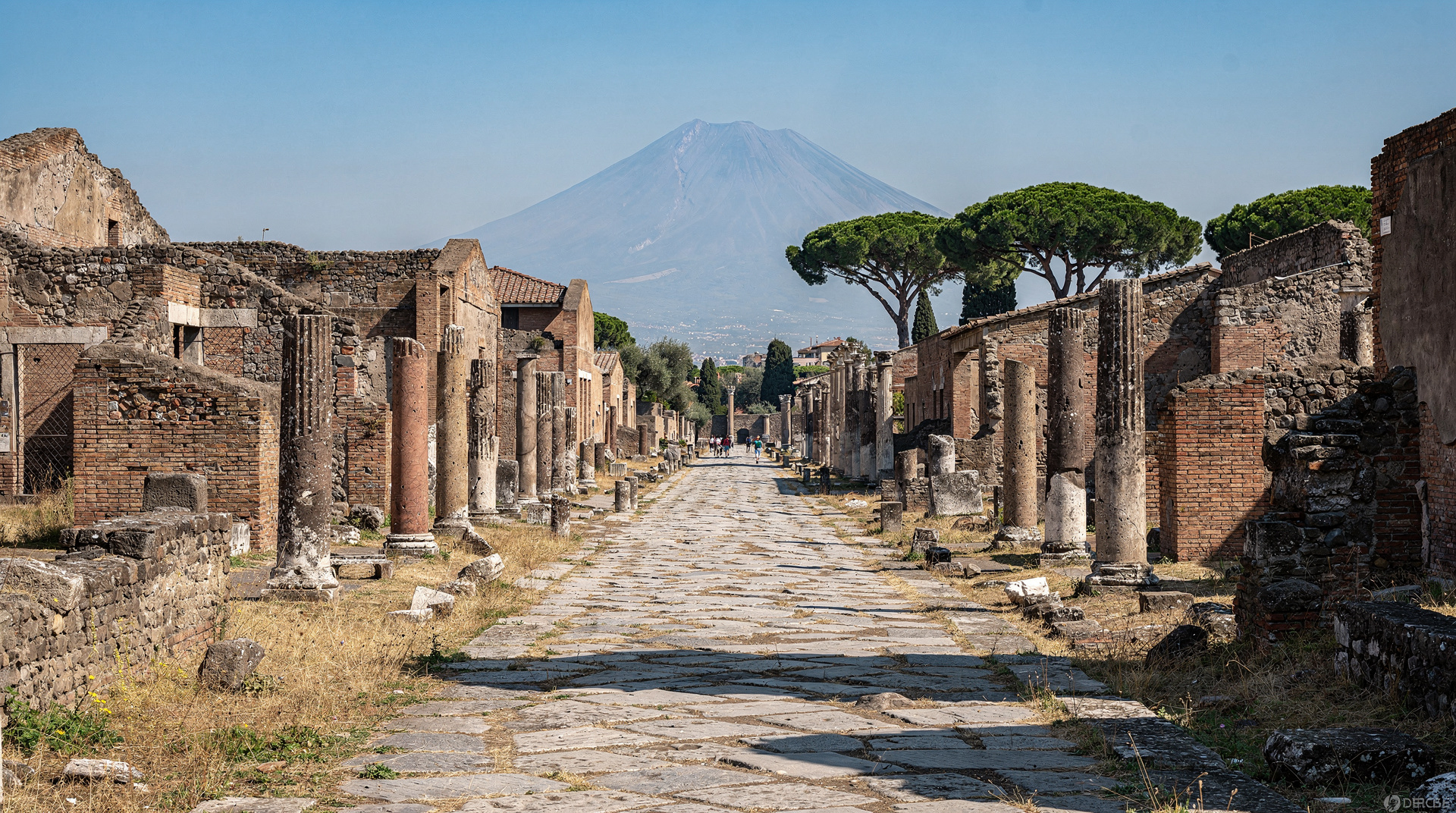
The site has almost no shade. The vegetation that exists is mostly ornamental within house gardens, not canopy-level. The ancient stones absorb and radiate heat. This is not a reason to avoid visiting — it’s a reason to visit strategically.
The good news: with the right approach, a July or August visit to Pompeii is entirely manageable. The site closes much earlier than you’d expect (last entry at 17:30, site closes 19:30), which means an early-morning visit avoids both the worst heat and the worst crowds.
| Peak heat months | July–August, air 28–32°C, felt 32–38°C on site |
| Best arrival time | 9:00 (site opening) |
| Water needed | around 1.5L per adult, 750ml per child |
| Shade on site | minimal — Grande Palaestra, Amphitheatre seating, house interiors |
| Better alternative months | April–May, September–October |
| Booking | 1 week ahead for morning slots in July–August |
What “hot” actually means at Pompeii in summer
Air temperature: July averages 28–31°C across the Naples/Campania region. August is similar.
Felt temperature at Pompeii: Add 4–6°C to the air temperature. The basalt cobbling, ancient stone walls, and near-complete exposure to direct sunlight make the thermal environment significantly hotter than the shade temperature recorded at weather stations. On a 32°C day in Naples, expect 37–38°C inside the site.
Humidity: Campania’s summer humidity (typically 50–70%) makes the heat feel heavier than dry-heat equivalents. This is not Mediterranean desert heat.
Wind: Occasional sea breezes reach Pompeii (it’s 4 km from the coast), but they are unreliable and don’t cool the stone significantly.
The 9:00 strategy
Arriving at site opening (9:00) is the single most effective heat-management technique at Pompeii.
At 9:00:
- Air temperature is typically 23–27°C
- The stone hasn’t fully absorbed the day’s solar radiation yet
- Tour groups are sparse (most arrive 9:30–10:30)
- All building interiors that are open for the day are accessible
By 12:00:
- Air temperature has climbed to 30–34°C
- The stone surfaces are radiating heat from the morning’s absorption
- Tour groups are at peak density
- The Forum area is genuinely uncomfortable to stand in
Practical implication: Plan to be at the site from 9:00 and start winding down by 12:30. A 3.5-hour visit in this window covers all the major highlights without significant heat discomfort.
If you arrive at 10:30 or 11:00 (which is when most hotel-assisted tour groups start), you have perhaps 2 hours before conditions become difficult.
The essential kit list for summer Pompeii
Non-negotiable:
- Water: minimum 1.5 litres per adult, 750ml per child. More in extreme heat. There are refill fountains at Via dell’Abbondanza intersections — use them.
- Wide-brimmed hat: not a cap (caps don’t protect the back of the neck, which burns fast on the Pompeii cobbles). A hat with a full brim covering neck and face is the most effective single heat-management item.
- SPF 50+ sunscreen: apply before entry, reapply after 2 hours. The on-site shop sells sunscreen at €12 for a small tube.
- Comfortable closed shoes: sandals are fine, flip-flops are not. The cobbles punish thin footwear after an hour.
Recommended:
- Portable fan (battery-powered): disproportionately helpful. The site has no airflow in enclosed areas.
- Electrolyte tablets: if you’re prone to heat headaches, adding these to your water matters.
- Light, loose, light-coloured clothing: dark clothing absorbs more heat. Breathable cotton or technical fabric over synthetic is better.
- Sunglasses: the white limestone and pale stone walls reflect light intensely.
What not to carry:
- Heavy backpack: Every extra kilo costs you. Use the lockers at the entrance (€3–4) and carry only what you need inside.
Where to find shade inside the site
The Grande Palaestra: A large gymnasium complex adjacent to the Amphitheatre. The colonnaded walkways provide real shade and the large open space creates some air movement. One of the better rest areas.
The Amphitheatre’s stone seating: The upper tiers are sometimes shaded depending on time of day and position. Getting off the open cobbles for 15 minutes here helps.
Villa of the Mysteries: The approach path is slightly shaded by vegetation. The villa itself has some internal shade. The walk there (10 minutes from Porta Marina) is in the open, so go before 11:00.
House interiors: Many houses have covered areas — rooms with original roof or reconstruction, covered peristyle gardens. These provide brief shade. Don’t expect roofed interiors — most Pompeii buildings are roofless ruins — but they offer momentary relief.
The Forum’s shaded edges: Stand in the shadow of the surviving column bases and walls rather than the open centre of the Forum space.
Water sources inside the site
Fountains (nasoni): There are multiple water fountains — the ancient-style tap-and-basin design common throughout Naples and the archaeological zone. They are located at several points along Via dell’Abbondanza and near the Forum. The water is potable and cold. Bring a refillable bottle (not just plastic disposables) and use these.
On-site café: Near the Forum. Sells water at €2–3 per 500ml bottle. Acceptable if you run out but expensive. Also sells coffee, sandwiches, and ice cream at similar premium prices.
The journey there adds to the heat
Don’t underestimate the trip itself. The Circumvesuviana train from Naples to Pompei Scavi runs without reliable air conditioning on older rolling stock, and platforms have no shade. If you’re travelling from Naples in summer, aim for an early train (before 8:30) to arrive close to opening, rather than a later, cooler-feeling departure that actually lands you at the site during the worst midday stretch. See getting to Pompeii from Naples for the full transport breakdown, including which trains tend to be less crowded. If you’re staying in Sorrento instead of Naples, the same logic applies — the earliest reasonable departure beats a leisurely one.
What to prioritise in the heat: a heat-aware route
Given that heat peaks between 11:00 and 16:00, your priority order changes from a cool-day visit:
9:00–9:45: Forum area (get the Temple of Jupiter photograph while cool and quiet), Basilica, Forum Granary plaster casts.
9:45–10:30: Head immediately west to the Villa of the Mysteries before heat builds. This is counterintuitive (most people do it last) but the walk is better in the morning and the site is cooler earlier.
10:30–11:15: Return to Via dell’Abbondanza for the mid-route sites: House of the Tragic Poet, House of the Faun, Brothel.
11:15–12:00: Move east toward the Amphitheatre and Garden of the Fugitives. The Grande Palaestra shade is available here for a rest.
12:00 onwards: Either exit and have lunch in Pompei town (with air conditioning) or push through to complete the remaining sites, accepting that it will be hot.
Is July or August actually worth it?
Yes — with the 9:00 start strategy. Pompeii is not a site where the quality of the experience degrades dramatically in heat the way that, say, a beach does. The ruins are the same at 32°C as they are at 22°C. The challenge is physical comfort.
If you have a choice, the best months for Pompeii are April–May and September–October. These months offer 15–24°C temperatures, substantially lower crowds, and the same site.
But if July or August is when you’re going — go at 9:00, bring water, wear a hat, and you’ll be fine.
Special considerations for different visitor types
Families with young children in summer
Young children overheat faster than adults and cannot always communicate discomfort until it becomes distress. Specific advice for parents:
- Pre-cool before entering: Sit in a café near the entrance for 15 minutes in air conditioning (if available). Starting cooler extends tolerance.
- Weighted hat: Wide-brimmed hat with neck coverage for every child, every time.
- Sunscreen reapplication: Apply at the entrance and again after 2 hours. Children’s skin burns faster at lower UV intensities than adults.
- Watch for signs of heat exhaustion in children: Excessive crying, lethargy, reduced or no urination, flushed skin, rapid breathing. These are more serious than adult symptoms and develop faster. If any of these appear, move immediately to shade, give water, and consider leaving.
- Timing is non-negotiable with young children: 9:00 start, out by noon. No exceptions in July–August.
For full family planning at Pompeii, see Pompeii with kids.
Solo travellers and couples in summer
The 9:00 start advantage is strongest for solo visitors and couples because you’re not coordinating with anyone. A solo visitor at 9:00 can be at the Villa of the Mysteries before 9:30, in the Forum by 10:30, and done with the Garden of the Fugitives by noon — seeing the three best sites at Pompeii in the optimal window.
If you want to photograph the Forum without crowds, arrive at exactly 9:00 and go straight there before any tour groups enter. The 10-minute window between opening and the first groups arriving is the best photography opportunity at Pompeii in summer.
Visitors with medical conditions
Visitors with cardiovascular conditions, heat sensitivity disorders, or respiratory conditions should discuss Pompeii in summer with their doctor. The sustained heat, minimal shade, and physical exertion (walking on uneven cobbles for 3+ hours) create conditions that require awareness.
Practical measures:
- Take the coolest part of the day (9:00–11:00) and don’t push beyond your comfortable pace
- Identify shade stops before entering (Forum Granary, covered sections of houses, Grande Palaestra)
- Consider Herculaneum instead — smaller, more shaded, same historical period
- Ask about mobility assistance at the entrance — some routes avoid the roughest cobbles, and staff can advise on the shortest path between shaded rest points
- If travelling with a companion, agree a check-in rhythm (every 30–45 minutes) rather than relying on one person to notice symptoms developing in the other
What the other seasons offer
Visiting Pompeii in summer is a compromise. The other seasons offer progressively better conditions:
September–October: The best months overall. Temperatures drop to 22–27°C. Sea still warm enough for swimming at coastal sites after Pompeii. Crowds thinner from mid-September. October is increasingly popular for this reason — don’t expect to be entirely alone.
April–May: Spring conditions. 15–22°C. Crowds are building toward summer but April especially is still manageable. Easter weekend (variable date) brings significant local and tourist traffic — avoid it.
November–March: The quietest period. Temperatures 10–16°C — comfortable for walking but pack a layer. Many Amalfi Coast businesses close until March/April. Pompeii itself stays open (except 1 Jan and 25 Dec). The atmospheric, quiet Pompeii of winter is a very different experience to summer and has its own appeal.
If your only available time is summer and you haven’t yet planned the trip — go at 9:00, wear the hat, bring the water. The site will reward you regardless of the temperature.
| Season | Temp at site | Crowds | Verdict |
|---|---|---|---|
| Jul–Aug | 32–38°C felt | Peak | Manageable with 9:00 start; book ahead |
| Sep–Oct | 22–27°C | Moderate, dropping | Best overall balance |
| Apr–May | 15–22°C | Moderate, rising | Very good, avoid Easter week |
| Nov–Mar | 10–16°C | Quiet | Atmospheric, layer up |
For broader trip timing beyond Pompeii itself, see best time to visit Naples and, if you’re travelling in August specifically, Naples in August closures — several restaurants and shops close for Ferragosto even though the archaeological sites stay open.
Booking a heat-smart tour instead of going solo
If queuing and self-pacing in the heat sounds like more logistics than you want to manage, a guided option with a fixed early start removes the planning entirely. A skip-the-line audioguide ticket lets you move at your own pace without standing in the entry queue in the sun:
Pompeii fast-track entry with audioguideFor families or anyone who wants a guide who paces the visit around shade stops rather than a fixed script, a private guide can adjust in real time as the heat builds:
Private 2-hour guided tour of PompeiiHerculaneum as a summer alternative
If you find the Pompeii heat genuinely unpleasant, consider Herculaneum as a complement or alternative. The excavated area at Herculaneum is below modern street level, with some covered areas, and is visited in 2 hours rather than 3–4. It’s not dramatically cooler, but the shorter time required reduces total heat exposure significantly. See Herculaneum vs Pompeii for a full comparison. If you’re set on doing both sites plus Vesuvius in the same trip, Pompeii and Vesuvius same day has honest advice on whether that’s sensible in summer heat at all — the crater climb adds significant exposure on top of the site visit.
Frequently asked questions about Pompeii in summer
Is Pompeii closed in August?
No. Pompeii is open year-round except 1 January and 25 December. August is one of the busiest months, not a closure period. Some of Naples’s restaurants and shops close in August (Ferragosto, usually around 10–20 August), but Pompeii itself does not.
Do I need to book summer Pompeii tickets further in advance than other seasons?
Yes. July and August entry slots, especially 9:00 and 10:00, can sell out 3–5 days in advance. Book at least one week ahead in peak summer to guarantee your preferred entry time.
Are guided tours affected by the heat?
Guided tours proceed regardless of heat — the guide is working in these conditions daily. The quality of the tour itself doesn’t change, but you’ll be walking in the same heat. The best family or private guides will pace the visit with shade stops and adjust the pace. Ask your tour provider whether they modify the itinerary in extreme heat.
Can I leave and re-enter Pompeii to escape the heat at midday?
No. Once you exit through the turnstile, your ticket is invalidated. Plan your timing so you do the majority of the site before midday, then exit for lunch. If you want to return for afternoon sites, you need a new ticket.
Frequently asked questions about Pompeii in summer: heat tips and how to survive a July or August visit
What temperature does Pompeii reach in July and August?
What time should I arrive at Pompeii in summer?
Is there shade at Pompeii?
Can I buy water inside Pompeii?
Are there health risks from visiting Pompeii in extreme heat?
Is visiting Pompeii in September or October much better than July–August?
Should I avoid the Forum area in summer?
Top experiences
Bookable activities with verified prices and instant confirmation on GetYourGuide.