Naples in summer: what to expect in June, July and August
From Naples: Guided Capri Island Day Trip
Duration: 8h
What is Naples like in summer?
Hot, crowded, and brilliant for the sea and islands. Temperatures reach 28–33 °C in the city; Pompeii can feel closer to 40 °C at midday. July and August are the busiest months. The Amalfi Coast and islands are stunning but expensive and congested. June and September are the practical sweet spots within the warm season.
Quick answer: Summer in Naples is hot and crowded, best for sea and islands. June is the sweet spot — warm enough for swimming, before peak congestion. Pompeii requires early starts. August closures affect some local restaurants.
| Best month | June |
| Temperature range | 22–35 °C depending on month |
| Sea temperature | 20–26 °C, rising through summer |
| Pompeii strategy | Arrive 09:00, leave by 12:30–13:00 |
| Booking lead time | March–April for June Amalfi Coast/Capri stays |
Summer in Naples: month-by-month
June: the best summer month
June is widely considered the optimal summer month for Naples and Campania. The Mediterranean heat is established but not yet extreme (22–28 °C), the sea reaches swimmable temperatures (20–22 °C and rising), and the infrastructure is fully operational before the August peak.
The Amalfi Coast in June is close to its best — roads are drivable, buses manageable, towns not yet overwhelmed. Capri and Ischia ferry services run at full frequency. Pompeii visits in June can extend to 14:00 if you carry water and take a hat.
Book well ahead for June. It has become extremely popular as travellers avoid the July–August extremes. Accommodation on the Amalfi Coast and Capri often fills by March–April for peak June dates.
July: peak heat and peak crowds
July is the busiest and hottest month. Average high: 30–31 °C. Pompeii and Herculaneum feel closer to 38 °C at midday in the Forum. The Circumvesuviana trains to Pompeii (departing 08:30–10:30) are packed to standing room, hot, and slow.
If visiting in July:
- Schedule Pompeii as a first-morning activity — arrive at opening (09:00) and aim to leave by 12:30
- The islands are beautiful in July but crowded; take the first morning ferry to arrive before day-tripper boats at 10:00
- The city itself has more shade than the ruins — museum visits (MANN, Capodimonte) are more comfortable in July than outdoor archaeology
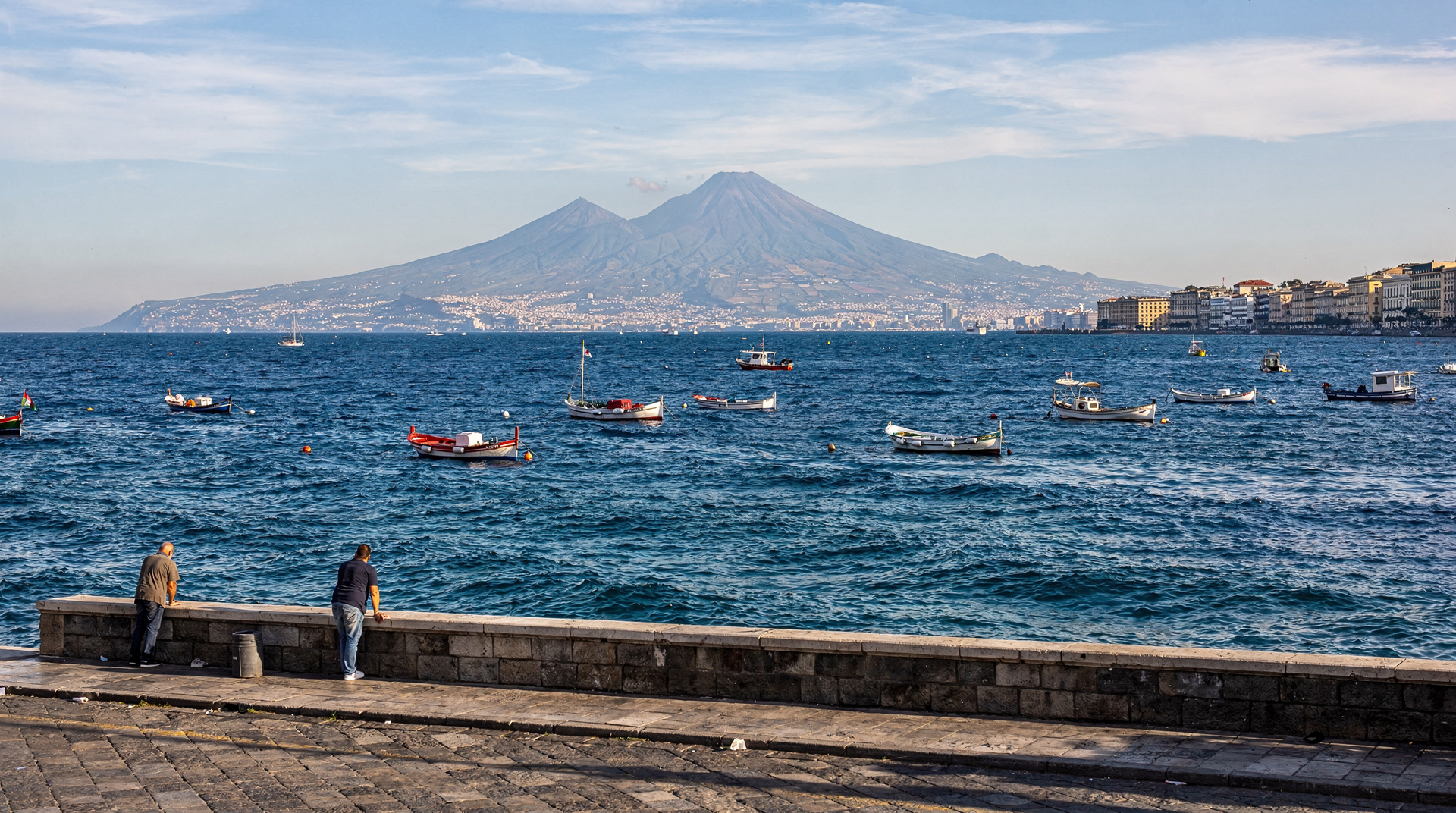
- The Lungomare waterfront in the evening is one of the best free pleasures in Naples — cool sea breeze, crowds of locals promenading
August: Ferragosto and heat
August is the hottest month and brings Ferragosto. Temperatures regularly exceed 33 °C; some days push above 38 °C.
The Ferragosto holiday (around August 14–16) is the annual Italian vacation peak. Many resident-facing businesses — neighbourhood trattorias, local bars, some bakeries — close for 1–3 weeks. Tourist-facing restaurants and all hotels stay open. This creates an odd dynamic: the city is actually somewhat quieter than July in the residential areas (Neapolitans leave for the coast) while still packed in the tourist zones.
See naples-in-august-closures for a detailed breakdown of what closes and when.
Managing the heat at Pompeii
This deserves a dedicated section because it affects safety, not just comfort.
The sun exposure risk is real. The Pompeii site covers 44 hectares. The Via dell’Abbondanza, the Forum, and most of the main streets have no overhead shade. In July–August, the stone surface temperature in direct sun can exceed air temperature by 10–12 °C. Heat exhaustion is genuinely possible for visitors who do not prepare.
Mitigation strategy:
- Buy water before entering the site (the café inside charges tourist prices; buy from a supermarket in Pompeii town or Naples before departure)
- Bring at least 1.5 litres per person; refill at the water points inside the site
- Wear a brimmed sun hat — non-negotiable in July and August
- Apply SPF 50 sunscreen on all exposed skin; reapply every 90 minutes
- Arrive at the Porta Marina entrance at or before 09:00
- Plan to exit the main exposed areas by 12:30–13:00
- Use the Villa of the Mysteries and Via dei Sepolcri sections for later in the morning — these have slightly more vegetation
See pompeii-in-summer-heat-tips for the full strategy.
Islands and coast in summer
Capri
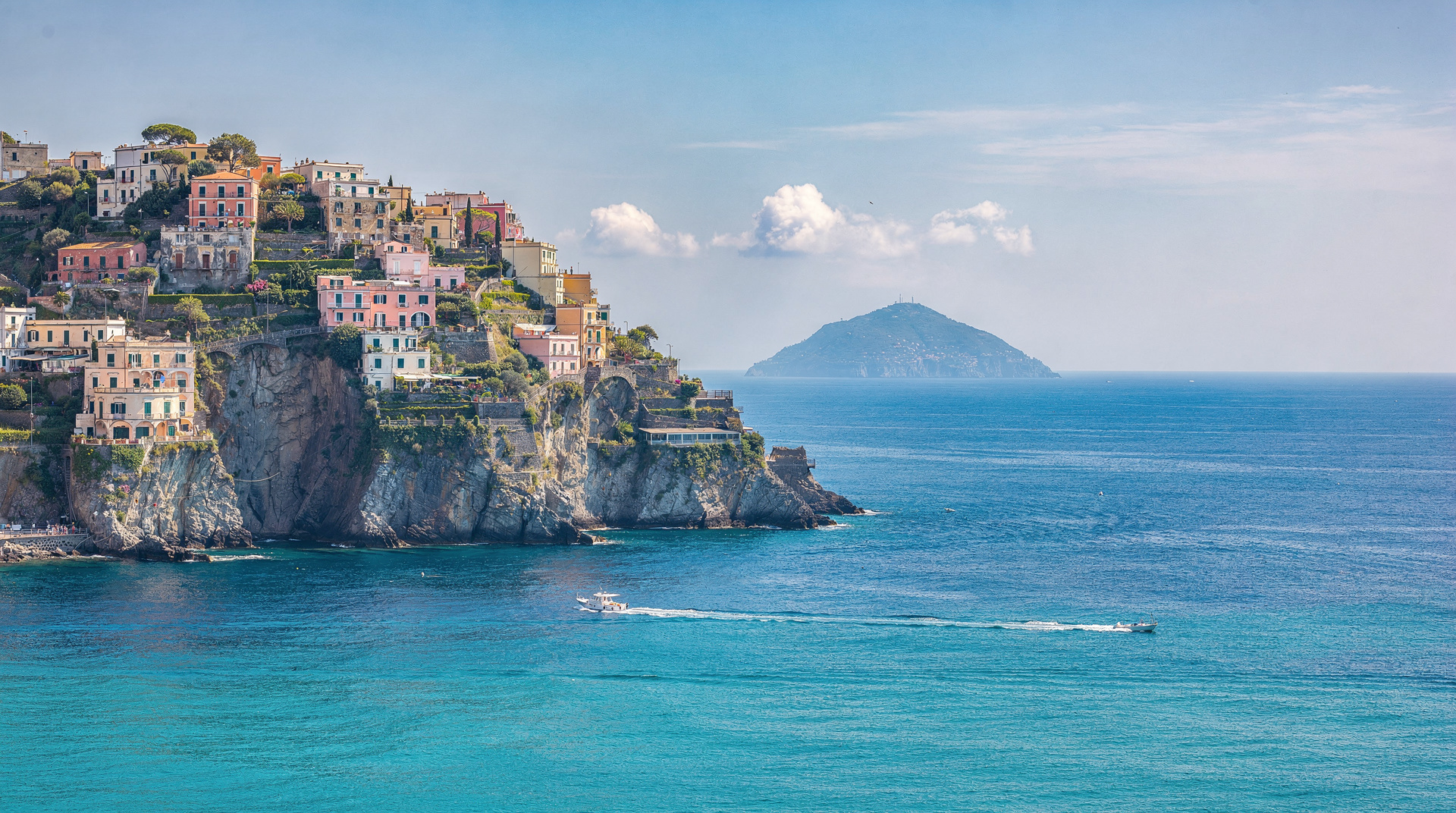
The most glamorous day trip but also the most crowded in summer. Capri in July–August from 10:00 to 16:00 is genuinely overwhelming — the funicular queue alone can be 45 minutes.
Beat it: Take the first morning hydrofoil from Molo Beverello (07:00–07:30 departure). You arrive on the island before the rush and have 2–3 hours of relative calm. Alternatively, stay overnight — Capri prices drop sharply after the day-trippers leave and the island becomes a different, much more pleasant place.
From Naples: Guided Capri Island Day TripIschia
Ischia is the best alternative to Capri for a summer day — better sandy beaches, thermal parks, and significantly fewer foreign tourists per square kilometre. The ferry from Naples (Molo Beverello hydrofoil) takes 50 minutes. Poseidon Thermal Gardens is the main attraction — entry 30–38 € for a day pass with access to pools, thermal springs, and sea access. See ischia-day-trip-guide.
Procida
The smallest and most peaceful of the three main islands. A UNESCO Cultural Capital of Italy 2022 designation has raised its profile, but it remains far less visited than Capri. Ferry from Naples: 30–40 minutes, approximately 12 € each way. The coloured fishing village of Corricella is one of the most photogenic settings in the bay. See procida-day-trip-guide.
Amalfi Coast
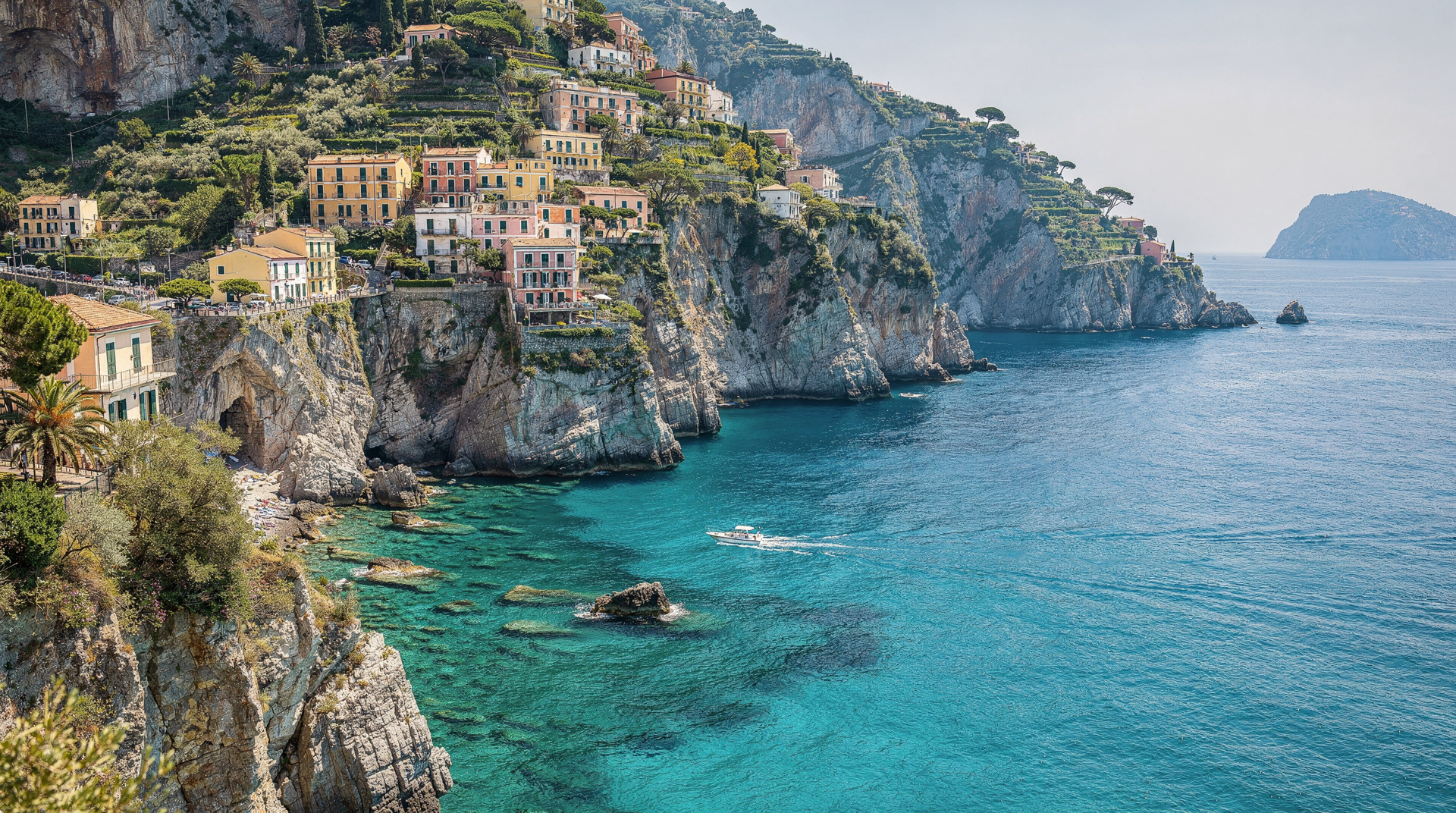
The coast in summer is stunning but requires strategy. Advice for summer visits:
- Drive (or take a private driver) in the early morning — the SS163 road is nearly empty before 08:30 and unbearable from 10:00–18:00 in July–August
- Bus SITA works but build in 30–50% extra time for summer traffic
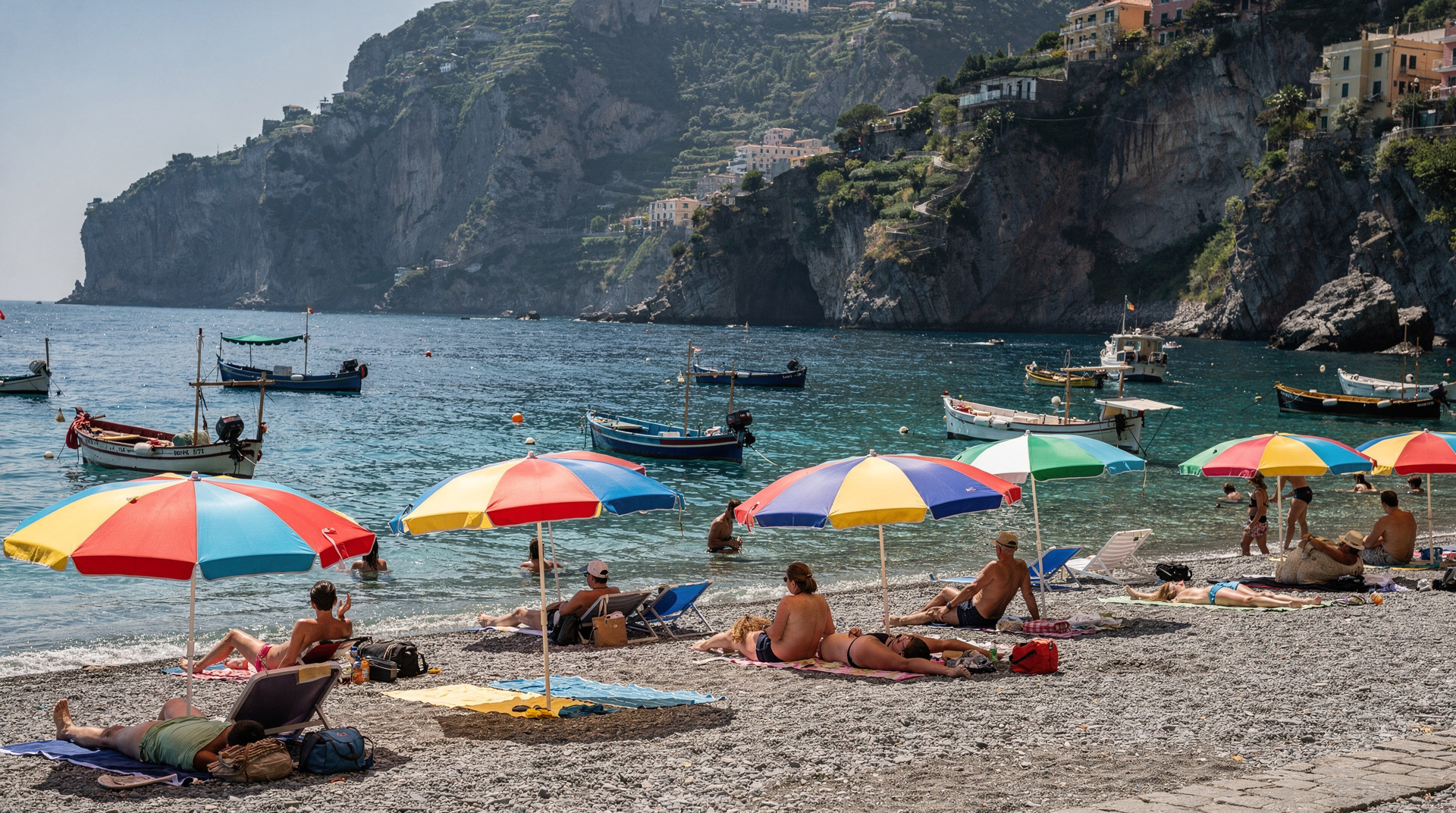
- The best beaches (Furore, Arienzo near Positano) require private boat access — a boat day from Positano is the comfortable way to swim
- Ravello above the crowd line is significantly cooler and less congested than the coastal towns
City attractions in summer
The good news about summer heat: Naples’ best indoor attractions are excellent escapes from the sun.
MANN is air-conditioned (partially). Allow the full morning and use the afternoon heat to your advantage — explore the museum when it is impossible to be comfortable outside.
Napoli Sotterranea stays at 15 °C year-round — one of the most welcome facts about the underground tour in August.
Galleria Borbonica is underground, consistently cool.
Cappella Sansevero has no air conditioning but is small and shaded — brief visit time.
The naples-underground-guide covers underground tour options, all of which are excellent summer itinerary padding.
Evening culture in summer
Naples comes alive in the evening, particularly in summer. The passeggiata (evening promenade) culture means the streets of Spaccanapoli, Via Toledo, and the Lungomare fill with locals from about 19:30 onward. Restaurants open at 19:30–20:00; most Neapolitans eat dinner at 21:00 or later.
Best evening activities in summer:
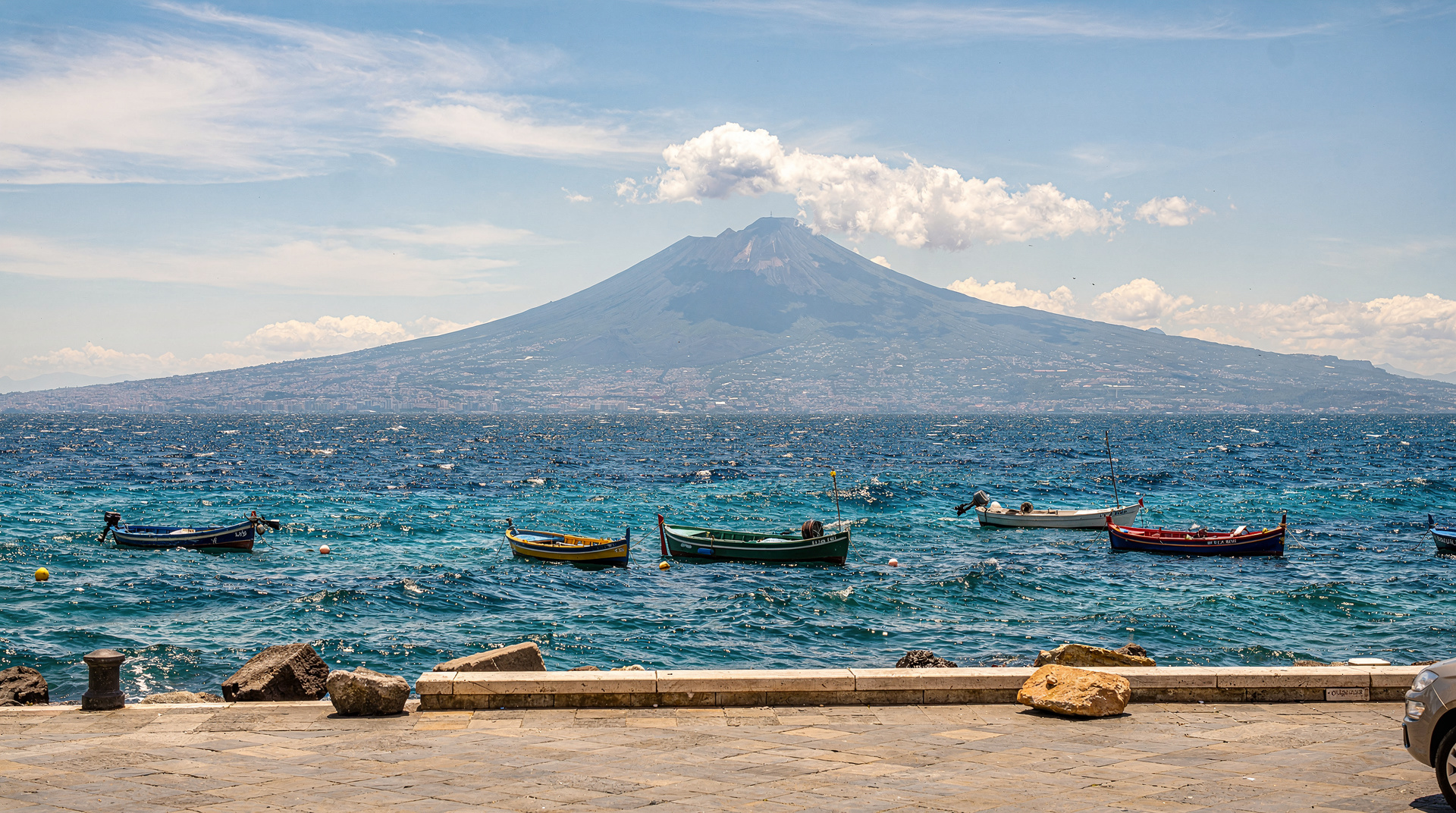
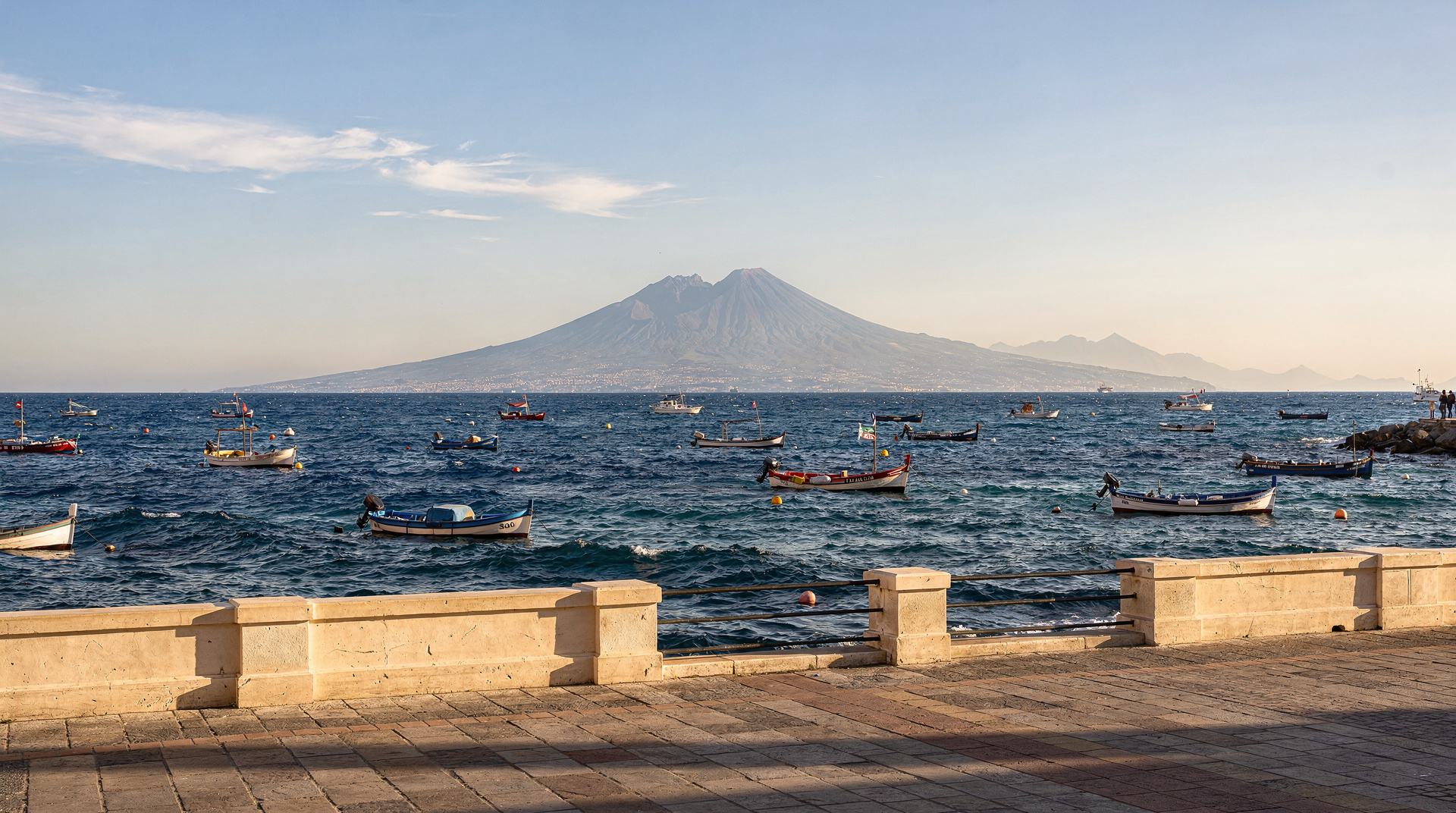
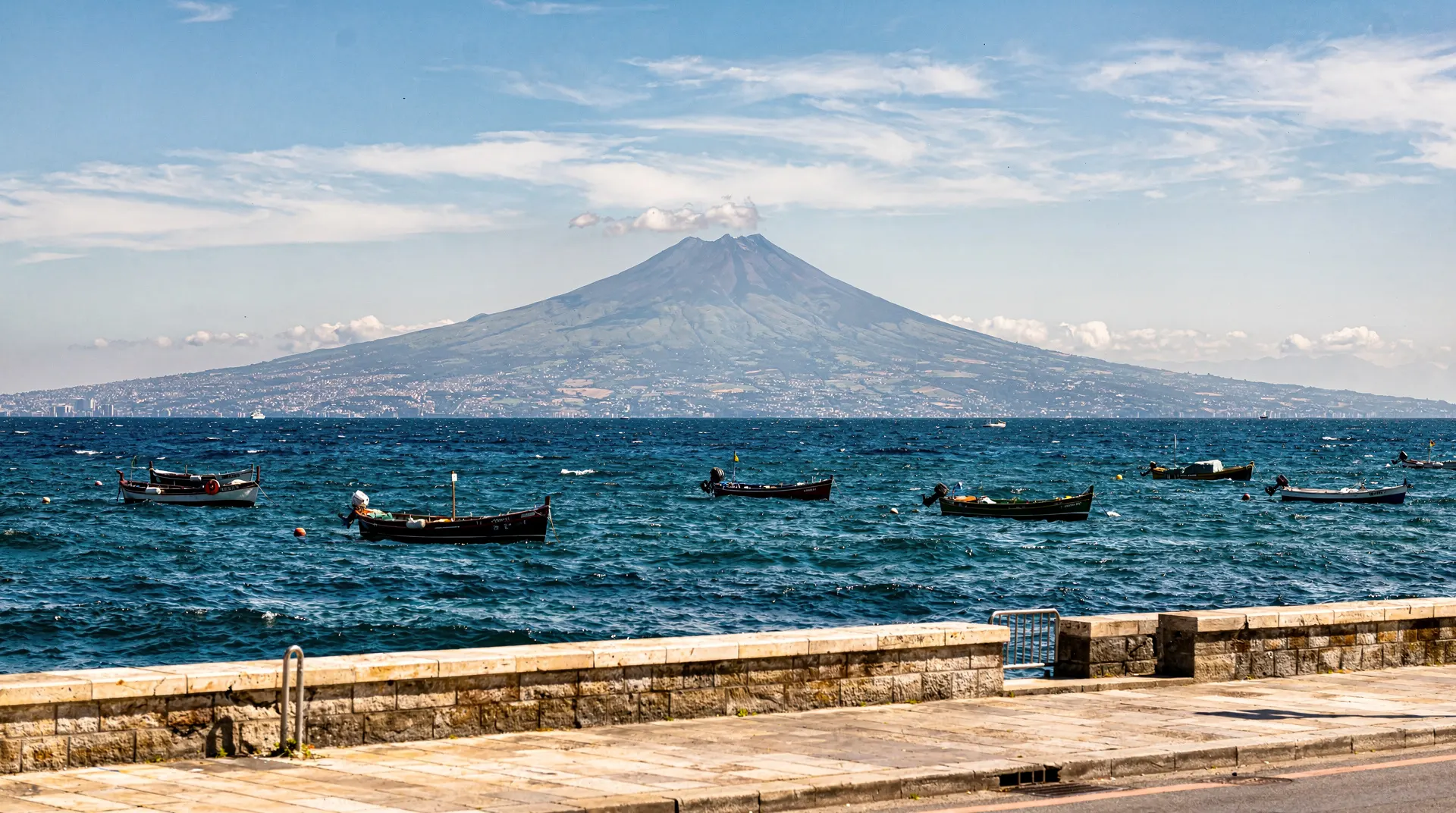
- The Lungomare at sunset (Castel dell’Ovo to Mergellina) — free, spectacular with Vesuvius in the background
- Piazza Bellini for aperitivo — the square has multiple bars spilling onto the pavement, one of the city’s liveliest early-evening spots
- The Spaccanapoli pasticcerie for a late-night babà or sfogliatella
- A boat excursion at dusk from the Lungomare (some operators offer evening tours)
Summer month by month: quick comparison
| Factor | June | July | August |
|---|---|---|---|
| Average high | 22–28 °C | 30–31 °C | 33–35 °C |
| Sea temperature | 20–22 °C, rising | 24–26 °C | 25–26 °C |
| Crowds | Moderate, rising | High | Peak, but locals leave the city |
| Amalfi Coast traffic | Manageable | Heavy restrictions | Heaviest |
| Ferragosto closures | None | None | 10–20 August |
Day trips: booking and timing in summer
Summer is peak demand for every day trip out of Naples, and the practical difference between a comfortable and a stressful version of the same excursion is almost entirely about timing. For Pompeii, a guided tour that starts at opening avoids both the worst heat and the largest crowds — a small-group option with skip-the-line entry is worth the premium in July and August specifically, when the ticket-office queue alone can eat 45 minutes of your morning.
Pompeii skip-the-line guided tourFor the Amalfi Coast, a boat day trip from Naples sidesteps the SS163 traffic entirely and reaches beaches (Furore, Arienzo) that are otherwise only accessible by private boat. This is consistently the least stressful way to see Positano and Amalfi in July–August.
Amalfi Coast by boat from NaplesFrequently asked questions about summer in Naples
Is Naples too hot in July and August?
For outdoor sightseeing at exposed sites (Pompeii, Vesuvius), July–August is genuinely challenging. For the city, the heat is manageable with air-conditioned museums, underground tours, and evening activity. For beaches and the sea, it is perfect. The heat is a serious constraint on Pompeii visits but not on Naples city visits.
When should I go to Pompeii if visiting in summer?
No later than 09:00 arrival at the site. The first Circumvesuviana trains leave Napoli Garibaldi around 06:30–07:00. An 08:00 arrival at Pompeii town (Pompei Scavi station) gives time to walk to the site and enter at opening. Leave by 12:30. See pompeii-in-summer-heat-tips.
Are there any advantages to visiting in August?
Yes — the city itself is quieter than July because Italian residents leave Naples for the coast. Museums, the underground, and residential neighbourhoods have more local atmosphere. Ferragosto week (August 14–16) is particularly quiet in the residential areas. If you avoid the absolute peak days and go early to Pompeii, August can work well.
What should I pack for Naples in summer?
Sun hat, SPF 50 sunscreen, 1.5L refillable water bottle, breathable clothing, comfortable walking shoes, and a light layer for air-conditioned museums and transport. See naples-packing-essentials.
Is the Amalfi Coast drivable in July and August?
Yes, but not comfortably in peak daytime hours. The SS163 coastal road is subject to alternating traffic (odd/even plates) on some stretches from June to September, 10:00–18:00. Drive very early (before 08:30) or late (after 19:00) to avoid the worst congestion. Buses are an alternative but also slow in peak traffic.