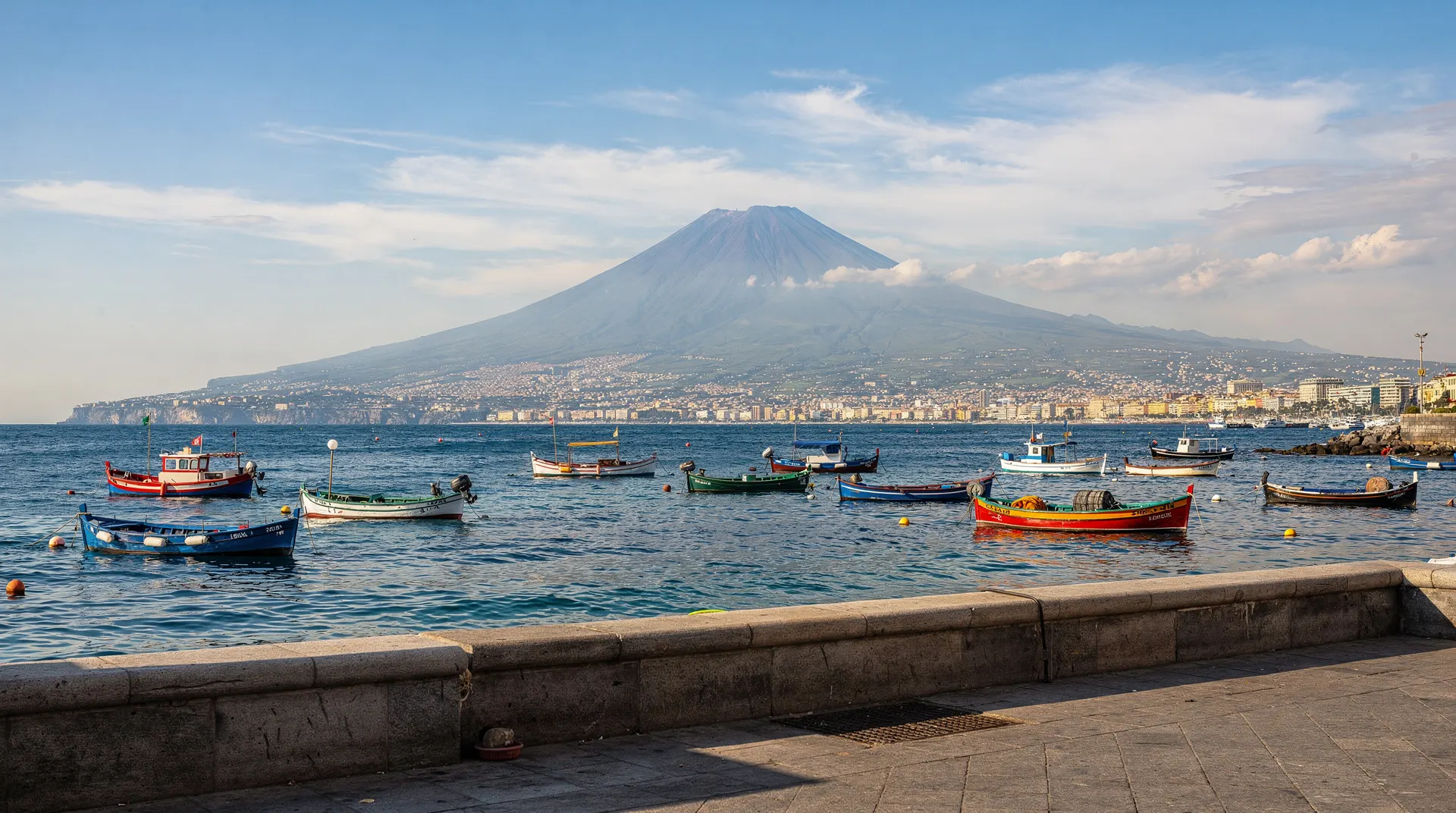
Naples in autumn: September, October and November guide
Pompeii: Skip-the-Line Ticket and Guided Tour
Is autumn a good time to visit Naples?
September and early October are genuinely among the best weeks of the year in Naples — temperatures drop to a comfortable 22–27 °C, the sea stays warm enough to swim until mid-October, crowds thin from mid-September onward, and prices on accommodation fall sharply. October remains pleasant for sightseeing. November is wetter but quiet, cheap, and authentically local.
Quick answer: September and early October are among the year’s best weeks in Naples — manageable heat, warm sea, falling prices, and shrinking queues at Pompeii. October stays comfortable for sightseeing. November is wetter but inexpensive and authentically local.
| Best window | Mid-September to mid-October |
| Sea temperature | 24–25 °C (Sept) down to 21–22 °C (Oct) |
| Accommodation | 20–40% cheaper than August from mid-September |
| Amalfi Coast | Full service through September, thinning by late October |
| Booking lead time | 4–6 weeks for late September; earlier for early Sept |
Why autumn is one of Naples’ best-kept secrets
Most visitors prioritise June or September instinctively, but the honest planning case for autumn extends well into October — and even November has genuine advantages that the travel industry tends to understate.
The core shift: from mid-September, the summer price premium collapses. A room that cost 200 € per night in Positano in August can drop to 110–130 € by late September. The same dynamic applies in Naples city — boutique hotels in Chiaia and the centro storico that are fully booked and expensive in peak season have availability and competitive rates from mid-September onward.
The crowds thin in two waves: the Italian domestic tourism peak ends sharply around September 10–15 (schools return across Italy); the northern European wave extends a little longer but recedes through September. By early October, you are largely sharing the sites and ferries with other deliberate travellers rather than peak-season volume.
Month by month: what to expect
September: the best month of the autumn
September is consistently rated by experienced Campania travellers as the single best month of the year — not just the autumn.
First two weeks: Still warm (26–29 °C), still busy, still expensive. This is essentially an extension of summer with slightly calmer conditions. The Amalfi Coast road alternating traffic scheme (odd/even plates, 10:00–18:00) typically remains in force through early September on some stretches.
From mid-September: The conditions shift noticeably. Temperatures settle at a comfortable 23–26 °C. The sea remains warm (24–25 °C) — fully swimmable and pleasant without the summer oppressiveness. Pompeii can be visited at any hour of the day without a heat strategy. Accommodation prices begin dropping. Ferry queues shorten.
Practicalities: Book accommodation for early September as you would for July–August. For late September, booking 4–6 weeks ahead is usually sufficient rather than 3–4 months. Some Amalfi Coast operators start their shoulder-season schedules from September 16 — check ferry and boat tour timetables carefully.
Pompeii: Skip-the-Line Ticket and Guided TourOctober: the sightseers’ month
October shifts the appeal from sea-and-coast to culture and sightseeing. Average highs drop to 18–22 °C — warm enough for a light jacket, cool enough to walk archaeological sites all day without overheating.
This is the ideal month to spend a full day at Pompeii, taking your time in the Villa of the Mysteries and the outlying insulae that summer visitors skip due to heat exhaustion. Herculaneum in October is exceptional — fewer visitors, comfortable temperatures, and the late-afternoon light on the excavated buildings is outstanding.
The Amalfi Coast in October still runs ferries and most restaurants, but some smaller operators begin closing from mid-month. Positano and Ravello are particularly beautiful in October — cooler air, autumn light, and a fraction of the summer footfall. Expect some rain, particularly in the second half of the month. The sea cools to 21–22 °C; still swimmable for those acclimatised to it, but not universally appealing.
The harvest context: October is harvest time throughout Campania. Markets fill with local produce — grapes, figs, chestnuts from the Cilento hills, porcini mushrooms. Seasonal menus in honest neighbourhood restaurants reflect this; it is a particularly good month to eat well without resorting to tourist menus.
November: wet, quiet, and genuinely local
November is the least-visited month in Naples — and for travellers who want to see the city without a tourist overlay, this is its appeal.
What to expect honestly: Naples in November receives significant rainfall, sometimes in the form of sustained downpours that last a full day. Average rainfall is the highest of the year. Streets in the centro storico flood occasionally. The islands and Amalfi Coast run skeleton services — some hotels and restaurants close entirely from the first or second week of November.
What works: The city itself functions normally and is considerably cheaper. MANN (National Archaeological Museum), the Capodimonte gallery, the underground tours, and Via San Gregorio Armeno (where the presepe artisans are at peak activity preparing for Christmas) are all fully operational. Restaurants are locally patronised — the calibre-to-price ratio in Neapolitan trattorie is often at its best in November precisely because the kitchen is cooking for regulars, not volume.
What to avoid: Day trips to Capri and Ischia in November require checking ferry schedules individually — high winds cancel services frequently. The Amalfi Coast in November is scenic but many accommodation and eating options have closed. If the coast is a priority, do it in October.
Pompeii in autumn: the honest assessment
Pompeii in September and October is a fundamentally different experience from the summer version. The practical details:
- September: No meaningful heat constraint. Arrive when it opens (09:00), but you can stay until 17:00 without danger. Still worth carrying water (1 litre per person) and a hat.
- October: Comfortable throughout the day. The site is less crowded on weekdays. The low-angle autumn light makes photography more rewarding — long shadows on the Via dell’Abbondanza rather than the bleached-out midday flatness of summer.
- November: Very quiet, occasionally wet. Bring waterproof footwear — the Pompeii site has uneven surfaces and stone paths that become slippery in rain. Check opening hours, as they shift to winter schedule (09:00–17:00, last entry 15:30).
A good guided tour in autumn allows you to cover more ground at a relaxed pace. The smaller group sizes typical of autumn tours (versus packed summer groups) mean the guide has time to explain context at individual houses rather than keeping the group moving for heat reasons.
A Taste of Napoli: Food Walking Tour with Local Tour GuideLacryma Christi and the autumn harvest
Campania’s wine culture is worth understanding in autumn context. The volcanic slopes of Vesuvius produce a distinctive wine — Lacryma Christi del Vesuvio — from Piedirosso (red) and Falanghina-based (white) grapes. The harvest happens in late September and October. Local restaurants in the towns around the volcano — Ercolano, Torre del Greco — celebrate with new vintage bottles at very reasonable prices (8–14 € per bottle in a local trattoria; 12–18 € in Naples city).
This is not a major wine tourism region in the organised Tuscany sense. There are no elaborate winery hotel complexes. But the combination of a Pompeii visit with a lunch in Torre del Greco featuring a carafe of young Lacryma Christi is genuinely one of the more satisfying half-days in Campania — and costs a fraction of what comparable food-and-culture combinations run in Florence or Rome.
Chestnuts roasted on charcoal braziers appear on street corners in Naples from early October — one of the least expensive and most enjoyable things to eat while walking. Markets in Piazza Garibaldi and the Quartieri Spagnoli sell seasonal produce: fat Campania figs, baskets of local grapes, and the first winter squash.
The Amalfi Coast in autumn: timing matters
The Amalfi Coast in autumn has a narrower operating window than the coast’s reputation suggests. A practical breakdown:
September: Nearly full summer service. Most restaurants, hotels, and boat operators remain open. The road restriction scheme may still be active on some stretches. Sea conditions are excellent.
Early to mid-October: Good conditions. Most facilities still open. Some smaller operators begin closing from the 10th–15th. The towns of Ravello, Atrani, and Cetara are particularly pleasant — fewer visitors than Positano and Amalfi town, full services.
Late October to November: Selective operations. Check each hotel and restaurant individually before booking. Positano retains more winter services than other towns due to its year-round resident and expat population. Amalfi town (the ferry hub) remains operational. Furore, Praiano, and some of the smaller villages have very limited options in November.
The hydrofoil route from Salerno along the coast to Positano and Amalfi remains one of the best autumn experiences in southern Italy when the sea is calm — views of the terraced cliffs from the water in October light are outstanding.
Autumn advantages versus summer: an honest comparison
| Factor | July–August | September–October |
|---|---|---|
| Pompeii comfort | Challenging, heat-limited | Comfortable all day |
| Accommodation cost | Peak premium | 20–40% lower from mid-September |
| Amalfi Coast roads | Congested, plate restrictions | Calmer; restrictions end |
| Sea temperature | Excellent (26 °C) | Good (21–25 °C) |
| Crowds at sites | High | Moderate to low |
| Local restaurant availability | Ferragosto closures | Fully operational |
| Evening atmosphere | Hot, vibrant | Comfortable, still lively |
The honest summary: if your priority is swimming and beach culture, July–August or early September. If your priority is archaeology, food, city exploration, and walking — late September through October is the better choice on almost every measure.
What to wear in autumn in Naples
September: Pack as for summer. Shorts and light tops for the day, a light layer (linen or cotton jersey) for evenings. Sun hat and SPF 30+ still necessary. Comfortable walking sandals or shoes.
October: Transition kit. A mid-weight jacket (not a coat — it does not get cold). A mix of lighter and warmer layers for variable days. Comfortable waterproof or water-resistant walking shoes. A compact umbrella.
November: A proper waterproof jacket with a hood, waterproof footwear, warm jumper, and practical trousers rather than shorts. Rain in Naples in November can be heavy; a compact travel umbrella will be inadequate.
See naples-packing-essentials for a full seasonal checklist.
Practical tips for autumn visits
Book Pompeii and key sites online: Even in autumn, the online ticket system for Pompeii is faster than the queue. Entry is 18 € for adults; no timed entry slot is required but online booking avoids the cash desk wait.
Check ferry schedules fresh: Autumn timetables change — sometimes weekly in October and November. Always check the Caremar, Snav, and NLG websites directly rather than relying on third-party listings that may show the summer timetable.
Respect the weather in November: The Circumvesuviana to Pompeii runs in all weathers, but the Pompeii site itself and the Amalfi Coast paths can become hazardous in heavy rain. Build flexibility into your itinerary; a November Naples trip is best planned with 3–4 days in the city and day trips treated as weather-dependent.
Naples food tour in autumn: The seasonal menus in autumn make a food tour particularly worthwhile. A walking food tour in Naples in October gives access to seasonal street food and pastry that does not exist in the same form in summer — roasted chestnuts, mushroom-topped pizzas, and the first batch of seasonal torrone (nougat) in the run-up to Christmas.
Underground Naples: an autumn-proof backup plan
If a rainy November afternoon interrupts a walking plan, autumn is actually one of the best times to go underground. Napoli Sotterranea and the Galleria Borbonica sit at a constant 15 °C year-round, which means an unexpected downpour becomes an opportunity rather than a lost afternoon. Both tours run daily regardless of surface weather, take around 90 minutes, and pair naturally with a morning at MANN if the whole day looks unsettled. This is a genuinely useful autumn-specific tip: build one indoor, weather-proof activity into any October or November itinerary rather than assuming every day will cooperate.
Underground Naples tour — hidden city beneath the streetsComparing your three autumn windows
Not every autumn week offers the same trip. Early September still behaves like summer; late November is closer to winter. The honest way to choose:
- First half of September — for travellers who want warm sea and don’t mind summer-level prices and crowds a little longer.
- Mid-September to mid-October — the sweet spot for most people: comfortable heat, swimmable sea into early October, thinning crowds, falling prices.
- Late October to November — for travellers prioritising low cost, quiet sites, and city culture (museums, food, Christmas presepi prep from late November) over coastal time.
Match your dates to which of these three you actually want, rather than assuming “autumn” is one uniform season — the difference between 5 September and 25 November in Naples is closer to two different trips than one long shoulder season.
Frequently asked questions about autumn in Naples
Is September or October better for visiting Naples?
Both are excellent, with different advantages. September (from mid-month) gives you a warm sea, lower prices than August, and Pompeii without heat danger. October offers even quieter sites, better value accommodation, and the full harvest season, but the sea cools and some coastal services begin to reduce. If you can only pick one, late September is the single best week of the autumn for combining sea access with comfortable sightseeing.
How hot is Naples in September?
Early September: 26–29 °C highs, similar to July but slightly less humid. From mid-September: 23–26 °C average highs. The sea temperature hovers at 24–25 °C, making it the warmest comfortable month for swimming. Evening temperatures drop to 18–21 °C — pleasant for outdoor dining without the heat exhaustion of August nights.
Is Pompeii too crowded in autumn?
Not from mid-September onward. The site receives a fraction of its summer visitor numbers, particularly on weekdays. October is noticeably calm. November is the quietest of the year. Even weekends in October are manageable by summer standards.
Can I visit the Amalfi Coast in November?
Yes, but with limited services. Positano retains some open hotels and restaurants year-round. Amalfi town (ferries, main restaurants) is operational. The scenic drive and coastal hiking paths are accessible. However, many smaller restaurants, boat operators, and hotels close from late October — this is not a month for a Amalfi-centred trip without careful research and pre-booking.
What events happen in Naples in autumn?
The Settembre al Borgo festival takes place in the Campania hinterland in September. The Pizzafest (Pizza Village Napoli) typically takes place on the Lungomare in September — a large free event celebrating Neapolitan pizza culture. The Naples Film Festival (Napoli Film Festival) usually runs in October. See naples-events-calendar for current year dates.
Is wine tasting near Vesuvius worth adding to an autumn itinerary?
Yes, particularly in October during the harvest period. The wineries around Vesuvius are small and low-key by Tuscany standards, but the wine — Lacryma Christi in particular — is distinctive and the volcanic terroir story is genuinely interesting when you can see Vesuvius above the vines. A half-day combining a Pompeii morning with a lunch including local wine costs far less than equivalent experiences in Chianti or Barolo. See wine-tasting-near-naples for producer details.