Naples at Christmas: presepi, Via San Gregorio Armeno and what to expect in December
Naples: Street Food Experience With 6 Stops
Duration: 2h
Is Naples good at Christmas?
Yes — genuinely so. December in Naples means the world's most famous nativity-scene street (Via San Gregorio Armeno) at peak activity, excellent festive pastries, mild temperatures of 10–14 °C, and a city in full celebration mode from the Feast of the Immaculate Conception (8 December) through Epiphany (6 January). Expect crowds in the centro storico but no summer-level heat.
Quick answer: Naples in December centres on the presepi tradition — handcrafted nativity scenes made by artisans on Via San Gregorio Armeno. Temperatures are mild (10–14 °C), the centro storico is festive but crowded at weekends, and the festive calendar runs from 8 December (Immaculate Conception) through to Epiphany on 6 January. Struffoli, roccocò, and mostaccioli are the seasonal foods to seek out.
| Where | Via San Gregorio Armeno, centro storico |
| Peak season | 8 December–6 January |
| Temperature | around 10–14 °C daytime, 7–9 °C evenings |
| Best visiting window | weekday mornings, 09:30–11:30 |
| Budget for pastori | around 5–15 € basic, 60–150 € starter set |
| Booking | tours and Christmas Eve restaurants — book ahead |
Why Naples takes Christmas seriously
Christmas in Naples is not a tourist performance — it is a deeply embedded civic and religious event that reshapes the city’s calendar from late November through early January. The presepe (nativity scene) tradition here predates most of Europe’s Christmas markets by centuries. King Charles III of Bourbon formalised it as a courtly art form in the 18th century, and the Neapolitan approach — elaborate multi-figure scenes, realistic miniature food and fabric, hyper-detailed pastori — influenced nativity traditions across Italy and much of the Catholic world.
What this means practically: in December, the city genuinely transforms. Via San Gregorio Armeno, already an active artisan street year-round, shifts to a different gear. Street food vendors cluster around the centro storico with seasonal items. Pasticcerie display their Christmas ranges. And the cathedral at Piazza del Duomo fills for Christmas Eve mass and for the Feast of the Immaculate Conception on 8 December.
For visitors, it is one of the more rewarding times to see Naples operating as a living city rather than a backdrop for tourism.
Via San Gregorio Armeno: the street of the nativity workshops
What you’ll find
Via San Gregorio Armeno runs between Spaccanapoli (Via San Biagio dei Librai) and Via dei Tribunali — roughly 200 metres of largely pedestrianised lane in the heart of the centro storico. Every building at street level is either a workshop, a shop, or both. In summer the street is active but calm. From late November it becomes one of the most photographed urban spectacles in Italy.
The displays are substantial. Workshops arrange presepe scenes in multi-level tableau covering entire shopfronts, some stretching three metres high — complete with working water features, electric lighting, moss-covered hillsides, and figures performing every trade of 18th-century Neapolitan life. The biblical nativity itself (Natività) occupies the centre, surrounded by perhaps 50 to 200 supporting figures: fishmongers, winemakers, beggars, musicians, shepherds.
The pastori (nativity figurines)
The individual figures — pastori — range in quality and price more widely than first-time visitors expect. At the affordable end: simple terracotta shepherd figures, unpainted or simply glazed, for 5–15 €. At the collector end: hand-finished figures with real fabric garments, glass inset eyes, and anatomically accurate hands and faces — 80 to 400 € each, signed by the artisan family.
The historically significant workshops include Ferrigno (on Via San Gregorio Armeno itself, active since the 18th century), Esposito, and Castaldo. Pieces from these workshops are sold as art objects as much as devotional items. Less expensive anonymous-brand pieces sold on trestle tables outside the shops are fine for decorative use but not collector items.
Price reference: a complete starter presepe set (Natività family plus 8–12 supporting figures) from a mid-range workshop runs 60–150 €. Figures sold individually from established artisans: 20–80 € per piece at mid-range quality.
The satirical figures
One of the street’s distinctive quirks is the annual arrival of contemporary satirical pastori — caricature figures of recognisable faces. This is not a modern commercial gimmick: the tradition of inserting contemporary figures into the presepe scene goes back to the Bourbon era, when Neapolitan nobles commissioned figures of themselves and prominent court members to populate their elaborate domestic presepi. Today the targets are politicians, footballers, and cultural figures — typically 8–25 € and sold as novelty items rather than devotional pieces. Finding that year’s figures is part of the December street visit.
Practical logistics
- Opening hours: most workshops open Mon–Sat 09:00–13:00 and 16:00–20:00; many open continuously 09:00–20:00 in December. A few open Sunday mornings.
- Best visiting time: weekday mornings 09:30–11:30. Weekend afternoons in December are extremely congested — movement slows to a shuffle in peak weeks.
- Entry: free. No admission, no queues for the street itself.
- Navigation: enter from the Spaccanapoli end (south) to move with the natural foot traffic flow. The street is very narrow and the crowds move in both directions — patience required.
The December festive calendar
8 December — Feast of the Immaculate Conception
The Italian national holiday marking the beginning of the Christmas season. Banks, post offices, schools, and most non-tourist shops close. The Duomo holds a solemn mass in the morning. Piazza del Gesù Nuovo and Via San Gregorio Armeno are at their most crowded — if you have only one day in the city, 8 December is one of the most atmospheric but also most congested.
Christmas week (23–26 December)
Christmas Eve (24 December) in Naples is marked by the cena della vigilia — a traditional seafood dinner observed by most families. Restaurants offering this menu tend to pre-sell fixed-price menus well in advance (expect 40–80 € per person). The Duomo and the Basilica of Santa Chiara hold midnight masses. Via San Gregorio Armeno artisans typically close 24–25 December.
Christmas Day (25 December) and Santo Stefano (26 December) close most shops and restaurants. Tourist-facing restaurants stay open but book ahead.
New Year’s Eve and New Year’s Day
Naples New Year’s Eve is loud and pyrotechnic. Unofficial fireworks throughout the centro storico from about 22:00 until well after midnight — not from formal licensed displays but from individual balconies and street-level ignition. The Lungomare (seafront near Castel dell’Ovo) is the most popular public gathering point.
New Year’s Day (1 January) is a national holiday with near-universal closures.
6 January — Epiphany (Befana)
Italians observe Epiphany as the bookend of Christmas, and in Naples it is celebrated seriously. The Befana — a folkloric witch figure who delivers sweets to children on the night of 5–6 January — is sold as figurines throughout December. Most businesses close on 6 January. The city’s holiday atmosphere extends through this date, making the period 8 December to 6 January the full festive season.
Christmas food in Naples
The three seasonal sweets
Struffoli are the defining Neapolitan Christmas sweet — small balls of deep-fried dough soaked in warm honey and piled into a mound, decorated with candied citrus peel and coloured sprinkles. They are made in large batches, shared between families and as gifts, and eaten at room temperature throughout the season. Almost every pasticceria and many home kitchens produce them from early December.
Roccocò are ring-shaped hard biscuits made with almonds, orange zest, and mixed spice (cinnamon, cloves, pepper). They are deliberately hard — traditionally dunked in sweet wine (like Lacryma Christi) to soften. Sold by weight in pasticcerie; expect 8–14 € per kg.
Mostaccioli are flat, diamond-shaped biscuits made with spiced must (or grape juice), cocoa, and almond, covered in dark chocolate glaze. Softer and more approachable than roccocò. Widely sold in gift boxes and in loose form at 10–16 € per kg.
All three are available at the city’s main pasticcerie — Scaturchio (Piazza San Domenico Maggiore), Attanasio (near the central station), and Gay-Odin (multiple locations for the chocolate-focused version). See sfogliatella-and-pastries for the year-round pastry context.
Food markets and stalls
December sees additional street food stalls in the centro storico — around Piazza del Gesù Nuovo, Spaccanapoli, and near the Mercato di Porta Nolana. Roasted chestnuts (caldarroste) are sold from mobile braziers. Vendors near Via San Gregorio Armeno also sell seasonal items. For a broader survey of what to eat in the streets, naples-street-food-guide has the year-round context.
What’s open and what’s closed
Generally open throughout December
- Major museums (MANN, Capodimonte, Madre) — check specific Christmas Day/New Year hours on the institution websites
- Tourist-facing restaurants — book ahead for Christmas Eve, Christmas Day, and New Year’s Eve
- Via San Gregorio Armeno workshops — most open daily except Christmas Day itself
- Ferries to the islands — reduced winter schedule but Capri and Ischia routes continue
Closed on national holidays (8 Dec, 25 Dec, 1 Jan, 6 Jan)
- Banks and post offices
- Most government-run services
- Neighbourhood food shops and many non-tourist businesses
Reduced hours or possible closure
- Smaller churches and minor attractions
- Local neighbourhood trattorias (some close for the Christmas–New Year period entirely)
- Some archaeological sites — confirm in advance for Pompeii and Herculaneum, which maintain reduced winter hours (typically 09:00–15:00, last entry 13:30)
December weather: what to actually expect
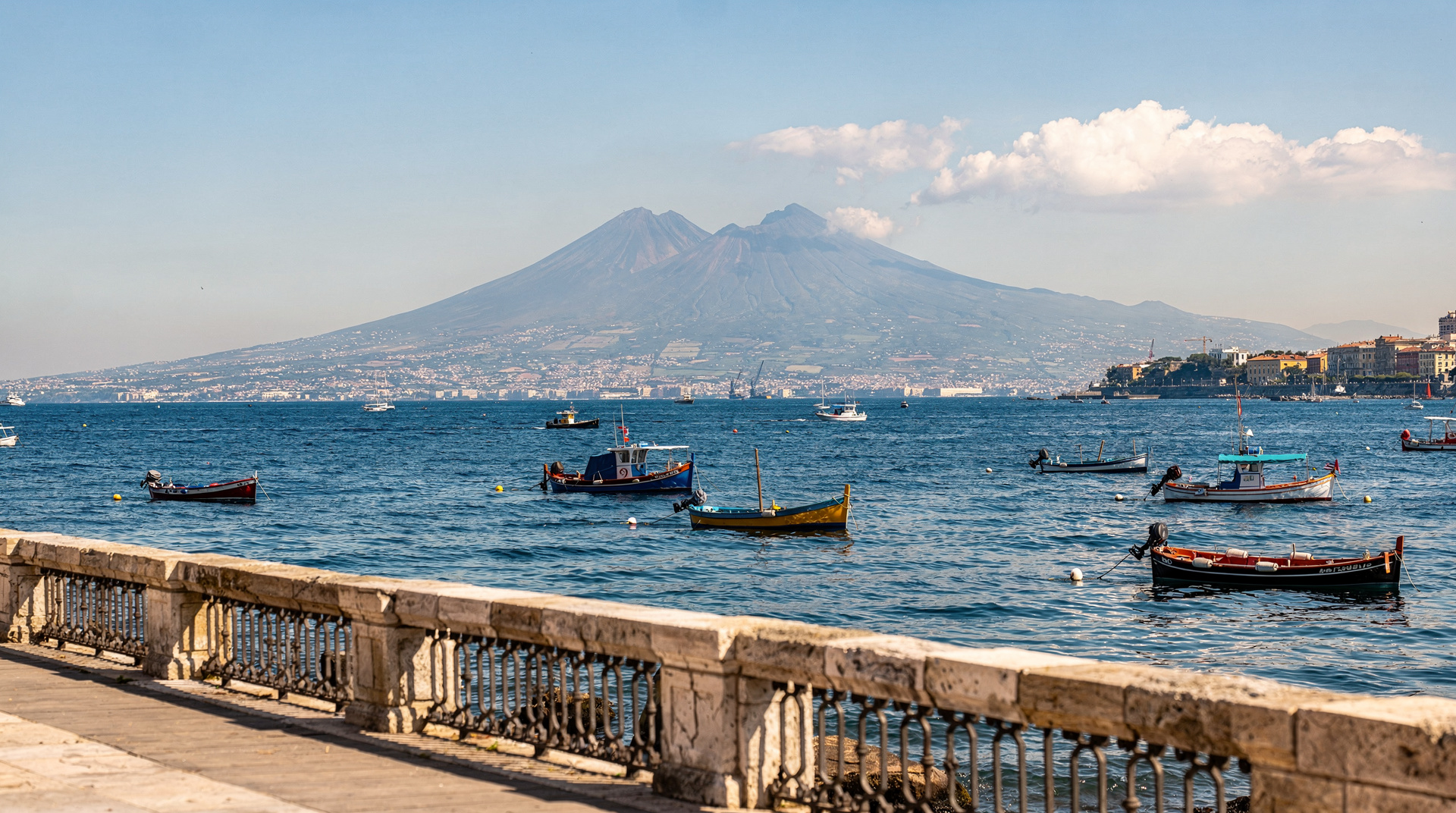
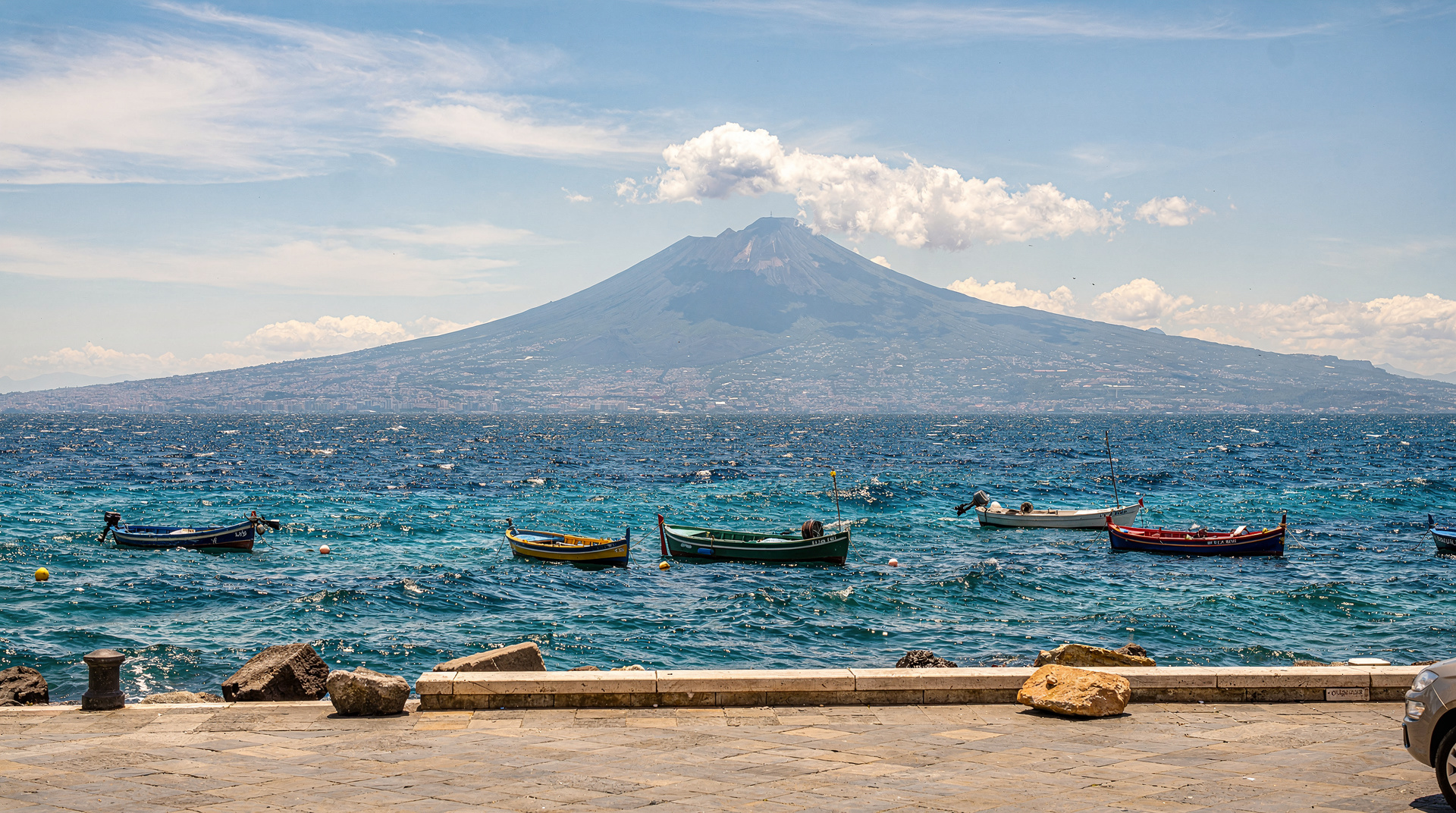
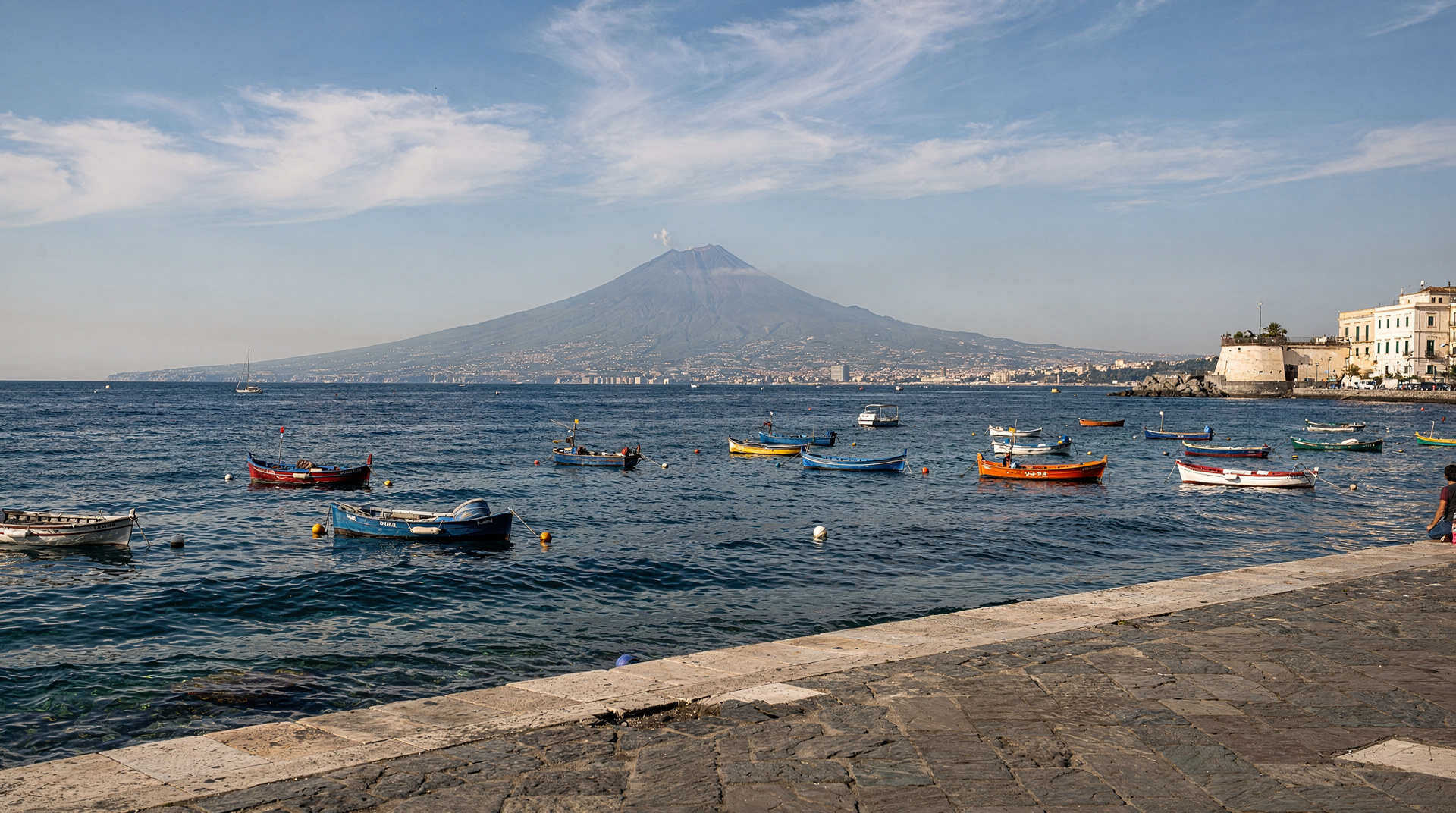
December in Naples is mild compared to northern Europe but meaningfully wet. Daytime temperatures sit at 12–14 °C; evenings drop to 7–9 °C after dark, and the street-level dampness from rain makes it feel cooler. Average rainfall: 100–120 mm across the month, spread over roughly 11–13 rainy days. Clear days do occur — and on a clear December afternoon, the light over the bay and Vesuvius is exceptionally good — but plan for at least some wet weather.
Practical implications:
- A compact waterproof jacket or packable rain shell is essential — not optional
- Indoor itinerary segments (museums, underground sites, pasticcerie) should anchor each day
- Via San Gregorio Armeno in light rain is still fully navigable — it is partly sheltered by the overhanging upper floors of the buildings
- Pompeii in December has very short hours (leave by 13:30) but manageable weather; the site is far emptier than in summer
Crowds in the centro storico peak on weekends, on 8 December, and in the final week before Christmas. If you have flexibility, mid-December weekdays offer the best balance of festive atmosphere without congestion.
A practical itinerary for a December morning in the centro storico
09:00 — Coffee and a sfogliatella at a bar near Piazza del Gesù Nuovo. Locals take their espresso standing at the bar.
09:30 — Via San Gregorio Armeno while it is still manageable. Allow 45–75 minutes for a thorough walk with time to go inside workshops. Pick up roccocò or mostaccioli as gifts from a nearby pasticceria.
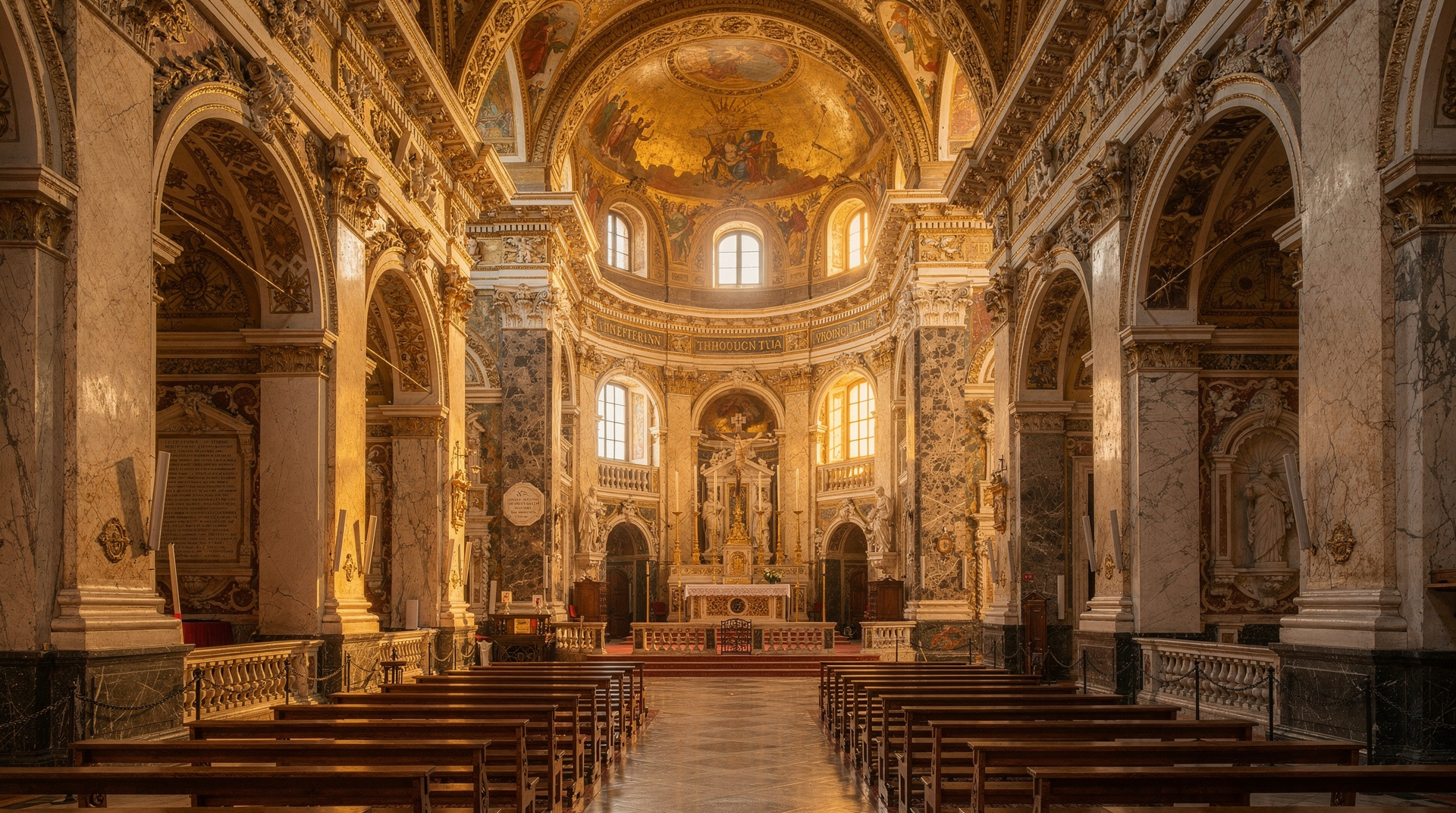
11:00 — Walk Spaccanapoli east toward the Duomo. The Naples Cathedral is free to enter and the December interior (often decorated with its own institutional presepe) is worth 20 minutes.
12:00 — Lunch in the centro storico. The side streets off Via dei Tribunali have several honest-value trattorie that remain open in December; expect 12–18 € for a two-course lunch with wine.
Afternoon — Museums or the underground for a weather-proof afternoon. The underground tunnels at Napoli Sotterranea (entrance from Piazza San Gaetano, adjacent to Via San Gregorio Armeno) stay at 15 °C year-round — a warm refuge on a damp December afternoon.
For the deeper historical context behind Naples’ history and culture and the Neapolitan traditions that shape the presepi tradition, those guides give the background the December visit earns.
Frequently asked questions about Naples at Christmas
When does Via San Gregorio Armeno get really crowded?
The street is at its most intense in the two weekends before Christmas and on 8 December. Weekday mornings in early and mid-December are significantly more comfortable — you can stop, look closely at the workshop displays, and speak to artisans without being pushed through by the crowd.
Can I buy a presepe to take home?
Yes, and it is one of the most practical Naples souvenirs. Individual pastori pack well in carry-on luggage — most artisans wrap pieces in tissue and will advise on safe transport. For larger scenes with architectural elements, check the dimensions carefully. The wooden capanna (stable structure) is the element that creates volume and may need checked baggage or shipping.
Is Naples safe to visit at Christmas?
The same considerations apply as at any time of year — the centro storico and tourist zones are fine for daytime visits with normal urban awareness. The increased Christmas crowds around Via San Gregorio Armeno create pocket-picking conditions similar to any crowded European Christmas market: keep bags and phone in front pockets or a cross-body bag, and be alert in the narrowest sections of the street where the crush is greatest.
What is the Befana and how do Neapolitans celebrate it?
The Befana is a folk figure — an old woman who flies on a broomstick on the night of 5–6 January and fills children’s stockings with sweets if they have been good, or coal (often symbolic sugar coal, carbone dolce) if not. In Naples the holiday has a genuine popular following; 6 January is treated as seriously as Christmas Day. Epiphany marks the end of the festive season — the presepi come down and the decorations are stored until next year.
Are Christmas Eve and Christmas Day good times to be in Naples as a tourist?
Christmas Eve is atmospheric — the city fills with families heading to dinner and mass, and the Lungomare is busy with a genuine celebratory feel. The difficulty is practical: many restaurants are pre-sold to groups for the vigilia menu at fixed prices, and finding a casual walk-in dinner is harder than usual. Book any Christmas Eve restaurant well in advance. Christmas Day itself is quiet — a good day for the seafront, a winter walk, or a self-catering picnic from provisions bought the day before.
How does the December weather compare to summer in Naples?
Completely different. December’s 10–14 °C and occasional rain is genuinely more comfortable for walking the centro storico than July’s 30 °C and direct sun. No heat exhaustion risk, no need for early-morning archaeological site strategies. The trade-off is shorter daylight (sunset around 16:30) and the need for a waterproof layer. For sightseeing in the urban historic centre, December is objectively more comfortable than high summer — though best-time-to-visit-naples gives the full seasonal comparison across all criteria.
What to pack for a Naples December trip
Beyond the obvious waterproof layer, a few specifics make a real difference in December. Layering matters more than a single heavy coat — indoor spaces (churches, restaurants, pasticcerie) run warm, while outdoor stretches on Via San Gregorio Armeno or the Lungomare can feel colder than the 10–14 °C daytime reading suggests once wind and damp are factored in.
Comfortable, closed, water-resistant shoes matter more than style — the centro storico’s cobblestones get slick in rain, and you’ll be on your feet for hours between the presepi street and the Duomo. A crossbody bag or a jacket with a zipped inside pocket is worth having in the denser December crowds, more for peace of mind than any specific elevated risk. Sunglasses, unexpectedly, are still useful: clear December afternoons over the bay produce strong low winter light.
Where to base yourself for a December visit
The centro storico is the obvious choice for a Christmas trip — Via San Gregorio Armeno, the Duomo, and the pasticcerie are all within a short walk, and staying inside the old town means you’re never more than ten minutes from the festive core. Chiaia, the calmer residential district west of the centre, works well if you’d rather retreat from the crowds each evening; it’s a short funicular or bus ride to the historic quarter. See the best areas to stay in Naples for a fuller comparison, and check getting around Naples for how the funiculars and metro run over the holiday period (expect a reduced, Sunday-style timetable on 25 December and 1 January).
A December day trip: Pompeii and Herculaneum in winter
If you have more than a long weekend, December is one of the more comfortable months to combine the presepi with an archaeological day trip — the summer heat and queues are both gone. Winter opening hours are shorter (last entry typically around 13:30), so an early departure matters more than in summer. The Pompeii and Herculaneum day trip planning guide covers winter timetables in detail, and a guided half-day option removes the logistics entirely on a trip already packed with Christmas-specific plans.
Pompeii skip-the-line tour with fast-track entryChristmas gifts to bring home besides pastori
Beyond the nativity figurines, December pasticcerie sell roccocò and mostaccioli in decorative tins that travel well and make good edible gifts. Limoncello and small bottles of Lacryma Christi wine (the same sweet wine traditionally used to soften roccocò) are widely available and pack safely in checked luggage. For a wider souvenir list beyond the seasonal specifics, the Naples bucket list guide has year-round recommendations that still apply in December.