Neapolitan culture and traditions: pizza, music, superstition and the street
Naples: Authentic Neapolitan Pizza Making Class
Duration: 2h
What are the defining traditions of Neapolitan culture?
Naples has five culture-defining traditions: pizza (invented here in its modern form), the espresso and coffee bar ritual, the canzone napoletana (Neapolitan song tradition that produced O Sole Mio and Funiculì Funiculà), the presepe craft tradition centred on Via San Gregorio Armeno, and a specific relationship to death and the supernatural — the anime pezzentelle skull cult, the San Gennaro blood miracle, and a highly developed system of popular superstition.
Every city has a culture; fewer cities have a culture as self-conscious, as defended, and as continuously reinvented as Naples. Neapolitans are famously aware of being Neapolitan — the identity is specific and historically formed, not simply a regional variation on Italian national culture. Understanding a few key elements of this identity transforms the city from a backdrop for Pompeii day trips into something considerably more interesting.
This is not a definitive anthropological account — no guide can be that. It is an honest overview of the cultural elements most visible to visitors and most important for understanding what you are actually seeing in the streets, the bars, the churches, and the food.
| Signature food | Pizza napoletana (UNESCO Intangible Heritage, 2017) |
| Signature ritual | Espresso al banco, €1–1.20, 30–90 seconds |
| Signature music | Canzone napoletana — O Sole Mio, Funiculì Funiculà |
| Signature belief | Malocchio (evil eye) + cornicello horn charm |
| Signature event | San Gennaro blood miracle — 3x/year at the Duomo |
| Where to see it live | Centro storico, Via San Gregorio Armeno, the Lungomare |
Pizza: the creation myth and the actual history
The Margherita pizza origin story is told everywhere in Naples and should be treated with the scepticism appropriate to creation myths. In this account, in 1889, a pizzaiolo named Raffaele Esposito of the Pizzeria Brandi (still operating on Via Chiaia) was asked to make pizza for Queen Margherita of Savoy, who was visiting Naples with King Umberto I. He made three varieties; she preferred the one with tomato, mozzarella, and basil — the colours of the Italian flag — which was subsequently named the Margherita in her honour.
The story is partly documented (there is a letter of thanks attributed to the queen’s chamberlain) and partly legendary (the named toppings combination certainly existed before 1889, and the attribution of the name to this specific occasion is difficult to verify independently). What is not in dispute: pizza as a recognisable ancestor of the modern product originated in Naples in the 18th–19th centuries. The specific elements — yeast-leavened flatbread, tomato sauce (tomatoes arrived in Europe from America in the 16th century and took another century to enter Neapolitan food culture in quantity), buffalo or cow’s milk mozzarella — were assembled in Naples.
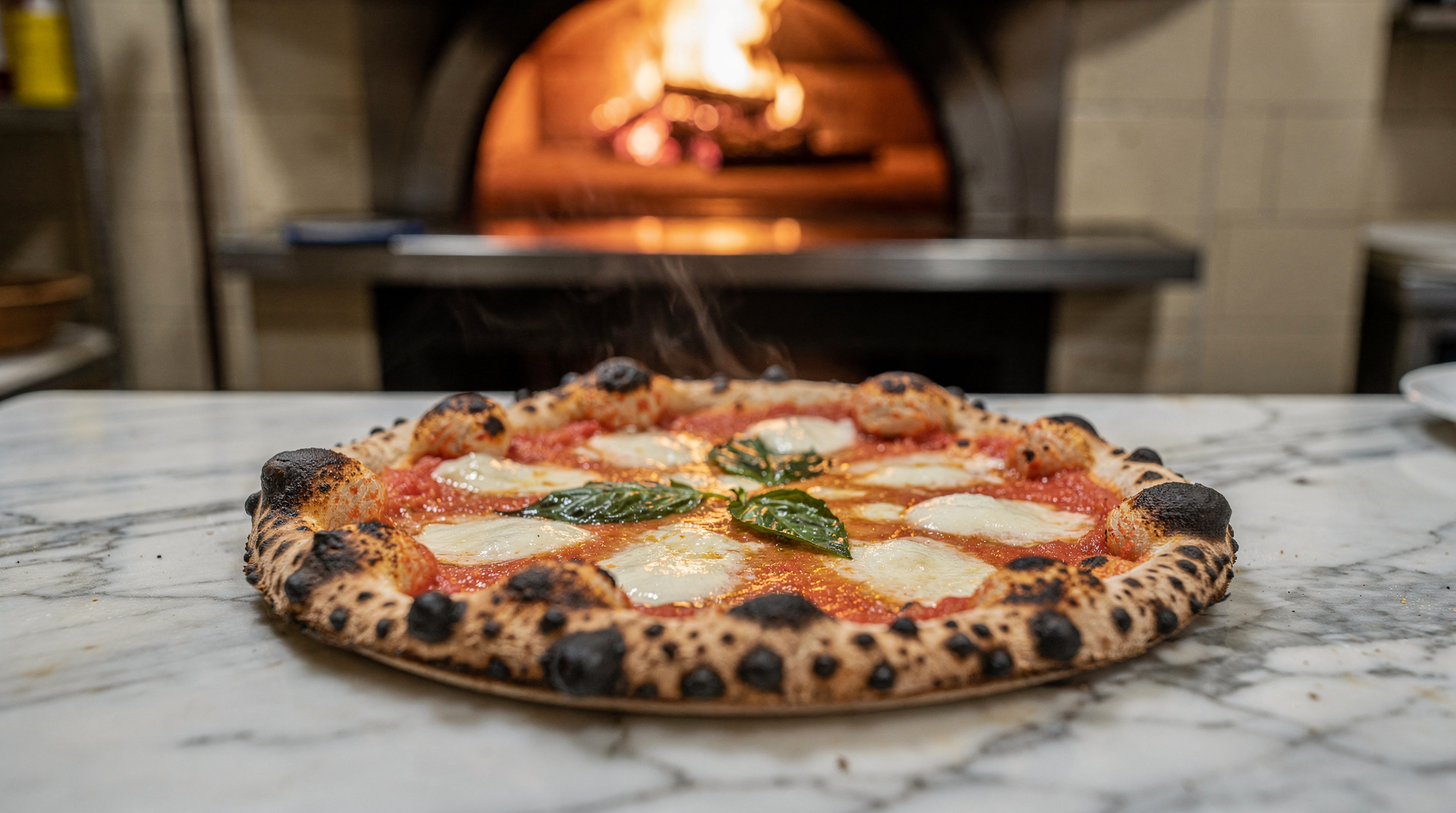
The AVPN (Associazione Verace Pizza Napoletana) maintains the standards for pizza napoletana verace. The critical technical elements: soft wheat flour (00), fresh brewer’s yeast, specific San Marzano DOP tomatoes or equivalent, bufala or fior di latte mozzarella, wood-fired oven at 485°C, baking time 60–90 seconds. The result has a soft wet centre, charred bubbles at the crust edge, and a specific chewiness that distinguishes it from cracker-thin Roman pizza or the thicker American derivatives.
UNESCO recognised pizza napoletana as Intangible Cultural Heritage in 2017 — the specific practice of the pizzaiolo, not just the food product. The certification was genuinely meaningful in Naples: a formally underdeveloped city in an officially disadvantaged region had its most famous cultural product inscribed in the same register as Venetian glassblowing, Sicilian opera of marionettes, and the ceremonial falconry of Central Asia.
For visitors who want to go beyond eating pizza and understand why it works the way it does, a hands-on session with a pizzaiolo is the most direct route — watching the dough handled, the oven managed at 485°C, and the 60–90 second bake up close explains the texture better than any description can. See our pizza making class guide for how to book one and what to expect.
Naples pizza-making class with a local pizzaioloThe coffee ritual
Naples has a claim to the best espresso in Italy that is contested by Milan, Turin, and Rome but is not without empirical support. The Neapolitan coffee culture differs from other Italian variants in several specific ways:
The blend. Neapolitan espresso typically uses more Robusta in the blend than northern Italian styles — Robusta has higher caffeine content, a creamier crema, and a more bitter flavour profile. The result is a stronger, more intense espresso than Milanese or Roman versions.
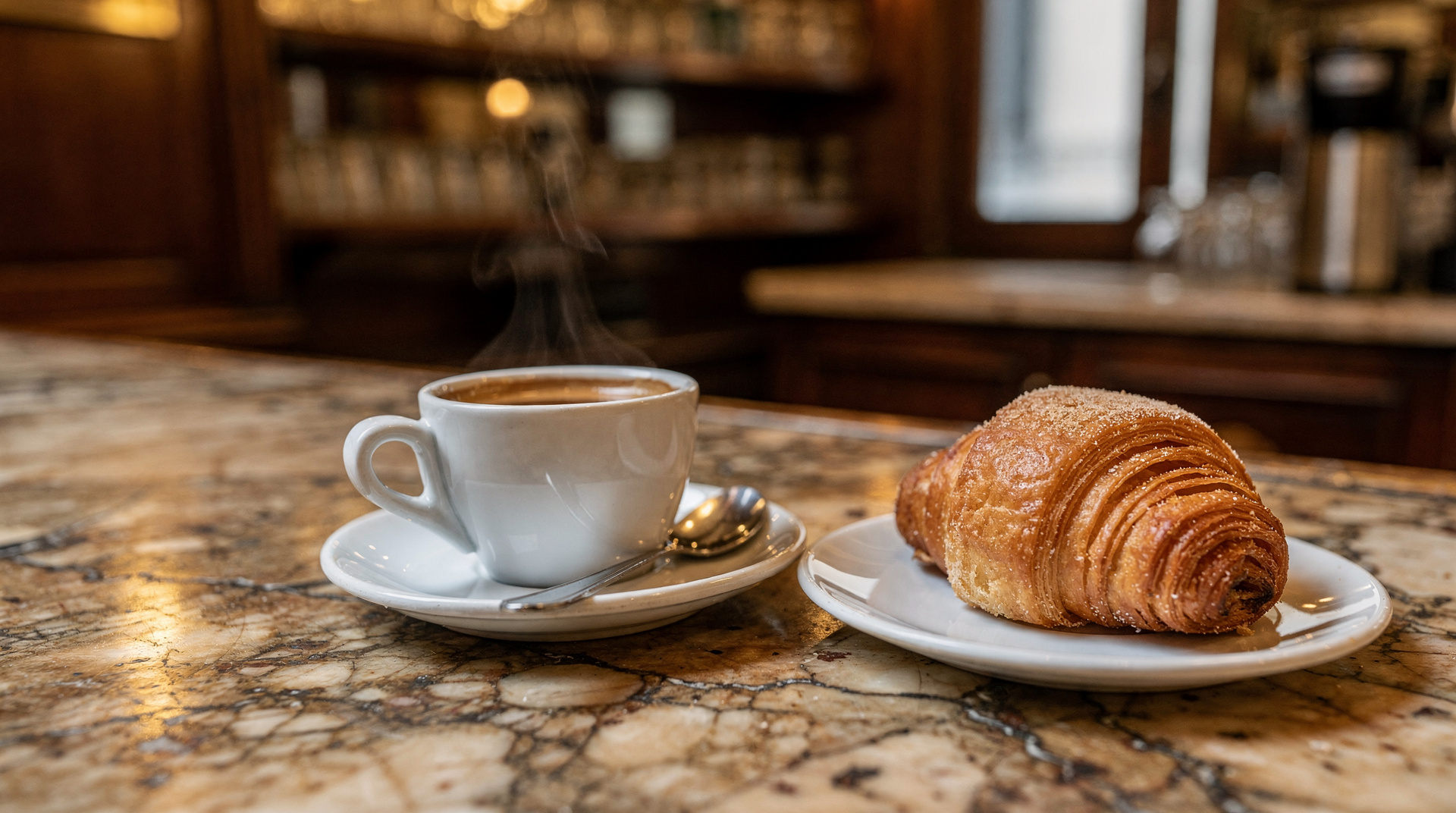
The ritual. Standing at the bar (al banco) is the standard mode. The espresso is consumed in 30–90 seconds. The social exchange with the barista is part of the experience — a brief, specific kind of conversation that has nothing to do with being friendly to customers and everything to do with the social fabric of the neighbourhood.
The price. Espresso at the bar in Naples typically costs €1–1.20 — this is among the lowest in Italy and is maintained partly by cultural convention, partly by inter-bar competition, and partly by an awareness that the espresso is a public good. Sitting at a table costs substantially more (€2.50–4) because Italian law allows premises to charge differently for seated service.
The caffè sospeso. A tradition specific to Naples: when you buy a caffè sospeso (suspended coffee), you pay for two espressos and leave one “suspended” — a credit for whoever next comes to the bar and cannot afford their coffee. The practice dates to at least the early 20th century and is documented in Neapolitan literature. It largely disappeared during prosperous decades and has been actively revived since the 2008 economic crisis.
The canzone napoletana: the soundtrack of Naples
The Neapolitan song tradition — canzone napoletana — is one of the most globally distributed musical traditions in the world, largely unrecognised as such. Songs like O Sole Mio, Funiculì Funiculà, Torna a Surriento, Core ‘ngrato, and O Marenariello are known in multiple countries and languages, having been carried by Neapolitan emigration to the United States, South America, and Australia in the late 19th and early 20th centuries.
The formal tradition emerged in the mid-19th century — the first Festival della Canzone Napoletana was held in 1835 — but drew on older popular music traditions from the streets and taverns of Naples. The key characteristics: Neapolitan dialect lyrics, typically nostalgic or romantic in content, a strong melodic line suitable for tenorial voice, and an emotional directness that Italian critics sometimes describe as sentimentale or lacrimoso (tearful).
The tradition peaked commercially in the late 19th and early 20th centuries, when Enrico Caruso — born in Naples in 1873, son of a factory worker from the centro storico — became the most famous tenor in the world and recorded many of the canonical songs. The American recording industry’s early commercial successes were substantially built on Caruso’s records.
Contemporary Neapolitan popular music continues the tradition in modified forms — there are living artists who work in traditional canzone napoletana, and a separate tradition of Neapolitan folk-pop that uses dialect lyrics and musical structures derived from the older tradition.
The most easily accessible exposure for visitors is street performance — musicians in the centro storico and along the Lungomare regularly play canzone napoletana standards. The experience of hearing O Sole Mio on the Lungomare at evening is not a tourist cliché — it is a genuine cultural encounter.
San Gennaro and the blood miracle
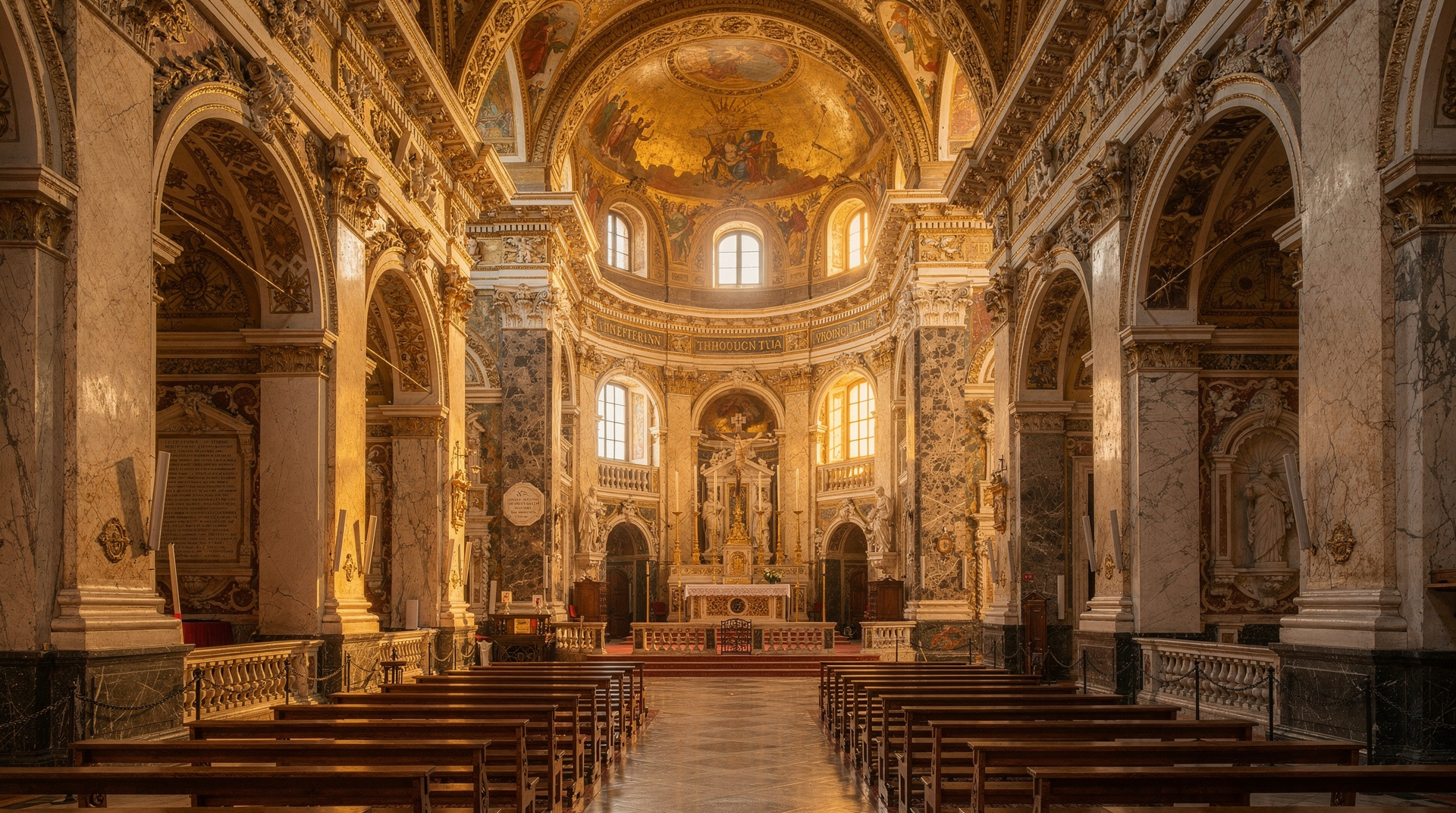
The cult of San Gennaro (Januarius) — bishop of Benevento, martyred near Pozzuoli around 305 AD — is one of the most elaborate and durable popular religious traditions in European Catholicism. The centre of the cult is a small glass phial said to contain the bishop’s blood, kept in the Tesoro (treasury) of the Naples cathedral (Duomo).
Three times a year — on the Saturday before the first Sunday of May (anniversary of the transfer of the relics to Naples), on 19 September (feast day), and on 16 December (anniversary of a 1631 eruption of Vesuvius that spared Naples) — the phial is brought from the treasury and held up before the congregation. Before the eyes of thousands of witnesses, the dried brown substance in the phial liquefies and becomes red blood. This is documented to have happened reliably for at least 600 years.
The scientific explanations proposed for the liquefaction include thixotropy (a property of certain gels that become liquid under mechanical pressure), temperature effects, and deliberate fraud — none is conclusively established. The Church does not officially claim the liquefaction is miraculous but treats it as a sign of divine favour. Neapolitan popular tradition treats the failure to liquefy as an omen of disaster; historically documented non-liquefactions have coincided with or preceded major catastrophes (plague in 1527, cholera epidemics in the 19th century, the 1980 earthquake).
The event on 19 September is the largest — the Duomo fills completely, crowds gather outside, and the moment of liquefaction is announced by a priest at the altar to audible public reaction. For visitors interested in the intersection of Catholic practice and popular culture, this is one of the most revealing events in southern Italy.
The evil eye, the cornicello, and popular superstition
Naples has a highly developed system of popular superstition that is simultaneously post-Christian and deeply embedded in the city’s Catholic culture. The two principal elements:
Malocchio (the evil eye). The belief that envious or malicious gazing can cause harm — particularly to children, animals, and anyone who has experienced recent good fortune — is ancient and pan-Mediterranean. In Naples, it is active and contemporary. Protective measures include the cornicello (horn charm), the mano cornuta (the hand gesture making a horn sign with the index and little finger), and specific prayers or counter-rituals performed by practitioners known as fattucchiere.
The cornicello. The twisted horn pendant — typically red or gold, made of coral, plastic, or gold — appears in cars, hanging in doorways, worn as jewellery, and sold at souvenir stalls throughout the city. The horn connects to pre-Christian symbolism but is now a general-purpose protection talisman with no explicit religious content. It is bought and given seriously, not merely as decoration.
Numbers and portents. Neapolitan number symbolism is elaborate and institutionalised in the Smorfia Napoletana — a traditional numerical dream-interpretation system used to derive numbers for the Neapolitan lottery (Lotto). Each number has an associated person, object, or concept (77 is the devil; 13 is the saint; 90 is fear). The Smorfia is a legitimate folk text with a publication history going back several centuries. It is still consulted and referenced in popular culture.
The street: bassi, vicoli, and public life
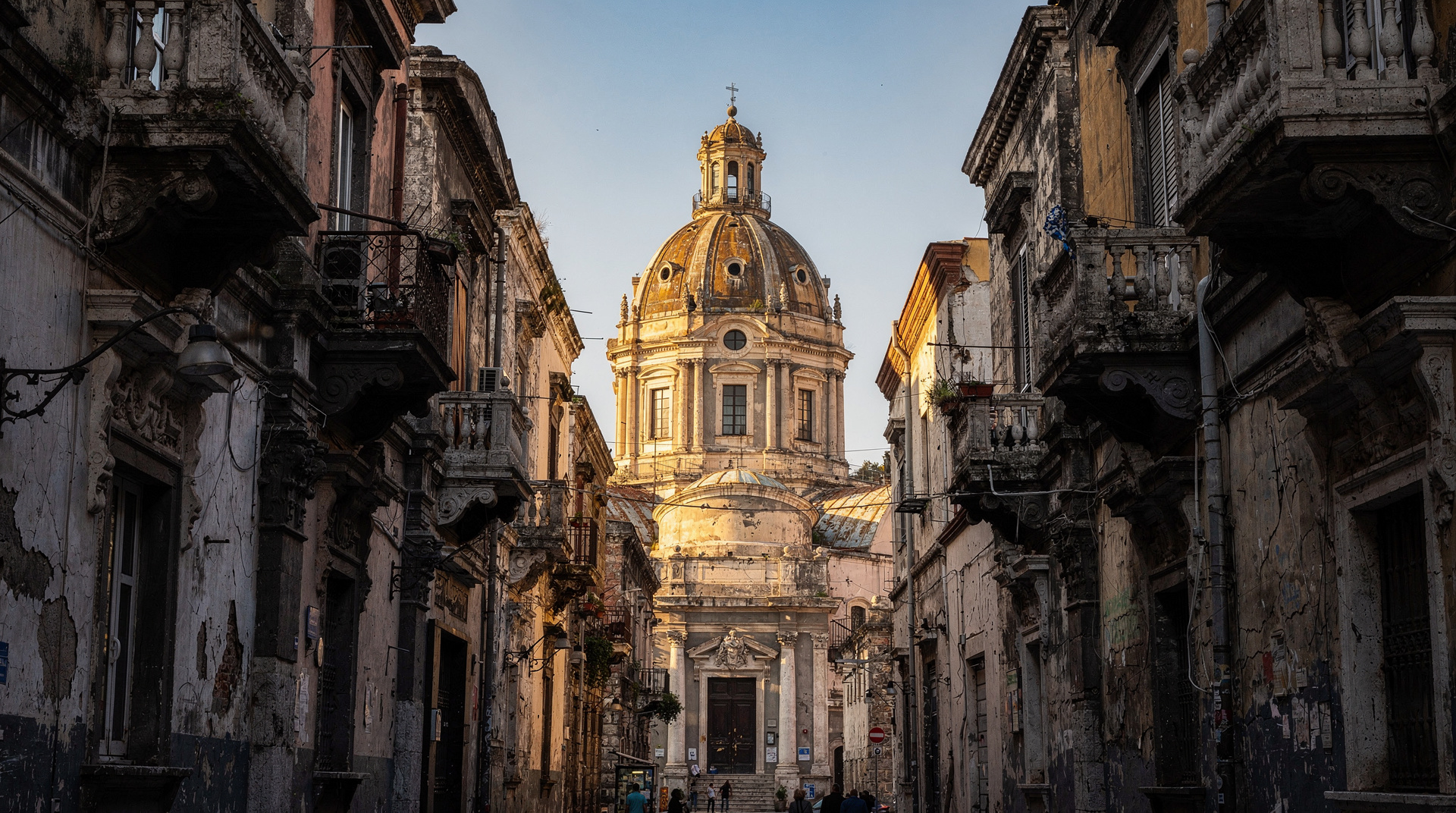
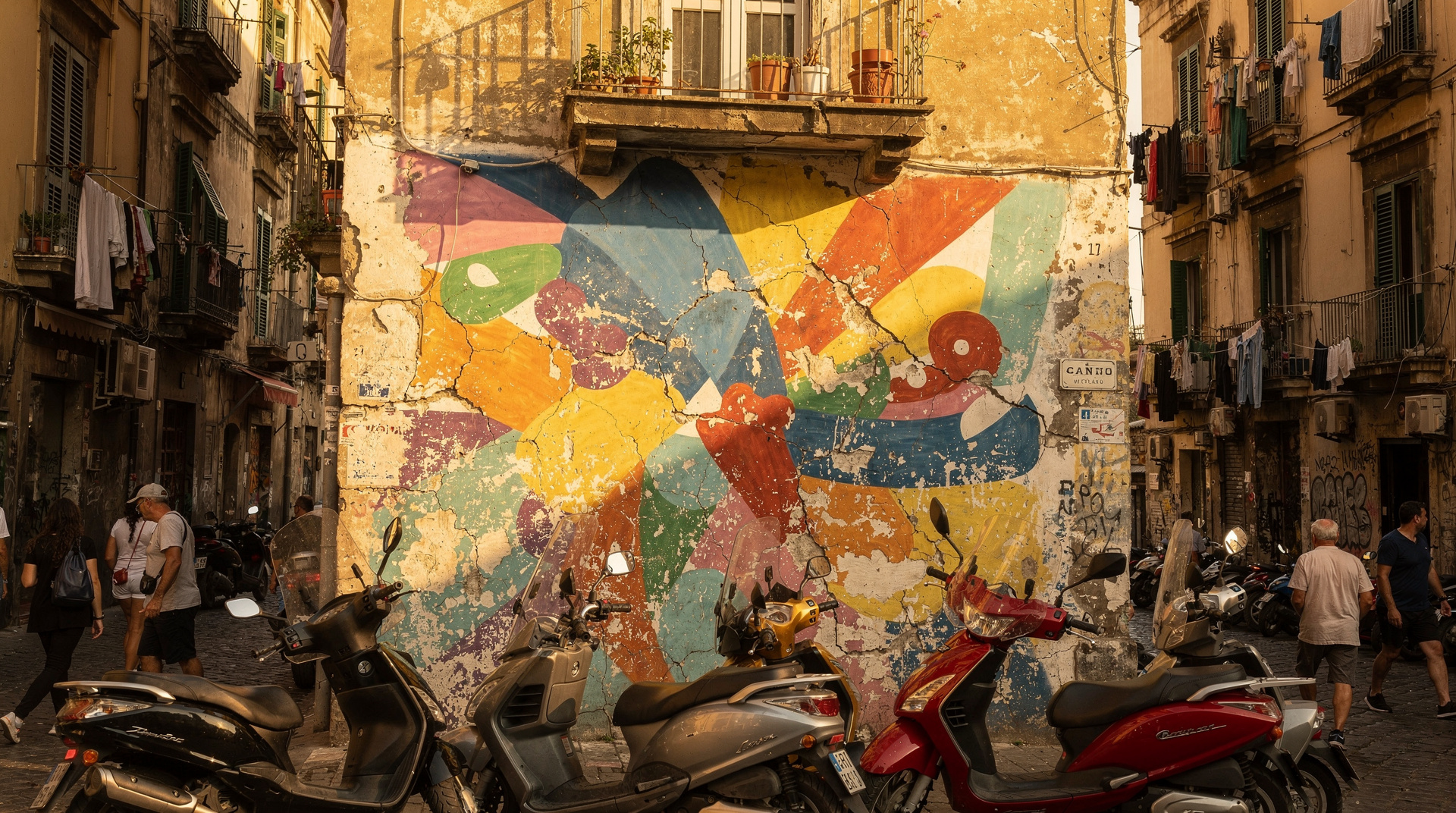
The physical structure of Naples — the extreme density of the centro storico, the narrow vicoli, the bassi (ground-floor single rooms opening directly onto the street) — produces a particular quality of public life that is immediately visible to visitors.
The basso is specifically Neapolitan: a room opening directly onto the street, with its private life (kitchen, bed, domestic altar) directly visible to passers-by. The room-street boundary is permeable — conversations happen across it, goods are passed through it, children play on the step. The basso-inhabiting culture was the primary target of the 19th-century urban reformers who described Naples’ living conditions with horror; it persists in the centro storico and is both a housing poverty indicator and a social unit that mainstream urban planning has never successfully replaced.
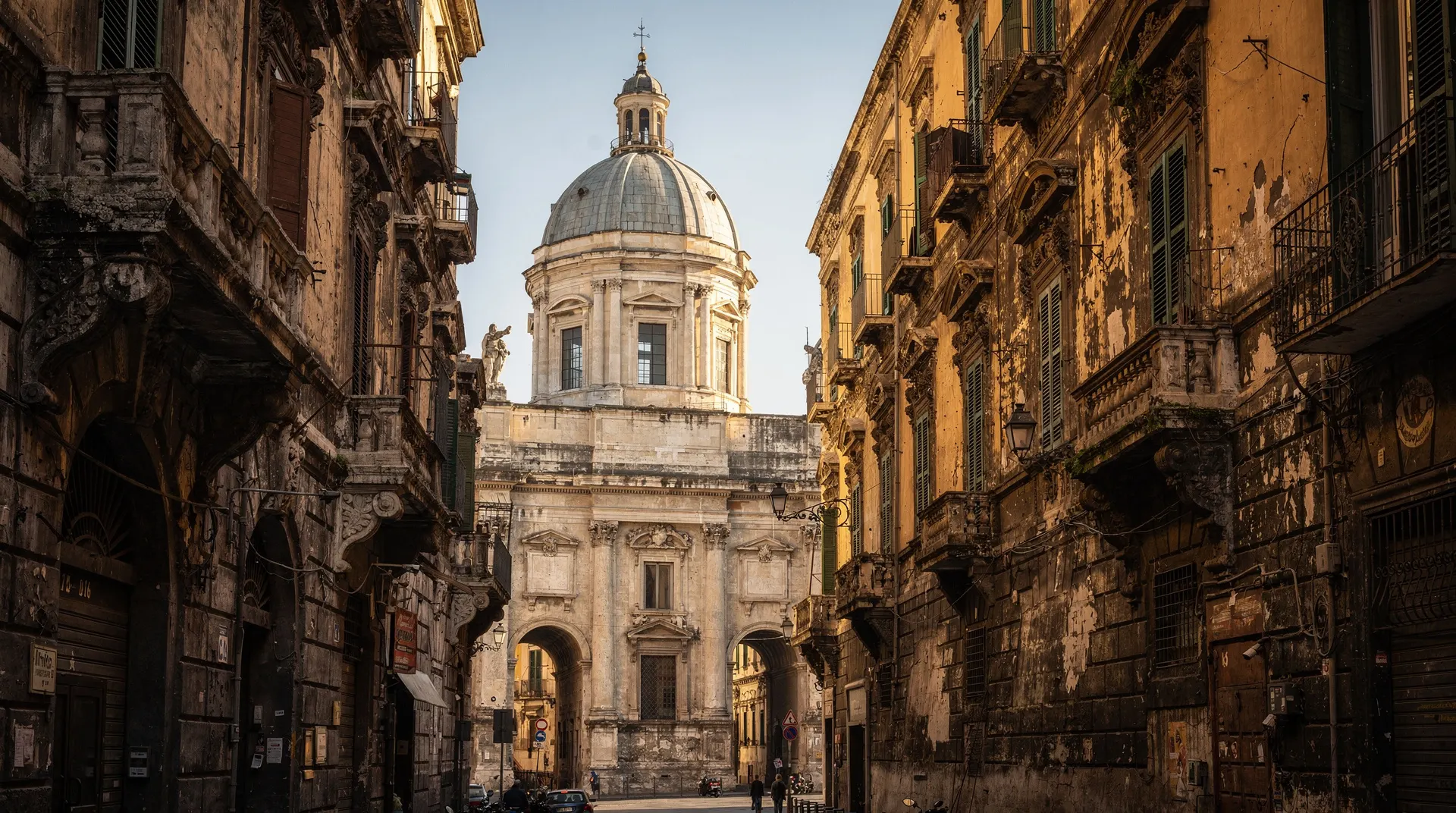
The vicolo — the narrow alley — is the spatial unit that makes this permeable life possible. In a street too narrow for vehicles, with buildings rising 4–6 floors on each side, the acoustic and visual connection between levels and across the street creates a neighbourhood texture quite different from the anonymous streets of modern cities. Visitors often describe the centro storico as loud. It is. The loudness is a function of the spatial structure — people are close together, the walls are reflective, and a culture that practices public social life has created a built environment suited to it.
The presepe: Naples’ Nativity craft tradition
The presepe (Nativity scene) is a craft tradition Naples takes further than anywhere else in Italy. Rather than a simple manger scene, the Neapolitan presepe is a miniature theatre of 18th-century Naples itself: the Holy Family is placed inside a crowded street scene populated with tavern-keepers, fishmongers, drunks, beggars, musicians, and — since the mid-20th century — an ever-expanding cast of celebrity and pop-culture figures rendered in terracotta alongside the shepherds. The tradition reached its peak under the Bourbon kings, who competed with the aristocracy to commission ever more elaborate scenes, and it survives today as a living craft rather than a museum piece.
Via San Gregorio Armeno is where that craft is made and sold, year-round but at its most intense from October through Epiphany (6 January). Workshops line the street, artisans work in full view of passers-by, and the figurine catalogue ranges from traditional saints to whichever politician or footballer is currently in the news. It is one of the few living craft streets left in a European historic centre, and walking it costs nothing.
Naples, the Camorra, and what visitors actually encounter
The word “Camorra” appears in almost every foreign article about Naples, and it is worth separating the reality from the shorthand. The Camorra is real, it is economically significant in parts of the region, and its activity (extortion, drug trafficking, territorial disputes) is genuinely serious. What it is not: something visitors are likely to see, be affected by, or come into contact with. Organised-crime violence in Naples is overwhelmingly targeted — rival clan disputes in specific peripheral neighbourhoods — not random and not directed at tourists.
What visitors do actually encounter is opportunistic petty crime: pickpocketing on crowded buses and in the centro storico, scooter bag-snatching, and the occasional restaurant overcharging a tourist table. These are nuisances to guard against with ordinary vigilance, not evidence of the Camorra, and they are comparable to or lower than rates in other major European tourist cities. For a clear-eyed, data-based look at this distinction, see is Naples safe: the data and Naples scams to avoid. The gap between Naples’ reputation and the actual visitor experience is one of the more consistent things first-time visitors report.
Frequently asked questions about Neapolitan culture
Is the stereotype of Naples as chaotic and dangerous accurate?
Partially. The traffic is genuinely chaotic by northern European standards — the approach to traffic signals and lane discipline is interpretive. The noise level in the centro storico is high. Petty crime (pickpocketing, scooter bag-snatching) exists and is more common than in comparable northern Italian cities. The serious crime associated with the Camorra is not randomly distributed and does not typically affect tourists. The city is not dangerous in any way that should prevent a visit.
Why is Neapolitan identity so strong compared to other Italian cities?
Several factors: the city’s history as an independent capital (Kingdom of the Two Sicilies) for centuries; the subsequent experience of economic marginalisation after Italian unification; the specific cultural productions (pizza, song tradition, coffee culture) that are globally recognised as distinctly Neapolitan; and the pressure of a long-standing northern Italian cultural contempt that has produced a counter-identity of intense local pride. Neapolitan identity is partly defensive, partly celebratory, and always self-aware.
How different is Neapolitan culture from other parts of southern Italy?
Significantly different, though sharing some characteristics with the broader Southern Italian culture. Naples is a metropolis — the third-largest city in Italy — with a complex urban culture that differs considerably from the small-town cultures of the Campanian interior, Calabria, or rural Sicily. The density of cultural production (music, theatre, food, artisanal craft) in Naples proper is not replicated in the smaller southern cities.
Is it true Neapolitans are particularly warm to visitors?
The reputation for warmth is real and broadly accurate, with the caveats appropriate to any generalization. The Neapolitan social style — talkative, physically expressive, willing to spend time in conversation with strangers — contrasts with the more reserved northern Italian manner. Tourist zones can produce a different version of this warmth, which is commercial. The warmth in a neighbourhood bar, market, or church is more likely genuine.