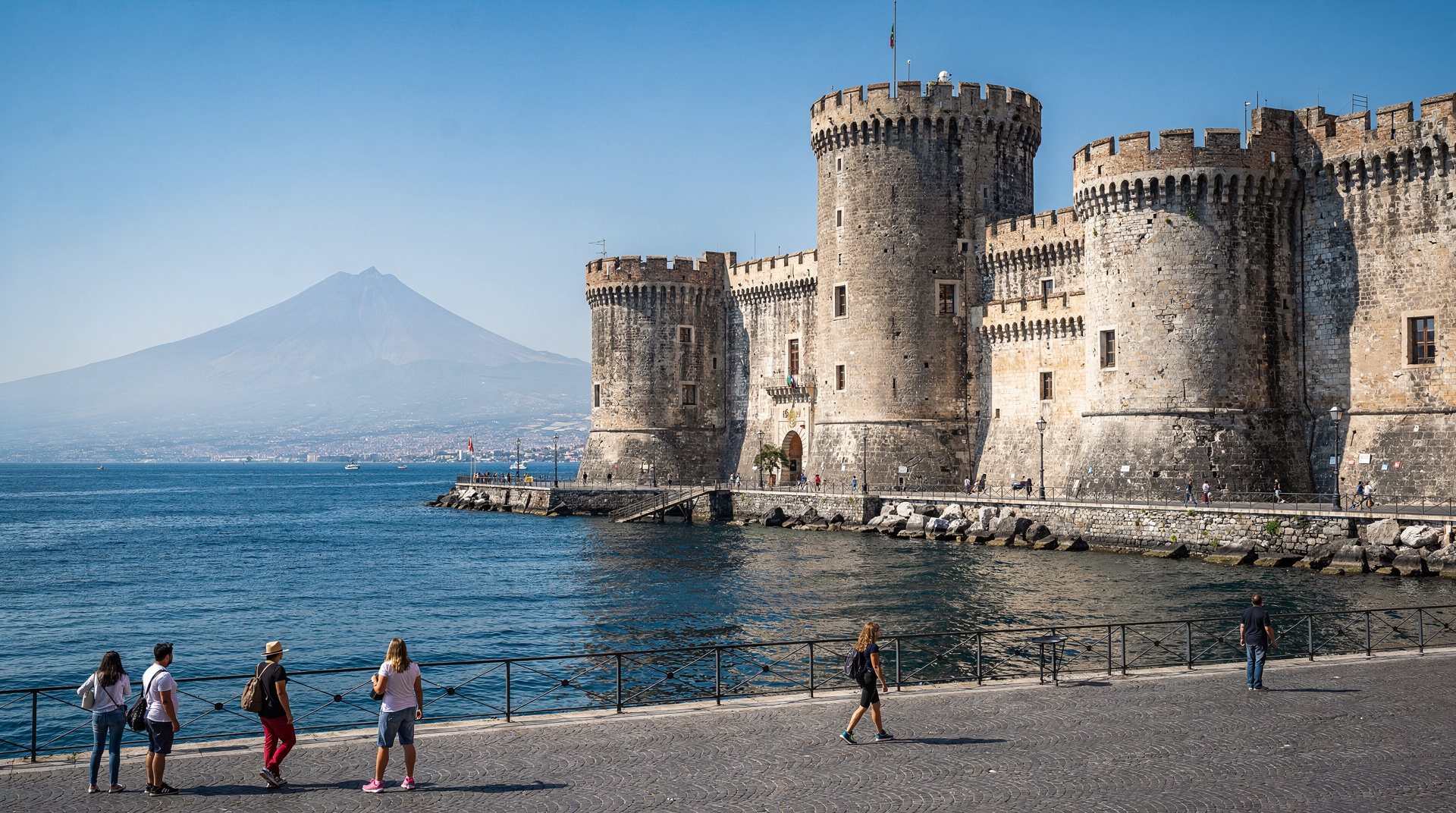
Top attractions in Naples — ranked honestly
The Best of Naples Private Walking Tour
What are the top attractions in Naples?
The MANN (archaeological museum), Cappella Sansevero (Veiled Christ), Spaccanapoli, Napoli Sotterranea (underground), and Capodimonte museum are the top five. Castel dell'Ovo, the Lungomare, and the catacombs of San Gennaro are strong secondary attractions. Pompeii is nearby and exceptional but technically a separate site.
Quick answer: MANN, Cappella Sansevero, Spaccanapoli, the underground city, and Capodimonte make up the top five. Everything else is secondary or a day trip. Pompeii is 30 minutes away and extraordinary, but requires a dedicated day.
| Top pick | MANN (Museo Archeologico Nazionale) |
| Best free sight | Spaccanapoli walking route |
| Time needed | 3 focused days for the city itself |
| Combined pass | Campania ArteCard, around €25 for 3 days |
| Booking ahead | Cappella Sansevero — sells out days ahead |
How this ranking works
Tourist rankings often put the most Instagram-photographed sights at the top. This guide ranks by genuine cultural or experiential value — how much you will learn, feel, or remember — weighed against realistic time and cost. A beautiful castle that takes 20 minutes is ranked lower than a 3-hour museum that reframes your entire understanding of the ancient world.
Prices are 2026 adults full price unless stated.
Tier 1: the unmissable
1. MANN — Museo Archeologico Nazionale di Napoli
Entry: €22 | Time: 2–4 hours | Closed Tuesday
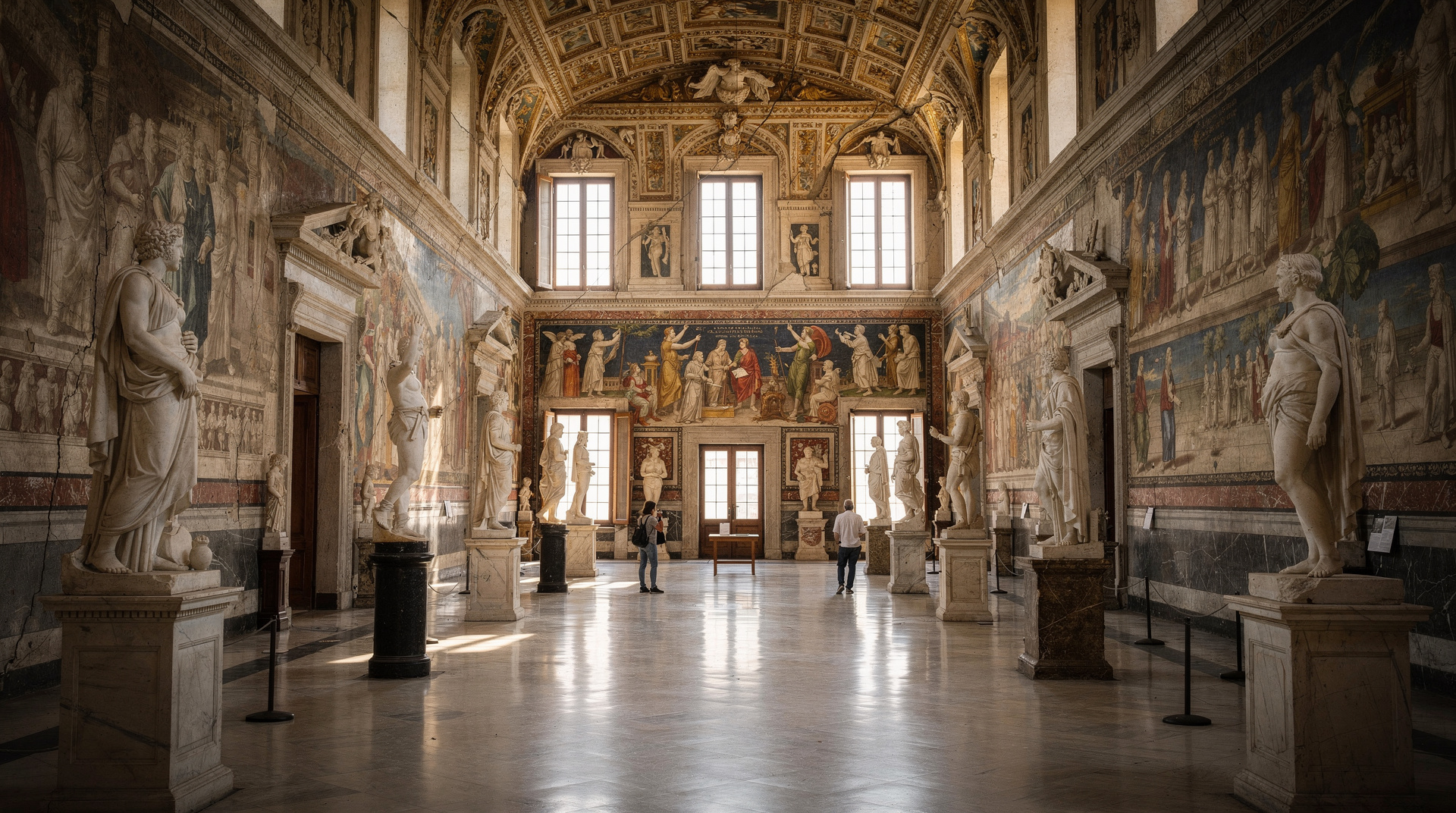
The MANN is the reason Naples matters archaeologically. When excavations at Pompeii and Herculaneum uncovered mosaics, bronzes, frescoes, and statues, the most significant pieces were transferred here. What you see at Pompeii itself is largely cast replicas and intact walls — the originals are here.
The Alexander Mosaic alone — 1.5 million individual tesserae showing the battle of Issus — is worth the trip from Rome. The bronze portraits from the Villa of the Papyri at Herculaneum are among the finest surviving examples of ancient sculpture. The Secret Cabinet (Gabinetto Segreto) contains the erotic art collected from Pompeii — historically fascinating, often misunderstood.
The Farnese collection on the upper floor adds Greek originals and Roman copies at the scale of the Vatican: the Farnese Hercules, the Farnese Bull (largest ancient sculpture group surviving), the Atlas.
Allow 3 hours minimum. Book skip-the-line in summer.
Guided MANN tour with skip-the-line entry (3h)2. Cappella Sansevero — the Veiled Christ
Entry: €10 | Time: 45–60 minutes | Closed Tuesday | Book online in advance
The Cappella Sansevero houses a small collection of extraordinary 18th-century sculpture, of which the Veiled Christ (Cristo Velato) by Giuseppe Sanmartino (1753) is the centrepiece. The marble veil is so delicately rendered that observers routinely disbelieve it is stone — they look for evidence of real fabric. It is not real fabric.
The Disinganno (Disillusionment) by Francesco Queirolo and the Pudicizia (Modesty) by Antonio Corradini are nearly as remarkable. In the basement, two preserved human nervous systems from the 18th century — anatomical machines commissioned by Raimondo di Sangro — are genuinely mysterious.
Tickets sell out. Book at least 24–48 hours ahead in peak season.
3. Spaccanapoli
Entry: free | Time: 2–3 hours for a proper walk
The ancient street running through the historic centre is not a single monument but a continuous experience. Greek street plan, Roman layer, medieval and baroque churches, market stalls, street food, workshop craftsmen making presepi (nativity scenes) on Via San Gregorio Armeno.
The main churches en route — Gesù Nuovo, Santa Chiara, San Domenico Maggiore, San Gregorio Armeno — are free to enter and architecturally significant. Do not rush this; the value is in the street life, not the individual monuments.
Tier 2: excellent with time
4. Napoli Sotterranea (the underground)
Entry: ~€12 | Time: 90 minutes guided | Daily from 10:00
The underground Naples is not a single site but a network of spaces: Greek aqueducts cut through volcanic tufa in the 4th century BCE, Roman cisterns, Medieval well shafts, WWII shelters (with graffiti still on the walls). The main tour from Via dei Tribunali includes passages as narrow as 40 cm.
Not for severe claustrophobics. Everyone else finds it genuinely extraordinary — a reminder that Naples is built on its own past rather than having erased it.
5. Museo di Capodimonte
Entry: €20 | Time: 2–3 hours | Closed Wednesday
Capodimonte is the Bourbon royal palace on the hill above the city, now a major art museum. It has Italy’s best collection outside the Uffizi and the Vatican for early Italian painting: Simone Martini, Giovanni Bellini, Raphael, Titian (the Danae), Caravaggio (the Flagellation of Christ), Artemisia Gentileschi.
The free park surrounding the palace is Naples’ largest green space.
Small-group guided tour of Capodimonte (2.5h)6. Certosa di San Martino
Entry: €8 | Time: 1.5–2 hours | Closed Wednesday
The former Carthusian monastery on the Vomero hill is one of the best examples of Neapolitan baroque architecture and holds the world’s most important collection of presepi. The cloistered terraces overlook the entire bay. Accessible by funicular.
Full guide at Certosa di San Martino.
7. Catacombs of San Gennaro
Entry: €9 | Time: 50 minutes guided | Open daily 10:00–17:00
The catacombs in the Rione Sanità date to the 2nd century CE. The earliest Christian frescoes in Campania are here, along with the tomb of San Gennaro (patron saint of Naples) before his relics were moved. Tours are guided and informative.
Tier 3: worth visiting with specific interests
8. Royal Palace of Naples (Palazzo Reale)
Entry: €10 | Time: 60–90 minutes | Open daily except Wednesday
The Royal Palace on Piazza del Plebiscito was the main Bourbon royal residence. The piano nobile apartments retain much of their original furnishing and decoration. The court theatre is one of the better-preserved royal theatres in Italy. For most visitors, a 90-minute visit is sufficient.
9. Castel Nuovo (Maschio Angioino)
Entry: €10 | Time: 45–60 minutes | Open daily
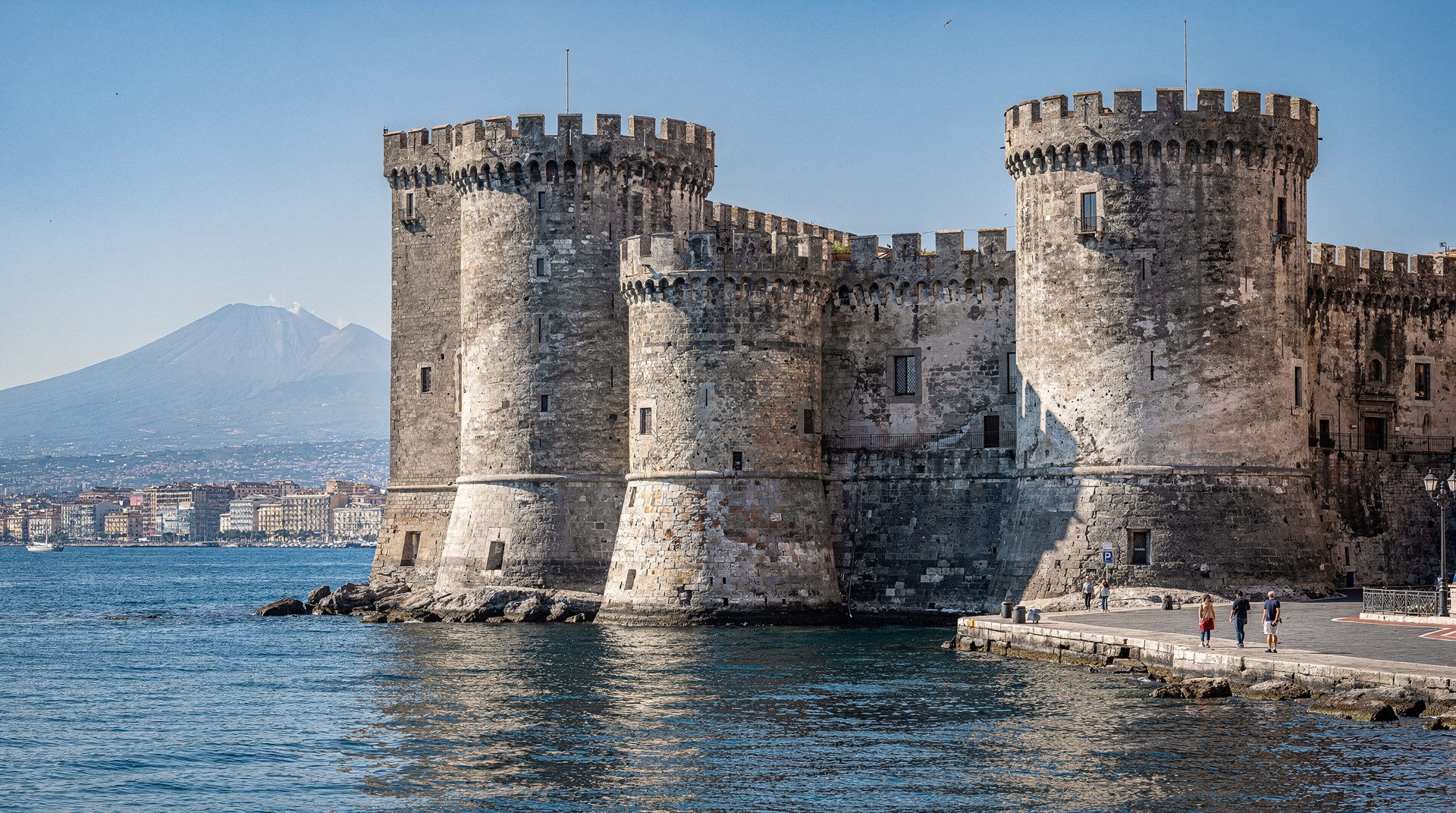
Castel Nuovo is the 13th-century Angevin castle by the port. The triumphal arch (Arco di Trionfo, 1443–1467) at the main entrance is the main event — an early Renaissance relief depicting Alfonso I’s entry into Naples. The civic museum inside has medieval Neapolitan paintings and the original bronze doors of 1474 (with a cannonball still embedded from a French siege). The exterior is free.
10. Castel dell’Ovo
Entry: free | Time: 30–45 minutes | Open daily
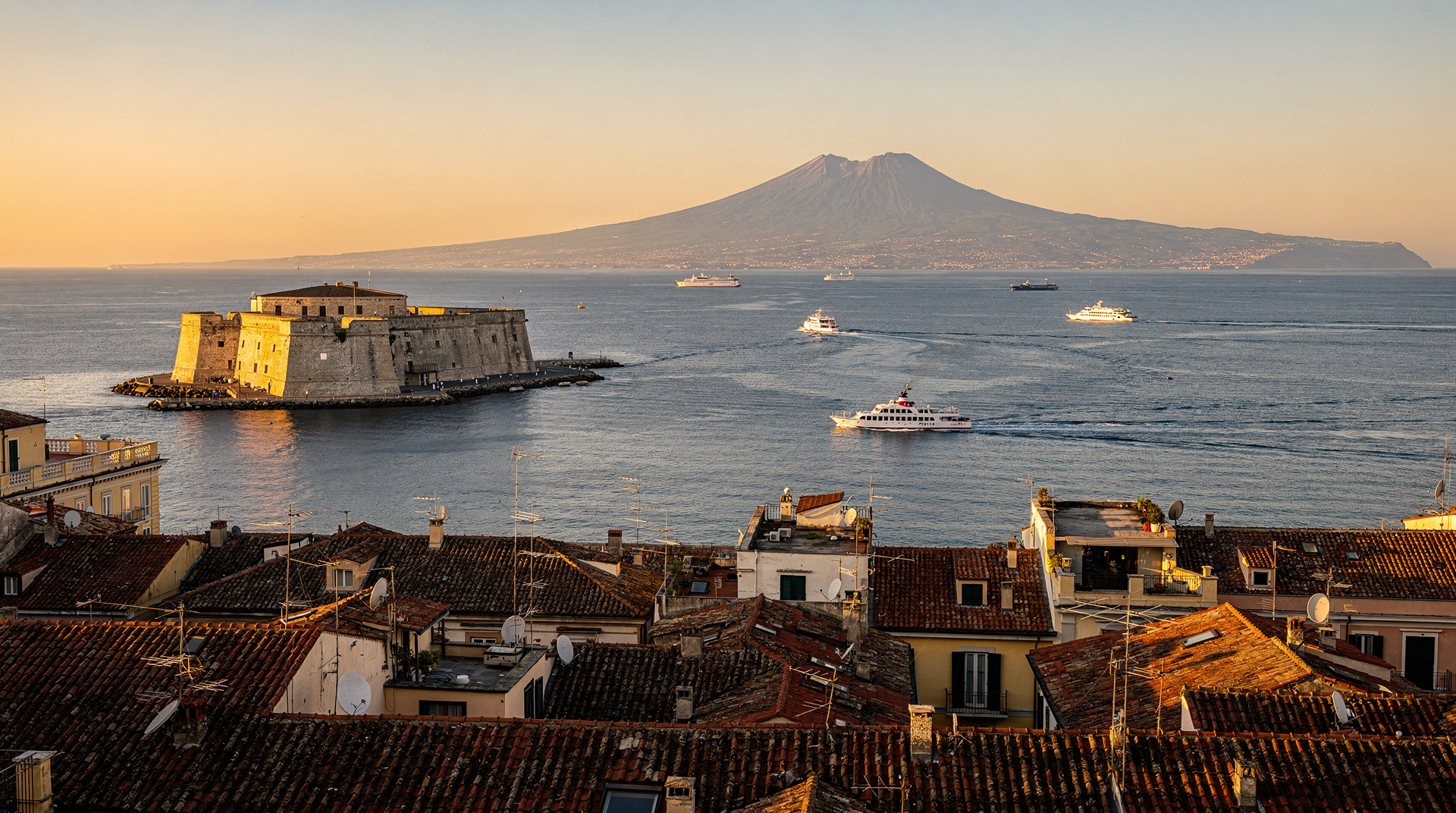
Castel dell’Ovo on its seafront promontory is primarily visual — the silhouette from the Lungomare is one of the most reproduced images of Naples. The interior is modest (exhibition spaces, battlements, limited Roman remains). Worth visiting for the views and the Borgo Marinaro fishing village at its base, less so for the museum content.
11. Naples Cathedral (Duomo)
Entry: free | Time: 30 minutes | Open daily
The Duomo houses the Chapel of San Gennaro with the saint’s blood relics, the liquefaction of which is one of Naples’ most significant religious events (September 19, December 16, and the Saturday before the first Sunday in May). The cathedral itself is a palimpsest of Angevin Gothic, baroque renovation, and earlier archaeological layers including a 4th-century baptistery.
What is overrated or missable
The hop-on hop-off bus: Covers the port, Chiaia, and the Lungomare — useful for orientation on arrival. Cannot enter the ZTL historic centre. Not worth spending an entire day on. Read the full assessment here.
Castel dell’Ovo interior: Beautiful from outside; interior is modest. The walk to the castle is the point, not the museum.
Piazza del Plebiscito restaurants: Location premium, food quality does not match. Walk two blocks in any direction for better value.
The Napoli Sotterranea on Via Toledo (Galleria Borbonica): Different route, 19th-century rather than ancient, worth visiting if you have time for both tunnels but lower priority than the Via dei Tribunali version.
Practical planning
The Campania ArteCard covers MANN, Capodimonte, and metro travel on the 3-day Naples card (€25). Break-even point is two museum entries.
For a structured order of attack, see best things to do in Naples and Naples in three days.
Frequently asked questions about top attractions in Naples
Is the MANN or the Vatican Museums better?
Different collections. The Vatican has Greco-Roman sculpture and the Sistine Chapel; the MANN has the Pompeii and Herculaneum originals plus the Farnese collection. Both are essential for serious art and archaeology visitors. The MANN is less crowded and more accessible.
Can I see all the top attractions in two days?
Two days allows MANN, Cappella Sansevero, Spaccanapoli, the underground, and a half-afternoon at Piazza del Plebiscito and the Lungomare. Capodimonte and Certosa require a third day. Pompeii is a separate day trip.
What is the best way to book tickets for Cappella Sansevero?
Directly from the chapel’s official website (museosansevero.it). No third-party reseller is cheaper. Book at least 24 hours ahead; during peak season (June–September), 72 hours or more.
Which attractions have the worst queues?
The MANN in July–August can have 45-minute door queues. Cappella Sansevero has fixed-capacity timed entry so queues are less of an issue if you book online. The underground has frequent departures and rarely needs advance booking.
Are guided tours worth the premium at these sites?
At the MANN, yes — the density of objects benefits enormously from explanation. At Cappella Sansevero, the chapel provides an audio guide for €2 and guided tours are available but not essential for a 45-minute visit. For the underground, the guided format is mandatory.
What is the best free attraction in Naples?
Spaccanapoli as a walking route. The combination of Greek-Roman street grid, baroque churches, craft workshops, and street food costs nothing and takes as long as you want. The Toledo metro station — often cited as the most beautiful in Europe — is also free to walk through.
How this list changes with the seasons
A handful of attractions on this list are meaningfully better or worse depending on when you visit. The MANN and Capodimonte are air-conditioned and equally good year-round, making them reliable choices for a hot August afternoon or a rainy winter day. Spaccanapoli’s outdoor street life is at its best in spring and autumn, when the temperature suits a slow 2-3 hour walk; in high summer, plan the walk for morning or early evening rather than midday heat. The underground sites maintain a constant 12-17°C regardless of season, which makes them a genuinely useful cooling option on the hottest August days — factor this into your itinerary if visiting in peak summer.
A realistic priority order if you only have one day
| Priority | Attraction | Time |
|---|---|---|
| 1 | Cappella Sansevero (book ahead) | 45–60 min |
| 2 | Spaccanapoli walk | 2–3 hours |
| 3 | MANN | 2–3 hours (afternoon) |
| Optional | Napoli Sotterranea | 90 min if time allows |
This order works because it front-loads the timed-entry site (Sansevero), uses the walk to cover ground between sights, and leaves the MANN — which rewards an unhurried visit — for when the day’s pace has settled. Trying to add Capodimonte or the Certosa on the same day usually means rushing one of the top three, which defeats the point of visiting at all.
Matching attractions to traveller type
Not every “top” attraction suits every visitor equally. History and archaeology enthusiasts should prioritise the MANN, the underground, and the catacombs — these reward the kind of slow, detail-oriented visit that casual sightseers sometimes rush. Art lovers get more from Capodimonte and the Cappella Sansevero than from the castles, which are stronger on atmosphere than on collections.
Families with children generally do best with Castel dell’Ovo (free, outdoor, photogenic) and a shorter underground tour, saving the MANN for a second visit when attention spans allow; see Naples with kids for a fuller family-specific list. Visitors with only a half-day should skip the museums entirely and walk Spaccanapoli — it delivers the highest density of “Naples” per hour of any option on this list.
Frequently asked questions about Top attractions in Naples — ranked honestly
Which is the best museum in Naples?
Is Cappella Sansevero worth visiting?
What is Napoli Sotterranea?
Is the Royal Palace of Naples worth visiting?
What attractions in Naples are free?
What attractions in Naples are overrated?
How many days do I need to see all major attractions?
Top experiences
Bookable activities with verified prices and instant confirmation on GetYourGuide.