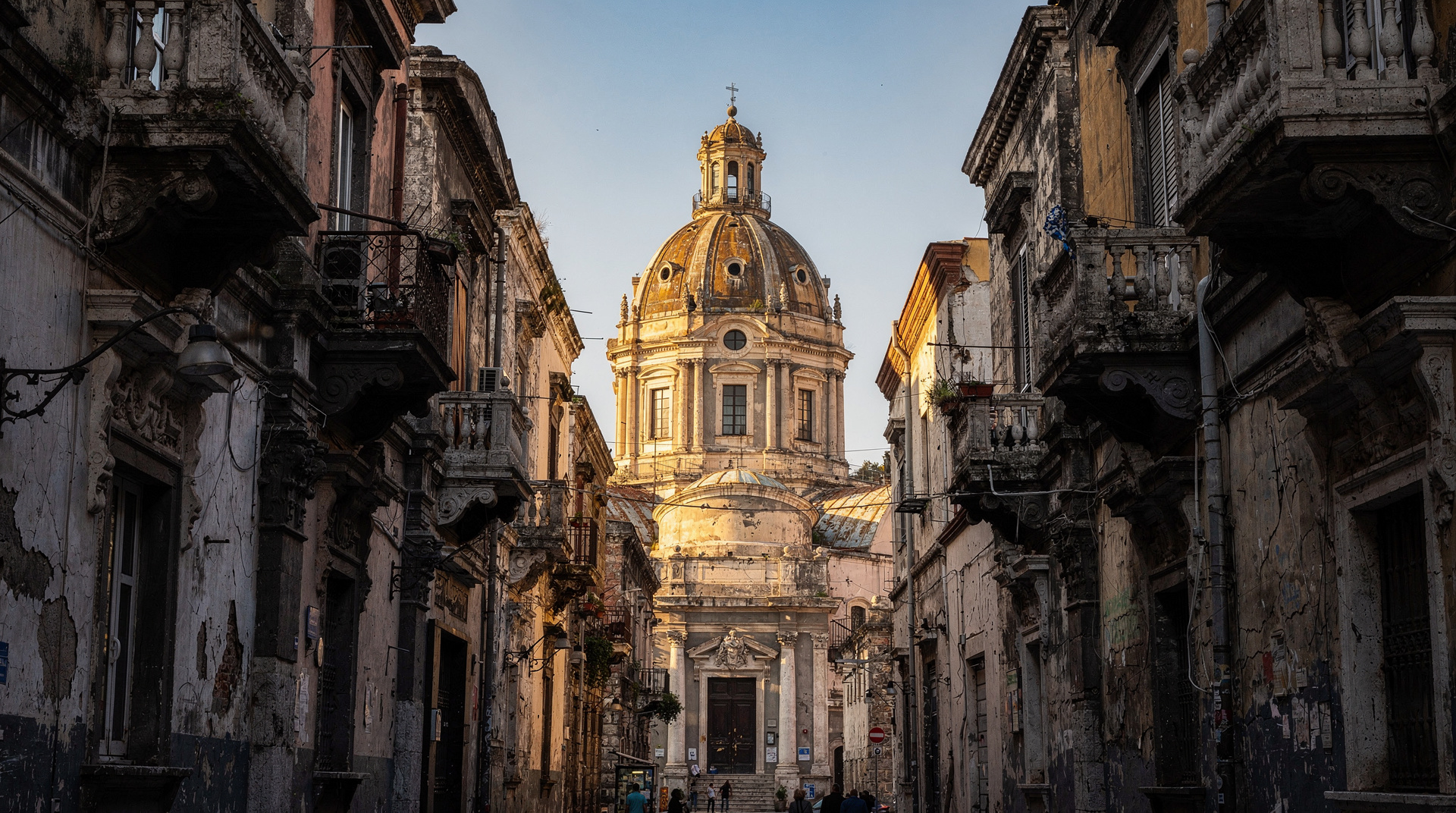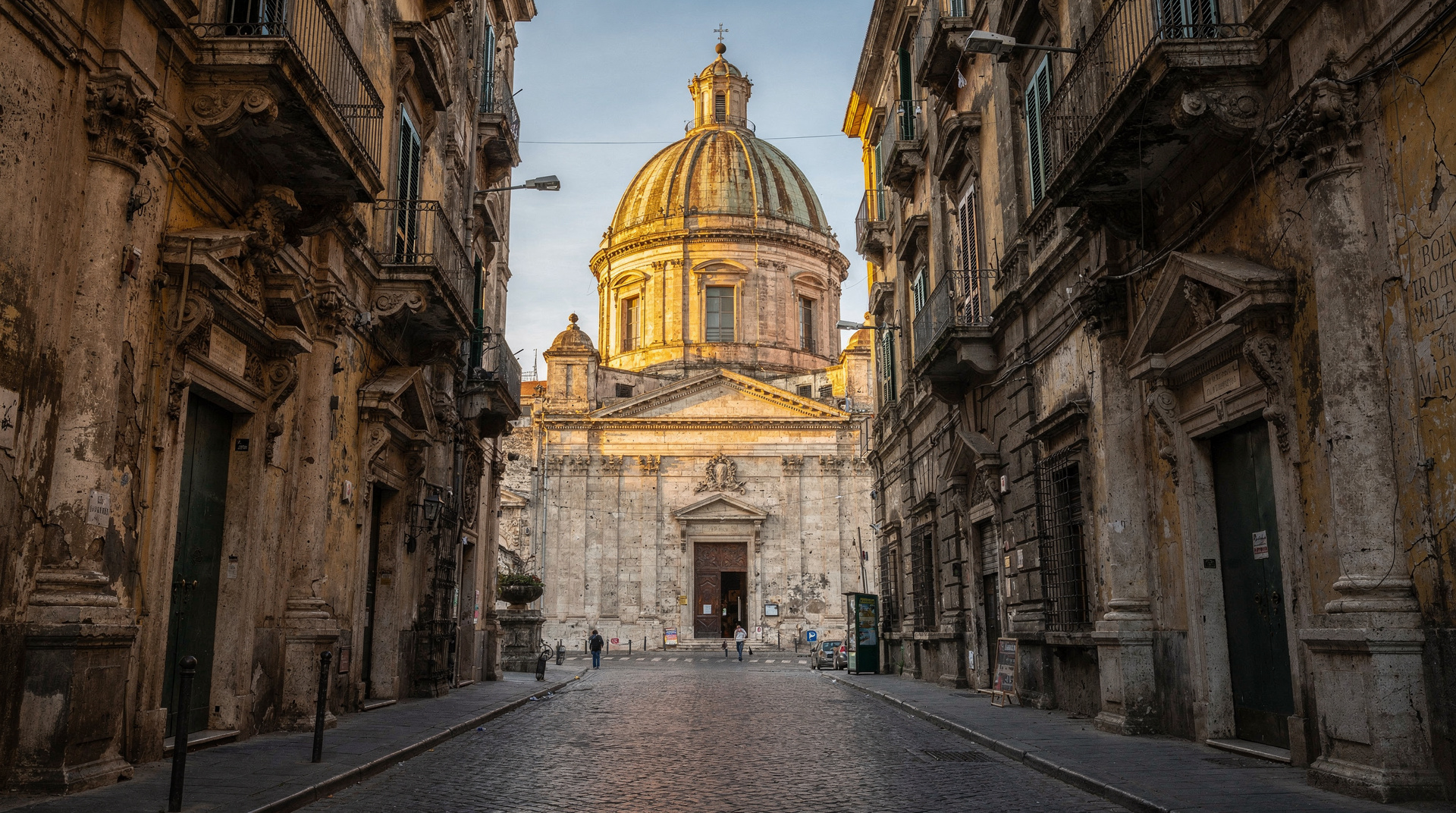
Naples Cathedral (Duomo) — guide to the city's main church
Naples: Old Town Tour with Veiled Christ and Cathedral
Is the Naples Cathedral worth visiting?
Yes, and entry is free. The Cathedral holds the Chapel of San Gennaro (patron saint of Naples) with its extraordinary silver bust and blood relic, a 4th-century baptistery with original mosaics, and an archaeological zone below ground. Allow 45–60 minutes. The cathedral is closed during masses.
Quick answer: The Naples Cathedral is free to enter, holds the San Gennaro blood relic and a 4th-century baptistery, and is one of the most historically layered buildings in the city. Allow 45–60 minutes. Visit in the morning to avoid closure during masses.
| Where | Via del Duomo 147, centro storico |
| Cost | free (archaeological zone around €3–4) |
| Time needed | 45–60 minutes, add 30 for the archaeological zone |
| Best time | weekday mornings, 9:00–10:00 |
| Getting there | 10–12 min walk from Spaccanapoli |
| Dress code | shoulders and knees covered |
A cathedral built on a city built on a city
The Naples Cathedral (Cattedrale di Santa Maria Assunta, commonly called the Duomo) stands on Via del Duomo in the eastern section of the historic centre. It is not the most architecturally striking church in Naples — that competition is intense — but it is the most historically layered.
Below the current Gothic–baroque building lie the remains of a Greek temple (6th century BCE), a Roman street grid, a 4th-century Christian basilica, and the baptistery that is the oldest surviving Christian baptistery in the western world. The visible cathedral is the uppermost layer of a 2,500-year accumulation.
Construction history: The current structure was built primarily between 1294 and 1323 under Charles II of Anjou, incorporating and replacing an earlier Norman church. The Gothic bones are still visible in the nave, though most of the interior was heavily redecorated in the baroque period (17th–18th century). The facade was rebuilt in the neo-Gothic style in 1905 by Enrico Alvino — the pointed arches and sculptural programme are 20th-century.
Getting there
Address: Via del Duomo 147 From Spaccanapoli: Walk north on Via San Gregorio Armeno then east on Via dei Tribunali, turn south on Via del Duomo. Approximately 12 minutes. From the MANN: 20 minutes south through the historic centre. Nearest metro: Università (Line 1) — 12 minutes’ walk. Cavour (Line 2) — 15 minutes.
Opening hours and entry
Hours: Monday–Saturday 8:00–12:30 and 14:30–19:30; Sunday 8:00–13:30. Entry: Free. Archaeological zone: Small fee (approximately €3); accessed via the left aisle. Baptistery (Battistero di San Giovanni): Accessed through the museum; fee included or separate (verify at entrance).
The Cathedral is closed during masses. Morning visits (9:00–11:00 on weekdays) are typically the most accessible.
The Chapel of San Gennaro (Cappella del Tesoro di San Gennaro)
The chapel is to the right of the main nave, entered through an elaborate iron screen (1668). It is the most important and most visited part of the cathedral.
San Gennaro: The bishop of Benevento martyred in approximately 305 CE, whose relics were eventually brought to Naples. He became the city’s patron saint. His skull (in the silver reliquary) and two sealed ampoules of his dried blood are the centrepiece of one of the most persistent religious phenomena in Europe.
The blood phenomenon: Three times a year, the dried blood in the ampoules is exposed before the congregation. On the successful dates, it is observed to liquefy from a dark solid to a reddish liquid. The phenomenon has been documented since the 14th century (first recorded 1389). Scientific analysis of the substance confirms it is blood; the mechanism of liquefaction is disputed — hypotheses include thixotropic behaviour (viscosity change under agitation), psychosomatic crowd response, or undocumented fraud. The phenomenon is treated by the Catholic Church as a devotional tradition rather than an official miracle.
The silver bust of San Gennaro (made 1305) is housed above the altar. It is extraordinary craftsmanship — considered one of the finest examples of 14th-century silver and enamel work in Europe.
The frescoes: The chapel ceiling has frescoes by Domenichino and Giovanni Lanfranco (1636–1641), painted in competition with each other — a famous artistic rivalry of the Roman baroque period. The Domenichino sections (vault scenes, small episodes) are more elegant and refined; the Lanfranco sections (the large cupola) are more dramatically baroque. Both are exceptional.
The main nave and gothic structure
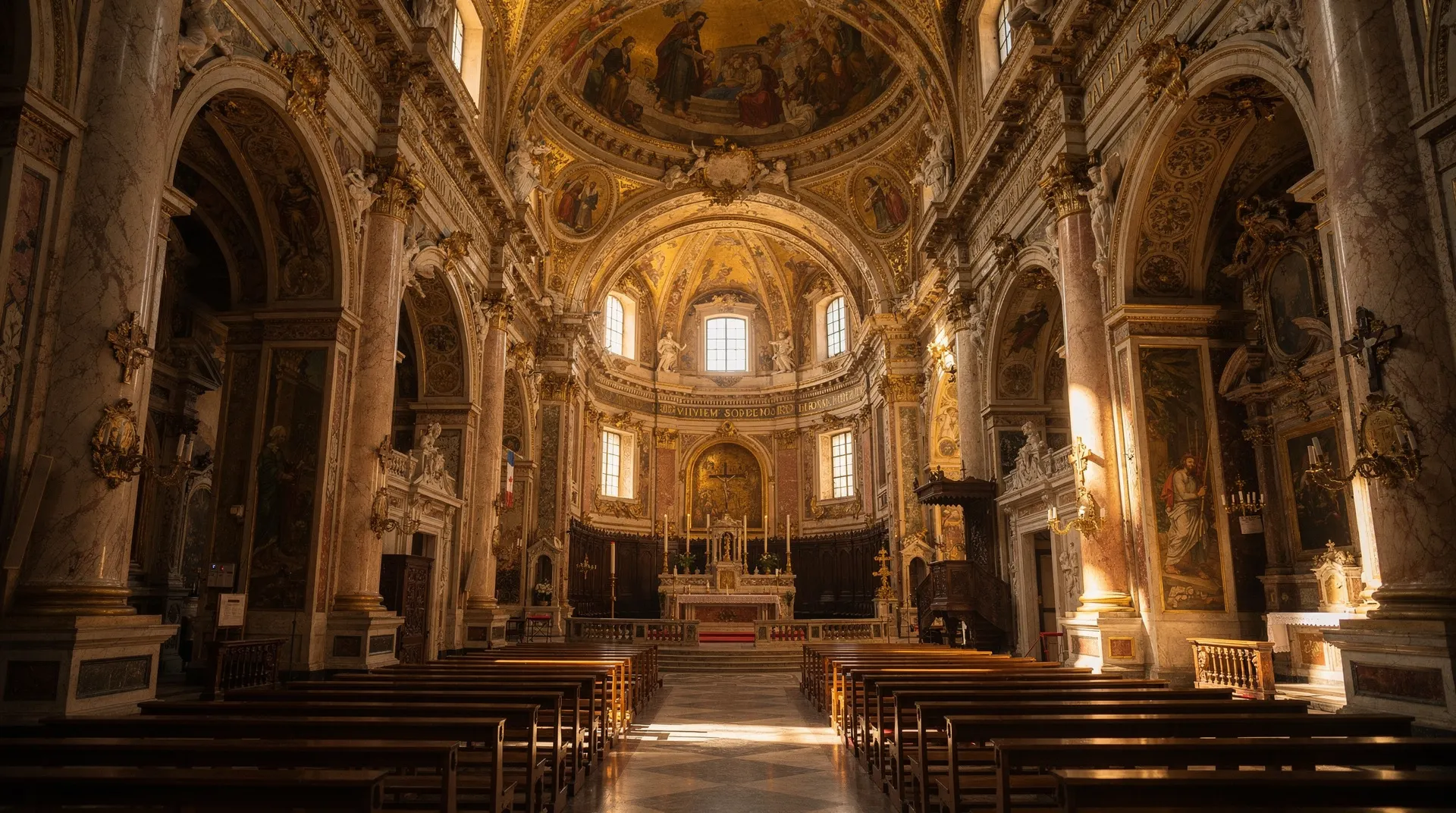
The main nave is among the longest in Italy — 101 metres — with a Gothic arcade of pointed arches. The original Gothic structure is still visible in the proportions despite the baroque overlay.
Floor: The Cosmatesque marble floor is largely medieval, with later repairs. Worth looking down as well as up.
Side chapels: Numerous chapels line the nave walls, with altarpieces ranging from the 14th to 18th centuries. The Cappella Minutolo has an intact Gothic fresco cycle (13th century) — rare in Naples. The Cappella Caracciolo del Sole has a 14th-century Lello da Orvieto mosaic floor.
The apse: The apse behind the altar has a 19th-century mosaic. The Gothic ambulatory around the apse is partially preserved.
The baptistery — oldest in the western world
The Battistero di San Giovanni in Fonte, accessed from the left aisle or through the museum, is a circular building dating to the late 4th or early 5th century CE — roughly contemporaneous with the earliest surviving Christian buildings in Rome and Ravenna.
The vault retains original mosaic decoration: Christ enthroned, scenes from the New Testament, symbolic imagery. The mosaics are not in perfect condition (many 19th-century restorations) but sections of original work survive. The iconographic programme is among the earliest examples of Christian symbolic art in Italy.
The entrance font — the actual baptismal pool — is visible in the centre of the space, now below the modern floor level.
The archaeological zone
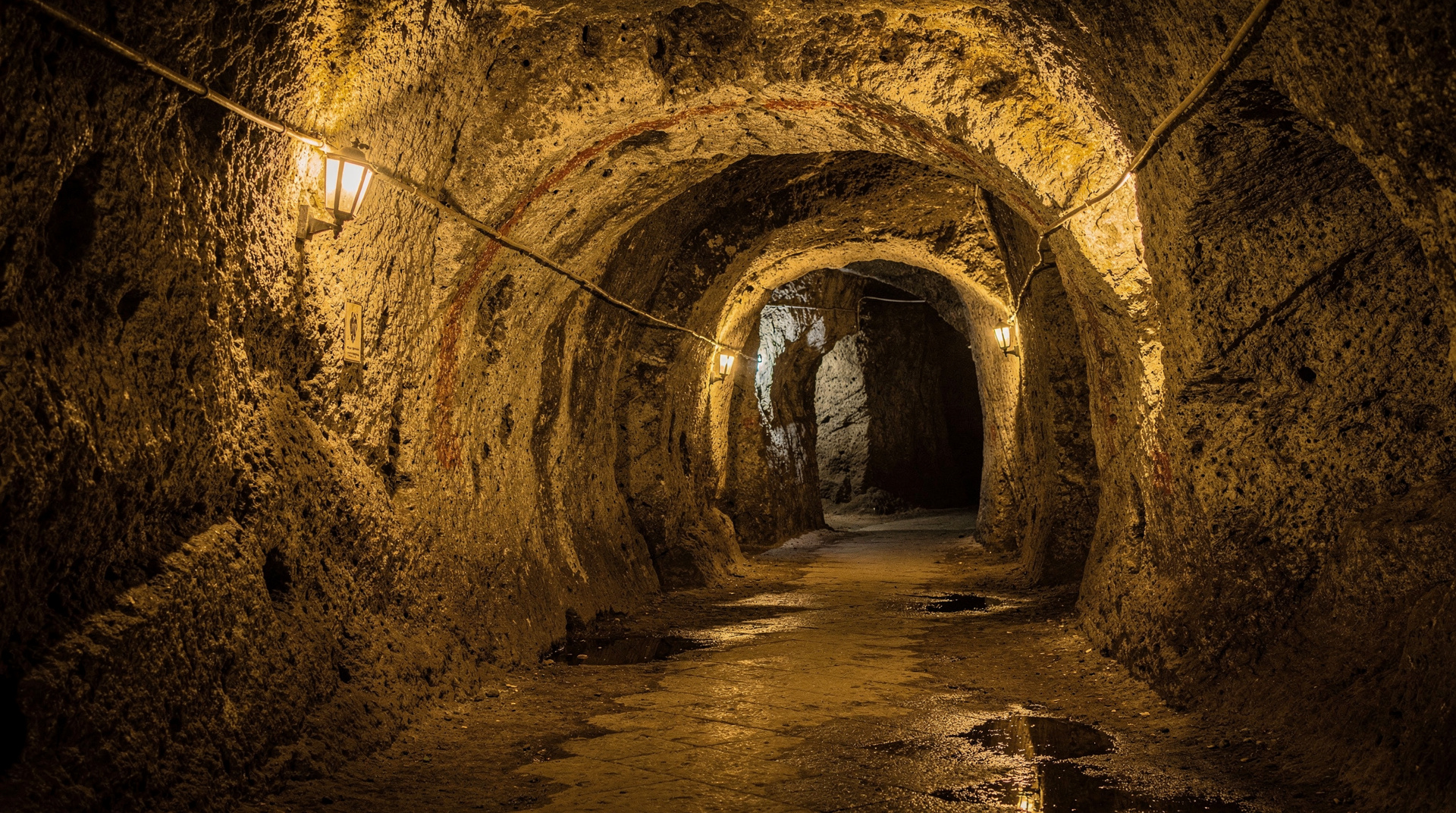
To the left of the main entrance, a staircase descends to the archaeological zone under the cathedral — remains of the Greek and Roman city, including portions of the original street grid, sections of a Greek temple, and early Christian structures.
The zone is not the most dramatic archaeological site in Naples (Napoli Sotterranea or the San Lorenzo Maggiore excavations are more extensive) but adds significant context for visitors interested in the layering of the city.
Entry approximately €3–4. Allow 30 minutes.
The blood miracle ceremony
If you are in Naples on September 19, the Saturday before the first Sunday in May, or December 16, attending the blood miracle ceremony is one of the more distinctive and uncanny experiences in the city.
The ceremony takes place in the Chapel of San Gennaro. The archbishop holds the reliquary containing the ampoules; if the blood liquefies, he announces it to the congregation with “Il miracolo è avvenuto” (the miracle has occurred). The crowd responds with relief and celebration.
Lines form several hours before the ceremony. The cathedral fills completely. Non-Catholics are welcome to attend as observers. Photography is technically allowed but discretion is appropriate — this is a devout religious gathering, not a tourist event.
Practical notes
Dress code: Shoulders and knees covered. Scarves or wraps available to borrow at the entrance.
Photography: Permitted in the main body of the cathedral; restricted during masses and ceremonies. The Chapel of San Gennaro typically prohibits photography of the reliquary at close range.
Duration: 45–60 minutes for the main cathedral including the Chapel. Add 30 minutes for the archaeological zone.
Crowds: The cathedral sees significant tourist traffic in summer, particularly the Chapel of San Gennaro. Early morning visits (9:00–10:00) are calmer.
Combining with other sights
Via del Duomo runs from the northern edge of the historic centre to the port. The MANN is 20 minutes north (turn west on Via Foria). Spaccanapoli and Via dei Tribunali are accessible 10 minutes’ walk west. The catacombs of San Gennaro in Rione Sanità are 25 minutes on foot north.
A logical morning route: Cathedral (9:00) → Spaccanapoli walking tour (10:00) → Cappella Sansevero (pre-booked, 12:00) → lunch.
Frequently asked questions about the Naples Cathedral
Is the Naples Cathedral worth visiting if I have limited time?
Yes — it is free, centrally located, and takes 45 minutes. The Chapel of San Gennaro alone is worth the visit for its architectural and historical significance. The baptistery adds an extraordinary ancient layer.
Can I visit during a mass?
The cathedral is closed to tourist visits during masses. Check hours carefully; morning masses (typically 8:30, 10:00, 12:00 on weekdays) create gaps in visiting hours.
Is the blood miracle scientifically explained?
The phenomenon has been analysed and found to be thixotropic behaviour in certain iron-rich gels, which liquefy under mechanical agitation. Whether the substance in the ampoules behaves this way is disputed — the ampoules have never been opened for scientific analysis. The Church treats it as a devotional tradition rather than declaring it a miracle.
Where is San Gennaro’s tomb?
The relics (skull and blood ampoules) are in the Cathedral. The earliest association of San Gennaro with Naples is through the catacombs in Rione Sanità — his original burial site before the relics were moved. The catacombs of San Gennaro are the historical site.
Is the Naples Cathedral the most architecturally interesting church in Naples?
The architecture is historically important but not the most visually spectacular. Gesù Nuovo (elaborate pietra lavica facade), Santa Chiara (majolica cloister), San Lorenzo Maggiore (Gothic), and Cappella Sansevero (sculpture) all make stronger architectural statements in different ways. The Cathedral’s importance is historical and devotional rather than primarily visual.
How the Cathedral compares to San Lorenzo Maggiore’s excavations
Visitors weighing up which underground archaeological layer to prioritise often ask this directly, so it’s worth being specific. The Cathedral’s archaeological zone shows fragments of the Greek and Roman street grid and early Christian structures in a compact, dimly lit space — genuinely interesting but modest in scale. The excavations beneath San Lorenzo Maggiore, a short walk away on Via dei Tribunali, are considerably more extensive: a full stretch of the ancient Roman market street (macellum) with shops and thoroughfares still walkable underground — see the Naples history guide for how this fits the city’s layered past.
If you only have time for one underground archaeological visit in the centro storico, San Lorenzo Maggiore’s is the more complete experience — but the Cathedral’s is free to combine with the main church visit, while San Lorenzo’s charges separately. For the fullest underground picture of the ancient city, pair either with Napoli Sotterranea, which covers the Greek-era aqueduct network on a different, larger scale entirely.
Why the Duomo works well as a first stop
Because it’s free, centrally located, and takes under an hour, the Cathedral is a natural opening move for a first morning in Naples — it eases you into the city’s layered history before the denser, ticketed sights. It sits directly on the route between the MANN to the north and Spaccanapoli/centro storico to the south, so it slots into almost any walking itinerary without a detour.
For visitors building a first full day, the Naples self-guided walking tour uses the Cathedral as an early-morning anchor point precisely for this reason. If you’d rather not navigate the layered history alone, a guided centro storico walk that includes the Duomo removes the need to piece the story together from plaques.
Historic centre walking tour with Cappella Sansevero and Duomo areaFrequently asked questions about Naples Cathedral (Duomo) — guide to the city's main church
What is the blood miracle of San Gennaro?
When does the blood miracle happen at Naples Cathedral?
What is the 4th-century baptistery in the Naples Cathedral?
Is the Naples Cathedral free?
Where is the Naples Cathedral?
Top experiences
Bookable activities with verified prices and instant confirmation on GetYourGuide.