Napoli Sotterranea: what to expect on the underground tour
Naples: Naples Underground Entry Ticket and Guided Tour
Duration: 1.5-2h
What is Napoli Sotterranea and is it worth visiting?
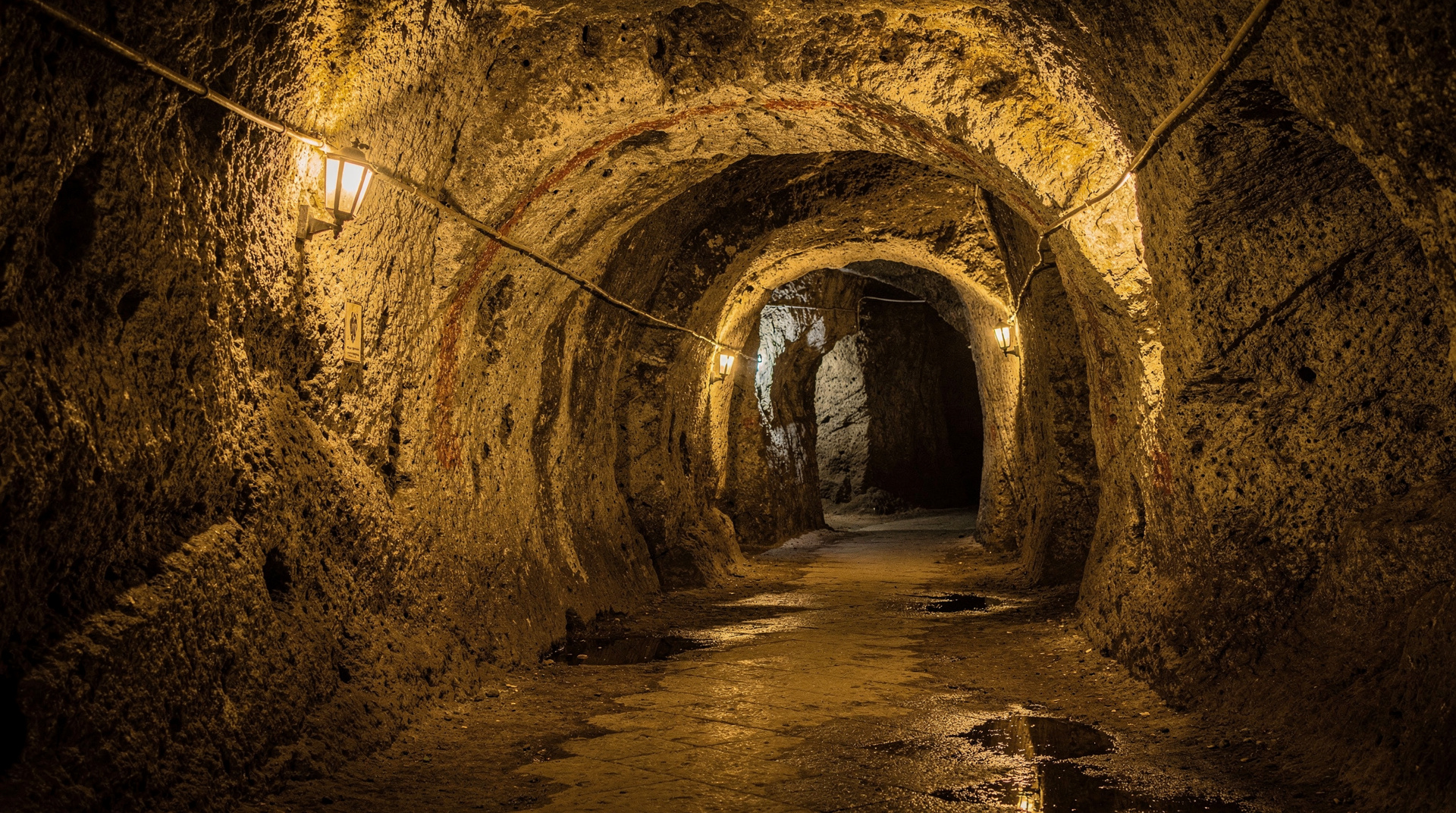
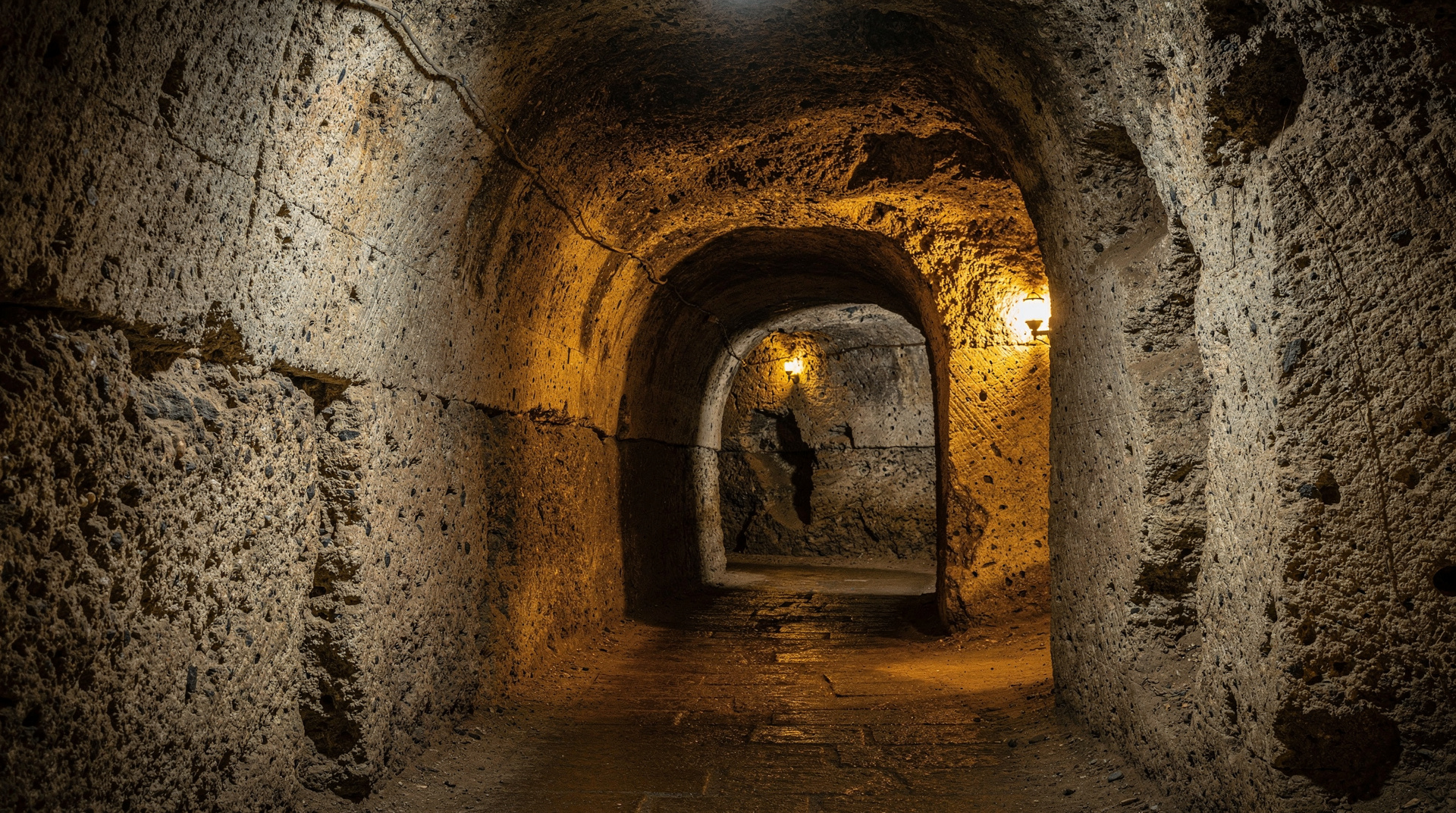
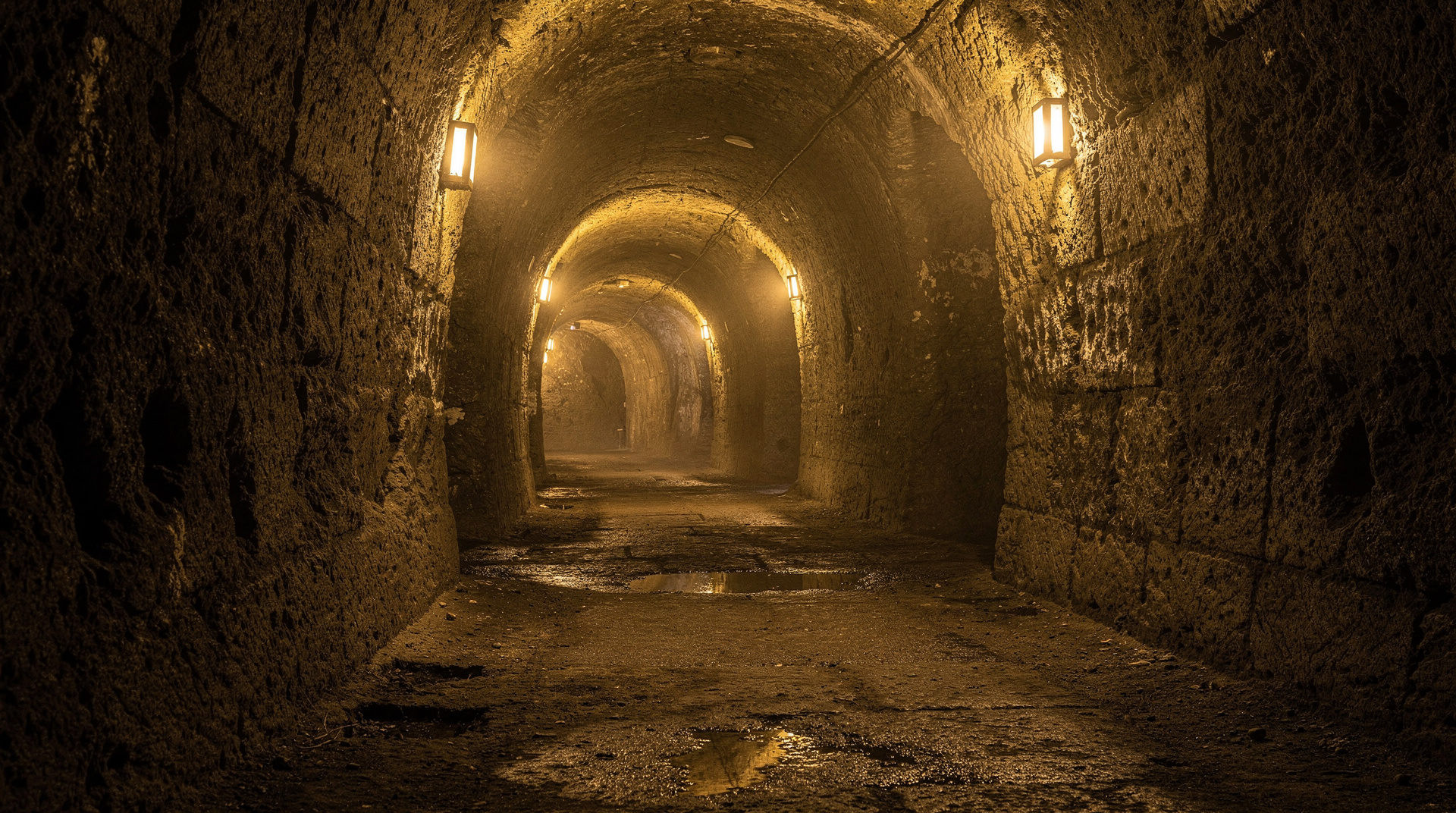
Napoli Sotterranea is a guided tour through tunnels and cisterns carved under central Naples starting in the 4th century BC. The tour includes Greek-Roman water channels, a section navigated by oil lamp through very narrow passages, and a WWII air-raid shelter. It lasts 80 minutes and costs €12. It is worth it for history-minded visitors; not suitable for anyone with severe claustrophobia.
| Where | Piazza San Gaetano, centro storico |
| Cost | €12 standard tour; €15 extended (2 hrs) |
| Time needed | 80 minutes standard; half-day combined with nearby sights |
| Getting there | Metro Linea 1 to Dante, 5-min walk |
| Best time | Morning slots (10:00–10:30) for smaller groups |
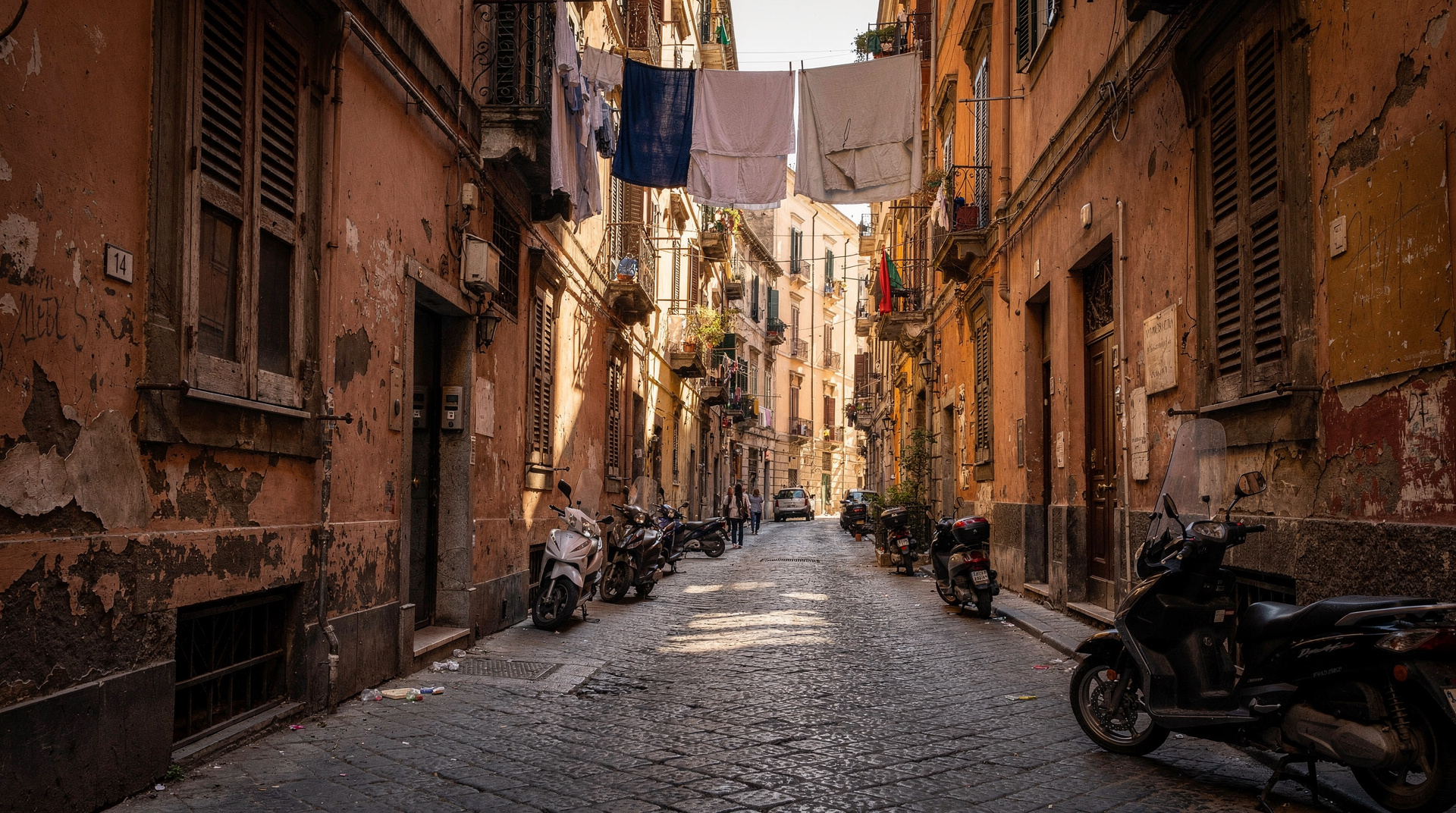
There are more than 80 access points to the underground beneath central Naples. Napoli Sotterranea manages one of the most visited — a 1.2-kilometre section of connected cisterns, tunnels, and chambers under Piazza San Gaetano, in the core of the centro storico. The organisation has been running public tours since 1992 and is one of the most established underground tour operators in southern Italy.
The appeal is genuine: this is not a theme-park reconstruction but actual Greek tunnelling from the 4th–3rd centuries BC, expanded by the Romans, used as a wartime shelter in the 1940s, and only systematically explored from the 1980s onward. Visiting does require tolerating confined spaces and some physical discomfort. What you get in return is 2,500 years of urban history accessible in a single 80-minute walk.
What the tour actually covers
The tour departs from a courtyard entrance off Piazza San Gaetano, descends 45 steps, and proceeds through a sequence of connected spaces:
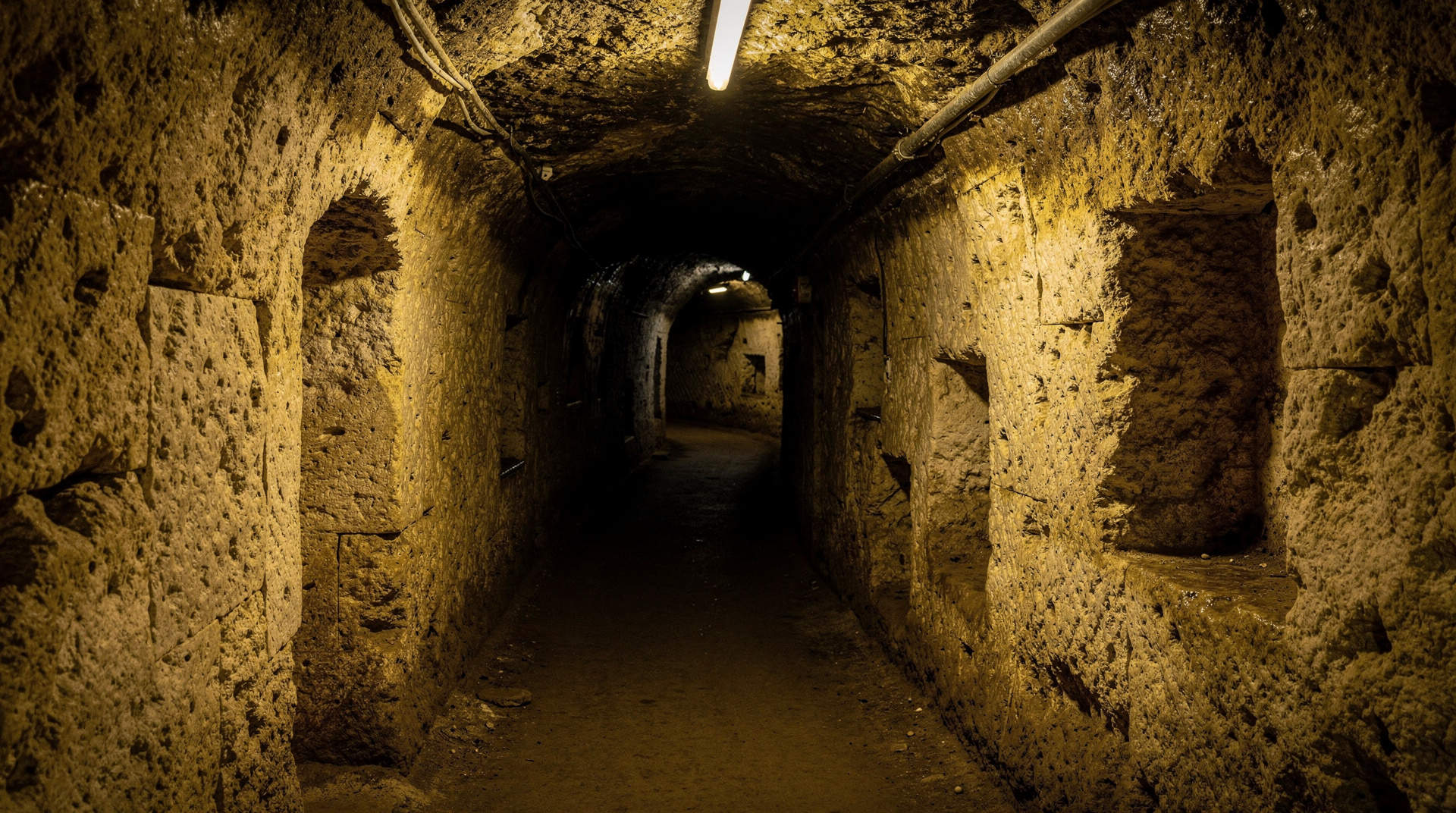
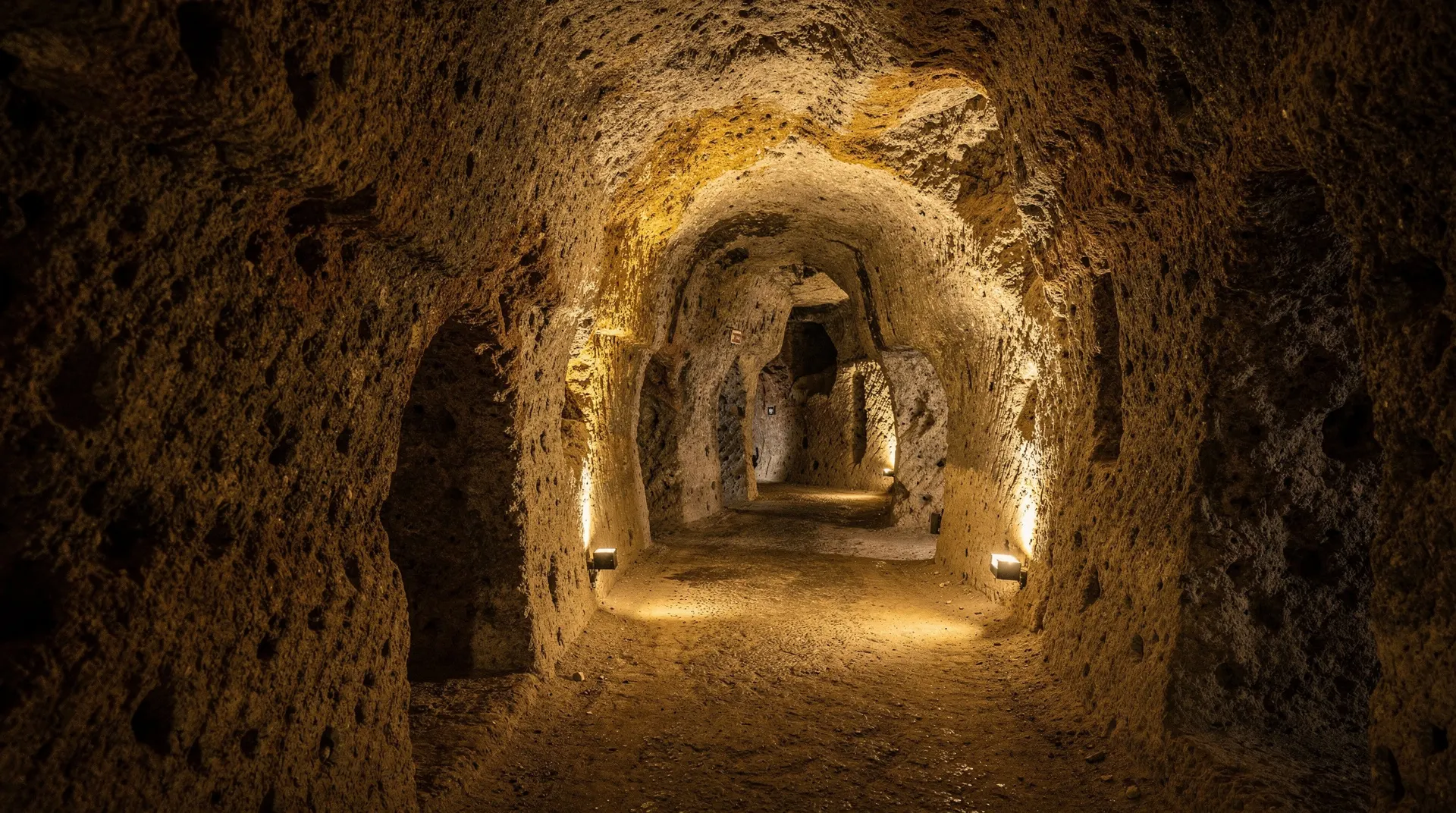
The Greek cistern channels. The earliest tunnels were cut directly into the tufa bedrock by Greek workers building the city’s water supply. The channels are between 40 and 70 cm wide — the width required to lower a water bucket. Waterproofed with opus signinum (Roman lime and ceramic aggregate), they fed into larger collection chambers. You can see the original tool marks in the walls.
The Roman expansion. As Neapolis grew under Roman rule, the cistern network expanded to serve bath complexes, private households, and the public fountains characteristic of Roman city planning. The Romans widened and deepened sections of the Greek network and added distribution chambers — larger spaces where multiple channels converge. The underground population at peak Roman-period usage (1st–2nd centuries AD) could supply water to a city of 300,000–400,000 people.
The aqueduct connection. The network fed into the Carmignano aqueduct, which supplied Naples until it was damaged during the 1656 plague and definitively cut by the war of 1884. After the aqueduct failed, the cisterns gradually filled with rubble and debris thrown in from above. This filling is part of why the tunnels are still structurally intact — the pressure of the fill stabilised the tufa walls.
The lamp passage. The narrowest section of the tour — approximately 50 metres through passages 45–50 cm wide. Each visitor receives a terracotta oil lamp. The passage is completely dark except for these flames. It is the most talked-about part of the tour and divides visitors clearly: some find it genuinely atmospheric and memorable; others find it uncomfortable. If you are moderately claustrophobic, assess honestly at the entrance — the guide will show you the width before you commit.
The WWII air-raid shelter. One of the larger cistern chambers was converted to an air-raid shelter in 1942 for the residents of the surrounding streets. Families from above-ground homes relocated here during Allied bombing campaigns from 1942 to 1944. The shelter contains personal objects left behind when residents finally returned to the surface: children’s shoes, a cot, handwritten calendars marking raid nights with crosses, a small altar. The objects were not staged — this is the archaeological record of people who lived underground for months. The effect on visitors is typically more powerful than the Greek and Roman sections because the human scale is immediately legible.
The theatre discovery. In the deeper sections, the tour passes above excavated sections of a Roman theatre — the Teatro di San Gregorio Armeno or Teatro Romano — whose stage and orchestra elements are visible below the current floor level. The theatre was rediscovered in the 1990s when workers digging foundations hit the stone structure. It is partially excavated; further work is ongoing.
Napoli Sotterranea: official guided tourAccessibility and physical demands in detail
Beyond the well-documented 45 cm lamp passage, the full tour involves a 45-step stone descent at the start (and the equivalent ascent at the end), uneven tufa flooring throughout with occasional low ceilings requiring a slight stoop, and roughly 80 minutes of standing and walking with no seating along the route.
None of this is extreme for an able-bodied adult, but it adds up for visitors with knee or back conditions, and it rules out wheelchairs and standard strollers entirely — there is no accessible alternative route through this particular site. Visitors with milder mobility concerns who still want an underground experience should compare with the catacombs of San Gennaro, which involve fewer steps and no narrow squeezes, though they are not step-free either.
The extended itinerary
Beyond the standard tour, Napoli Sotterranea offers an extended route available at selected times (check the website for schedule — typically Saturday and Sunday afternoons). The extended itinerary adds sections that include:
- The oldest Greek cistern chambers, with visible tool marks from the original 4th-century BC excavation
- A water distribution junction where multiple channels converge in a space large enough for five or six people to stand
- Additional WWII sections with graffiti from shelter inhabitants, including drawn maps, messages to family members, and the outline of a soldier
The extended tour lasts approximately 2 hours and costs €15. It is not significantly more physically demanding than the standard version but requires slightly more comfort with confined spaces.
Location and practical access
Address: Piazza San Gaetano, 68, 80138 Naples. The entrance is in a courtyard off the piazza — look for the Napoli Sotterranea sign on the gate.
Getting there: Metro Line 1, Dante station (5-minute walk east along Via dei Tribunali). Bus 201 from Piazza Garibaldi. On foot from Spaccanapoli via Via San Biagio dei Librai, approximately 5 minutes.
Opening hours: Daily 10:00–18:00 (last tour). Extended tours on weekends. Closed Christmas Day and sometimes Easter Sunday — check the website.
Temperature: 12–15°C underground, year-round. Bring a layer regardless of external weather.
Photography: Allowed without flash. Tripods are not permitted on standard tours.
How it fits into a day in the centro storico
Napoli Sotterranea is on the main Spaccanapoli tourist axis. A logical half-day combines:
- Morning walk along Spaccanapoli from east to west
- Visit to the Cappella Sansevero (home of the Veiled Christ) — 10 minutes’ walk southwest of San Gaetano; book this in advance as slots are timed and limited
- Napoli Sotterranea tour at midday or afternoon
- Late afternoon walk to the Naples cathedral (Duomo) — 5 minutes east of San Gaetano
This covers a concentrated slice of Naples archaeology without requiring transport between sites.
Who should and should not do this tour
Well suited for: Visitors with an interest in urban history, WWII history, archaeology, or the mechanics of ancient water supply. Adults and older children who are not claustrophobic. Anyone who wants to understand how the physical fabric of modern Naples rests on layers of earlier cities.
Less suited for: Visitors with severe claustrophobia (the lamp passage is genuinely tight). Visitors with mobility limitations (45-step descent, uneven tufa floors). Very young children (passages are not safe with small hands near oil lamps).
Practical tips for the best visit
Time of day: Morning tours (first slot at 10:00 or 10:30) have smaller groups than afternoon slots in peak summer. A tour with 15 people feels considerably different from one with 30 — both are offered at the same ticket price. On weekdays in spring and autumn, all tours are manageable. Weekend afternoons in July–August can hit maximum group sizes.
Clothing: The underground is 12–15°C regardless of external temperature. A light jacket or layer makes the 80-minute experience significantly more comfortable. Flat-soled, closed shoes are essential — sandals and flip-flops are unsafe on uneven, sometimes damp tufa.
With children: The minimum practical age for children is about 6–7 years old for the standard tour, and 8–9 for the lamp passage. The WWII shelter section with its abandoned personal objects is historically rich but requires children who can process discussions of war and bombing calmly. The tour guides at Napoli Sotterranea are experienced with children and typically adjust the narrative accordingly.
Photography preparation: If photography matters to you, bring a wide-angle lens or ensure your phone’s widest mode is accessible. The cistern chambers are tighter than they appear in photographs — a standard portrait focal length captures walls but not the spatial quality of the tunnels. A small torch or the phone’s flashlight is useful for examining detail in less-lit sections.
Language and guides: The quality of the guide is significant to the experience. English-language guides at Napoli Sotterranea are generally excellent — the organisation trains its own staff — but occasionally you get a guide whose English is stronger in the formal scripted sections than in the conversational Q&A parts. If you want to ask detailed historical or archaeological questions, arriving with some background reading pays dividends.
What visitors consistently say afterward
Reviews and word-of-mouth feedback on Napoli Sotterranea cluster around a few consistent themes: the WWII shelter section is described far more often as the emotional highlight than the older Greek and Roman engineering, despite the latter being historically older and, in a strict sense, more remarkable.
The lamp passage generates the most polarised reactions — a meaningful minority describe it as the best five minutes of their Naples trip, while others admit they were relieved when it ended. Almost universally, visitors report that the guide’s storytelling quality shapes the experience more than the physical setting itself, which is part of why picking a morning slot with a smaller, more attentive group tends to produce better reviews than a rushed peak-afternoon group of 25–30 people.
The broader cistern network: what remains unexplored
The section managed by Napoli Sotterranea is one corridor through a much larger system. Estimates for the total extent of the ancient cistern network beneath central Naples range from 90 to over 700 km — the uncertainty reflects how little systematic mapping has been done. The Napoli Sotterranea organisation has explored approximately 2 km of accessible passages; much of the rest is inaccessible, flooded, or structurally unstable.
This means the tour you take is genuinely representative of a small fraction of what exists. The cisterns beneath the centro storico are connected — channels link at distribution points — and extend under the entire Greek and Roman city footprint. Every time foundations are dug for new construction in the historic centre, workers are required by law to stop and report if they hit archaeological remains. This happens several times a decade.
The WWII shelters used sections of the network that are not included in the standard Napoli Sotterranea tour. Several additional access points — including ones in residential buildings and churches — have been documented by local researchers but are not currently open to visitors. The full extent of the inhabited shelter during the 1942–1944 bombing period encompassed dozens of separate complexes throughout the city.
Underground photography tips
The challenging lighting conditions underground require some preparation for good photography:
Phone cameras: Modern phones in night mode or pro mode can capture the cistern walls and wider chambers reasonably well. The lamp passage — where individual oil lamps are the only light source — is very difficult to photograph without dedicated equipment. A slow shutter speed on manual mode, pressed against a wall for stability, can produce interesting results.
Flash: The guide will advise on the tunnel surfaces. In the Greek cistern sections, direct flash bleaches the tufa colour. Bounced or diffused light gives better results. In the WWII shelter section, normal flash is acceptable.
Specific subjects: The tool marks in the original Greek tufa walls — the individual chisel strokes visible in the rock surface — photograph well at close range with angled light. The waterproof opus signinum lining of the cistern channels (visible in some sections) shows its composite texture clearly in detailed shots.
Frequently asked questions about Napoli Sotterranea
Is Napoli Sotterranea the same as the Galleria Borbonica?
No. Napoli Sotterranea (the non-profit organisation) operates the Greek-Roman cistern network under Piazza San Gaetano. The Galleria Borbonica is a separate 19th-century Bourbon-era tunnel in the Chiaia district. Both are worthwhile; they are physically distant from each other and cover different periods of history.
How does it compare to the catacombs?
The catacombs (San Gennaro, San Gaudioso) are burial sites with Christian frescoes — primarily of interest for religious art and early Christian history. Napoli Sotterranea is civic infrastructure — aqueducts and shelters. They are complementary visits, not competing ones. For a full comparison, see underground Naples compared.
Can I visit alone or does everyone go in a group?
The tours are guided group visits — typically 15–25 people. There is no solo route available. If you want a private experience, private group bookings can be arranged through the official website.
Are the online ticket prices the same as at the door?
Yes, there is typically no price differential between advance online booking and door pricing at Napoli Sotterranea. The advantage of online booking is not price but guaranteed slot time.
Is Napoli Sotterranea run by the city?
No. It is managed by the Associazione Culturale Napoli Sotterranea, a non-profit cultural association. The site is private, not municipal. The cooperative maintains the tunnels and employs local guides.
Comparing Napoli Sotterranea to nearby underground options
If you are deciding between Napoli Sotterranea and the other underground sites in the same district, the practical distinction is subject matter and comfort level: Napoli Sotterranea covers civic engineering (aqueducts, wartime shelters) with the tightest passages of any site; the Galleria Borbonica covers 19th-century military and wartime history with wider, more comfortable tunnels; and the catacombs of San Gennaro cover early Christian burial and art in large open chamber spaces, not narrow tunnels at all.
Visitors who found Napoli Sotterranea’s lamp passage uncomfortable should not extrapolate that discomfort to the catacombs, which are a fundamentally different kind of underground space. For the fullest comparison across all four, see the naples-underground-guide.
Booking tips and avoiding disappointment
Book online at least the day before if you have a fixed schedule — while weekday slots rarely sell out, arriving without a reservation means accepting whatever slot is available, which can mean a 1–2 hour wait in peak summer. If you are combining this with the Cappella Sansevero on the same day (a common pairing given the short walk between them), book Sansevero first since its slots sell out much faster, then fit Napoli Sotterranea around that fixed time. Both are cash- and card-friendly at the door, but online booking guarantees your preferred time slot rather than the price.
Naples underground: hidden city guided experienceFrequently asked questions about Napoli Sotterranea: what to expect on the underground tour
How narrow are the passages in Napoli Sotterranea?
How deep underground does Napoli Sotterranea go?
Do I need to book Napoli Sotterranea tickets in advance?
How long does the tour last?
What languages are available?
Is Napoli Sotterranea suitable for children?
Is there a reduced ticket price?
Top experiences
Bookable activities with verified prices and instant confirmation on GetYourGuide.