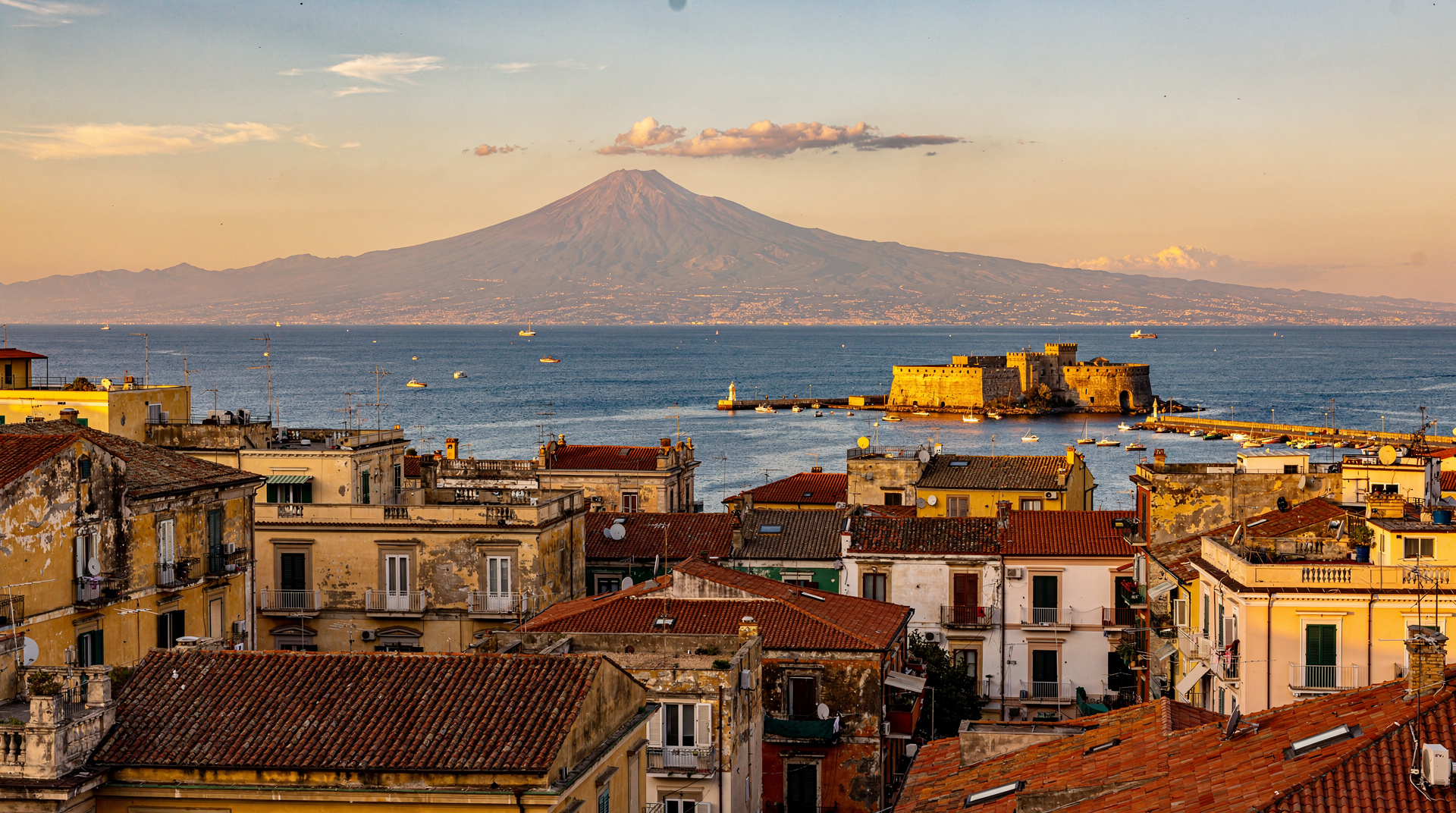
Centro storico — Naples
Navigate Naples' UNESCO-listed historic centre — Spaccanapoli, the Duomo, Cappella Sansevero, San Gregorio Armeno, and the best street food stops.
Naples: Walking Tour of the Historical Center
Quick facts
- UNESCO status
- Listed 1995 as "Historic Centre of Naples"
- ZTL hours
- Private vehicles restricted 9h–17h (weekdays)
- Main artery
- Spaccanapoli (Via Benedetto Croce / Via San Biagio dei Librai)
- Key metro stop
- Dante (Line 1) or Università (Line 1)
- Best for
- Architecture, street food, churches, underground tours
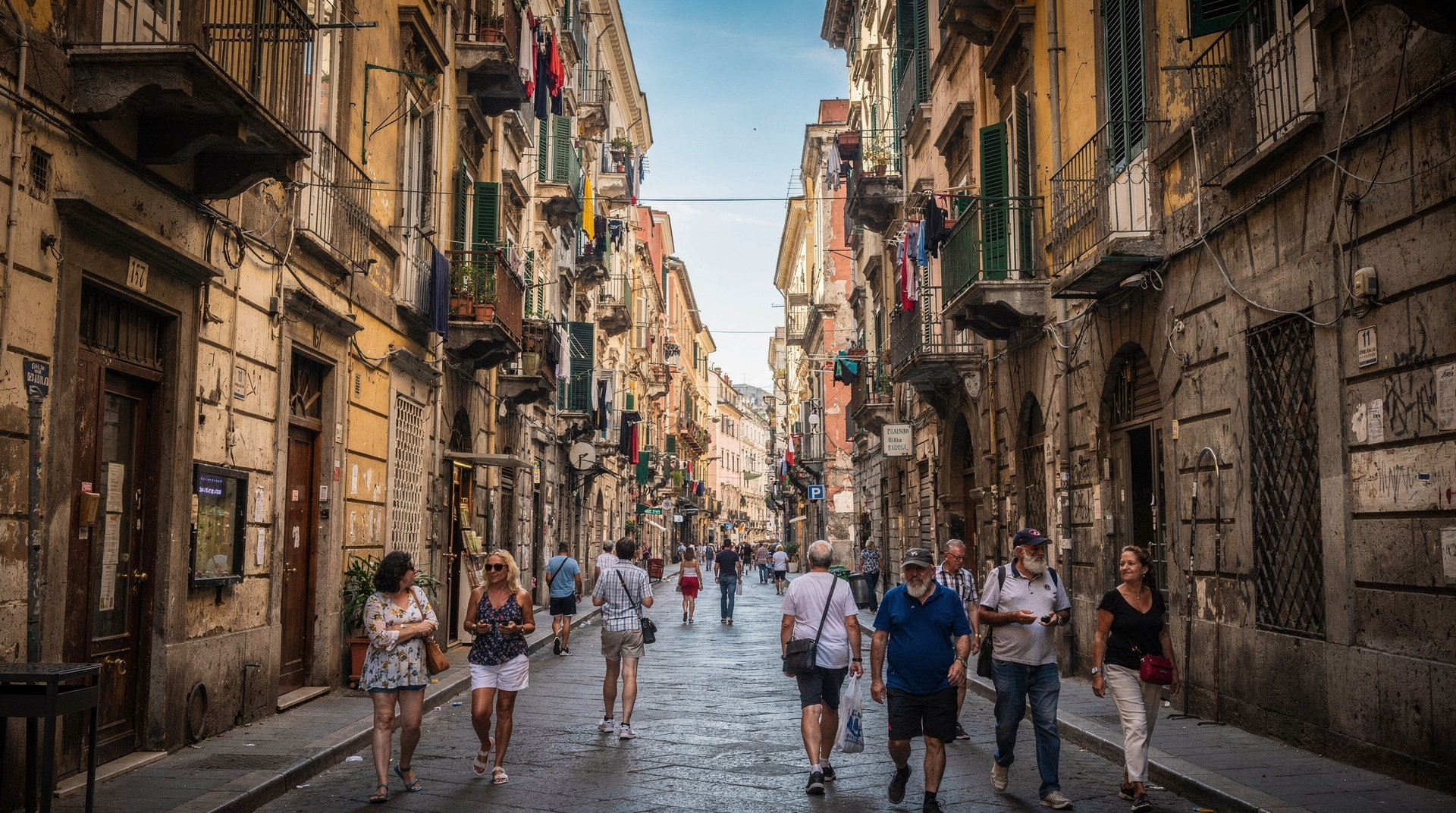
Few neighbourhoods in Europe have as much compressed into as small a space as the centro storico of Naples. The Greek city of Neapolis — founded circa 470 BC — is still legible in the street grid: three main east-west arteries (decumani) cut by narrow north-south lanes (cardines) at regular intervals. Walk it once and you are walking through 2,500 years of continuous urban life.
| Where | Central Naples, around Via Duomo and Spaccanapoli |
| Cost | Free to walk; Sansevero chapel ~€8–10, Napoli Sotterranea ~€15 |
| Time needed | Half a day for highlights; a full day for depth |
| Getting there | Metro Line 1 to Dante or Università |
| Best time | Before 10:00 or after 17:00; avoid August middays |
The UNESCO grid
The historic centre was inscribed on the World Heritage list in 1995 for “outstanding universal value” — specifically for the layering of civilisations visible in a single city block. Dig any foundation in this neighbourhood and you hit Roman thermae, Greek fortifications, or early-Christian catacombs. The density of monuments per square kilometre is unmatched in southern Italy.
Orientation: the central spine is Spaccanapoli (see the dedicated Spaccanapoli page for street-by-street detail). The upper decumano — Via dei Tribunali, also known as Decumano Maggiore — runs parallel one block north and is slightly wider. A third artery, Via Anticaglia, runs further north but is less visited. The neighbourhood is roughly bounded by Via Toledo to the west, Piazza Garibaldi to the east, and the two hills (Vomero, Capodimonte) to the north.
Cappella Sansevero and the Veiled Christ
The Sansevero chapel (Via Francesco De Sanctis 19) is the single most technically remarkable work of art in Naples, and for many visitors in all of Italy. The Cristo Velato — Veiled Christ — by Giuseppe Sammartino (1753) is a full-size marble figure under what appears to be a gauze veil: veins, eyelids, ribs visible through it. The rest of the chapel contains allegorical sculptures commissioned by Raimondo di Sangro, an 18th-century polymath who was also accused of alchemy and necromancy (the anatomical machines in the basement are real, and disturbing).
Entry: around 8–10 €. Timed slots sell out days ahead in peak season — book online. The chapel is small; tours and independent visitors are staggered. For depth, see the Cappella Sansevero guide.
Guided visit to Cappella Sansevero with a local art historianThe Duomo (Cattedrale di Santa Maria Assunta)
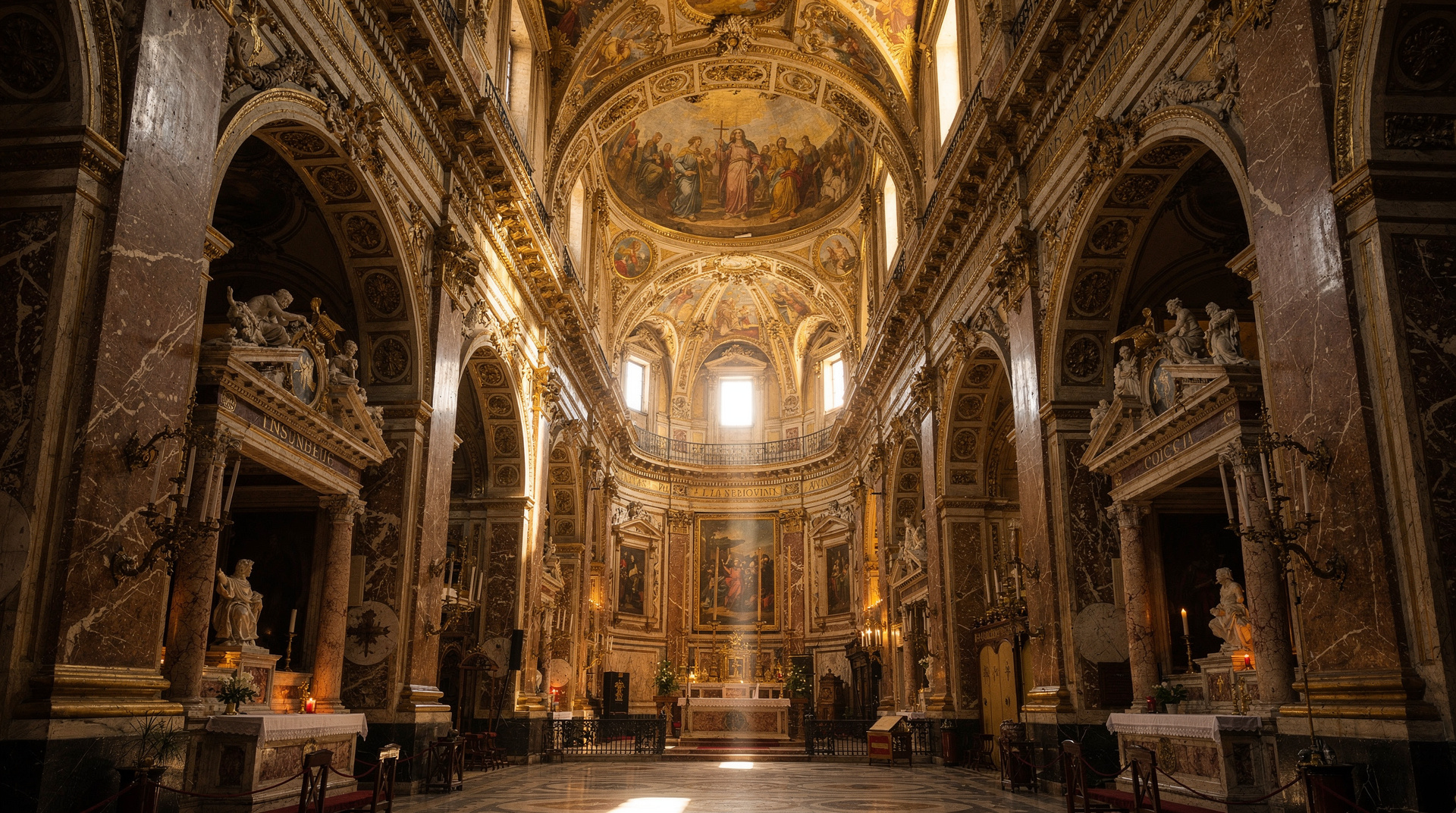
The Duomo on Via Duomo (the main north-south street bisecting the historic centre) is a palimpsest: a Gothic cathedral built in the 13th–14th centuries on top of an early-Christian basilica on top of a Roman temple. The Chapel of San Gennaro contains the saint’s head and two vials of blood that allegedly liquify on three feast days (September 19, December 16, and the Saturday before the first Sunday in May). When the blood fails to liquify, tradition holds that disaster follows — the last notable failure was 1980, the year of the Irpinia earthquake.
The underground zone accessible from the cathedral shows Greek and Roman remains. Free entry to the main church; small charge for the archaeological area. See the Duomo guide for opening hours and feast day logistics.
Napoli Sotterranea — the underground tunnels
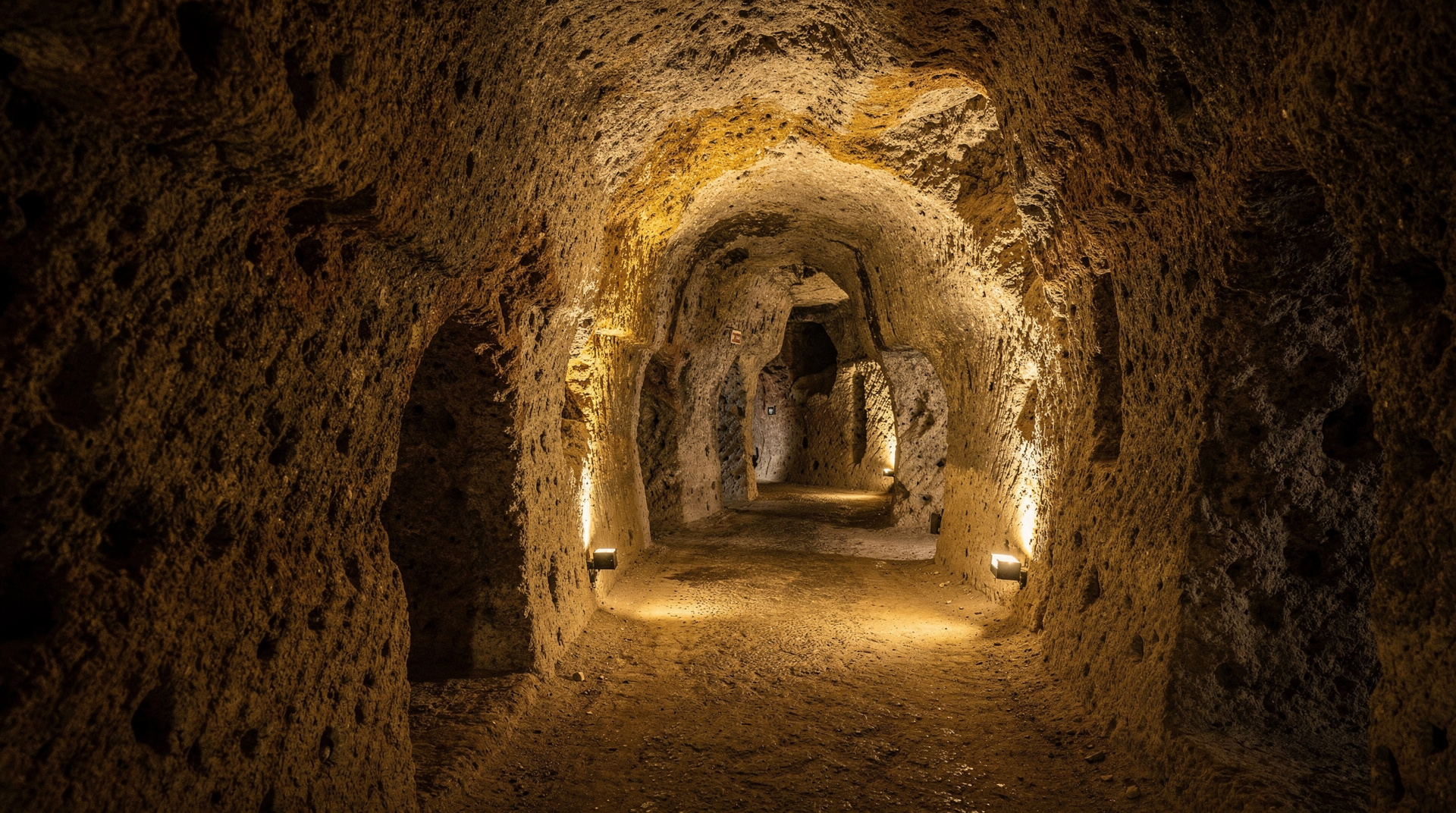
The Greek-Roman aqueduct tunnels below Piazza San Gaetano are the most accessible underground experience in Naples. Two-hour guided tours in English and Italian descend about 40 metres to passages carved in Greek tufa, widened by Romans as cisterns, used as WWII air-raid shelters (graffiti from 1943 visible), and later as a rubbish dump (which is how they were lost and then rediscovered in the 1980s).
Entry: around 15 €. Tours depart hourly. Book in advance during busy periods. For a full comparison of underground options — Sotterranea vs Galleria Borbonica vs Catacombs — see the underground Naples compared guide.
Naples underground tour — 1.5-hour guided tunnel experienceSan Gregorio Armeno — the presepi street
Via San Gregorio Armeno, a short street linking the two main decumani, is the centre of Naples’ presepi (nativity scene) craft tradition. Workshops here produce hand-made ceramic and terracotta figures using techniques passed down over centuries. Year-round, you’ll find everything from classic shepherd scenes to contemporary additions: a Maradona figure with number 10 shirt, politicians of the moment, popular TV characters.
In the weeks before Christmas, the street becomes difficult to navigate — arrive before 10h or after 17h. Prices range from a few euro for small figures to several hundred for large hand-carved pieces. For context on the tradition, see the presepi guide.
Churches worth the detour
The centro storico has over 40 churches. Most are free to enter; many have extraordinary interiors that receive a fraction of the tourist attention of more famous sites elsewhere. Notable examples:
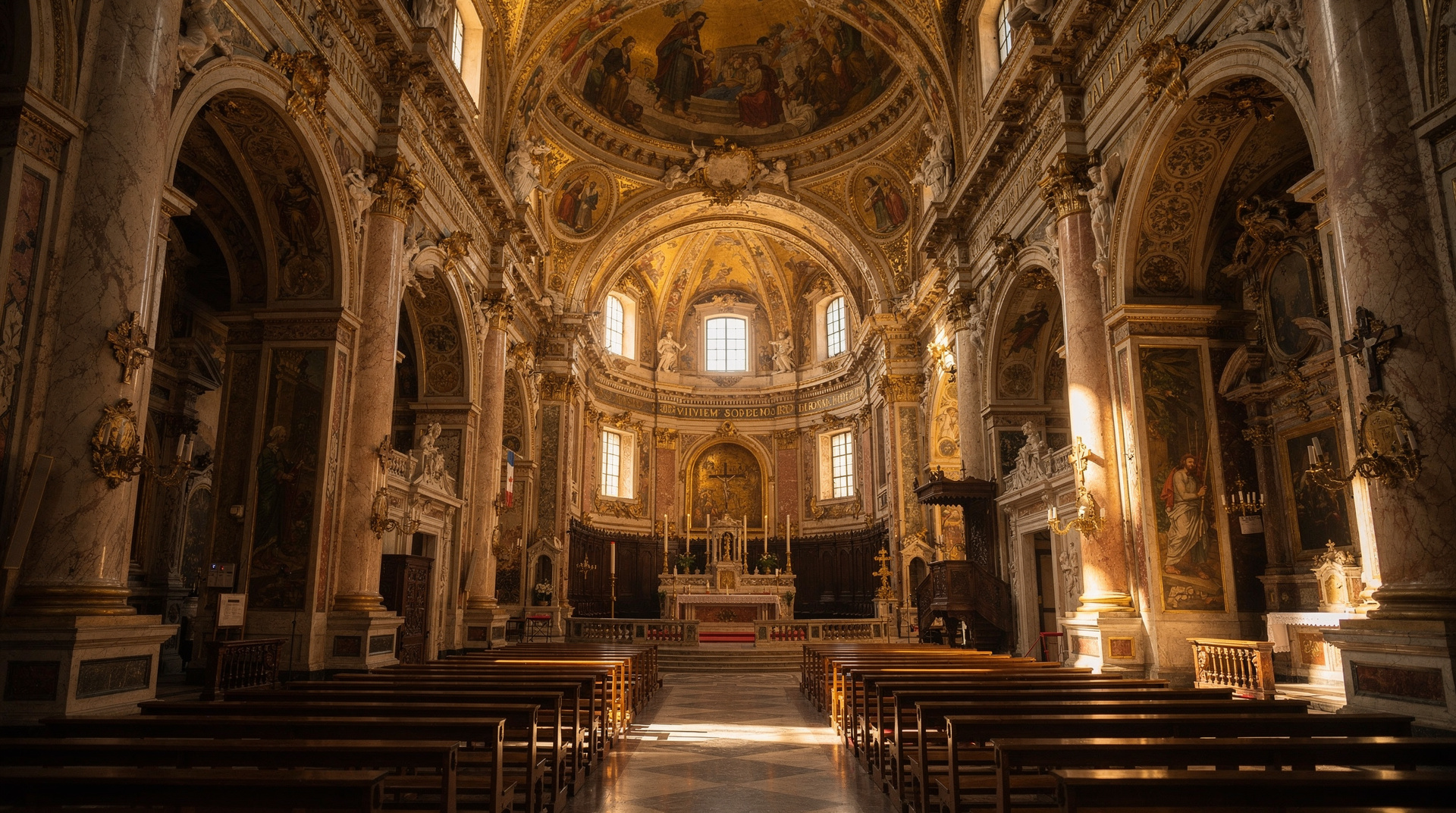
San Domenico Maggiore (Piazza San Domenico Maggiore). Gothic interior, marble tombs of the Aragonese nobility, coffins of Aragonese royalty in the sacristy. Thomas Aquinas taught here.
Santa Chiara. The majolica-tiled cloister behind the plain Gothic facade is one of the most photographed spaces in Naples — decorated in the 18th century with colourful tiles depicting pastoral scenes. The bombed-and-rebuilt church interior is less interesting than the cloister. Entry around 6 €.
San Lorenzo Maggiore. Excavations under the church reveal the Greek agora, the Roman macellum (market), and medieval streets — effectively a vertical time-slice of the city. There is a small underground museum.
Gesù Nuovo. The diamond-rusticated black facade conceals a Baroque interior; the adjacent piazza is where tourists tend to cluster, making it a pickpocket zone. The interior is worth a quick look; the piazza restaurants are generally overpriced.
Street food in the centro storico
The centro storico is the best urban eating zone in Naples. The main concentration is on Via dei Tribunali and the perpendicular lanes.
Pizza a portafoglio: folded pizza sold at standing counters — the original takeaway food of working-class Naples. Antica Pizzeria Port’Alba (Via Port’Alba) claims to be the oldest pizzeria in the city (1738). Expect to pay 2–3 € per pizza.
Friggitorie: fried food shops selling cuoppo (paper cone of mixed fried seafood or vegetables), frittatine (fried pasta rounds in béchamel), and montanara (fried pizza). Friggitoria Vomero on Via Cimarosa and many unnamed counters throughout the quarter charge 4–6 € for a cuoppo.
Sfogliatella: Pasticceria Attanasio (near Napoli Centrale, a short walk east) is the known benchmark for sfogliatella riccia (flaky shell) and frolla (soft pastry). 1,50–2 € each. Arrive before 9h or queue.
For the complete food picture, see Naples street food guide and where to eat Spaccanapoli.
Street food walking tour — local guide, 6 tastings in the centro storicoThe MANN — just outside the historic centre boundary
The Museo Archeologico Nazionale (MANN) technically sits on the northern edge of the historic centre boundary, at the end of Via Pessina near Piazza Cavour. It deserves a mention here because most visitors combine it with a centro storico day, and rightly so — the MANN holds virtually everything from Pompeii, Herculaneum, and the Farnese collection that you cannot see at the excavation sites themselves.
The standout pieces: the Alexander Mosaic (a 1st-century BC floor mosaic depicting Alexander the Great at the Battle of Issus, originally from the House of the Faun in Pompeii — considered one of the finest pieces of ancient art surviving anywhere); the Farnese Hercules (a 2nd-century AD Roman copy of a Lysippos original, found in the Baths of Caracalla in Rome); and the Secret Cabinet (Gabinetto Segreto), a room of erotic art from Pompeii that the Bourbons kept locked for a century and a half.
Entry: around 18 €. Campania Artecard covers entry. Allow 3–4 hours for a serious visit; 2 hours for highlights. See the MANN guide for what to prioritise.
Rione Sanità — just north of the historic centre
The neighbourhood immediately north of the historic centre, Rione Sanità, is worth mentioning for visitors who complete the centro storico in a day and want to extend: the Catacombs of San Gennaro and the street art scene are both accessible from here in a 15-minute walk north. See the Rione Sanità guide for detail.
Via Toledo and the western edge
Via Toledo, the long straight artery running north-south along the western edge of the historic centre, connects Piazza Trieste e Trento (with the San Carlo Opera House and Royal Palace on its east side) to Piazza Dante at the top. It is Naples’ main commercial street — pedestrianised for most of its length — and beneath it runs the metro Line 1, with the extraordinary Toledo station at its deepest point. The station, designed by Oscar Tusquets Blanca with a mosaic cone descending from a skylit blue ceiling to a deep aquatic blue floor, is accessible on any standard metro ticket (1,20 €). See the metro art stations guide.
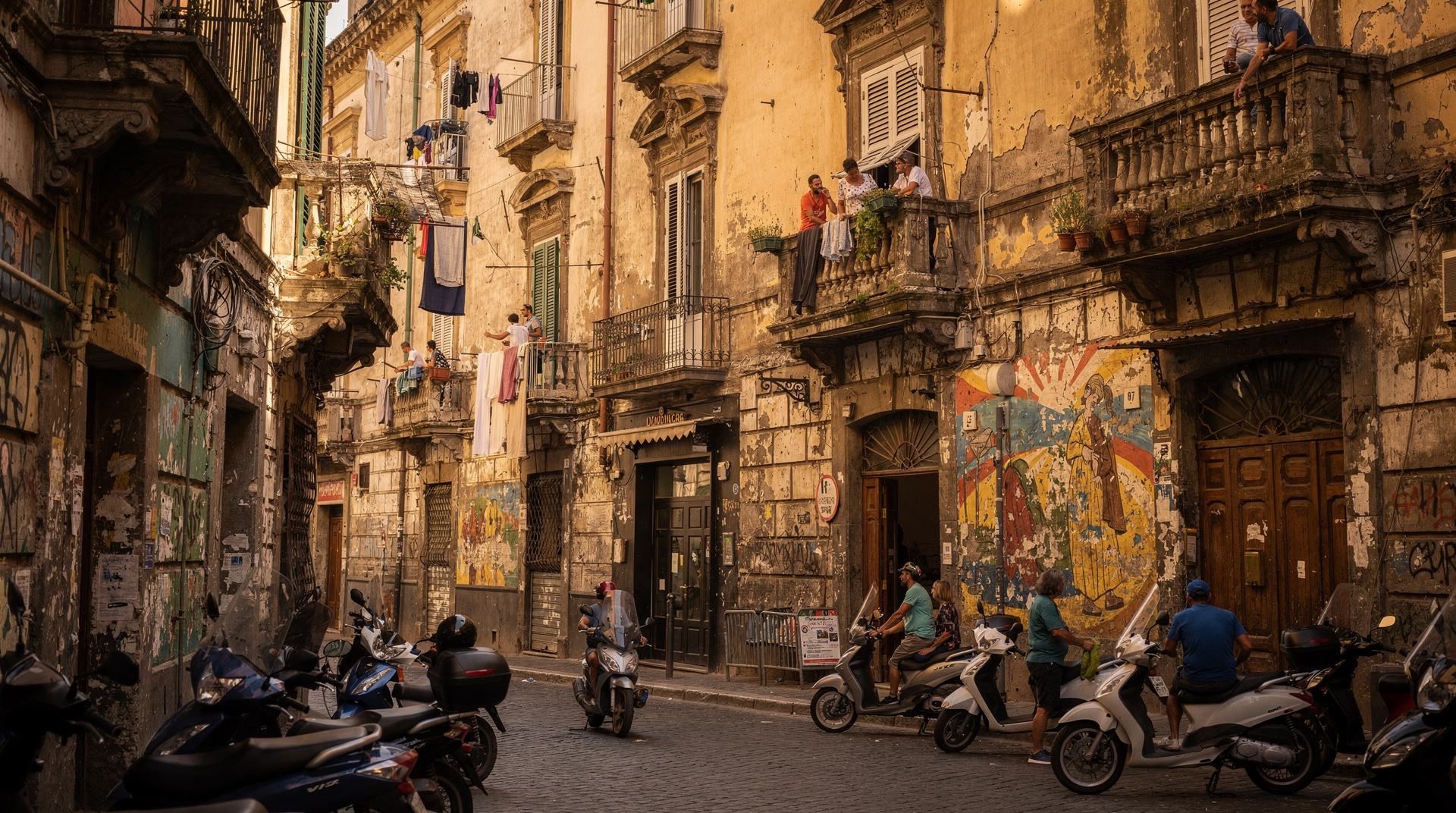
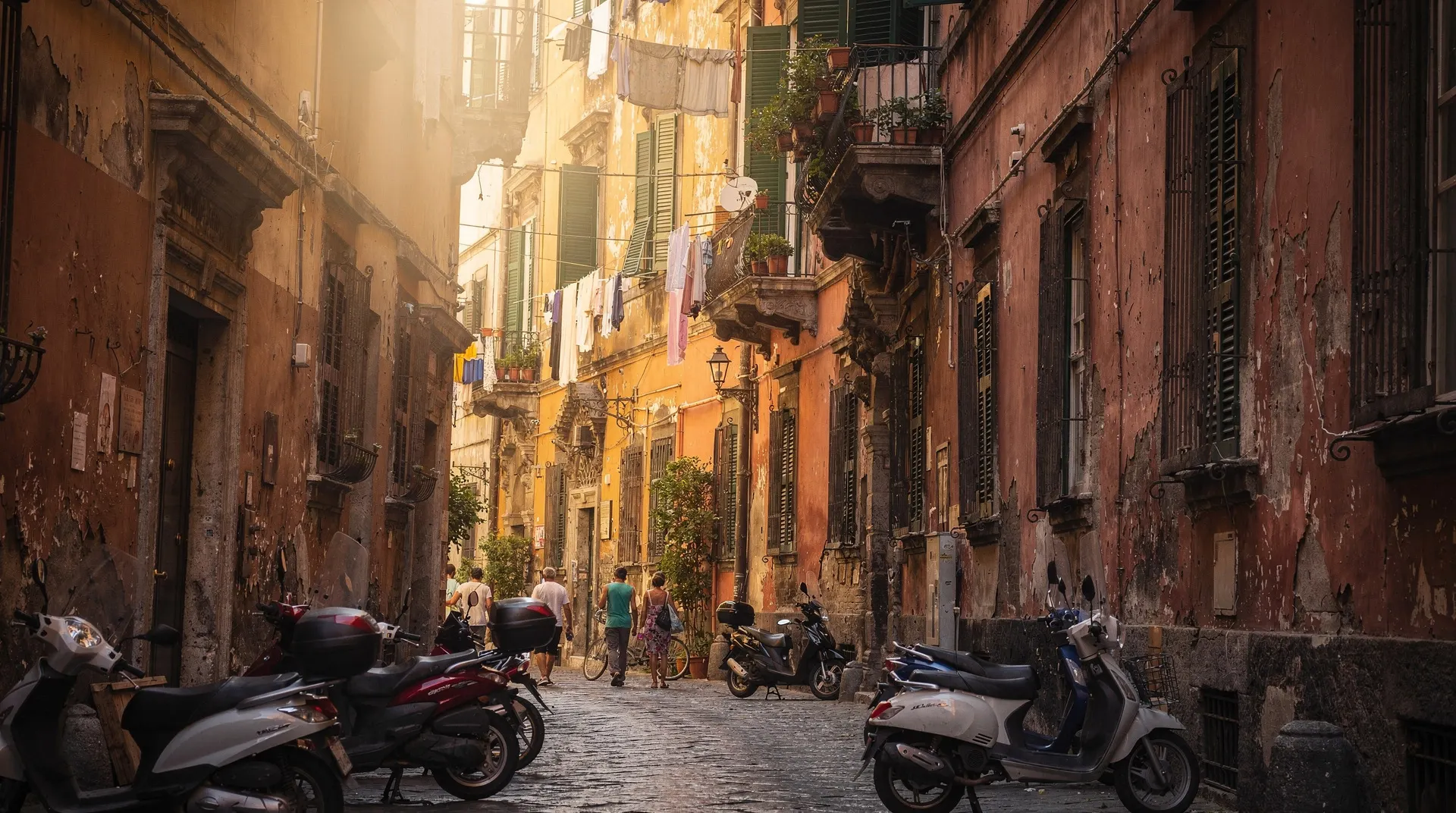
The Quartieri Spagnoli (Spanish Quarters) run to the west of Via Toledo: a grid of steep narrow lanes laid out in the 16th century to house Spanish troops. The area has a reputation as edgy that is more literary than current — it is perfectly navigable by day and has some of the city’s best informal restaurants and pizza counters. Shrine-filled alleyways, laundry overhead, the smell of frying and coffee. Worth at least 30 minutes of walking.
Capodimonte — a longer excursion
The Museo e Real Bosco di Capodimonte sits 3–4 km north of the centro storico on its own hill. The palace was built as a royal hunting retreat and Bourbon art collection; it now holds Titian, El Greco, Raphael, Caravaggio, and the most important collection of Neapolitan painting in existence. The surrounding park (the Bosco di Capodimonte) is a large public green space used by Neapolitan families on weekends. Getting there requires a bus or taxi; it is a half-day in itself. See the Capodimonte guide.
Practical notes for visiting
Walking shoes. The street surface is a mix of basalt sanpietrini cobblestones and uneven paving. Sandals or thin-soled shoes are unpleasant.
Photography. The narrow lanes create excellent low-light conditions for photography in the morning. The covered passages (like Galleria Principe di Napoli) add variety. For curated viewpoints, see best photo spots Naples.
ZTL. The Centro Antico ZTL restricts private vehicles during daytime hours on weekdays. Taxis and rental cars with advance registration by the hotel can pass. If you are self-driving, your hotel should arrange this; failing that, park outside the ZTL boundary and walk.
When to arrive. The neighbourhood is at its best before 10h (quiet streets, light raking across facades) and after 17h (activity returning as the afternoon heat drops). 11h–14h in summer is the least pleasant time to walk the narrow lanes.
The Quartieri Spagnoli — the Spanish Quarters
The blocks immediately west of Via Toledo, between the historic centre and Chiaia, form the Quartieri Spagnoli — a grid of steep, narrow lanes laid out in the 16th century to house the Spanish troops garrisoning the city. The name has carried associations of poverty and crime through much of the 20th century; the reality today is a densely inhabited neighbourhood that is navigable and interesting by day.
The lanes are very narrow — sometimes barely wide enough for a Vespa to pass — and overhung with washing. The ground floors are a mix of small workshops, bars, and vendors of everyday goods. The famous Maradona mural by Mario Filardi (on Via Emanuele de Deo) is here; it has become a pilgrimage point for football fans and cultural tourists. Shrines to the Madonna — the traditional edicole votive — appear in recesses in the walls every 50 metres. This is one of the most photographically distinctive streets in Naples.
Security: safe by day on the main lanes; after dark, stick to the wider streets and take a taxi rather than walking back toward Chiaia alone. The neighbourhood is not dangerous in the sense that guidebooks sometimes imply, but late-night solo walking through the narrowest alleys is not advised.
The Decumano Maggiore (Via dei Tribunali) in depth
While Spaccanapoli is often described as the heart of the historic centre, Via dei Tribunali — the parallel street one block north — is the one with the highest concentration of pizza. The stretch from Via Duomo to Via Monteoliveto has:
Sorbillo (No. 32): the most famous pizzeria in this part of the city, now an international brand with branches in other cities. The original has a long lunch queue. The pizza is legitimately excellent — wood-fired, wet in the centre (which is correct for Neapolitan style), fast-charred crust.
Pizzeria e Friggitoria Di Matteo (No. 94): a different approach — faster, more counter-service. Their pizza fritta (fried pizza, a folded calzone fried in oil) is one of the best street versions in the city. 2–3 €.
Palazzo Spinelli di Laurino and various minor palaces: the street also has surviving examples of Neapolitan Baroque civil architecture — courtyards accessible through open portals during business hours.
The pizza queue question: is it worth the wait?
Every guide mentions L’Antica Pizzeria da Michele and Sorbillo, and every visitor eventually faces the same decision: queue for an hour at one of the famous names, or eat at a portafoglio counter with no wait. The honest answer depends on what you’re optimising for. Da Michele serves exactly two varieties — marinara and margherita — cooked to a formula unchanged since 1870; it is a genuinely interesting historical experience as much as a meal, and worth the queue once if you have the time and curiosity.
Sorbillo’s queue is similar in length but the pizza is more varied. For a purely good meal without ceremony, the counter operators on the side streets off Via dei Tribunali fire the same wood ovens, use the same DOP San Marzano tomatoes and fior di latte, and serve in five minutes rather than sixty. Neither choice is wrong; know which one you’re making before you commit an hour of a half-day itinerary to a queue.
Suggested half-day and full-day routes
Half-day (4 hours): Start at Cappella Sansevero for the Veiled Christ (30–45 min), walk Spaccanapoli east past San Domenico Maggiore and Santa Chiara’s cloister (45 min), stop for pizza a portafoglio or a cuoppo on Via San Biagio dei Librai, then finish at San Gregorio Armeno for the presepi workshops (30 min).
Full day (7–8 hours): Add the Duomo and its underground archaeological area in the morning, Napoli Sotterranea after lunch (2 hours including the descent and return), a stop at San Lorenzo Maggiore’s excavations, and end the day on Via dei Tribunali for dinner — Sorbillo or Di Matteo if you don’t mind a queue, a quieter side-street pizzeria if you do.
Two days: Split the above across two mornings and use the freed-up afternoon for the MANN or Capodimonte, both of which deserve unhurried time rather than being squeezed in after a full centro storico day.
The Naples presepe tradition beyond San Gregorio Armeno
The nativity-scene (presepe) tradition that fills San Gregorio Armeno’s workshops has deeper roots than the tourist-facing street suggests. Neapolitan presepi developed a distinctive style in the 18th century under Bourbon patronage — King Charles III himself was an enthusiast — combining religious scenes with contemporary street life: taverns, market stalls, and ordinary Neapolitans going about daily business alongside the nativity figures.
The best historic examples of this style are not on Via San Gregorio Armeno at all but in the permanent collections of the Certosa di San Martino on the Vomero hill, which holds the Cuciniello presepe, one of the largest and most elaborate 18th-century nativity scenes in existence. Seeing both — the working artisan street and the museum-grade historic example — gives a fuller picture than either alone. See the presepi guide and the Naples at Christmas presepi guide for the seasonal context.
Historic centre walking tour including Cappella SanseveroFrequently asked questions about Naples’ centro storico
How long does it take to see the centro storico?
A focused half-day covers Cappella Sansevero, a chiesa or two, Spaccanapoli, and a food stop. A full day adds Napoli Sotterranea, the Duomo, San Gregorio Armeno, and San Lorenzo Maggiore. Two days is comfortable and allows for the MANN, which is just north of the western edge of the historic centre.
Is the centro storico safe to walk around?
Yes, by day and in the early evening. Keep standard urban awareness: bag across the body, phone in a pocket, don’t flash expensive items. The main pickpocket risk is on buses and the Circumvesuviana, not on foot in the historic centre.
Do I need to book Cappella Sansevero in advance?
Yes, especially April–October. The chapel is small and uses timed entry; walk-up availability runs out by mid-morning on peak days. Book through the official Sansevero website or a reputable booking platform.
Are the churches free to enter?
Most churches are free. Santa Chiara charges for the cloister (around 6 €). San Lorenzo Maggiore charges for the underground archaeological area. Cappella Sansevero is not technically a functioning church — it is a private chapel / museum, hence the entry fee.
What is the best street for pizza in the centro storico?
Via dei Tribunali is commonly cited as the city’s pizza street. L’Antica Pizzeria da Michele (Via Cesare Sersale, two blocks south) is the most famous, but the queue can exceed an hour at lunch. Sorbillo (Via dei Tribunali 32) is nearly as famous with a similar queue. For a shorter wait, try the side streets or a portafoglio counter.
How do I get to the centro storico from the train station?
Metro Line 1 from Garibaldi to Dante (3 stops, ~7 min, 1,20 €) puts you at the western edge of the historic centre. Or walk east along Via Tribunali (~15 min from the station). Taxis are available but traffic can make them slower than the metro.
Is one day enough to see the centro storico properly?
For the headline sights, yes — the half-day and full-day routes above cover Sansevero, the Duomo, San Gregorio Armeno, and a proper meal. If archaeology is your main interest, add the MANN as a separate half-day rather than trying to fold it into the same day.
Top experiences
Bookable activities with verified prices and instant confirmation on GetYourGuide.