Chiaia
Chiaia is Naples' safest and most comfortable neighbourhood — upscale shopping, the Lungomare seafront, aperitivo bars, and easy access to the historic centre.
Naples: Panoramic E-Bike Tour
Quick facts
- Character
- Upscale residential, boutique shopping, seafront promenade
- Safety
- Among the safest areas in Naples, day and night
- Metro access
- Line 1 — Amedeo or Piazza Vittoria (under construction); funicular from Vomero
- Key street
- Via Chiaia (shopping), Via dei Mille, Via Filangieri
- Waterfront
- Lungomare (Villa Comunale, Piazza Vittoria, Castel dell'Ovo)
Chiaia is the neighbourhood of Naples that doesn’t match the stereotypes. There are no crumbling palaces here, no mopeds three-deep on narrow lanes, no argument about whether it is “authentic”. It is a prosperous, mostly quiet residential quarter that happens to border the waterfront and sit within easy walking or transit distance of everything else in the city. For travellers who want Naples’ culture without its noise, Chiaia is consistently the most sensible base.
| Where | Between Piazza Plebiscito and Mergellina, along the waterfront |
| Cost | Free to walk; spritz €5–8, sit-down dinner €25–40/person |
| Time needed | Sights fit in half a day; best used as a 2+ night base |
| Getting there | Metro Line 1 to Amedeo, or the Chiaia funicular from Vomero |
| Best time | Year-round; April–October for the Lungomare evenings |
What makes Chiaia different
The neighbourhood occupies the curve of the bay between the historic centre / Piazza Plebiscito to the east and Mergellina to the west. Its social character is upper-middle-class Neapolitan — the kind of neighbourhood where legal professionals, architects, and established families have lived for generations. Via Chiaia, the main commercial artery, runs from Piazza Trieste e Trento (in front of the Royal Palace) westward through a concentrated strip of independent boutiques, pastry shops, and wine bars.
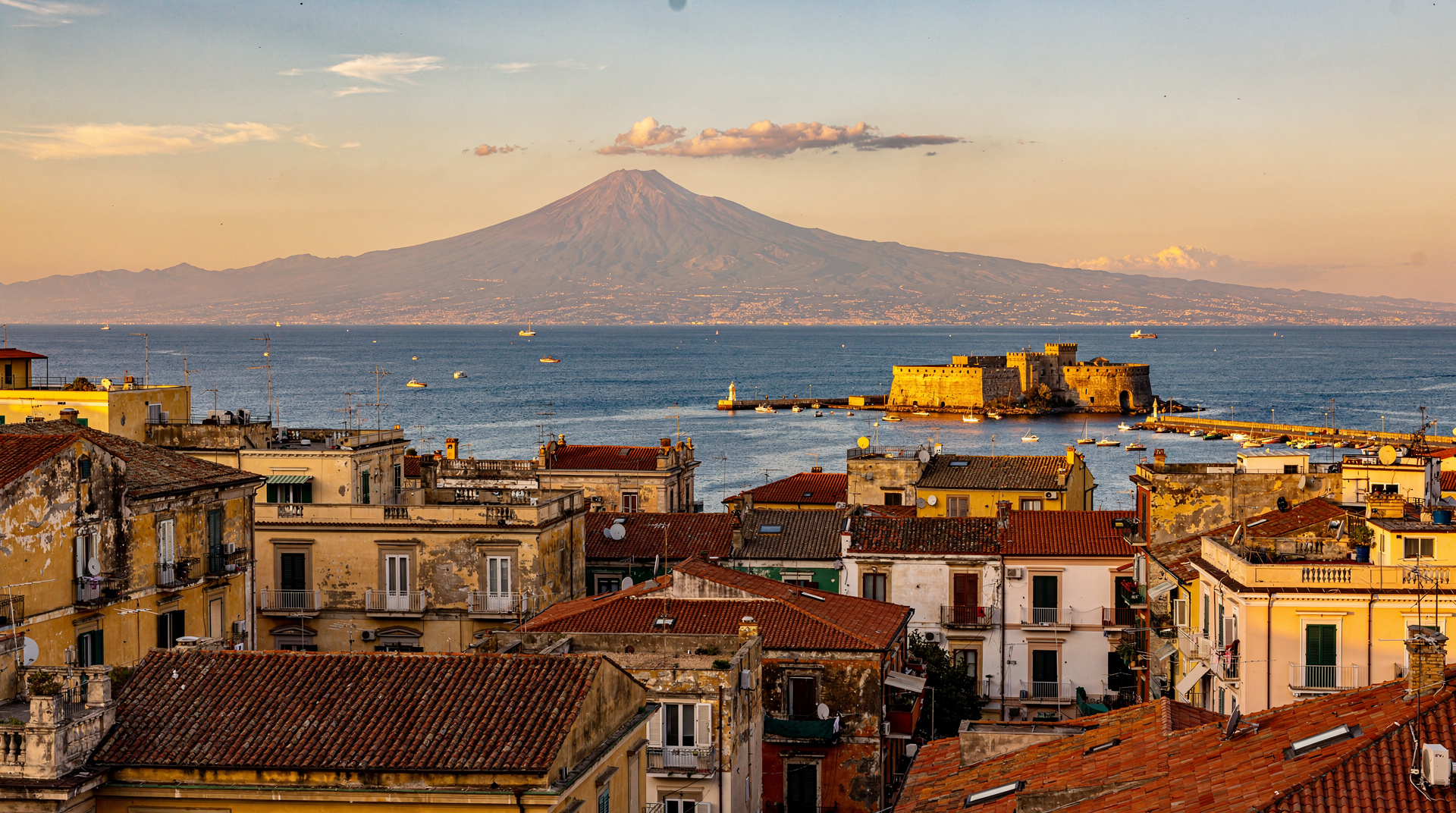
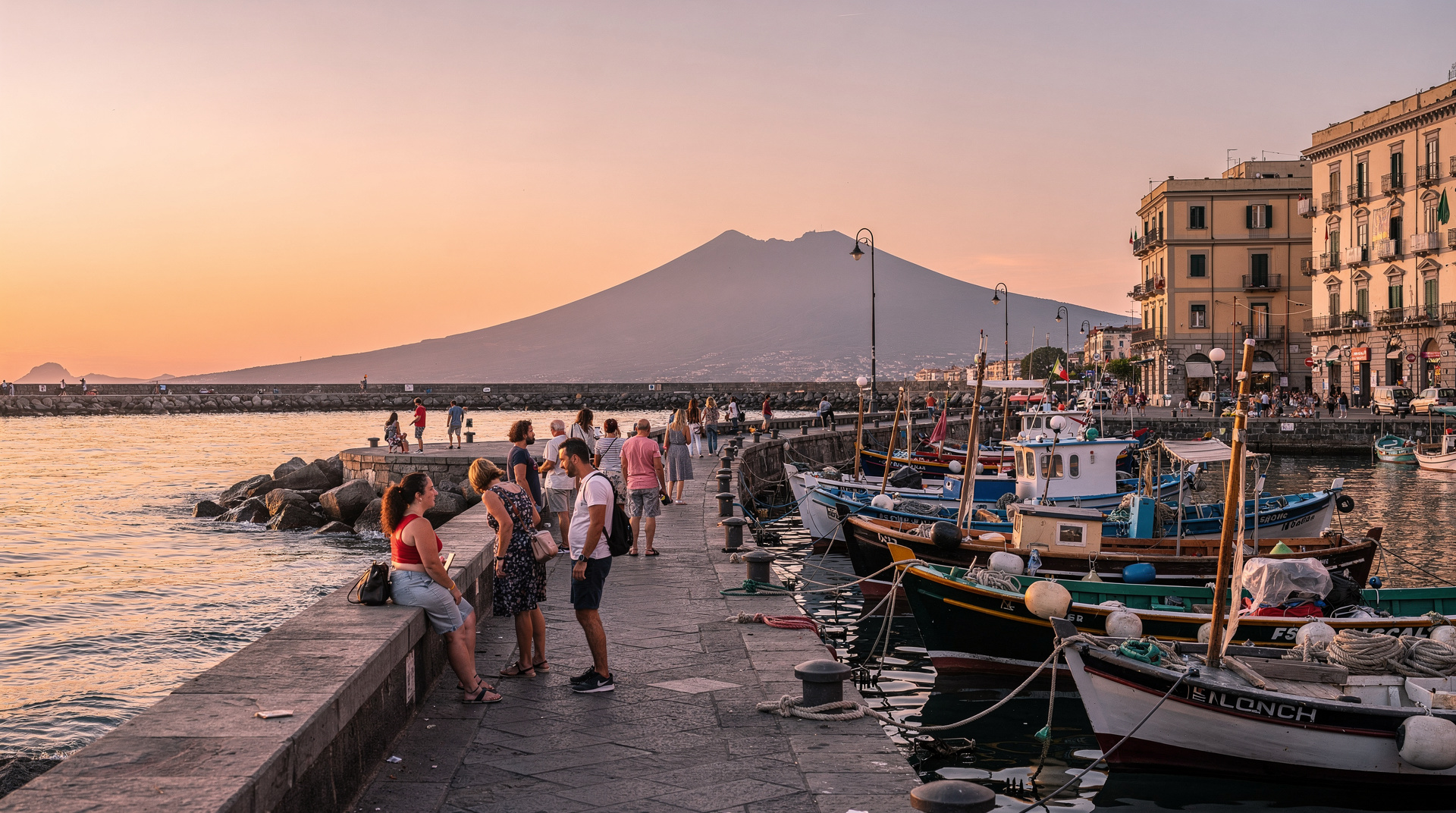
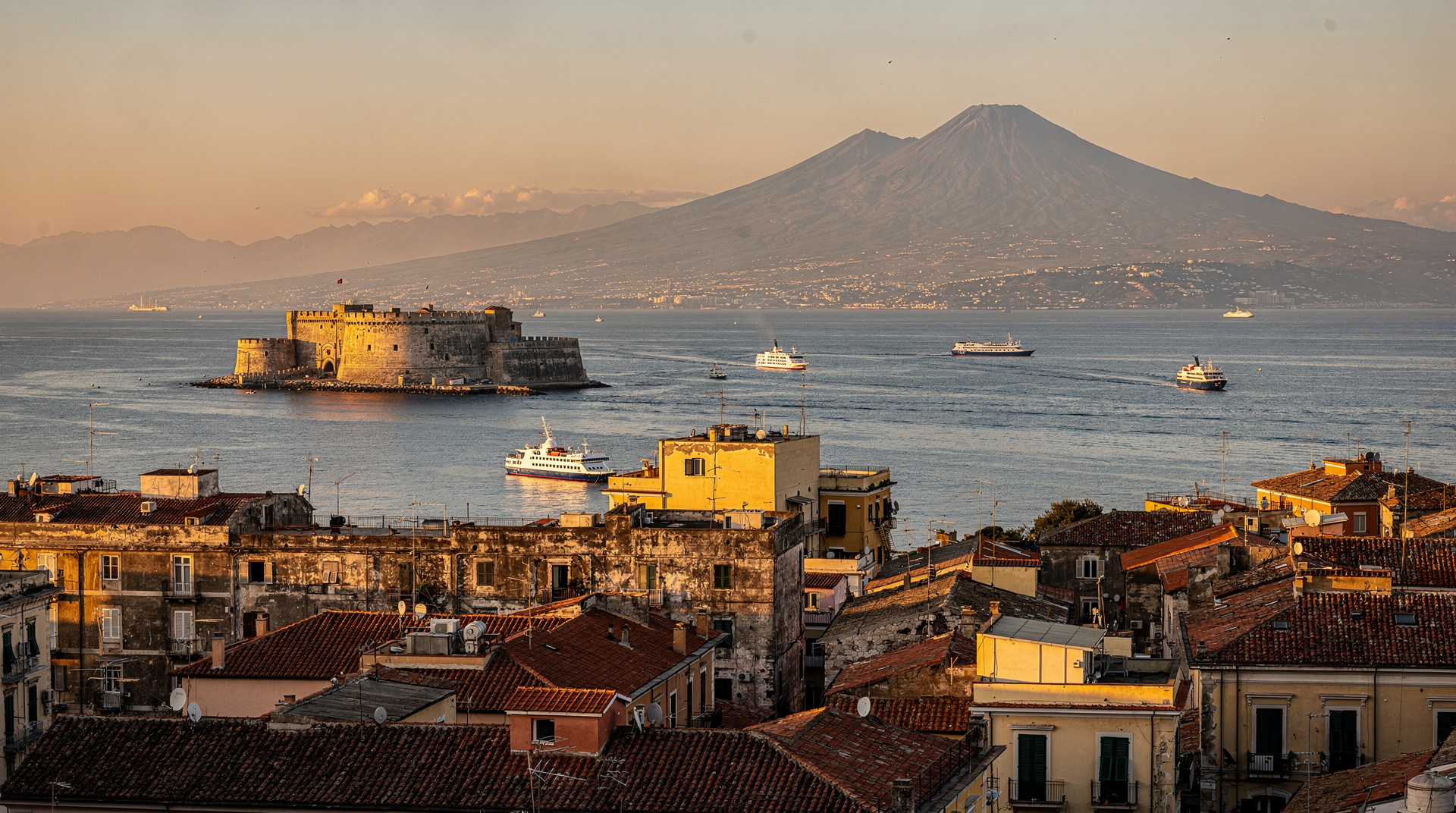
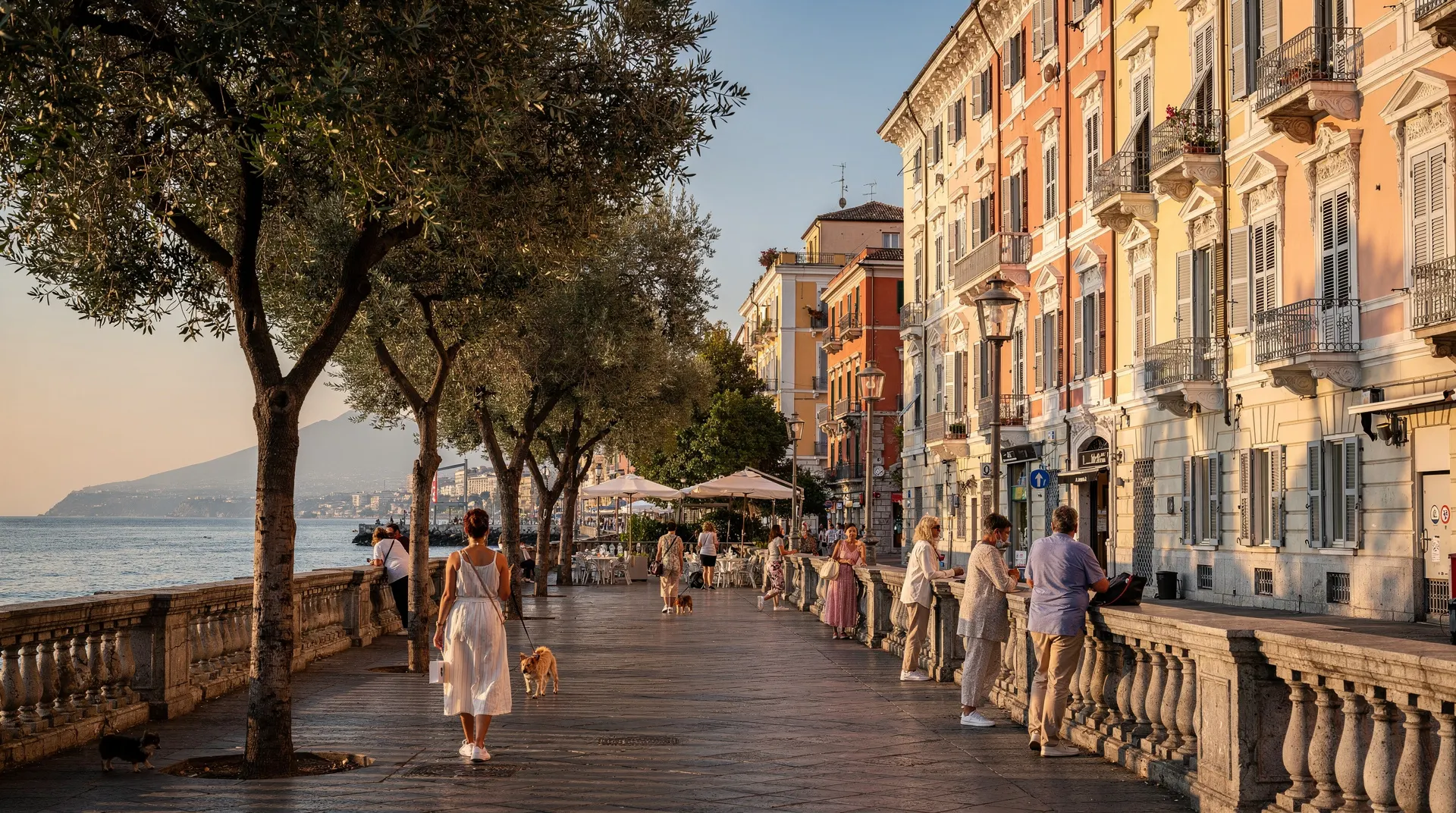
The seafront promenade — the Lungomare — begins at Chiaia’s eastern edge at Castel dell’Ovo and runs west past Villa Comunale (the public gardens) to Mergellina. For more detail on the waterfront itself, see the Lungomare guide.
What Chiaia offers that the centro storico does not: quieter streets at night, better-maintained pavements, a lower density of tourist infrastructure, and a neighbourhood bar culture where locals actually outnumber visitors.
Shopping on Via Chiaia and around
Via Chiaia and the parallel streets (Via dei Mille, Via Filangieri, Via dei Fiorentini) form Naples’ main shopping district for fashion, food, and design. The concentration runs from Piazza Trieste e Trento to Piazza Amedeo.
What you find here: Neapolitan tailoring (Naples has a long tradition of bespoke menswear — names like Sartoria Kired, Kiton, and Isaia originate here), independent shoe shops, jewellery, leather goods, and high-end food shops selling local products (mozzarella di bufala, olive oil, limoncello, local wines).
The Galleria Borbonica — the underground royal escape tunnel — has an entrance in this area (Vico del Grottone, off Via Morelli). A different underground experience from Napoli Sotterranea, focused more on the 19th-century royal court and wartime use. See the underground Naples guide for comparisons.
Aperitivo culture
Chiaia is where Naples’ aperitivo culture is most developed. From around 17h–20h, the bars along Via dei Mille, Piazza Amedeo, and Via Filangieri fill with Neapolitans finishing work. A spritz costs 5–7 €; many bars serve snacks (olive ascolane, bruschette, crostini) with drinks at no extra charge — a tradition called aperitivo or, in local parlance, happy hour.
Recommended streets: Piazza Amedeo (the square has several bars with outdoor tables); Via Bisignano; Via Schipa. More upscale options exist along Via Nazario Sauro on the seafront.
For the evening scene including rooftops, see best rooftop bars Naples and the nightlife guide.
Naples by night — food and wine evening tour through Chiaia and the cityWhere to stay in Chiaia
Chiaia offers the strongest combination of comfort, safety, and access in Naples for most travellers. The hotel stock runs from 4-star design hotels to small boutique B&Bs; there are fewer budget hostels than in the centro storico, which reflects the neighbourhood’s character.
Key considerations:
- Access to the historic centre: 15–20 min walk east along the seafront, or 2 min on the metro from Amedeo to Municipio / Università stations. The funicular from Piazza Amedeo goes up to Vomero if needed.
- Ferries: Molo Beverello (hydrofoils to islands) is about 20 min walk east, or a short taxi. Worth planning if you have an early departure to Capri or Ischia.
- Airport: Allow 30–40 min to Capodichino by taxi (around 25 €) or Alibus + walk.
For a full comparison of all Naples neighbourhoods, see best areas to stay in Naples.
Villa Comunale and the Aquarium
The public gardens of Villa Comunale run along the waterfront between Chiaia and Mergellina. Opened in the 18th century as royal grounds, they became public in 1888. The gardens contain the Anton Dohrn Aquarium — the oldest public aquarium in Europe, founded 1872, still operating as a scientific station and public museum. Entry around 2–3 €; a modest but interesting collection of Mediterranean species including octopus, moray eels, and local fish.
The gardens are used by Neapolitan families in the evenings and on weekends — benches, ice cream sellers, children on bikes. A more authentic slice of the city than most tourist-oriented spaces.
The Royal Palace and Piazza del Plebiscito connection
Walking east from Via Chiaia for about 15–20 minutes, you reach Piazza del Plebiscito — the enormous neoclassical square that is technically where Chiaia meets the historic centre. The Palazzo Reale (Royal Palace) fronts the square; the church of San Francesco di Paola closes the opposite end. The square is now fully pedestrianised and used for public events (concerts, Christmas markets, New Year’s Eve).
The Royal Palace (Palazzo Reale) is open as a museum; entry around 6 €. The state apartments are moderately interesting; the Biblioteca Nazionale (Bourbon library) in the palace holds the Herculaneum papyri — fragile carbonised scrolls recovered from the Villa dei Papiri at Herculaneum, being gradually deciphered using X-ray scanning as of 2026. See the Royal Palace guide.
The Teatro San Carlo (the opera house, founded 1737 — older than La Scala in Milan) is adjacent to the Royal Palace. Performances run October–June; the interior can be visited on guided tours. A performance evening in San Carlo is one of the more distinctive cultural experiences Naples offers, and tickets are considerably cheaper than comparable opera houses in northern Europe. See San Carlo Opera House.
Castel Nuovo (Maschio Angioino)
The imposing medieval castle at the foot of Via Toledo, visible from the Lungomare, is technically in the port/harbour area rather than Chiaia, but it is a 10-min walk from the Chiaia hotels. Built in 1279 for Charles I of Anjou (hence the Angevin name), it later served as the main royal residence before the Bourbon period. The triumphal arch in the entrance gate (1470s) is a masterpiece of Renaissance sculpture. The castle houses a small civic museum and the Sala dei Baroni — a late-15th-century throne room with a complex stellar vault.
Entry around 6 €. For detail, see the Castel Nuovo guide.
Piazza dei Martiri
The elegant 19th-century square in the heart of Chiaia, with a Neoclassical column commemorating four Neapolitan uprisings. This is the neighbourhood’s social centre — a point of reference for meeting. Surrounding streets have a good concentration of cafes and restaurants.
Getting around from Chiaia
- Metro Line 1: Amedeo station is on the western edge of Chiaia, one stop from Museo (for MANN) and two stops from Università / Municipio (for Piazza Plebiscito and the eastern historic centre).
- Chiaia funicular: runs from Via del Parco Margherita (near Piazza Amedeo) up to the Vomero.
- On foot: Piazza del Plebiscito and Castel dell’Ovo are both about 15–20 minutes from the centre of Chiaia.
- Taxis / FreeNow: available throughout; a short taxi to the ferries costs 8–12 € depending on traffic.
Coffee and pastry in Chiaia
The Neapolitan bar culture in Chiaia runs the same way as everywhere in the city but with slightly better decor. Caffè Gambrinus — technically on Piazza Trieste e Trento at the edge of Chiaia and adjacent to Piazza del Plebiscito — is the most famous café in Naples. It opened in 1860 and has served Neapolitan intellectuals, European monarchs, and ordinary tourists ever since. An espresso at the counter: 1,50–2 € (slightly elevated because of its status). Sitting down: 5–8 €. Worth visiting for the interior (Belle Époque mirrors, carved wood, marble); not worth making a habit of sitting for the price.
For everyday coffee, the bars on Via Filangieri or Piazza Amedeo are considerably cheaper and the espresso quality is identical.
Galleria Borbonica — the Bourbon escape tunnel
The underground tunnel system at Via Morelli (off Via Domenico Morelli, near the Chiaia waterfront) was built in the 1850s by Ferdinand II as an emergency escape route from the Royal Palace to the Castel Nuovo, and potentially to the sea. The Bourbons never used it for that purpose; instead it served as an air-raid shelter in WWII and was later used as a car impound (which is why there are vintage cars still inside the tunnel). The guided tour lasts around 75 min and includes the tunnel, the cisterns, and the impounded vehicles.
Entry: around 10 €. Different tour formats available (standard, adventure with ropes and wading). See the underground Naples guide for how this compares to Napoli Sotterranea and the catacombs.
Best walks from Chiaia
Beyond Via Chiaia itself, three short walks from the neighbourhood’s centre are worth knowing:
To Piazza del Plebiscito (15 min east): along Via Chiaia to Piazza Trieste e Trento, then the grand neoclassical square opens in front of you. Continue into Via Toledo for the historic centre.
To the Lungomare (10 min south): down Via Gennaro Serra or Via Ascensione, then you hit the seafront promenade at Villa Comunale. Walk left for Castel dell’Ovo; walk right for Mergellina.
To Vomero via the funicular (7 min): from Piazza Amedeo, the Chiaia funicular takes you up the hill in about 4 min. Castel Sant’Elmo and Certosa di San Martino are a 10-min walk from the top station.
For the Vomero guide and Lungomare guide, see their dedicated pages.
Restaurants in Chiaia
Chiaia’s restaurant scene skews toward sit-down meals rather than street food. Mid-range to upscale Neapolitan cuisine, plus some modern osterie and wine bars. Prices are a step above the historic centre but not stratospheric.
A few reliable categories: the Via Bisignano area for wine bars with local charcuterie and cheese; Via Filangieri for a good range of dinner options. Restaurants on Via Partenope (waterfront) often charge for the view — the food is usually adequate but overpriced relative to interior equivalents. Check menus displayed at the entrance, which is required by law.
The Riviera di Chiaia and the waterfront edge
The Riviera di Chiaia is the road running parallel to Villa Comunale (the public gardens) that forms the southern edge of the neighbourhood before the full Lungomare begins. It has a different character from the elevated shopping streets: slower, more residential, with the greenery of Villa Comunale visible on one side.
Along this road, several small pizzerias, local trattorie, and neighbourhood bars serve primarily residents. The area around Piazza della Repubblica and the adjacent streets has a concentration of good-value eating options often missed by visitors who stay on the tourist-facing routes.
Security-practical details for Chiaia visitors
A few specific notes:
ATMs. Available throughout Via Chiaia and Piazza Amedeo. The machines of major Italian banks (Intesa Sanpaolo, UniCredit, BNL) are reliable; avoid standalone machines in poorly lit locations.
Pharmacy. Several on Via Chiaia and Via Filangieri, typically open 8h30–13h and 15h30–19h30 Monday–Saturday; some have extended hours. All-night pharmacies (farmacie di turno) post their address in the window.
Medical. The Clinica Mediterranea on Via Orazio (Chiaia) is one of the better private clinics; public Guardia Medica is available for non-emergency consultations.
Taxi ranks. At Piazza Amedeo, Piazza dei Martiri, and Via Partenope (waterfront). Phone or app booking is often faster during busy periods.
Chiaia as a base for Campania
One dimension of staying in Chiaia that is sometimes overlooked: it is a comfortable base not just for Naples but for the Campania region.
From Piazza Amedeo, you are 10 min by metro to Garibaldi station and the Circumvesuviana — giving access to Pompeii (30 min), Herculaneum (15 min), and Sorrento (70 min). From Mergellina (20 min walk or short metro/taxi), ferries reach Capri and Ischia. For those using Naples as a regional hub rather than just a city destination, the transport arithmetic from Chiaia is genuinely good.
See Pompeii day trip, Capri day trip, and best day trips from Naples for routing from this side of the city.
Neapolitan tailoring in Chiaia: a real local industry
Naples’ reputation for bespoke menswear is not tourist marketing — it reflects a genuine tailoring tradition centred on Chiaia and the surrounding streets since the early 20th century. The “Neapolitan shoulder” (spalla camicia), a soft, unstructured jacket shoulder that moves with the body rather than holding a fixed shape, is a specific technical innovation associated with tailors working in this part of the city, most famously the Rubinacci family, whose atelier remains a working business rather than a museum piece.
Kiton and Isaia, both internationally known menswear houses, also trace their roots to this neighbourhood’s ateliers. A made-to-measure jacket here starts in the low thousands of euros and takes weeks, which is well beyond most visitors’ Naples itinerary, but window displays and occasional open ateliers on Via Filangieri and Via dei Mille give a sense of the craft even without commissioning a suit.
Chiaia vs the centro storico as a base: an honest comparison
| Chiaia | Centro storico | |
|---|---|---|
| Atmosphere at night | Quiet, residential | Lively, sometimes loud |
| Distance to Duomo/Sansevero | 15–20 min walk or 2 stops metro | On foot, immersed |
| Distance to ferries (Beverello) | ~20 min walk or short taxi | ~10 min walk |
| Accommodation style | Boutique hotels, few hostels | Wider budget range, more hostels |
| Best for | Couples, families, longer stays | Budget travellers, first-timers wanting immersion |
Neither is objectively better — the choice depends on whether you want to sleep inside the history or a short walk from it. Many repeat visitors to Naples choose Chiaia specifically because the first visit’s centro storico stay showed them how much quieter Chiaia’s evenings are.
Piazza Vittoria and Mergellina’s edge
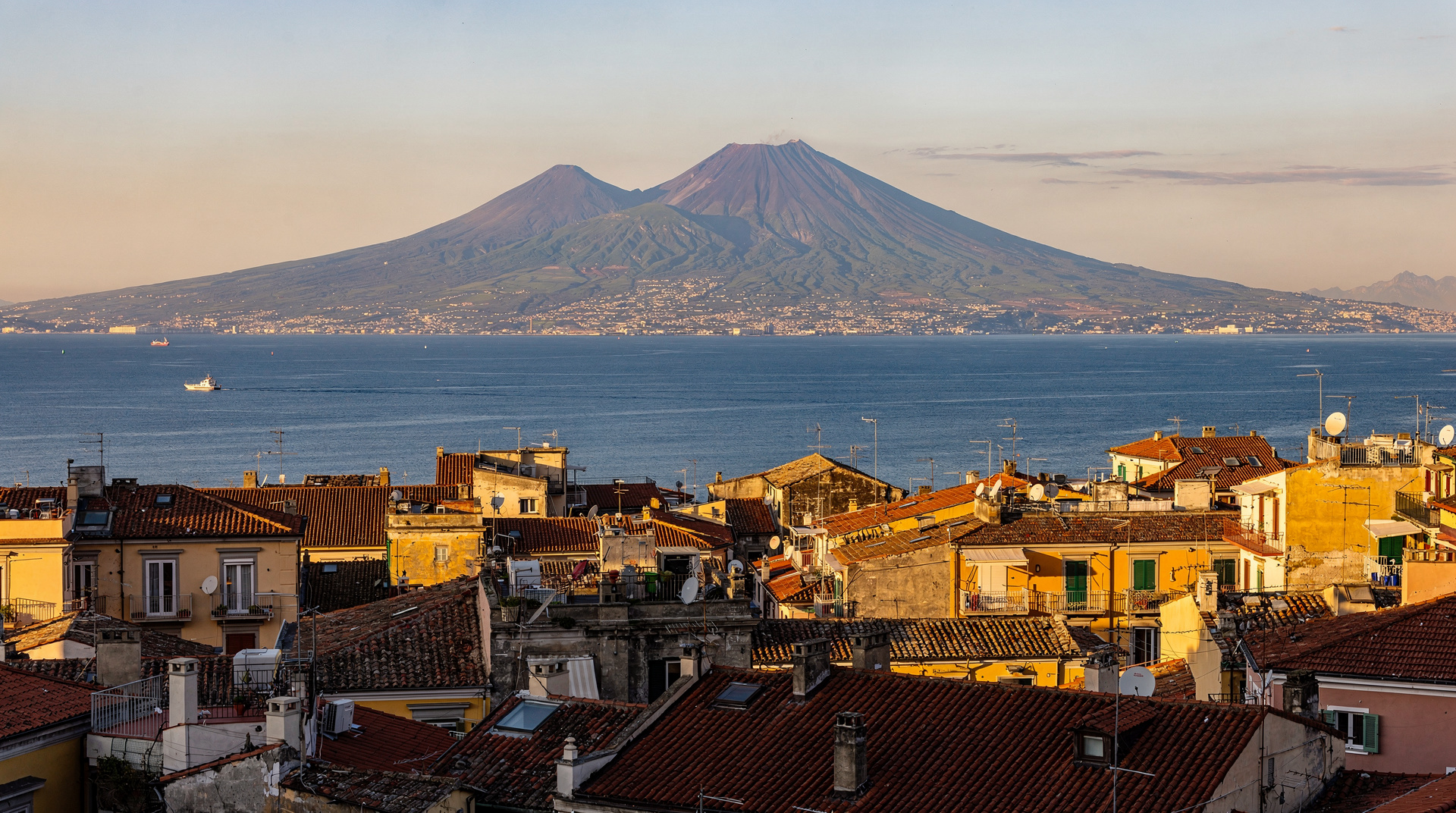
At Chiaia’s western boundary, Piazza Vittoria marks the transition to Mergellina and the start of the Lungomare’s most scenic final stretch, with views back across the bay toward Vesuvius on clear days. The square itself is a green, roundabout-style space rather than a destination, but it is the natural point to note if you are walking the full waterfront from Castel dell’Ovo through Chiaia to Mergellina’s ferry terminal and fish restaurants — a walk of about 35–40 minutes end to end that most Chiaia-based visitors do at least once. See the Lungomare guide for the continuation past this point.
Castel dell’Ovo boat and snorkelling experience from the Chiaia waterfrontFrequently asked questions about Chiaia
Is Chiaia the right neighbourhood for first-time visitors to Naples?
Yes, it is the most comfortable choice for visitors who want cultural access without the intensity of the centro storico. The slight trade-off is that you are 15 min from the main historic sights rather than immersed in them — most people find this acceptable.
Is Chiaia safe at night?
Consistently, yes. It is one of the two safest areas in Naples at night (Vomero being the other). Standard urban sense applies: don’t leave bags unattended, use taxis or rideshare apps late at night, don’t walk alone on completely deserted streets after 1h.
What is the best way to get to the Circumvesuviana from Chiaia?
Metro Line 1 from Amedeo to Garibaldi (lower level of Napoli Centrale) — about 10 min and one transfer at Dante or Università depending on the service. Or taxi directly to Garibaldi (~20 min, around 15 €).
Can I walk to the centro storico from Chiaia?
Yes. Via Chiaia leads directly to Piazza Trieste e Trento, adjacent to Piazza del Plebiscito and the Royal Palace. From there it is a 5-minute walk into Spaccanapoli. The full walk from the Chiaia / Piazza Amedeo area is about 20 min.
Is there a beach near Chiaia?
No sandy beach directly in Chiaia. The Lungomare is a promenade, not a beach. The nearest swimming spots are at Posillipo (rocky coves, accessible by bus) or the island of Nisida. For actual beaches, Ischia and Procida are your best options from Naples — less than an hour by ferry. See best beaches near Naples.
Are restaurants in Chiaia expensive?
More expensive than the centro storico street food scene, roughly on par with mid-range dining in other Italian cities. A sit-down dinner (two courses, house wine) runs 25–40 €/person at a neighbourhood trattoria; higher at restaurants on the waterfront.
Should I stay in Chiaia or the centro storico for a first Naples visit?
If you want to be immersed in the history from the moment you step outside, the centro storico. If you’d rather sleep somewhere quiet and take a short walk or metro ride into that history each day, Chiaia. Neither choice is wrong — see the comparison table above for the specific trade-offs.
Top experiences
Bookable activities with verified prices and instant confirmation on GetYourGuide.