Best photo spots in Naples: where and when to get the best shots
Naples: Panoramic E-Bike Tour
Where are the best places to photograph Naples?
The top photography spots in Naples are: the Lungomare waterfront (best at sunset and blue hour), the Spaccanapoli street view from Piazza del Gesù Nuovo (morning light), Posillipo hilltop (panoramic bay and Vesuvius views), Piazzetta Nilo (a quieter historic square), Toledo metro station (the blue mosaic descent), and the terrace of Certosa di San Martino (sunset with the bay below).
| Best single shot | Certosa di San Martino terrace at golden hour |
| Best free viewpoint | Castel Sant’Elmo battlements or Parco Virgiliano |
| Best street scene | Spaccanapoli / San Gregorio Armeno, morning light |
| Best transit shot | Toledo metro station, off-peak |
| Typical viewpoint entry | around €5–8 |
| Best light | Golden hour and blue hour, roughly 45 min around sunrise/sunset |
What makes Naples special for photography
Naples rewards the patient photographer. The city is dense with visual material — peeling palazzi, washing lines across narrow vicoli, shrines tucked into niches, volcanic stone and baroque marble. But beyond the iconic postcard shots, there is a range of compositions that repay knowing where to stand and when.
This guide covers the best fixed locations for photography, the right times of day, practical access, and what you can realistically expect at each spot.
The Lungomare waterfront
Best time: Golden hour to blue hour. Sunset behind Posillipo lights the waterfront from the west. Location: Via Caracciolo, Mergellina to Castel dell’Ovo
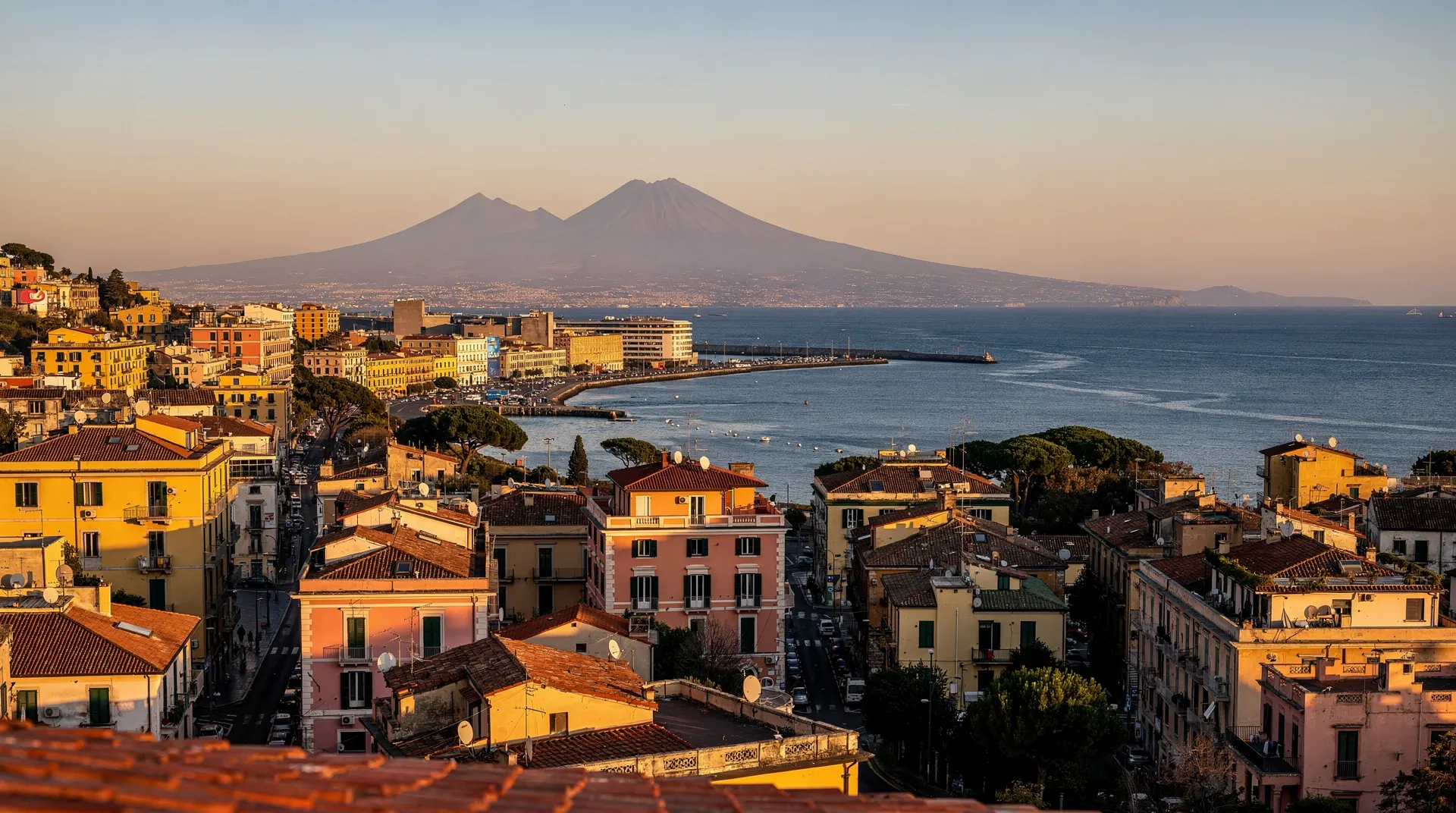
The Lungomare is the most cinematically satisfying Naples photo. The curving seafront promenade, the silhouette of Castel dell’Ovo on the water, the Vesuvius cone in the distance, and the warm light of late afternoon create a scene that has barely changed in composition for 150 years.
The best angles:
At the Castel dell’Ovo end (Borgo Marinaro), the view back west along the promenade shows the curve of the bay with Posillipo headland in the distance. This works well at golden hour when the western sky is warm behind the headland.
From the middle of Via Caracciolo, a longer focal length compresses the bay and brings Vesuvius closer relative to the urban foreground.
From the Borgo Marinaro quay itself (at the foot of the castle), a lower angle from the waterfront rocks gives an unusual perspective with the castle towers against the sky and the Amalfi direction in the distance on clear days.
After sunset: Blue hour from the Lungomare is excellent — the lit promenade cafes and Castel dell’Ovo lights reflect on calm water when the sea is flat. Bring a tripod or use a railing for steady shots.
Access: Free, public, walkable. See Lungomare evening walk for the full promenade walkthrough.
Spaccanapoli from street level and above
Best time: Morning (east-facing light on the north side of the street, angled to the south). Location: Via dei Tribunali, Via Benedetto Croce / Via San Biagio dei Librai
The street photography in the historic centre is among the best urban material in Italy. The vicoli are narrow, the light is dramatic at the right time, and the density of human activity and architectural detail is remarkable.
Spaccanapoli street view: The intersection of Via Benedetto Croce and Via San Gregorio Armeno is worth spending significant time on. The Christmas presepe (nativity) workshops line San Gregorio Armeno year-round and make for layered, detail-rich images.
Elevated Spaccanapoli view: The famous “straight line cutting Naples” is most visible from above — the straight cut through the city visible from the Castel Sant’Elmo battlements or from certain roof terraces. This is a wide-angle telephoto compression shot requiring an elevated point with a clear sight line.
Morning in the Quartieri Spagnoli (Spanish Quarter): The grid of streets west of Via Toledo, between Via Toledo and the Certosa hillside. Early morning light shoots down the east-west streets. The washing lines (panni stesi), iron balconies, and chaotic street level create classic Naples street photography.
Posillipo and Parco Virgiliano
Best time: Late afternoon to sunset. Clear days reveal the full bay panorama. Location: Via Posillipo, Parco Virgiliano (headland park)
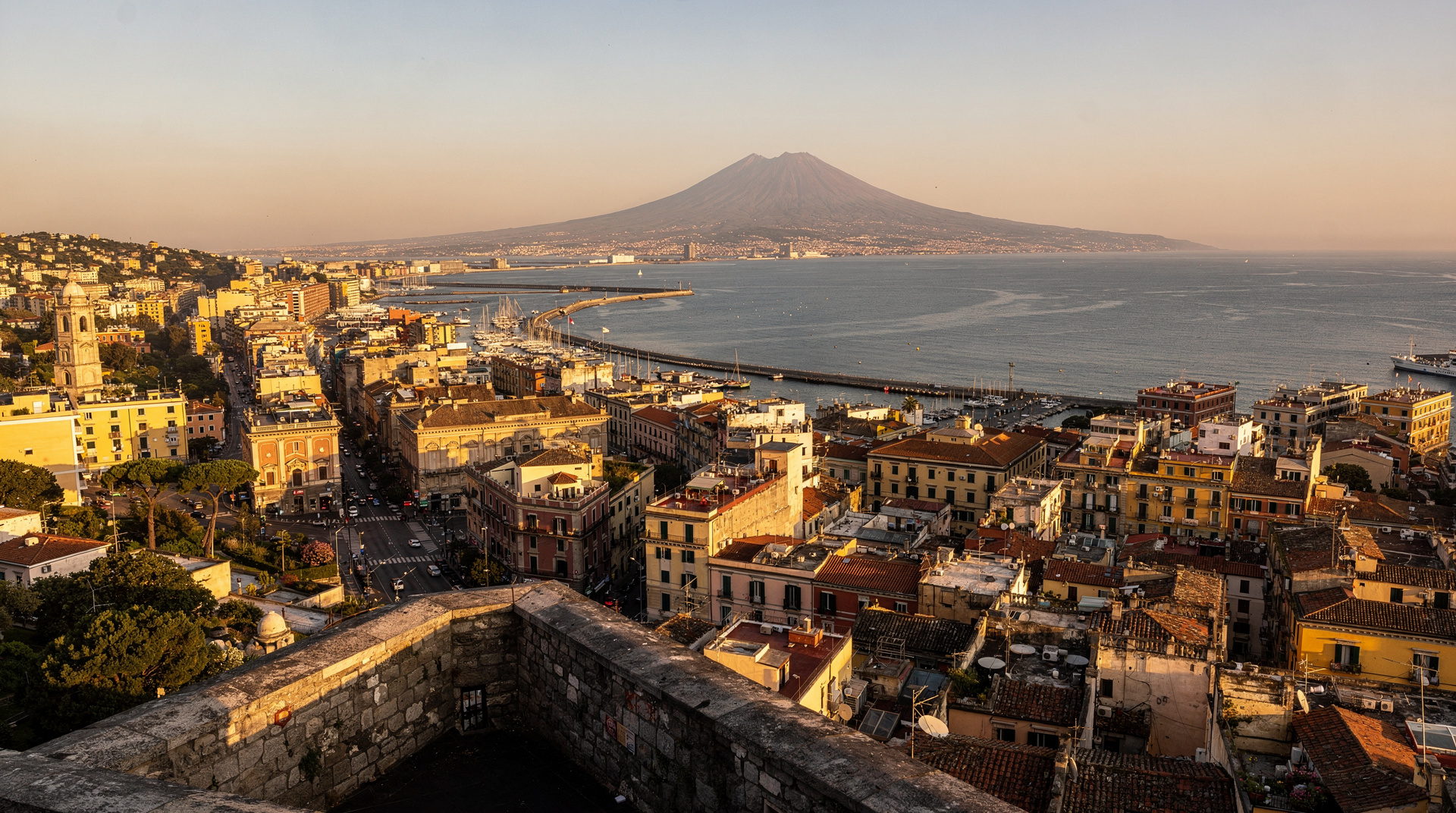
Posillipo is the residential cape at the western end of the Bay of Naples. The elevated road (Via Posillipo) and the park at the tip (Parco Virgiliano) give panoramic views across the bay toward Vesuvius, the islands, and Sorrento.
Parco Virgiliano (free entry): The park benches and stone walls along the southern cliff of the headland face southeast — the direction of Capri, Ischia, and the islands. In clear weather, all three islands are visible simultaneously from certain points. This is one of the best “bay panorama” compositions in Naples.
Marechiaro viewpoint: Along Via Posillipo, the small fishing village of Marechiaro (accessible by bus) has a waterfront terrace with views across to Pozzuoli and the Phlegraean Fields to the northwest.
Access: Bus lines R7 and C16 from the city centre. The Funicolare di Mergellina takes you to the lower part of Posillipo; the higher viewpoints require the bus.
Certosa di San Martino terrace
Best time: Golden hour to blue hour. Location: Largo San Martino, Vomero (take the Funicolare Centrale)
The museum terrace on the south side of the Certosa has the most comprehensive Bay of Naples panorama accessible to the public. From left to right: Vesuvius, the eastern bay, the city spreading below, the waterfront, Castel dell’Ovo, Posillipo, and on clear days, Capri and Ischia in the distance.
This is the shot to have on a clear late afternoon. Entry to the Certosa (€8) is required; the museum closes before sunset in most seasons, so check closing times and plan accordingly. The view is worth the entry fee independently of the museum collection.
The cloisters inside the Certosa are also photographic subjects — Baroque architecture in the great cloister, geometric garden, and the porcelain and presepe rooms inside.
Castel Sant’Elmo battlements
Best time: Late afternoon. Location: Via Tito Angelini, Vomero (adjacent to Certosa)
The star fort’s battlements provide a higher vantage point than the Certosa terrace, with 360-degree views — including north toward the Camaldoli hills and west toward Pozzuoli. Entry: €5 (or combined ticket with Certosa).
The star-shaped ramparts themselves are photogenic — the geometric defensive walls create strong architectural lines.
Toledo metro station
Best time: Off-peak hours (before 09:00 or 14:00–16:00). Location: Metro Line 1, Toledo station
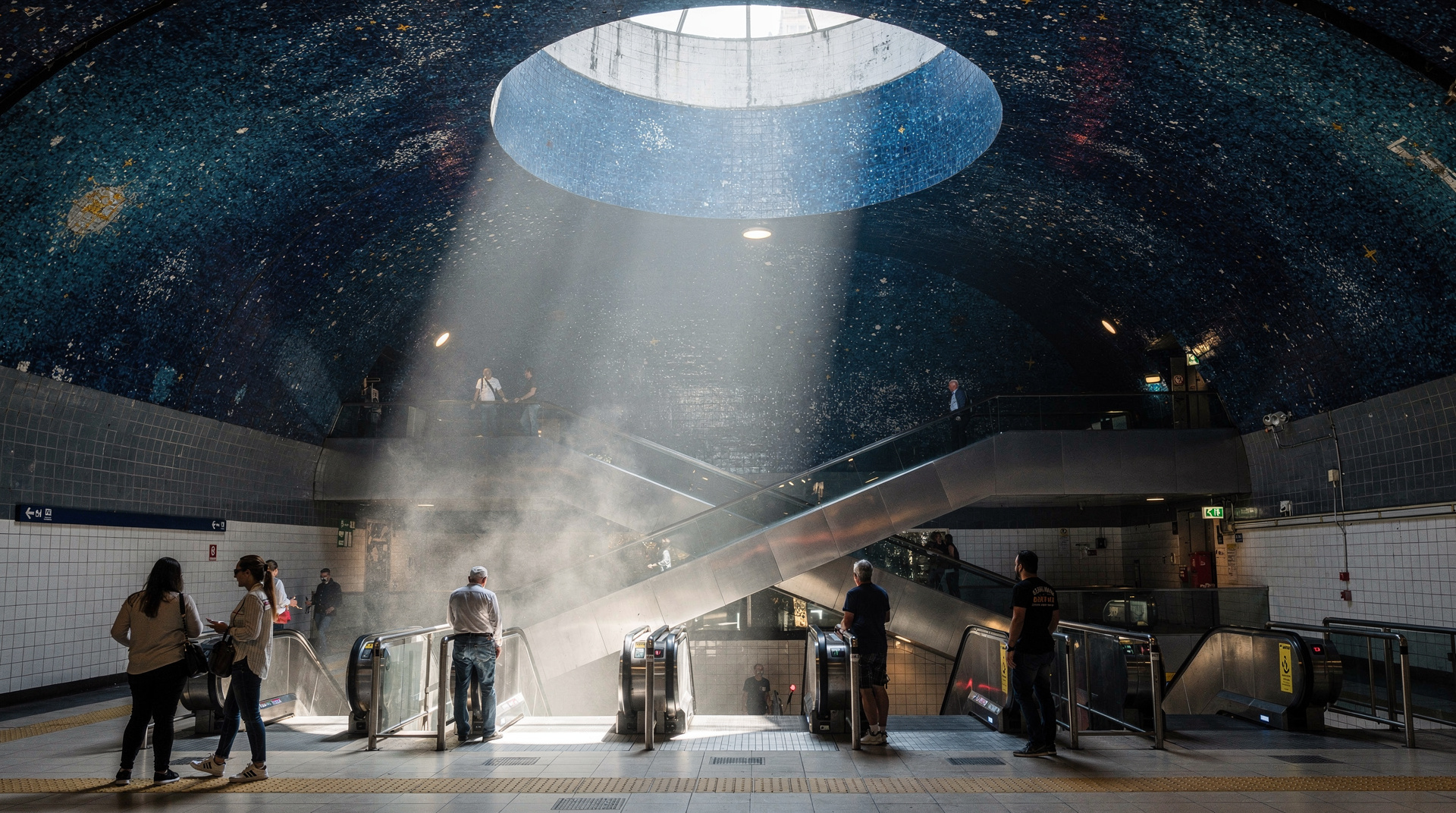
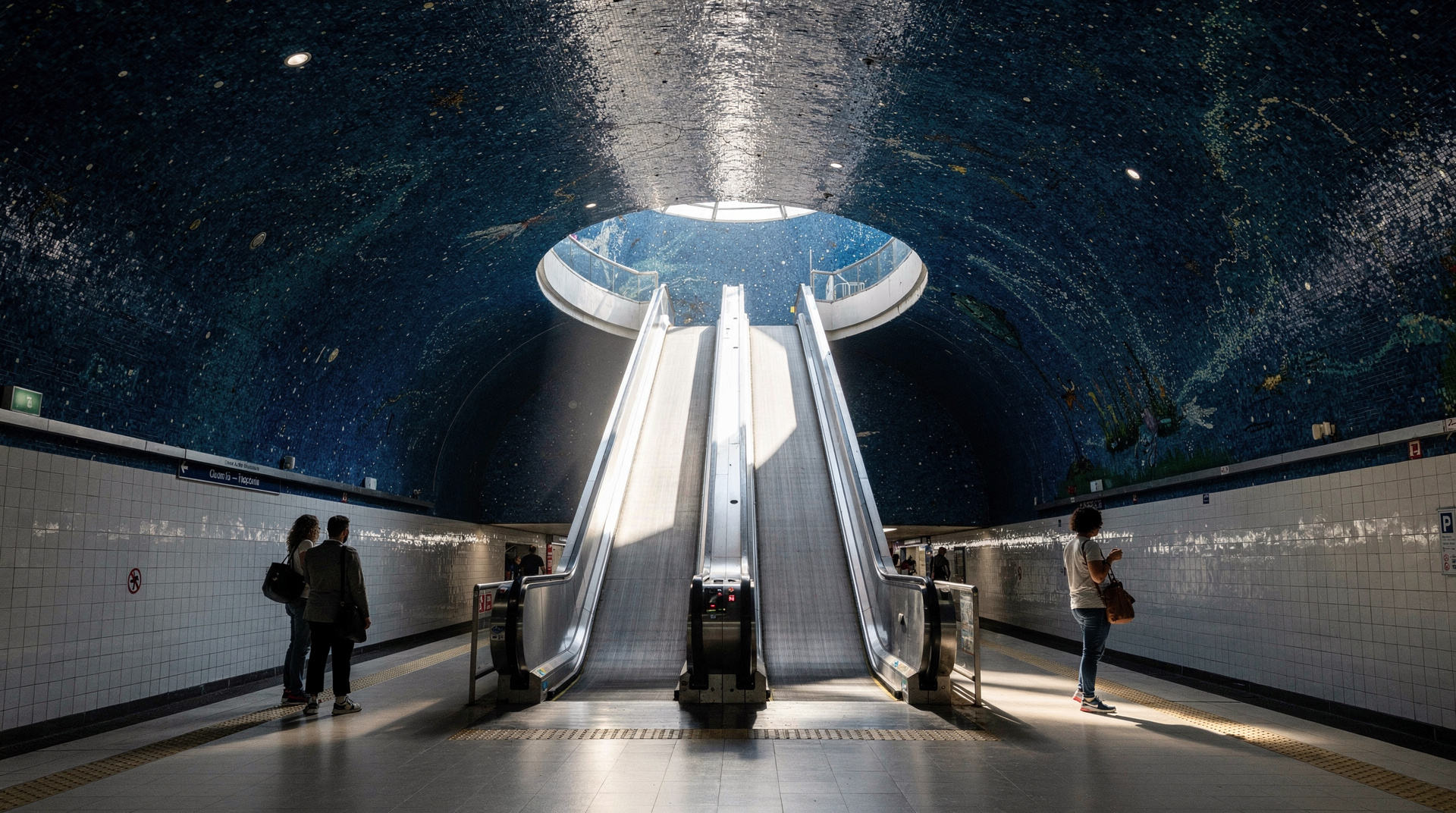
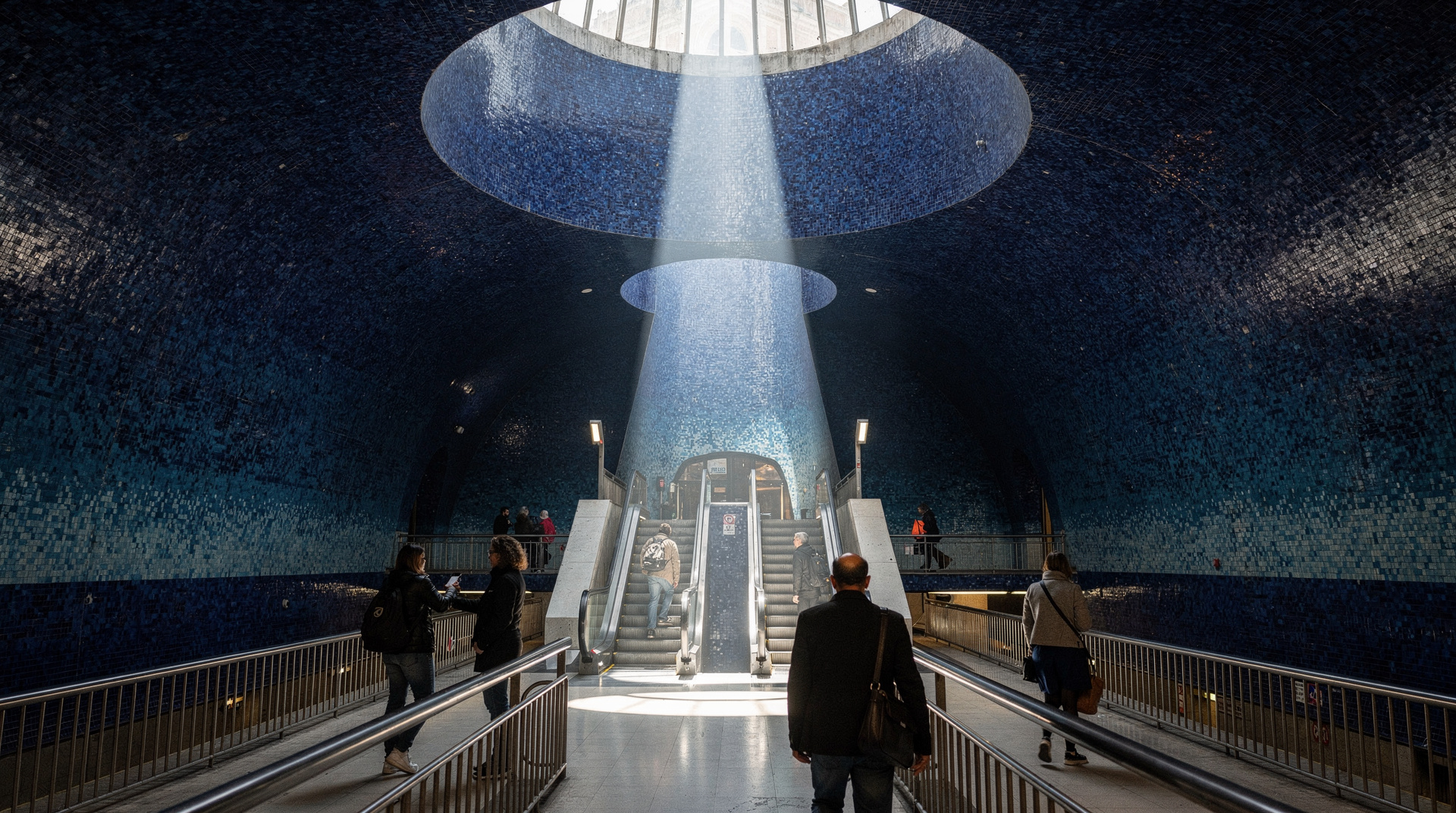
The descent through the blue mosaic atrium is the centrepiece shot. See Naples metro art photography for detailed photography guidance specific to Toledo and the other art stations. A standard €1.30 metro ticket provides access.
Key composition: Stand at the top of the escalator and look down through the dome — the blue mosaic extends all around the escalator shaft, creating a cylindrical blue tunnel. A wide-angle lens (16–24mm on full frame) captures the full circle.
The Rione Sanità and Via Vergini
Best time: Mid-morning (east-facing streets). Location: Rione Sanità neighbourhood, north of the historic centre
The Rione Sanità is one of Naples’ most photographically rich and least photographically saturated neighbourhoods. The Baroque churches, the community murals (particularly around Via Vergini and Piazza Sanità), and the authentic neighbourhood market life at Piazza Sanità are all strong photographic material.
The neighbourhood has received significant attention since being designated a creative district, and community art projects have added murals and installations. It is genuinely alive and photogenic.
Note: Visit during daytime with normal street awareness. The neighbourhood is safe for visitors but is working-class residential — respect that, be discreet with cameras, and ask permission for portraits.
Piazzetta Nilo and the historic centre
Best time: Morning. Location: Largo Corpo di Napoli (near Spaccanapoli)
The small Piazzetta Nilo, with its ancient Egyptian-era torso of the Nile god (incorporated into a 16th-century street sculpture), is a quieter photo subject than the main Spaccanapoli drag. The piazzetta has excellent morning light and a human scale that rewards composition.
Other quieter but excellent photo locations in the historic centre: the courtyard of Palazzo dello Spagnolo (Via Vergini 19), the octagonal atrium of the church of San Lorenzo Maggiore, and the view down Via San Gregorio Armeno in the morning before the market stalls set up.
Practical photography tips for Naples
Narrow streets and light: The vicoli of the historic centre can be in deep shadow even at midday. The best light for street photography in narrow streets is when the sun is aligned with the street axis — observe the street direction and visit when the sun angle is optimal.
Security and cameras: Naples has a reputation that is largely outdated, but standard camera security applies. Keep a neck strap on all cameras, use a bag for lenses, and don’t leave gear on cafe tables or visible in a car. Smartphone theft is a real issue in crowded tourist areas — keep your phone in your trouser pocket when not in use.
Permits for commercial photography: Street photography and personal travel photography are unrestricted. Commercial shoots (advertising, stock, paid assignments) in public spaces may require a permit from the comune. For personal photography, no permit is needed.
Golden hour and blue hour timing by season
| Season | Sunset | Golden hour window | Notes |
|---|---|---|---|
| Winter (Dec–Feb) | around 16:45–17:15 | 16:00–17:15 | Short window, plan around museum closing times |
| Spring (Mar–May) | around 19:00–20:15 | 18:15–20:15 | Best balance of long days and manageable heat |
| Summer (Jun–Aug) | around 20:15–20:45 | 19:30–20:45 | Very late; dinner and photography can share the evening |
| Autumn (Sep–Nov) | around 17:30–19:00 | 16:45–19:00 | Clear autumn light, fewer crowds at viewpoints |
Check a sunset time app for your exact dates rather than relying on these ranges — they shift by up to 45 minutes across each season, and viewpoint closing times (the Certosa and Castel Sant’Elmo both close before actual sunset in winter) need to be checked against them.
Reaching the viewpoints without wasting light
Elevated viewpoints all involve some transit time, which matters when you’re chasing a 20-minute golden hour window. The Funicolare Centrale to Vomero (for the Certosa and Castel Sant’Elmo) takes about 10 minutes from Piazza Augusteo but queues build fast in the final hour before sunset — arrive with at least 45 minutes to spare. Posillipo’s Parco Virgiliano requires a bus (R7 or C16) rather than the funicular, so build in extra time if traffic is heavy.
For the metro art stations, off-peak hours (before 09:00 or 14:00–16:00) give you the platform and escalators with fewer commuters in frame. The Naples viewpoints guide maps every elevated spot in the city with walking times, and Naples funiculars guide has the exact schedules for the four lines.
Naples panoramic e-bike tour covers several of these viewpoints in a single outing if timing separate visits around golden hour feels like too much logistics for one trip.
Night photography in Naples
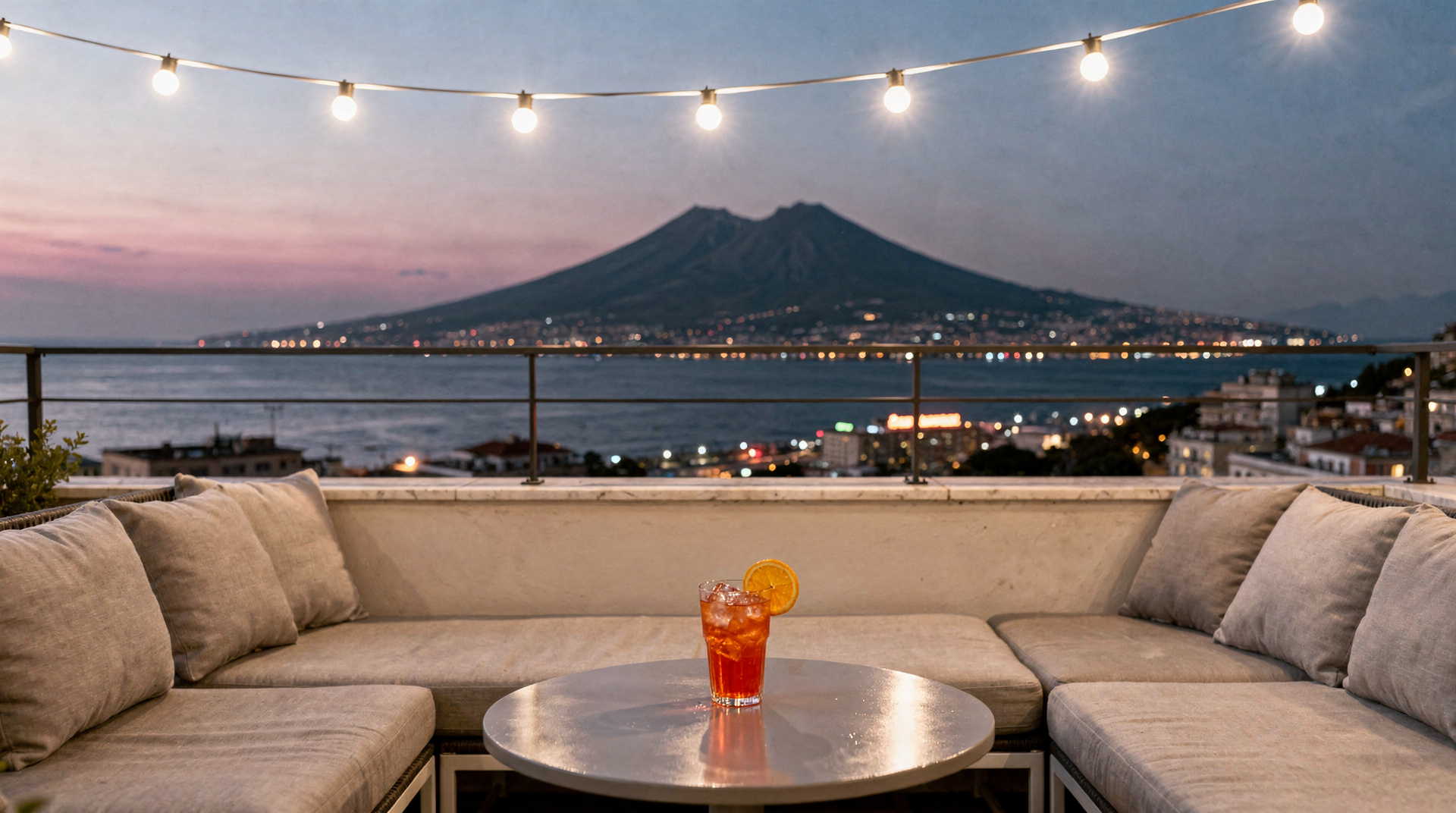
After blue hour fades, Naples still rewards a camera. The Lungomare’s lit promenade and the illuminated facade of Castel dell’Ovo work well handheld at higher ISO or on a small tripod resting on a railing or wall. The historic centre’s narrow streets take on a different character after dark — lit shrines, glowing pizzeria ovens visible through open doors, and quieter Spaccanapoli without daytime crowds. The Naples at night guide covers safe routes and the best-lit areas, and several rooftop bars double as elevated night photography spots if you’re willing to buy a drink for the access.
Frequently asked questions about Naples photo spots
Is the Spaccanapoli aerial shot accessible to tourists without paying for a private roof access?
The exact elevated angle showing the long straight cut through the city requires significant height. The Castel Sant’Elmo battlements (€5) are the most reliably accessible public viewpoint for a version of this shot. Some hotels in the area offer roof terrace views, sometimes with consumption required (a coffee or drink). Social media specifically shows certain roof terrace bars that provide this angle — search recent content for current access status.
When is the Lungomare too crowded for photography?
Sunday evenings (when the Lungomare is closed to traffic and becomes a pedestrian walkway) are beautiful but extremely busy with locals. Weekend mornings are quieter. Weekday evenings in summer are busy but not overwhelming. For near-empty Lungomare shots, early morning on a weekday in late October–March.
Is Posillipo worth a special trip just for photography?
Yes if you are interested in panoramic bay shots. The Parco Virgiliano view is difficult to match from anywhere else in Naples proper. Combined with the Mergellina funicular and a walk along the lower Posillipo waterfront, it is a worthwhile 2–3 hour photography trip from the city centre.