Naples viewpoints: the best panoramic spots in the city
Naples: Panoramic E-Bike Tour
Where are the best views over Naples and the Bay of Naples?
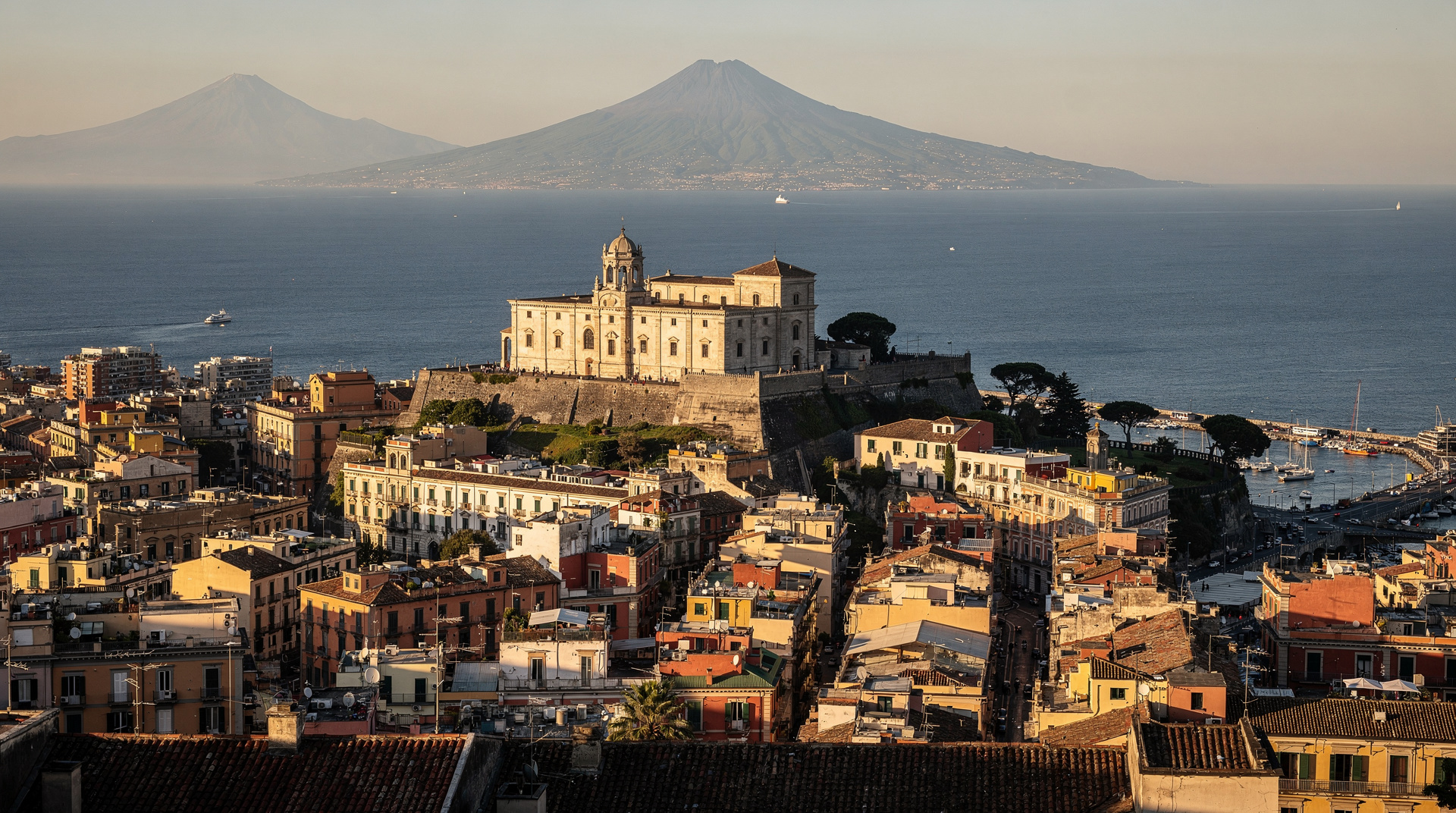
The finest panoramic views are from: the Certosa di San Martino terrace (Vomero hilltop — the most comprehensive bay view with Vesuvius), Castel Sant'Elmo battlements (360 degrees over the city and bay), and Parco Virgiliano at the tip of the Posillipo headland (views to Capri, Ischia, and Procida simultaneously). All are accessible by public transport and require little or no hiking.
Why Naples has exceptional viewpoints
The city of Naples is built on topography that creates natural drama — the historic centre at sea level, the hills of Vomero and Posillipo rising steeply behind, and the entire bay framed between the Sorrento Peninsula to the south and the Phlegraean Fields to the north. Mount Vesuvius to the east anchors the scene.
From the right elevation and angle, Naples offers one of the great urban panoramas of the Mediterranean. The viewpoints described here range from the well-known to the less visited, and from paid (but justified) to entirely free.
| Best overall | Certosa di San Martino terrace, Vomero |
| Cost | Free (Lungomare, Parco Virgiliano) to €8 (Certosa) |
| Getting there | Funicolare Centrale to Piazza Fuga for Vomero sites |
| Best time | Late afternoon, 15:00–17:00, for warm light on the bay |
| Best for islands | Parco Virgiliano, clear days November–April |
Comparing the main viewpoints
| Viewpoint | Cost | View highlight | Best time |
|---|---|---|---|
| Certosa di San Martino | €8 | Full bay arc + Vesuvius | Late afternoon |
| Castel Sant’Elmo | €5 | 360° incl. Phlegraean Fields | Late afternoon |
| Parco Virgiliano | Free | Capri, Ischia, Procida together | Clear winter days |
| Lungomare | Free | Sea-level postcard shot | Sunset/blue hour |
| Vesuvius crater rim | €14 (park fee) | Naples from above, reversed | Morning, before haze |
The Certosa di San Martino terrace
Type: Hilltop museum terrace, paid entry Entry: €8 (includes access to the museum and terrace) Transport: Funicolare Centrale from Via Toledo to Piazza Fuga, then 5-minute walk Best time: Late afternoon (15:00–18:00)
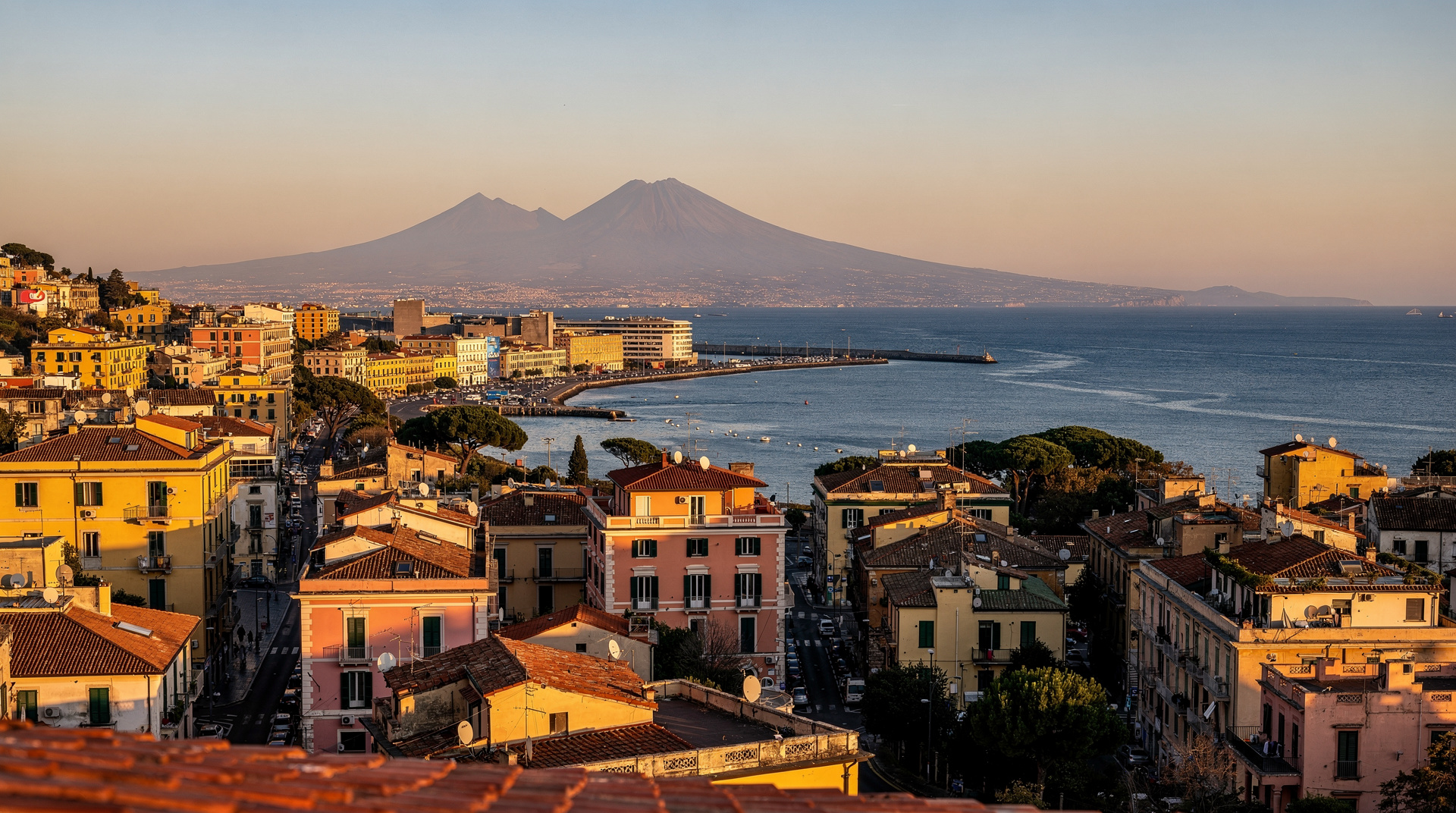
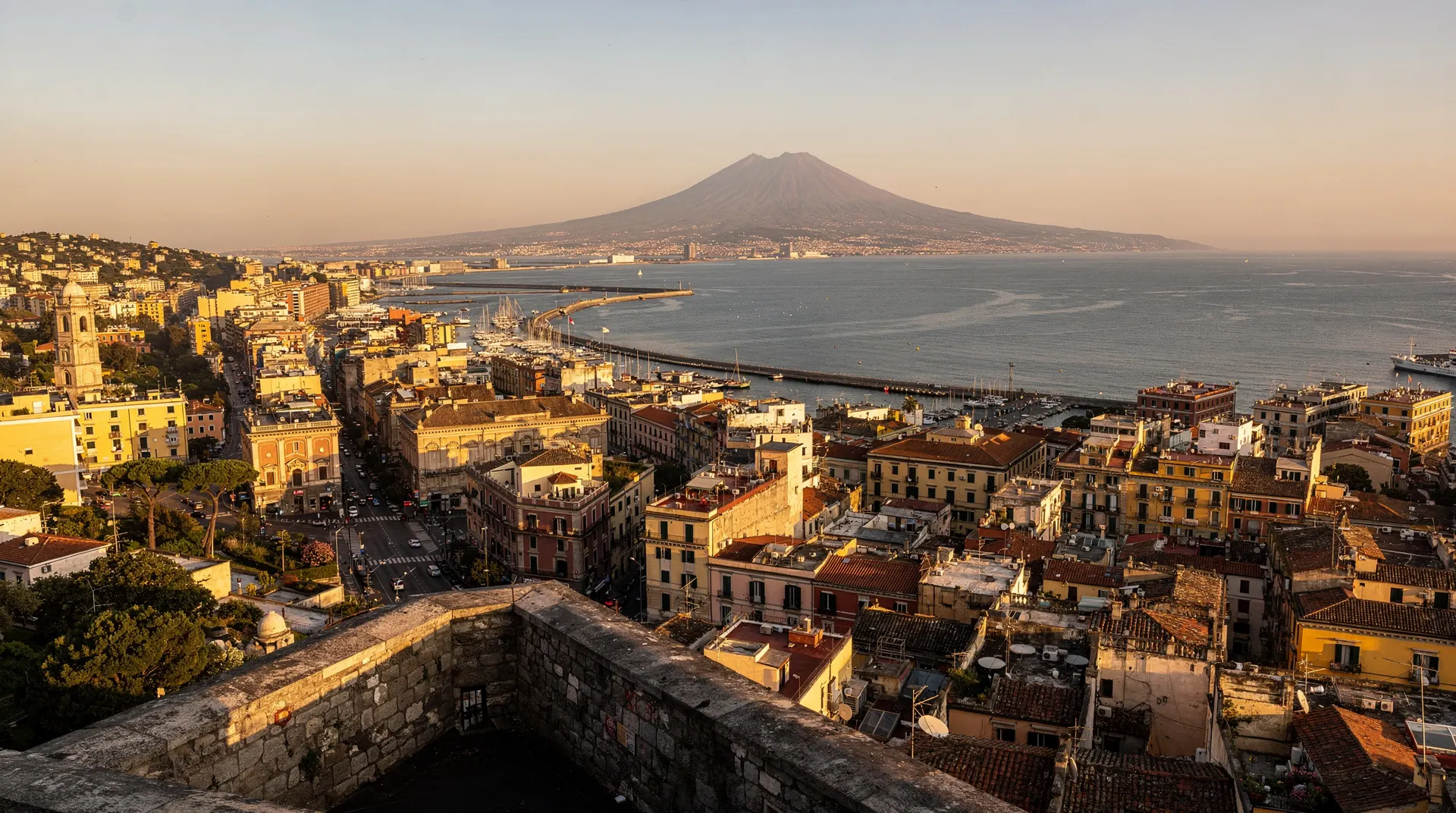
The south-facing terrace of the Certosa di San Martino (the former Carthusian monastery turned national museum) is the most satisfying single viewpoint in Naples. It faces south and southeast, taking in the full arc of the Bay of Naples.
What you see:
From left (east) to right (west): Vesuvius rising above the eastern bay, the urban sprawl of Naples climbing the hillsides, the waterfront Lungomare curving along the coast, Castel dell’Ovo on its rocky promontory, Posillipo headland to the right, and on clear days, the silhouette of Capri to the south-southeast and Ischia further right.
The terrace is a ledge projecting from the monastery complex, bounded by low stone walls. It is not elevated above the monastery — you are standing on the monastery terrace at Vomero hill height. This makes the view horizontal rather than vertically bird’s-eye, which gives a more intimate sense of the city.
Tips: The museum closes in the early evening (typically 19:00, with last entry an hour before). Plan to arrive no later than 17:00 to ensure time on the terrace before closing. The museum interior — particularly the baroque great cloister and the presepe collection — is worth significant time. See Certosa di San Martino for the full guide.
Castel Sant’Elmo
Type: Historic fortress, paid entry Entry: €5 Transport: Funicolare Centrale to Piazza Fuga, then 5–8 minutes walk uphill Best time: Late afternoon (different angle from Certosa — faces north and east too)
Castel Sant’Elmo is a few minutes’ walk uphill from the Certosa and occupies a slightly higher position. The star-shaped fortress has battlements on all six points of its star, giving true 360-degree views:
- South: Same bay view as the Certosa terrace
- North: The Camaldoli hills and the Phlegraean Fields area toward Pozzuoli
- East: Vesuvius and the eastern suburbs
- West: The Posillipo headland and beyond toward Baia
The north and northwest views (toward Pozzuoli and the Phlegraean Fields) are unique to Castel Sant’Elmo — you cannot see this direction well from the Certosa terrace. If you are planning a visit to Campi Flegrei, this gives a useful spatial orientation.
The castle also contains a contemporary art museum (included in the €5 entry) and temporary exhibitions. The architecture of the star fort itself — the angular geometry of the 16th-century defensive design — is photographically interesting, particularly from above looking down at the star points.
Combined visit: The Certosa terrace + Castel Sant’Elmo battlements can be done in the same visit (2–3 hours). A combined ticket may be available at the entrance — ask when buying. Both sit within the vomero-neighborhood-guide area, so pair the viewpoints with lunch or a coffee stop in Vomero’s cafés before heading back down via the naples-funiculars-guide.
Naples panoramic e-bike tour — Vomero and the bay viewpointsParco Virgiliano, Posillipo
Type: Public park, free Transport: Bus R7 or C16 from the Chiaia waterfront (Via Caracciolo) to Posillipo headland; or Funicolare di Mergellina plus a further bus/walk Best time: Late afternoon or sunset
Parco Virgiliano sits at the tip of the Posillipo headland — the narrow rocky cape that protrudes into the bay from the western side of Naples. It is named for the Roman poet Virgil, whose tomb (tradition says) was nearby.
What you see:
The park faces southeast, south, and southwest. This is the view that takes in the bay islands:
- Southeast: Capri (approximately 25 km, visible clearly on clean days)
- South-southwest: Ischia (approximately 35 km, a larger mass on the horizon)
- West: Procida (approximately 15 km, closer and more distinct)
- Northeast: Pozzuoli and the Phlegraean coast
On very clear days in winter or after rain, all three islands are simultaneously visible with detail — Capri’s cliffs, Ischia’s Monte Epomeo, Procida’s coloured buildings at the harbour. In summer haze, island visibility degrades significantly.
The park itself: Tree-lined with benches along the cliff edges. Not a dramatic or groomed park — more of a public green space that happens to be at the best point. A stone viewpoint terrace looks south over the bay. The scene is quieter and less touristic than the Vomero viewpoints.
Getting there from the city centre: Bus R7 from Via Caracciolo (Lungomare) westward to the Posillipo area. The journey takes 20–30 minutes. The Funicolare di Mergellina takes you up from Mergellina waterfront to Via Manzoni (lower Posillipo); from there you can walk further along Via Posillipo or take a bus to the park tip.
Via Posillipo road viewpoints
Type: Roadside, free Best time: Sunset (west-facing sections), late afternoon
Via Posillipo is the main road running along the ridge and southern slope of the Posillipo headland. As it winds along the coast, it passes through several areas with viewpoints over the bay.
Marechiaro: A small fishing village cove on the south face of Posillipo. The waterfront terrace here faces south toward Capri and gives a low-angle view over the calm water of the inner bay. Accessible by bus from the city or by a steep walk down from Via Posillipo.
Roadside lookouts along Via Posillipo: Several pull-off points and pedestrian areas along the road provide glimpses of the bay between villas and gardens. These are not manicured viewpoints but rather gaps in the urban fabric that reveal the water below.
The Lungomare: ground-level bay view
Type: Waterfront promenade, free Best time: Golden hour to blue hour
The Lungomare (Via Caracciolo) is not a traditional “elevated viewpoint” — it is at sea level. But it provides the most romantic composed view of the bay: the curving promenade, Castel dell’Ovo projecting into the water, Vesuvius in the distance, and the Sorrentine Peninsula on the horizon.
This is the shot that defines postcards of Naples. It is best at sunset when the sky behind Posillipo is warm and the castle is lit against the darkening bay. See best photo spots in Naples for specific composition advice on the Lungomare, and lungomare-evening-walk for a full route that turns the walk itself into an evening outing rather than just a photo stop.
Rooftop and bar viewpoints
For a view with a drink rather than a museum ticket, several rooftop bars around Chiaia, the Lungomare, and Piazza del Municipio offer bay panoramas — generally lower and closer to street level than the Vomero sites but with a different, more social atmosphere, especially after dark. See best-rooftop-bars-naples for a shortlist by neighbourhood and price. For a fuller sense of how the city looks and feels once the sun is down, naples-at-night covers lit landmarks and evening atmosphere beyond just the view.
Vomero neighbourhood views
Type: Street-level neighbourhood views, free Best time: Late afternoon
Beyond the Certosa and Castel Sant’Elmo, Vomero’s residential streets offer incidental views over the city below. The streets on the south-facing slope between Piazza Fuga and the Certosa give glimpses of the bay between buildings.
Piazza Vanvitelli: The main Vomero square is not a traditional viewpoint, but it has an elevated character — sitting at a hilltop neighbourhood square with the noise of the lower city absent, the quality of light and air is noticeably different from the historic centre below.
Photography gear and settings notes
A wide-angle lens (24mm equivalent or wider) captures the full bay arc from the Certosa or Castel Sant’Elmo without stitching multiple frames, though a standard zoom works fine for tighter compositions on Vesuvius or the islands. A polarising filter cuts haze and glare on bright afternoons, particularly useful at Parco Virgiliano where you are shooting toward a hazy horizon. For blue-hour shots on the Lungomare, a small tripod or a stable ledge and a 2–3 second timer beat handheld shots once the light drops. None of the viewpoints in this guide charge a photography fee beyond standard entry.
Less-known viewpoints worth seeking
Belvedere di San Martino: A small garden terrace adjacent to the Certosa complex on the west side — sometimes less crowded than the main Certosa terrace with a similar but slightly different angle.
Piazzetta Mondragone (Vomero): A small square with a ledge view south over the city from a different angle than the main Certosa terrace. Less visited by tourists.
The Pallonetto di Santa Chiara stairway: A series of steps descending the hillside east of Vomero, giving partial bay views between buildings at different levels. A scenic descent route rather than a defined viewpoint.
Vesuvius as a viewpoint
Looking from Naples to Vesuvius is the standard. But the crater rim of Vesuvius (accessible by bus from Pompei Scavi station and a 30-minute walk) gives the reverse — looking back over the bay toward Naples, with the city and the whole bay spread below. This is a different photographic perspective that some visitors find as compelling as the city viewpoints. See getting to Vesuvius for the practical logistics.
Planning a viewpoint-focused half-day
The most efficient sequence: take the Funicolare Centrale up to Piazza Fuga in the early-to-mid afternoon, walk to Castel Sant’Elmo first for the 360-degree orientation view, then the Certosa terrace as the light warms toward late afternoon, and finish with a coffee or aperitivo in Vomero before descending. If you have a full day, add Parco Virgiliano in the morning (best for island clarity before afternoon haze builds) and close with sunset on the Lungomare. This sequence avoids backtracking and times each viewpoint for its best light.
Frequently asked questions about Naples viewpoints
When is visibility best for island views from Naples?
Winter and early spring (November–April) typically have the clearest air and best long-distance visibility. Summer haze and sea humidity reduce island visibility significantly. The best chance of seeing all three bay islands clearly from Parco Virgiliano or Posillipo is in November–December on calm clear days.
Which viewpoint is best for sunset?
The Certosa terrace or Castel Sant’Elmo for a sunset view with Vesuvius as a backdrop (sun sets behind you to the west, light falls on the volcano and eastern bay). The Lungomare for a sunset view with the sun setting over Posillipo to the west (warm backlit sky behind the headland and Castel dell’Ovo). Parco Virgiliano faces more south/southeast — better for late-afternoon light than direct sunset.
Are the Vomero viewpoints accessible with mobility limitations?
The Funicolare Centrale has a lift and the funicular carriage itself is accessible. The Certosa terrace is reachable from the funicular without significant steps within the museum (check current accessibility with the museum before visiting). Castel Sant’Elmo has some steps in its access route. Parco Virgiliano is accessible by bus, but the park paths are uneven.
What is the best viewpoint for photographing Vesuvius specifically?
The Certosa terrace and Castel Sant’Elmo provide the clearest view of Vesuvius from the city with the bay in the foreground. For maximum proximity and drama, the view from the crater rim itself and from the villages on the Vesuvius slopes (Ercolano, Torre del Greco) give a different and closer perspective. From Pompei, Vesuvius towers directly overhead.