Vomero neighborhood guide: Naples' hilltop residential district
The Best of Naples Private Walking Tour
Is Vomero worth staying in for a Naples visit?
Vomero is a good base if you want quiet nights, lower noise levels, and residential authenticity without being far from the sights. The funicular to the centro storico takes 8–10 minutes. The neighborhood has excellent views, the Certosa di San Martino, and a walkable street life of its own. It costs less than Chiaia for comparable quality.
In brief: Vomero is Naples from the hilltop — less chaos, better views, good food, funicular access to the sights. Best for families, quieter travelers, and those wanting a residential experience above the city.
| Where | Hilltop above Chiaia and the centro storico, reached by funicular |
| Getting there | 3 funiculars (~4–10 min) or Metro Line 1 (Vanvitelli, Quattro Giornate) |
| Cost to stay | Around €50–130/night, generally cheaper than Chiaia |
| Time needed | Half a day for Certosa + Castel Sant’Elmo, or a full evening base |
| Best for | Quieter nights, families, panoramic views without the crowds |
Understanding Vomero’s position in Naples
Vomero sits on a hill that rises steeply above the centro storico to the north, above Chiaia to the south, and connects to the western heights of Posillipo. The hill is not a gentle slope — it is a proper geological rise of about 150 meters that separates the hilltop from the coastal plain below.
This geography explains everything about Vomero’s character. The neighborhood developed late — primarily in the late 19th and early 20th centuries, after the funicular lines were built (the first opened in 1889). It was designed as a residential expansion of the city, with wide streets for carriages, bourgeois apartment buildings, public gardens, and a planned commercial street (Via Scarlatti).
The result is a neighborhood that looks like Milan accidentally transported to southern Italy — orderly, relatively clean, architecturally coherent — sitting directly above the controlled urban chaos of old Naples.
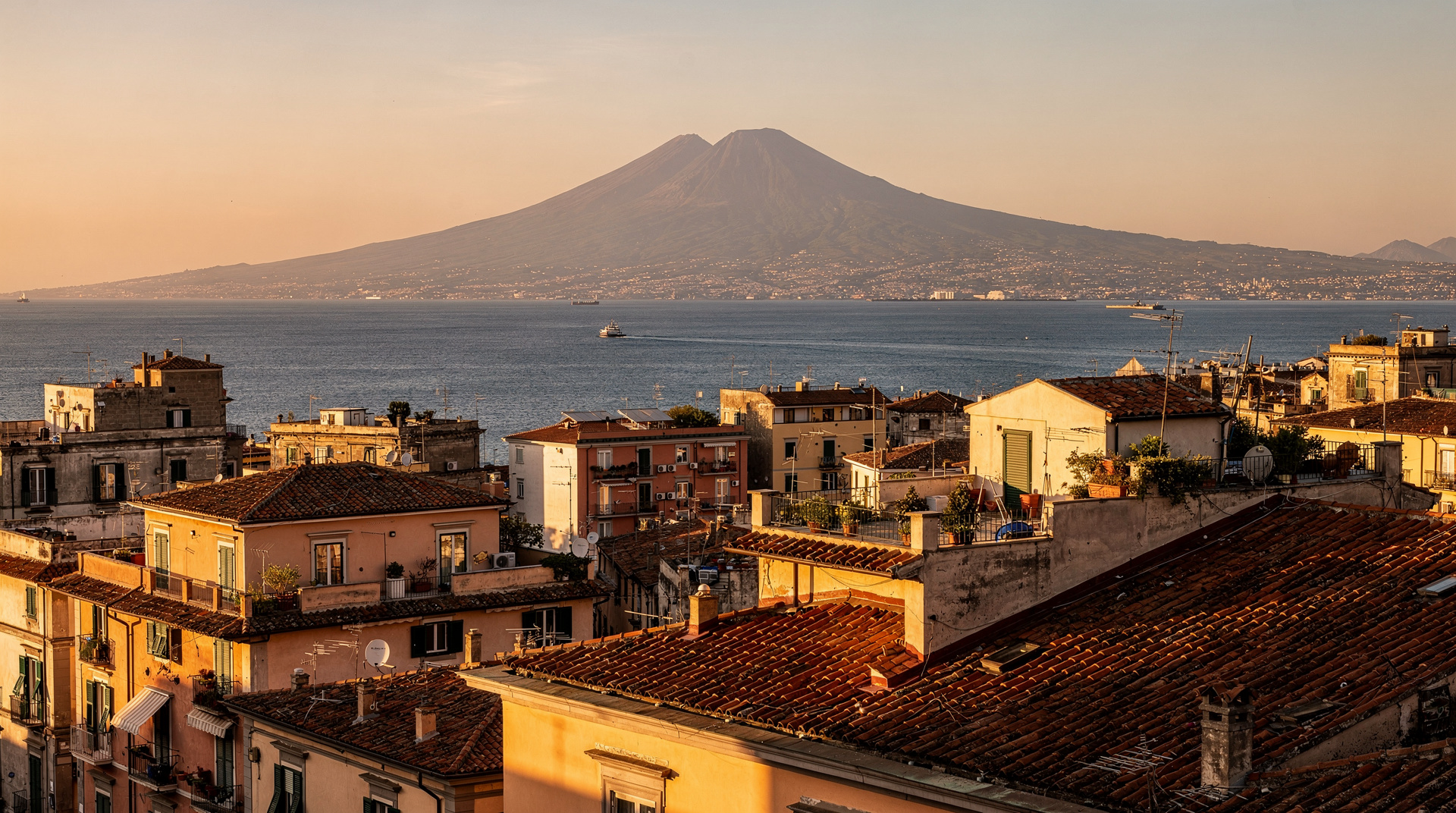
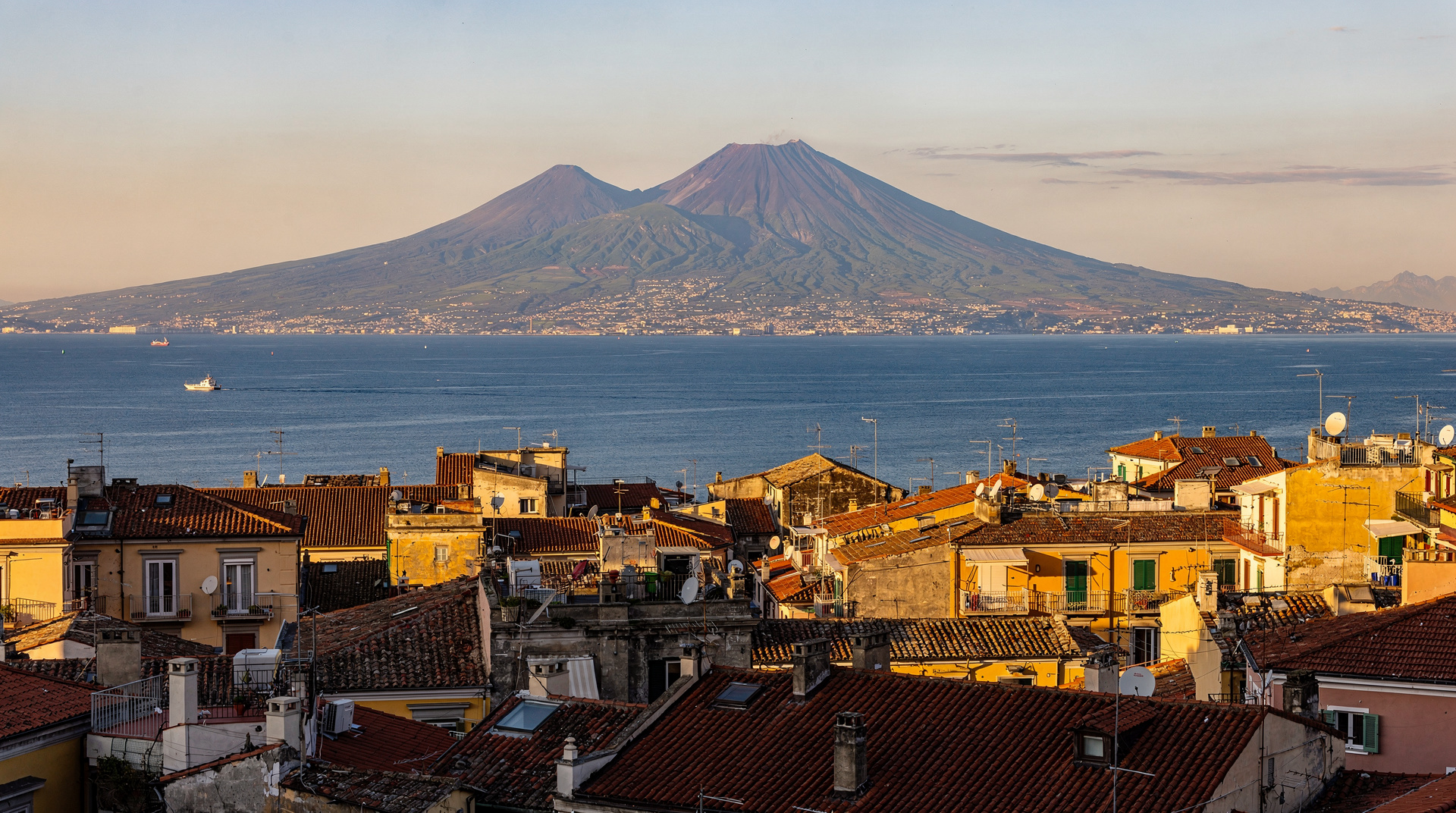
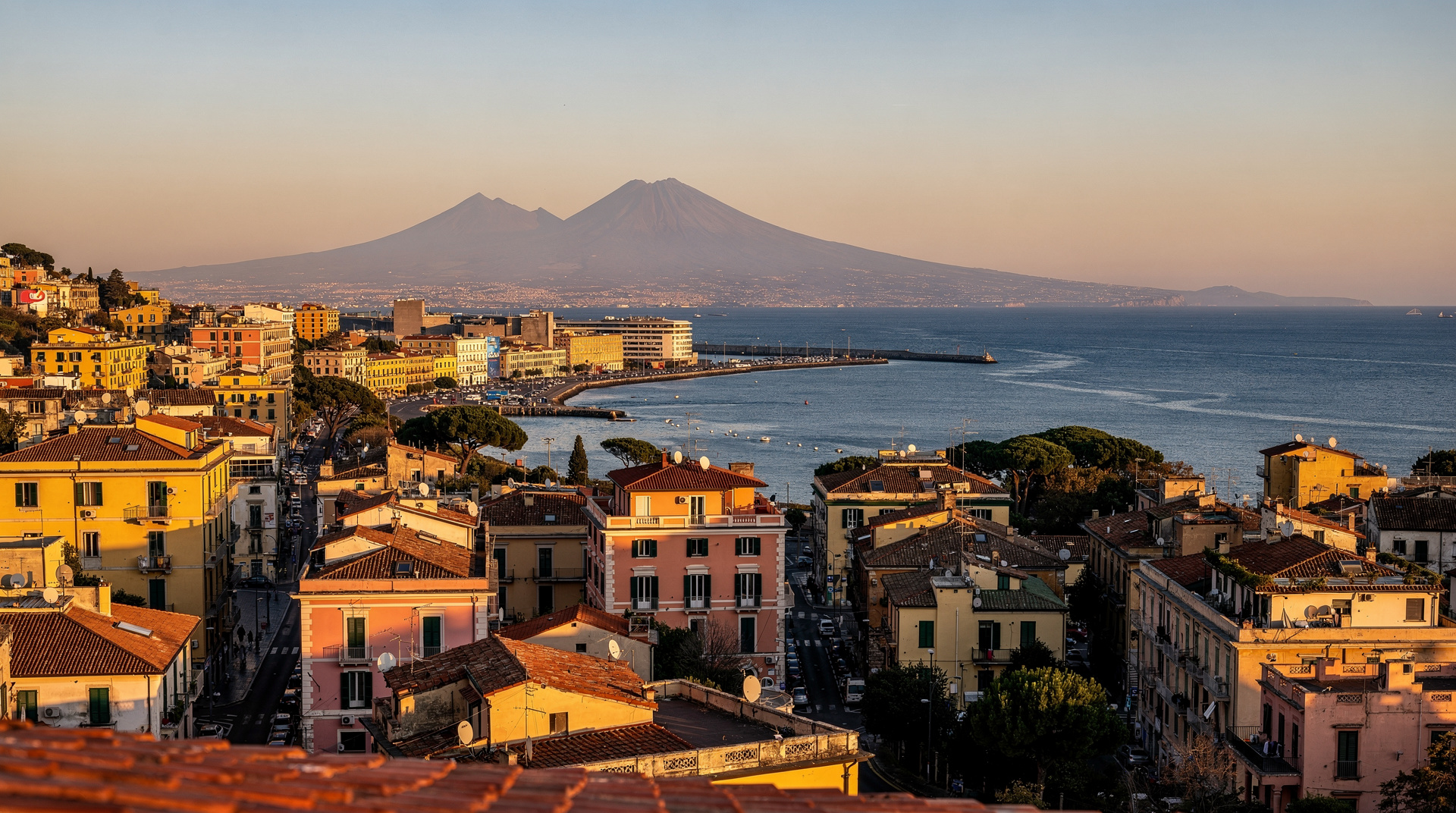
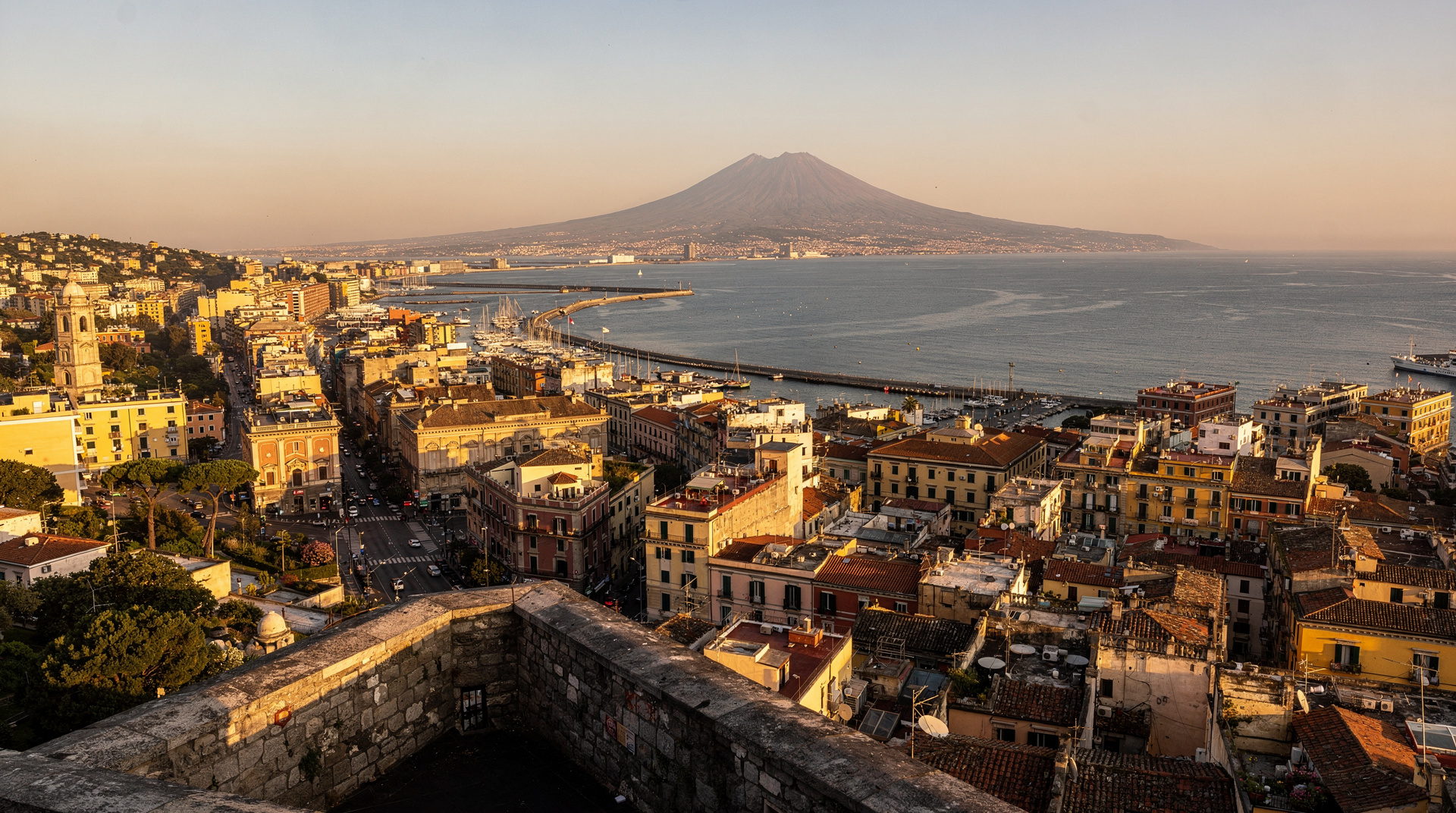
From Vomero’s belvederes on a clear winter day, you can see the entire bay: Vesuvius to the east, the Phlegraean Fields to the west, Capri in the distance, and the islands of Ischia and Procida. This is one of the best vantage points in southern Italy.
The funicular network: Vomero’s practical advantage
Three funicular lines run from the lower city to Vomero. They are not tourist attractions — they are a genuine transit system used by thousands of Neapolitan commuters daily.
Funicolare Centrale: Departs from Piazzetta Duca d’Aosta, just off Via Toledo between the metro stations of Piazza Amedeo and Municipio. Arrives at Stazione Centrale funicular in Vomero, close to Via Scarlatti. Journey: about 4 minutes. Frequency: every 10–15 minutes.
Funicolare di Chiaia: Departs from Parco Margherita in Chiaia. Arrives at Cimarosa, one of the western Vomero stops. Useful if staying in the Chiaia/Vomero overlap zone.
Funicolare di Montesanto: Departs from Piazza Montesanto, on the northwest edge of the centro storico. Arrives at Morghen in western Vomero. Less useful for most visitors than the Centrale line.
All funiculars run on standard ANM transit tickets — the same €1.60 ticket that covers metro and bus. A 24-hour pass (€4.50) covers unlimited rides across all Naples transit, including all three funiculars.
The key practical limitation: funiculars stop around 22:00 on most days (check current schedules — times change seasonally and for maintenance). After last service, a taxi from the centro to Vomero costs €8–12. This is a genuine consideration if you plan late evenings in the historic center; it is not a reason to avoid the neighborhood.
A hop-on hop-off bus includes Vomero in its route and is worth taking on day one for orientation before using the funiculars.
Certosa di San Martino: the main reason to visit Vomero
The Certosa di San Martino (Charterhouse of San Martino) is the most important sight in Vomero and one of the most interesting institutions in Naples. Founded in 1325 as a Carthusian monastery, expanded through the Renaissance, and decorated obsessively during the Baroque period, it is now a museum of Neapolitan history, art, and culture.
What to see inside:
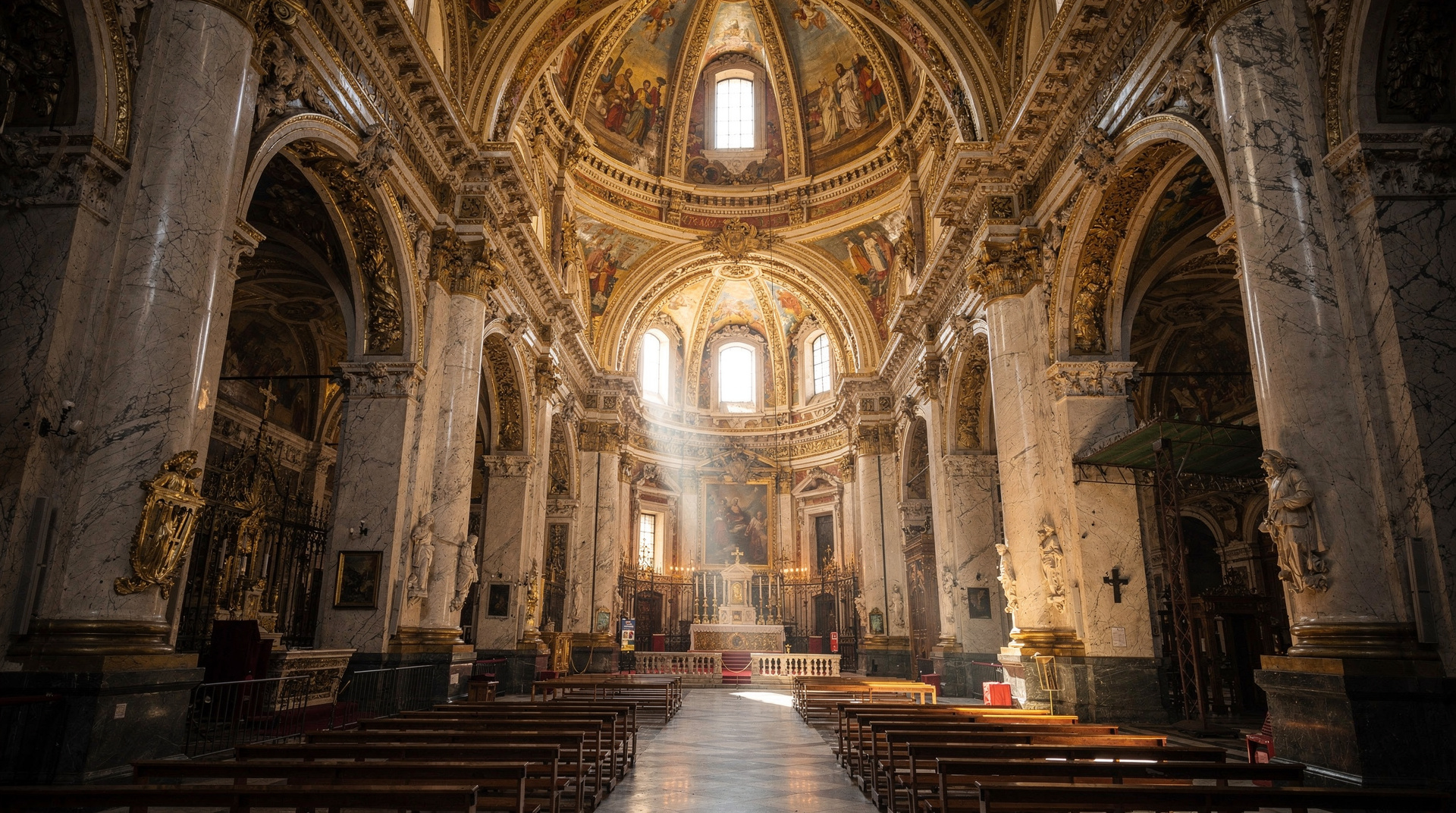
The church itself is one of the great Baroque interiors of southern Italy — ceiling frescoes by Luca Giordano, inlaid marble floors, a sacristy with remarkable detail. The monastic apartments give a clear picture of the extremely comfortable life of wealthy Carthusian monks. The collections include the most complete surviving collection of Neapolitan presepe (nativity scenes) in the world — the 18th-century examples are extraordinary in their detail and scale.
The terraced gardens behind the Certosa are the real secret. Access is included in the museum ticket; most visitors miss them. The lower terrace looks directly down over the Castel Sant’Elmo walls and across the entire bay. The view is at its best in early morning or late afternoon.
Practical: Open Thursday–Tuesday, 08:30–19:30 (last entry 18:30). Closed Wednesday. Entry €6. Reduced €3 for EU citizens 18–25. Free for EU citizens under 18 with ID. The Certosa San Martino guide covers the collections in detail.
Castel Sant’Elmo: the panoramic fortress
Castel Sant’Elmo crowns the highest point of the Vomero hill, above the Certosa. Originally a 14th-century tower expanded by the Spanish viceroys into a star-shaped fortress in 1537, it served primarily as a political prison (the philosopher Tommaso Campanella was held here for 27 years).
The interior now hosts exhibitions, but the reason to come is the terrace. The 360-degree view encompasses all of Naples spread out below, the full arc of the Bay of Naples, Vesuvius to the east, the Phlegraean Fields to the west, and on clear days the islands of Capri and Ischia.
Practical: Open daily 08:30–19:30. Entry €5. The ticket booth is inside the castle entrance. Allow 45–60 minutes for a comfortable visit.
Combined with the Certosa (directly below), a Castel Sant’Elmo visit makes for a full morning or afternoon in Vomero without needing to descend the hill.
Walking in Vomero
The neighborhood is flat on its hilltop plateau, making it genuinely walkable for those staying here. The main streets:
Via Scarlatti: The pedestrian spine of Vomero, about 400 meters running east–west. Shops, cafés, gelaterias, bars. The morning fruit and vegetable market on the crossing streets (Piazzale Vanvitelli area) is worth visiting.
Via Luca Giordano: Parallel to Scarlatti, with restaurants, wine bars, and more local commerce. Quieter in the mornings, livelier from late afternoon.
Piazza Vanvitelli: The neighborhood’s main square, with a fountain and the metro station entrance. Sunday mornings are best — families walking, elderly residents on benches, life proceeding at an entirely different pace from Spaccanapoli below.
Belvedere Pasquale Scura: Free viewpoint on the southern edge of Vomero, looking directly down over Chiaia and the seafront. No fee, no queue — one of the best views in Naples available at zero cost.
Eating and drinking in Vomero
Vomero’s restaurants serve the neighborhood, not tourists. This means honest prices, local ingredients, and none of the performance reserved for perceived tourists in the centro.
Pastry and coffee: Vomero has several of Naples’ best pasticcerie. Pasticceria Poppella (Via Arena alla Sanità is the original, but the Vomero branch exists too) is famous for its “fiocco di neve” (snowflake pastry — ricotta and cream). Bar Margherita on Via Luca Giordano is the neighborhood’s traditional morning bar.
Pizza: If you want pizza without the Spaccanapoli queue theater, Vomero has legitimate options. Pizzeria Il Pizzaiolo del Presidente has a branch on Via Ascensione.
Local restaurants: Via Luca Giordano has a dozen trattorie with €12–16 primi and €14–20 secondi. Quality is consistent and geared to regulars, not quick-turnover tourists.
Aperitivo: Starts around 18:30. The bars around Piazza Vanvitelli do spritz and Aperol with snacks for €5–7. Lighter and calmer than the Chiaia scene.
A panoramic Fiat 500 tour covers Vomero’s lookout points and the rest of the city’s most scenic viewpoints — including the coast above Posillipo.
Vomero for families
Vomero is the most family-practical neighborhood in central Naples:
- Streets: Wide, pedestrianized in parts, lower scooter traffic than the centro
- Parks: Parco Virgiliano (Villa Floridiana with its white Neoclassical villa and green spaces) is a short taxi or bus ride from central Vomero
- Noise: Significantly quieter than Centro Storico — children sleep better
- Supermarkets: A proper Carrefour on Via Giordano supplies formula, baby food, and everyday supplies
- Medical: A Farmacia (pharmacy) on every main block, open until 20:00 with after-hours signage for emergencies
The funiculars are easy for children to use and feel like a gentle adventure rather than just transit. The Certosa’s presepe collection (nativity dioramas with hundreds of tiny figures) reliably captivates children aged 5 and up.
For the full family Naples picture, see the Naples with kids guide.
Staying overnight in Vomero: practical notes
Noise: Considerably quieter than the centro storico. The main streets (Scarlatti, Giordano) have bar and café noise until around 22:00 but nothing like the bass from centro nightclubs or 02:00 mopeds. Rear-facing rooms are generally quiet by 22:30.
Wi-fi: Hotels and B&Bs in Vomero are typically well-equipped — the residential clientele demands working infrastructure.
Check-in logistics: If arriving by rental car, confirm your hotel’s parking arrangement before booking. Vomero has limited on-street parking and a ZTL zone in parts.
Late-night return: The last funicular runs around 22:00. After that, taxis from the centro are €8–12 and reliably available at Piazza del Plebiscito or Via Toledo. The Vanvitelli metro station (Line 1) runs later — check current last service times.
Vomero vs Chiaia: choosing between the two hillside options
Vomero and Chiaia are the two neighborhoods most visitors weigh against a centro storico base, and they solve slightly different problems. Chiaia sits at sea level, close to the seafront promenade and the smarter shopping streets, with a shorter walk into the historic center but a livelier, more expensive night scene.
Vomero sits genuinely above the city — quieter, cheaper, more residential, with the funicular as the one extra step between you and the sights. If proximity to the seafront and evening energy matters more than saving money, choose Chiaia. If quiet nights, better views, and lower prices matter more than being at street level with everything, choose Vomero. Both are safe, comfortable, and a clear step up in calm from a centro storico hotel.
For travelers cross-shopping the wider city, best areas to stay in Naples covers how Vomero, Chiaia, and the centro storico compare against each other and against the port-adjacent options for early ferry departures.
A practical rule of thumb: if it’s your first visit to Naples and you want to walk out the door straight into the historic center’s energy, choose the centro storico or Chiaia. If it’s a return visit, a family trip, or you simply value sleep over proximity, Vomero is the better call — and the funicular ride itself, with its views opening up as you climb, is a small pleasure rather than a chore.
Photography and viewpoints beyond the two castles
Vomero’s belvederes are one of the best reasons to come up the hill even without visiting the paid sights. Beyond Castel Sant’Elmo’s 360-degree terrace and the Certosa’s garden view, the free Belvedere Pasquale Scura (mentioned above) gets overlooked by visitors who only budget time for the ticketed attractions — it’s a five-minute detour from Via Scarlatti and costs nothing. For a fuller list of Naples’ panoramic spots, including a few outside Vomero, see Naples viewpoints and best photo spots in Naples; both are worth checking before you plan a Vomero half-day, since the light and crowd levels vary significantly by time of day at each spot.
Frequently asked questions about Vomero
Is Vomero worth the funicular step to reach the sights?
Yes for most visitors. The funicular is 4 minutes each way. You add perhaps 20 minutes per round trip compared to a centro storico hotel — a genuine but small cost. The payoff is better sleep, quieter base, lower prices, and a neighborhood that shows you a different face of Naples.
Does Vomero have a metro station?
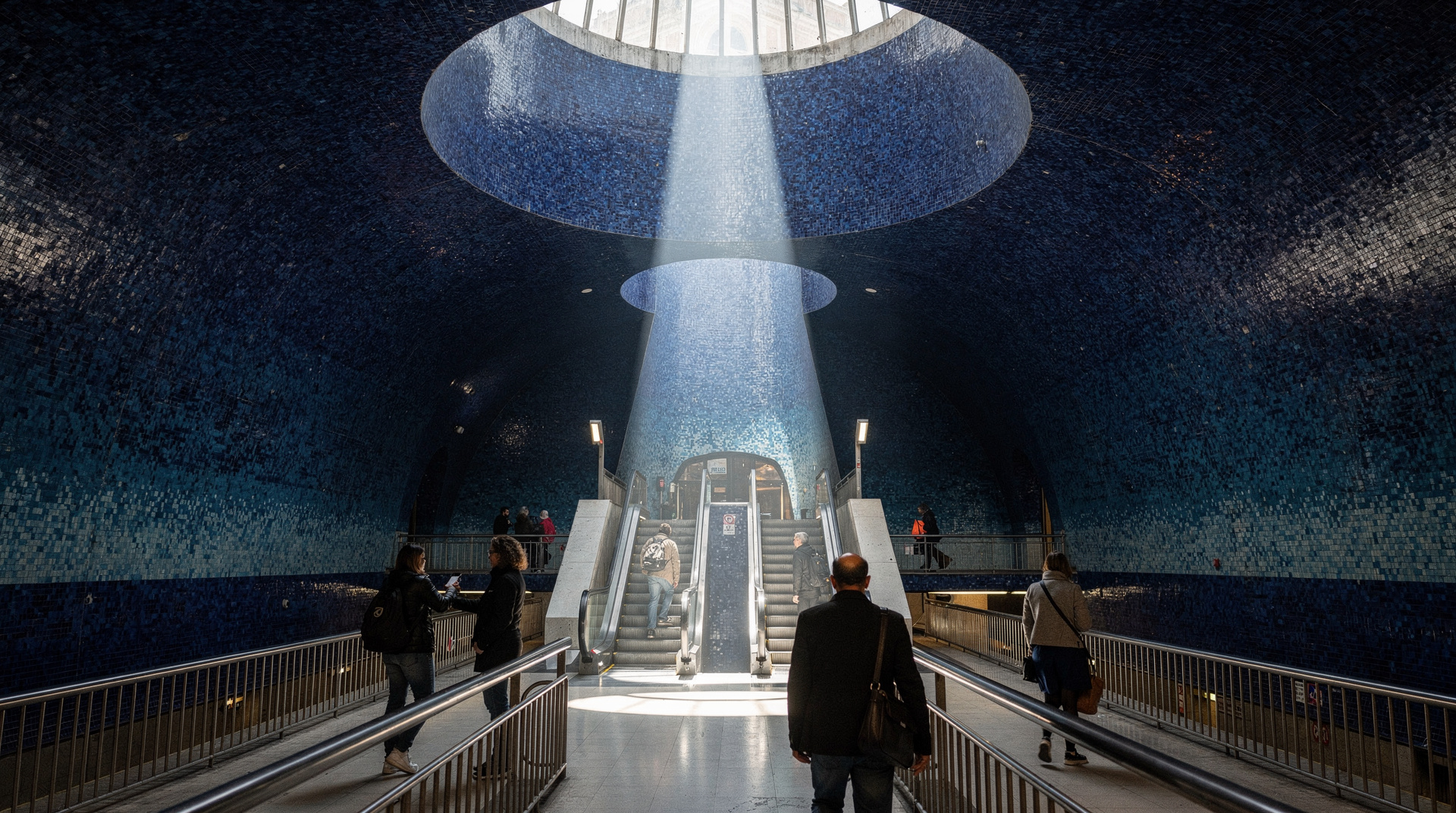
Yes — Vanvitelli and Quattro Giornate on Metro Line 1. Quattro Giornate station is one of the art stations designed by a contemporary architect. See the Naples metro art stations guide for details on these extraordinary underground spaces.
What is Villa Floridiana in Vomero?
Villa Floridiana is a 19th-century royal villa set in a large English-style garden on the Vomero hillside. The villa houses the Duca di Martina museum of decorative arts (European porcelain, majolica, glass — €2 entry). The gardens are free and offer good views — a pleasant walk especially with children.
Is Vomero far from the port for island ferries?
About 35–40 minutes total: funicular to centro (10 minutes), metro to Municipio/Beverello area (10 minutes), walk to ferry terminal (5–10 minutes). Not as fast as staying near the port, but entirely practical for an 08:00 ferry departure if you leave the hotel by 07:10.
How early do the funiculars start running?
The Funicolare Centrale starts at approximately 07:00. The first service on weekdays is around 06:30 on some lines. For very early departures (to catch the first Circumvesuviana for summer Pompeii visits), confirm the specific funicular schedule — or take a taxi.
Frequently asked questions about Vomero neighborhood guide: Naples' hilltop residential district
How do you get to Vomero from the center of Naples?
What are the main sights in Vomero?
Is Vomero safe?
What is the restaurant scene like in Vomero?
Can you walk from Vomero to the city center?
What does accommodation cost in Vomero?
Does Vomero have good shopping?
Top experiences
Bookable activities with verified prices and instant confirmation on GetYourGuide.