Chiaia neighborhood guide: Naples' most livable district
The Best of Naples Private Walking Tour
Is Chiaia a good area to stay in Naples?
Yes — Chiaia is the best balance of safety, comfort, and location for most visitors. You get the Lungomare seafront on your doorstep, excellent restaurants and wine bars, quiet residential streets, and metro access to the historic center in under 10 minutes. It costs slightly more than staying in the centro storico but the quality floor is higher and noise levels are lower.
In brief: Chiaia is the neighborhood for visitors who want a comfortable, safe base near the seafront without sacrificing access to the sights. Slightly pricier than centro storico, significantly quieter, and consistently higher quality.
| Where | Between Piazza Vittoria and Mergellina, along the Lungomare seafront |
| Cost premium vs. centro storico | Around 20–40% more for comparable rooms |
| Getting to the sights | Metro Piazza Amedeo to Dante/Museo, around 10 minutes |
| Best for | Comfort-focused visitors, couples, solo female travelers |
| Best time to walk the Lungomare | Sunset, around 18:00–20:00, or Sunday morning (traffic-free) |
What makes Chiaia different from the rest of Naples
Naples is often experienced as an assault on the senses — mopeds, noise, crumbling grandeur, anarchic traffic, brilliant food, bewildering streets. Most of that is true of the centro storico. Chiaia offers a different side of the same city: the Sunday-morning version, where the streets are wide enough for two people to walk side by side, where the buildings have been repainted this decade, and where cafés serve coffee to recognizable regulars.
The neighborhood runs roughly from Piazza Vittoria (at the eastern end of the Lungomare) to Mergellina (at the western end), and from the seafront up to the base of the Vomero hill. It is primarily residential — Neapolitan professionals, old money, and the city’s diplomatic community. Tourism exists here as a supporting element, not the main industry.
This makes Chiaia genuinely pleasant to be based in. You are not constantly navigating tourist infrastructure, overpriced restaurant menus, and selfie crowds. You are in a city that is living its actual life around you.
The Lungomare: Chiaia’s greatest asset
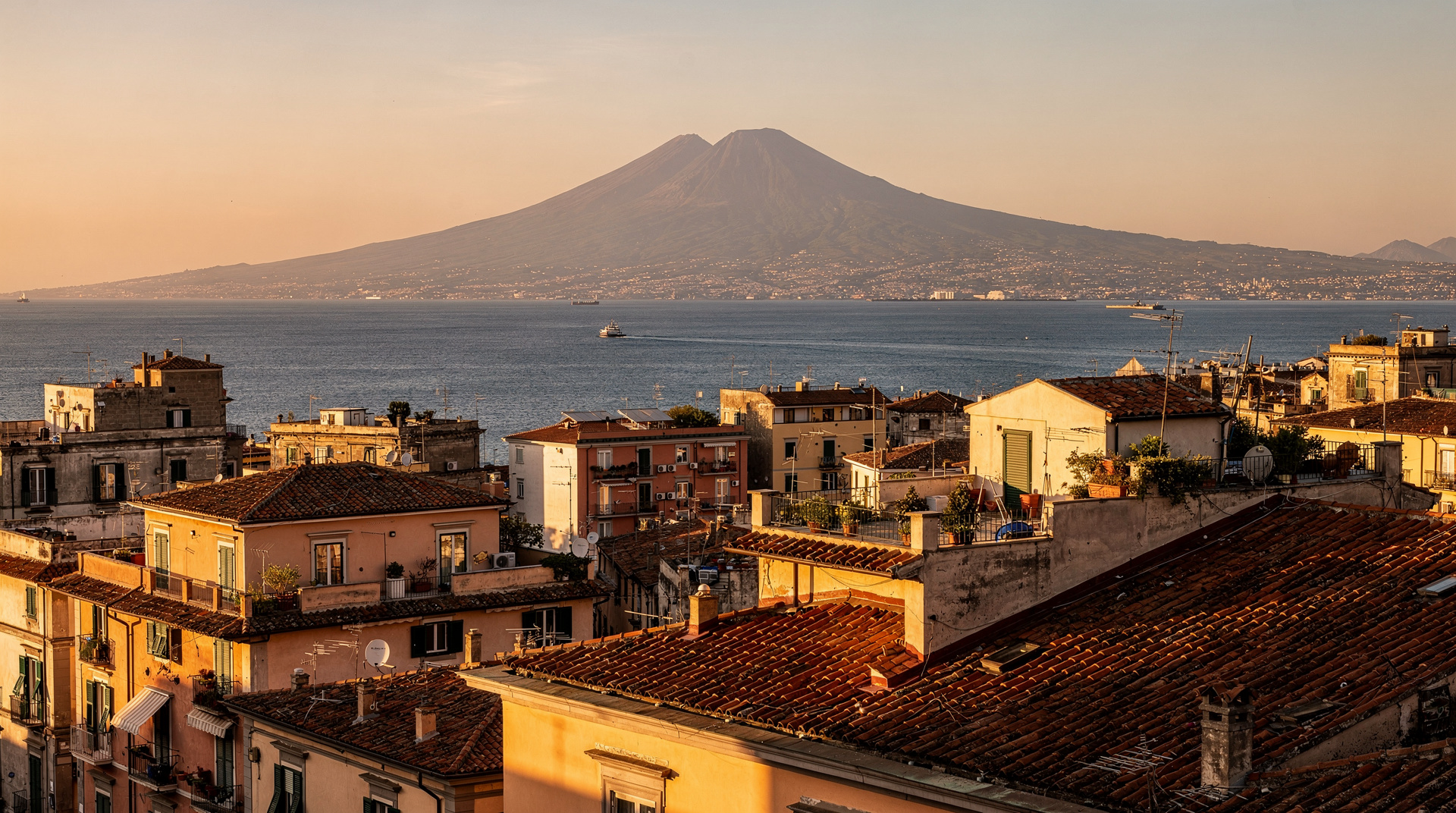
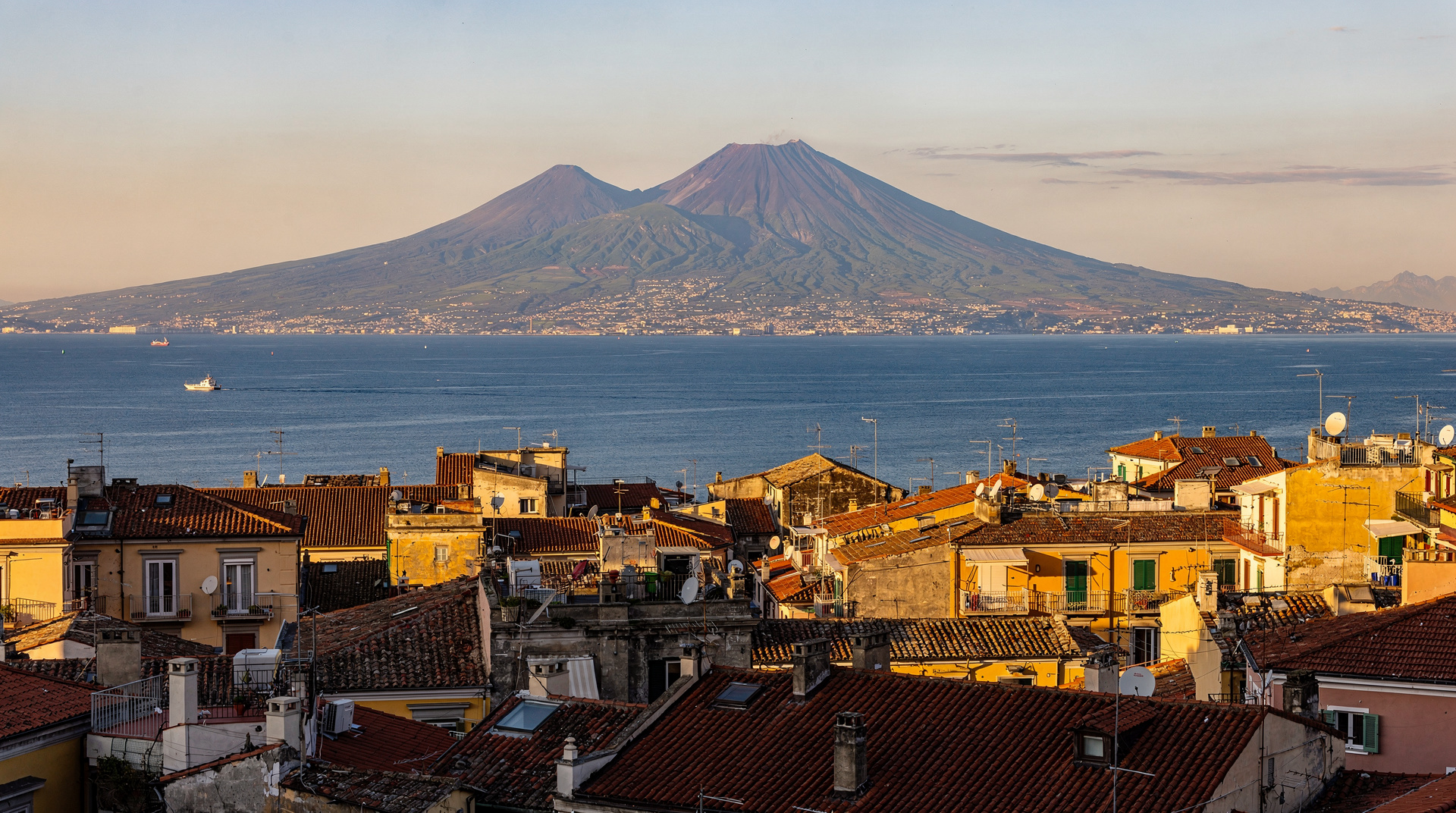
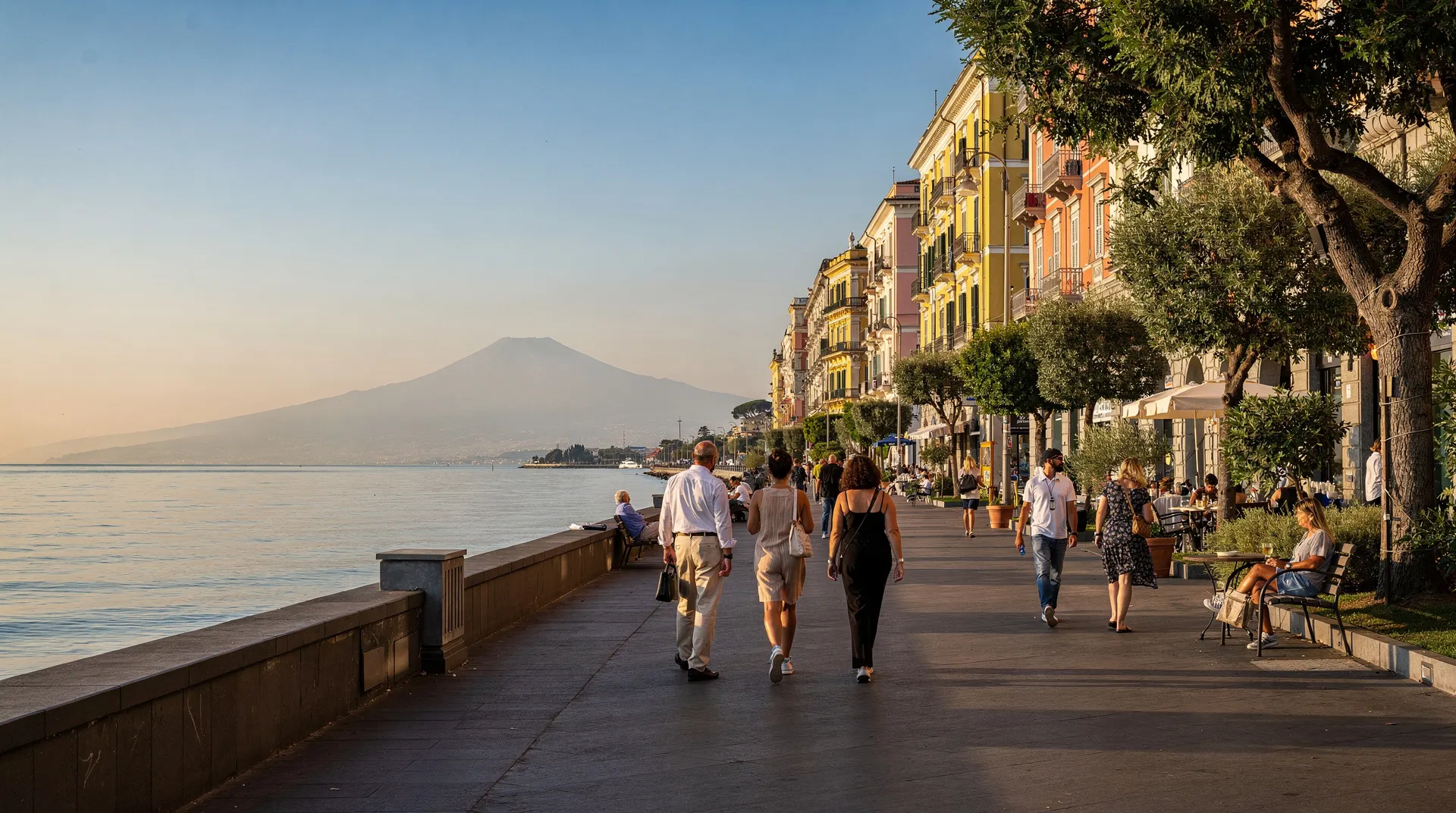
The Lungomare Caracciolo is the 2.5 km seafront promenade running along the front of Chiaia, closed to traffic on Sundays and summer evenings. On a clear day, Vesuvius rises across the bay to the southeast; the islands of Capri and Ischia are visible to the west on clear days.
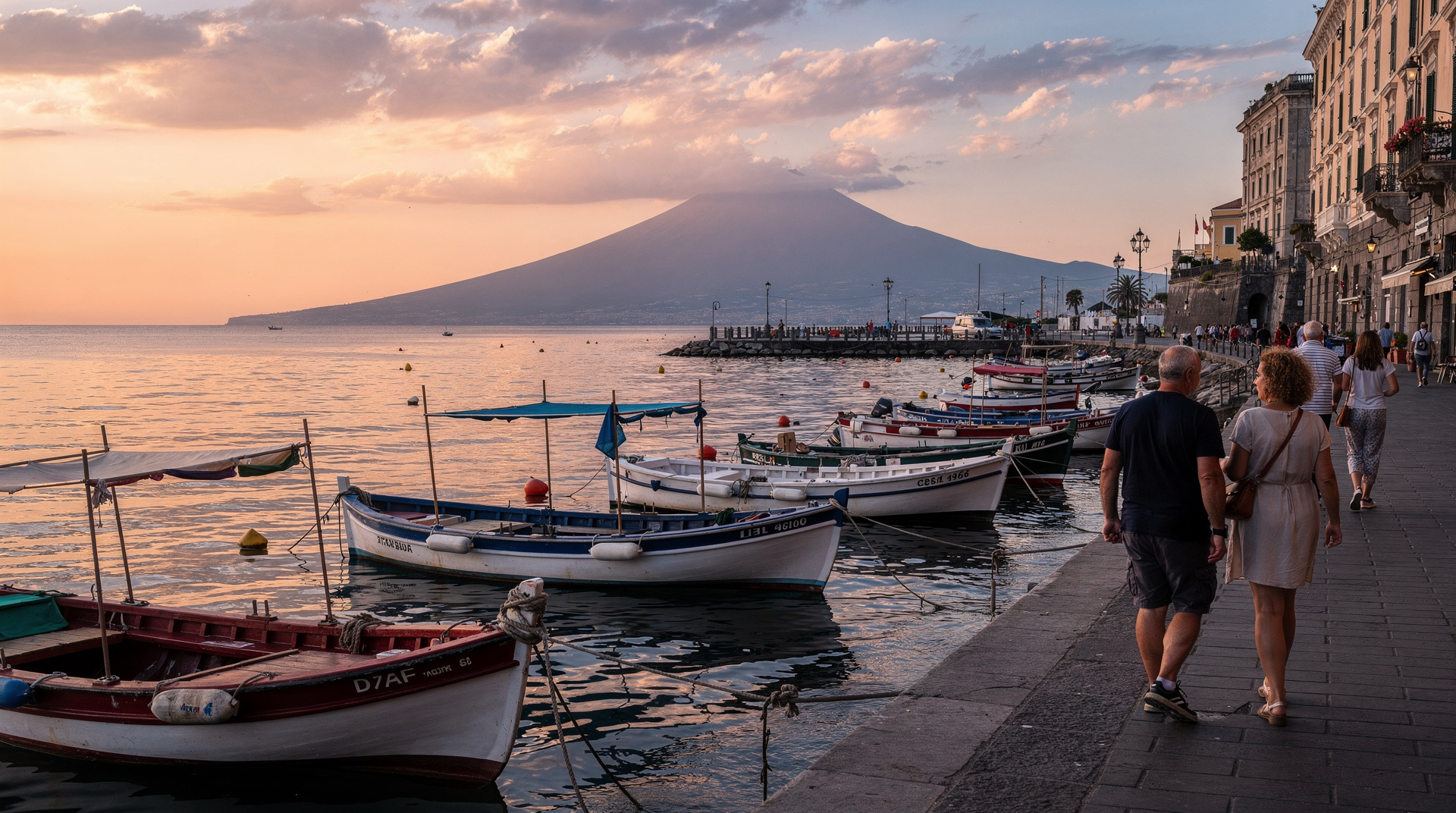
The walk from Castel dell’Ovo westward to Mergellina is one of the best free experiences in Naples — no museum queues, no entry fees, just the bay, the light, and the mountain. Locals run it in the morning; families occupy the benches in the afternoon; couples walk it at sunset.
The Lungomare itself is the promenade road (Via Francesco Caracciolo). Most of the year, cars share it with pedestrians, but on Sunday mornings the road closes to vehicles from early morning to 14:00. On summer evenings, sections close to traffic from around 20:00.
For the most atmospheric time, arrive between 18:00 and 20:00 on any day. The light on the bay at sunset, with the outline of the Camaldoli hill behind and Castel dell’Ovo silhouetted against the water, is one of the best views in southern Italy.
An evening food and wine tour through Chiaia and the Lungomare area covers the neighborhood’s best eating spots while explaining the history.
Piazza dei Martiri: the neighborhood center
Piazza dei Martiri is Chiaia’s social square — surrounded by boutique shops, gallery windows, wine bars, and an 1866 obelisk commemorating revolutionary martyrs. It is where locals have aperitivo, gallery openings happen, and neighborhood life is most visible.
The square connects to Via dei Mille and Via Calabritto, Chiaia’s main pedestrian shopping streets. These run past independent boutiques, wine merchants, delicatessens, and design shops. Not the place for tourist souvenirs — the place for actual Neapolitan products: locally made ceramics, Campanian wine, artisanal food products.
Castel dell’Ovo: the neighborhood landmark
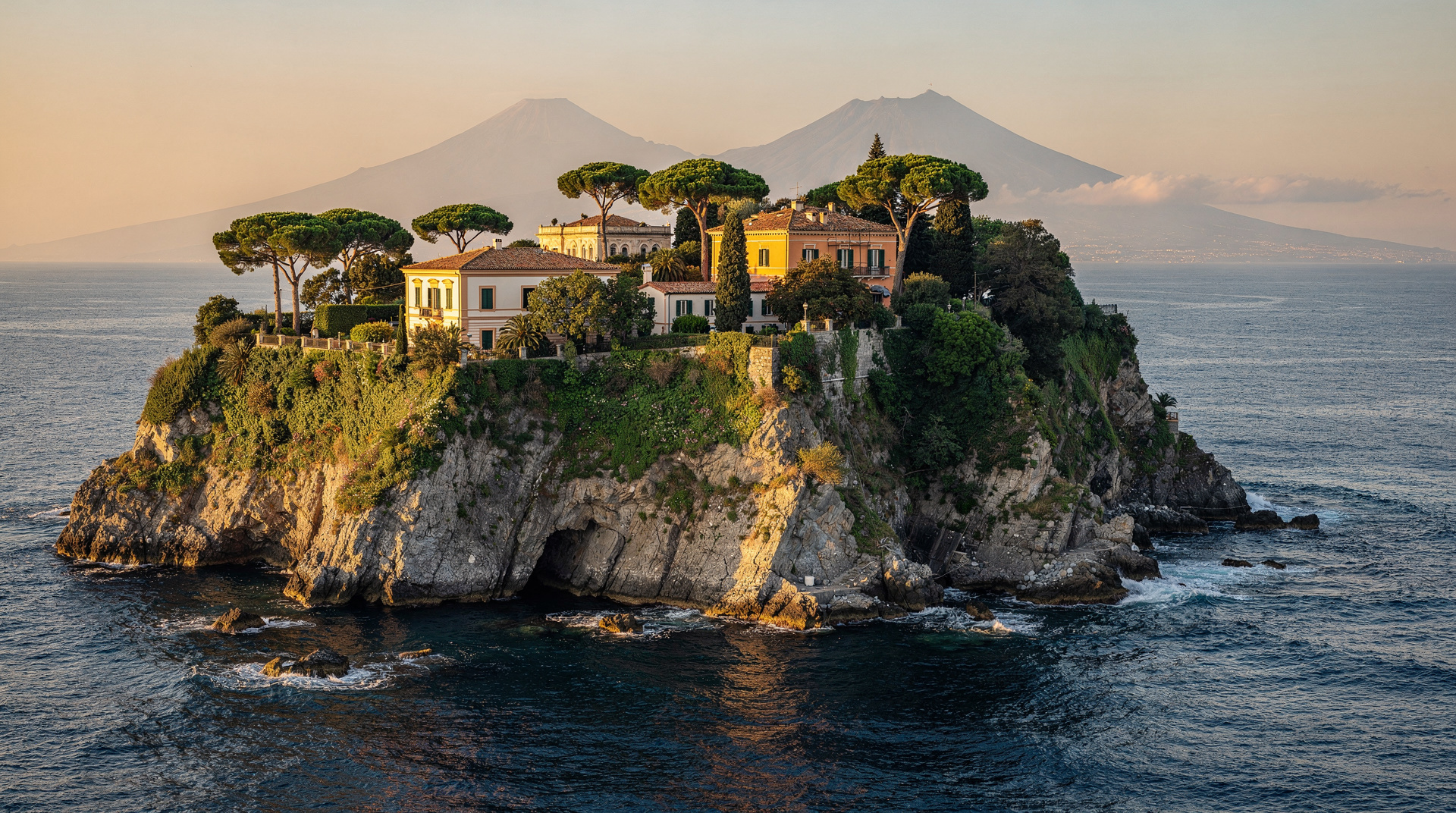
Castel dell’Ovo sits on a small promontory at Chiaia’s eastern end, connected to the mainland by a causeway. The current castle dates from Norman and Hohenstaufen periods, but the site has been occupied continuously since a Greek settlement in the 7th century BC.
Entry to the castle exterior and ramparts is free — walk out onto the battlements for unobstructed bay views. The interior rooms host temporary exhibitions (ticket required, varies). The small borgo (fishing village) at the base of the causeway, Borgo Marinari, has a cluster of seafood restaurants. Quality varies; the location premium is significant. Check reviews before booking dinner here.
The Castel dell’Ovo guide at castel-dell-ovo covers visiting logistics in detail.
Getting around from Chiaia
Metro Line 2 (Piazza Amedeo): The most useful connection for day trips. To Napoli Centrale: 8 minutes. From Centrale, the Circumvesuviana runs to Pompeii (30 min, €3.30), Herculaneum (20 min, €2.60), and Sorrento (70 min, €6.30).
Metro Line 1 (Municipio, 20 min walk or taxi): Connects to Piazza Garibaldi, Università, and the art stations. Useful for the port (Piscinola line) if going to the Beverello ferry terminal.
Mergellina funicular: Takes you up to Vomero from the western end of Chiaia. Useful if visiting Certosa di San Martino.
Walking: To Piazza del Plebiscito — 15 minutes east along the waterfront then north. To Spaccanapoli — 20–25 minutes walking north on Via Chiaia then Via Benedetto Croce. To Castel Nuovo — 20 minutes east.
Taxis: Readily available. Official white cabs have fixed-rate zones; agree the fare before entering or ensure the meter is running. Chiaia to Napoli Centrale: about €8–12.
Eating and drinking in Chiaia
Chiaia has a higher percentage of genuinely good restaurants per block than any other Naples neighborhood. The local clientele demands quality; there is no tourist-volume business model to fall back on.
Best pizza in Chiaia: Despite not being in the traditional pizza heartland (that’s Spaccanapoli), Chiaia has some serious pizzerias. Pizzeria Salvo (Via Riviera di Chiaia) is consistently rated among the city’s top five.
Seafood: The seafood restaurants around Borgo Marinari and Mergellina are genuine fish specialists. Prices are higher than elsewhere — expect €35–60 for a seafood dinner with wine. La Bersagliera at Borgo Marinari has been operating since 1919; it is not a tourist trap, but it is not cheap.
Wine bars: The aperitivo strip around Via Bisignano and Piazza dei Martiri operates roughly 19:00–22:30. Enoteca Belledonne (Vico Belledonne a Chiaia) is the reference wine bar — 400+ labels, standing room, local crowd, bottles starting at €15.
Morning coffee: Bar San Pasquale on Via San Pasquale is the neighborhood’s best morning bar — espresso at the counter for €1.20, cornetto, standing with locals. Do not sit at a table unless you want to pay 3x the counter price.
Shopping in Chiaia
Via dei Mille and Via Calabritto concentrate the neighborhood’s best independent shops. Standouts:
Libreria Deperro: Independent bookshop with a strong Italian literature section and occasional author events (Via dei Mille 17).
Ceramics: Several shops sell quality southern Italian ceramics — not the mass-produced Positano fish-pattern tiles but genuinely handmade pieces from Vietri sul Mare and the artisans of the Neapolitan tradition.
Food: Supermercato di Chiaia (Via dei Mille area) and a good Carrefour on Via Riviera di Chiaia for self-catering supplies.
Chiaia in the evening
Chiaia transitions from a daytime residential neighborhood to an evening social hub around 18:00. The cycle:
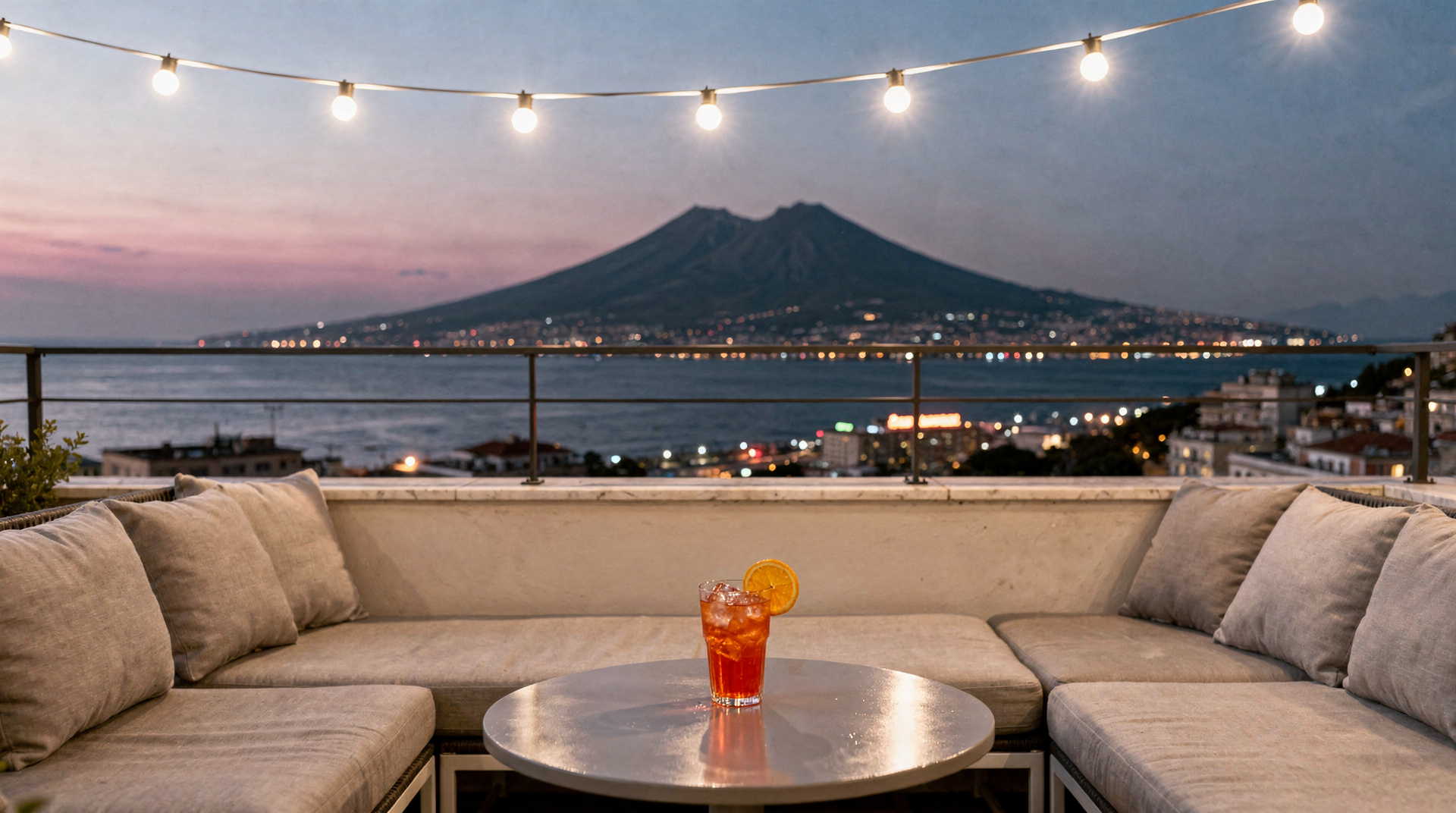
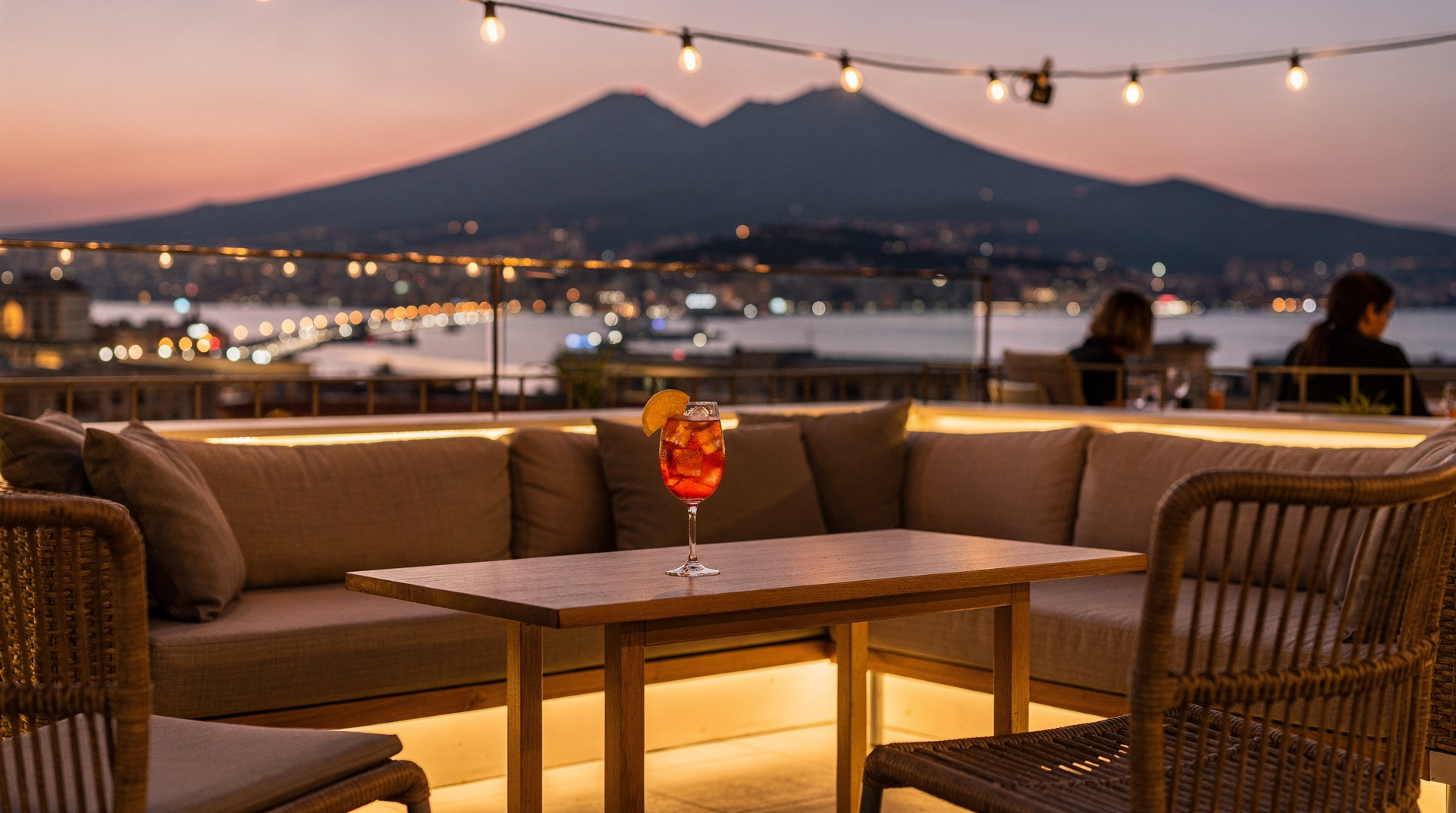
- 18:00–20:00: aperitivo — spritz (€5–7), small snacks included, wine bars open their doors to the street
- 20:00–22:30: dinner — most restaurants don’t take their last orders before 22:00 (Neapolitans eat late)
- 22:30 onwards: wine bars stay open, conversation continues; this is not a party neighborhood but it is socially alive
For a full picture of evening options across Naples, the Naples at night guide compares the neighborhood scenes.
A panoramic e-bike tour covers Chiaia, the Lungomare, and the Posillipo hill above — a good way to see the neighborhood geography in a morning.
Accommodation in Chiaia: what to expect
Budget range (€60–90): A few B&Bs and private apartments, mostly in older buildings. Quality varies. Check that windows don’t face the seafront road (Via Caracciolo) for noise reasons.
Mid-range (€100–180): The sweet spot. Several small boutique hotels in palazzo buildings, often with original architectural features. This is where Chiaia’s quality advantage over the centro is clearest — similar prices, better rooms, quieter nights.
Upper-mid/luxury (€180–350): A handful of genuine design hotels and converted historic residences. The Hotel Il Convento and similar properties provide the full Neapolitan palazzo experience without the centro’s noise.
What to avoid: Ground-floor rooms on Via Caracciolo (the seafront road). It is a beautiful location but traffic noise is significant. Upper floors with rear views give you the quality of the neighborhood without the exhaust.
Chiaia vs. Naples’ other visitor-friendly bases
Chiaia is one of several credible bases, and the right choice depends on what you prioritize:
| Neighborhood | Best for | Trade-off |
|---|---|---|
| Chiaia | Comfort, safety, seafront | Costs more, one extra transit step to the sights |
| Centro Storico | Walking to everything | Noisier, more crowded, uneven building quality |
| Vomero | Quiet hilltop, local life | Funicular-dependent, further from the bay |
| Posillipo | Views, upscale calm | Least central, needs buses or taxis |
Most first-time visitors who want a single, low-friction base choose Chiaia or the Centro Storico; the where to stay in Naples guide walks through the full decision in more detail.
Food beyond Chiaia: day trips and tastings
Chiaia’s restaurant scene is strong on seafood and wine, but it is not the neighborhood for the deepest pizza tradition — that belongs to Spaccanapoli and the streets around where to eat pizza in Naples. If you are staying in Chiaia and want to understand Neapolitan pizza properly, budget a separate outing rather than expecting your hotel neighborhood to deliver it.
For wine drinkers, Chiaia’s enoteche pour mostly Campanian labels — Falanghina, Greco di Tufo, Taurasi. If a tasting in Chiaia sparks curiosity about where the wine comes from, the Campania wine guide and organized wine tasting near Naples options cover the Vesuvius and Irpinia producing areas within day-trip range.
A guided food-tasting walk through Naples’ best bites, including the Chiaia and centro storico areas is a practical way to eat well without researching every stop yourself.
Chiaia as a base for day trips
Because Chiaia sits close to Piazza Amedeo and the Line 2 metro, it works well as a launchpad for the Circumvesuviana connections to Pompeii, Herculaneum, and Sorrento, and it is a short taxi or bus ride from the Mergellina hydrofoil pier for Capri and Ischia departures in season. If your plan includes several day trips, weigh the extra 8–10 minutes to Napoli Centrale each morning against Chiaia’s quieter evenings — for most visitors doing two or three excursions across a week, it is a fair trade. The family day trips from Campania guide and ferries from Naples guide cover the logistics from either base.
Travelers basing themselves in Chiaia specifically to combine comfort with excursions should plan on one buffer morning without a scheduled departure — Neapolitan trains and hydrofoils run reliably but not always exactly on published schedules, and starting the trip stressed undermines the neighborhood’s main appeal.
Frequently asked questions about Chiaia neighborhood
Is Chiaia safe at night?
Yes. Chiaia is consistently the safest neighborhood in central Naples for after-dark walking. Street lighting is good, foot traffic from restaurants and bars continues to midnight, and the neighborhood has a residential character that discourages the petty theft concentrated around Napoli Centrale and Spaccanapoli.
Is Chiaia expensive compared to other Naples neighborhoods?
It costs 20–40% more than comparable accommodation in the Centro Storico. The premium buys quieter nights, generally higher quality of room, and a neighborhood atmosphere that many visitors find more pleasant. Eating out in Chiaia is also slightly more expensive than in the centro.
What are the nearest beach options to Chiaia?
Lido La Balena at Mergellina (west of Chiaia) is the nearest. For proper swimming, the beaches at Posillipo (15–20 minutes by bus or taxi) are better. The easiest day-trip beach options are the islands — Procida, Ischia, and Capri are all reachable within an hour from the Beverello ferry terminal.
Can I park in Chiaia?
Parking is difficult and regulated. On-street parking requires payment at meters (€1–2/hour). The nearest multi-storey car parks are near Piazza dei Martiri and near the Caracciolo waterfront. If arriving by rental car, check your hotel’s parking arrangements — some have agreements with local garages. Overall, coming to Naples without a car is strongly preferable.
Is Chiaia good for solo female travelers?
Yes. Chiaia is specifically recommended for solo female travelers who want to feel comfortable walking alone in the evening. The neighborhood is well-lit, active, and has lower street harassment than some other parts of the city.
Frequently asked questions about Chiaia neighborhood guide: Naples' most livable district
What is Chiaia known for?
Is Chiaia far from the historic center?
What is the best street to stay on in Chiaia?
What are the best restaurants in Chiaia?
Can I walk from Chiaia to the main Naples sights?
What is the nightlife like in Chiaia?
How do I get from Chiaia to Pompeii?
Top experiences
Bookable activities with verified prices and instant confirmation on GetYourGuide.