Family day trips from Naples: the best Campania options for children
From Naples: Pompeii Ruins & Mount Vesuvius Day Tour
Duration: 7-7.5h
What are the best day trips from Naples for families with children?
For most families: Herculaneum (smaller, more child-manageable than Pompeii), Procida island (relaxed, colorful, good swimming), and a combined Pompeii+Vesuvius day for older children aged 10+. Capri works for all ages but is more expensive. Ischia Poseidon thermal park is excellent for families wanting beach and pool time. All are reachable within 1.5 hours from Naples.
The top family day trips: Herculaneum (ages 6+), Procida island (all ages), Ischia Poseidon Gardens (all ages, water focus), Pompeii with Vesuvius (ages 10+), Capri (ages 7+, more expensive).
| Easiest for young children | Herculaneum, Procida |
| Best for water/beach time | Ischia Poseidon Gardens |
| Most demanding logistically | Capri (boat, crowds, cost) |
| Minimum age for Vesuvius hike | Around 8, with decent fitness |
| Booking ahead | Recommended for boats/ferries and thermal parks in summer |
How to choose the right day trip with children
The Bay of Naples region has more world-class day trip options within 1.5 hours of the city than almost any equivalent destination in Europe. The challenge for families is choosing which ones to prioritize, and matching the trip to the children’s age range, stamina, and interests.
The basic decision tree:
- History/archaeology interest: Herculaneum first, then Pompeii
- Beach/swimming focus: Procida or Ischia
- Spectacular scenery + boat trips: Capri
- Geological interest + active hiking: Vesuvius
- Ancient temples + food: Paestum
No single day trip covers everything. A 5-day Naples trip with children might include: day 1 Naples city (underground, metro art), day 2 Herculaneum (half day) + Vesuvius (afternoon), day 3 Procida or Ischia, day 4 Pompeii, day 5 Capri.
Herculaneum: the better Pompeii for young families
Herculaneum is consistently better for families with children under 10 than Pompeii, despite Pompeii getting almost all the name recognition. Reasons:
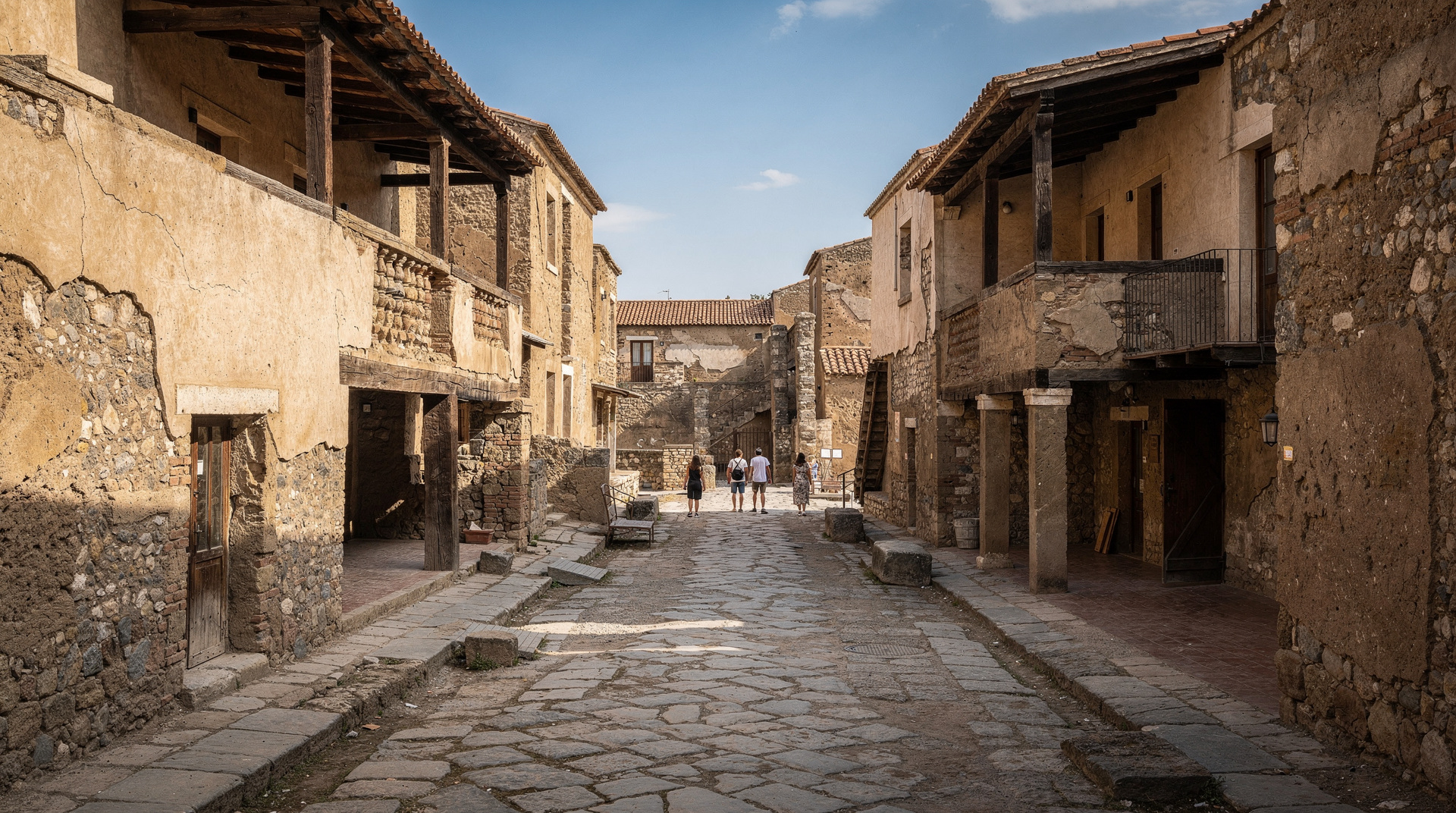
Scale: Herculaneum’s excavated area is about one-fifth of Pompeii’s — manageable in 1.5–2 hours without exhausting young children. A family can cover the main highlights without anyone melting.
Preservation: Herculaneum’s buildings were buried in volcanic mud rather than dry ash. This preserved organic materials — wooden beams, furniture, food in jars, doors. Walking into a building where the wooden ceiling has survived 2,000 years is more visceral than seeing foundations.
The skeletal remains: At the boat arches on the ancient beachfront, archaeologists found hundreds of skeletal remains of victims who sought shelter. Unlike Pompeii’s plaster casts, these are actual bones in-situ. For children aged 10+, this is extraordinarily compelling. For younger children, assess comfort level first.
Heat: Herculaneum is partially covered or shaded by the surrounding modern town — slightly more comfortable than the open Pompeii site in summer.
Getting there: Circumvesuviana from Napoli Centrale to Ercolano Scavi, 20 minutes, €2.60. The excavations are a 10-minute walk from the station. Entry €15; free for EU citizens under 18.
For the full guide to visiting, see Herculaneum guide.
Pompeii with older children (ages 10+)
For children aged 10 and above, Pompeii has no equivalent in scale, variety, and historical depth. The site is vast enough that different ages find different elements compelling — teenagers typically respond to the brothel, the graffiti (Roman street art includes insults, political slogans, and food reviews), and the violence of the gladiatorial amphitheatre. Younger children respond to the dog, the bakery, and the fast-food counter.
The detailed logistics for family Pompeii visits are covered in the dedicated Pompeii with kids tips guide. Key points:
- Arrive at 09:00 for the shade and crowd advantage
- EU children under 18 enter free (bring ID)
- A child-focused guide makes the experience significantly better
- Plan to leave by noon in summer
A combined Pompeii and Vesuvius day trip covers both the human and geological story in a single organized day.
Mount Vesuvius: geological drama for active families
The hike to the Vesuvius crater rim is 30–45 minutes on volcanic gravel paths from the car park at 1,000 meters altitude. The crater is about 550 meters in diameter and 300 meters deep — visible fumaroles, sulphur smell, and the geological drama of looking into an active volcano.
For children: Ages 8+ with decent fitness manage the hike without difficulty. The path is uneven volcanic gravel — proper footwear is required (trainers minimum, hiking boots better). The scientific interest (active volcano, different geological layers visible in the crater walls) is excellent for curious children.
What to know: The crater visit lasts about 45 minutes (up 30–45 min, walk the rim 30 min, down 20–30 min). At 1,200 meters, the temperature is noticeably cooler than Naples — bring a layer. Weather changes quickly; the crater sometimes closes due to cloud and wind.
Getting there independently: From Naples or Pompeii by bus to the parking area, then hike. From Pompeii, a shuttle bus runs seasonally (€10 return). See the Vesuvius guide.
Procida: the family-friendly island
Procida is Naples’ smallest inhabited island (4 km²) and arguably its most charming. The harbor of Marina Grande, with its characteristic pastel-painted fishermen’s houses stacked above the waterfront, was the backdrop for the classic Italian film “Il Postino.” The island has almost no car traffic (golf carts and mopeds), which makes it genuinely relaxing for families.
Why it works for families:
- Small enough to walk the whole island in an afternoon
- Marina Corricella (a smaller fishing harbor) is exceptionally photogenic and calm
- Chiaiolella beach on the western side is suitable for children
- No overwhelming tourist infrastructure — it’s a real fishing community
Getting there: Ferry from Molo Beverello or Calata Porta di Massa in Naples. Hydrofoil: approximately 35 minutes (€12–15 return). Standard ferry: 40–50 minutes (slightly cheaper). Check schedules as frequency drops in winter.
A Procida day tour from Naples handles the logistics and includes a local guide for the island.
Ischia: beaches and thermal pools
Ischia is the largest island in the Bay of Naples (about 46 km²) — significantly bigger and more developed than Procida. For families focused on beach and water access, Ischia offers the best combination of organized facilities and thermal interest.
Poseidon Gardens (Giardini Termali Poseidon): The best family thermal park on the island. 22 pools ranging from thermal (30–38°C) to standard seawater temperature, including pools specifically designed for children. Waterslides in the family section. Sandy beach area. Entry approximately €32 adults, €20 children 5–12, under 5 free (check current prices before booking).
Getting there: Hydrofoil from Beverello to Ischia Porto: approximately 50 minutes (€20–25 return). Ferry: 90 minutes (slightly cheaper). From the port, a bus or taxi to Poseidon Gardens takes 20–30 minutes.
Transfer and Poseidon Gardens entry from Naples handles the hydrofoil and park entry in one booking.
Other Ischia options: Ischia town (the castle on its rocky promontory is impressive), Lacco Ameno, and the walking trails inland. For families purely focused on the thermal experience, Poseidon is the priority.
Capri: spectacular but more demanding
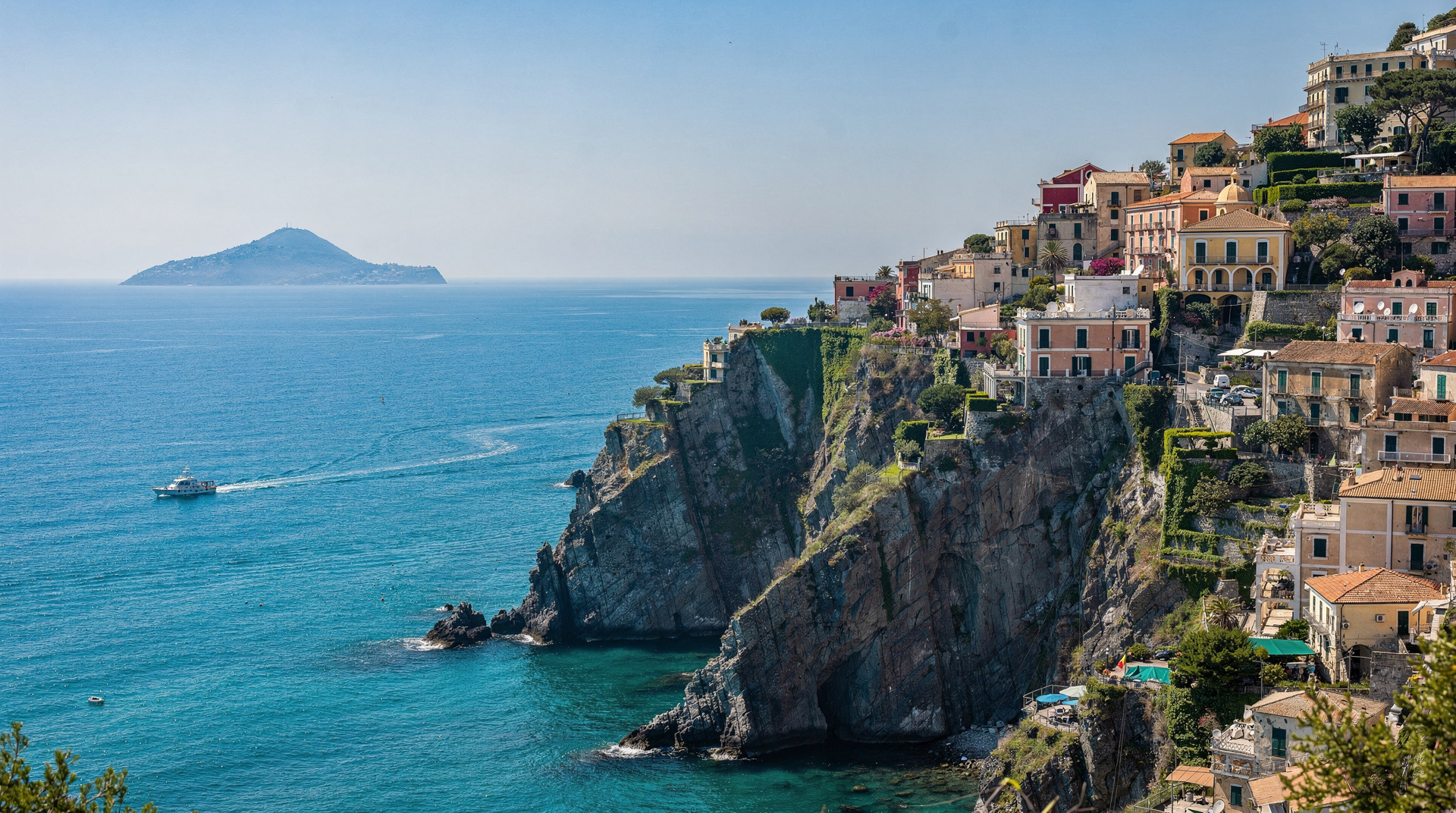
Capri has the most dramatic scenery of the Bay of Naples islands — the Faraglioni rock stacks, the vertiginous cliffs, the Blue Grotto sea cave, the town of Capri with its pastel architecture. It is also more expensive, more crowded in summer, and more logistically complex than Procida or Ischia.
For families: Capri works well for families with older children (9+) who can handle boat rides, crowd navigating, and higher prices. The Monte Solaro chairlift (from Anacapri to the summit, 12 minutes, €12 return) is excellent for all ages — the views are extraordinary. The Blue Grotto boat excursion involves transferring to a tiny rowboat in open water — assess whether your children will manage this calmly.
Getting there: Hydrofoil from Beverello: 45–50 minutes (€20–28 return). The journey from Naples to Capri and back costs more than Procida or Ischia.
For the full day trip logistics, see the Capri day trip guide.
Paestum: ancient Greek temples and mozzarella
Paestum is a less-visited but genuinely excellent family day trip for children aged 9+ with some interest in ancient history. The site has three of the best-preserved Greek Doric temples outside Greece — standing virtually complete, not reconstructed.
For children: The visual impact of the temples is immediate — they are larger and more intact than most children expect from a school textbook illustration. The Paestum museum holds the Tomb of the Diver, a 5th-century BC painted tomb with a unique diving figure.
The mozzarella bonus: Paestum is in the heart of the Campania buffalo farming region. Several farms near the site offer mozzarella making demonstrations and tastings — the combination of ancient temples and fresh mozzarella pulled from warm water in front of you is genuinely memorable.
Getting there: Train from Napoli Centrale to Paestum (Regionale, approximately 1 hour 15 minutes, €6.50 one way). The station is a 10-minute walk from the temples.
Planning a multi-day family itinerary
3 days with children:
- Day 1: Naples city (metro art, underground, street food)
- Day 2: Herculaneum + optional Vesuvius afternoon (for ages 10+)
- Day 3: Procida island
5 days with children:
- Day 1: Naples city
- Day 2: Herculaneum + Vesuvius
- Day 3: Pompeii
- Day 4: Procida or Ischia
- Day 5: Capri or Paestum
7 days with children:
- Days 1–2: Naples city
- Day 3: Herculaneum
- Day 4: Pompeii
- Day 5: Vesuvius (afternoon) + Sorrento
- Day 6: Capri or Amalfi Coast (boat from Sorrento)
- Day 7: Procida or Ischia thermal park
The Naples with kids 3-day itinerary has a specific day-by-day plan.
Comparing the main options at a glance
| Destination | Best age | Travel time | Cost level | Main draw |
|---|---|---|---|---|
| Herculaneum | 6+ | 20 min | Low | Compact, well-preserved ruins |
| Procida | All ages | 35–50 min | Low–medium | Relaxed island, calm swimming |
| Ischia (Poseidon) | All ages | 50–90 min | Medium–high | Thermal pools, beach |
| Pompeii + Vesuvius | 10+ | 30–45 min | Medium | Scale, geology |
| Capri | 9+ | 45–50 min | High | Dramatic scenery, boat trips |
| Paestum | 9+ | 75 min | Low–medium | Greek temples, mozzarella |
This complements the age-by-interest decision tree above — use it when two destinations seem equally appealing and cost or travel time becomes the deciding factor. For a broader, non-family-specific view of the same destinations, the best day trips from Naples guide is a useful cross-reference, and the Circumvesuviana guide covers the train logistics shared by Herculaneum, Pompeii, and Sorrento-bound trips.
What to pack for a family day trip
The right day bag makes a bigger difference to how the day goes than most families expect. For any island or thermal-park day: swimwear, a full change of clothes per child, a lightweight towel, high-factor sunscreen reapplied at midday, and a hat.
For Pompeii, Herculaneum, or Vesuvius: closed, comfortable shoes rather than sandals — the ground is uneven volcanic gravel or ancient cobblestones in both cases — plus more water than you think you’ll need, since shade is limited at Pompeii and refill points are not frequent. A portable phone charger is worth carrying on any full-day trip, since photos and navigation apps drain batteries fast, and a small first-aid kit with plasters and motion-sickness tablets covers most minor incidents on ferry crossings.
Snacks matter more with children than adults tend to assume — Italian meal times run later than many families are used to (lunch service often starts around 12:30–13:00, dinner from 19:30), so carrying something to bridge the gap avoids a mid-afternoon meltdown at an archaeological site with no café in sight.
Beaches for families beyond the big day trips
Not every family day needs to be a full excursion — the beaches for families near Naples guide covers closer options for a half-day swim without the logistics of a full island trip. Combining a shorter beach outing with a lower-key day in the city (see the kid-friendly things to do in Naples guide and the general Naples with kids guide) is often a better rhythm for younger children than back-to-back full-day excursions.
Frequently asked questions about family day trips from Naples
Are there lifeguards on Campania beaches?
Organized lido beach clubs have lifeguards and safety equipment during operating hours. Public beaches (free access areas) often do not. Families with young children should use organized lidos. The calm coves of Procida have generally safe swimming conditions; the open sea around Capri can have currents.
Is the Blue Grotto worth visiting with children?
The Blue Grotto experience is brief (about 5–10 minutes inside) and involves a very small rowboat. Children who are comfortable with small boats and darkness will find it memorable — the blue light effect from underwater light refraction is genuinely extraordinary. Children who are anxious about small spaces or boat motion should skip it. Lines can be very long in summer — up to 2 hours waiting. Consider the Monte Solaro chairlift instead as a Capri highlight for families.
What do children eat on day trips from Naples?
Every destination has good food options. Pompeii and Herculaneum towns have standard Italian café/bar and restaurant options. Procida and Capri have very good local seafood; Capri also has excellent gelato. Ischia’s café culture is relaxed. Packing snacks and a picnic lunch is always practical for keeping children fed on your own schedule.
Is there anywhere to rent baby/children’s equipment near Naples?
Several rental services in Naples and Sorrento offer pushchairs, car seats, and beach equipment. Book ahead in summer. For Pompeii specifically, baby carrier rental is not available at the site — bring your own.
Can elderly grandparents join family day trips?
Herculaneum has improved accessibility paths. Pompeii has some accessible routes but the cobblestones remain challenging. Procida is mostly flat and accessible. Capri’s Marina Grande and Anacapri are manageable; the paths between them are steep. Ischia’s Poseidon Gardens are well-equipped for mixed-mobility groups.
Frequently asked questions about Family day trips from Naples: the best Campania options for children
Is Herculaneum or Pompeii better for families?
Which island is best for families near Naples?
Can families with young children take the Circumvesuviana?
Is a Vesuvius hike suitable for children?
What is the Ischia Poseidon Gardens and is it good for children?
How far is Paestum from Naples for a family day trip?
Are there family boat tours from Naples?
Top experiences
Bookable activities with verified prices and instant confirmation on GetYourGuide.