Kid-friendly things to do in Naples: activities that actually work
Naples: Hop-on Hop-off Bus Tour 24-Hour Ticket
Duration: 24h
What are the best kid-friendly activities in Naples?
The Naples underground (Napoli Sotterranea), the metro art stations on Line 1, street food tours, the hop-on hop-off bus for first-day orientation, and the MANN archaeological museum's Pompeii collection are the most reliably successful activities for children in the city. Day trips to Pompeii, Herculaneum, Procida, and Capri typically score higher with older children than in-city sightseeing.
What actually works: Underground tunnels, metro art stations, street food tasting, hop-on bus for geography, MANN Pompeii rooms, and day trips to Herculaneum or Procida. The best Naples family day involves spending money on experience (guided underground, art metro tickets) not on sit-down meals.
| Best ages | 5+ for visual appeal, 8+ for underground/museum tours |
| Top pick | Napoli Sotterranea (Naples underground) |
| Typical daily cost | Around €25–35/day for street food, plus attraction tickets |
| Best season | April–June or September–October (heat management) |
| Getting around | Hop-on hop-off bus or Metro Line 1, not walking with a stroller in the centro storico |
Activities ranked by child engagement (honest assessment)
Not everything marketed as “family-friendly” actually works with children. Here is an honest breakdown based on what consistently engages children of different ages.
Tier 1: reliably excellent for children
Naples underground (Napoli Sotterranea)
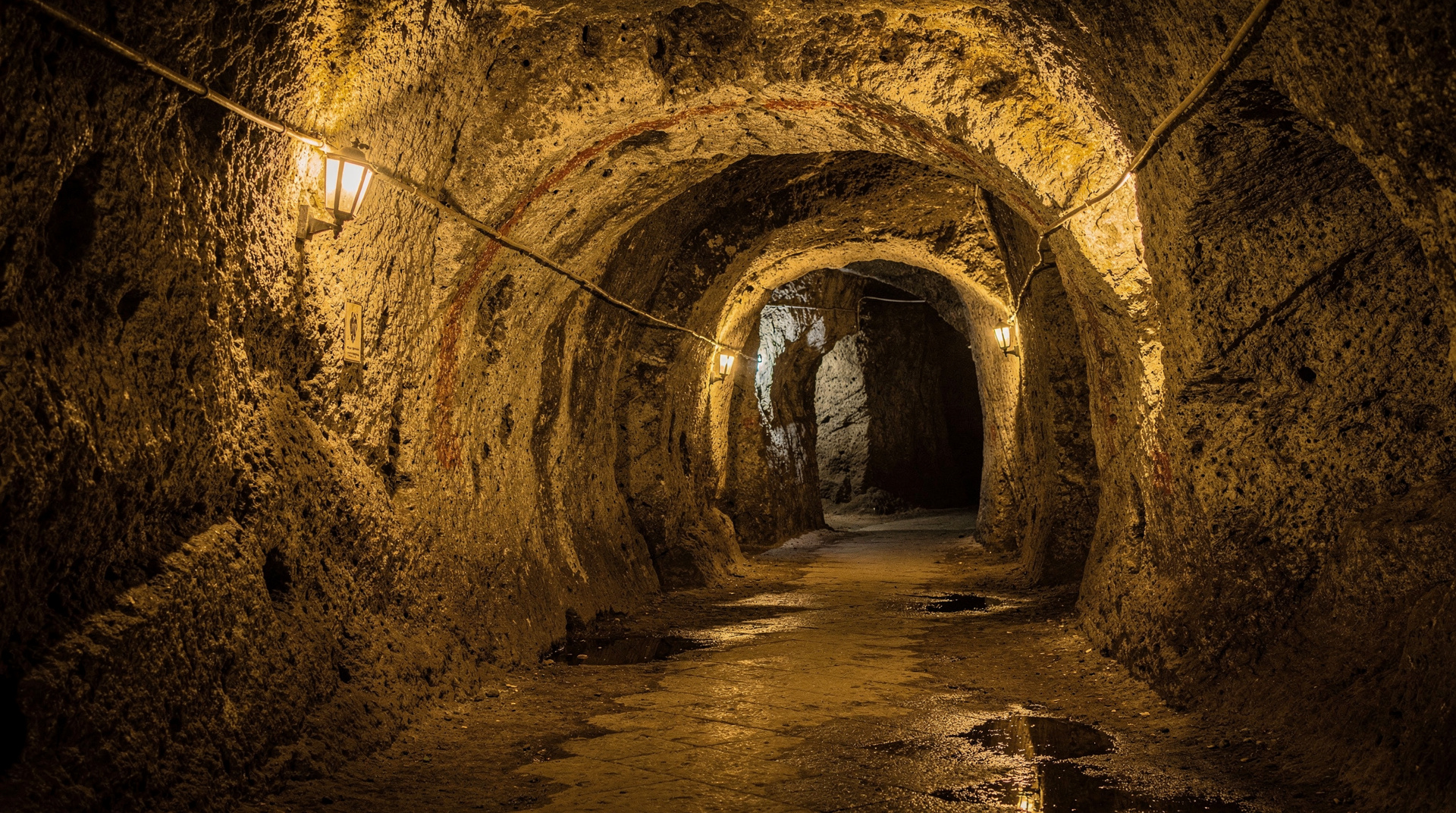
The 1.5-hour tour through the Roman cistern system below Via dei Tribunali is one of the most genuinely exciting child activities in Naples. Elements that work:
- Darkness and narrow passages (controlled adventure)
- Wartime tunnels dug during the 1943 Allied bombing campaign (relatable history for children who have heard about World War II)
- Underground vegetable gardens lit by mirrors angled from street level (visual trick that genuinely surprises adults)
- Archaeological layers visible in the walls
Best for: Ages 8–16. Ages 6–7 depending on the child’s comfort with confined spaces.
Practical: Departures from Piazza San Gaetano (off Via dei Tribunali) every two hours. €12 per adult, €10 children. Tour is 1.5 hours. See the underground guide for full details.
Metro art stations
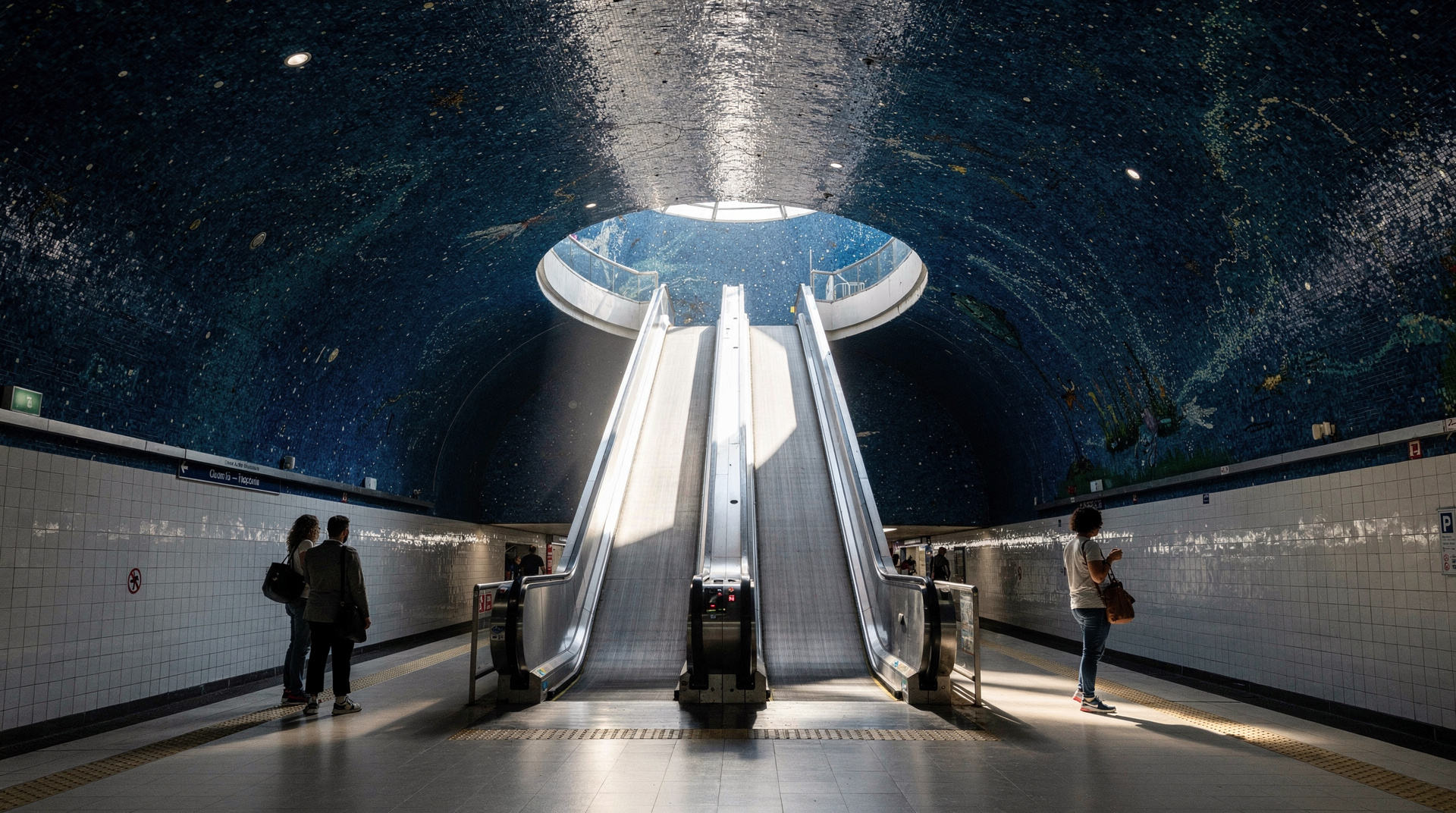
Line 1 of the Naples metro is genuinely one of the most architecturally significant transit systems in Europe. For children, the Toledo station is the one to see: a 100-meter-deep shaft clad in a blue and white mosaic tidal pattern, with an LED panel at the bottom casting diffused light. The effect is disorienting and extraordinary.
Access costs €1.60 per person (a standard metro ticket). You can descend, look, and return. No additional entry fee, no guided tour required. Children under a certain height travel free.
Suggested route: Start at Dante station (top of Via Toledo), ride to Toledo (one stop — unusual to go to a closer station but justified), walk back to Dante street level or continue to Municipio for more art. See the metro art photography guide for the visual highlights.
Street food circuit
No activity generates more universal child enthusiasm in Naples than working through the street food options. The logistics are family-friendly: no sitting down, no menus, no waiting for service, no argument about whether to order dessert.
The family street food route:
Start at a pastry shop for morning sfogliatella (€2 each). Walk to Via dei Tribunali for pizza a portafoglio (€2–3 each). Mid-morning, find a friggitoria for cuoppo di verdure (fried vegetables cone, €4–5). Afternoon: gelato near Piazza del Plebiscito (€2.50–3.50).
Total food cost for two adults + two children: approximately €25–35 for a full day’s eating without sitting in a restaurant.
A guided 8-stop food tour provides the navigator role so you can focus on the children rather than the map.
MANN — the Pompeii collections
The National Archaeological Museum is large (you cannot do it all), but the Pompeii-focused rooms are among the best child experiences in any museum. Specific highlights:
- The Cave Canem mosaic (the “Beware of Dog” floor mosaic from a Pompeii house entrance — immediately recognizable and relatable)
- The plaster cast animals from Pompeii — a dog, pig, and others frozen in their death positions
- The surgeon’s tools room — Roman surgical instruments that are shockingly modern in design
- The Alexander Mosaic — a massive floor mosaic of Alexander the Great at the Battle of Issus, in extraordinary detail
- The daily life rooms — bread, oil jars, writing tablets, children’s toys
Entry €20 for adults; free for EU citizens under 18 with ID. Worth bringing EU passports or national ID cards for children. The museum is free on the first Sunday of each month for everyone.
Time needed with children: 1.5–2 hours focused on the above rooms. Avoid trying to cover the whole museum — exhaustion sets in. See the full MANN museum guide for layout, tickets, and how to combine it with a Pompeii day.
Herculaneum day trip
For families choosing one archaeological day trip, Herculaneum often works better than Pompeii for children under 10. The site is a fraction of the size, the wooden beams, furniture, and even loaves of bread carbonised (rather than buried in ash) are more visually vivid at close range, and the whole visit can be done in 1.5–2 hours without the leg-tiring distances of Pompeii. See the Herculaneum guide for tickets and comparison with Pompeii, and Pompeii with kids if you decide the larger site suits your children better.
Tier 2: good with the right age group
Castel dell’Ovo exterior walk
Free, visually impressive, 45 minutes. The castle sits on a promontory connected to the mainland by a causeway — good views, ancient walls, and the small Borgo Marinari at the base. Children aged 5+ enjoy the location; the interior exhibitions vary in interest.
Hop-on hop-off bus
The hop-on hop-off bus is best used on day one as a geographic orientation — it covers Chiaia, Lungomare, Posillipo, and the historic fringe. The open top works in mild weather; in July–August the upper deck is extremely hot by midday. Evening circuits with the city lit up are better for summer visits.
Children under 5 generally free; ages 5–12 at a reduced rate (verify with the specific operator). A 24-hour ticket allows unlimited use — useful if you plan to cover the city’s geography efficiently.
Certosa di San Martino presepe collection
The Certosa di San Martino (Vomero) holds the most important collection of Neapolitan presepi (nativity scenes) in the world. These are not simple Christmas decorations — they are elaborate 18th-century dioramas with hundreds of hand-painted terracotta figures, representing every aspect of Neapolitan street life (not just the Biblical nativity, but fish sellers, tavern scenes, blacksmiths, noblewomen, beggars).
For children with an eye for detail, these are extraordinary. The figures are tiny, the scenes complex, and the observation game (spot the musician, find the sleeping dog, count the fish stalls) keeps children engaged. Entry to the Certosa is €6.
Best for ages 7+. Available year-round (the presepe collection is permanent). At Christmas, the whole city’s presepe tradition becomes more visible — see Naples at Christmas.
Pizza making class
Several Naples venues offer pizza-making classes that include children explicitly. The format: stretch dough, add tomato, watch it go into a wood-fired oven, eat what you made. About 2 hours total. Cost: €35–50 per person (children sometimes cheaper). For families with children aged 6+, this is a reliable high-engagement activity. See the pizza making class guide.
Tier 3: works for specific ages or interests
Cappella Sansevero
The Veiled Christ is one of the most extraordinary sculptures in European art — worth seeing for any visitor. For children, the reaction varies enormously by age: under 8, mostly confusion; ages 10–14, genuine interest if they understand the historical context; teenagers, strong reaction to both the sculpture and the alchemical experiments room. Entry €8 (strictly timed, no photography). Only worth including for older children who have been briefed on what they’re seeing.
Catacombs of San Gennaro (Rione Sanità)
Carved underground burial galleries with 2nd-century frescoes and mosaics. For children aged 8+ interested in ancient history or archaeology, this is good. For younger children, the darkness and bones are potentially unsettling. The guided tour is 50 minutes. See the Rione Sanità guide.
Vesuvius crater hike
The 30–45 minute walk to the crater rim works for children aged 8+ who can manage uneven volcanic terrain. Good views, geological interest, the smell of sulphur from fumaroles. Not suitable for very young children. The crater hike is also a significant part of a combined Pompeii+Vesuvius day trip.
Procida island day
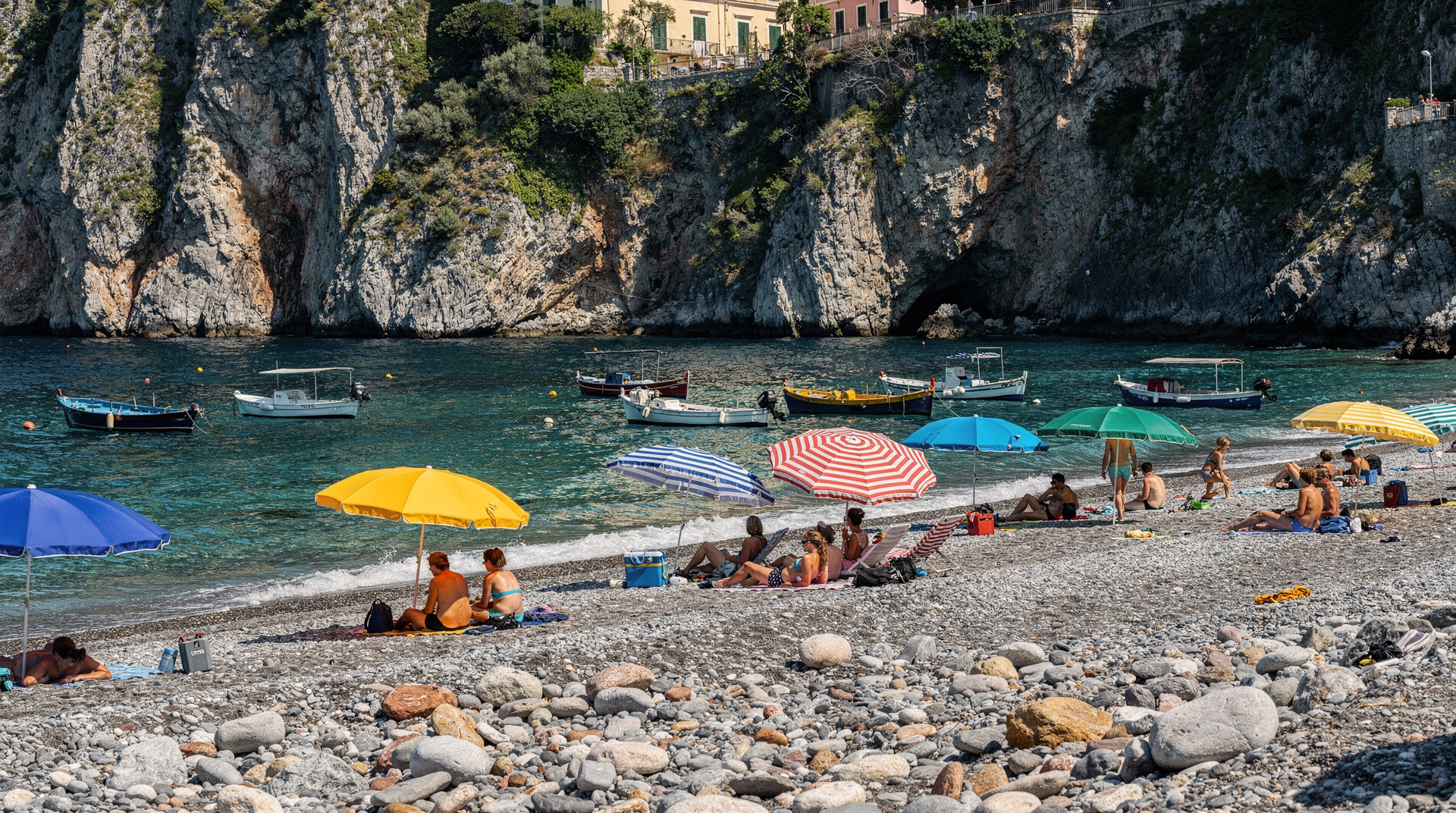
Procida is the most reliably successful island day trip with children. The ferry crossing from Molo Beverello takes about 40 minutes on a hydrofoil, the colourful Marina Corricella waterfront is genuinely photogenic for children old enough to appreciate it, and the island’s small size means you can walk most of it without exhausting anyone. Add a beach stop at Chiaia beach or Chiaiolella for swimming. Quieter and less overwhelming than Capri, and considerably cheaper. See the family day trips in Campania guide for how to sequence Procida against Ischia and Capri.
Practical notes for families
Planning the day around heat
In June–August, structure the day as: early sightseeing (08:00–11:30), lunch break + rest (12:00–16:00 in air conditioning), late afternoon/evening activities (16:30–20:00). This matches Neapolitan rhythm and protects children from peak heat.
Managing the Circumvesuviana
The Circumvesuviana is the train to Pompeii and Herculaneum from Napoli Centrale. It is functional but uncomfortable — not air-conditioned, often crowded, bags need watching. Strategies for families:
- Travel outside peak times (avoid 09:00–11:00 departures in summer)
- Keep bags in front, children between adults
- Consider the Campania Express supplement when available (seasonal, ~€7 vs €3.30, air-conditioned)
- For return journeys from Pompeii, the Circumvesuviana stops frequently — the journey back is often less crowded
Entry fees for children
EU citizens under 18: Free at state-managed sites (Pompeii, Herculaneum, MANN, Royal Palace). Bring EU passport or national ID.
Non-EU children: Generally pay adult rate (€18 Pompeii, €20 MANN) unless very young (under 3–5 depending on site). Check the specific site’s rules.
Campania ArteCard: A 3-day Naples pass (€25 adult) covers MANN, Capodimonte, and Certosa with transport. A child companion card exists. See the Campania ArteCard guide.
Where to stay with children
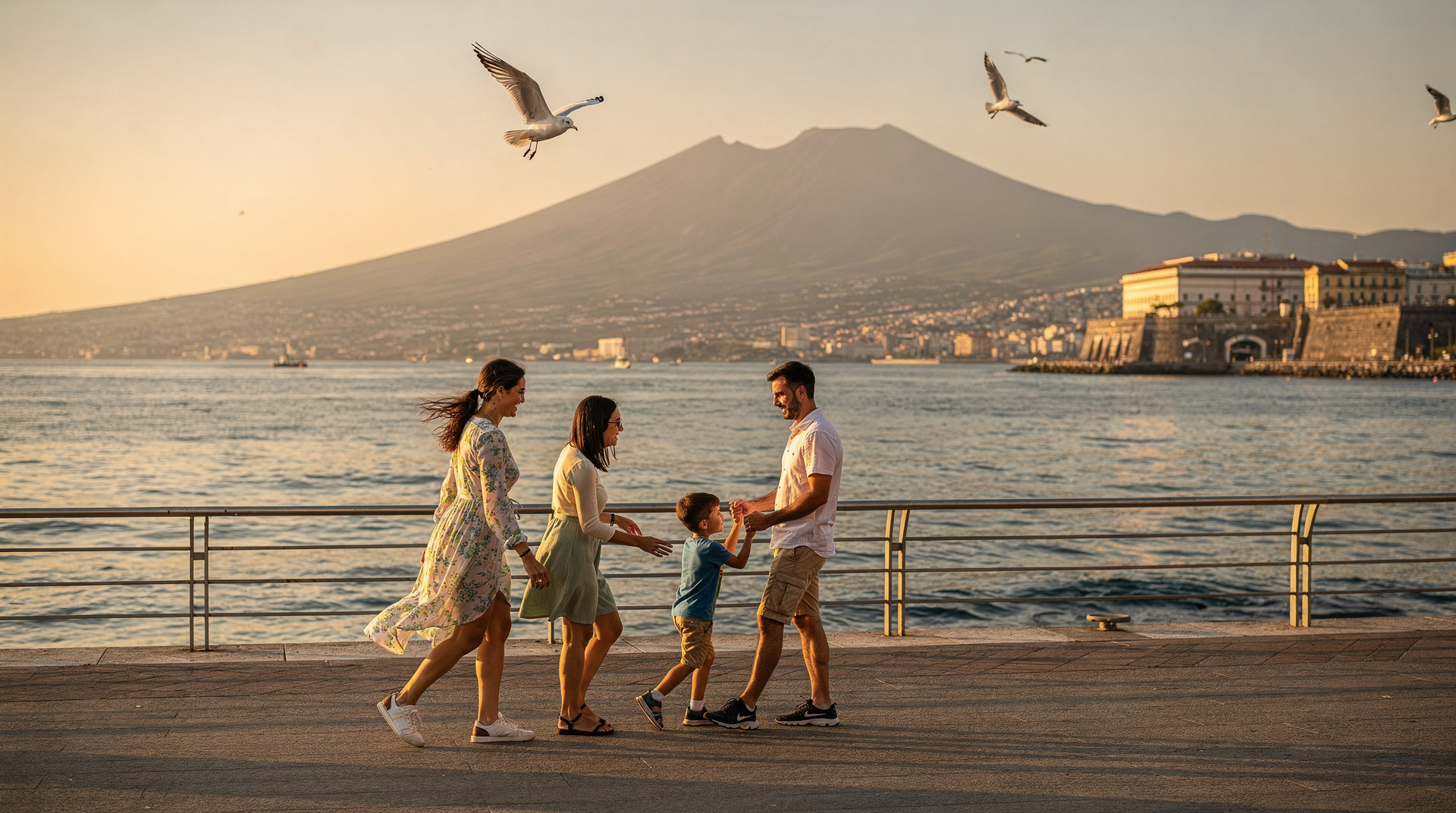
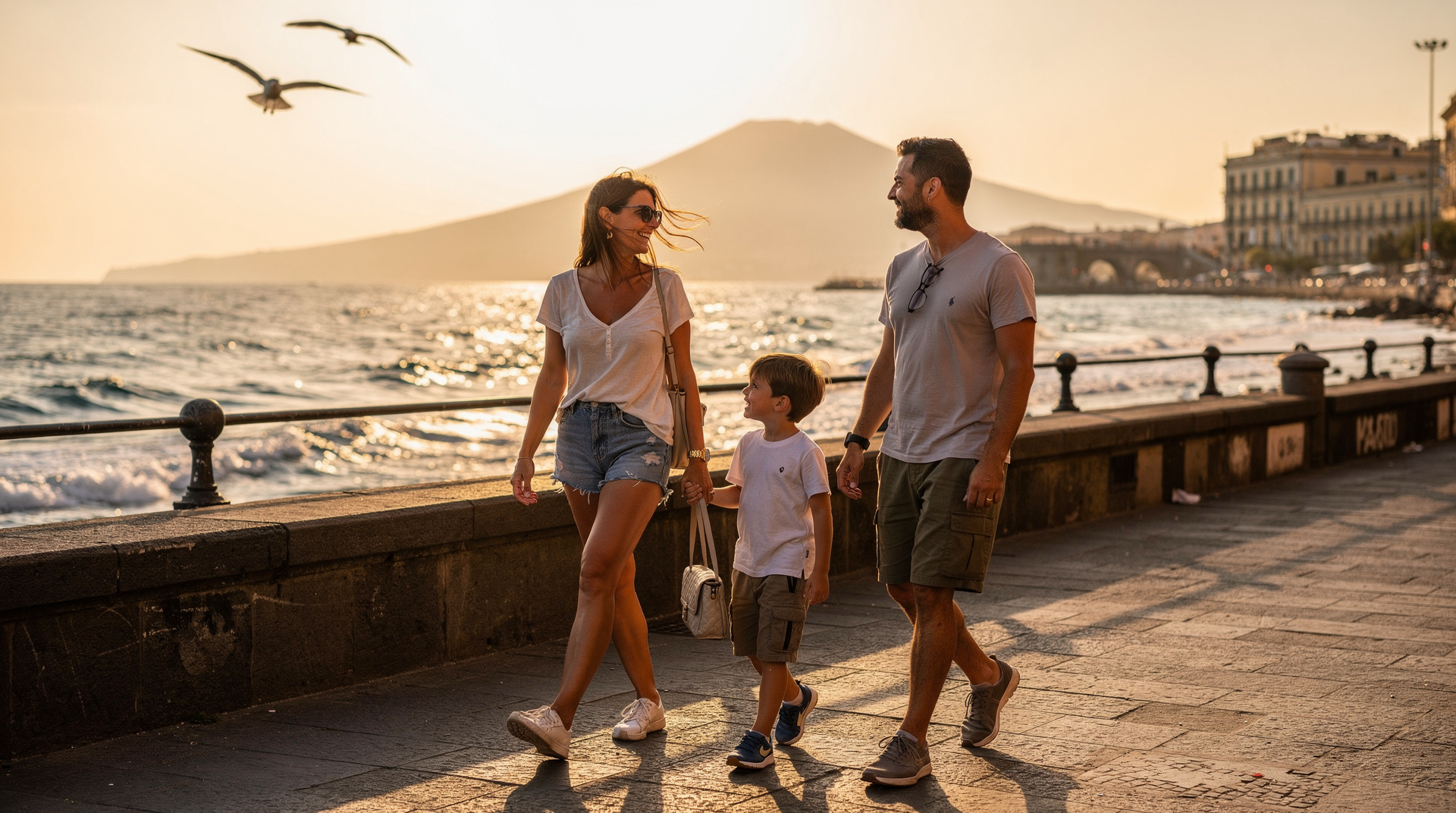
Chiaia and Vomero are the two neighbourhoods most families end up preferring over the centro storico, mainly because of the stroller and pram problem described above — cobblestones, narrow pavements crowded with scooters, and the general density of the historic centre are tiring with young children in tow. Chiaia has the advantage of proximity to the Lungomare seafront, which offers flat, pushchair-friendly evening walking with gelato stops built in.
Vomero is quieter and higher up, reached by funicular, which children generally enjoy as a novelty in its own right. See the where to stay in Naples guide for the full neighbourhood breakdown, and the best areas to stay in Naples for a wider comparison including options just outside the centre.
Restrooms and practicalities
Public restrooms are not abundant in the historic centre. The practical approach is to plan bathroom stops around museum and church visits rather than relying on finding a public facility on the street; café and bar owners are generally tolerant of a quick request if you buy something small. Carry hand sanitiser and tissues, as facilities in older buildings can be basic.
Frequently asked questions about kid-friendly activities in Naples
What is the single best thing to do with children in Naples?
If forced to choose one: the Naples underground (Napoli Sotterranea). It combines cool temperatures (a genuine relief in summer), controlled adventure, historical interest, and engaging narrative. For ages 8+, it is consistently the most positively remembered part of a Naples family trip.
Are there good playgrounds in Naples?
Yes, though not in tourist-accessible density. Parco Virgiliano (Posillipo) and Villa Floridiana (Vomero) have playground equipment in green spaces. Piazza dei Martiri (Chiaia) has an open space children use informally.
Can you visit Naples with a baby or toddler?
Yes, but it requires planning. The historic center’s cobblestones are difficult for strollers — a baby carrier/backpack is more practical. Heat in summer is the main concern for infants. Chiaia and Vomero are significantly more stroller-friendly than the centro storico.
How do children react to Naples’ street chaos?
Older children (10+) often find the energy and unpredictability exciting. Younger children can be overwhelmed by the noise, traffic, and density. Either way, building in recovery time (quieter neighborhoods, afternoon rest, parks) makes the difference between a manageable trip and an exhausting one.
Is there a children’s museum in Naples?
Not a dedicated children’s museum. The MANN has some child-focused programming. Some of the Vomero area parks have interactive elements. For a dedicated children’s science/exploration museum, this is not Naples’ strength — the city’s appeal for children lies in its authentic (rather than curated) stimulation.
Frequently asked questions about Kid-friendly things to do in Naples: activities that actually work
What age do children need to be to enjoy Naples?
Is the hop-on hop-off bus good for families?
Is the Castel dell'Ovo worth visiting with children?
What is the Naples underground like for children?
Is the MANN museum good for children?
What street food should children try in Naples?
Are there swimming pools in Naples hotels?
What is the best single day trip with children from Naples?
Should we buy the Campania ArteCard for a family trip?
Top experiences
Bookable activities with verified prices and instant confirmation on GetYourGuide.