Procida: The Quiet Island That Stole the Trip
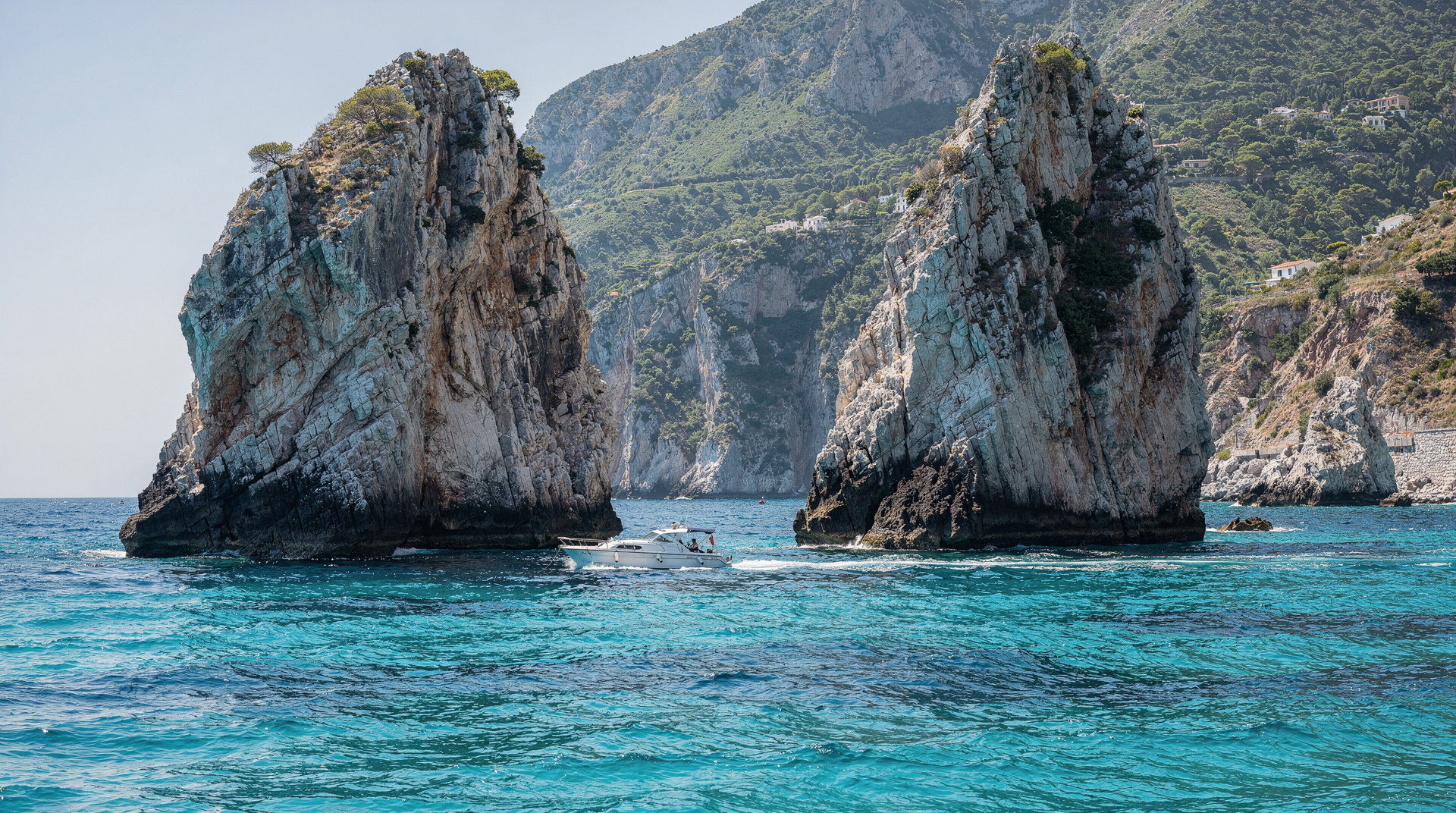
I’d planned to go to Capri. I’d been talking about going to Capri since before I booked the trip. The Blue Grotto, the Faraglioni rocks, the chairlift to the top — I had a loose mental itinerary and everything. And then, on the morning of, standing at the Molo Beverello with a ferry ticket in my hand, someone at the next counter was buying a ticket to Procida, and I thought: why not?
This is a story about that impulse being entirely correct. Our fuller Procida day trip guide covers the practical planning; this one is the honest, unplanned version.
| Getting there | Fast ferry from Molo Beverello, ~35 min, ~€22 return |
| Time needed | One day is enough |
| Cost on the island | Lunch €12–20, beer €3, no entry fees |
| Best for | Travellers who find Capri too crowded or too pricey |
| Crowd level | Low, even in shoulder season |
The Ferry In
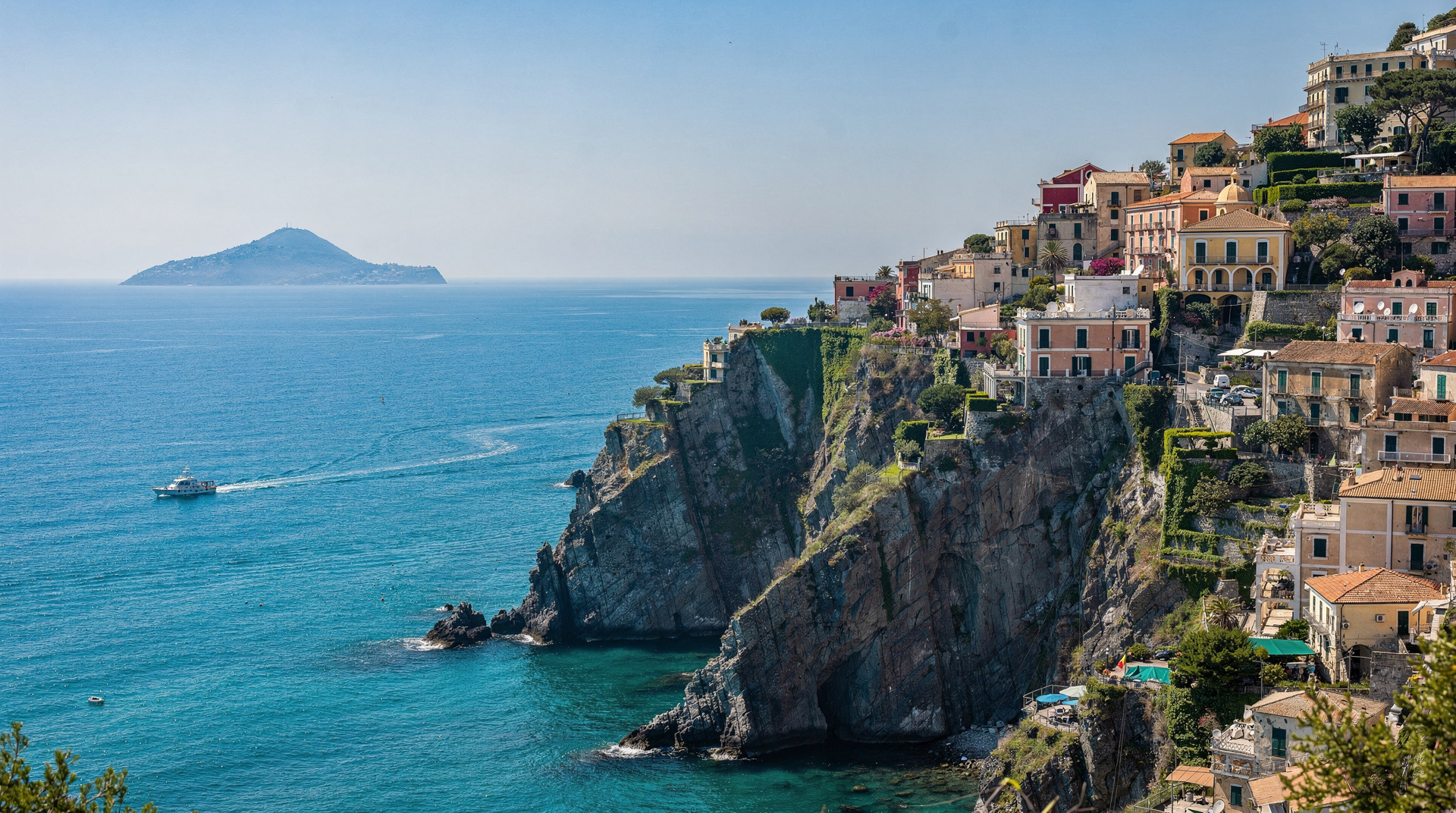
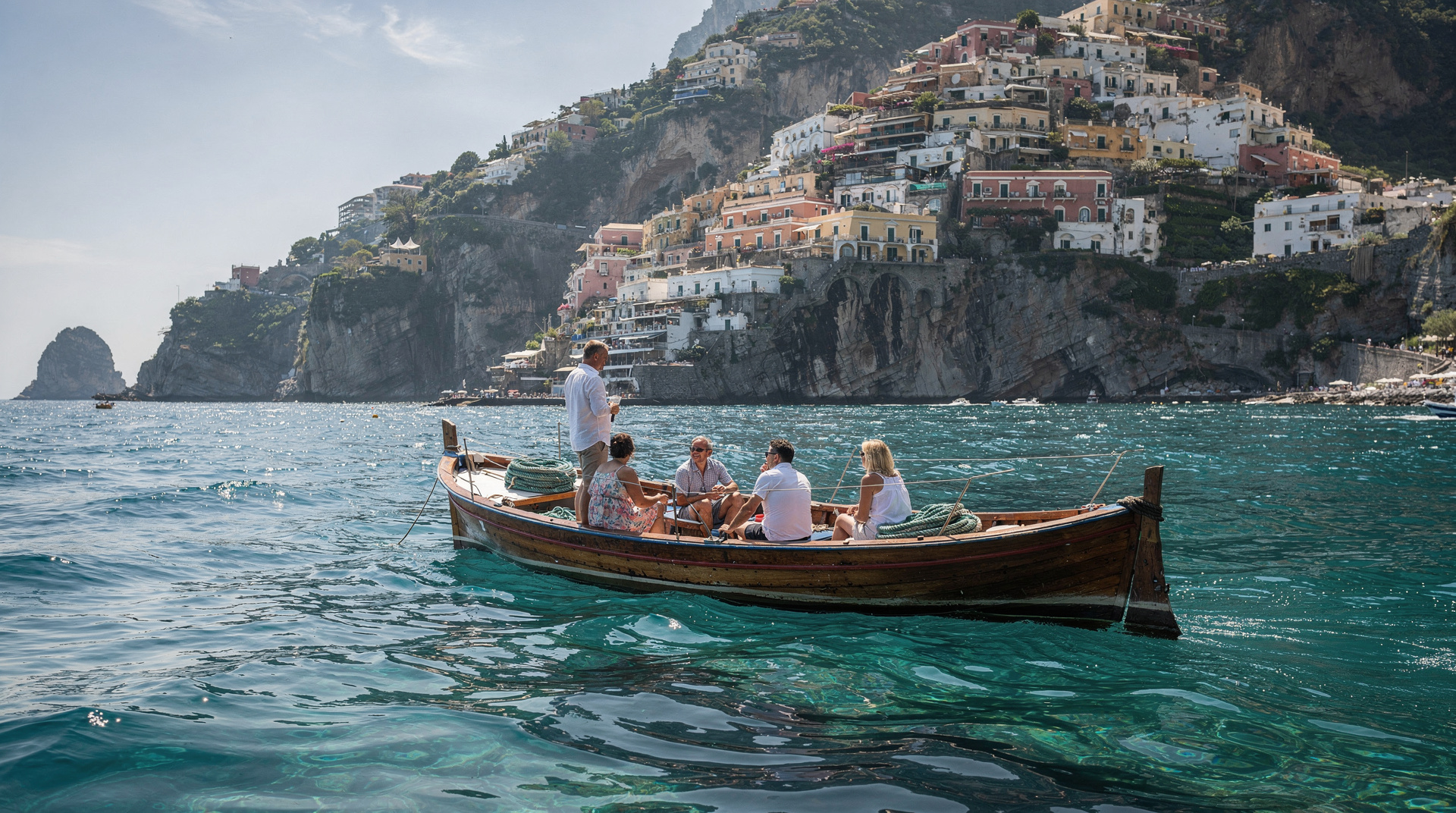
Procida is thirty-five minutes from Naples by fast ferry (hydrofoil), which departs from Molo Beverello multiple times a day. Return tickets cost around €22. The island appears first as a jumble of colour on the horizon — ochre, terracotta, faded yellow — and then gradually resolves into something more specific and stranger: a genuine working harbour with actual fishing boats, actual nets drying on actual bollards, and a waterfront that has clearly not been optimised for Instagram.
This is the first thing you notice about Procida: it hasn’t tried very hard to accommodate you. There are no big resort hotels, no boutiques selling artisanal limoncello at boutique prices, no queue for anything. The ferry discharges its passengers — mostly locals, a handful of tourists — and the town absorbs them without ceremony. If you’re weighing it against the other islands off Naples, our best island near Naples guide has the wider comparison, including Ischia and Capri.
Marina Corricella
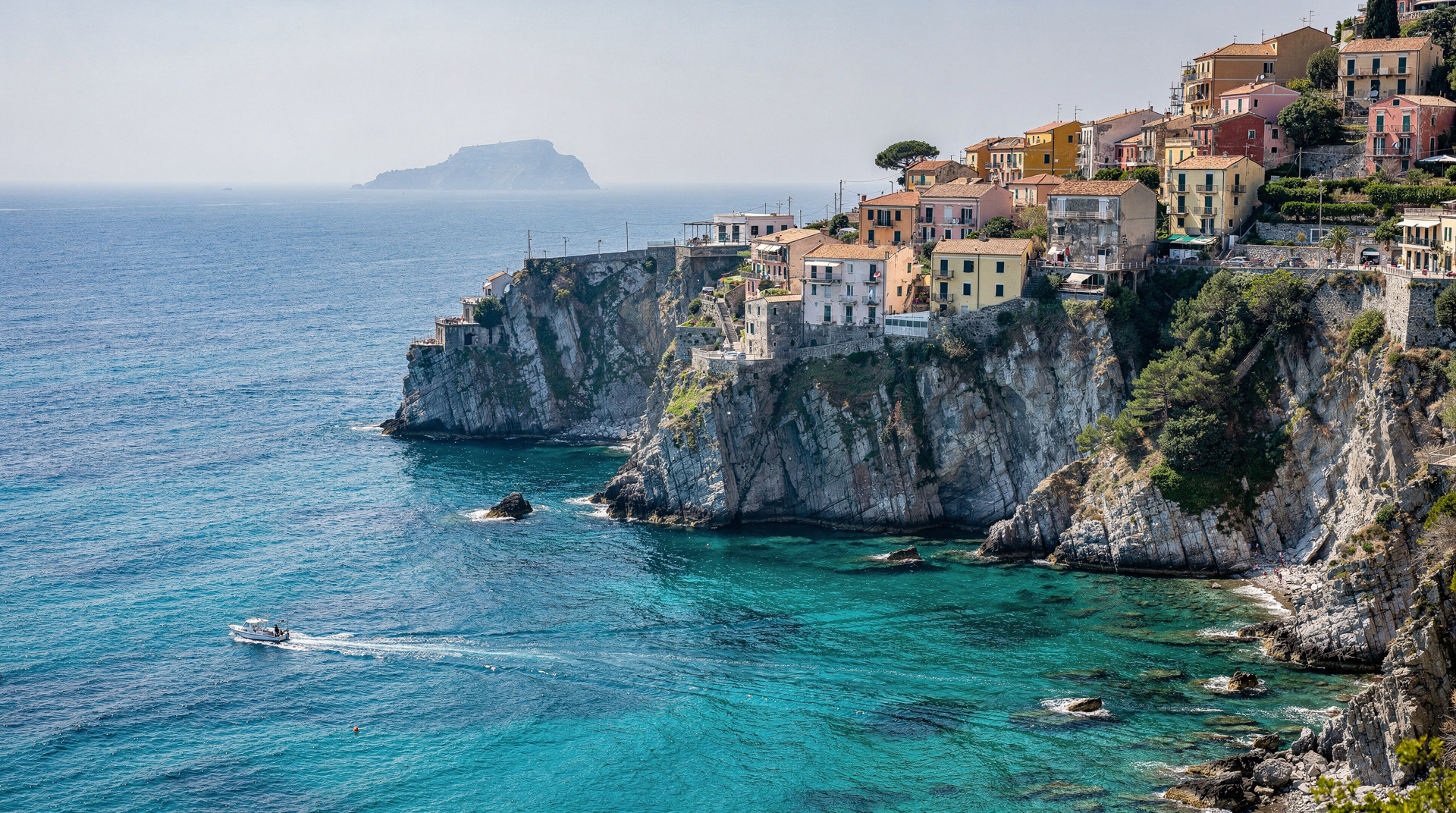
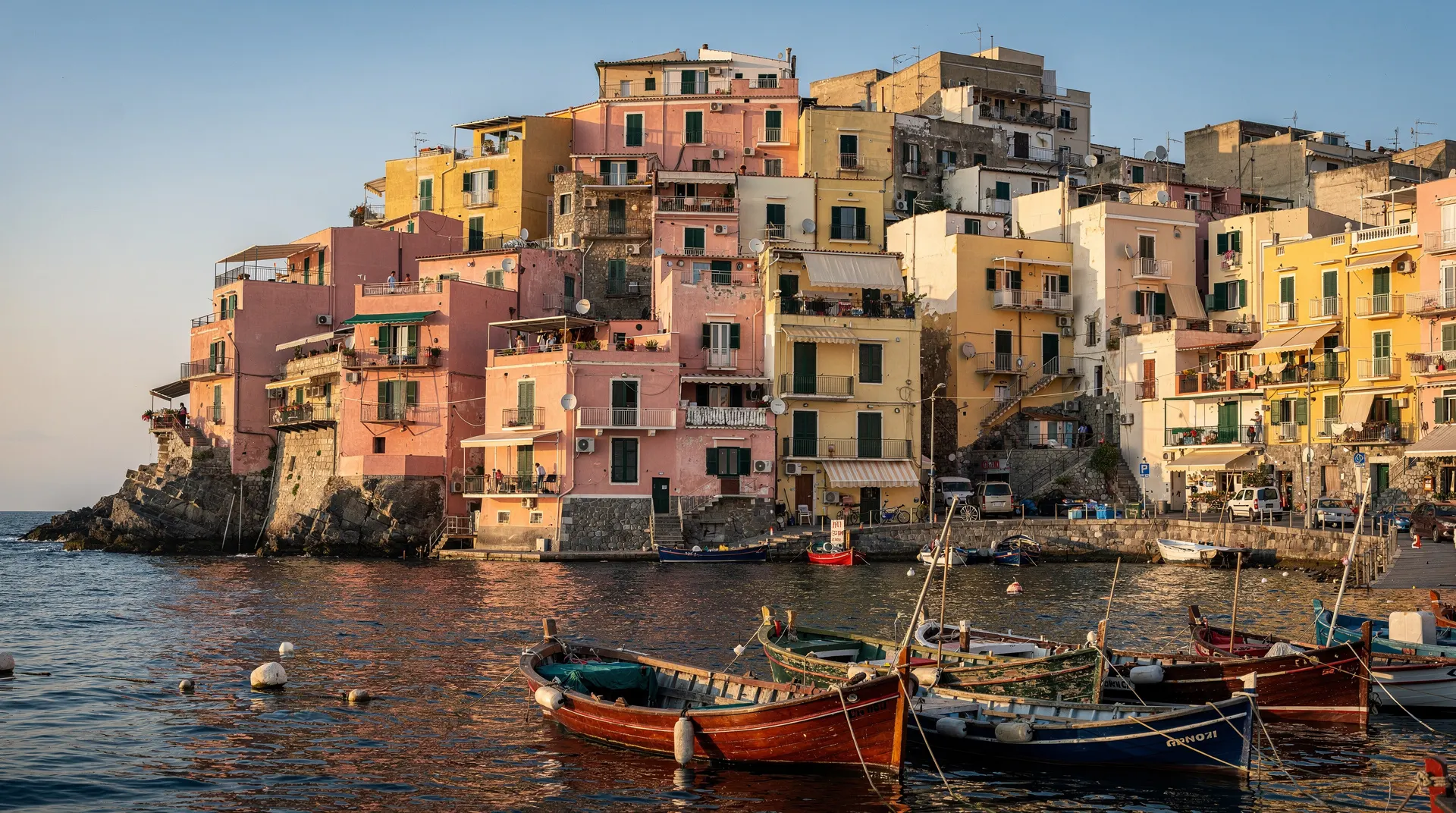
Walk left from the main port and you’ll reach Marina Corricella in about twenty minutes, following the coastal path around the headland. This is Procida’s famous postcard image: a crescent of tall, narrow houses in shades of peach and yellow and faded red, stacked up the hillside above a small fishing harbour. Brightly painted boats, cats on the steps, the whole thing.
The photographs don’t lie, but they also don’t capture the scale — it’s small, intimate, quiet. On the day I visited, a Tuesday in late spring, there were perhaps thirty tourists in the entire harbour area. Compare that to the Amalfi waterfront at the same time of year, where the word “crowded” barely covers it.
Lunch at one of the trattorie on the harbour front: spaghetti al nero di seppia (€12), fried anchovies and mixed seafood (€10), house white wine by the glass (€4). The fish was caught that morning and the whole meal tasted like it. This is not a boast about the restaurant — it was just competent and local and honest — it’s an observation about the baseline here.
Why It Beats Capri for Some People
I want to be careful here because this is a comparison that can tip into snobbery: “I prefer the unspoiled version, you see.” That’s not the point. Capri is beautiful and has genuinely spectacular scenery. But it asks a lot of you. The crowds, the prices, the effort of not being disappointed by the Blue Grotto after all that queuing — it’s a lot of friction for a day trip.
Procida doesn’t ask much. It’s small enough to walk across in an hour. The food costs what food should cost. Nobody is trying to sell you anything particularly hard. The highlight — Marina Corricella — is free to look at and easy to reach. There is no single unmissable attraction that everyone crowds toward.
What Procida has, instead, is atmosphere. The kind that you absorb by walking slowly through the lanes above the harbour, or sitting on the breakwater in the afternoon with a beer that cost €3, watching nothing in particular happen.
If you’re weighing up the islands before you commit to one, our Capri vs Ischia vs Procida comparison guide lays out the practical differences — crowds, cost, ferry times, what each island is actually for — in more detail than a single day’s impressions can give you.
Chiaiolella and the Other Side of the Island
Marina Corricella gets the postcards, but the other side of Procida — Chiaiolella, on the southwestern tip — has its own quieter appeal. It’s a fifteen-minute walk or a short local bus ride from the main port, past small vegetable gardens and vineyards that feel more rural than anything you’d expect this close to Naples.
Chiaiolella’s harbour is where local fishing families and a handful of small sailing boats share the water, and the beach nearby (Spiaggia di Chiaia) is the best swimming spot on the island, with fine dark sand rather than the pebbles common elsewhere on the Campanian coast. I didn’t make it there on this trip — an admission that even a quiet island has layers you don’t get to in one day — but it’s on the list for next time.
Going by Boat from Naples
If you want to combine Ischia and Procida in a single day — both islands, full-day, with lunch included — the full-day boat trip from Naples covering both islands with lunch is a good option. It handles all the logistics and gives you time at both stops without the ferry-juggling.
For something more private — a smaller group, your own pace, the ability to stop at the swimming coves between the islands — the private boat tour from Naples to Ischia and Procida is the elevated version. Prices reflect the difference, but so does the experience.
The Terra Murata
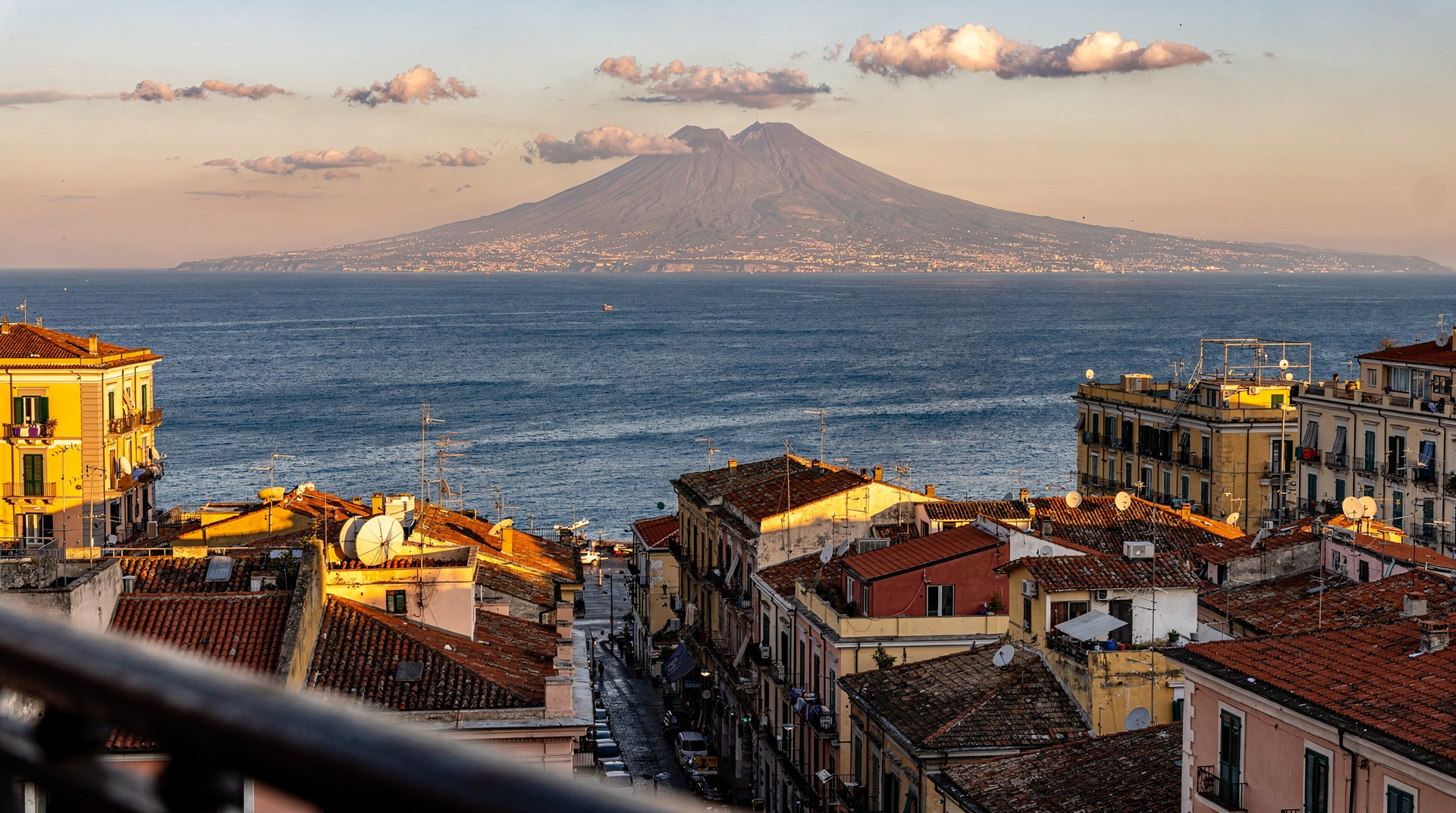
Before the return ferry, I climbed up to the Terra Murata — the old fortified town at the island’s highest point. The climb takes about twenty minutes and is steep enough to discourage most people, which keeps it pleasantly empty. At the top, the abbey of San Michele Arcangelo, the old prison (now closed, its facade still imposing), and views across the bay to Naples, Vesuvius behind it, Capri visible in the distance.
It was the kind of view that makes you glad you went somewhere unexpected. If a full day trip from Naples covering both Procida and its logistics interests you more than a solo improvisation like mine, the Procida day trip guide has the structured version.
What to Know Before You Go
Procida is genuinely small — you can walk its entire coastline in three to four hours. There’s no need to hire a scooter or a taxi. Bring cash; card machines are present but patchy. The island can feel subdued outside peak season, with some restaurants closed on weekdays. In July and August, it gets busier — still nothing like Capri or Positano, but the character shifts slightly.
Check the ferry schedule before you go — the ferries from Naples guide has current timetables and operator details, since services thin out considerably outside the summer months and the last boat back is earlier than you’d assume.
One day is the right amount of time. I left on the 5 p.m. ferry feeling like I’d found something that most visitors to Naples miss entirely. That feeling is, I suspect, part of why people who’ve been to Procida tend to recommend it so quietly and specifically. They don’t want it ruined. Understandable.