Where to stay in Naples: honest neighborhood guide for every traveler
Naples: Hop-on Hop-off Bus Tour 24-Hour Ticket
Duration: 24h
Where is the best area to stay in Naples?
For first-time visitors, Chiaia or the Centro Storico offer the best balance of location and comfort. Chiaia is the safest and most polished residential district, close to the Lungomare. Centro Storico puts you inside the UNESCO historic core but noise and scooter traffic are real trade-offs. Vomero suits families and anyone who wants quiet hilltop life with funicular access.
Short answer: Chiaia is the most comfortable and safe base for most visitors. Centro Storico is the most atmospheric but noisier. Vomero suits families and those who want residential quiet. Posillipo is beautiful but remote.
| Where | Centro Storico, Chiaia, Vomero, Posillipo, or Rione Sanità |
| Cost | Around €40–400/night depending on neighborhood and season |
| Getting there | Metro Line 1/2, funicular, or on foot from Napoli Centrale |
| Time to decide | Match noise tolerance and day-trip plans to the table below |
| Best time to book | 4–8 weeks ahead; earlier for Easter, August, big matches |
How to pick the right Naples neighborhood
Naples is a compact city by Mediterranean standards, but its topography creates distinct zones that feel like different cities. The centro storico sits on the flat coastal plain, Vomero and Posillipo rise on hills above it, and Chiaia stretches between the waterfront and the slopes. Getting the base right saves an hour of daily logistics.
Two practical questions narrow the choice immediately: How central do you need to be? And what is your tolerance for urban noise and chaos?
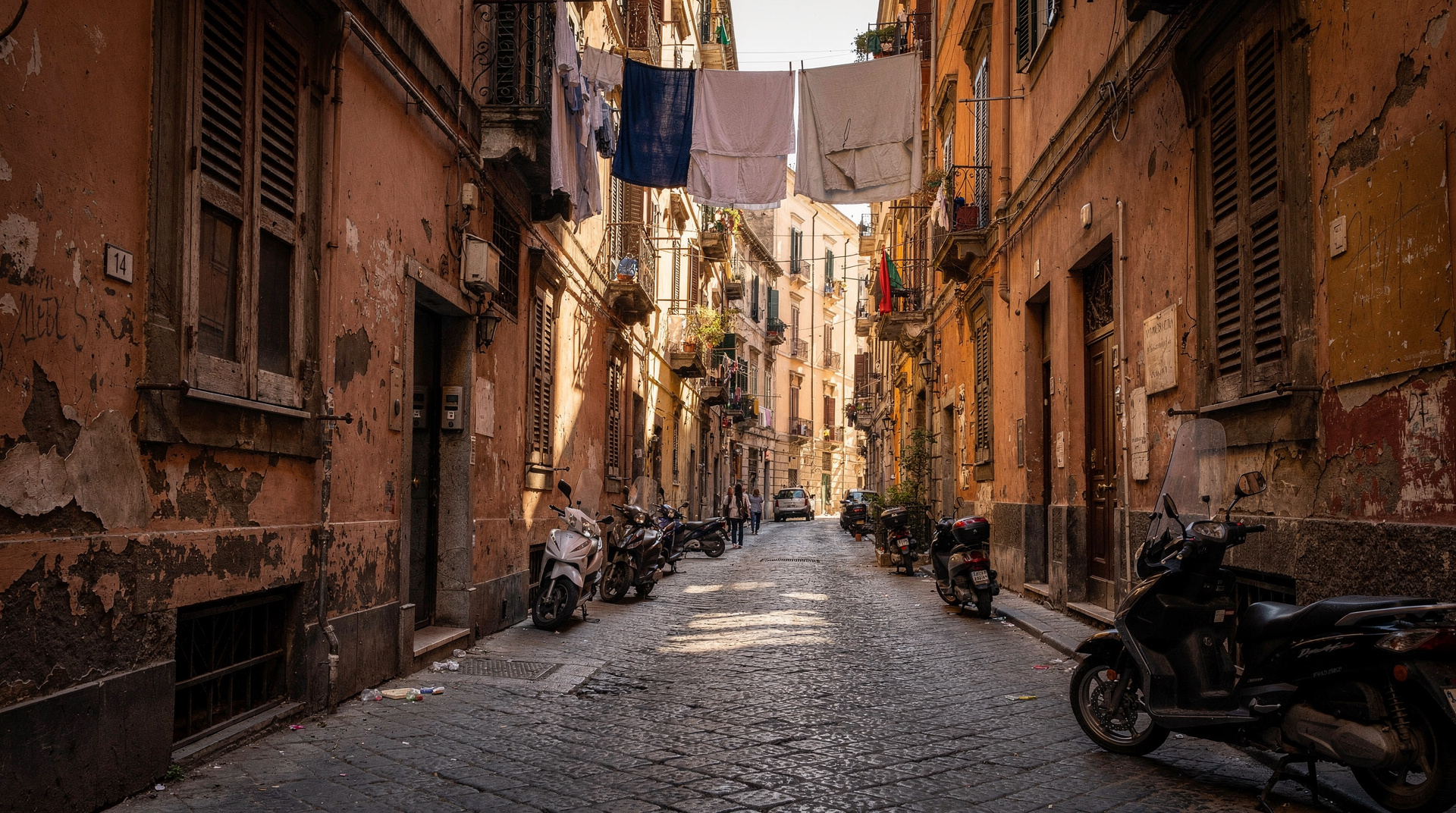
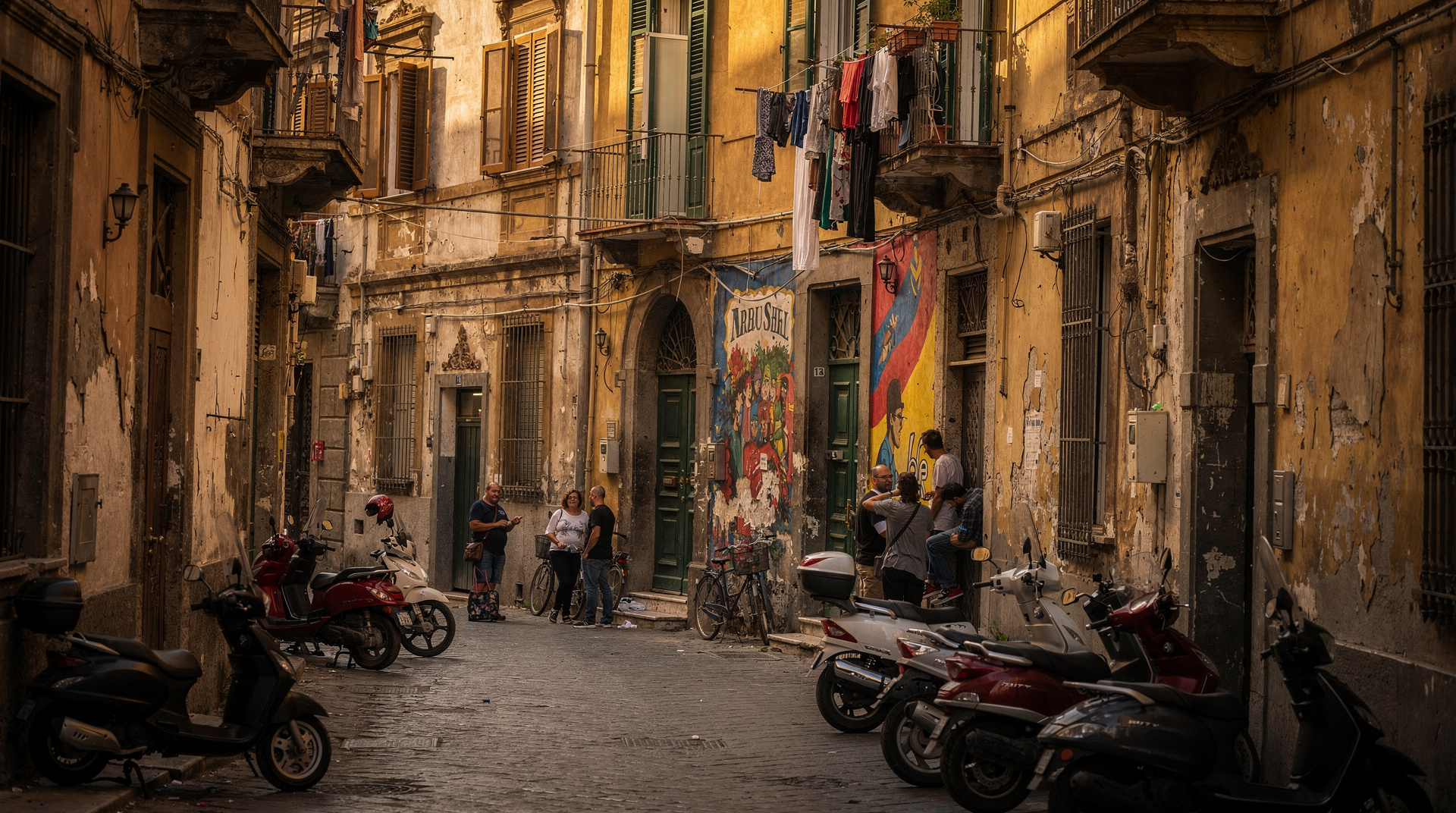
The historic center puts you inside UNESCO World Heritage streets — every morning you open a door onto Spaccanapoli or Via dei Tribunali. The trade-off is scooter noise until midnight, occasional petty theft on crowded corners, and building quality that varies wildly from palazzo grandeur to crumbling stairwells. It is the best choice for first-timers who want maximum immersion.
Chiaia offers the calmest of both worlds: walkable to the sea, safe residential streets, excellent restaurants and wine bars, and metro/funicular access to the historic center within 20 minutes.
Centro Storico: inside the historic core
The Centro Storico encompasses Spaccanapoli, the Decumani, Via Toledo (its western edge), and the area around Piazza Dante. This is the beating heart of old Naples — UNESCO-listed for its layer-cake of Greek, Roman, Norman, and Bourbon heritage.
Why stay here: You are 10 minutes on foot from Cappella Sansevero, MANN (the archaeological museum), Napoli Sotterranea, the Cathedral, and dozens of street food vendors. The neighborhood never stops. Morning sfogliatella from a bakery before the crowds arrive, evening pizza at a historic pizzeria — this is the full Naples experience.
What to know: Scooter traffic is constant and fast, even on pedestrian-looking streets. Noise can be an issue until midnight on summer weekends. Hotels and B&Bs range from beautifully restored palazzo rooms (€100–200) to budget guesthouses in dark courtyard buildings (€30–60). Always read recent reviews for specific noise levels. Air conditioning is essential June–September.
The pocket around Piazza Garibaldi (the main train station) gets chaotic at night and has more street hustlers than elsewhere. Book accommodation at least 5 minutes walking distance from the station square itself.
Access to day trips: Excellent. Napoli Centrale and Garibaldi metro hub for the Circumvesuviana to Pompeii (€3.30, 30 minutes), Herculaneum (€2.60, 20 minutes), and Sorrento (€6.30, 70 minutes). Metro Line 1 to the port for island ferries.
Chiaia: the residential sweet spot
Chiaia runs along the waterfront from Piazza Vittoria to Mergellina, backed by the slopes below Vomero. It is the city’s wealthiest residential neighborhood — boutique hotels, good restaurants, wine bars, and a genuinely walkable atmosphere.
Why stay here: The Lungomare Caracciolo (the seafront promenade) is your front garden. Castel dell’Ovo sits at the eastern end of the waterfront. The neighborhood is quiet by Naples standards, with far less scooter chaos than the centro. Streets are wider, better lit, and the general atmosphere is calmer.
Prices are slightly higher than Centro Storico for equivalent quality: mid-range doubles run €100–180, boutique design hotels €180–300. The quality floor is also higher — you are unlikely to end up in a damp stairwell.
Access: Piazza Amedeo (Metro Line 2) connects to Napoli Centrale in under 10 minutes. The Mergellina funicular climbs to Vomero. To reach Spaccanapoli, a 20-minute walk along Via Chiaia gets you to the historic center. Taxis from Chiaia to the Circumvesuviana for early-morning Pompeii runs are about €8–12.
Best for: Couples, solo travelers seeking comfort, anyone sensitive to noise, second-time visitors who want a more local feel.
Vomero: hilltop calm with city views
Vomero occupies the hill above Chiaia and is served by three funiculars descending to the city below (Central funicular: 7:00–22:00; Chiaia funicular: 7:00–22:00; Montesanto funicular: 7:00–22:00 — confirm timetables on site, last journeys fill up).
The neighborhood centers on Via Scarlatti, a pedestrian shopping street, and Via Luca Giordano, lined with cafés and restaurants. The views from the Certosa di San Martino belvedere are among the best in Naples.
Why stay here: Residential streets, low noise at night, no ZTL restrictions, good supermarkets (important for families). The air is noticeably fresher than the centro. Hotel prices are moderate: €70–140 for comfortable doubles.
What to know: Every trip to the sights involves the funicular or metro — factor in 20–30 minutes each way plus waiting time. Funiculars stop around 22:00 (earlier on some lines), so late-night centro evenings require a taxi back up. Taxis Vomero→Centro cost about €8–12.
Best for: Families, older travelers, those who value quiet sleep over door-to-door location, budget travelers who want comfort without the centro premium.
A hop-on hop-off bus covers Chiaia, Lungomare, Vomero, and Posillipo — useful on day one to understand the city’s geography before settling into your neighborhood.
Posillipo: sea views, premium calm
Posillipo sits on the promontory west of Mergellina, overlooking the Bay of Naples toward Vesuvius. It is the most upmarket residential area in the city — villas, private beaches, boutique hotels at €200–400 per room, and some of the best seafood restaurants in Campania.
Why stay here: The setting is exceptional. Sunsets over the bay with Vesuvius as a backdrop, private swimming areas, a sense of removed exclusivity. If you are staying for a week-plus and want a tranquil base, Posillipo delivers.
What to know: You are 25–35 minutes from the historic center by taxi (€15–20) or a combination of the Mergellina funicular and metro. Buses exist but are infrequent and slow. For intensive sightseeing days, the commute adds up. This neighborhood makes most sense as a holiday retreat rather than an exploration base.
Best for: Couples on a longer stay, those prioritizing sea access over sightseeing proximity, people returning to Naples who have already covered the centro.
Rione Sanità: authentic and improving
Rione Sanità sits north of the historic center, between the centro storico and Capodimonte. It is a working-class neighborhood undergoing gradual renovation, best known for the Catacombs of San Gennaro and San Gaudioso, the vibrant street art, and the slow movement of artisans and cafés reclaiming historic buildings.
Why stay here: The cheapest genuine Naples experience: B&Bs and small hotels at €40–80. Morning street life (vegetable vendors, local bars, schoolchildren) that has nothing to do with tourism. The Catacombs are at your doorstep.
What to know: Parts of the neighborhood remain rough at night. The area is safe during the day for sightseeing; at night, stick to well-lit routes and take taxis back from the centro. Infrastructure is improving but still uneven — hot water, wi-fi quality, and elevator availability vary.
Best for: Younger independent travelers, anyone specifically interested in the underground heritage and street art scene, budget travelers comfortable with less polish.
A guided Naples walking tour often includes Rione Sanità’s street life and murals alongside the more-visited centro stops.
Quick comparison: which neighborhood for which trip
| Neighborhood | Best for | Safety | Noise | Price range (double) | Distance from Circumvesuviana |
|---|---|---|---|---|---|
| Centro Storico | First timers, immersion | Good (day/evening) | High | €50–200 | 10 min walk |
| Chiaia | Couples, comfort seekers | Excellent | Low | €100–300 | 20 min metro/taxi |
| Vomero | Families, budget comfort | Excellent | Very low | €70–140 | 25 min funicular+metro |
| Posillipo | Relaxation, views | Excellent | Very low | €200–400 | 35 min taxi |
| Rione Sanità | Budget, authenticity | OK (day), cautious evening | Medium | €40–80 | 20 min walk |
Transport connections: what actually matters
Every Naples neighborhood connects reasonably well to the sightseeing circuit, but day-trip logistics from the centro are fastest. The Circumvesuviana (trains to Pompeii, Herculaneum, Sorrento) departs from the lower level of Napoli Centrale/Garibaldi station. Metro Line 1 connects the centro to the port for Capri, Ischia, and Procida ferries.
From Chiaia or Vomero, add 15–25 minutes to those journeys. From Posillipo, add 30–40 minutes plus a taxi.
The Naples funicular network is free with a standard ANM transit ticket (€1.60 per journey, or a 90-minute pass at €1.80). A 24-hour pass costs €4.50 and covers metro, bus, and funiculars — good value for Vomero residents. See the getting around Naples guide and Naples funiculars guide for full logistics.
Avoiding common accommodation mistakes
Booking by map pin alone: Zoom in carefully. Some hotels listed as “centro storico” are actually on the Piazza Garibaldi ring road — fine for train access, uncomfortable for evening walks.
Ignoring noise reviews: Summer in the Centro Storico can mean 06:00 garbage trucks, 23:00 moped convoys, and street-level bars. Read the last 20 reviews specifically for noise. Ask for a rear or upper-floor room.
Assuming all Chiaia hotels are equal: The quality range is wide. A boutique hotel on Via Vittoria Colonna differs enormously from a private room in a ground-floor apartment on a traffic street.
Not checking ZTL access: If arriving by rental car, confirm the hotel handles your plate registration for the ZTL. Failure to register results in fines of €200+ per day. See the Naples ZTL driving guide before booking.
Matching a neighborhood to your trip type
Beyond the raw comparison table, it helps to think in terms of trip type rather than neighborhood alone:
First-time visitor, 3–4 nights, wants to see everything: Centro Storico or Chiaia. If noise tolerance is decent, the Centro Storico puts every major sight within walking distance and gives the fullest immersion. If you’d rather sleep well and don’t mind a 20-minute walk or short metro ride to the sights, Chiaia is the safer bet — see the Chiaia neighbourhood guide for the full picture.
Family with young children: Vomero, for the reasons covered above — wider streets, less scooter traffic, good supermarkets, and a funicular ride children genuinely enjoy rather than tolerate. The Naples with kids guide has the fuller family-specific breakdown, including which sights work best with a stroller.
Return visitor or longer stay (5+ nights) prioritising calm: Posillipo or a slower-paced week split between Chiaia and a couple of nights in Rione Sanità for a different, less touristed side of the city.
Heavy day-tripper (Pompeii, Herculaneum, Sorrento most days): Centro Storico for proximity to Napoli Centrale, or consider basing partly in Sorrento instead — see Naples vs Sorrento as a base for that trade-off in full, since it changes the calculation considerably if the Amalfi Coast is also on your list.
Naples nightlife and neighborhood choice
Evening plans should factor into your neighborhood choice as much as daytime sightseeing does. The Centro Storico’s bar density around Piazza Bellini and Quartieri Spagnoli makes it the obvious base for anyone prioritising nightlife, while Chiaia’s more understated wine-bar and aperitivo scene suits visitors who want a good evening without the noise that comes with being in the middle of it. See the Naples nightlife guide for specific venues and how late each area realistically stays lively — useful context before you commit to a booking based on daytime photos alone.
Budgeting your stay against the rest of the trip
Accommodation is usually the single biggest line item after flights, so it’s worth weighing your neighborhood choice against your overall budget rather than in isolation. A trip that splits a few nights between a comfortable Chiaia hotel and a couple of nights in the cheaper Rione Sanità can average out to a similar nightly cost as a mid-range Centro Storico stay, while giving you two distinct neighborhood experiences instead of one.
The Naples trip cost and budget guide breaks down how accommodation choice interacts with food, transport, and sightseeing costs across a typical multi-day visit, which is useful for deciding whether to spend more on location or save it for museum tickets and restaurant meals instead.
Frequently asked questions about Naples neighborhood accommodation
Is it safe to stay in Chiaia, Naples?
Chiaia is one of the safest neighborhoods in Naples — comparable to upscale districts in any southern Italian city. Petty theft is low, the streets are well-lit, and evening foot traffic from restaurants and bars continues past midnight. Normal urban awareness applies.
Can I walk from my hotel to the main sights in Naples?
From Centro Storico hotels: yes, nearly everything is walkable. From Chiaia: the Lungomare, Castel dell’Ovo, and the western centro are walkable (20–30 minutes). From Vomero: funicular to the centro (10 minutes), then on foot. Posillipo requires transport for all sightseeing.
Is the centro storico noisy at night?
Yes. Summer weekends are particularly loud until midnight or later — outdoor seating at bars and restaurants, mopeds, and local foot traffic. Double-glazed windows and rear rooms reduce but don’t eliminate the noise. If you are a light sleeper, Vomero or Chiaia are better choices.
What neighborhoods should I avoid in Naples?
Scampia and Secondigliano (northern outskirts, far from tourist areas) have genuine gang-related crime and no reason for tourists to visit. Forcella (eastern centro storico edge) and parts of Piazza Garibaldi feel edgy at night but are fine for daytime visits. The tourist-relevant areas are all safe with basic awareness.
Should I book accommodation near the Circumvesuviana for Pompeii?
Only if Pompeii is your sole focus. The Circumvesuviana departs from Napoli Centrale; getting there takes 10 minutes from Centro Storico, 20–25 from Chiaia or Vomero. Staying right next to the station puts you in a less pleasant area for no compelling reason unless you have an extremely early departure.
What is the best Naples neighborhood for nightlife?
The Centro Storico has the highest concentration of bars, clubs, and late-night venues — particularly around Piazza Bellini, Via dei Tribunali, and Quartieri Spagnoli. Chiaia’s Via Bisignano and surrounding streets have wine bars and aperitivo spots that attract a more local, residential crowd. For the full nightlife picture see the Naples nightlife guide.
Do hotels in Naples include breakfast?
Many mid-range hotels include breakfast, but quality varies widely. Neapolitan breakfast culture centers on a sfogliatella and espresso at a local bar — often better and cheaper than a hotel buffet. Some hotels offer a “breakfast not included” option at a discount worth taking if there is a good bar nearby.
Frequently asked questions about Where to stay in Naples: honest neighborhood guide for every traveler
Is it safe to stay in Naples centro storico?
Which Naples neighborhood is best for families?
How far is Chiaia from the main sights?
Is Vomero a good base for day trips?
What does accommodation cost in Naples?
Should I stay in Naples or Sorrento for the Amalfi Coast?
Is Posillipo worth the premium?
Top experiences
Bookable activities with verified prices and instant confirmation on GetYourGuide.