Pizza making class in Naples
Naples: Authentic Neapolitan Pizza Making Class
Duration: 2h
Are pizza making classes in Naples worth it?
Yes, if you book the right type. A class held in a working pizzeria oven (wood-fired, 430°C+) with a certified pizzaiolo teaching real technique is genuinely educational and produces an excellent lunch. Hotel-lobby or tourist-kitchen classes that use electric ovens at lower temperatures are a different, inferior product. Expect to pay €45–75 per person; classes run 2–2.5 hours and include the pizza you make plus wine or drinks.
| Where | Working pizzerias in the centro storico or Quartieri Spagnoli |
| Cost | €45–75/person group, €100–180 private |
| Time needed | 2–2.5 hours (2.5–3 with dessert add-on) |
| Group size | 6–16 depending on operator; smaller = more hands-on |
| Booking | Advance recommended, especially weekend slots |
Learning to make pizza in its city of origin
The gap between watching a pizza being made and making one yourself is instructive. Hand-stretching dough is more difficult than it looks — the technique of pushing the air outward from the centre while rotating the disc requires specific hand positioning and pressure that is not obvious to first-time practitioners. More importantly, understanding why the dough needs to be stretched (rather than rolled) — because a rolling pin compresses the gas bubbles and produces a denser, less airy crust — gives you the conceptual framework to understand the pizza you will eat for the rest of your time in Naples.
Pizza making classes vary enormously in quality. This guide distinguishes the types, explains what separates a valuable experience from tourist entertainment, and identifies what to look for when booking.
The quality divide: working pizzeria vs tourist kitchen
This is the most important distinction in the Naples pizza class market.
Working pizzeria classes
A class held in a pizzeria that is open to the public means:
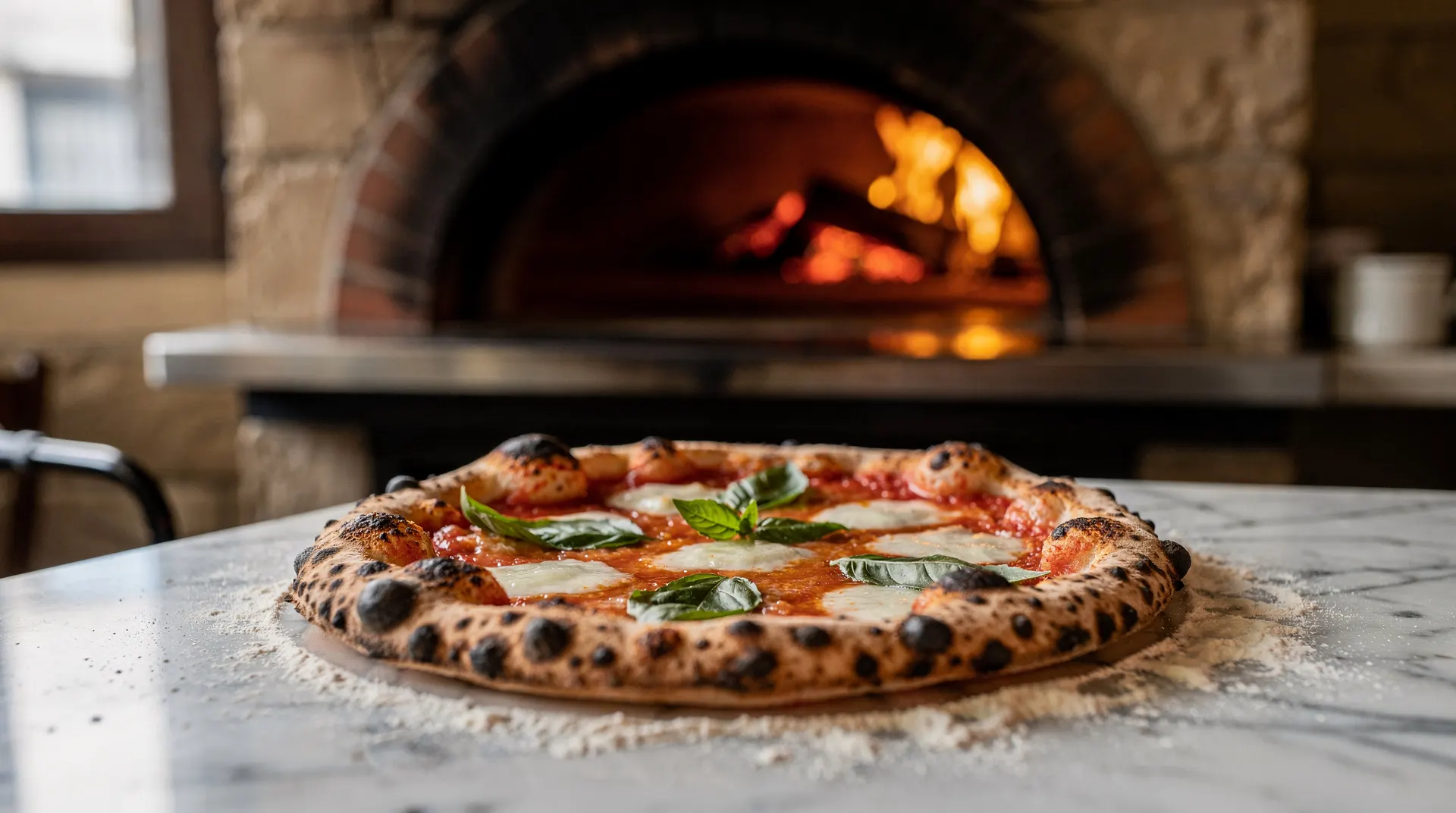
- A wood-fired oven running at 430–480°C — the correct temperature for Neapolitan pizza
- A working pizzaiolo teaching the class alongside their actual daily work
- Authentic ingredients (San Marzano DOP tomatoes, fior di latte or buffalo mozzarella DOP)
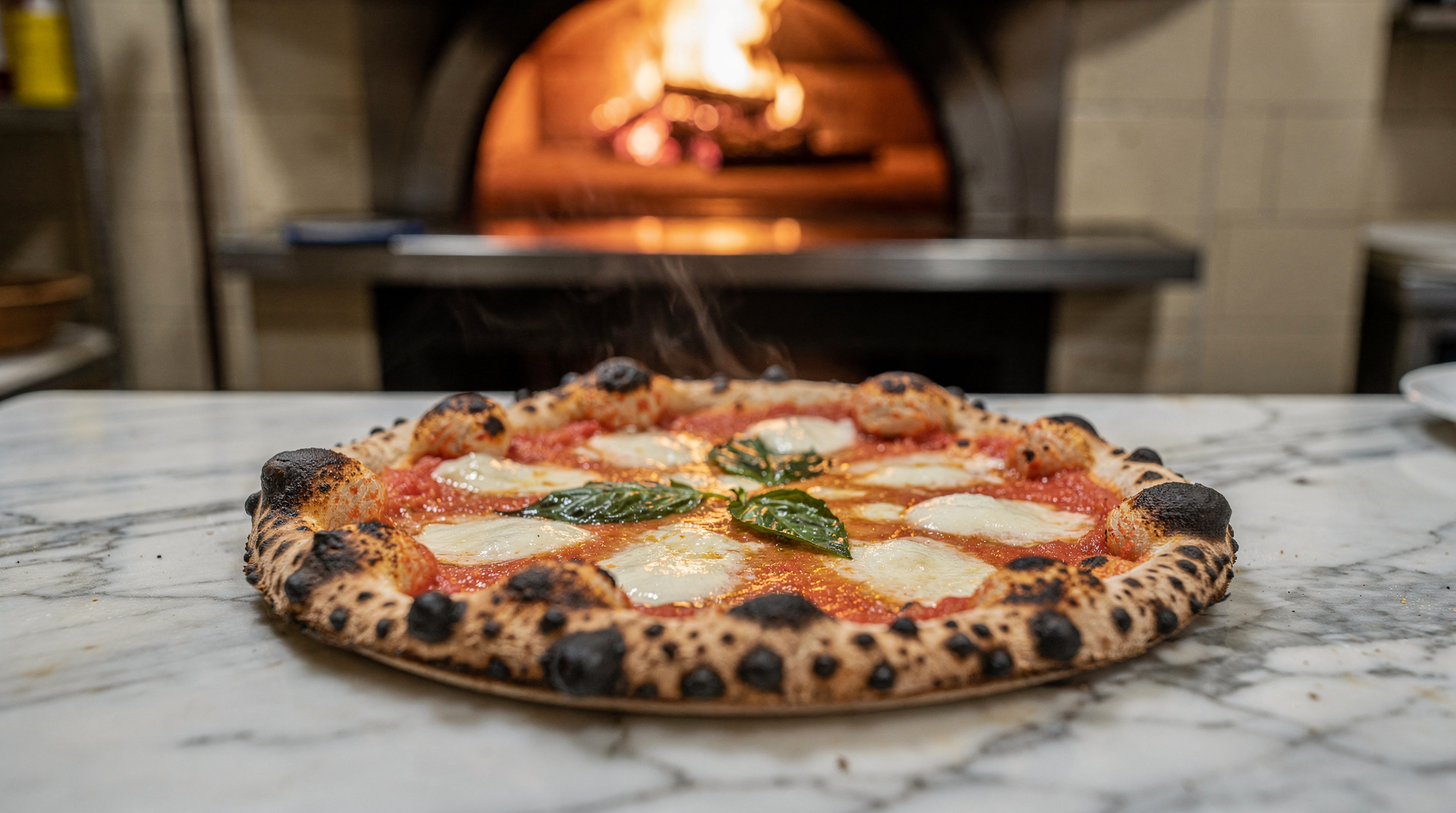
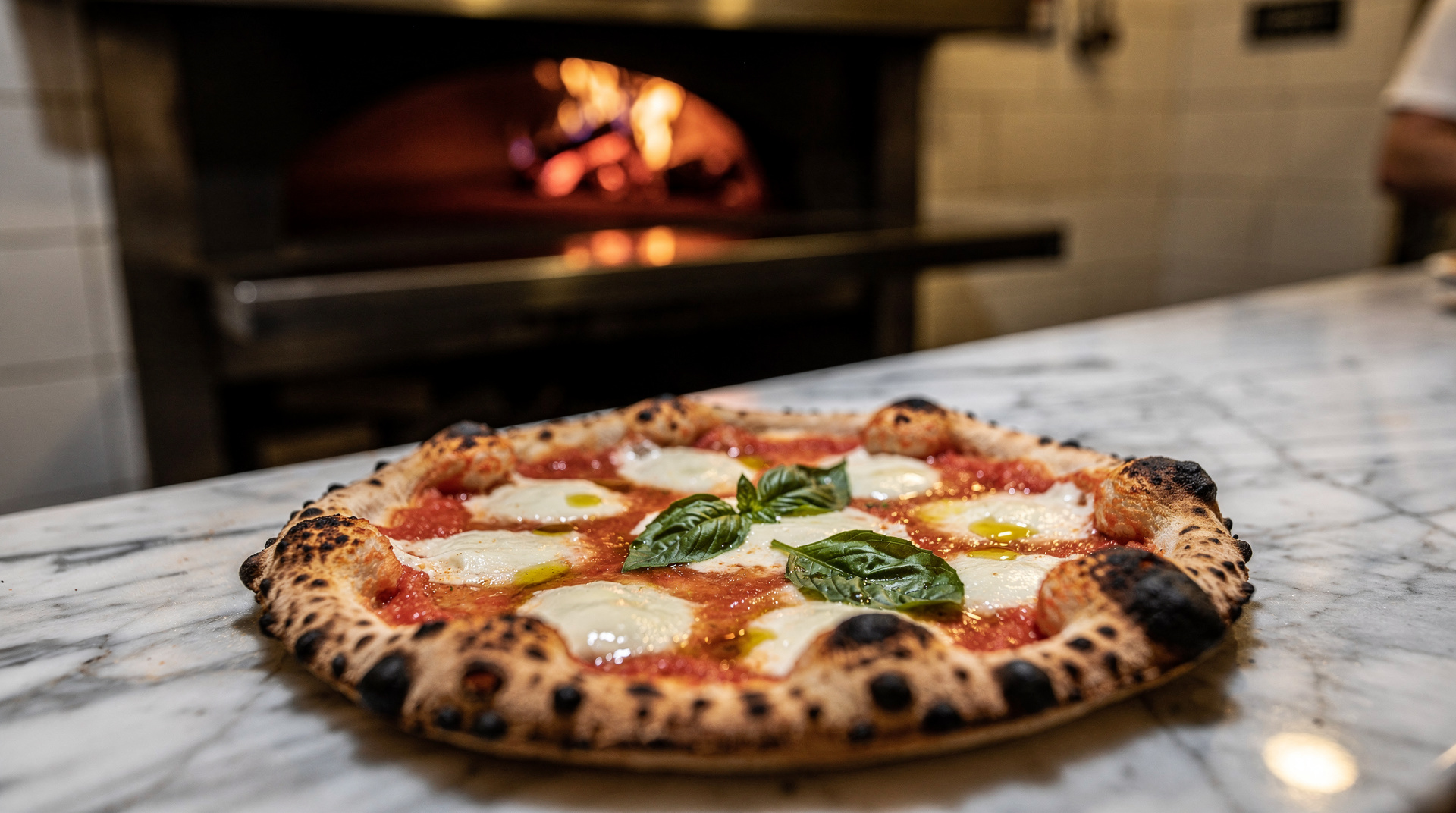
- The pizza cooks in 60–90 seconds and develops the correct char and texture
- You are seeing real production, not a demonstration staged for tourists
The result is a pizza that tastes like Neapolitan pizza. The experience teaches real technique.
Tourist kitchen classes
A class held in a hotel kitchen, cooking school, or purpose-built tourist kitchen typically uses:
- An electric oven at 250–280°C (standard commercial or domestic range)
- A longer cooking time (8–12 minutes) at lower temperature
- The resulting pizza is closer to a home-baked pizza than a Neapolitan one — drier edges, less char, no leopard-spotting
The experience can still be enjoyable and the instruction may be accurate. But you are not making Neapolitan pizza — you are making a pizza that happens to have Neapolitan ingredients. This distinction matters if the purpose of the class is to learn the real technique.
How to tell from the booking description: look for “wood-fired oven” or “forno a legna” specifically. If the oven type is not mentioned, ask before booking.
What a good pizza class covers
A 2-hour class at a qualified working pizzeria should cover the following:
Dough theory (15–20 minutes): the role of each ingredient (flour type, water, salt, yeast or sourdough starter), hydration percentage (55–65% for Neapolitan), and fermentation time (minimum 8 hours; better classes use 24-hour dough). This is the part that most tourist classes skip but that makes the experience educational rather than merely entertaining.
Dough handling (20–30 minutes): the hands-on portion. Taking a pre-fermented dough ball (made the night before by the pizzeria — you will not make the dough from scratch in a 2-hour class) and learning to stretch it by hand. The technique involves pressing with fingertips from the centre outward, then using the knuckles to stretch over the back of the hand while rotating. First attempts will be uneven — this is normal and part of the instruction.
Topping application (10–15 minutes): spreading the tomato sauce in a spiral from the centre (not edge to edge — the cornicione must be sauce-free), applying mozzarella in restrained amounts, adding basil, drizzling olive oil.
Baking and eating (30–45 minutes): watching the instructor slide the pizza into the wood-fired oven with a peel, observing the 60–90 second cook (the cornicione puffing, the char developing), and then eating your pizza. Good classes include a wine or drinks accompaniment.
Optional dessert component: some classes add a 20-minute tiramisu or babà making component after the pizza. This adds time (total becomes 2.5–3 hours) and cost but is a useful add-on if Neapolitan desserts interest you.
Class formats and pricing
Group classes (standard)
Group size: 10–15 people
Duration: 2–2.5 hours
Price: €45–65 per person including the pizza you make and usually wine or drinks
Best for: solo travellers or couples comfortable in group settings, visitors on a mid-range budget
A 2-hour class with a local pizzaiolo and hands-on technique:
2-hour Neapolitan pizza class with a local pizzaioloPremium group classes (smaller groups, better equipment)
Group size: 6–8 people
Duration: 2.5 hours with dessert component
Price: €65–80 per person
Best for: visitors who want more hands-on time and more direct instruction, those interested in the technique as much as the social experience
Local pizzaiolo one-on-one style classes
Group size: 4–8 people maximum
Duration: 2 hours
Price: €55–75 per person
Best for: visitors who want an intimate, less structured experience and personal instruction
Private classes
Group size: 1–4 people
Duration: 2–3 hours (customisable)
Price: €100–180 for the group, depending on duration and location
Best for: couples, small families, those with specific dietary needs or learning objectives
Ask any of the above operators about private bookings — most offer them at a premium.
What to look for when booking
Checklist before booking:
- Wood-fired oven specifically mentioned
- Group size capped (ideally at 12 or fewer)
- AVPN or equivalent quality reference for the instructor
- Class held in a working pizzeria (not just a kitchen)
- Includes wine/drinks with the meal
- Cancellation policy of 24 hours or better
Red flags:
- Price under €30 per person (corners are being cut somewhere)
- “Pizza experience” rather than “pizza class” (marketing language that often indicates lower instruction quality)
- No mention of oven type
- Hotel booking or hotel kitchen location
- No mention of what ingredients are used
Combining with a food tour
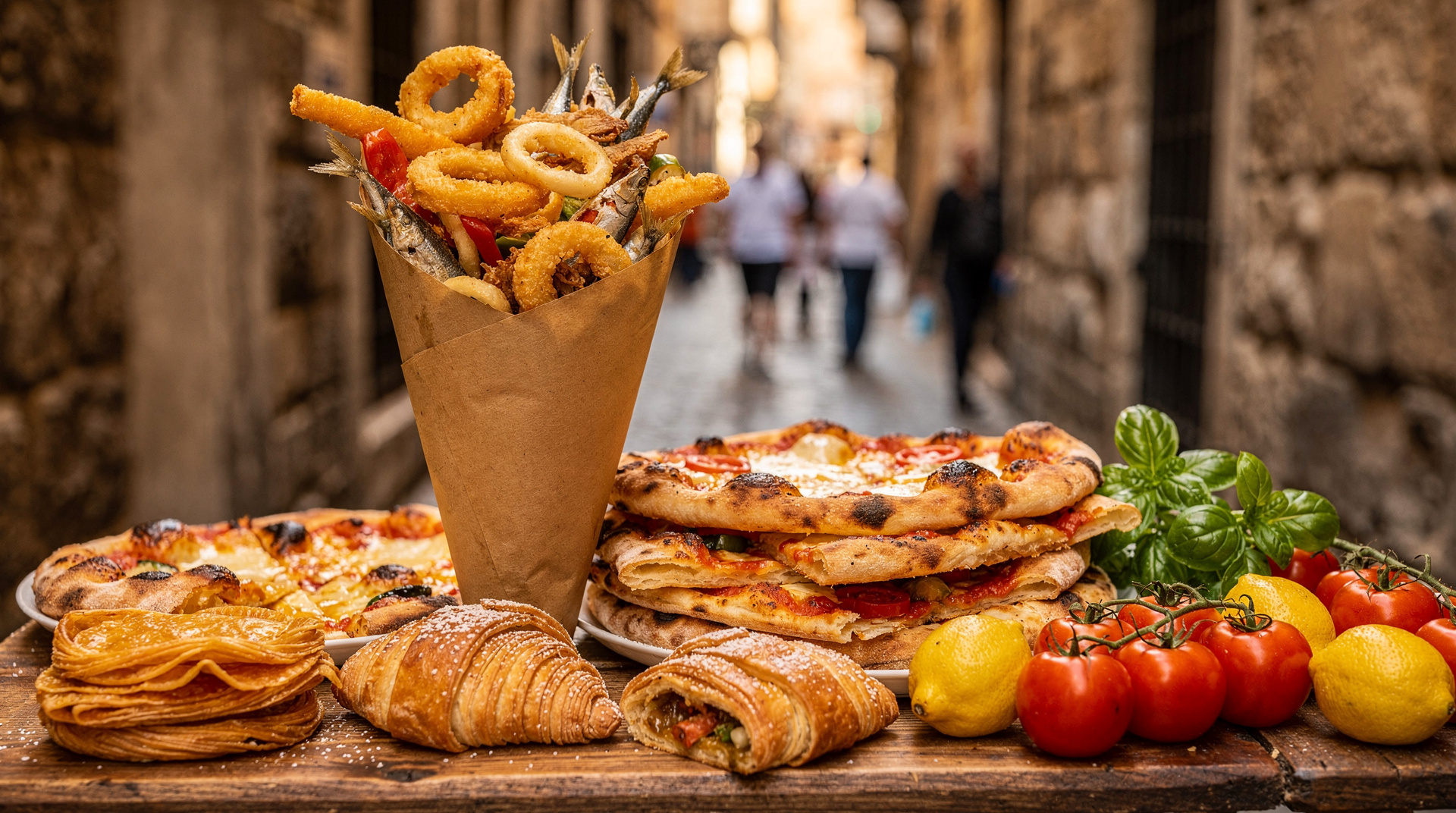
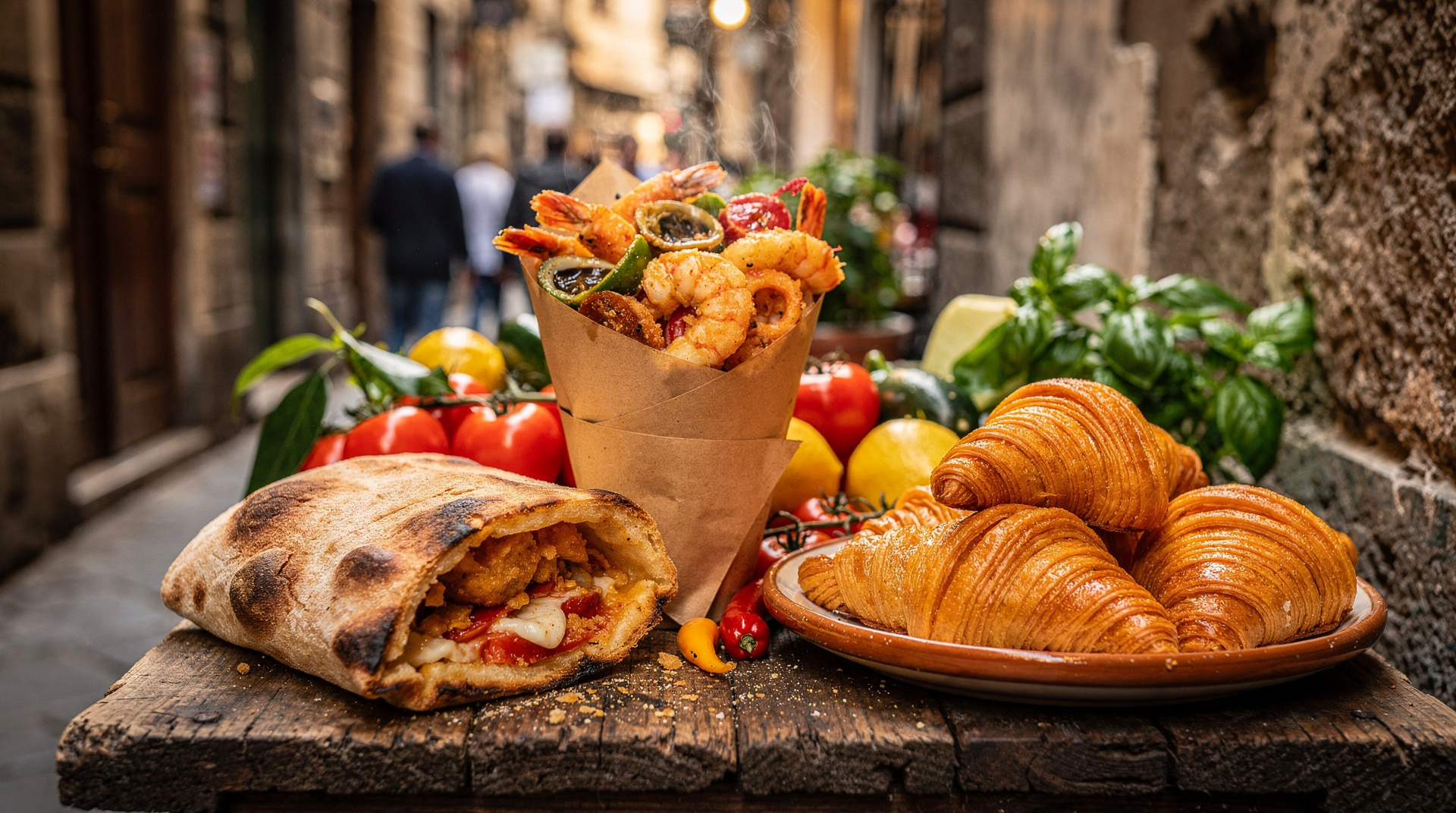
The optimal combination for a first visit to Naples: a street food tour on day one (orientation across multiple food types), a pizza making class on day two (depth on the specific item you care most about). The food tour gives you context that makes the class more meaningful — you’ve already eaten a portafoglio and a pizza fritta; now you understand the dough they came from.
The best food tours in Naples guide covers the tour options.
Pizza with tiramisu: the extended option
Some classes combine pizza making with tiramisu — the two most internationally recognised Italian dishes in a single session. This combination is popular with visitors who want a broader introduction to Italian cooking rather than a deep dive into pizza specifically.
Naples pizza and tiramisu class — make both, eat bothDietary restrictions and gluten-free options
Standard Neapolitan pizza dough is wheat-based and not suitable for coeliac visitors, but most operators can accommodate common dietary requests with advance notice. Vegetarian classes are straightforward — a Margherita or marinara base covers it, and the fior di latte/bufala mozzarella used is standard dairy, not a substitute product.
Vegan requests need more lead time, since a proper dairy-free mozzarella alternative isn’t something every pizzeria stocks; ask when booking rather than assuming it can be arranged on the day. Gluten-free dough is offered by some operators but rarely cooked in the same wood-fired oven as the wheat dough (cross-contamination risk), so coeliac travellers should confirm the specific handling procedure directly with the operator before booking, not rely on the listing description alone.
Taking kids to a pizza class
Pizza classes are one of the more reliably kid-friendly food activities in Naples — the hands-on dough stretching genuinely engages children in a way that a restaurant meal or a walking tour doesn’t, and most operators are used to families. That said, check the minimum age policy before booking: some classes are structured for adults and move at a pace that loses younger children, while others explicitly market themselves as family classes with simplified instruction and shorter attention-span segments.
A private class (1–4 people) is usually the better format for families with young children, since it removes the pressure of keeping pace with a group of adults. See Naples with kids for how a pizza class fits into a broader family itinerary, and kid-friendly things to do in Naples for other age-appropriate activities to pair it with.
What you take home
From a quality pizza class, you take home:
- The muscle memory of hand-stretching dough (useful for home baking, though replicating the result without a wood-fired oven is limited)
- Understanding of why Neapolitan pizza is structurally different from other pizza types
- The recipe: flour ratios, fermentation time, tomato source
- An excellent lunch or dinner
The pizza you made will be the best pizza-making experience you have had. The pizza you will eat at Da Michele or Sorbillo the next day will be better — a reminder that 40 years of daily practice is not replicable in a 2-hour session, and that this is the point of eating at the best pizzerias rather than making your own.
Frequently asked questions about pizza making classes in Naples
Are pizza making classes in Naples worth it?
Yes, if you book a class held in a working pizzeria with a wood-fired oven. The experience is genuinely educational and produces a good lunch. Avoid hotel-kitchen or tourist-school classes that use electric ovens.
What do you actually learn in a Naples pizza class?
Dough fermentation basics, hand-stretching technique, San Marzano tomato application, mozzarella restraint, and wood-fired oven management. Lower-quality classes skip the technical foundation and focus on the spectacle.
What is the difference between a working pizzeria class and a tourist kitchen class?
Working pizzeria uses wood-fired oven at 430–480°C — pizza cooks in 60–90 seconds and develops real char. Tourist kitchen uses electric oven at lower temperature — result is closer to home-baked pizza.
How long do pizza classes take?
2–2.5 hours for most classes. Extended options with dessert run 3 hours. Classes before 12:30 become lunch; evening classes function as dinner.
How many people are in a pizza class?
Group classes: 10–15 people. Small-group classes: 6–8. Private: 1–4. Smaller groups give more hands-on time.
Do I need cooking experience?
No. Classes are designed for beginners. Some advanced classes benefit from basic kitchen confidence.
Is the pizza I make edible?
Yes — with a qualified instructor and proper oven, the pizza is genuinely good, even if the stretching is uneven.
Frequently asked questions about Pizza making class in Naples
What do you actually learn in a Naples pizza making class?
What is the difference between a class at a working pizzeria versus a tourist kitchen?
How long do pizza classes take?
How many people are in a pizza class?
Do I need any cooking experience?
Is the pizza I make edible?
What should I look for when booking a pizza class?
Are there classes that also cover pasta or other Italian cooking?
Top experiences
Bookable activities with verified prices and instant confirmation on GetYourGuide.