Where to eat pizza in Naples
Naples: Pizza and Beyond Food Tour
Duration: 3.5h
Where should I eat pizza in Naples?
L'Antica Pizzeria da Michele (Via Cesare Sersale 1) is the most famous and serves only Margherita and Marinara for €5–8. Sorbillo (Via dei Tribunali 32) handles larger crowds more smoothly. Di Matteo (Via dei Tribunali 94) adds fried options. All three are in the centro storico and within walking distance of each other.
The mythology and the reality of Neapolitan pizza
Naples invented pizza as the world knows it. The Margherita — named, according to a story of uncertain historical accuracy, after Queen Margherita di Savoia in 1889 at Pizzeria Brandi — is the template from which every other variant descends. But the more important institution is the pizza Marinara, which predates the Margherita by at least a century and is, by most accounts, the more technically demanding pizza to make well.
The centro storico is saturated with pizzerias. This guide distinguishes the genuinely good from the tourist-grade operations that cluster near the major sights. It also covers the neighbourhoods where locals actually eat pizza — Rione Sanità, Materdei, Mergellina — which offer better value and shorter queues.
| Where | Via dei Tribunali (centro storico) has the highest concentration |
| Cost | Around €5–9 sit-down Margherita, €2–3 folded/street-style |
| Time needed | 30–60 min queue at the famous names, none at the local spots |
| Getting there | Walkable within the centro storico; funicular for Vomero |
| Best time | Before 12:00 or after 14:30 to skip the longest queues |
The benchmark pizzerias
L’Antica Pizzeria da Michele — the most famous address
Via Cesare Sersale 1, off Corso Umberto I
Da Michele was founded in 1870 and serves exactly two pizzas: Margherita and Marinara. Nothing else. The menu has not expanded in 150 years. The space is large, utilitarian, and fluorescently lit — there is nothing romantic about the experience. The pizza costs €5–8 depending on size and topping.
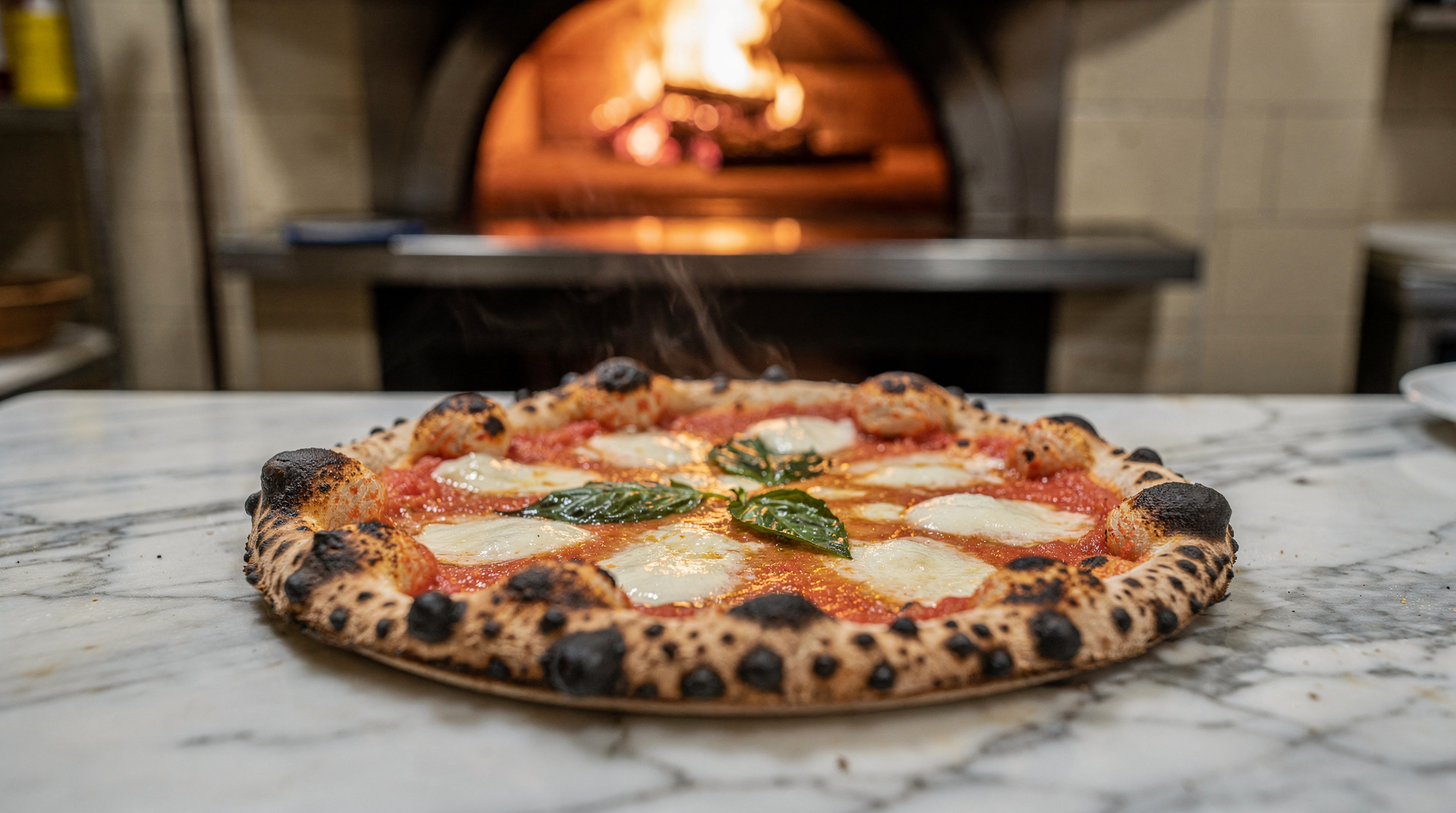
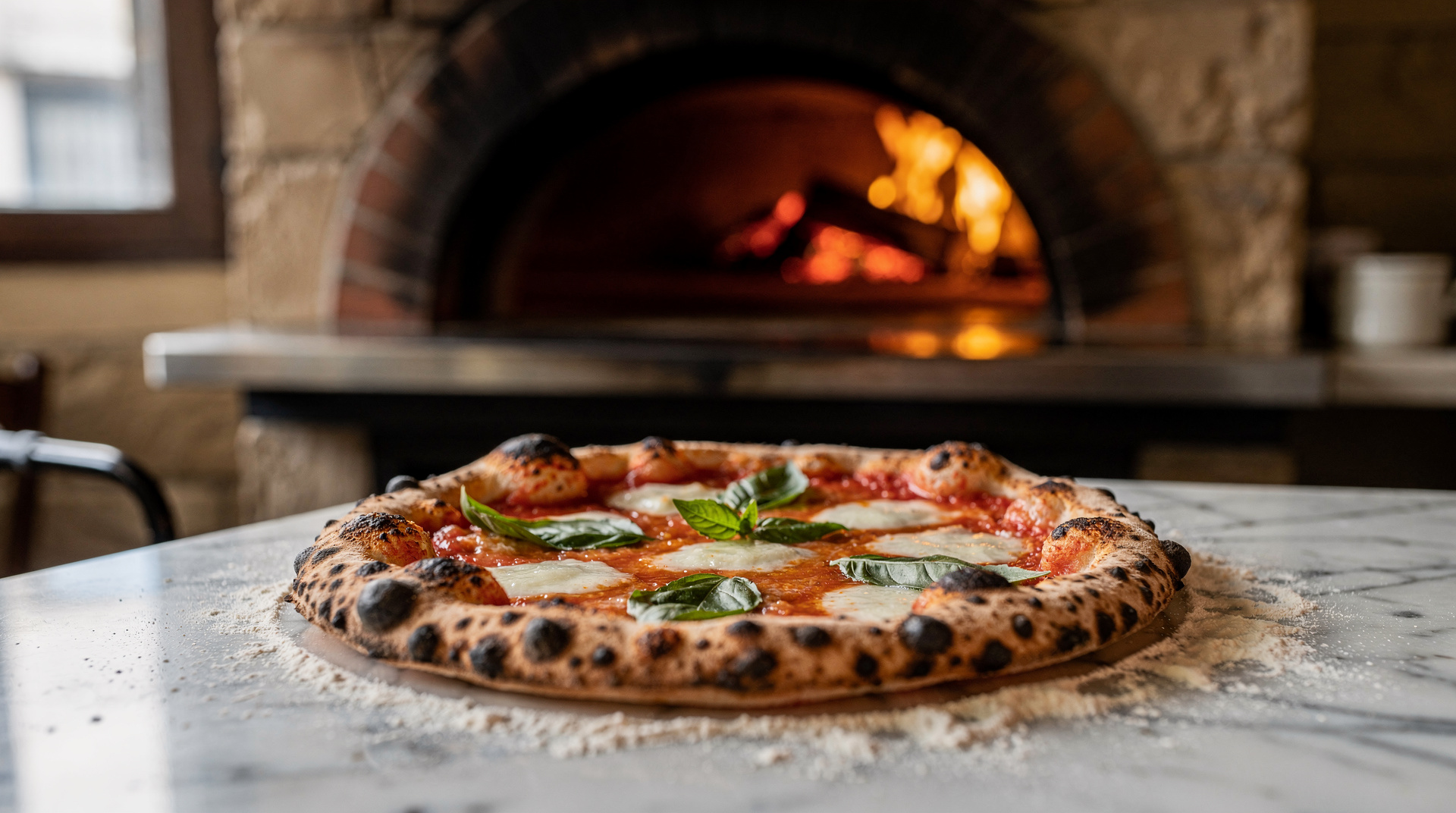
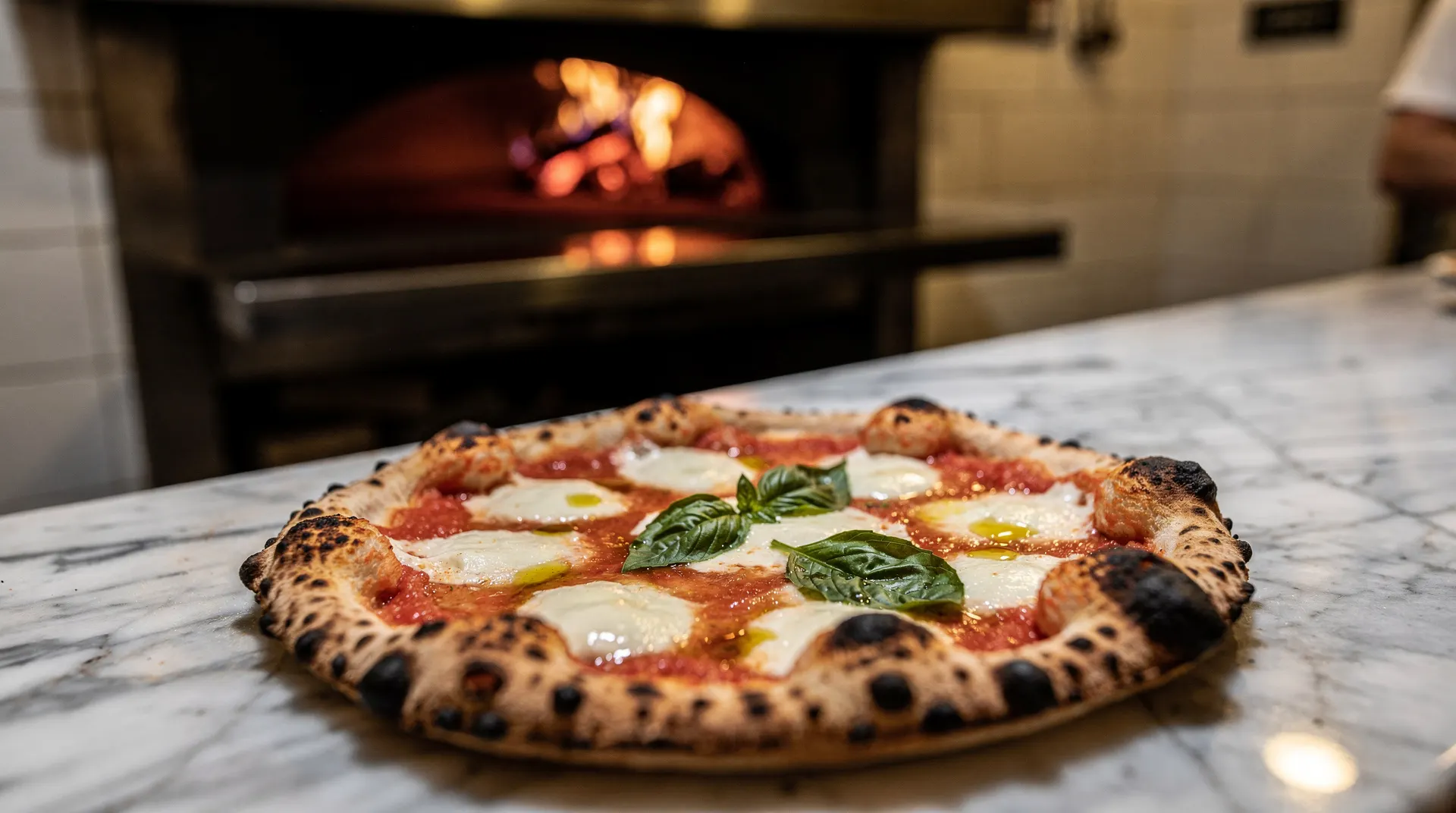
It is very good. The dough is chewy and blistered, the San Marzano tomato sauce acidic and bright, the fior di latte applied in a restrained hand. The cornicione (crust edge) is puffy and unevenly charred — what pizza people call leopard-spotted.
The queue is genuine. Arrive before 12:00 or after 14:30 on weekdays. On weekend lunchtimes, waits of 45–60 minutes are normal. The online booking option (via their website) avoids the queue for a small fee — worth considering if your time is limited.
Da Michele is AVPN certified and has been since the organisation’s founding.
Pizzeria Gino Sorbillo — the highest throughput
Via dei Tribunali 32 (main branch)
Sorbillo is the most visible name in Neapolitan pizza internationally, partly because founder Gino Sorbillo is an effective media operator and AVPN advocate. The pizza is excellent and consistent. The dough is softer and more hydrated than Da Michele’s, which some prefer; the toppings are more varied, including buffalo mozzarella options (costlier).
Expect a queue. Sorbillo manages it better than Da Michele — they use a numbered ticket system and have expanded the space several times. Wait times are typically 20–35 minutes at peak hours. Prices: Margherita €7–9, buffalo variants €12–16.
Multiple branches now exist (including one in Milan and Rome), but the Via dei Tribunali address remains the reference.
Di Matteo — the street-food hybrid
Via dei Tribunali 94
Di Matteo is 50 metres from Sorbillo and offers something the others do not: a street-facing counter selling pizza fritta (fried pizza) and other fried items to eat standing up. A pizza fritta here costs €2.50–3.50. Former US President Bill Clinton ate here in 1994 during the G7 summit; photographs remain displayed inside.
The sit-down pizzas are good — not quite at the level of Da Michele or Sorbillo, but the prices are lower and the queue shorter. It is also the better option if you want a quick lunch combining a slice and street browsing along the Decumani.
Starita a Materdei — the oldest, and away from the crowds
Via Materdei 27, Materdei neighbourhood
Founded in 1901, Starita was the setting for Sophia Loren’s role as a pizza fritta seller in the 1954 film L’oro di Napoli. The pizzeria is tucked into a quieter neighbourhood north of the centro storico — 15 minutes’ walk from Via dei Tribunali or a short funicular ride up to Materdei.
Starita is particularly known for its fried pizza (pizza fritta) and its montanare (small fried dough rounds with tomato and provola). Sit-down pizzas are very good; prices are €7–10. This is where many Naples food professionals eat when they want to avoid the tourist circuit.
50 Kalò — dough as a technical obsession
Piazza Sannazaro 1, Mergellina
Ciro Salvo at 50 Kalò is widely cited by food critics as making the best dough in Naples. His approach emphasises long fermentation (24–48 hours) and high hydration, resulting in a pizza that is notably lighter and more digestible than most. The pizzeria opened in 2014 and has maintained a high reputation without the century-old fame of the others.
Located on the Mergellina waterfront (near Lungomare Mergellina), it is further from the tourist concentration. Reservations are recommended for dinner; lunch is easier. Prices: Margherita €7–9, menu goes to €18–20 for premium toppings.
50 Kalò also has a London branch, but Naples is where you go for the real thing.
Concettina ai Tre Santi — the Rione Sanità standard
Via Arena della Sanità 7, Rione Sanità
Enzo Coccia’s second generation has made this the flagship of the Rione Sanità food revival. The space is welcoming without being precious, the service attentive, and the menu includes some creative toppings alongside the classics. Particularly good for groups who want a full meal rather than a quick pizza — they take reservations.
The neighbourhood context is also part of the experience: the Sanità is one of Naples’ most culturally rich areas, and combining a lunch here with the Catacombs of San Gennaro or fontanelle cemetery makes for a complete afternoon.
Along Via dei Tribunali — the pizza street
Via dei Tribunali (one of the main Decumani, east–west streets of the ancient Greek and Roman grid) is to pizza what Via della Vigna Nuova is to Florentine leather. Sorbillo and Di Matteo both sit here, as do several dozen other pizzerias of varying quality.
Walk east from Piazza Dante: you will pass Pizzeria Di Matteo at number 94, Sorbillo at 32, Pizzeria Lombardi 1892 at 12. Further east, near Piazza Garibaldi, quality drops sharply as proximity to the train station increases tourist-trap density. Stick to the section between Via Toledo and Via Duomo.
The where to eat Spaccanapoli guide covers the parallel street to the south, which has its own concentration of good options.
What pizza a portafoglio actually is
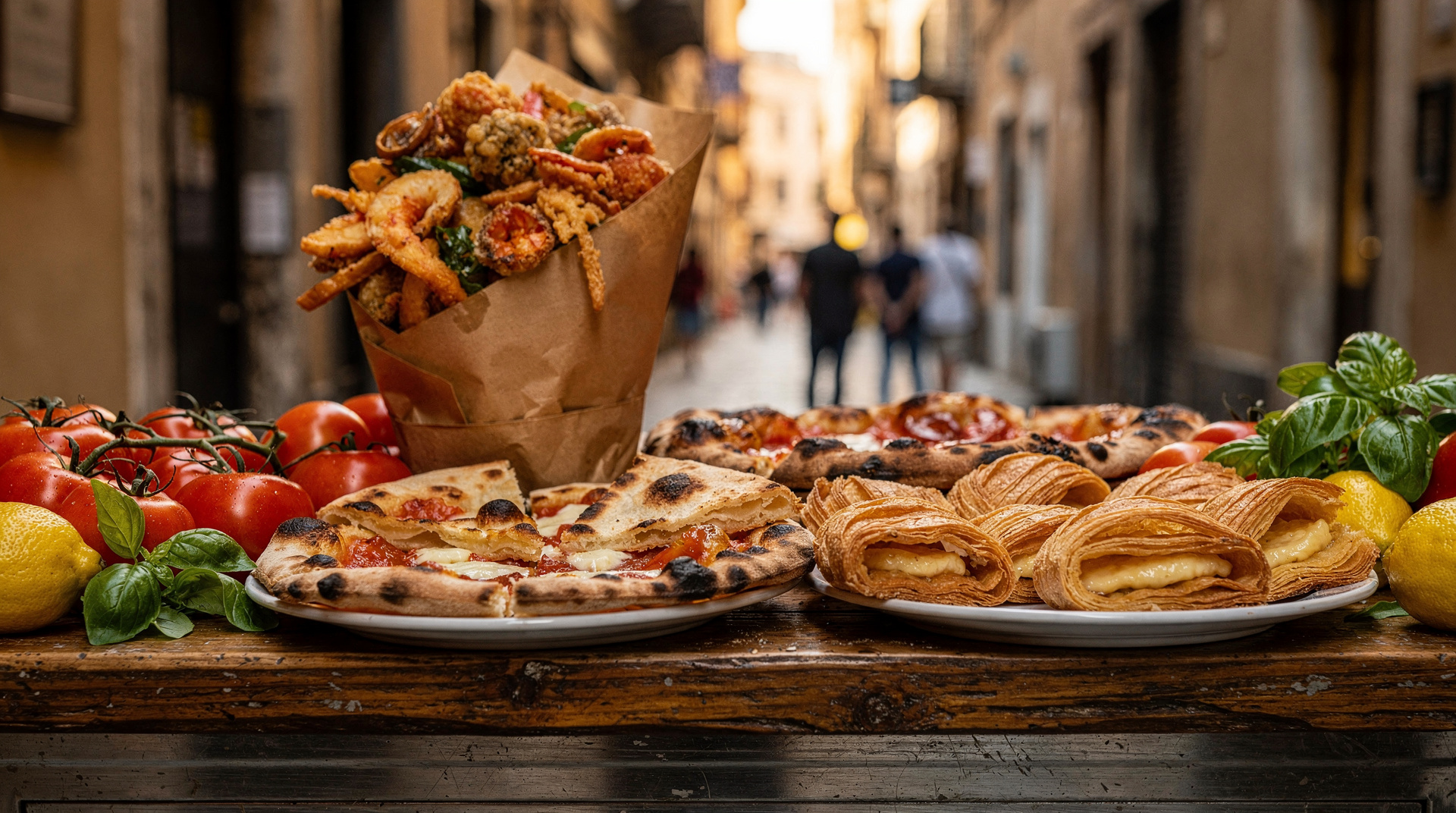
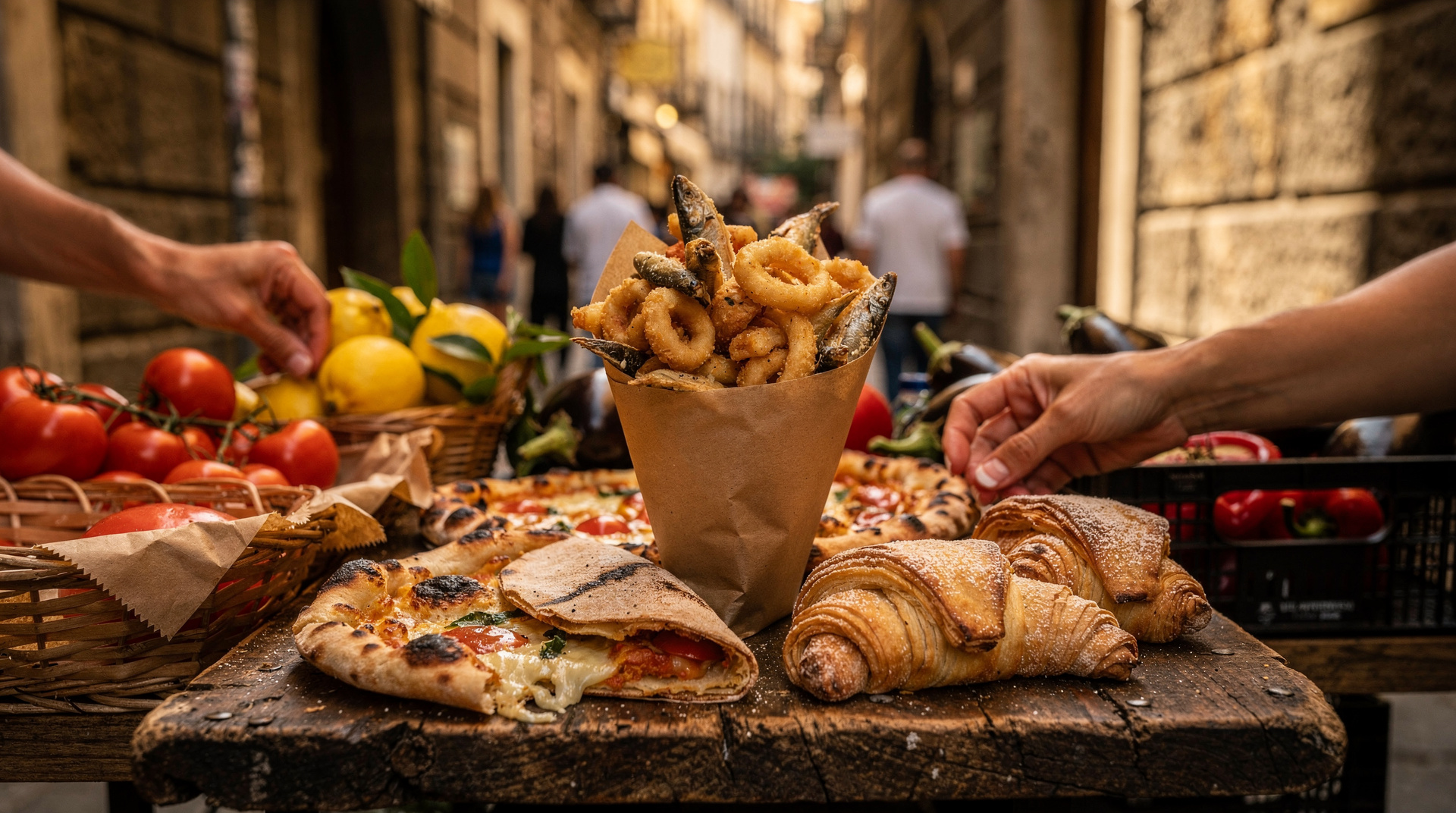
The street version of Neapolitan pizza — a portafoglio — is sold at many of the same pizzerias via a street-facing counter. A full pizza (usually Margherita or Marinara) is folded into quarters, making it hand-portable and cheaper. Cost: €2–3. Eating it while walking is entirely normal and expected; do not feel obliged to sit down and pay service.
The best street-side counter for pizza a portafoglio on Via dei Tribunali is Di Matteo’s. A morning option worth noting: Pizzeria Port’Alba on Via Port’Alba (near Piazza Dante) claims to be the world’s first pizza shop (founded 1738) and still sells excellent folded pizzas.
Pizza fritta: the fried alternative
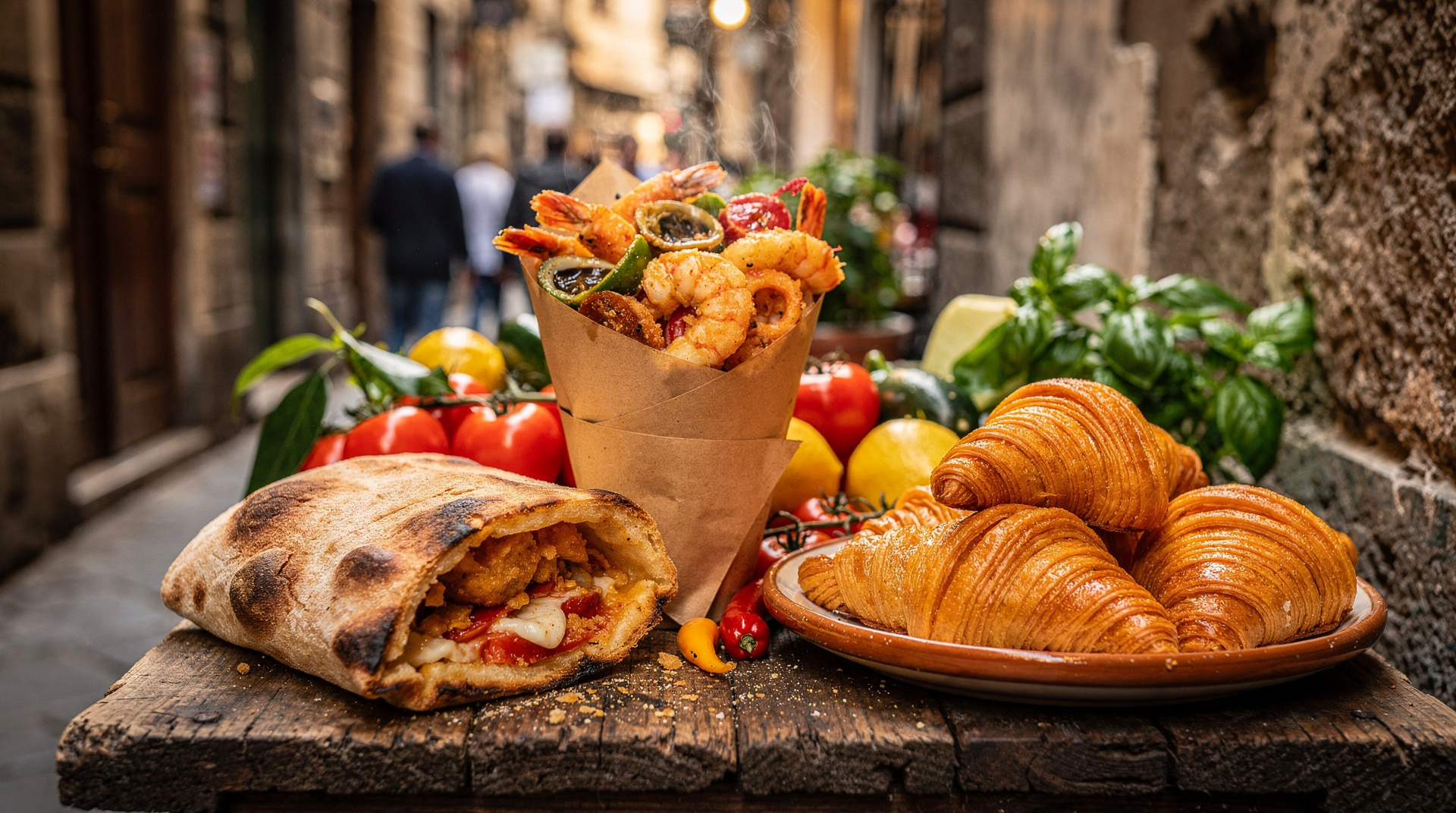
Pizza fritta predates wood-fired pizza as the dominant Neapolitan street food — it required no oven, just a cauldron of lard. A calzone-shaped dough pocket is deep-fried and filled with ricotta, cicoli (pork crackling), salami, and provola. Cost: €2.50–4. It is filling, rich, and not particularly light — one is generally enough.
Starita is the reference address. Di Matteo’s street counter also sells it. Several stalls along Via dei Tribunali and Via Spaccanapoli offer it; quality varies.
Guided food experiences
If you want to eat pizza at several places in a single session with context and narration, a food tour covers ground efficiently. The best include stops for pizza a portafoglio, pizza fritta, street food, and coffee — a full overview of the Naples street food scene in two to three hours.
Naples pizza and beyond — tasting tour with local guideFor a hands-on approach, pizza-making classes are widely available and range from serious technique workshops with a pizzaiolo to informal tourist-oriented sessions. The pizza making class guide covers what to look for.
Pizza class with a local pizzaiolo — dough, technique, mealNeighbourhoods beyond the tourist centre
Vomero: the hilltop residential district (accessible by funicular) has several solid local pizzerias with no tourist premium. Avoid the chain-looking places near the funicular stations; ask at your accommodation for the current local favourite.
Chiaia: higher prices, more aperitivo culture than pure pizza. Good for evening options combining drinks and a light meal. See the Chiaia neighbourhood guide for context.
Posillipo: the western residential ridge. A Figlia d’O Marenaro is one name that circulates locally; the prices are not particularly lower than the centro storico, but you eat with a sea view and without queuing.
Tourist traps: what to avoid
The following patterns indicate below-average quality at above-average prices:
- A menu with photos of every dish laminated in plastic
- A man standing outside actively inviting you in
- Pizza listed above €14 on a tourist-facing menu
- Location directly on Piazza Garibaldi (train station area)
- “Authentic Neapolitan pizza” in English on the signage (real places don’t need to say it)
The restaurant traps Naples guide covers this in full detail for all food categories.
Budget reality
Eating very well in Naples on pizza alone is cheap. A Margherita at Da Michele, a pizza fritta from a counter, and an espresso at a bar totals under €12. A sit-down lunch including a full pizza and a beer is €14–18 at any of the named pizzerias. The places where you overpay are specifically those targeting arrivals from the train station or cruise terminal.
The Naples food budget guide has a full breakdown across all food categories.
Choosing between the famous names: a quick comparison
For visitors with limited time who can only fit in one or two stops, the choice usually comes down to trade-offs between fame, queue length, and price:
| Pizzeria | Style | Typical wait | Price (Margherita) |
|---|---|---|---|
| Da Michele | Classic, two options only | 20–60 min | €5–8 |
| Sorbillo | Softer dough, more variety | 20–35 min | €7–9 |
| Di Matteo | Street + sit-down hybrid | 10–20 min | €6–8 |
| Starita | Pizza fritta specialist | Rarely a queue | €7–10 |
| 50 Kalò | Technical, long-fermented dough | Reservation advised | €7–9 |
| Concettina ai Tre Santi | Creative, sit-down meal | Reservation advised | €8–11 |
If you only have one meal to spend on pizza, Da Michele or Sorbillo deliver the classic experience most efficiently. If you want to avoid queuing entirely and don’t mind a short walk or a reservation, Starita, 50 Kalò, or Concettina reward the extra effort with a calmer meal and, in the case of 50 Kalò, arguably better dough.
Travelling with a group changes the calculation. Larger groups struggle at Da Michele, where tables are shared and turnover is fast — it works better for two or three people than six. Sorbillo’s numbered-ticket system handles bigger groups more gracefully, and Concettina ai Tre Santi, which takes reservations, is the most comfortable choice for a party of six or more who want to sit, order a full meal, and not be rushed. If you’re travelling solo, the counter seating at Di Matteo or a folded slice eaten while walking is the most efficient option of all.
A pizza crawl for one afternoon
If pizza is the priority for a full afternoon, a practical route starts at Di Matteo for a pizza fritta from the street counter, continues to Sorbillo or Da Michele for the sit-down classic (splitting a Margherita between two people keeps portions manageable), and finishes with an espresso nearby before continuing into the centro storico guide sights. Pace yourself — Neapolitan pizza is filling, and trying to eat three full sit-down pizzas in one afternoon is more ambitious than enjoyable. Pair the crawl with a walk through Spaccanapoli for other food stops along the same stretch.
Frequently asked questions about pizza in Naples
How much does pizza in Naples cost?
A sit-down pizza Margherita costs €5–8 at traditional pizzerias, €10–14 at smarter addresses. Pizza a portafoglio (folded slice, street style) is €2–3. Avoid tourist traps on Piazza Garibaldi where a pizza can cost €15–18.
Is it rude to fold pizza in Naples?
No — pizza a portafoglio (folded into quarters) is the traditional street-eating method. A full sit-down pizza is typically eaten with fork and knife, but there are no rules enforced.
Do I need to book a table at Da Michele?
Da Michele operates a queue system rather than reservations. Arrive before 12:00 or after 14:30 to avoid the longest waits. Peak waits on weekends can reach 45–60 minutes. They also accept online booking via their website for a small fee.
What is the difference between Margherita and Marinara?
Margherita has tomato, fior di latte (fresh mozzarella), and basil. Marinara has tomato, garlic, oregano, and olive oil — no cheese. Marinara is older, cheaper, and vegan. Both are protected by the AVPN (Associazione Verace Pizza Napoletana).
What makes Neapolitan pizza different?
Neapolitan pizza uses high-hydration dough (65–70%), 00 flour, and is cooked in a wood-fired oven at 430–480°C for 60–90 seconds. The result is a thin, soft, slightly charred base with a puffy, leopard-spotted crust (cornicione) and a wet, saucy centre. It is not meant to be crisp.
Are there good pizzerias outside the centro storico?
Yes. Concettina ai Tre Santi (Rione Sanità) is excellent and less touristy. 50 Kalò (Mergellina) is considered one of the best in the city for dough quality. Starita (Materdei) is the oldest and known for pizza fritta.
What is AVPN certification?
The Associazione Verace Pizza Napoletana (founded 1984) certifies pizzerias that follow strict traditional rules — San Marzano tomatoes, fior di latte or buffalo mozzarella, specific dough ratios, wood-fired oven only.
Are tourist trap pizzerias easy to spot?
Yes. Be suspicious of laminated menus with photos, a host standing outside, pizza listed above €14, and a location directly on Piazza Garibaldi. The best pizzerias do not need to advertise on the street.
Frequently asked questions about Where to eat pizza in Naples
How much does pizza in Naples cost?
Is it rude to fold pizza in Naples?
Do I need to book a table at Da Michele?
What is the difference between Margherita and Marinara?
What makes Neapolitan pizza different from Roman or New York style?
Are there good pizzerias outside the centro storico?
What is AVPN certification?
Are tourist trap pizzerias easy to spot?
Top experiences
Bookable activities with verified prices and instant confirmation on GetYourGuide.