Restaurant traps in Naples — and how to avoid them
A Taste of Napoli: Food Walking Tour with Local Tour Guide
What are the most common restaurant traps in Naples?
The main traps are undisclosed fish priced by weight, inflated coperto charges, tourist menus near major sights, touts steering you to commission restaurants, and bills with phantom charges. A genuine Neapolitan trattoria has a short handwritten menu, a coperto of 1–2 €, prices posted visibly, and a local clientele. Pizza Margherita in a real pizzeria costs 5–8 €.
Quick answer: The most common restaurant traps in Naples are fish priced by weight without warning, inflated coperto charges, tourist menus near major sights, and bills with invented extras. A reliable escape: find a busy local trattoria two streets away from any landmark, check that prices are displayed, and ask how the fish is priced before ordering.
| Main risk | Fish priced “al chilo”, inflated coperto, tourist menus |
| Fair coperto | Around €1–2 per person |
| Safe pizza price | Around €5–8 for a Margherita |
| Highest-risk streets | Via dei Tribunali (tourist stretch), Piazza Garibaldi, waterfront |
| Simple rule | Walk two streets off any landmark for better food, similar price |
What you are actually paying for
Naples has one of Italy’s most robust food cultures — genuine pizza, excellent fried street food, and no-frills trattorias serving real Campanian cooking at honest prices. It also has a concentrated tourist economy around a handful of well-known streets and landmarks, where some restaurants operate on the assumption that you will not be back.
The two environments exist side by side, sometimes on the same block. Understanding the difference is the most useful thing you can do before eating out in the city.
The coperto: fair vs abusive
The coperto (cover charge) appears on nearly every restaurant bill in Naples. It covers bread placed on the table, napkins, and notionally the use of the table. It is legal when the restaurant lists it on the menu.
What is fair: 1–2 € per person. At this level, coperto is a normal cost of sitting down in Italy and should be budgeted as such.
What is a warning sign: coperto of 3–5 € per person at a mid-range restaurant. At the high end (€40+ per-head dining), a higher coperto can be justified. At a place selling pizza for 8 €, a 4 € coperto per person is extractive.
What is not acceptable: a coperto that is not listed on the menu, or a service charge added as a separate line — neither of which you are required to pay. Ask to see the menu entry for coperto if you are querying a charge. Italian consumer law requires it to be disclosed before the meal.
If you are charged for bread you did not touch or did not want, you can politely decline to pay for it. Ask for the bread to be removed at the start if you prefer.
The “fish of the day” weight trap
This is the most financially significant trap in Neapolitan restaurants — the one most likely to result in a genuinely shocking bill.
Fish is frequently priced al chilo (per kilogram) or al etto (per 100 grams) on Italian menus. The number printed on the menu is not what you pay — it is the unit price, and the final charge depends on the weight of your portion.
A worked example: Sea bass listed at 28 €/kg. A standard serving portion is 350–450 grams. Your actual cost before coperto, bread, wine, and water: 9.80–12.60 €. That is not necessarily exploitative — but if you did not know the fish was priced by weight, you may have compared it mentally to a fixed-price secondo at 14 € and assumed it was cheaper.
The trap is not the pricing model — it is the failure to disclose it. Some tourist-facing restaurants list fish with no unit indicator, display an attractively low number (7 €, 9 €), and reveal at the bill that this was a per-100g price.
How to protect yourself: Before ordering any fish listed without a clear fixed price, ask: “Is this al chilo, or is it a fixed price?” A reputable restaurant will confirm upfront and may offer to weigh the fish before cooking if you ask.
Tourist menus near major sights
The pattern is consistent across Naples: in the immediate vicinity of the Duomo, the entrances to Spaccanapoli, the waterfront between Castel Nuovo and the ferry port, and along Via dei Tribunali near its tourist-heavy stretches, restaurants display laminated menus in multiple languages with a menù turistico option.
These menus offer apparent value — a two-course meal plus wine for 12–18 € — but the quality tradeoff is significant. Common features:
- Pasta made from dried industrial stock, not fresh
- Sauces from jars
- Pizza from pre-frozen bases or low-quality dough
- House wine from cartons or bag-in-box
- Portions calibrated for rapid throughput, not satisfaction
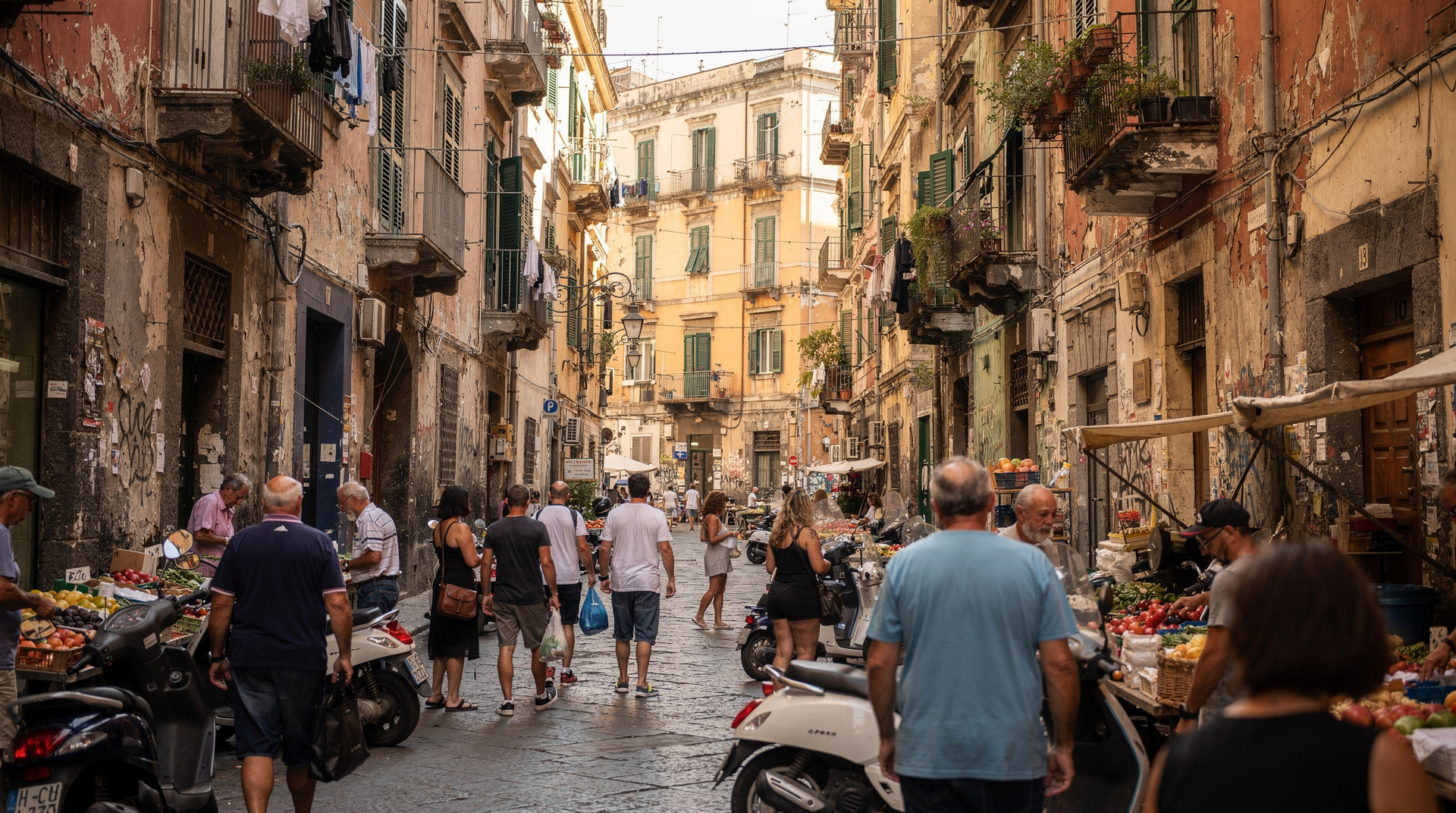
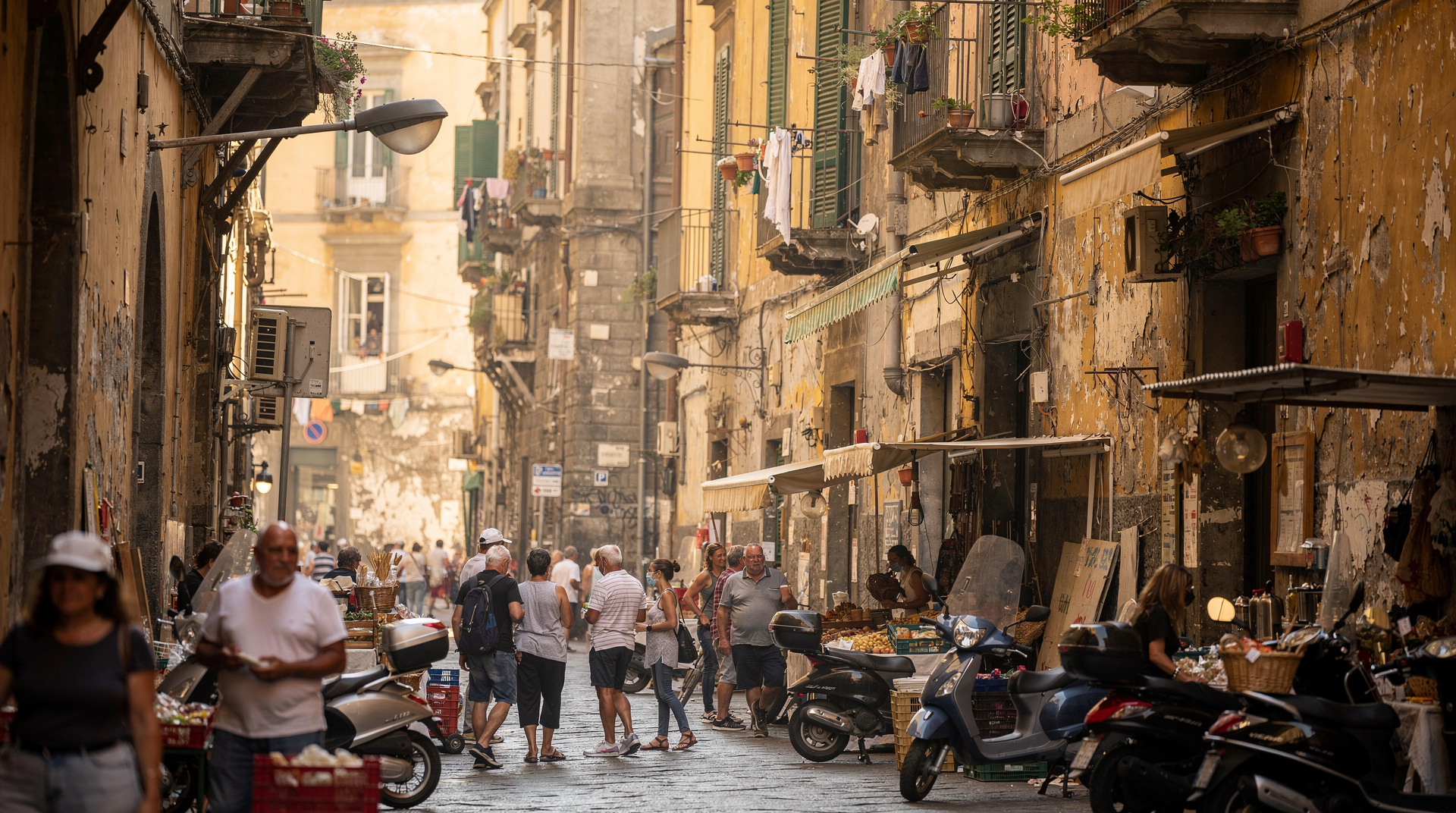
A Neapolitan does not eat in these restaurants. Moving one or two streets off the main tourist path almost always produces better food for similar or lower prices. The difference between a restaurant on the Spaccanapoli main drag and one on a parallel street 50 metres away can be dramatic.
Exception: some tourist menus are legitimate value propositions — a family trattoria that happens to offer a set lunch to attract passing trade. The markers of a genuine offer: short handwritten menu insert, no tout outside, mainly Italian customers, no plastic display boards visible from the street.
How to spot a real Neapolitan restaurant
There is no single foolproof indicator, but the following cluster reliably points towards a genuine local trattoria or pizzeria:
Positive signals:
- Menu is short — 6–10 items per section — and changes with the season
- Prices are displayed in the window or inside, not hidden or obscured
- Majority of customers are speaking Italian
- The restaurant is full at local dining hours: lunch 13:00–14:30, dinner 20:30–22:30
- No one is standing outside soliciting customers
- Bill is handwritten or printed without a “suggested tip” line
Negative signals:
- Laminated, photo-illustrated multi-language menu
- Staff member at the door actively recruiting customers
- Outdoor seating facing a major landmark or tourist crowd
- Menu items in English alongside Italian with no Italian customers in sight
- Prices significantly above or below local norms without explanation
For pizza specifically, the AVPN certification (Associazione Verace Pizza Napoletana) is the gold standard. Certified pizzerias must adhere to strict dough, topping, and oven standards. The list is public on the AVPN website. Certified pizzerias in Naples include well-known names (L’Antica Pizzeria da Michele, Sorbillo on Via dei Tribunali, Di Matteo) but also smaller, less famous places worth seeking out.
A Taste of Napoli: Food Walking Tour with Local Tour GuideRabatteurs and commission restaurants
In areas heavily trafficked by tourists — around Piazza Garibaldi, near the port, on the main Via dei Tribunali tourist stretch — some restaurants employ hostlers (Italian: imbonitori) to recruit customers from the street.
These are people who stand outside or approach pedestrians and use compliments, special-offer claims (“tonight only, free dessert”), or physical steering to direct you inside. The restaurant pays them a commission — typically 10–15% of your bill — which is recovered through higher prices or, in the worst cases, items added to the bill that you did not order.
The simple rule: if someone on the street tries to guide you into a restaurant, keep walking. A full, popular restaurant does not need to recruit from the pavement.
Bill inflation: what to watch for
Inflated bills in Naples restaurants tend to fall into a few repeating patterns:
- Coperto charged at a higher rate than listed on the menu — compare the menu figure with the bill line
- Cover for bread you did not request — itemised as “pane” on the bill
- Phantom items — a bottle of water you did not order, an extra portion listed
- Fish priced per weight with the weight never disclosed — as above
- Service charge added on top of coperto — not standard practice outside high-end restaurants
What to do: Read your bill in detail before paying. Itemise any line you do not recognise. Ask the waiter to explain any charge that was not on the printed menu. If a charge is on the bill that was not disclosed in advance and is not on the menu, you are legally entitled to refuse it. Keep the exchange calm — most discrepancies at genuine restaurants are errors, not deliberate fraud.
Frozen pizza in tourist zones
Not all pizza in Naples is made from fresh dough. In areas with very high tourist density and rapid table turnover, some restaurants use partially pre-cooked or frozen bases. This is not unique to Naples but it is particularly jarring given the city’s status as the birthplace of pizza.
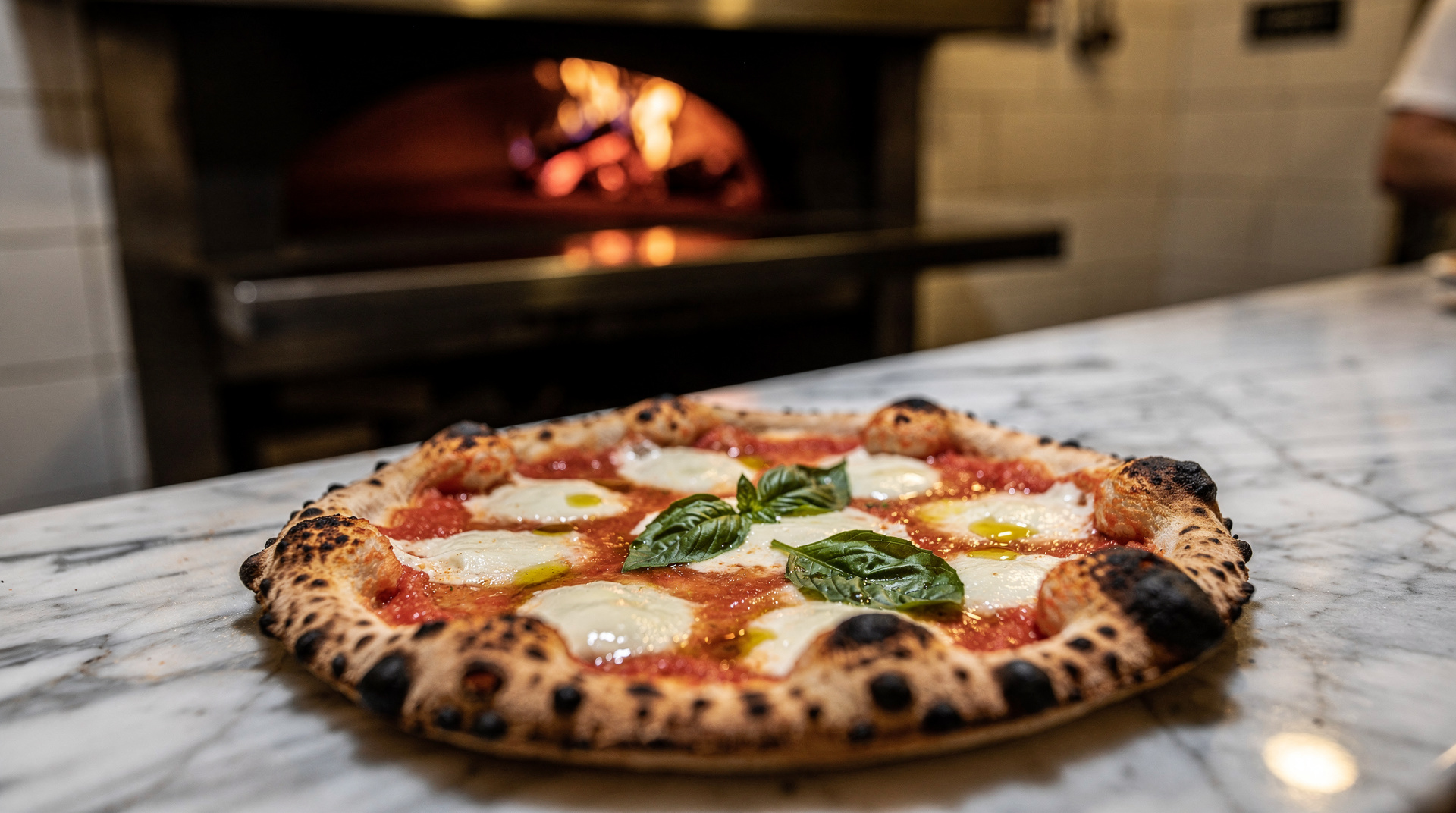
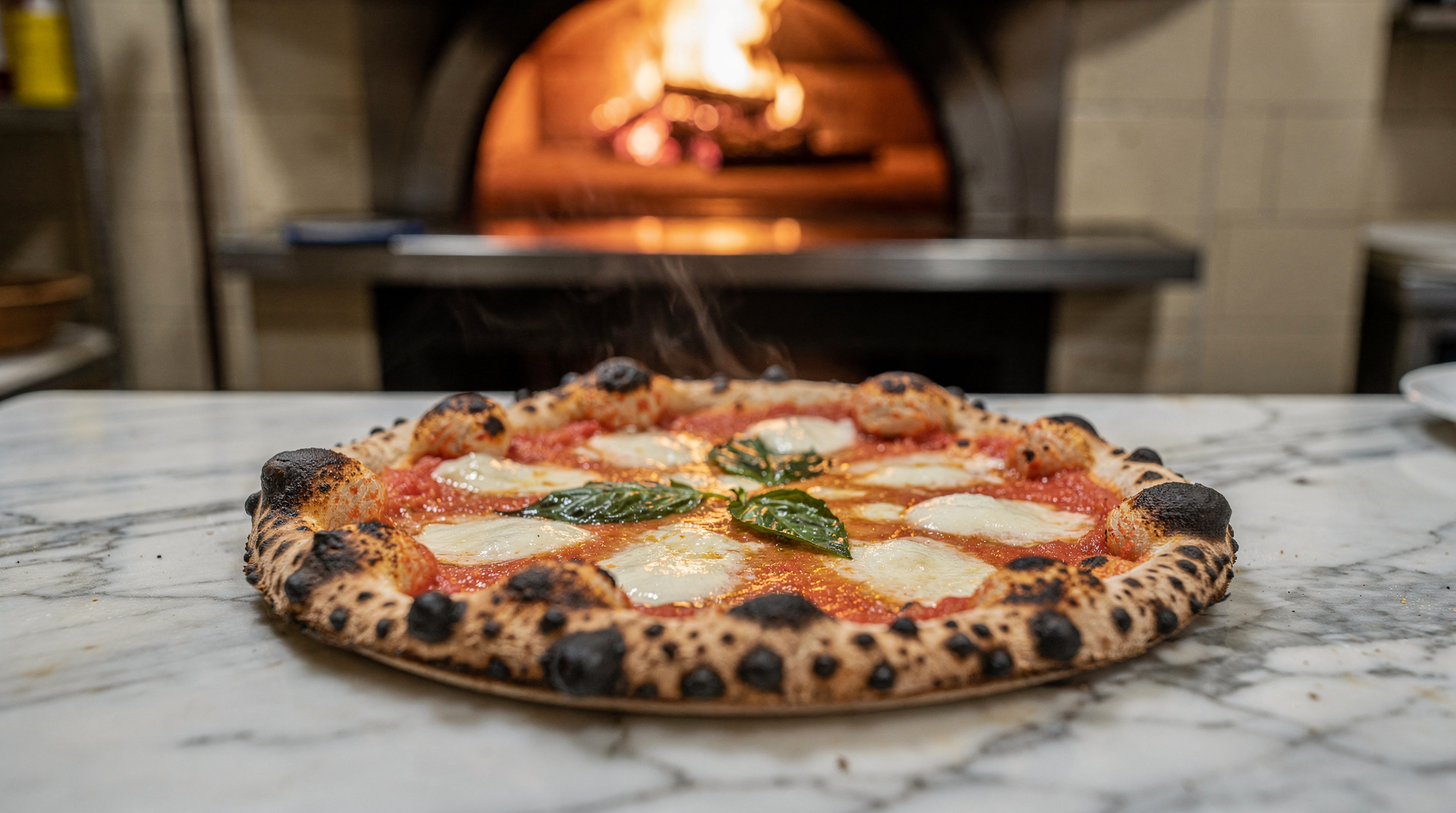
Signs of a substandard pizza: uniform, perfectly circular shape with no char variation on the cornicione; base that is uniformly thin and stiff rather than having a puffy, irregular edge; toppings that taste processed rather than fresh.
Price is not always the differentiator — a tourist-zone restaurant can charge 10–12 € for a mediocre pizza while a proper pizzeria nearby charges 6–8 € for something genuinely good. Use the queue and the local clientele as your primary quality signal. If Neapolitans are waiting 20 minutes for a table, the pizza is real.
High-risk streets and areas vs reliable alternatives
Highest risk for the traps described above:
- Via dei Tribunali (the most tourist-facing stretch, roughly between Via Duomo and Piazza del Gesù)
- The immediate waterfront strip between Castel Nuovo and Molo Beverello
- Piazza Garibaldi and its surrounding streets
- Via Toledo in the tourist-facing blocks below Piazza Dante
Lower risk — more likely to find genuine local restaurants:
- The Quartieri Spagnoli (Spanish Quarter) grid west of Via Toledo — small, family-run trattorias, less tourist-oriented
- Via Pignasecca and its market surrounds — working-class food culture, honest prices
- The Vomero hill neighbourhood — residential, local restaurants serving the neighbourhood
- Chiaia between Via Filangieri and Via dei Mille — upmarket but genuine, local clientele
- Side streets off Spaccanapoli towards the Decumano Superiore
The where-to-eat-spaccanapoli guide covers the specific streets around the main tourist artery with more granular recommendations.
Realistic price benchmarks for 2026
Use these as a calibration reference. Significantly above these figures at a mid-range establishment is worth questioning; well below them in a tourist area is a warning sign for quality.
| Item | Fair range |
|---|---|
| Pizza Margherita (sit-down pizzeria) | 5–8 € |
| Pizza Margherita (famous/celebrated pizzerias) | 7–10 € |
| Pasta primo at a trattoria | 8–12 € |
| Meat secondo | 10–18 € |
| Fish secondo (fixed price) | 14–25 € |
| House wine (carafe, 0.5L) | 4–7 € |
| Still or sparkling water (0.75L) | 2–4 € |
| Coperto | 1–2 € per person |
| Coffee at the bar | 1.00–1.20 € |
| Full meal (primo + secondo + wine + water + coperto) | 20–30 € per person |
A three-course meal with wine at a tourist-zone restaurant charging above these benchmarks is almost certainly not offering proportionally better quality — it is charging for the location.
Tipping: what is actually expected
Naples has its own relationship with tipping that does not match Northern European or North American norms.
Neapolitans tip modestly and selectively. At a bar, they might leave 10–20 cents. At a trattoria for a good meal, they might leave 1–3 € total on the table. A 10% service tip would strike most Neapolitan diners as unusual.
If you have been charged a coperto, the service component is notionally included. You are not obliged to tip additionally.
Tourist-facing restaurants in Naples have absorbed North American tipping expectations in recent years and sometimes present bills with a “gratuity” suggestion, or servers ask directly. This is not standard Neapolitan practice. Leave what you judge to be appropriate — or nothing — without obligation. See naples-coffee-culture for more on how payments work at the bar.
For a broader view of tourist traps beyond restaurants, see naples-tourist-traps and naples-scams-to-avoid. For budget-conscious eating across the city, naples-on-a-food-budget has the full breakdown.
Frequently asked questions about restaurant traps in Naples
Is the coperto charge compulsory?
Coperto is compulsory when listed on the restaurant menu — it is part of the contracted price of sitting down. It is not payable if it was not displayed on the menu before you ordered. If added without prior disclosure, you can politely decline. A fair coperto in Naples is 1–2 € per person; anything above 3 € at a mid-range establishment warrants questioning.
What is “al chilo” on a menu and why does it matter?
“Al chilo” means priced by the kilogram. A fish listed at 28 €/kg is not a 28 € dish — your final charge depends on the weight of your specific portion, typically 350–450g. Always ask before ordering fish whether the price is fixed or by weight. A reputable restaurant will tell you and may weigh the fish before cooking if you request it.
Are tourist menus (menù turistico) ever worth ordering?
Occasionally, at a genuine family trattoria offering a set lunch — but rarely near major sights, where the format is typically used to sell low-cost ingredients at mid-range prices. Compare the tourist menu price against ordering individual dishes à la carte; the difference is often smaller than it appears, with better quality in the à la carte option.
How do I know if a pizzeria serves real Neapolitan pizza?
Look for: an AVPN certification (Associazione Verace Pizza Napoletana) displayed in the window; a wood-fired oven visible from the counter; a Margherita priced at 5–8 €; and a queue of local customers. The crust should have an irregular, charred cornicione (edge) and a soft wet centre. A uniform, stiff, perfectly circular pizza is a warning sign. See naples-pizza-guide for the full breakdown.
What should I do if my bill looks wrong?
Ask the waiter to itemise each line. Compare against the menu prices and your memory of what was ordered. Identify specifically which item or charge you are questioning. Keep the exchange factual and calm — many discrepancies are errors. If a charge is not on the menu and was not disclosed before the meal, you are not legally required to pay it. Paying by card gives you a record; always get a receipt (scontrino).
Which areas of Naples have the most reliable restaurants?
The Spanish Quarter (Quartieri Spagnoli) west of Via Toledo, the Vomero residential neighbourhood, the Chiaia district, and streets around the Pignasecca market are all lower-risk than the immediate surroundings of Via dei Tribunali (tourist section), Piazza Garibaldi, and the waterfront near the ferry port. Two streets off any landmark typically produces noticeably better value. See best-restaurants-naples for specific recommendations by neighbourhood.
Eating with a guide instead of navigating it alone
If you would rather not build your own mental map of high-risk streets, a guided food walk removes the guesswork entirely — a local guide takes you to vetted stops, and the tastings are already priced in, so there is no bill-reading required at all.
Naples street food tour with a local guideThis is also a reasonable way to spend your first evening in the city before you have learned to read the signals yourself — see naples-first-48-hours for how it fits into an arrival itinerary, and naples-street-food-guide for the stalls and stands worth seeking out on your own afterwards.