Catacombs of San Gennaro: Naples' early Christian underground
Naples: Catacombs of San Gennaro Entry Ticket & Guided Tour
Duration: 1h
What are the Catacombs of San Gennaro in Naples?
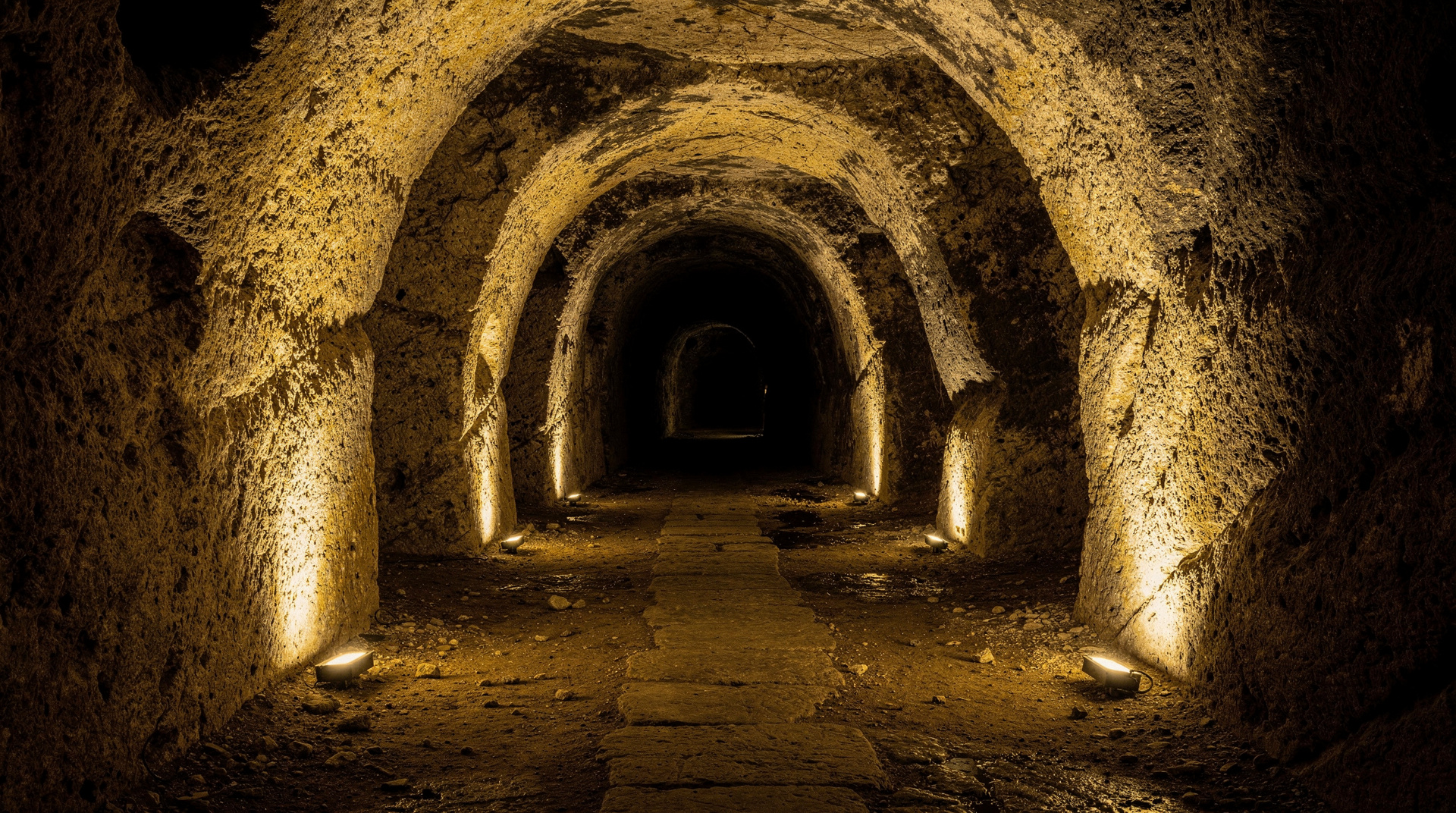
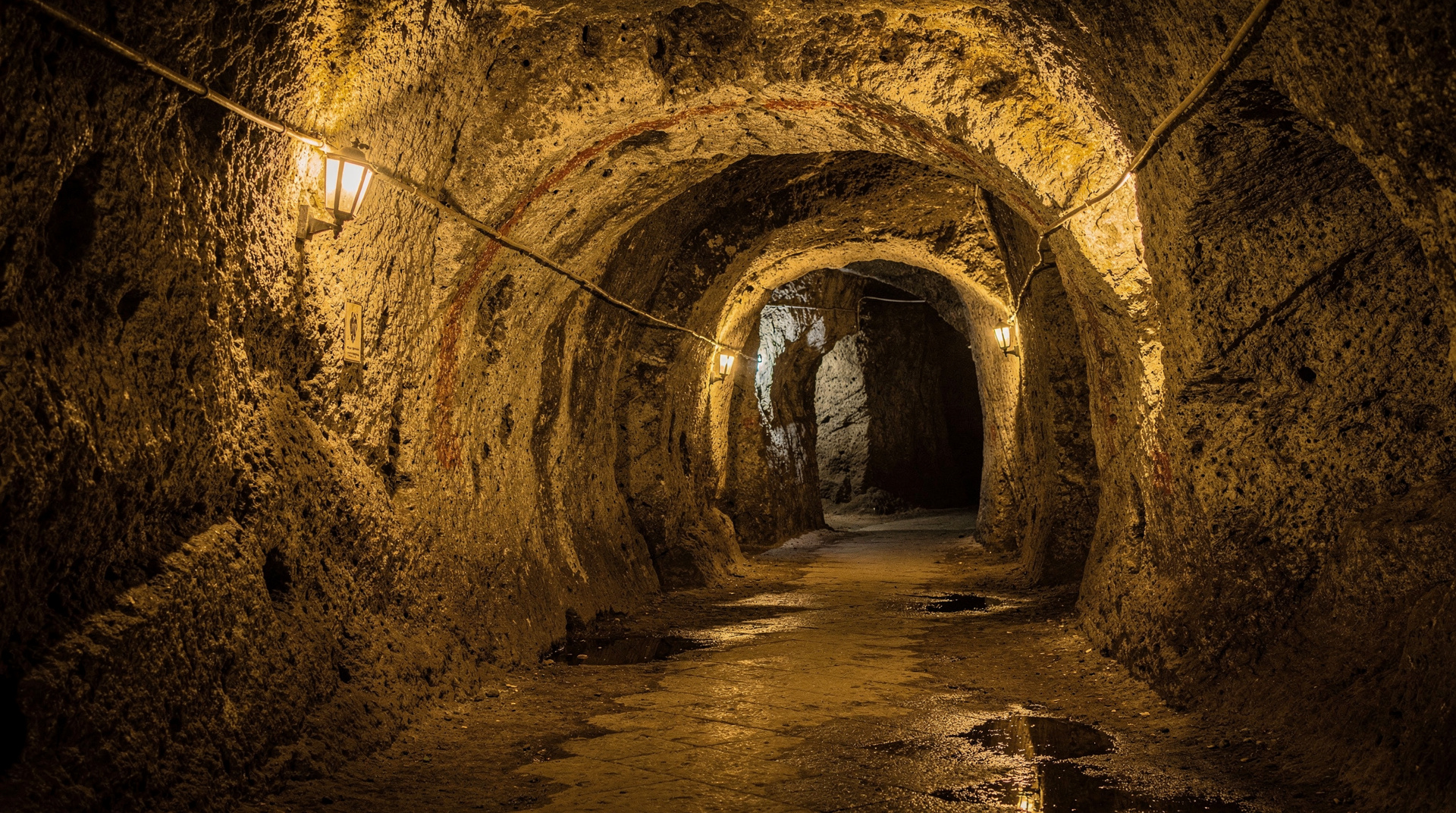
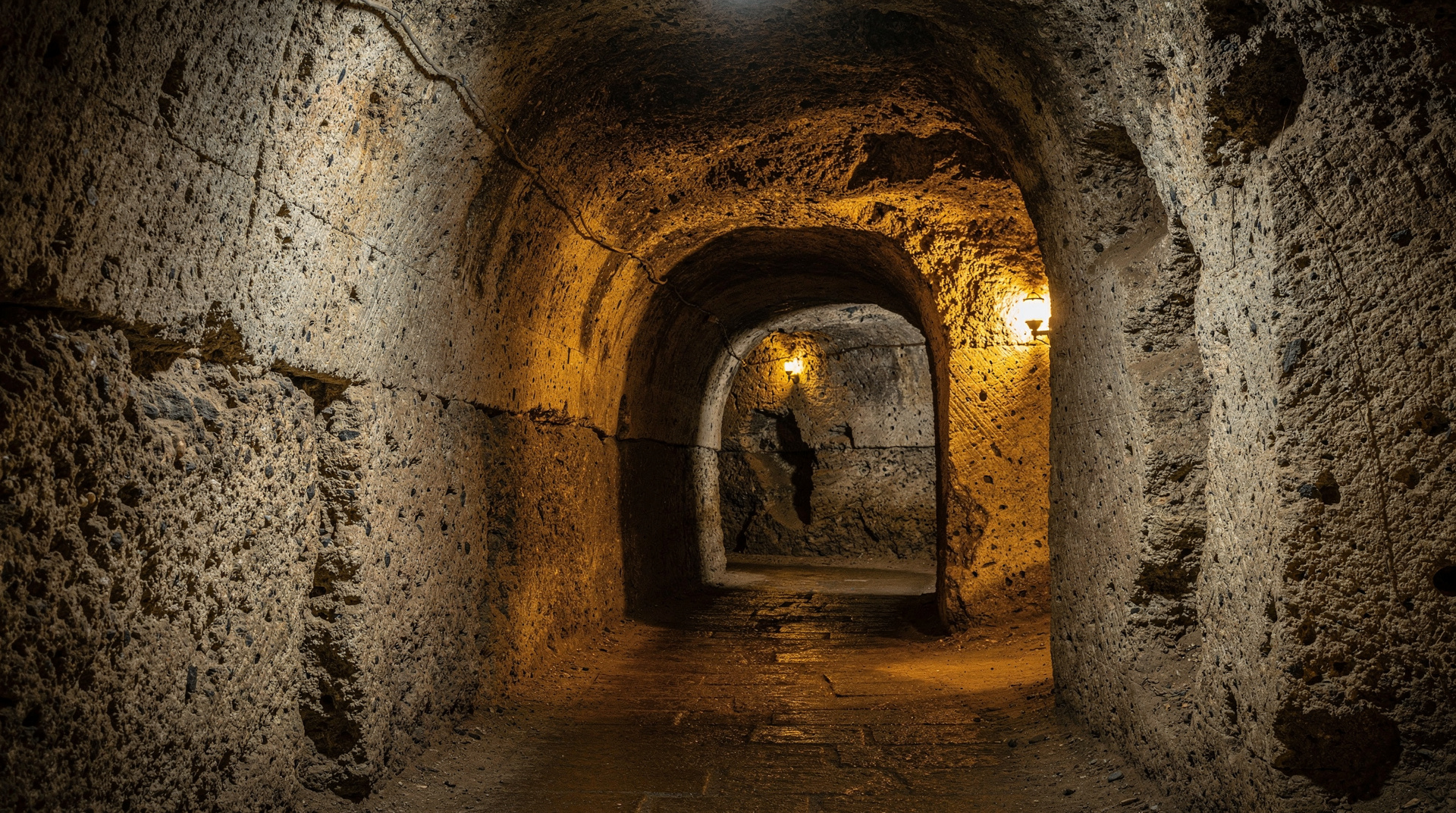
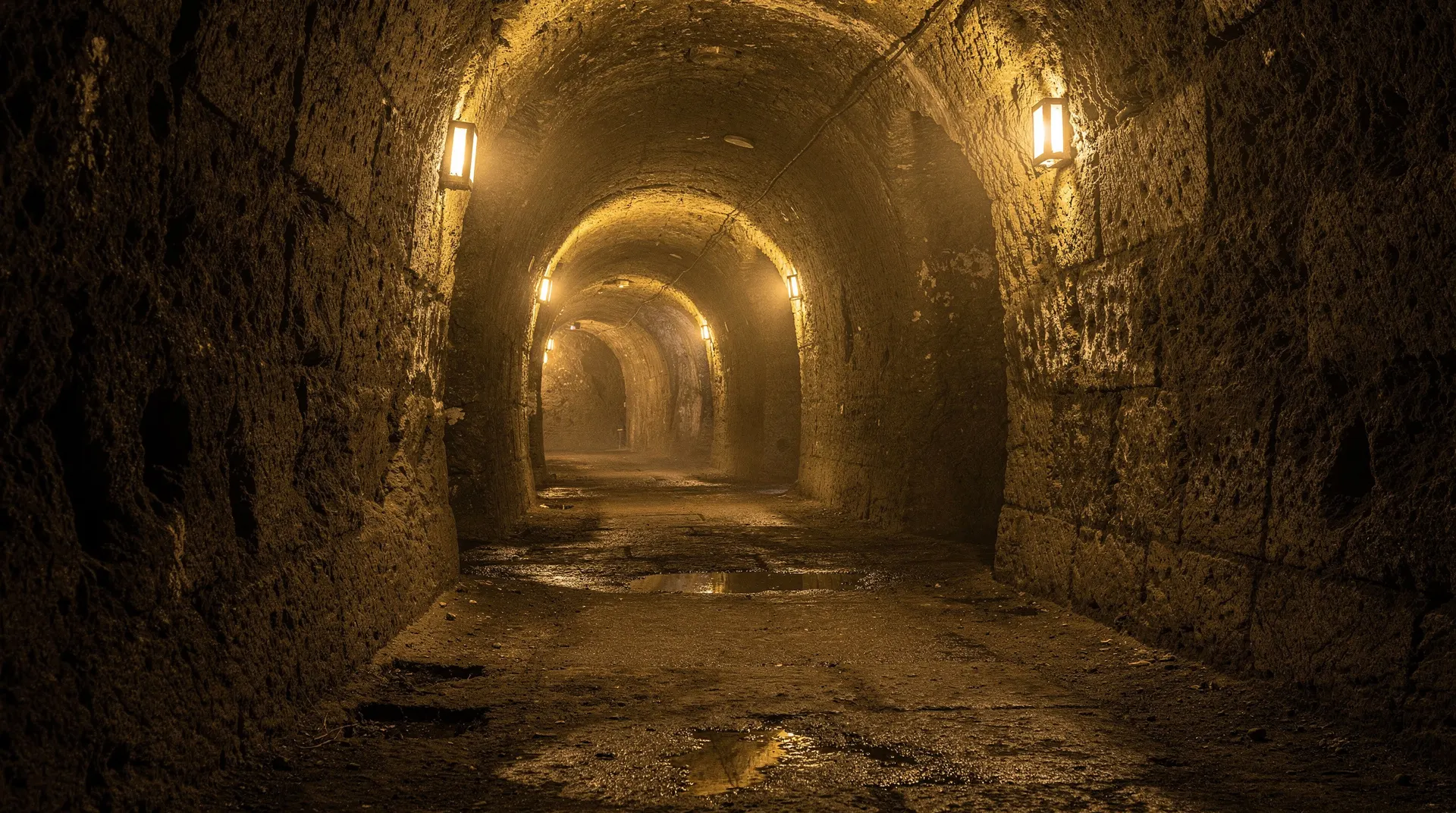
The Catacombs of San Gennaro are an early Christian burial complex under the Rione Sanità hill, with two catacomb levels dating from the 2nd to 5th centuries AD. They contain some of the oldest intact Christian frescoes in Italy and the earliest known portrait of San Gennaro, Naples' patron saint. Tours last 1 hour and cost €9.
| Where | Basilica di San Gennaro extra Moenia, Rione Sanità |
| Cost | €9 solo, €15 combined with San Gaudioso |
| Time needed | 1 hour (2.5–3 hours for the wider Sanità) |
| Getting there | Metro Line 1 to Materdei, then 15-min walk downhill |
| Best time | Weekday mornings; book ahead for weekends and summer |
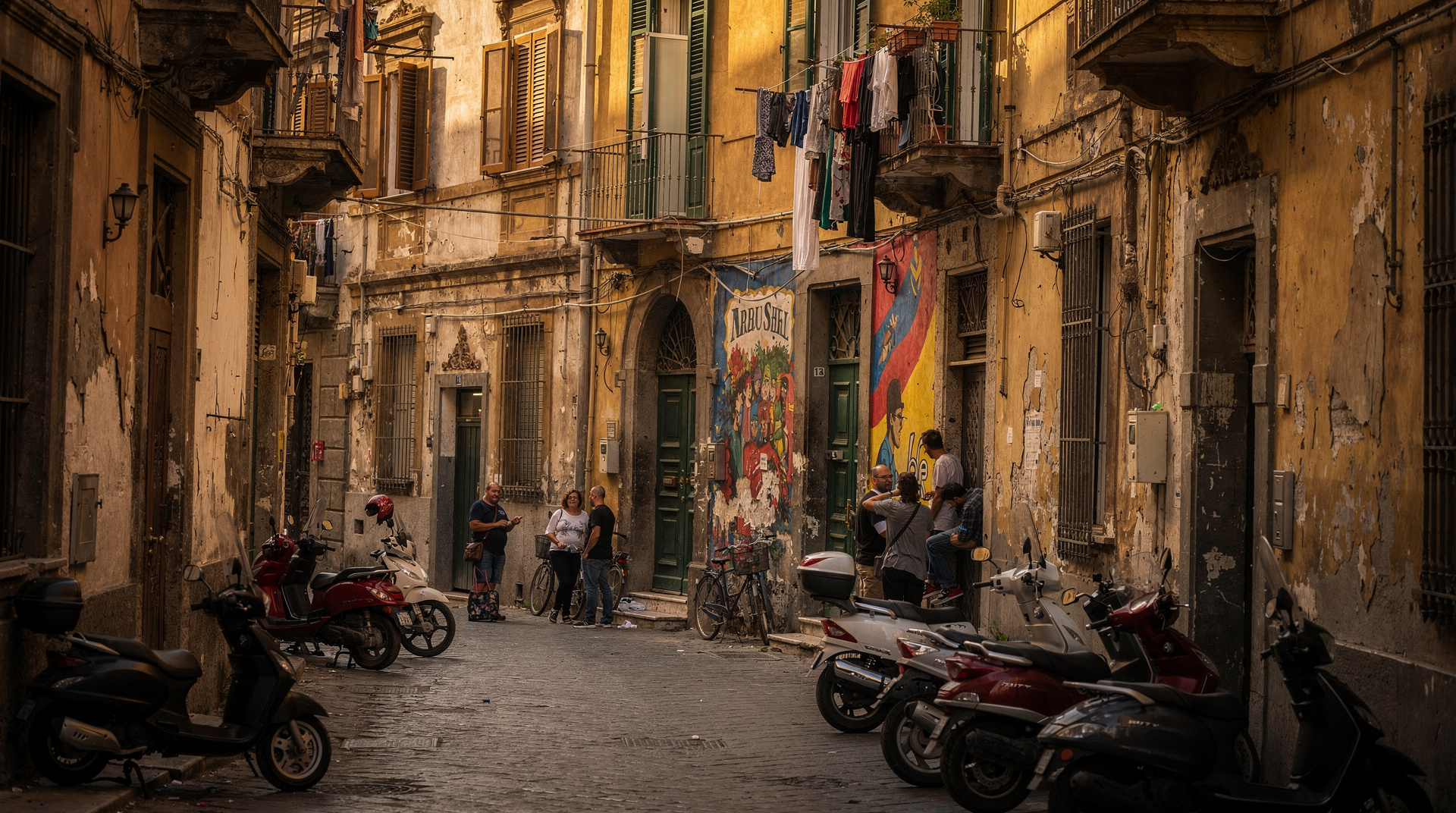
The Rione Sanità sits in a basin below the Capodimonte hill, north of the centro storico. For much of its modern history it was considered one of Naples’ most difficult neighbourhoods — economically marginalised, bypassed by the city’s official tourist circuit, famous chiefly for its association with the Camorra. What the neighbourhood also contains, largely invisible to visitors until recently, are two catacomb complexes that rank among the most important early Christian archaeological sites in Europe.
The Catacombs of San Gennaro are the larger and more significant of the two. The history preserved inside them — in frescoes, burial inscriptions, and the architectural evolution of the chambers themselves — covers the transition of Naples from a pagan Roman city to a Christian one, a process that took roughly two centuries and left visible traces at every stage.
Origins: before Christianity was legal
The earliest burials in the San Gennaro complex predate the Edict of Milan (313 AD), the imperial decree that legalised Christianity across the Roman Empire. The 2nd-century burials here were Christian, but practised discreetly on the edge of a pagan city — the complex was outside the city walls, on private land belonging to a Christian family of rank. The form is Roman: loculi (rectangular burial slots) cut into tufa walls, sealed with terracotta tiles or marble slabs. The content distinguishes them: the Greek inscription Christos, a chi-rho symbol, a fish — markers of a faith not yet publicly acceptable.
By the 3rd century, the complex had expanded into two levels. The lower catacomb is the older; the upper, larger level was cut above it as demand grew. This two-level structure is unusual for Italian catacombs of the period — most expand laterally rather than vertically. The vertical expansion reflects the quality of the tufa here: dense and structurally reliable enough to support a substantial structure above.
The arrival of San Gennaro
Januarius — San Gennaro — was Bishop of Benevento and was martyred near Pozzuoli around 305 AD during the Diocletianic persecution. His relics were moved to Naples sometime in the 5th century and placed in the upper catacomb level. The decision transformed the site’s status entirely: it became a bishop’s burial complex and a major pilgrimage destination.
The earliest known portrait of San Gennaro is painted in the catacomb — a 5th-century fresco showing the bishop in formal episcopal vestments. The portrait was made within living memory of people who might have known him. It is not spectacular art by Renaissance standards; it is valuable precisely because it is early — a documentary record made before the stylised iconographic conventions of Byzantine and medieval Christian art were fully established.
The bishops of Naples were buried here for several centuries following San Gennaro’s installation. The succession of episcopal tombs forms an architectural timeline: the earliest are simple arcosolia (arched niches); later ones become increasingly decorated with mosaic and fresco, reflecting the growing wealth and status of the Neapolitan church in the 5th–6th centuries.
Catacombs of San Gennaro: guided visit with English tourThe frescoes: what survives and what it shows
The fresco programme at San Gennaro is not complete — centuries of moisture, occasional floods, and periods of neglect have taken their toll. What survives is uneven: some sections are fragmentary, others remarkably well-preserved. The guide will orient you to what is original, what is later addition, and what has been lost.
Notable among the surviving frescoes:
The Good Shepherd. A recurrent early Christian image — Christ depicted as a young shepherd carrying a lamb — appears in multiple locations in the complex. The figure is classical in style, indistinguishable from pagan pastoral imagery except to eyes that knew the symbolic code. This deliberate visual ambiguity was practical in a period when open Christian symbolism was legally dangerous.
The orante figures. Upright figures in prayer posture (hands raised, palms outward) appear in niches and on tomb walls throughout. These are standardised Christian funerary images representing the soul of the deceased in a state of prayer — neither individual portraits nor generic decorations, but a specific theological statement about resurrection and intercession.
The episcopal succession portraits. The upper catacomb level contains painted portraits of bishops in the apse of what functioned as a funerary chapel. These are more individualised than the earlier images — actual faces rather than symbolic types. Their survival through fifteen centuries of darkness, seismic activity, and moisture is partly fortuitous.
The La Paranza cooperative and the neighbourhood
The catacombs are managed by the Cooperativa Sociale La Paranza — an organisation founded in 2006 by young people from the Rione Sanità specifically to develop cultural tourism as an economic alternative to the neighbourhood’s traditional informal economies. This context matters for visitors: buying a ticket here is not routing money to a distant heritage corporation. It goes directly to local employment in one of Naples’ most complex neighbourhoods.
La Paranza trains guides from the community, maintains the site, and is responsible for the excavation and restoration work that continues in the lower catacomb. The cooperative also manages the Catacombs of San Gaudioso and organises combined neighbourhood tours that pair the underground visit with above-ground Rione Sanità architecture and street life.
Rione Sanità: catacombs and neighbourhood folklore tourWhat makes the guided tour worth it here
The quality of interpretation at San Gennaro is notably higher than at most archaeological sites in Naples. The La Paranza cooperative specifically trains local guides in both the historical content and the neighbourhood context — the result is that good guides here tell three stories simultaneously: the early Christian history of the catacombs, the social and economic history of the Rione Sanità, and the practical story of how a community organisation rebuilt something from an abandoned heritage site.
For visitors who would normally skip guided tours — who prefer to explore independently — the catacombs are an exception. The physical space requires guidance (there is no solo access), but more importantly, the depth of interpretation available from a well-prepared La Paranza guide significantly exceeds what you can read in any text preparation. Questions about the specific bishops whose frescoes survive, the archaeological sequence of the different burial periods, and the current excavation work get real answers here rather than generic heritage-site responses.
English-speaking guides are available at set times — typically morning slots. Confirm the English tour schedule when booking via the catacombedinapoli.it website.
Getting there: the Rione Sanità access problem
The Rione Sanità sits in a bowl below the Capodimonte hill, connected to the rest of central Naples by bridges (the Ponte della Sanità and the Ponte Maddalena) that were built specifically to allow upper-city residents to travel to Capodimonte without descending into the neighbourhood. This physical geography isolated the Sanità from the 17th century onward and contributed to its social marginalisation.
For visitors arriving from the centro storico, there are two practical approaches:
On foot from Via dei Tribunali (30 minutes): Walk north up Via Miracoli or Via Supportico Lopez — the descent into the Sanità basin is steep and involves stairs.
Bus from Piazza Cavour (metro stop, 10 minutes): Bus 201 or C63 from Piazza Cavour. Get off at the Via Capodimonte stop near the Basilica di San Gennaro extra Moenia.
Metro + walk: Line 1 to Materdei, then 15-minute walk downhill.
The Basilica entrance is at Via Capodimonte 13. The catacomb entrance is through the basilica.
Combining San Gennaro with the rest of Rione Sanità
A full Rione Sanità half-day can include:
- Catacombs of San Gennaro (1 hour)
- Walk down into the Sanità basin — the architecture of the 17th and 18th-century palazzi lining Via Sanità is exceptional: noble family mansions built when this was an aristocratic suburb outside the city proper. The Palazzo dello Spagnuolo (Via Vergini 19) has a famous double-ramped staircase visible from the courtyard.
- Basilica di Santa Maria della Sanità — the 17th-century church built over the entrance to the Catacombs of San Gaudioso.
- Catacombs of San Gaudioso (45 minutes, combined ticket with San Gennaro)
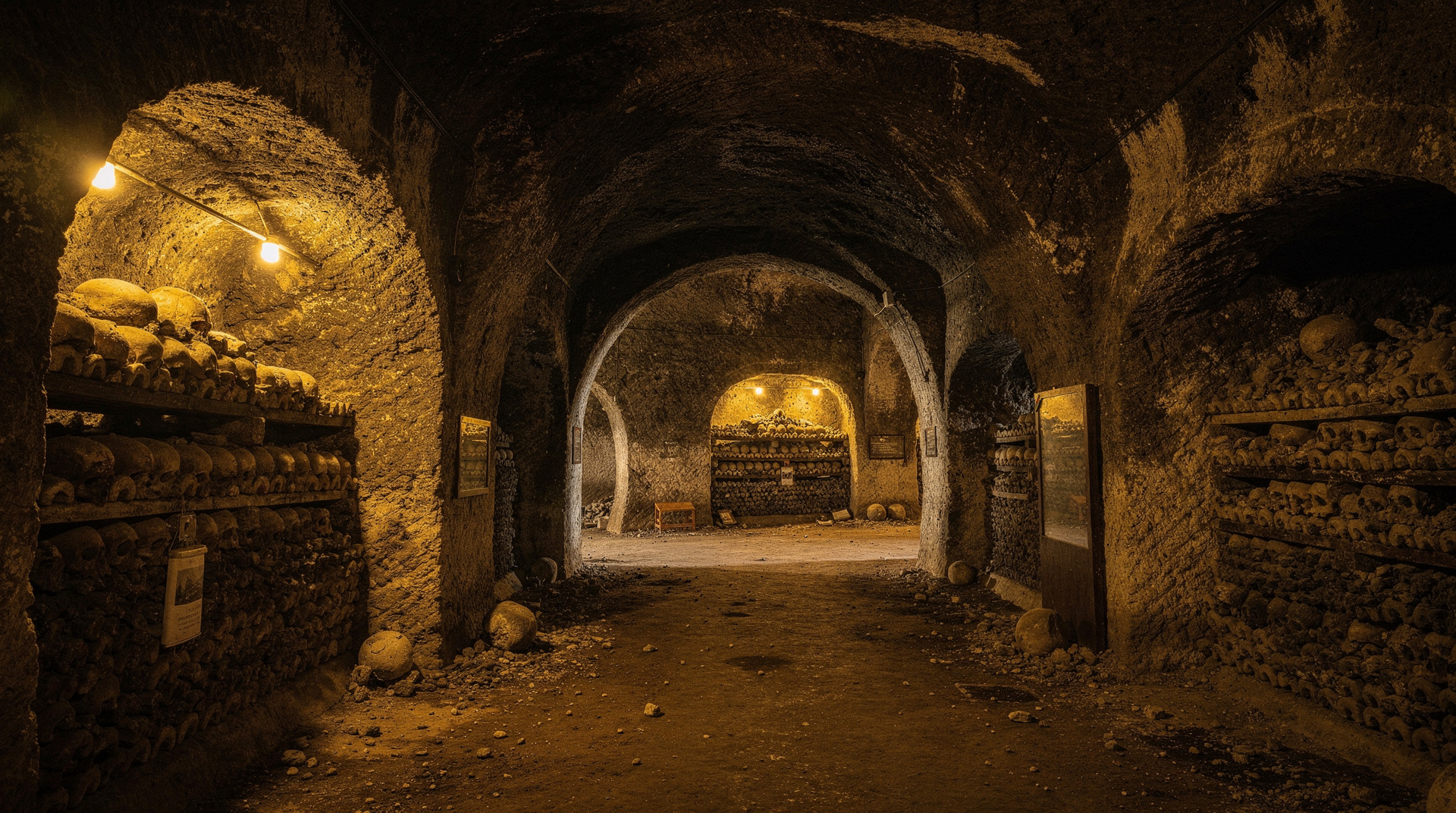
- Fontanelle ossuary — 10 minutes’ walk north on Via Fontanelle
This sequence covers the entire underground and architectural heritage of the Sanità without retracing steps.
Why the frescoes survived when so much early Christian art was lost
The survival of the San Gennaro frescoes across roughly seventeen centuries is not simply luck. Several factors combined to protect them: the catacomb was cut into dense, stable tufa rather than softer rock prone to collapse; the site remained an active pilgrimage destination for centuries after the frescoes were painted, meaning it was maintained and periodically restored rather than abandoned and forgotten; and after the relics of San Gennaro were eventually moved to the Duomo, the catacomb’s reduced ecclesiastical importance paradoxically protected it — it was sealed and left undisturbed rather than heavily rebuilt or reused, unlike many urban sites that were continuously redeveloped.
The result is a rare direct window into how early Christian communities in southern Italy visualised sainthood, resurrection, and the relationship between the living and the dead, largely undistorted by later renovation.
The connection to modern Rione Sanità culture
Visiting the catacombs today means engaging with a neighbourhood in active cultural transformation. The Rione Sanità has been the subject of significant documentary attention in recent years — films, journalism, and academic research have focused on the paradox of one of Naples’ most historically rich neighbourhoods being among its most economically marginalised.
La Paranza’s work has been one element of a broader cultural renewal in the area that also includes:
The Palazzo dello Spagnuolo and noble architecture. Via Vergini 19 contains one of the most extraordinary Baroque staircases in Naples — the double-ramped staircase (scala a ‘bumbardiera) of the Palazzo dello Spagnuolo, open to view from the entrance courtyard. The palazzo was built in 1738 for a Spanish nobleman and represents the aristocratic building culture that made the Sanità, in the 17th and 18th centuries, a prestigious suburb outside the city walls. Several other palazzi on Via Vergini have similar courtyards and staircases in varying states of preservation.
The Ponte della Sanità and physical isolation. The bridge built by the Bourbon government in the 18th century to allow Capodimonte traffic to bypass the Sanità basin contributed to the neighbourhood’s isolation from the main city fabric. The bridge passes literally over the rooftops of the neighbourhood below — a piece of urban infrastructure that physically and symbolically separated the Sanità from the rest of Naples for 250 years. Recent urban policy has focused on reconnecting the neighbourhood via the metro system (Materdei station) and pedestrian routes.
Street markets and neighbourhood life. The Sanità basin has a daily produce and food market along Via Vergini and the surrounding streets — one of the more authentic neighbourhood markets in Naples, less touristified than Porta Nolana or Pignasecca.
The ongoing excavation
The lower catacomb level at San Gennaro is the subject of ongoing archaeological work. The upper level — the one standard tours visit — is fully excavated and conserved. The lower level, which was sealed by later burial activity and structural collapse in the medieval period, contains sections that have not been systematically excavated.
Recent excavation campaigns (funded by EU cultural heritage grants and private donations through La Paranza) have opened new sections of the lower level and found additional 4th–5th century frescoes. Some of this material is partially incorporated into specialised tours that go beyond the standard route; ask La Paranza about extended access options at booking.
Frequently asked questions about catacombs of San Gennaro
How does San Gennaro relate to the blood relic in the Duomo?
San Gennaro’s relics are no longer in the catacombs — the bones and the famous blood phial are housed in the Duomo (the cathedral of Naples), where the liquefaction miracle is performed three times a year. The catacombs represent the original burial site and the early centre of the cult; the Duomo became the primary site when the relics were transferred in later centuries. The guide in the catacombs explains this transition clearly.
Is there restoration work happening that limits access?
Ongoing excavation of the lower catacomb level means some sections may be inaccessible depending on schedule. At booking, La Paranza will advise on current access. The upper level (which contains most of the significant frescoes) is always accessible.
How do the San Gennaro catacombs compare to Rome’s catacombs?
San Gennaro is smaller than the major Roman catacomb complexes (San Callisto, San Sebastiano) but arguably better maintained and better interpreted. The guide here is typically a local community member rather than a religious order monk, which changes the quality of the storytelling toward social and neighbourhood history as much as ecclesiastical history.
Can I visit the catacombs on a Sunday?
Yes — Sunday is a popular day. Tours run regularly. Booking is strongly recommended for Sunday visits, particularly in summer.
Are there any safety concerns in Rione Sanità?
The neighbourhood’s reputation is significantly worse than its reality for daytime visitors. During daylight hours, the Sanità is a lived-in urban neighbourhood with families, local shops, and increasing tourist traffic. Normal urban caution applies. The neighbourhood is not a nightlife destination; late evening visits are less advisable without local guidance.
What should first-time visitors prioritise if time is short?
If you only have an hour in the Rione Sanità, the San Gennaro catacomb tour alone is the right call — it’s the more historically significant of the two catacomb complexes and includes the earliest known portrait of the city’s patron saint. With two hours, add the Palazzo dello Spagnuolo staircase and a walk down Via Vergini. With half a day, the full sequence through both catacombs, the basilica, and the Fontanelle ossuary rewards the extra time comprehensively.
Frequently asked questions about Catacombs of San Gennaro: Naples' early Christian underground
How old are the Catacombs of San Gennaro?
Do I need to book the San Gennaro catacombs in advance?
Is there a combined ticket with the Catacombs of San Gaudioso?
Are the catacombs suitable for children?
Can visitors with limited mobility access the catacombs?
What languages are tours available in?
How long does the visit take?
Top experiences
Bookable activities with verified prices and instant confirmation on GetYourGuide.