Catacombs of San Gaudioso: the African bishop's burial chamber
Naples: San Gaudioso Catacombs Guided Tour
Duration: 1h
What are the Catacombs of San Gaudioso?
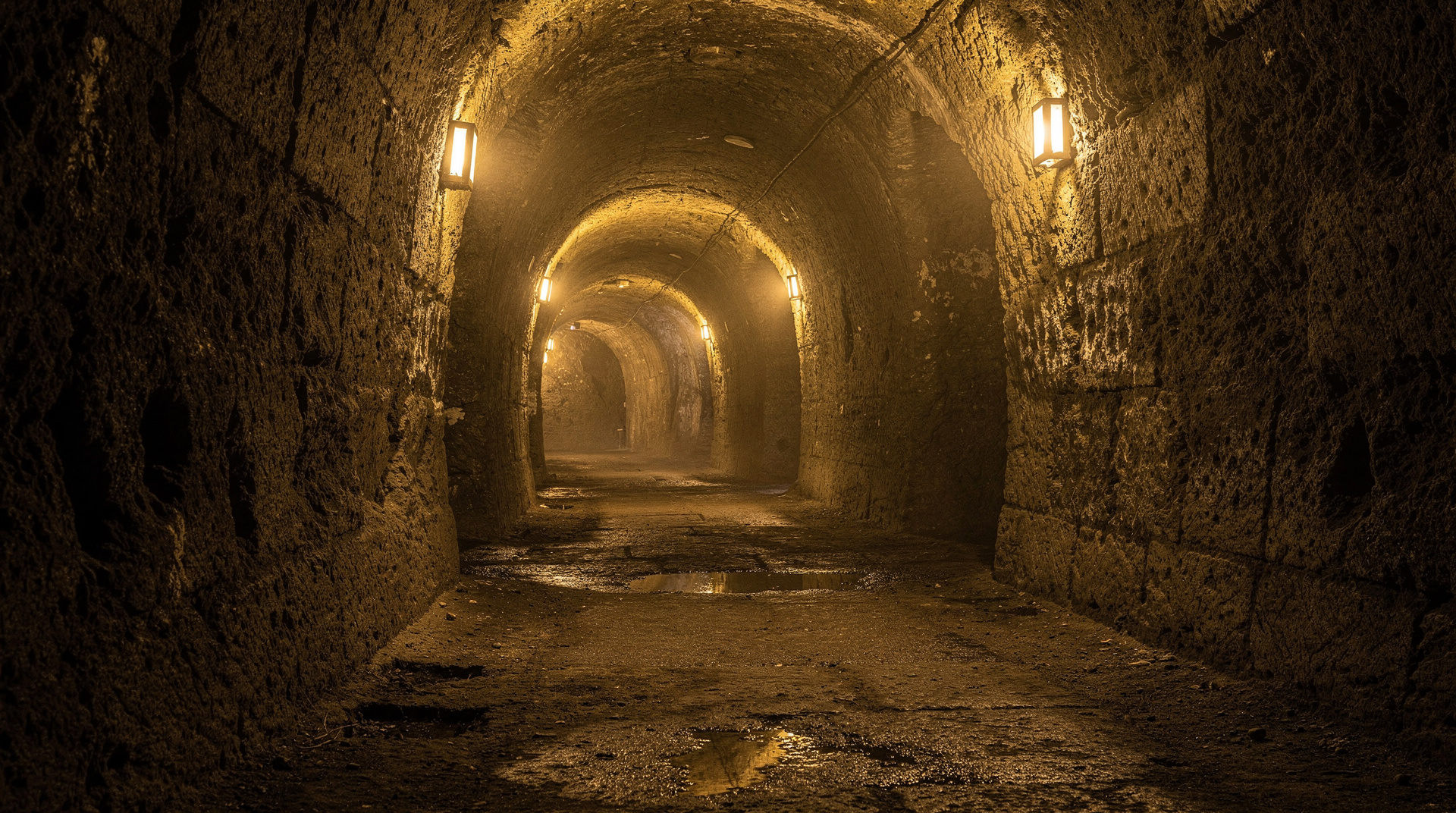
The Catacombs of San Gaudioso are an early Christian burial complex under the Basilica di Santa Maria della Sanità in Rione Sanità. Dating to the 5th century AD, they contain the tomb of an African bishop exiled to Naples and later decorated with 17th-century paintings of noble skulls displayed beneath portraits of the deceased. Tours last 45 minutes and cost €9, or €15 combined with the San Gennaro catacombs.
| Where | Basilica di Santa Maria della Sanità, Rione Sanità |
| Cost | €9 solo, €15 combined with San Gennaro |
| Time needed | 45–50 minutes (90 with the basilica) |
| Getting there | Metro Line 1 to Materdei, 10-min walk downhill |
| Best time | Weekday mid-morning tours, guided access only |
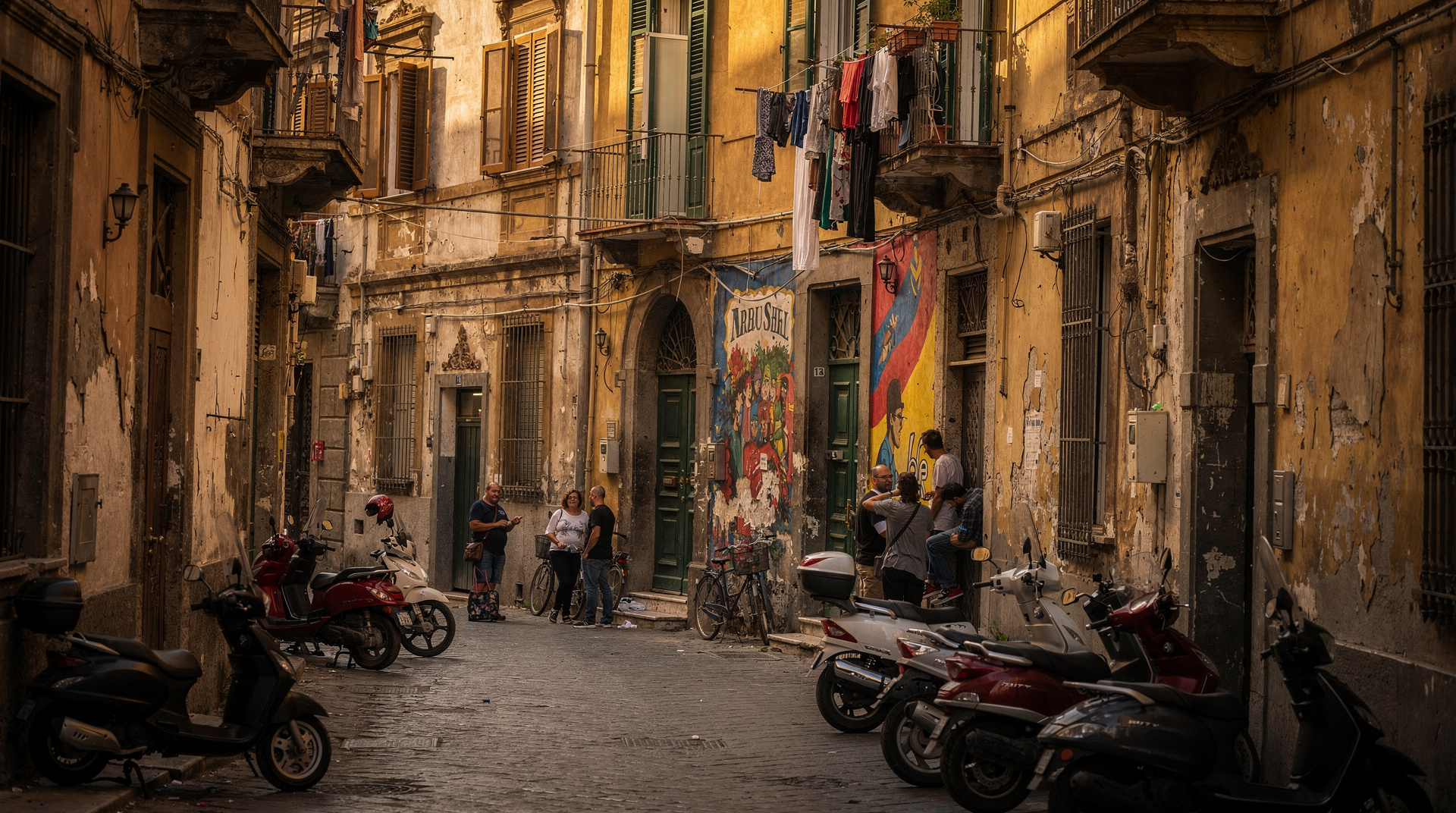
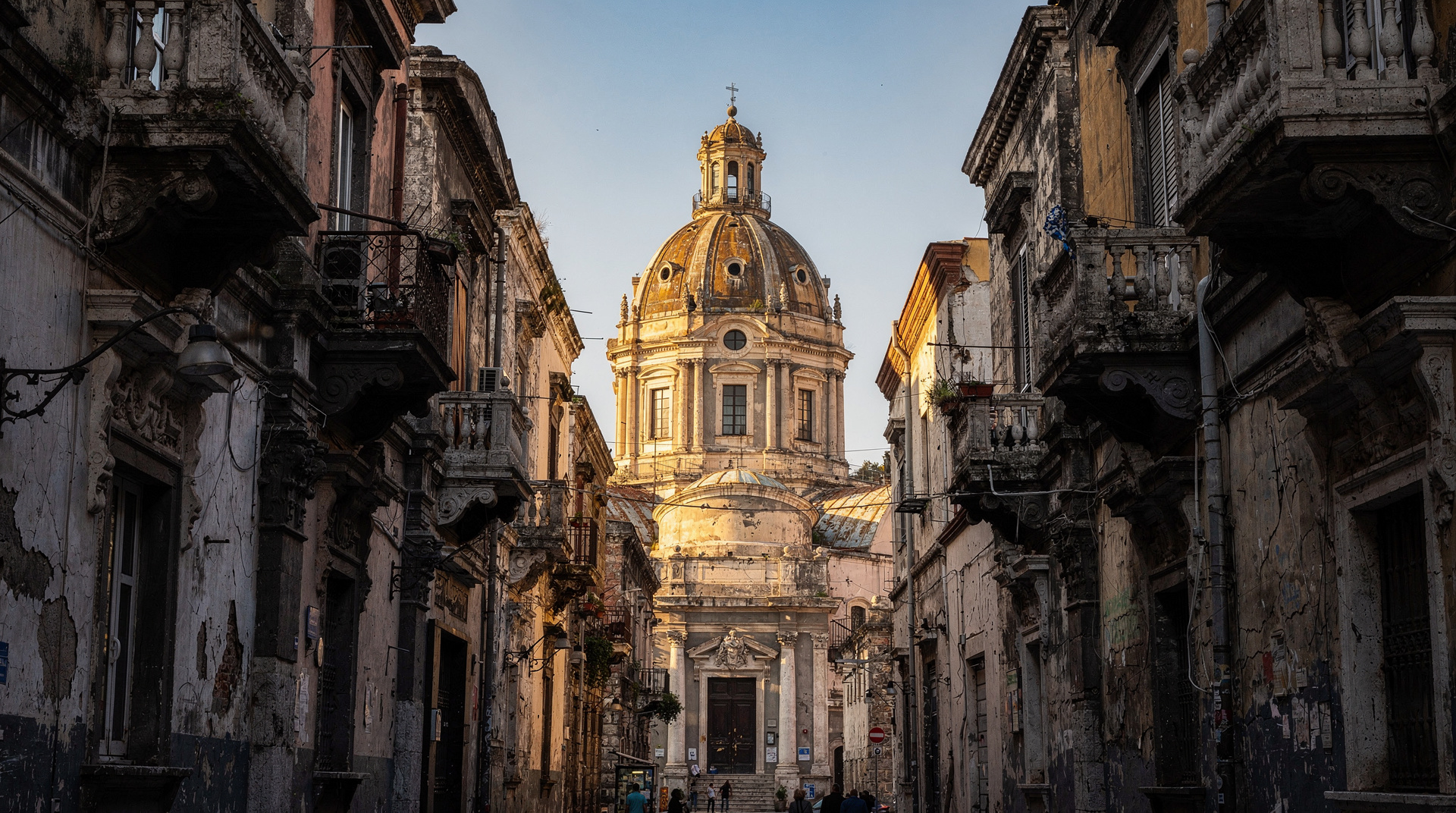
The Basilica di Santa Maria della Sanità — a large 17th-century church on the floor of the Rione Sanità basin — stands directly over a burial complex that predates it by more than a thousand years. The Catacombs of San Gaudioso run beneath the church’s nave, accessed via a staircase in the crypt. The site is smaller and less famous than the Catacombs of San Gennaro up the hill, but it has its own distinct character — particularly in the 17th-century decoration that is unlike anything else in the city.
The catacombs and the neighbourhood they sit in are managed with increasing attention to the community context. The La Paranza cooperative that runs guided tours employs local people from the Rione Sanità and explicitly frames the visit as both archaeological tourism and neighbourhood investment.
Gaudiosus: the exiled African bishop
The catacomb bears the name of a 5th-century bishop — Gaudiosus — whose presence in Naples was the result of political catastrophe. In 429 AD, the Vandals crossed from Spain into North Africa and swept through the Roman province of Africa Proconsularis, displacing the clergy who served the established cities of the region. By 439 AD, when Vandal king Gaiseric captured Carthage and established a Vandal kingdom, the North African church was effectively dismantled.
Gaudiosus had been bishop of Abitina or possibly Theveste (historical sources disagree) in what is now Tunisia. He and other displaced African clergy sailed to Naples, where the bishop of Naples sheltered the refugees. Gaudiosus founded a monastery on the Capodimonte slope and died in Naples sometime after 450 AD. His tomb in the catacomb below became a focal point for later Christian burial in the area — the same logic that governed the San Gennaro complex: proximity to a saint’s burial provided spiritual benefit to those buried nearby.
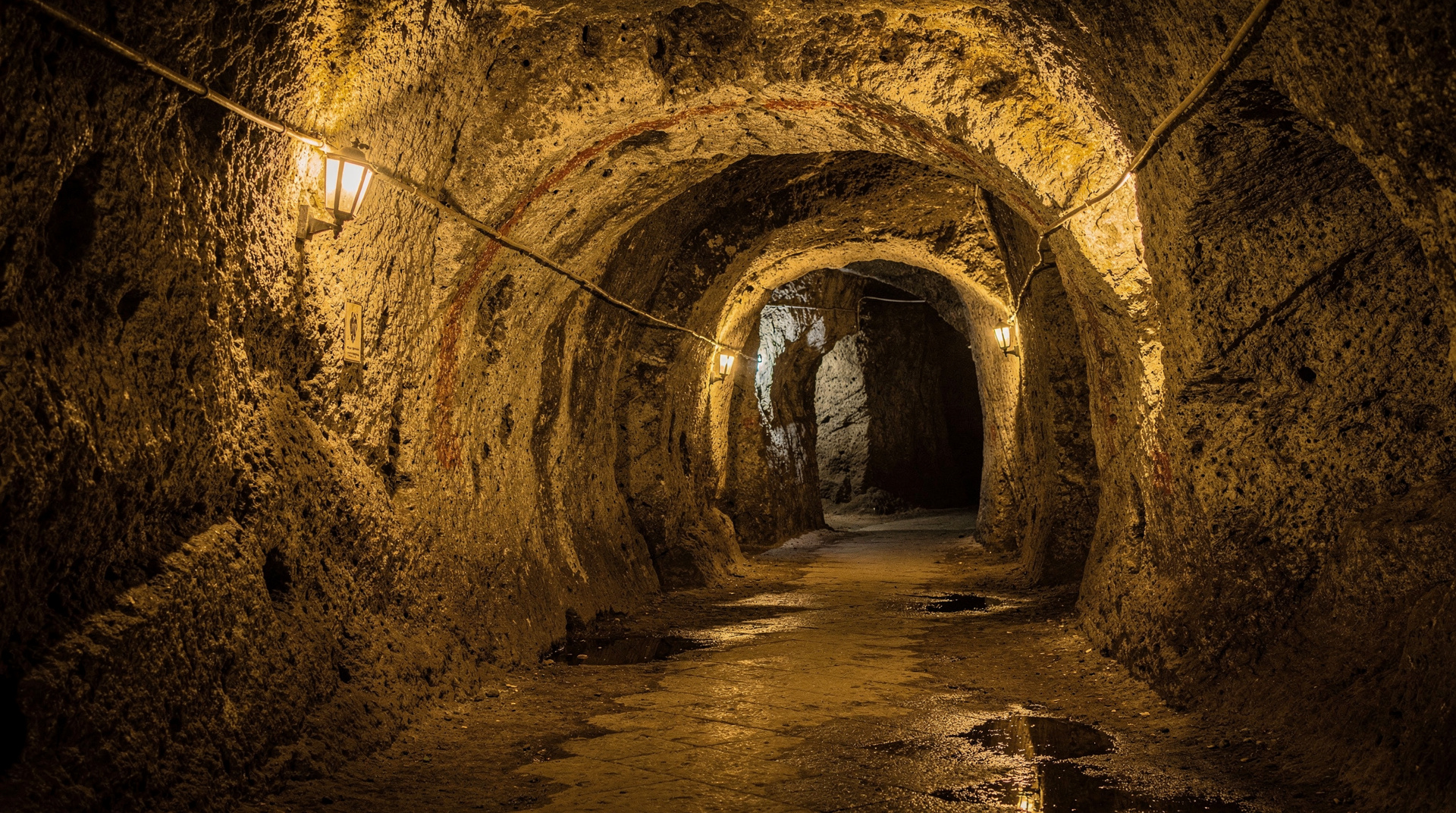
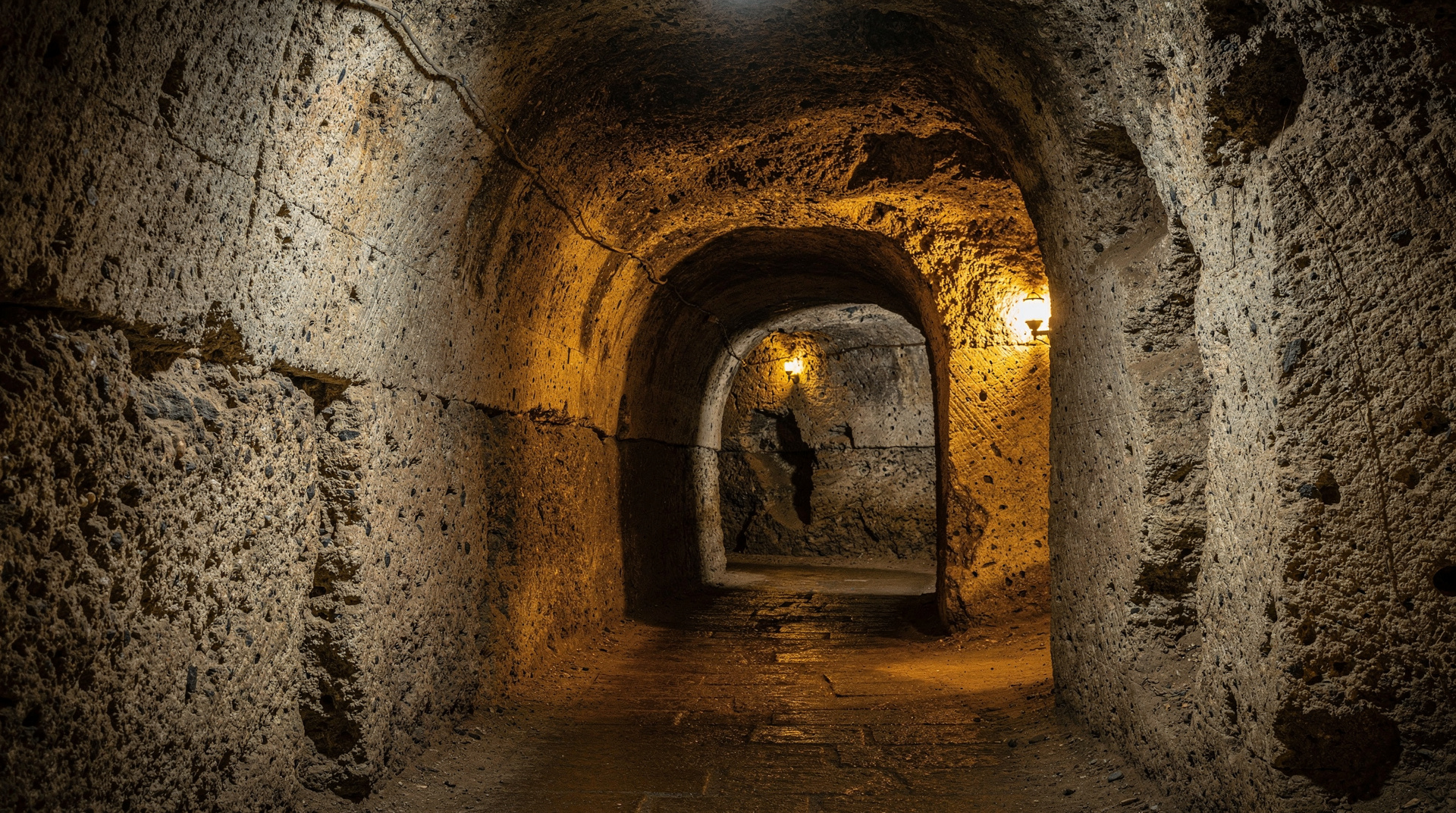
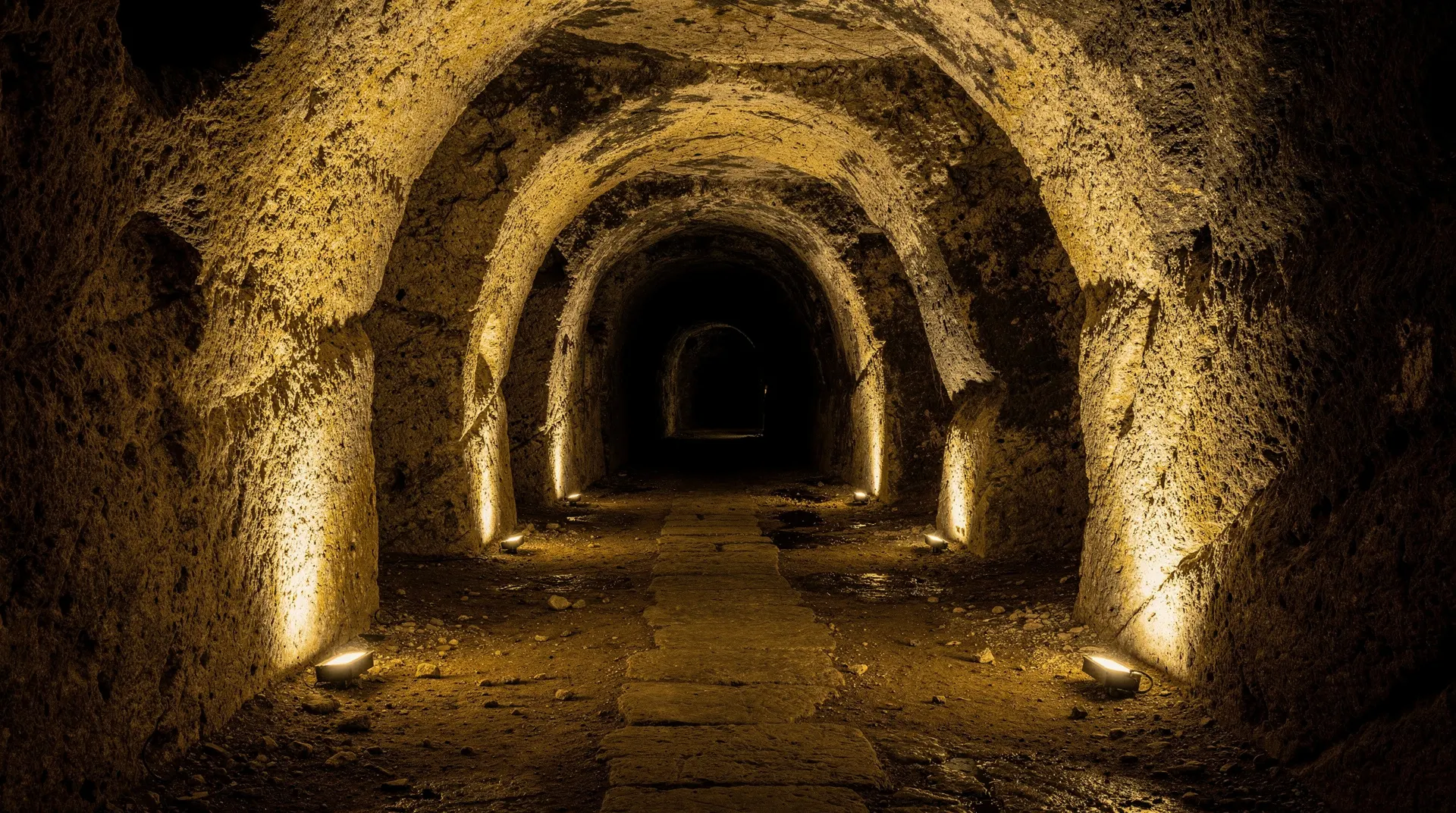
The catacomb shows the same formal characteristics as San Gennaro: tufa chambers carved in the second and third centuries by earlier occupants (possibly Jewish communities), then repurposed for Christian burial. The loculi — horizontal burial slots cut into the walls — date to different periods, identifiable by changes in cutting technique and the style of the sealing materials.
The 5th-century frescoes
The oldest frescoes in San Gaudioso are from the 5th century — painted within decades of Gaudiosus’s death, when the site was an active pilgrimage destination. The most significant is in the main chamber around the saint’s tomb: a programme of painted arcosolia (arched niches) with portraits of the early bishops and saints associated with the catacomb.
The style is characteristic of late Roman funerary art — schematic faces with large eyes, formal poses, hierarchical scaling (holy figures larger than secular ones) — but the pigments are well-preserved. The ochre, red oxide, and green earth colours typical of this period are still distinguishable in several panels. The faces, while not naturalistic in any modern sense, have enough individual variation to suggest they were intended as specific portraits rather than generic types.
The 17th-century skull-and-portrait installation
The most unusual feature of San Gaudioso is not ancient. When the Dominicans took over the site in the early 17th century and built the Basilica della Sanità over the catacombs, they introduced a burial practice that was specific to the Naples area during the Counter-Reformation period.
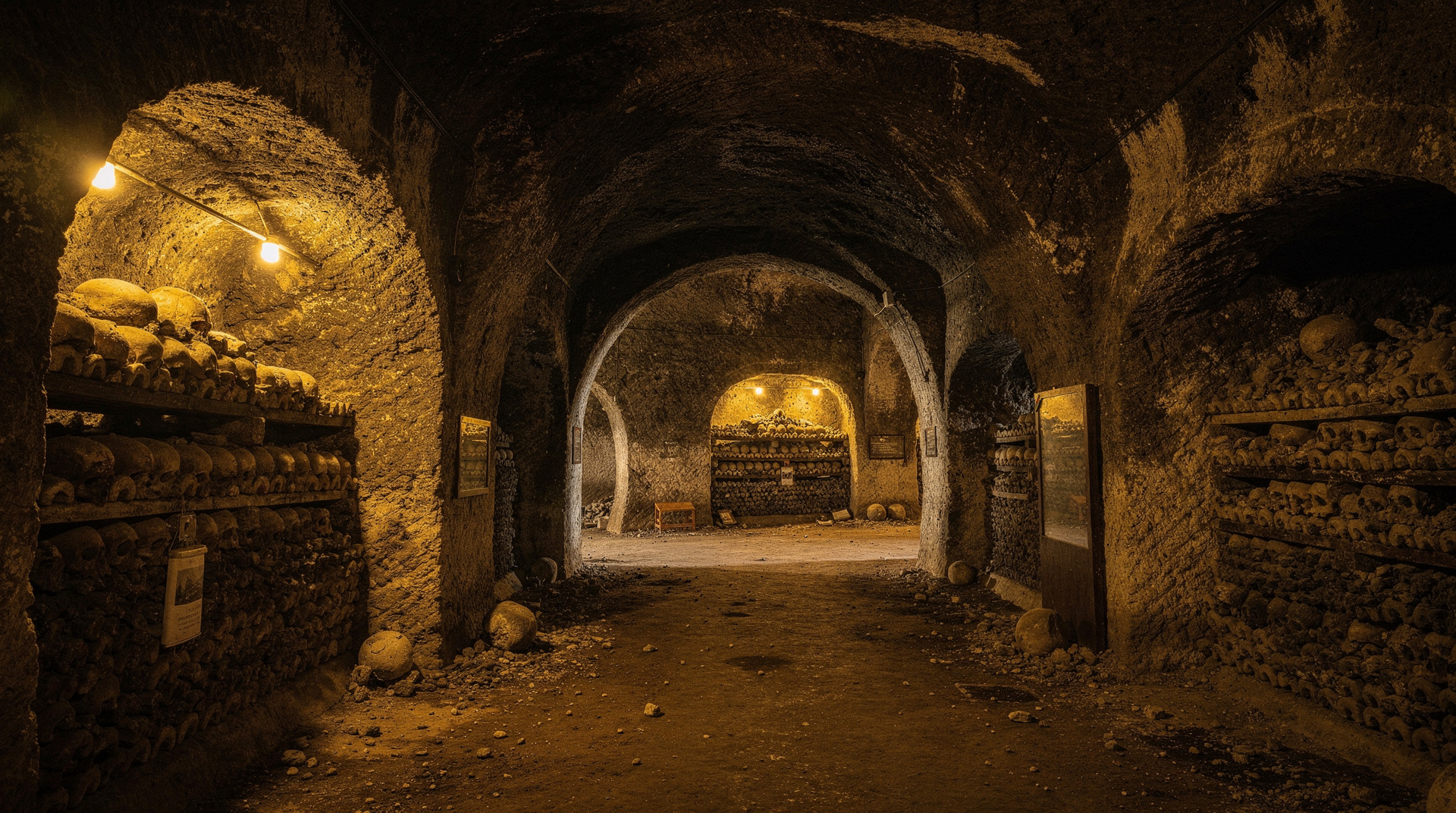
Noble and wealthy families who purchased burial rights in the crypt had their deceased members interred in the church floor or in niches cut into the catacomb walls. The skulls of these individuals were preserved separately and placed in niches cut directly into the tufa walls. Above each skull niche, a fresco portrait of the deceased was painted — a naturalistic face, sometimes with identifying clothing or attributes, set immediately above the skull of the person depicted.
The result is visually striking and conceptually explicit: the portrait shows the person as they lived; the skull below shows what remains. The combination was deliberate theology — a visual statement about the relationship between earthly life and death — but it reads today as unexpectedly direct. About a dozen of these portrait-and-skull installations survive in varying states of preservation.
Catacombs of San Gaudioso: guided tourThe basilica above
The Basilica di Santa Maria della Sanità is a significant piece of 17th-century Neapolitan architecture in its own right. Built between 1602 and 1613 to a design attributed to Fra Nuvolo (Giuseppe Donzelli), it is a large Dominican church with a domed crossing and an unusual arrangement: the entrance is at mid-level on the hillside, and the church floor is elevated above the street, accessible via a broad external staircase.
The interior contains good 17th-century paintings and a notable early 13th-century Byzantine icon — the Madonna della Sanità — which gives the church its name and is the object of local devotion. The icon is displayed in a separate chapel and can be visited independently of the catacomb tour.
The church also has a pair of chapels flanking the main apse that preserve more of the 17th-century decorative programme, including additional fresco fragments removed from the catacomb level during excavations in the 19th and early 20th centuries.
The Dominicans and the history of the site post-antiquity
The Dominican order took possession of the San Gaudioso site in the early 17th century and built the Basilica di Santa Maria della Sanità over the catacomb entrance — a church whose scale and architectural ambition signalled that this was not a peripheral neighbourhood property but a serious ecclesiastical investment. The Dominicans were one of the most powerful and intellectual religious orders in Counter-Reformation Italy; their choice of the Sanità site reflects the strategic importance they placed on controlling the major burial and pilgrimage spaces of Naples.
The basilica’s architect, Fra Nuvolo, was a Dominican brother himself — Giuseppe Donzelli, who had studied architecture alongside his religious life. His design for Santa Maria della Sanità is one of the most spatially interesting Baroque churches in Naples: the elevated entrance, the hexagonal lantern crossing, and the integration of the ancient catacomb below with the modern church above are architecturally coherent in a way that accidental historical layering rarely produces.
Fra Nuvolo’s other major work in Naples — the church of Santa Maria della Sanità is complemented by the church of Sant’Angelo a Nilo and the Guglia di San Gennaro — traces a career working within the distinctive aesthetic of the Neapolitan Counter-Reformation, where ancient early Christian heritage and new Baroque construction were explicitly integrated rather than separated.
Understanding the 17th-century building decision — why the Dominicans built here, why they incorporated the catacombs rather than sealing them, why the skull-and-portrait decoration was theologically defensible to their order — enriches the catacomb visit considerably. The guide will explain this; it is worth asking specific questions if you want to go deeper than the standard tour narrative.
How the tour compares to other underground Naples experiences
San Gaudioso occupies a specific niche among the Naples underground options. It is:
- Smaller than San Gennaro (the visit is 45 minutes rather than 60)
- Less busy than Napoli Sotterranea, which draws the largest crowds on the underground circuit
- More unusual in its decoration than any other catacomb site — the skull portraits are found only here and in a handful of other locations in the Naples area
- More accessible in terms of space — the chambers are large enough that claustrophobic visitors generally have no difficulty
The combined visit with San Gennaro (€15 for both) is the logical approach if you are spending a half-day in Rione Sanità. The two sites complement each other: San Gennaro provides the deeper historical narrative and the more significant frescoes; San Gaudioso provides the stranger, more unsettling layer of Counter-Reformation burial practice.
Rione Sanità, catacombs and local folklore tourWhat guides typically cover, question by question
Visitors who ask questions get considerably more from the San Gaudioso tour than those who walk through passively. Guides here are trained by La Paranza to go beyond the fixed script, and common productive questions include: how the 5th-century arcosolia portraits were identified and dated, why the Dominicans chose to preserve rather than seal the pre-existing catacomb when they built the basilica above, how the skull-and-portrait practice was theologically justified within Counter-Reformation doctrine, and what proportion of the original decoration has been lost to flooding and neglect over the centuries.
Asking about the specific families represented in the surviving portraits often produces the most memorable answers, since several of the noble Neapolitan lineages depicted have descendants still traceable in the city today.
The broader historical context: Counter-Reformation Naples
The skull-and-portrait tradition at San Gaudioso did not emerge in isolation. It was part of a broader cultural shift in Catholic Europe — particularly intense in Naples — during the 16th and 17th centuries, as the Catholic Church responded to Protestant criticism by intensifying popular engagement with death, purgatory, and intercessory prayer.
The Council of Trent (1545–1563), the Catholic Church’s formal response to the Protestant Reformation, explicitly endorsed prayers for the dead in purgatory — something Protestant theology rejected as unscriptural. In Naples, this doctrinal affirmation met an existing popular culture of death-engagement (the city had been repeatedly devastated by plague, famine, and epidemic) to produce something more intense and specific than elsewhere.
The artistic result appears in multiple forms across the centro storico: the skull motifs carved in the pilasters of numerous Baroque churches, the ossuaries maintained by confraternities, the skull-patterned pavements of the Gesù Nuovo church courtyard. The San Gaudioso skull portraits are the most direct and personalised version of this tradition — the face of the individual, rather than a generic memento mori symbol.
Visiting San Gaudioso in this context means encountering the specific theology of its period made tangible: not abstracted in doctrine but materialised in terracotta, paint, and human bone.
What makes San Gaudioso worth visiting independently
If you have already visited the Catacombs of San Gennaro or are planning to, the combined ticket is clearly the right choice. But San Gaudioso also makes sense as a standalone visit for visitors who want something shorter and more unusual rather than a historically comprehensive tour.
The 45-minute visit has a higher concentration of genuinely unexpected material per minute than most cultural sites in Naples. The early Christian frescoes around Gaudiosus’s tomb are limited but meaningful; the Baroque skull portraits are unlike anything else in the city. The Basilica della Sanità above — the 17th-century church with Giordano frescoes and the ancient Byzantine icon — is worth 20–30 minutes independently. A complete visit to church and catacombs costs €9 and takes about 90 minutes.
Practical visit information
Address: Via della Sanità 124, 80137 Naples (entrance through the Basilica di Santa Maria della Sanità).
Hours: Tours depart regularly from 10:00 to 17:00. English tours at selected times — confirm via the La Paranza website (leparanzadellanita.it or catacombedinapoli.it).
Tickets: €9 standard, €15 combined with San Gennaro. Children under 10 free (with paying adult). Student discounts available with valid ID.
Getting there: Metro Line 1, Materdei station, 10-minute walk downhill. Bus C63 from Piazza Cavour. On foot from Via dei Tribunali: 25 minutes via Via Vergini downhill through the Sanità.
Duration: 45–50 minutes for the standard tour.
Photography: Permitted without flash. No tripods.
Frequently asked questions about the Catacombs of San Gaudioso
Is it worth visiting both San Gennaro and San Gaudioso on the same day?
Yes — the combined ticket costs €15 and covers both. The two sites are 5 minutes apart on foot, share the same management, and offer complementary experiences. Visiting both takes about 2.5 hours including walking time. Start with San Gennaro (the longer visit, more significant historically) and finish at San Gaudioso.
Why are the skull portraits only found in Naples?
The practice of separating skulls for display in portrait niches was associated with the anime pezzentelle tradition — a Neapolitan Catholic folk practice involving the adoption and care of anonymous skulls. This tradition was particularly strong in the 16th and 17th centuries and was concentrated in the Naples area, where the combination of dense urban overcrowding, high mortality from plague and epidemic, and a specific local theology of purgatory and intercession produced practices that had no exact parallel elsewhere.
Are the catacombs temperature-controlled?
No — like all underground sites in Naples, the catacombs maintain a natural temperature of around 13–15°C from the surrounding tufa. Bring a layer even in summer.
Can I photograph the skull portraits?
Yes, without flash. The preservation of these frescoes is fragile and the site management asks visitors not to use direct flash photography. Natural-light or no-flash photography of the skull niches and frescoes is permitted.
Is the neighbourhood safe to visit?
The Rione Sanità has significantly improved in safety and civic life over the past decade, partly as a result of cultural tourism projects like La Paranza. Daytime visits are straightforward. As with any dense urban neighbourhood, normal awareness is appropriate. The catacomb tour routes do not take you through the most isolated parts of the district.
Should I book San Gaudioso in advance?
For most weekdays, arriving 20–30 minutes before a preferred tour slot and buying on-site is workable, since group sizes and departure frequency are reasonable. On weekends and around Italian public holidays, tours can fill, and booking online through the La Paranza website removes the risk of a wasted trip to the neighbourhood. English-language tour times are more limited than Italian-language ones, so confirm the schedule if that matters to your plans.
Frequently asked questions about Catacombs of San Gaudioso: the African bishop's burial chamber
Who was San Gaudioso?
Are the San Gaudioso catacombs better or worse than San Gennaro?
How long does the tour take?
Can I visit San Gaudioso without a guided tour?
What is the 'skull portrait' decoration?
Is the Basilica della Sanità open separately from the catacombs?
How do I get to the Catacombs of San Gaudioso?
Top experiences
Bookable activities with verified prices and instant confirmation on GetYourGuide.