Naples with kids in three days: ruins, pizza, and the underground
From Naples: Ruins of Pompeii with Archaeologist
Duration: 2h
Quick answer: Three days is the right amount of time for Naples with kids — enough to do Pompeii and Herculaneum properly, squeeze in the creepy underground tunnels, make (and eat) your own pizza, and still have time for gelato and the funicular. No car needed, no heroics required, just an honest family trip that keeps children engaged without marching them into exhaustion.
| Where | Pompeii, Herculaneum, centro storico, Vomero |
| Cost | around €120-160 per adult for activities across 3 days, mid-range |
| Time needed | 3 days, one big day, one activity day, one gentle finish |
| Getting there | Circumvesuviana train and funiculars, no car |
| Best time | June or September — July/August heat is hard on kids at the ruins |
The idea behind these three days with kids
Naples is better with children than its reputation suggests. The city is loud, tactile, and chaotic in exactly the ways kids tend to love — street food around every corner, a volcano on the horizon, and ruins that were, quite genuinely, buried alive. The trick is pacing. Pompeii is enormous and will wreck under-tens if you try to do it on your own without a hook; Herculaneum is smaller and far better preserved, which means shorter attention spans can still get something real from it. The underground is genuinely exciting, not just historically interesting.
The structure here is one big day trip (Day 1), one easier city day with a hands-on activity (Day 2), and a gentle close-out day (Day 3). Walking distances are short. Public transport handles everything. You’ll spend roughly €120-€160 per adult across three days on activities, not counting food and accommodation.
Day 1: Pompeii and back before dinner
Morning — Leave your hotel by 8:00 and walk to Napoli Centrale station. Take the Circumvesuviana train towards Sorrento — trains leave roughly every 30-40 minutes and the ride to Pompeii Scavi — Villa dei Misteri station takes around 35 minutes (€2.80 per adult, €1.40 under 12). Arrive as the site opens at 9:00 and you’ll beat 90 percent of the crowds.
A guided Pompeii tour with an archaeologist makes an enormous difference with children — not because kids can’t explore independently, but because a good guide knows exactly which houses land with young audiences. The Bakery with its carbonised loaves of bread, the plaster casts in the Garden of the Fugitives, and the stepping stones across the ancient street are reliably the highlights. Book a morning slot (3-4 hours) and resist the temptation to see more.
Midday — Exit the site by 12:30 and eat near the entrance — several family-run restaurants along Via Villa dei Misteri do honest pasta lunches for €10-12 per person. Avoid the tourist-trap places with laminated menus in five languages. A ten-minute rest here is not laziness; it’s strategy.
Afternoon — Back on the Circumvesuviana towards Naples, but stop one station early at Ercolano Scavi for Herculaneum. Yes, on the same day — but Herculaneum takes 90 minutes, not four hours, and the contrast is the whole point. Where Pompeii is vast and sun-baked, Herculaneum is compact and almost claustrophobically well-preserved: painted walls still in colour, carbonised furniture, wooden doors. A guided visit with an archaeologist is worth it here too, purely for the context on why so much survived here and so little at Pompeii (the answer involves superheated gas and volcanic mud, which is the kind of information children retain forever).
Evening — Back to Naples by 17:30. The Circumvesuviana deposits you at Napoli Centrale, ten minutes by metro Linea 1 from the centro storico. Dinner on or around Via dei Tribunali — Neapolitan pizza, obviously, and worth the queue. Early bedtime; Day 1 is the most demanding.
Day 2: The underground city and a pizza class
Morning — Start slowly. Day 2 is the city’s turn. After breakfast, walk down into the Spaccanapoli area and duck into the Napoli Sotterranea — the buried Greek-Roman city running 40 metres below the streets. The Naples Underground hidden city tour takes about 75 minutes and involves tight passages, ancient cisterns, and wartime shelters. Kids who are even slightly claustrophobic should skip it; kids who aren’t will talk about it for years. There are points where adults have to turn sideways; a stroller is completely impossible. Minimum recommended age is around 5-6 for the full circuit.
Midday — The highlight of the whole trip for most children: a Naples pizza-making class with lunch. Classes typically run around 2 hours, include making and eating your own pizza, and are booked for late morning or early afternoon. The best ones are small-group and based in a proper working pizzeria rather than a tourist kitchen. Prices run around €35-45 per person including lunch. Book ahead — popular slots sell out a week or more in advance in summer.
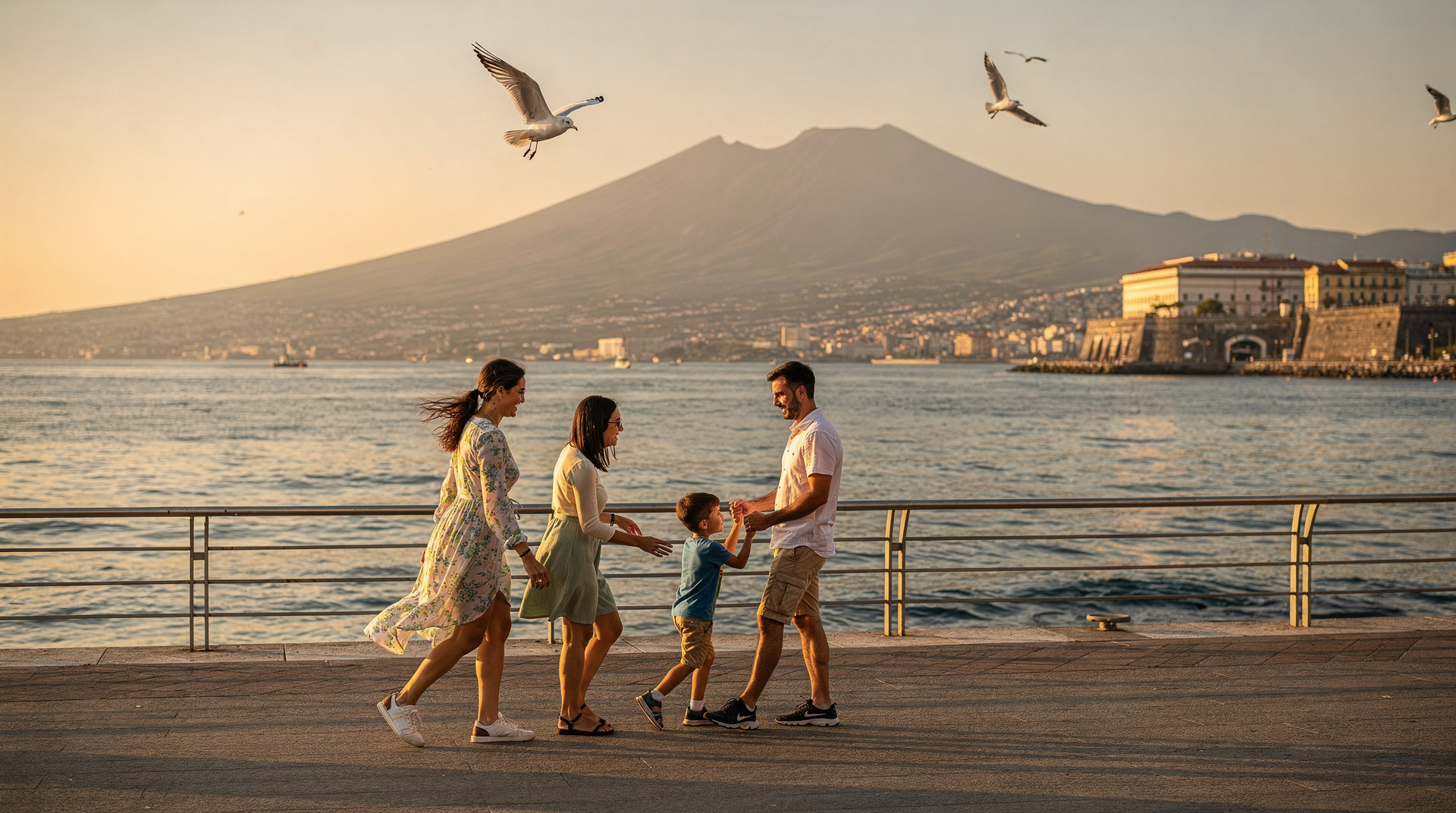
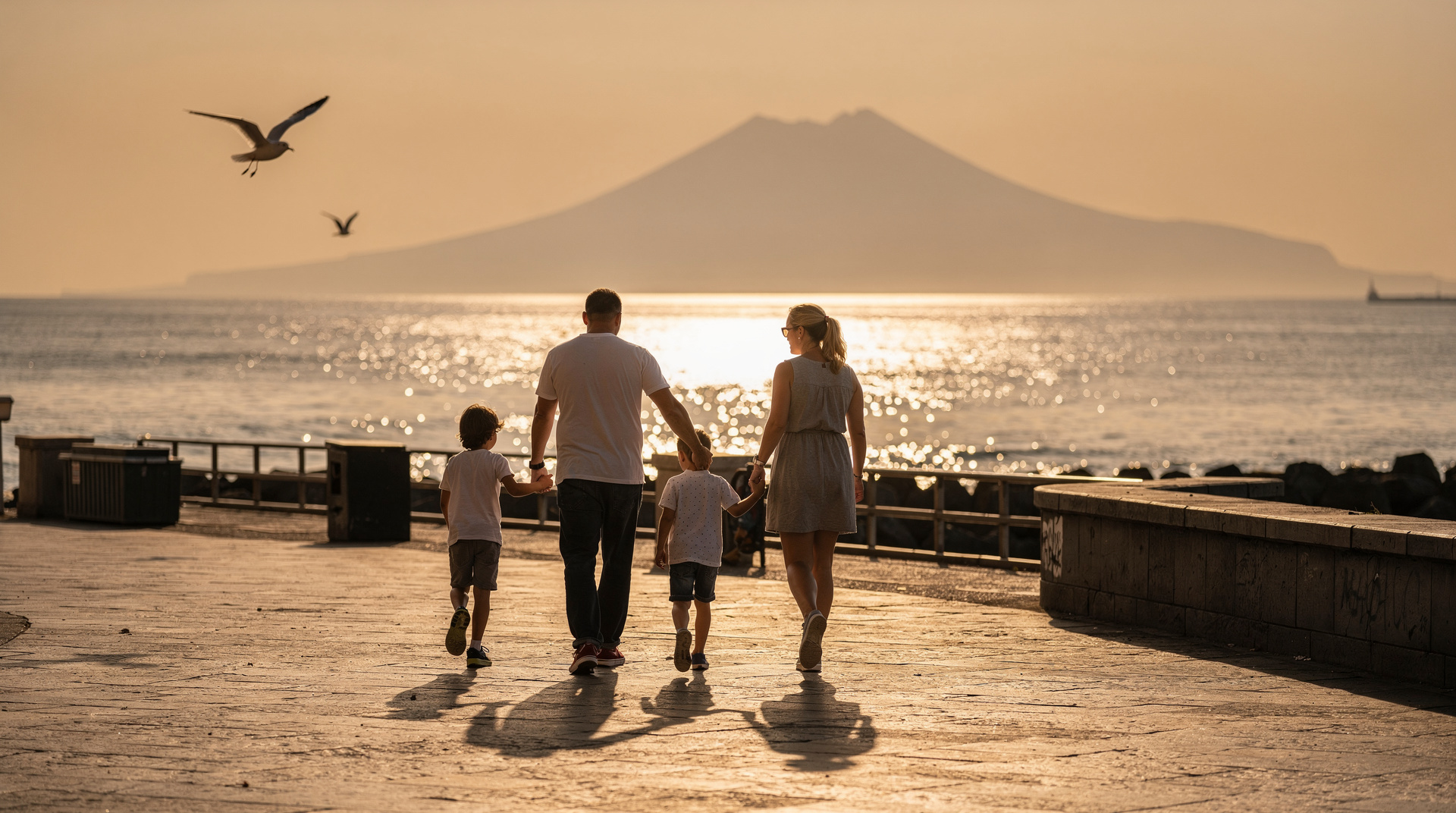
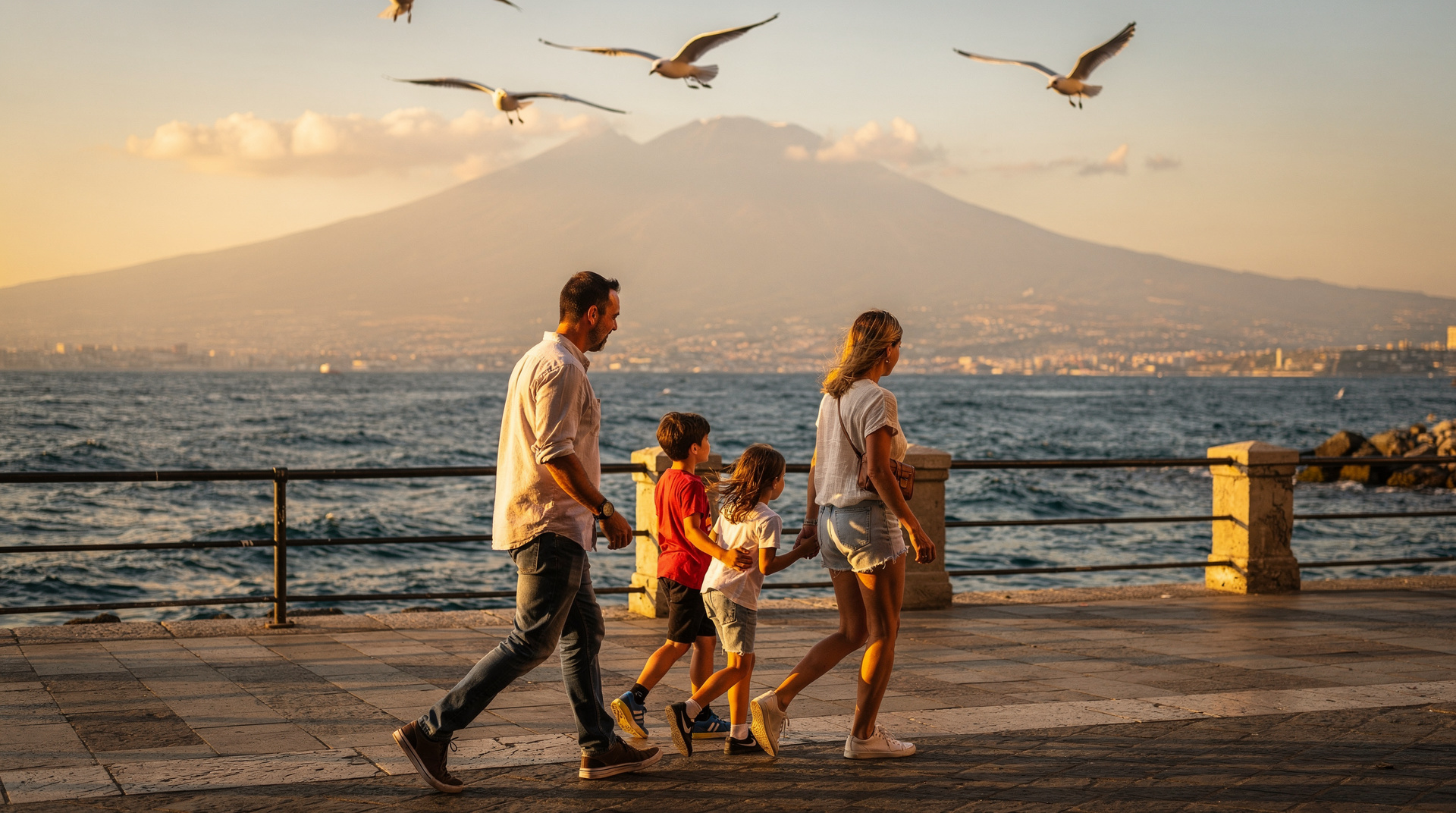
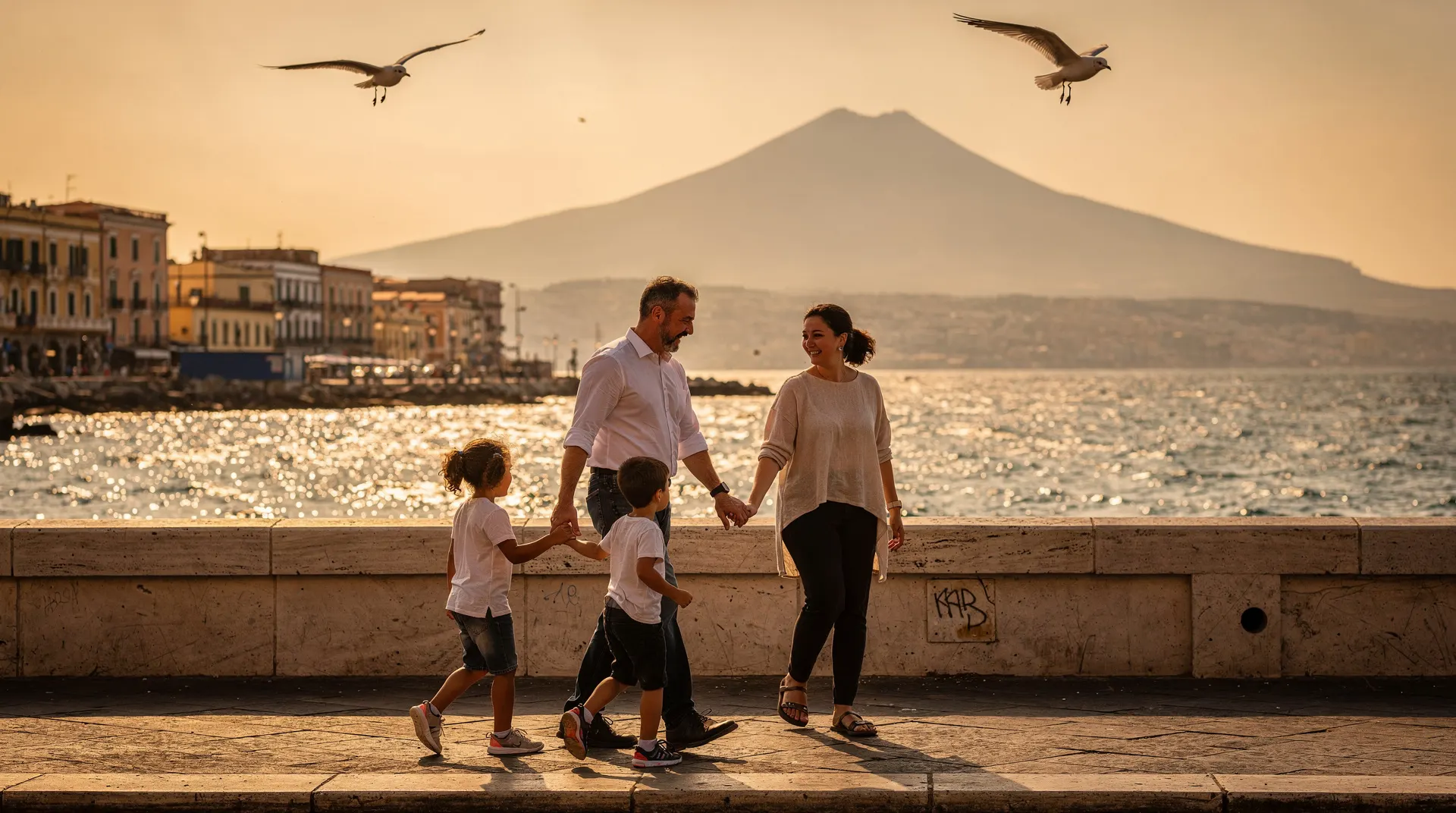
Afternoon — The afternoon belongs to the Lungomare seafront. Walk down from Piazza del Plebiscito to the Castel dell’Ovo — it’s free to enter, and the views of Vesuvius across the bay are the ones you came for. Children can run on the broad promenade, feed the seagulls, and expend energy without you managing them. Gelato from one of the kiosks near the castle; this is absolutely the right moment for it.
Evening — Ride the Funicolare Centrale from Via Toledo up to the Vomero neighbourhood — 10 minutes, €1.30 per person, and children reliably find funiculars exciting. Dinner up there is calmer and less expensive than the tourist centre, and the walk back down via Piazza Fuga after dark with the city lights below is a quiet pleasure.
Day 3: The National Museum and a gentle finish
Morning — The Museo Archeologico Nazionale di Napoli (MANN) holds the best finds from Pompeii and Herculaneum — the mosaics, the bronzes, the Secret Room (erotic artefacts from Pompeii, access usually restricted to 14+). A guided MANN tour keeps the visit focused to 90 minutes rather than the two-hour wander that ends with everyone’s feet failing. The mosaic of Alexander the Great at the Battle of Issus alone is worth the trip. Note: MANN is closed on Tuesdays — plan accordingly. Entry is €15 for adults, free for EU residents under 18.
Midday — Lunch in the Quartieri Spagnoli — the steep Spanish Quarter grid behind Via Toledo. This is Naples at its most alive: washing lines overhead, scooters brushing past, neighbourhood delis with no English menus. Buy a fried pizza (pizza fritta) from a street stall for €2 and eat it standing up. This is the correct approach.
Afternoon — Free time. Options: the Piazza del Gesù Nuovo with its extraordinary faceted stone facade, a final walk down Spaccanapoli for souvenir hunting (limoncello, presepe figurines, San Gennaro keyrings), or simply finding a bar with a terrace and staying put. If the family has energy left, the hop-on hop-off bus covers the key viewpoints without demanding more walking.
Evening — Last pizza. Try somewhere different from Day 1 — Naples has several hundred serious pizzerias and a strong opinion on each one. The city will forgive you for coming back.
Where to stay
For this trip, the centro storico is the right base — specifically the area around Via dei Tribunali, Piazza Bellini, or the bottom of Via Toledo. You’ll be within walking distance of the underground, MANN, and the Circumvesuviana, and the metro Linea 1 and funiculars are a short walk away.
Good mid-range options cluster around the historic centre and the Chiaia seafront neighbourhood. Chiaia is quieter at night and closer to the Lungomare, which matters if you have very young children who need early evenings. Centro storico is louder and livelier, which matters if you want to walk to dinner without a taxi at 21:00.
Avoid Napoli Centrale station area for family stays — functional for transport but noisy and dispiriting. The Spanish Quarter is atmospheric but the streets are narrow and cobbled, which counts against strollers.
The three days at a glance
| Day | Focus | Energy level |
|---|---|---|
| Day 1 | Pompeii and Herculaneum | Highest — big day trip, early start |
| Day 2 | Underground tour and pizza class | High but varied, hands-on activities |
| Day 3 | MANN and a gentle finish | Lowest — flexible, half a day free |
More on Naples with children
This itinerary covers the core three days, but a few companion guides go deeper on specific pieces. The Naples with kids guide and kid-friendly things to do in Naples guide round up more options than fit in three days, useful if you’re extending the trip. For the Pompeii day specifically, Pompeii with kids has age-specific tips this itinerary only touches on — which houses tend to land best, and how long children realistically last on-site before attention fades.
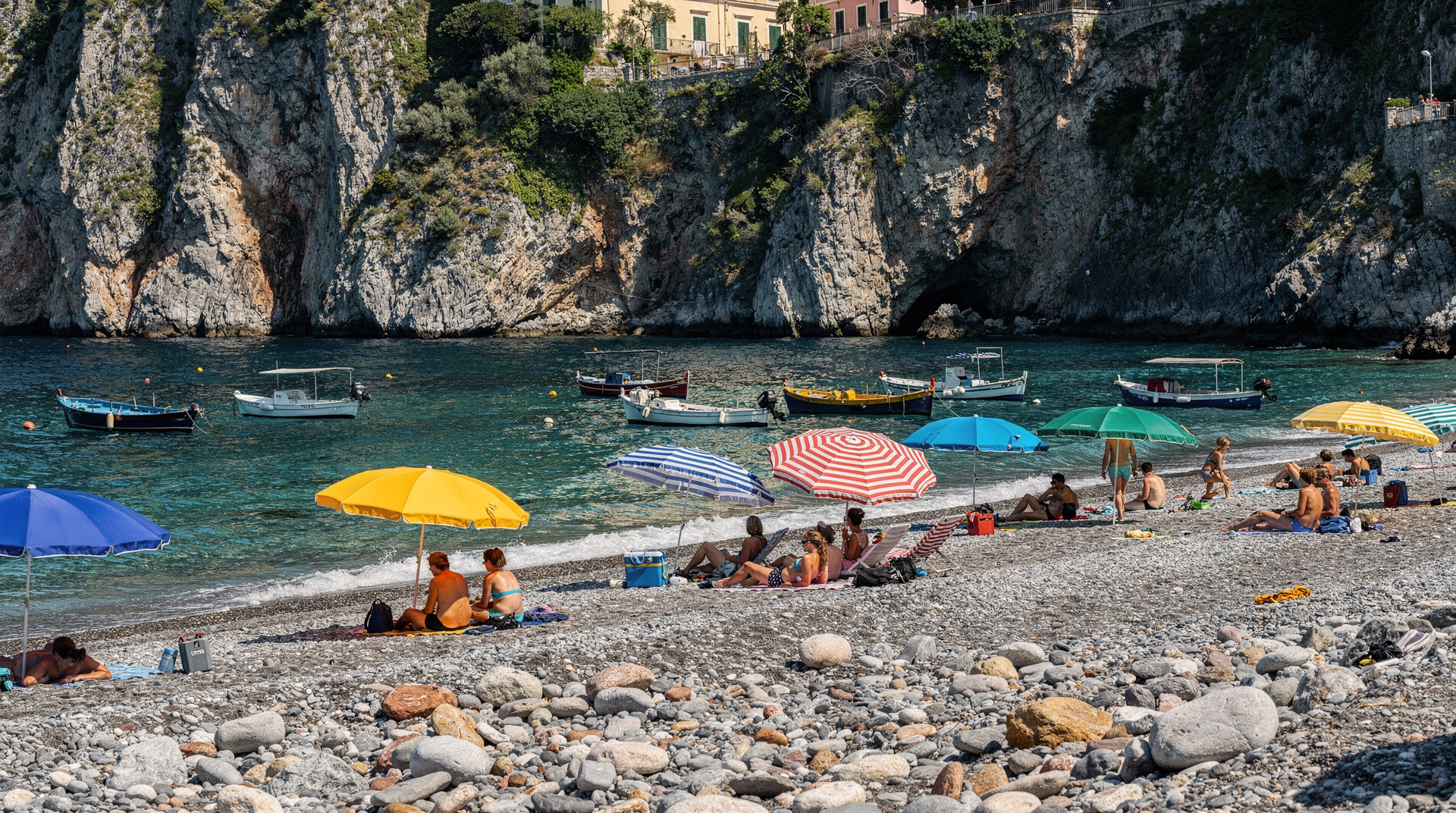
If a beach day would round out a longer trip, the beaches for families near Naples guide and the broader family day trips in Campania guide cover options beyond this three-day core. And since this plan leans on funiculars twice, the Naples funiculars guide is worth a quick read if your children (or you) haven’t ridden one before.
Practical tips
- Strollers on cobblestones: The centro storico is largely basalt cobbles — manageable but slow. A lightweight carrier or backpack carrier is more practical than a large pushchair for under-3s. For older children, strollers are fine on the main streets and the Lungomare, less so in the Quartieri Spagnoli.
- Circumvesuviana and pickpockets: The train to Pompeii is notorious for bag theft. Keep valuables in a front-facing bag or inner pocket. Board and exit quickly; do not place bags in overhead racks. This applies to adults more than children, but it bears saying clearly.
- MANN closes on Tuesdays. The museum is shut every Tuesday — build this into your planning if Day 3 falls on a Tuesday. A Tuesday alternative is the Certosa di San Martino museum in Vomero, easily reached by funicular.
- The underground tour requires no strollers and some crouching. If you have a child who needs to be carried through tight spaces, one adult will have their hands full. It’s still worth it — just go in prepared.
- Nap windows matter. A mid-afternoon rest (13:30-15:30) after a big morning is not a failure of ambition; it’s the difference between a functioning family at dinner and a collapsing one. Hotels in the centro storico are close enough for a genuine midday return.
- Gelato as bribery is legitimate. The best gelaterie in Naples are in the centro storico and Chiaia. One gelato break per day is a useful incentive, a sensory highlight, and the single cheapest thing you’ll buy.
- Heat in July and August: Pompeii and Herculaneum have almost no shade. Start early, bring hats and water, and accept that August afternoons outside are not for the faint-hearted. June and September are meaningfully more comfortable.
Three days is tight but honest. You will not see everything, and that’s fine — Naples rewards return visits precisely because there is always more. What you will see, in three days done this way, is more than enough to understand why the city gets under people’s skin in a way that very few places do.
Top experiences
Bookable activities with verified prices and instant confirmation on GetYourGuide.