First time in Naples: what to expect and how to prepare
The Best of Naples Private Walking Tour
What should a first-time visitor to Naples know?
Naples is noisy, chaotic, and utterly unlike any other Italian city — and most first-timers find it more interesting than they expected. The city is safe in tourist areas. Book Cappella Sansevero in advance. Use the metro, not taxis, for getting around the centre. And eat the street pizza before a sit-down meal — the folded portafoglio version costs 2–3 €.
Quick answer: Naples is chaotic, affordable, and extraordinary. Book Cappella Sansevero tickets before you arrive. Watch your bag on the Circumvesuviana. Eat the pizza. Stay 3+ nights to do it properly.
| Minimum stay | 3 nights (2 city days + 1 Pompeii day) |
| Best first base | Chiaia or the centro storico |
| Must book ahead | Cappella Sansevero (sells out) |
| Cash | Carry €50–100; many small vendors are cash-only |
| Getting around | Metro and walking, not taxis, in the centre |
Understanding what kind of city Naples is
Naples is not a polished tourist destination in the way that Rome, Florence, or Venice are. It is a working city of about 1 million people, one of the oldest continuously inhabited cities in Europe, with layers of Greek, Roman, medieval, and baroque history visible in its streets and buildings simultaneously.
The centro storico (historic centre, a UNESCO World Heritage Site) is built on a precise ancient Greek grid — if you look at an overhead map, the decumani (east-west streets like Spaccanapoli) are still the same alignment Neapolis used 2,500 years ago. Under those streets are Roman cisterns, tunnels, aqueducts, and early Christian catacombs that you can visit today.
The city is loud, traffic-heavy, physically beautiful in places and neglected in others, and has some of the best food in Italy at some of the lowest prices. It is not like any other Italian city, and most first-time visitors find it either overwhelming (for the first hours) and then revelatory, or not for them at all.
The city layout: a quick map in words
Napoli Centrale / Piazza Garibaldi: The main train station and the Circumvesuviana terminal. A busy, not particularly pleasant area — it improves as you move west.
Centro storico (Spaccanapoli / Via dei Tribunali): The ancient heart of the city. Everything within a few minutes of these two parallel streets — Cappella Sansevero, the MANN (a short walk north), churches, street food, small theatres, artisan workshops. This is where you will spend most of your time.
Rione Sanità: North of the Decumanus, this is the city’s most characterful working-class neighbourhood. The catacombs of San Gennaro and San Gaudioso are here. Less visited by tourists, more visited by people who return to Naples a second or third time.
Toledo and the Spanish Quarter: Via Toledo is the main shopping street leading south from the Museo metro station. To its west, the Quartieri Spagnoli (Spanish Quarter) is a dense grid of narrow streets, now one of the more gentrified parts of the city for cafés and small restaurants.
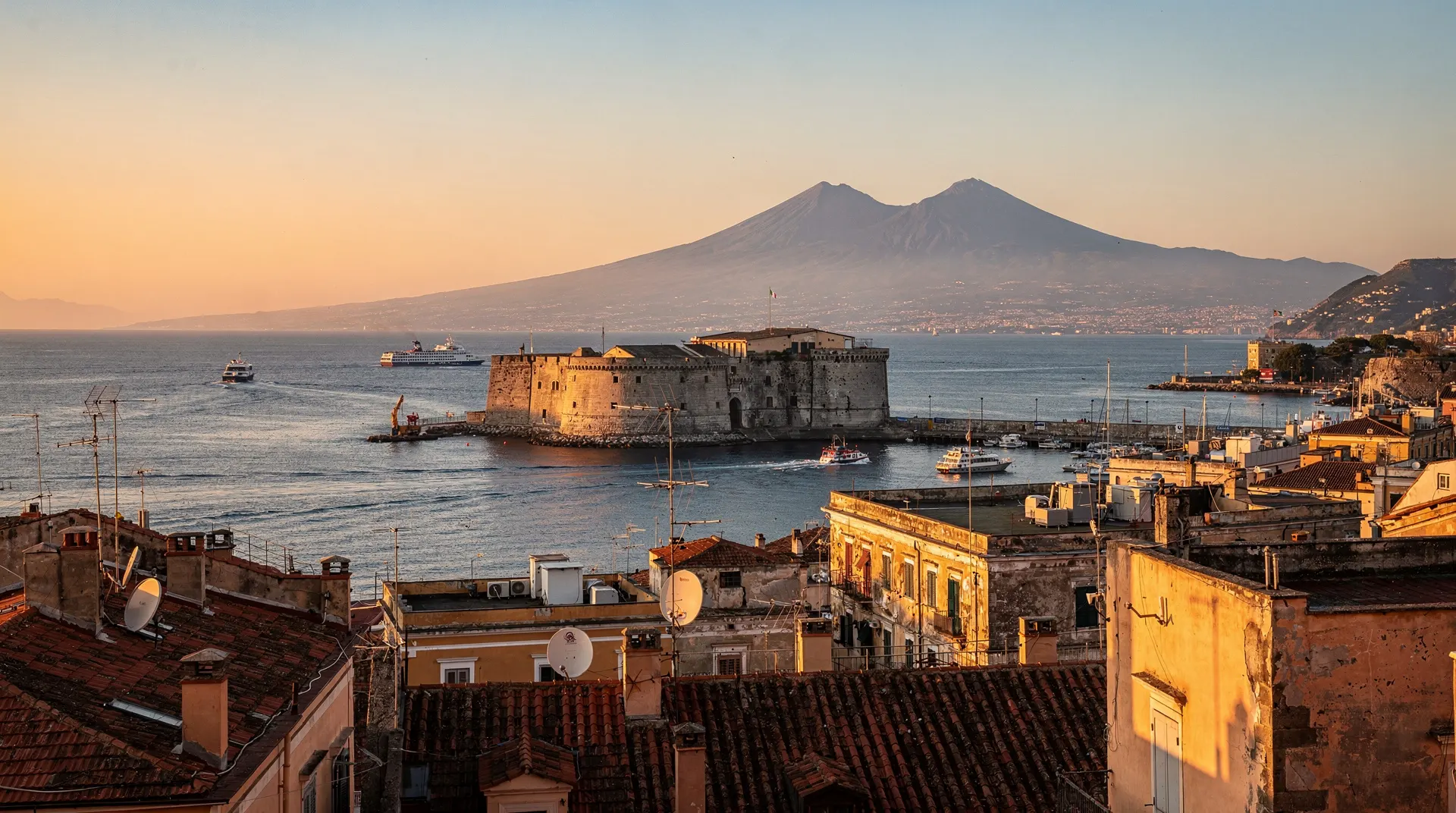
Chiaia: The upmarket residential neighbourhood running along the waterfront, west of Piazza del Plebiscito. Good restaurants, less tourist density, the Lungomare (waterfront promenade), and Castel dell’Ovo.
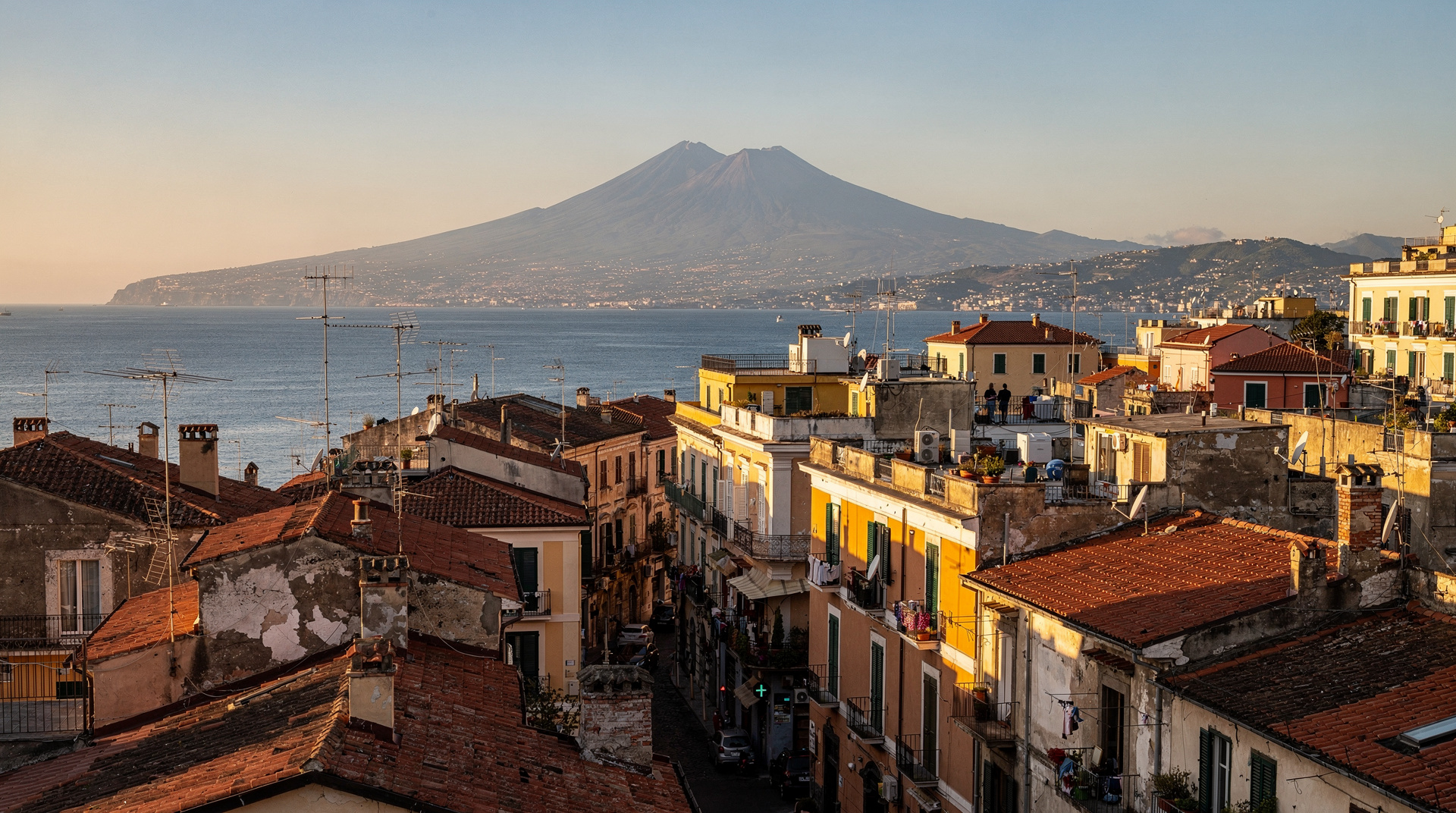
Vomero: The hill above the centre, accessible by funicular. Quieter, residential, with the Certosa di San Martino museum and Castel Sant’Elmo on top. The view from Vomero is the best panorama of the bay.
Posillipo: The headland west of the city, expensive residential area, spectacular viewpoints over the bay and islands. Less visited for sightseeing, worth a trip for sunset.
The non-negotiable first-timer list
Museo Archeologico Nazionale (MANN): The National Archaeological Museum holds the most important collection from Pompeii and Herculaneum in the world — the original mosaics, frescoes, bronzes, and sculptures that were removed from the sites. The Secret Cabinet (erotic art from Pompeii) requires a separate request at reception but is included in the main ticket. Allow 2–3 hours. Near Piazza Cavour, Museo metro station.
Cappella Sansevero: A small private chapel in the centro storico containing the Veiled Christ — a full-size marble sculpture of a shrouded figure by Giuseppe Sanmartino (1753) that is genuinely breathtaking. A single figure, draped in marble that looks like wet cloth. The chapel also has Raimondo di Sangro’s “Anatomical Machines” (preserved human skeletons with their circulatory systems intact) in the crypt. Book tickets before you arrive — this sells out.
Spaccanapoli: Walk the length of this street from Piazza del Gesù Nuovo to Via Duomo, stopping at the church of Gesù Nuovo, Santa Chiara (and its magnificent cloister), San Domenico Maggiore, and picking up street food as you go. Allow 2–3 hours.
Pompeii (day trip): The single best day trip from Naples. Take the Circumvesuviana from the lower level of Napoli Centrale to Pompei Scavi (30 minutes, 3.30 €). The ancient Roman city destroyed by Vesuvius in 79 AD is enormous — plan 4–5 hours on site. See pompeii-complete-guide for practical advice on how to make the most of your time there.
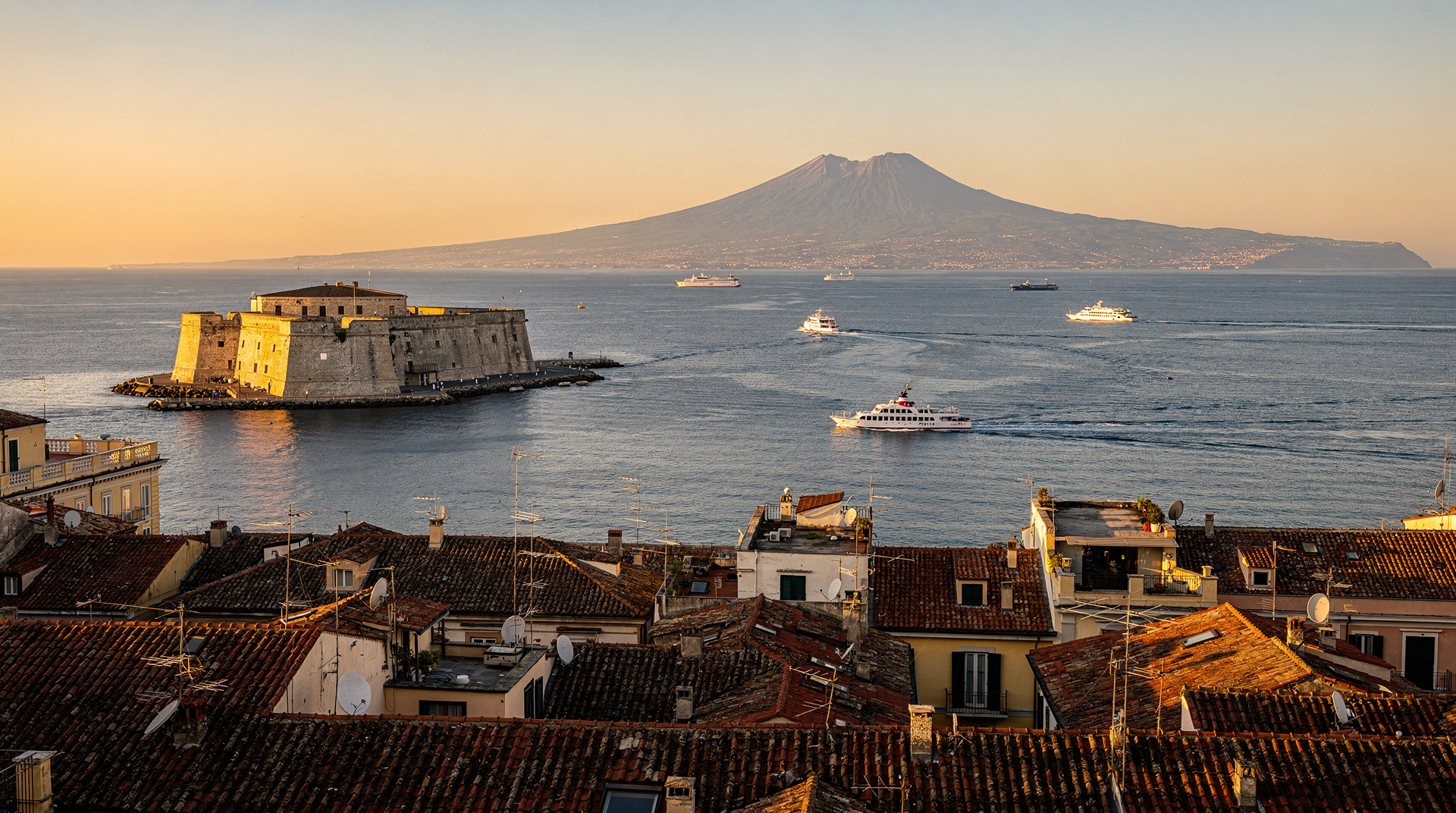
Lungomare waterfront: Free, beautiful, and perfect at dusk. Walk from Castel dell’Ovo past Villa Comunale to Mergellina, with views of Vesuvius and the islands.
Metro art stations: Toledo station on Linea 1 has been called the most beautiful metro station in Europe — the platforms descend through layers of Roman archaeological finds and a sensational blue-light installation. Free to enter.
The Best of Naples Private Walking TourWhat first-timers consistently get wrong
Underestimating time at the MANN. It is easy to spend 3 hours here and feel you rushed it. Do not book Cappella Sansevero immediately after — give yourself room.
Buying tickets on the day for Cappella Sansevero. It regularly sells out. Book online 3–7 days in advance in peak season.
Taking a taxi or rideshare to Pompeii. The Circumvesuviana is faster and cheaper. A taxi to Pompeii costs 40–60 € one way; the train costs 3.30 €.
Eating at the restaurants immediately outside Pompeii. They are overpriced and mediocre. Either bring food, walk into the town, or eat a proper meal back in Naples.
Planning Pompeii and Vesuvius in the same half day. Both deserve separate days, or at minimum a very early start and summer heat tolerance.
Staying near Napoli Centrale. The area around the main station is the least pleasant part of central Naples. Chiaia, the centro storico, or Via Toledo are better areas for a first visit. See where-to-stay-in-naples.
Not having any cash. Street food vendors, the Circumvesuviana, and small bars often prefer cash. Carry 50–100 € in notes.
Food: the first-timer’s guide to eating well
Neapolitan food is not the same as Italian-American food, and it is certainly not chain-restaurant Italian. Here is what to seek out:
Pizza: Order a Margherita or Marinara — the classics. Any respectable pizzeria uses San Marzano tomatoes and fior di latte (local mozzarella). Famous addresses: L’Antica Pizzeria da Michele (cash only, two options: Margherita and Marinara, ~7 €), Sorbillo (larger menu, Via dei Tribunali), Di Matteo (also on Via dei Tribunali), Gino e Toto Sorbillo. Expect to queue at dinner.
Pizza a portafoglio: The street version — a pizza folded into quarters and wrapped in paper. Buy from a window on Spaccanapoli. About 2–3 €. Eat it walking.
Sfogliatella: Ridged pastry in two forms — riccia (crispy, conch-shaped) and frolla (shortcrust). Filled with ricotta, cinnamon, and candied peel. Best at Pintauro (Via Toledo), Attanasio (near the station), or Scaturchio (Piazza San Domenico). About 1.50–2 €.
Cuoppo: A cone of fried street food — calamari, shrimp, zucchini, sometimes potato croquettes. 4–6 €.
Espresso: 1–1.20 € standing at the bar. Naples espresso is stronger and served slightly cooler than the rest of Italy. Do not ask for milk after 11:00 — you will get a polite but firm look.
Babà: The rum-soaked Neapolitan yeast cake. Available in pasticcerie throughout the centre.
For full street food recommendations, see naples-street-food-guide.
Day trips for first-timers
Pompeii is the default and it is the right choice. Nothing else in the region is as immediately striking.
Herculaneum is the better first choice if you want a smaller, less crowded, better-preserved site. It takes 2–3 hours rather than Pompeii’s 4–5, and the preservation of organic materials (wood, textiles) is extraordinary. See herculaneum-guide.
Capri as a day trip is possible from Naples but is a long day — 45–50 minutes by hydrofoil each way. It works better as a day trip from Sorrento (30–40 minutes). If you have only 3 days in Naples, consider skipping Capri for this visit and coming back.
How much a first visit costs
Naples remains one of the more affordable major Italian cities, which helps when planning a first trip. A realistic daily budget for a mid-range traveller: €10–15 for breakfast and coffee, €20–30 for a sit-down lunch or dinner (less for street food), €10–20 for museum entries, and €30–60 for a comfortable double hotel room per person depending on neighbourhood and season. The Naples trip cost and budget guide breaks this down by traveller style — budget, mid-range, and comfortable — with a day-by-day estimate.
How much time to allow, and where to look next
Three nights covers the essentials described above, but it is the minimum, not the ideal. The how many days in Naples guide walks through 2, 3, 5, and 7-day versions of a trip, and if your schedule is genuinely tight, the Naples in one day guide sets realistic expectations for a single-day visit — it is possible, but it means choosing between the city and Pompeii, not both.
For a broader sense of what the city offers beyond this first-timer list, the best things to do in Naples guide and the general transport guide are the natural next reads, and if you’re still deciding whether Naples belongs on your itinerary at all, is Naples worth visiting makes the case honestly, including the parts that won’t suit every traveller.
Guided tour of the Decumani and Naples undergroundWhat to expect emotionally, not just logistically
Most guides cover logistics well and leave visitors unprepared for the sensory adjustment. The first hour in Naples — stepping out of Napoli Centrale into the traffic and noise of Piazza Garibaldi — is genuinely disorienting for people used to more orderly Italian or northern European cities. Mopeds pass close, crossings feel improvised, and the streets can look more worn than glossy travel photos suggest. This is normal, and it passes.
By the second day, most visitors report the chaos reads less as danger and more as the texture of a city that has not been sanitized for tourism — which is, for many people, exactly the appeal. Give yourself the first afternoon to acclimatize rather than diving straight into a packed itinerary; a slow first walk through Chiaia or along the Lungomare works better than heading straight into the density of the centro storico.
Entry requirements for 2026
Italy is in the Schengen Area. Citizens of the US, UK, Canada, Australia, and dozens of other countries can enter for up to 90 days in 180 without a visa. The EU’s ETIAS travel authorisation is expected to launch in Q4 2026 but is not yet operational or required as of mid-2026 — this is a coming development, not a current requirement.
Frequently asked questions for first-time Naples visitors
What should I wear in Naples?
Comfortable walking shoes are non-negotiable — the cobblestones in the centro storico are uneven and tiring in heels. Dress lightly in summer (June–August temperatures reach 28–32 °C). For churches, have covered shoulders and knees (a sarong or light jacket in your bag works). Naples is not a formal city — smart casual is appropriate for most restaurants.
Is Naples suitable for solo travellers?
Yes — see solo-travel-naples for specific advice. The city is generally safe for solo visitors, and the café culture means it is easy to spend time in public spaces without feeling conspicuous. Solo women travellers should apply the same situational awareness they would in any large Italian city.
Do I need to buy a SIM card or is there free WiFi?
Most hotels and cafés offer free WiFi. A local Italian SIM (TIM, Vodafone IT, Wind Tre) is cheap if you want mobile data throughout the day — around 10–15 € for a month’s data. Alternatively, check if your home carrier has included EU roaming.
Is Naples suitable for a day trip from Rome?
Technically yes but not recommended as a first visit — the train is 1h10 but you lose 1–2 hours to getting oriented, and you need to leave by 17:00 to make the evening return. You will see a fraction of the city. Staying 2+ nights lets you actually experience it. If a day trip is genuinely all your schedule allows, the Naples in one day guide sets out the most realistic single-day route.
What is the best neighbourhood to stay in for a first visit?
Chiaia (near the waterfront, easy walking distance to the centro storico, quieter evenings) or the centro storico itself (Spaccanapoli / Via dei Tribunali area — central but noisier). Both are safe and well-served by transport. Vomero is quieter and has good views but requires a funicular trip down for sightseeing. See where to stay in Naples for a fuller neighbourhood-by-neighbourhood comparison.
Is it rude to eat on the street in Naples?
Not at all — street eating is built into the city’s culture. Pizza a portafoglio, cuoppo, sfogliatella — these are all designed to be eaten walking. Sitting on church steps while eating is frowned upon in front of active places of worship, but otherwise, eating in public is entirely normal.