Is Naples worth visiting? An honest assessment
Is Naples worth visiting?
Yes, for most travellers — particularly those interested in history, food, and experiencing a genuinely lived-in Italian city rather than a tourist-polished one. The MANN, Pompeii, and Cappella Sansevero are world-class. The pizza really is better here. If you want a relaxing beach holiday or a pristine cityscape, Naples may frustrate you.
Quick answer: Naples is worth visiting for most travellers — especially those who care about history, food, and authenticity. It is not the right destination if you want a polished, low-stress holiday.
| Best for | History, food, authenticity, budget travel |
| Not ideal for | Beach holidays, low-stress polish, toddlers |
| Time needed | 2 days minimum, 3–4 to add Pompeii |
| Cost level | Cheaper than Rome or Florence |
| Safety | Better than reputation — see the data below |
The honest case for Naples
Naples is one of the most contested city recommendations in European travel. People who love it tend to love it intensely. People who had a bad time tend to cite the chaos, the dirt, or a pickpocket incident. Both reactions are understandable.
This guide tries to give you enough information to make a decision that is right for you, rather than a blanket recommendation.
What Naples does exceptionally well
Ancient history — genuinely unmatched
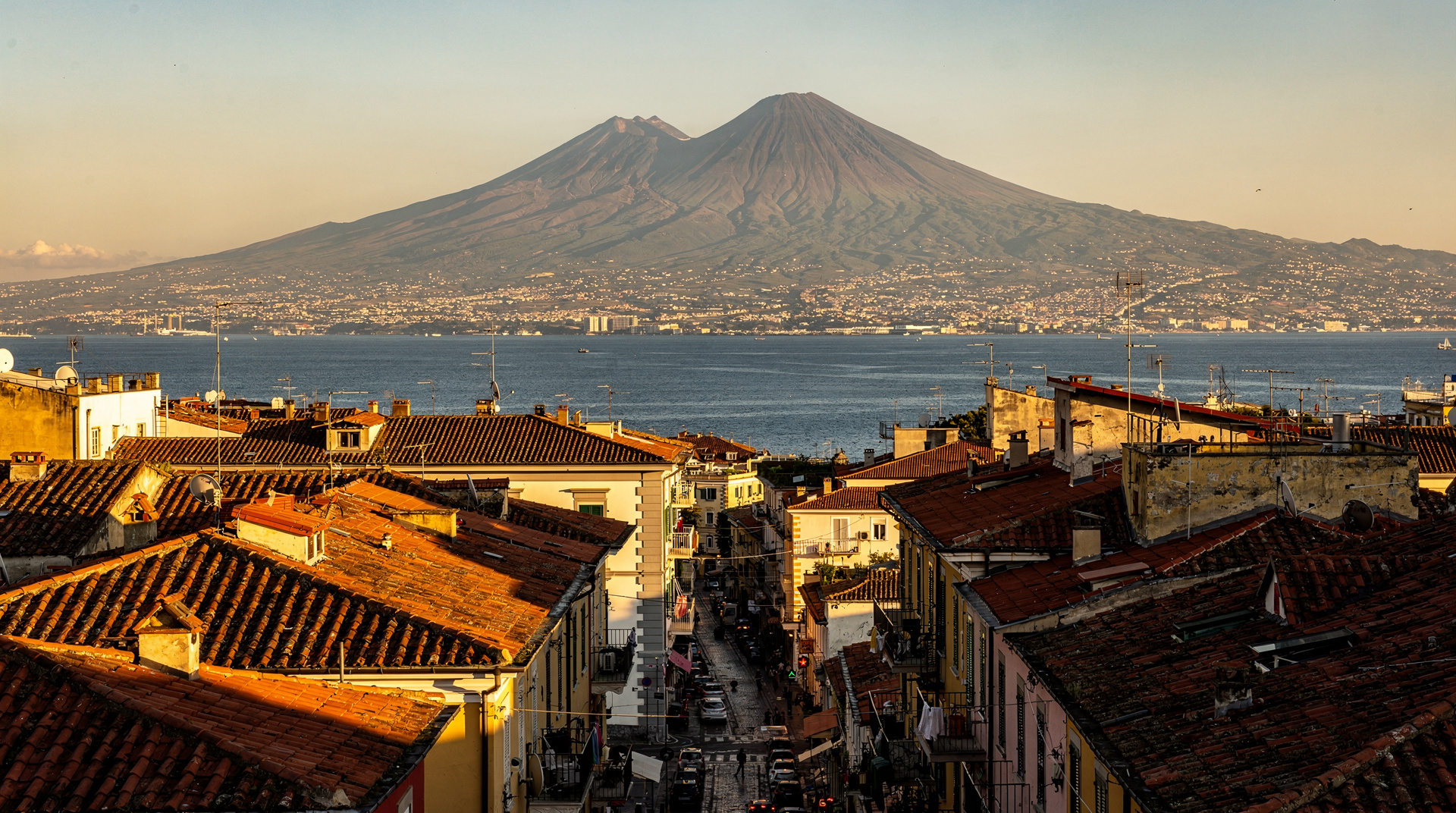
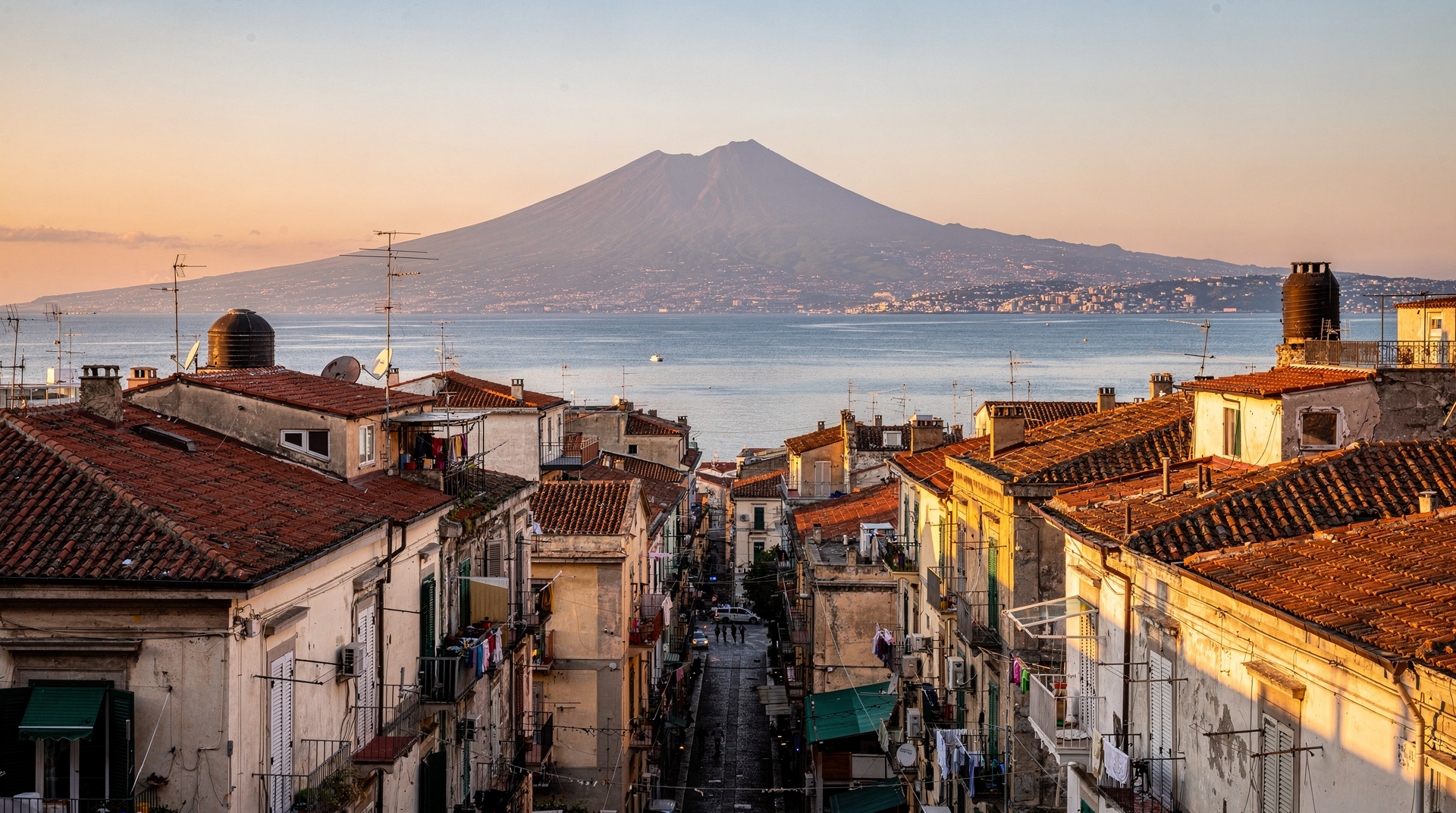
No city in Europe has more accessible Roman and pre-Roman history than Naples and its immediate surroundings. The MANN (National Archaeological Museum) holds the greatest collection of Pompeii and Herculaneum finds in the world — the mosaics, frescoes, bronzes, and erotic art that were removed from the sites and preserved. Pompeii itself is 30 minutes away by train. Herculaneum, just as extraordinary, is 20 minutes away. Mount Vesuvius is above both.
Under the centro storico, Greek and Roman infrastructure from 2,500 years ago remains intact — cisterns, tunnels, aqueducts, early Christian catacombs. The naples-underground-guide covers what you can visit.
Food — the best urban food culture in Italy
The argument for Naples as Italy’s finest food city is compelling. Pizza was invented here (the Margherita was created in 1889 for Queen Margherita of Savoy, according to the established story) and the Neapolitan pizzaiolo tradition is on UNESCO’s Intangible Cultural Heritage list. Neapolitan pizza is a distinct product — softer, wetter, more blistered than any other style — and at its source, it costs 5–8 € per pie.
Beyond pizza, the street food culture is deep and cheap: sfogliatelle (ridged ricotta pastry), cuoppo (fried seafood cone), pizza a portafoglio (folded pizza eaten walking), babà (rum-soaked yeast cake), and some of the best espresso in the world, served at 1–1.20 € per cup.
The naples-pizza-guide and naples-street-food-guide have the specific addresses.
Affordability
Naples is one of the cheapest large cities in Italy. Street food is inexpensive; even restaurant meals cost 20–30% less than Rome or Florence equivalents; mid-range hotels are well below the national average for comparable quality. A budget traveller can eat extraordinarily well for 15–20 € per day on street food and basic trattoria lunches.
Cappella Sansevero and the Veiled Christ
This single artwork — a full-scale marble sculpture of a shrouded figure, the cloth so precisely rendered that art historians once speculated about petrification processes — is one of the most technically extraordinary sculptures in the world. The chapel is small, the queue moves quickly, and the experience is genuinely arresting. No photograph does it justice.
The underground metro stations
The Linea 1 metro has some of the most architecturally ambitious subway stations in the world. Toledo (designed by Óscar Tusquets Blanca, inspired by the sea) was voted the most beautiful metro station in Europe by a Parisian architecture journal. Municipio station has ongoing Roman archaeological excavations visible through glass floors. All stations are free to enter.
What Naples does badly, or where it underdelivers
Urban maintenance and cleanliness
Naples has a long-standing problem with street rubbish. In the centro storico, particularly around Piazza Garibaldi and parts of the Spanish Quarter, rubbish accumulation and graffiti are visible and unpleasant. This is not a minority problem — it affects the aesthetic experience of the city. Chiaia, Vomero, and the Lungomare are significantly cleaner.
Traffic and noise
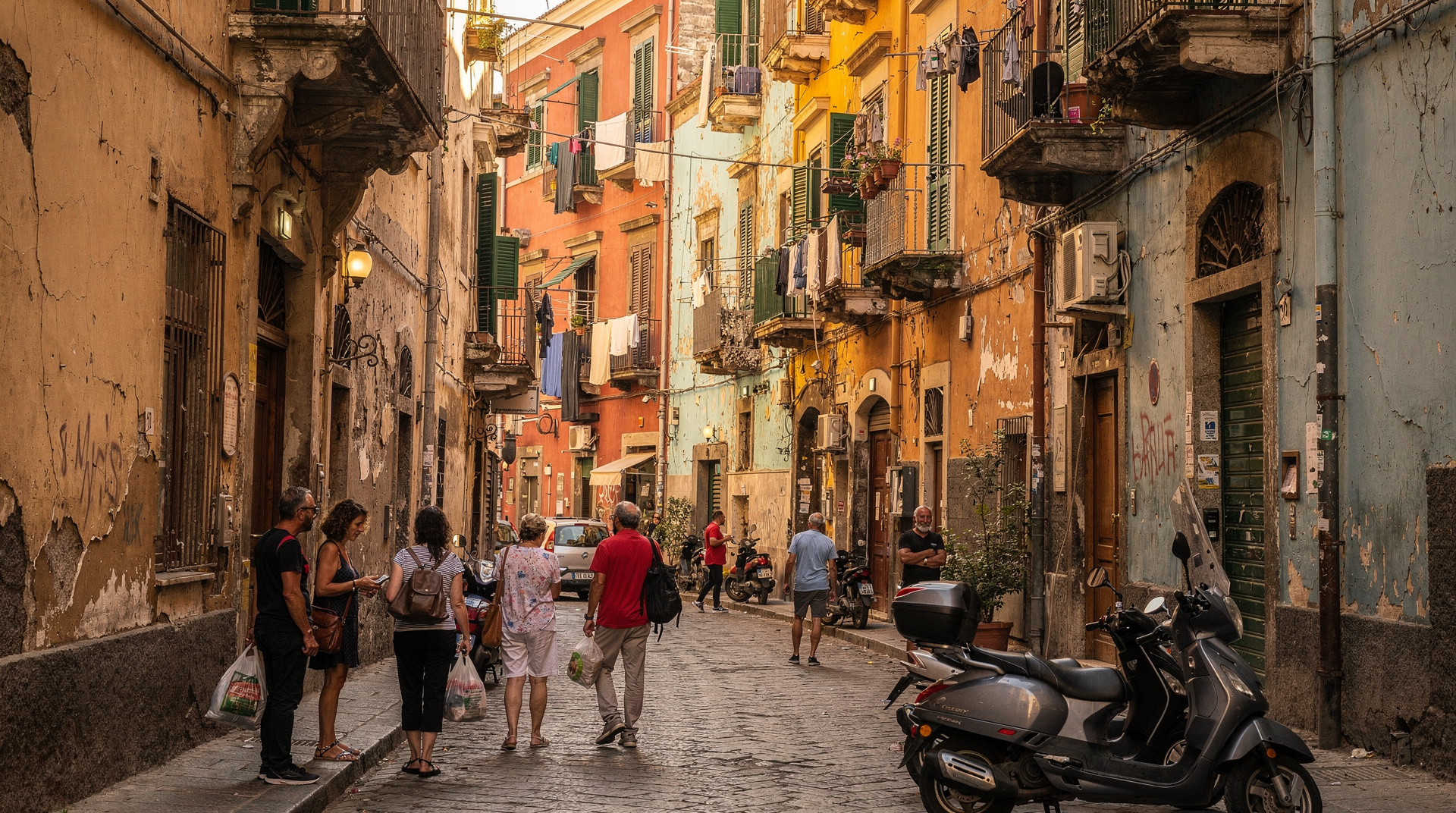
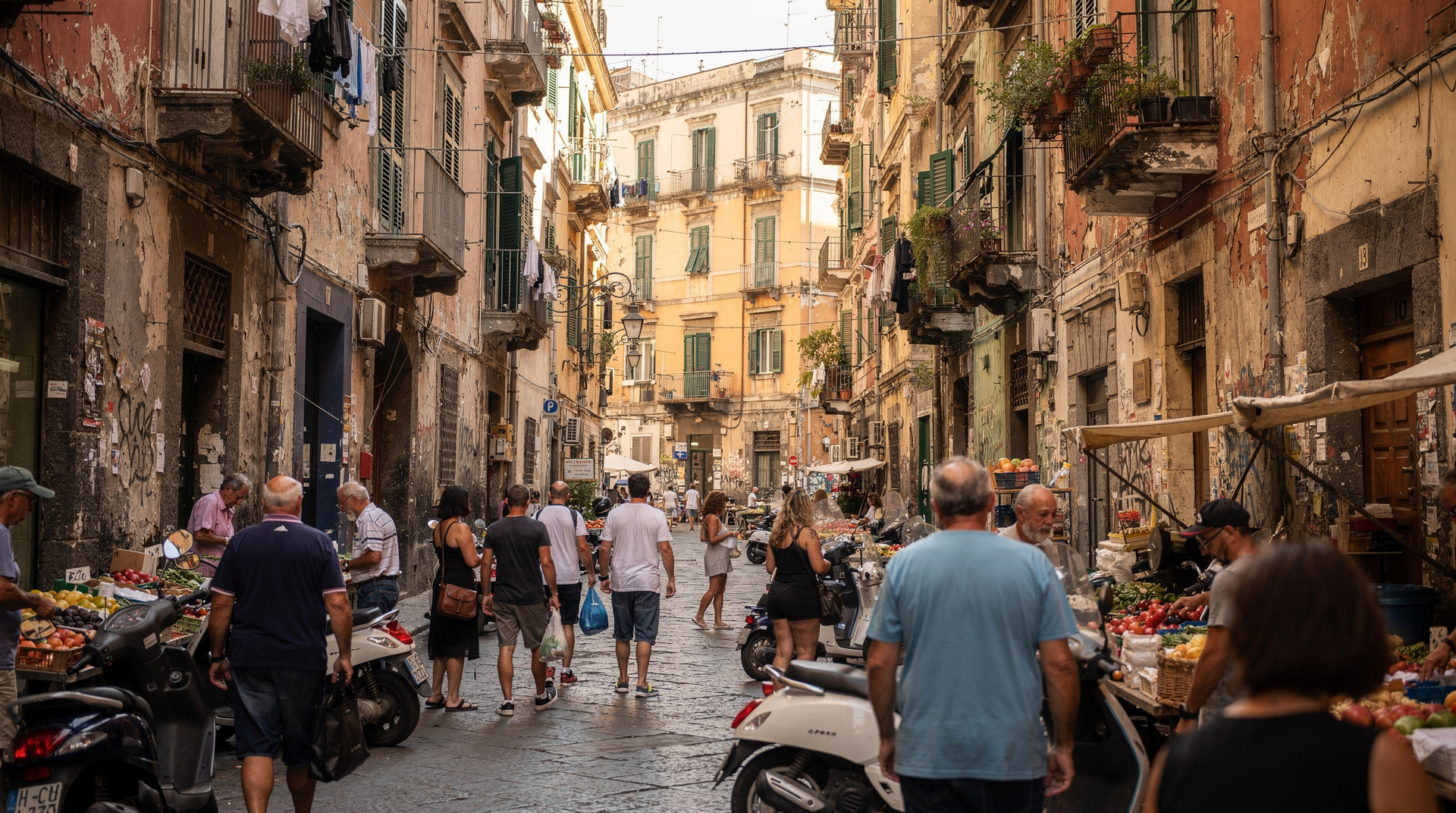
The centro storico is extremely busy with two-wheeled vehicles. Mopeds and motorcycles move at speed through narrow streets. Crossing the road requires patience and a degree of assertiveness. Some travellers find this thrilling; others find it exhausting.
Navigation complexity
The ZTL driving restrictions, the two different ferry terminals (Beverello for hydrofoils, Porta di Massa for car ferries), the Circumvesuviana pickpocket risk, the multiple levels of Napoli Centrale — Naples takes some orientation. It is not a difficult city, but it punishes travellers who do not read up in advance.
Tourist traps
The city has predictable tourist traps: restaurants on Piazza del Plebiscito and Piazza Trieste e Trento charging significantly over the odds; unofficial taxi drivers around the train station; overpriced tour operators at Pompeii entrance. See naples-tourist-traps for specifics. The restaurant-traps-naples guide covers where not to eat.
Who will love Naples
- Travellers interested in ancient Roman and Greek history
- Food-focused travellers willing to eat adventurously and cheaply
- Those who find “authentic” urban environments more interesting than tourist-polished ones
- History of art travellers (the MANN, Cappella Sansevero, Capodimonte museum)
- Independent travellers comfortable navigating a complex city
- Budget travellers — Naples is one of the best-value cities in Southern Europe
- Anyone already visiting southern Italy (Naples is the natural hub)
Who may not enjoy Naples
- Travellers primarily seeking relaxation and a low-stress holiday
- Visitors who find dirt and disorder genuinely upsetting (rather than merely inconvenient)
- Those expecting a polished, tourist-friendly experience comparable to central Rome or Florence
- Travellers with very young children who struggle with heat, crowds, and uneven cobblestones
- Anyone planning a beach holiday — the city beaches are mediocre (go to the islands instead)
Naples vs the alternatives
Naples vs Rome: Rome is easier, cleaner, and more tourist-developed. Naples has better food and a more intense living-city atmosphere. Both are essential Italian cities; neither replaces the other.
Naples vs Florence: Florence has higher art density per area but is more tourist-saturated and expensive. Naples is cheaper, less crowded (in the residential areas), and has more unusual/under-visited sites. See naples-vs-rome for a fuller comparison.
Naples as a base vs Sorrento: Sorrento is prettier, calmer, and a better base for Capri and the Amalfi Coast. But it has a fraction of Naples’ cultural depth. The optimal strategy for most first-time visitors is 2–3 nights in Naples, then 2–3 nights in Sorrento. See naples-vs-sorrento-base for detailed reasoning.
The Pompeii question
For many visitors, the strongest argument for including Naples in an Italy trip is Pompeii. If you are travelling through Rome and can extend south for 3–4 days, the addition of Pompeii (30 min by train from Naples) is one of the most compelling day trips in Europe. The site is large enough to absorb a full day and detailed enough to remain interesting to people who have visited before.
Combining Naples with Pompeii (and Herculaneum, if you have an extra day) is the classic Campania itinerary for a reason — it works. See the pompeii-complete-guide for what to prioritise.
What surprises first-time visitors
Even travellers who arrive expecting chaos are often surprised by specific details: how good the coffee is even at an unremarkable-looking bar, how cheap a genuinely excellent meal can be, and how much genuine warmth comes through once you get past the initial intensity of the street scene. The flip side surprises people too — the volume of scooter traffic on narrow streets, the amount of rubbish visible in some corners of the centro storico, and the fact that most museum and church interiors are noticeably calmer and more orderly than the streets outside them. Both sets of surprises are part of the same honest picture: Naples doesn’t sand down its rough edges for visitors, and that’s exactly why it feels different from Rome or Florence.
The safety question, briefly
Naples’ safety reputation is one of the biggest reasons hesitant travellers skip it — and it’s largely outdated. ISTAT crime data shows Naples with a lower pickpocketing rate than Rome, and the specific risks that do exist (Circumvesuviana theft, motorbike bag-snatching) are narrow and manageable with basic precautions. The full picture, including neighbourhood-by-neighbourhood detail, is in is Naples safe: the data — worth reading before you write Naples off on reputation alone.
Deciding how much time to give it
If the case above has convinced you, the next question is how many days. Two days covers the city’s headline sights; three adds Pompeii; a week lets you combine the city with the Amalfi Coast and Capri. See how many days in Naples for the full breakdown by trip length, and first-time-naples for a suggested order of operations if this is your first visit.
Frequently asked questions about visiting Naples
What is the one thing I should not miss in Naples?
The Cappella Sansevero (Veiled Christ) is the most irreplaceable single sight — nothing else like it exists in the world. After that, the MANN for the Pompeii collections, and a pizza at a proper local pizzeria.
Is 2 days enough for Naples?
Two full days is enough to see the best of the city — MANN, Cappella Sansevero, Spaccanapoli, Lungomare. It does not allow time for Pompeii. See how-many-days-in-naples for a full breakdown.
Is Naples suitable for a family holiday?
With older children (8+), Naples works well — Pompeii is compelling for children (the plaster cast victims are striking and age-appropriate to discuss), the metro stations are exciting, and the food is universally appealing. With toddlers, the cobblestones and heat are tiring. See naples-with-kids.
Can I visit Naples in August?
Yes, but with caveats. August is the hottest month (peaks above 35 °C), and August 15 (Ferragosto) sees many local restaurants and shops closed. Pompeii in August heat is punishing — go at opening, leave by 13:00. The islands and coast are very crowded. See naples-in-august-closures for what closes and when.
Does Naples get better on return visits?
Consistently yes. Most people who return rate it higher than their first trip. The city rewards familiarity — knowing which bars to use, which neighbourhoods to explore off the tourist circuit, which pizzerias to book and which to skip.
Is Naples more or less worth it than the Amalfi Coast?
They are different things. Naples is a city with deep historical and food culture. The Amalfi Coast is scenery and leisure. Most visitors benefit from both — 2–3 nights in Naples, then the coast. If forced to choose, Naples offers more substance; the coast offers more beauty.