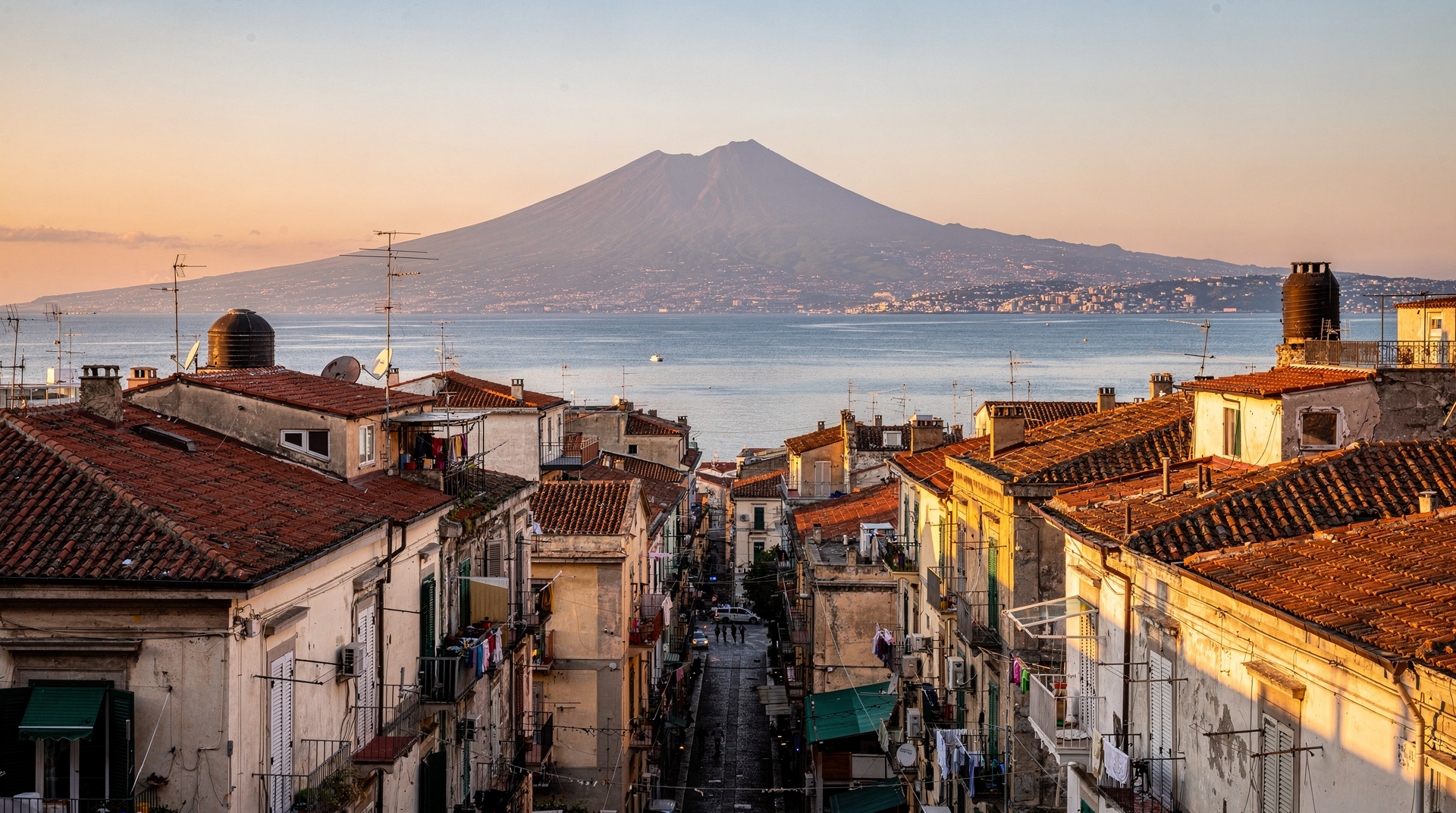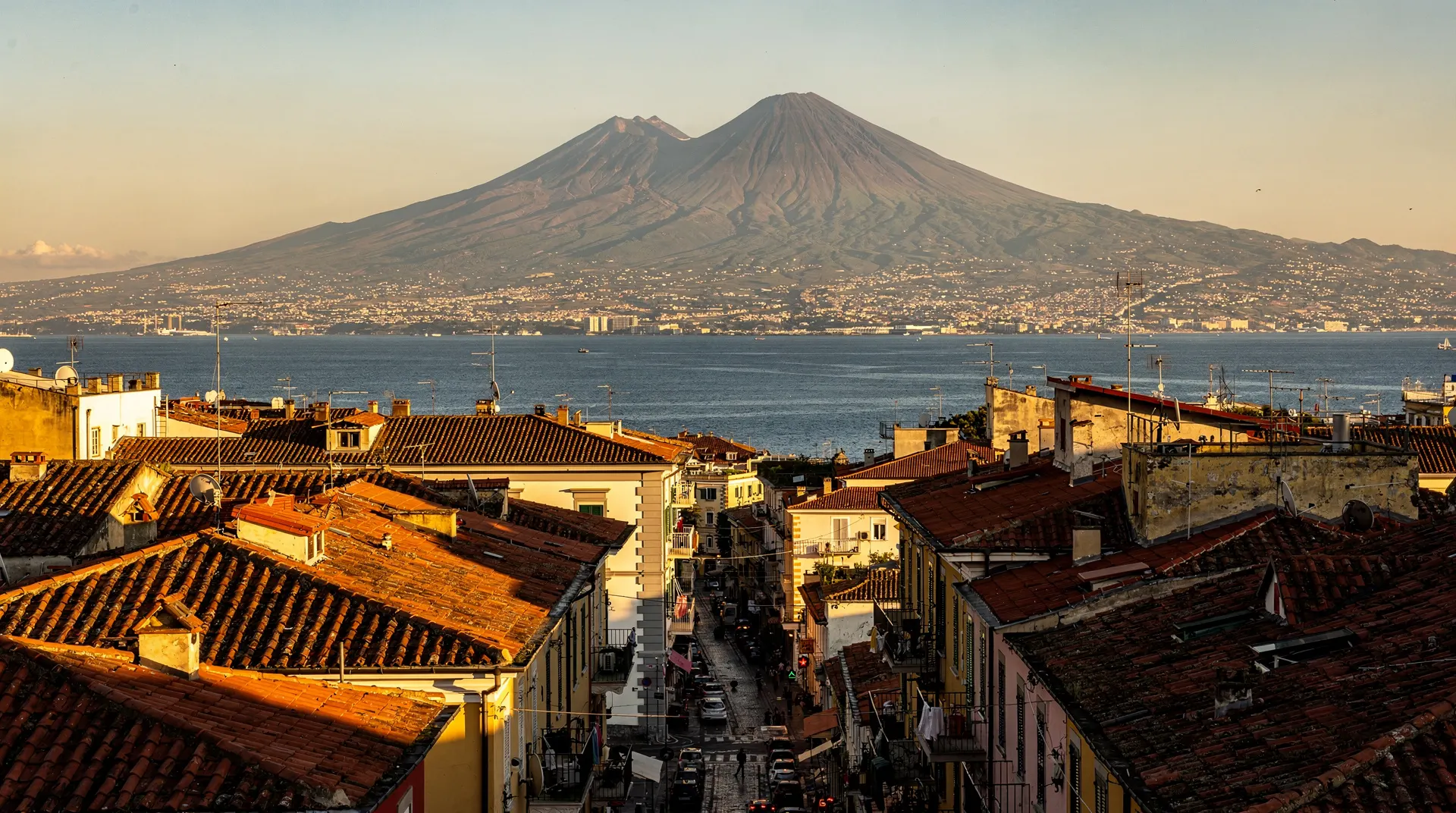
Naples vs Rome — which Italian city should you visit?
The Best of Naples Private Walking Tour
Should I visit Naples or Rome?
Both cities are extraordinary, but they suit different visitors. Rome is easier to navigate, more self-contained, and has wider accommodation choice. Naples is cheaper, has better street food, more intense cultural energy, and is the gateway to Pompeii, Capri, and the Amalfi Coast. For first-time visitors to Italy with limited time, Rome is often the safer choice. For repeat visitors or those prioritising archaeology and the bay, Naples offers more per euro.
Naples or Rome? Rome is more self-contained and navigable. Naples is cheaper, more intense, and sits at the centre of one of Italy’s richest archaeological landscapes. For a first trip to Italy, Rome is the default for good reason. For archaeology, food culture, or the Campania coast, Naples is the stronger choice.
| Cheaper city | Naples — 20–40% less across hotels, food, transport |
| Easier first trip | Rome — better signposted, wider hotel choice |
| Better day trips | Naples — Pompeii, Vesuvius, islands, Amalfi Coast |
| Train between them | 1h10, Frecciarossa/Italo, from €19 booked ahead |
| Do both? | Yes — 3–4 nights each on a 10–14 day trip |
Two cities that sell themselves completely differently
Rome has the Colosseum, the Vatican, the Trevi Fountain, and five thousand years of continuous monumental building. Its international recognition is total. Every infrastructure decision in Rome — metro, tourist lanes, museum booking systems — is calibrated for the 30+ million annual visitors.
Naples has none of this institutional framing. It does not present itself as a polished product. It is a chaotic, magnificent, deeply idiosyncratic city that rewards visitors who arrive with curiosity rather than a checklist. Its museums are genuinely world-class, its food culture unmatched in Italy, and its surrounding landscape — Vesuvius, Pompeii, Herculaneum, three islands, the Amalfi Coast — constitutes one of the most concentrated zones of extraordinary places on the planet.
The comparison is worth making not because you have to choose (you usually don’t) but because understanding what each city offers helps you allocate your time correctly.
Cost comparison: Naples wins by a significant margin
Naples is one of the least expensive major cities in Italy. Rome is significantly more expensive across every category.
| Category | Naples | Rome |
|---|---|---|
| Budget hostel dorm | €18–30 | €25–45 |
| Budget private double | €60–100 | €90–150 |
| Mid-range hotel double | €100–160 | €140–220 |
| Margherita pizza | €5–7 | €10–16 |
| Espresso at the bar | €1–1.20 | €1.20–1.80 |
| 24h transit pass | €4.50 | €7 |
| Pompeii/Colosseum entry | €20 each | €22–26 (timed reservation) |
The food cost difference is particularly noticeable. Naples’ street food culture — pizza a portafoglio (€2–3), sfogliatella (€1.50), cuoppo of fried things (€4–6), espresso while standing at a zinc bar (€1) — is a genuine bargain with no Roman equivalent. A full day in Naples can be managed on €30–40 including meals; the equivalent Rome day runs €50–70 at the same quality level.
Crowds and tourism pressure
Rome is Europe’s most visited city after Paris and Barcelona, with around 30 million arrivals annually. The Colosseum requires timed entry and books out weeks in advance in summer. The Vatican Museums have a peak wait of 3+ hours without advance booking. The Trevi Fountain is photographed shoulder-to-shoulder with strangers.
Naples is much less crowded in absolute terms. The main tourist hotspots — Cappella Sansevero, the MANN museum, Naples Underground — are busier than they were five years ago, but they rarely reach the saturation level of Rome’s top attractions. Pompeii in summer is genuinely overcrowded, but even at its worst it is less compressed than the Vatican.
The crowding comparison matters for planning: in Naples you can be spontaneous. In Rome, failing to pre-book the Colosseum or Vatican is a significant error in high season.
Museum and ticketing logistics
Rome’s major sights (Colosseum, Vatican Museums, Galleria Borghese) require timed-entry booking well in advance in peak season, and the booking systems themselves can be confusing — third-party resale sites often charge inflated fees for tickets available directly at official prices. Naples’ major sights are comparatively easier: MANN and Capodimonte rarely require advance booking outside weekends, though Cappella Sansevero is the notable exception and sells out days ahead regardless of season. This difference in booking pressure is one of the underrated advantages of Naples for travellers who dislike planning every hour of a trip in advance.
Public transport
Both cities have metro systems, but neither is comprehensive for tourists. Rome’s Metro has two main lines that barely touch the historic centre; getting around Rome means buses, trams, or walking. Naples’ Metro Line 1 is excellent (the Art Stations alone are worth a trip) and connects the main tourist zones — but the historic centre is largely pedestrian and most things are walkable from the centre.
The Circumvesuviana deserves special mention. This regional train connects Naples to Pompeii (30 min, €3.30) and Sorrento (65 min, €3.80) and is one of the most useful transit connections for tourists in Italy. It is also notoriously crowded, often late, and a known pickpocket environment — but it functions. Rome has no equivalent direct connection to any comparable archaeological site.
Safety: the statistical picture
Both cities carry a pickpocket risk that is real but manageable. The data, however, runs against Naples’ popular reputation.
ISTAT crime statistics show Rome recording approximately 14 pickpocketing incidents per 1,000 inhabitants annually. Naples records approximately 3 per 1,000. The concentration of tourists in small areas of Rome (the Vatican, Colosseum, Trevi Fountain, Termini station) makes it a higher-risk environment per tourist-hour than most of Naples.
Naples has specific risk zones that Rome does not: the Circumvesuviana train is a genuine pickpocket hotspot, particularly in summer with tourist luggage. The faux “gladiators” and bracelet sellers near tourist monuments are an annoyance. But the general city streets of tourist Naples (Spaccanapoli, Chiaia, Lungomare, Vomero) are no more threatening than central Rome.
Naples’ reputation derives partly from older statistics, partly from its socioeconomic challenges (which are real but concentrated in areas tourists never visit), and partly from a media narrative that has never updated itself. For a tourist walking the historic centre, the Lungomare, or the museum quarter, Naples is not more dangerous than Rome. See is-naples-safe-the-data for a full statistical breakdown.
Archaeological depth
Rome has the most concentrated monumental Roman archaeology in the world: the Colosseum, Roman Forum, Palatine Hill, Pantheon, Castel Sant’Angelo, and dozens of other sites. This is an extraordinary inheritance and impossible to match in concentration.
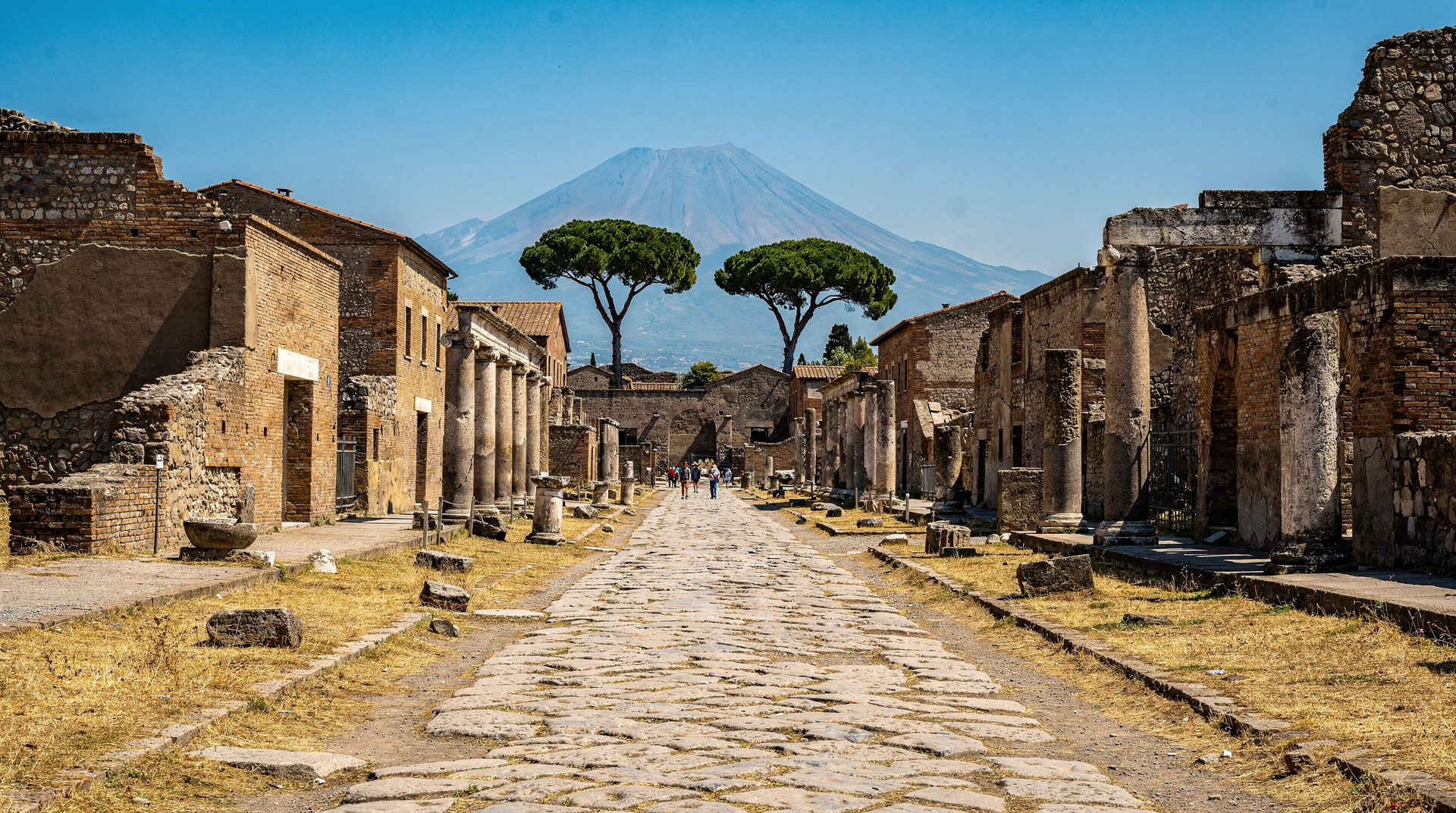
But Naples’ archaeological hinterland offers something Rome cannot: the preserved, inhabited moment. Pompeii and Herculaneum were buried alive in 79 AD and excavated with their contents intact — not the grand public monuments of imperial Rome, but bakeries with bread still in the ovens, houses with furniture and paintings, bodies preserved in volcanic ash. This is a different category of experience from Rome’s ruins.
The MANN — Museo Archeologico Nazionale di Napoli — houses the best collection of Roman domestic art and artefacts in the world, including the entire Secret Cabinet of erotic objects from Pompeii, the Farnese collection, and the original Alexander Mosaic. It is genuinely one of the great European museums and is barely mentioned in the same breath as the Vatican. See naples-archaeological-museum-mann for what not to miss.
Pompeii skip-the-line guided tour with archaeologistFood culture comparison
Rome has a strong pasta tradition: cacio e pepe, carbonara, amatriciana, and gricia are among the best pasta preparations in the world. Roman supplì, artichoke dishes, and pork products (porchetta, guanciale) are excellent. The city has thousands of good restaurants.
Naples’ food culture is a different matter. Pizza was invented here and is still made to a standard nowhere else reaches — the AVPN (Associazione Verace Pizza Napoletana) certifies over 3,000 pizzerias worldwide but the reference product is still a Neapolitan wood-fired margherita. Street food is extraordinary in variety and price. The coffee culture is a serious matter of civic identity — a Neapolitan espresso at a bar counter costs €1 and tastes noticeably different from what the same beans produce in Rome. Pastry culture (sfogliatella, babà, pastiera) is deeply embedded.
This is not a criticism of Rome. The two cities have different food identities and both deserve serious eating time. But if food culture is a primary travel interest, Naples offers more that is unrepeatable.
Naples food walking tour with 8 tastingsDay trips and surrounding region
From Rome: day trips reach Tivoli (Hadrian’s Villa, Villa d’Este), Ostia Antica, Orvieto, and Civita di Bagnoregio. All are good; none is Pompeii.
From Naples: within 30–90 minutes you can reach Pompeii, Herculaneum, Oplontis, Mount Vesuvius, Capri, Ischia, Procida, the Amalfi Coast, Caserta’s Royal Palace, and Paestum’s Greek temples. The density of exceptional day-trip options from Naples has no equivalent in Italy. See best-day-trips-from-naples for the full comparison.
This practical advantage is why many experienced Italy travellers, on their third or fourth visit, base in Naples rather than Rome: the day-trip landscape is simply more rewarding.
Nightlife and evening culture
Rome has more nightlife options in absolute terms — it is a capital city of 4 million. The Trastevere, Pigneto, and Testaccio neighbourhoods are active until 2–3am. Rome’s clubbing and bar scene is comprehensive.
Naples has an excellent evening culture centred on aperitivo bars (Chiaia is the main zone), late-night street food, and the passeggiata on the Lungomare. The San Carlo opera house runs performances from September to June (one of Italy’s most beautiful opera theatres). Piazza Bellini and the Spanish Quarter are active late. Naples is not an all-night party city but has enough evening depth for a week’s worth of good evenings.
Language, locals, and everyday interaction
Rome, as a capital and a top-five global tourist destination, has adapted heavily to visitors — many service workers switch to English immediately, and menus, signage, and transport information are routinely bilingual. Naples is less internationally adapted: English is common in hotels and central restaurants, but everyday interactions in markets, small bars, and with taxi drivers happen more often in Italian, occasionally in Neapolitan dialect. Some travellers find this a drawback; others find it exactly what makes Naples feel less staged than Rome’s most touristed quarters. A handful of Italian phrases go further in Naples than in Rome, and locals tend to respond warmly to the effort.
Architecture and urban texture
Rome is architecturally overwhelming: Baroque, Renaissance, Imperial, medieval, and modern layers stacked in every piazza. It is a city designed, consciously, to make visitors feel the weight of history.
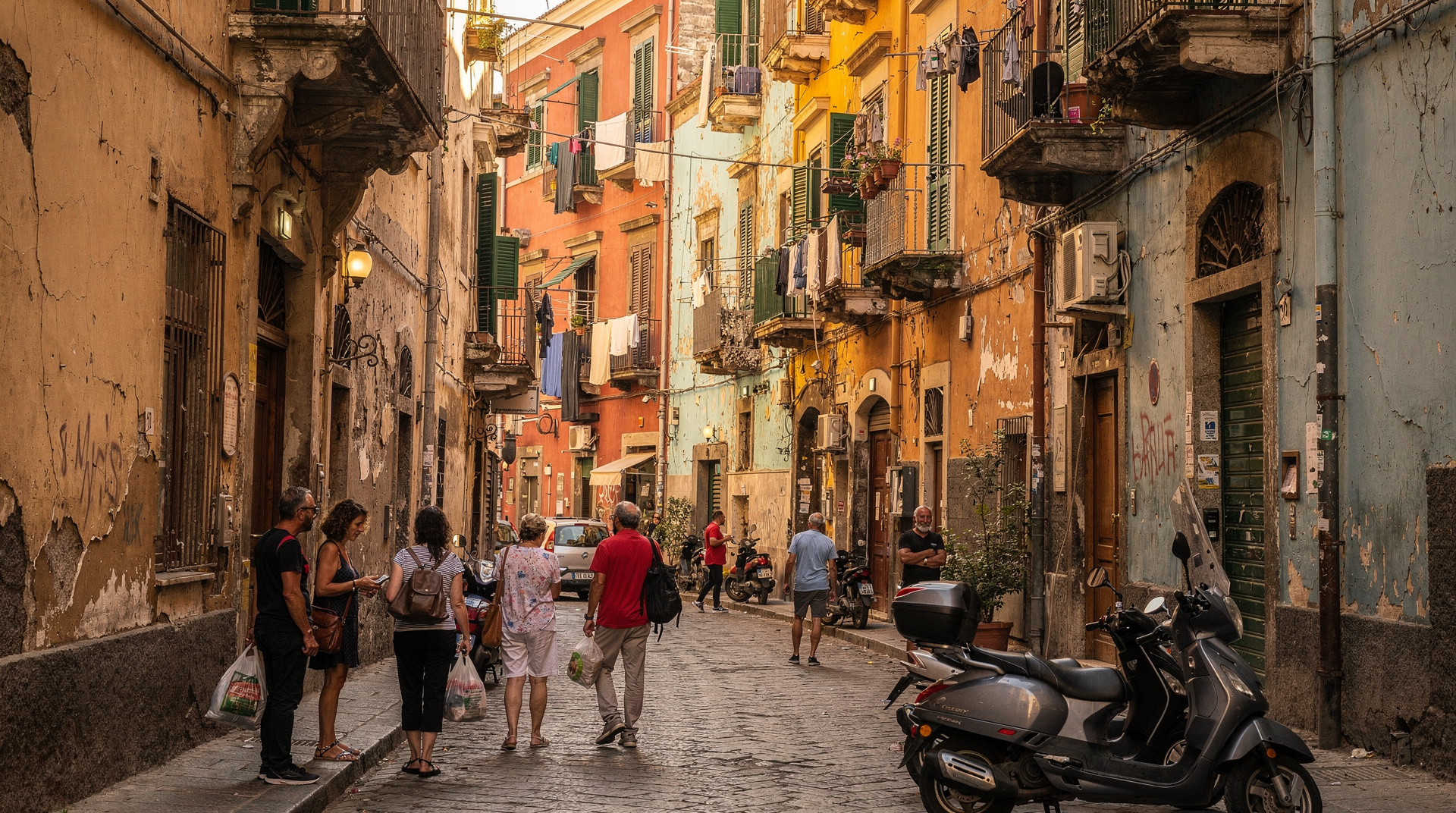
Naples has a different architectural character. The historic centre is UNESCO-listed for its continuous inhabited history from Greek settlement through Roman, Byzantine, Norman, Aragonese, Bourbon, and modern layers — all largely unrestored and lived-in. Walking Spaccanapoli or the Quartieri Spagnoli you encounter buildings still functioning as they have for centuries, laundry over Roman ruins, a Baroque church fronting a medieval courtyard. It is architecture that was never cleaned up for tourism.
Airports and arrival logistics
Rome is served by two airports — Fiumicino (FCO), the main international hub with direct trains to Termini, and Ciampino (CIA), used mostly by budget carriers with a bus transfer into the city. Naples’ Capodichino airport (NAP) is smaller and closer to the centre — about 15–30 minutes by bus or taxi, with no direct rail link as of 2026. For visitors flying long-haul, Rome’s Fiumicino generally has more direct international routes; for European visitors on budget airlines, Naples is often served directly too, particularly from the UK, Germany, and Scandinavia. If you are doing both cities, flying into one and out of the other (avoiding backtracking) is a common and efficient routing given the 1h10 train link.
Accommodation character
Rome’s hotel market is vast and stratified, from budget hostels near Termini to five-star properties near the Spanish Steps — with correspondingly wide price variation by neighbourhood. Naples’ hotel scene is smaller and more concentrated in Chiaia, the centro storico, and along the Lungomare, with fewer international chain options and more independent boutique properties. Naples’ relative shortage of large hotel inventory means peak-season prices can spike sharply around major holidays or cruise-ship days — booking further ahead pays off more in Naples than in Rome, where supply is deep enough to absorb demand spikes more smoothly.
Weather and seasonality differences
Both cities share a Mediterranean climate, but Naples’ coastal position moderates temperature extremes slightly more than Rome’s inland setting — summers feel marginally less oppressive near the Naples waterfront than in central Rome’s stone-paved piazzas, though humidity from the bay can make it feel sticky. Winters in Naples are a touch milder, and rain patterns are broadly similar across both cities (wetter autumn and spring, drier summer).
The practical difference that matters more than climate is what each city gives you in bad weather: Rome’s museums are numerous enough to fill several wet days without repetition, while Naples’ underground sites (Napoli Sotterranea, the catacombs) are an excellent rainy-day fallback that doubles as a genuinely worthwhile activity rather than a compromise.
Who should go to Rome
- First-time visitors to Italy
- Visitors for whom Vatican and Colosseum are non-negotiable
- Travellers who prefer navigable, well-signposted tourist infrastructure
- Those who want the widest accommodation range
- Anyone whose primary interest is Renaissance and Baroque art
Who should go to Naples
- Repeat Italy visitors who have done Rome
- Archaeology enthusiasts (Pompeii, Herculaneum, MANN)
- Food-focused travellers
- Anyone planning a Campania coast or island trip
- Budget-conscious visitors who want maximum value
- Travellers who enjoy navigating cities with genuine urban intensity
The sensible conclusion for most visitors
On a 10–14 day Italy trip, do both: 3 nights Rome, 4 nights Naples, 1h10 Frecciarossa between them. Rome first (easier to arrive, well-connected from most airports) then Naples (richer for exploration with established Italian travel confidence). The two cities are complementary, not competitive.
On a shorter trip of 5–7 days: choose one and do it properly rather than rushing between both. For first-timers, Rome. For repeat visitors, Naples. For archaeology and the coast, Naples.
Whichever you choose, the naples-to-rome-train guide has the practical booking details — timetables, price bands, and station navigation at both ends.
Naples best of walking tourFrequently asked questions about Naples vs Rome
Which city is better in summer?
Both cities are hot in July and August (30–35°C) and crowded. Rome’s tourist infrastructure handles the summer surge better than Naples, but Naples gives you the option of escaping to the islands and the Amalfi Coast, which Rome does not. For summer travel, Naples offers more alternatives to the city heat.
Is English widely spoken in both cities?
Yes, in tourist areas of both cities. Rome has more English-language signage and tourist infrastructure. In Naples, English is common in the tourist areas but the city’s character is more distinctly Italian in feel. Outside the tourist zones, Italian is necessary. Both cities are manageable without Italian in the standard tourist circuits.
Which city is better for a weekend trip?
Rome, by a small margin. Its headline attractions are concentrated, the airport connection (Fiumicino, Ciampino) is strong from most European cities, and a 2-day Rome visit covers the essentials. A 2-day Naples visit covers the city but barely touches the surrounding region. If you are coming from within Europe for a long weekend, Rome is the more complete experience at that time scale.
Can I do a day trip from Rome to Naples (or vice versa)?
Yes. The 1h10 train makes it feasible, but a day trip from Rome to Naples or Naples to Rome is rushed. It works for people who have specific targets — a day trip from Rome to Pompeii is especially common and manageable. But to properly experience either city, you need an overnight stay.
Which city has better art museums?
Rome, in absolute terms — the Vatican Museums and Galleria Borghese are among the world’s great art collections. But Naples’ art offer is underrated: the MANN, Capodimonte (with the strongest Baroque collection in Italy, including works by Caravaggio and Titian), and the Certosa di San Martino all deserve serious time. Naples has more to reward repeat museum visits than its reputation suggests.
Where should I eat pizza — Naples or Rome?
Naples. This is not a debatable point. Pizza Napoletana is a protected product and the city’s pizzerias represent its definitive form. Roman pizza al taglio (by the slice) is a different and excellent thing, but Neapolitan wood-fired margherita from a historic Naples pizzeria is in a different category. See where-to-eat-pizza-naples for specific recommendations.
Is it possible to see both cities in one week?
One week covering both cities means approximately 3 days each with travel time. This is possible but leaves little room for archaeological sites or the Campania coast. If the goal is the full Naples region (city, Pompeii, one island, day on the coast), allocate 5–6 days in Naples and skip Rome on that trip.
Frequently asked questions about Naples vs Rome — which Italian city should you visit?
Is Naples cheaper than Rome?
Which city is safer for tourists — Naples or Rome?
Which city has better food?
How long does it take to get from Naples to Rome?
Which city is better for families with children?
Do I need to choose between Naples and Rome?
Which city has better archaeological sites?
Top experiences
Bookable activities with verified prices and instant confirmation on GetYourGuide.