Naples in winter: what to expect in December, January and February
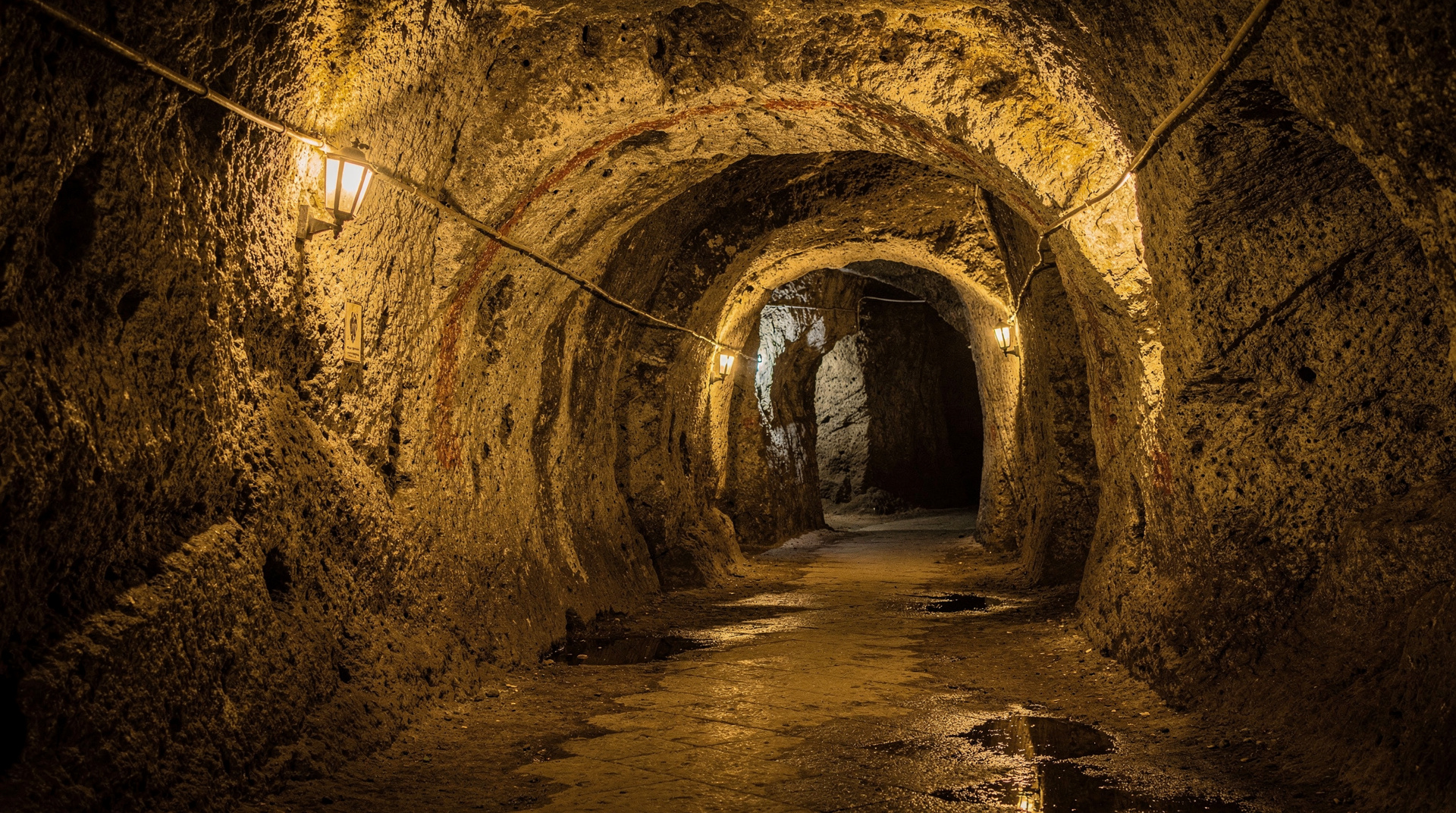
Naples: The Underground of Napoli – Trip to the Hidden City
What is Naples like in winter?
Mild, damp, and refreshingly uncrowded. Temperatures sit between 10 and 14 °C. Rain comes in bursts rather than all day. Museums and underground Naples are exceptional value in low season. Christmas brings the presepi tradition and genuine festive atmosphere. January and February offer the lowest prices of the year and almost no queues at any attraction.
Quick answer: Winter (December–February) is Naples in low season — mild at 10–14 °C, occasionally rainy, uncrowded and cheap. Museums, underground sites, and the food scene are the main draws. Christmas brings excellent presepi culture. Islands and the Amalfi Coast operate with reduced services; plan accordingly.
| Temperature range | 10–14 °C daytime, 5–7 °C overnight |
| Rain | 8–12 rainy days/month, in bursts not all-day |
| Prices | 30–50% lower than summer (Jan–Feb) |
| Amalfi Coast/islands | Reduced services Nov–March |
| Best for | Museums, food, city culture — not beaches |
What winter actually feels like in Naples
Naples in January does not look like a typical “winter city” to visitors from northern Europe or North America. Locals wear coats; cafés feel warm and steamy; pastry shops run at full capacity. The streets of the historic centre are busy on a weekday morning in February in a way that July never achieves — because the people on them are mostly Neapolitans, not tourists.
That is the essential character of a winter visit: you are sharing the city with the people who live in it. The trade-off is shorter days, rain episodes, and a coast and island scene operating at minimum capacity.
December is the busiest winter month by visitor numbers, pulled up by the Christmas season. The city’s nativity scene tradition draws Italians from across the country, and the atmosphere between December 8 (Immaculate Conception) and Epiphany (January 6) is genuinely festive.
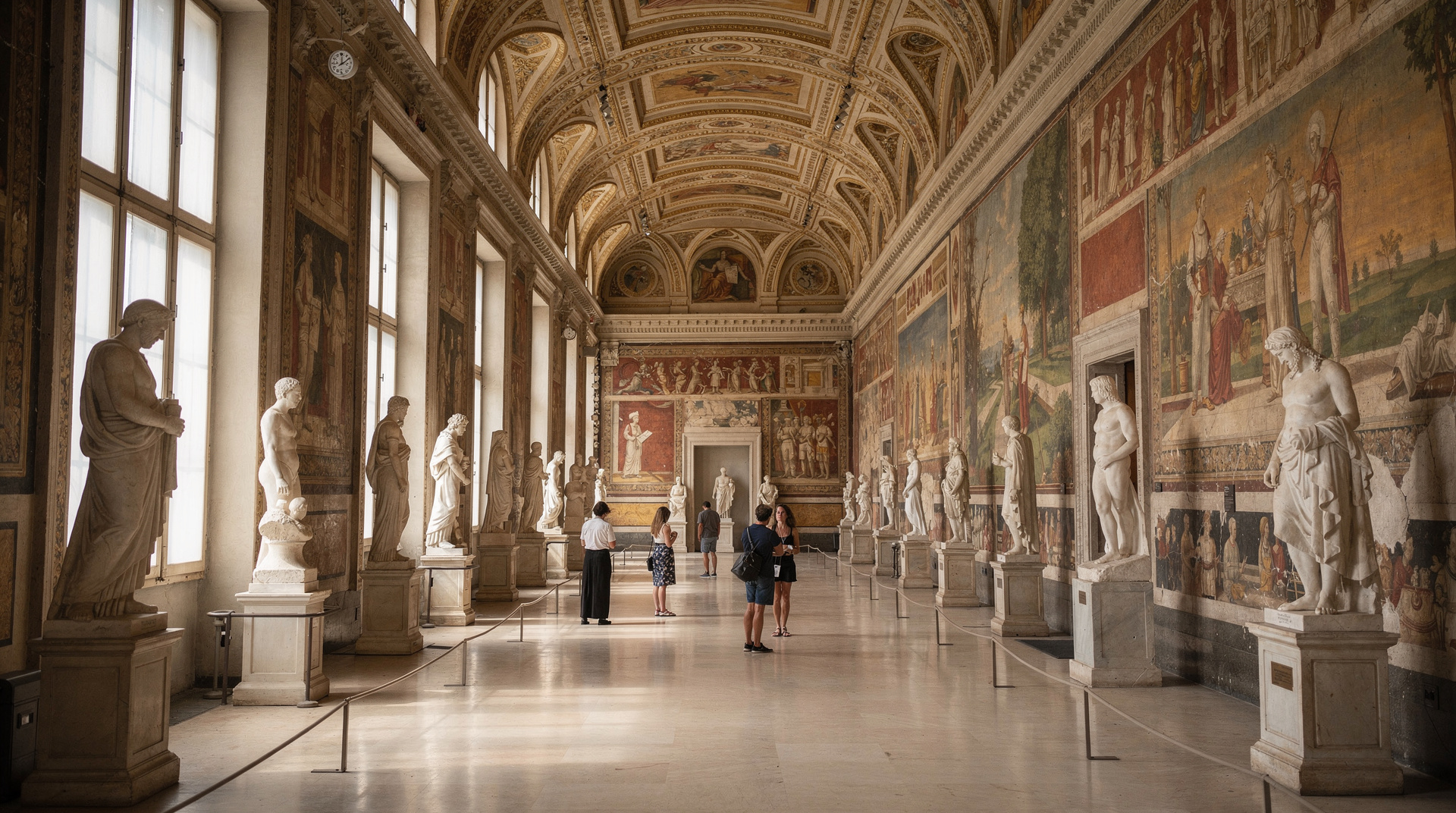
January and February are the quietest months of the year at every attraction. If your goal is to visit MANN or Capodimonte without crowds and without paying premium prices, these two months are unambiguously the best time to go.
The museums: winter’s clearest advantage
Naples has two world-class museums that summer visitors routinely shortchange because of heat, exhaustion, or insufficient time: MANN and Capodimonte.
MANN — Museo Archeologico Nazionale di Napoli holds the greatest collection of Greco-Roman antiquities in existence. The Farnese collection, the Secret Room, the mosaics from Pompeii’s House of the Faun — each of these alone justifies a half-day. In summer, the queues and tour groups make deep engagement difficult. In January, you can stand alone in front of the Alexander Mosaic. Entry: around 18 €; check for the first Sunday free admission.
Capodimonte sits in a park above the city, in a former Bourbon royal palace. The painting collection spans Titian, Caravaggio, Raphael, and an extraordinary room of Neapolitan baroque. In winter, the park is empty, the galleries are quiet, and the café inside the palace is a genuine pleasure. Entry: approximately 16 €. Take the Capodimonte bus from Piazza Dante or a taxi.
Cappella Sansevero — home to the Veiled Christ sculpture — is small, intense, and visits are time-slotted. Winter queues are minimal; in summer you often wait 45 minutes. Book online regardless of season (around 8 €) because slot capacity is limited.
See best-museums-naples for opening hours, prices, and routing between the three.
Underground Naples in winter
The underground is temperature-neutral by definition. The Greek tunnels, Roman cisterns, and WWII shelters that run beneath the historic centre maintain a constant 15 °C throughout the year — warmer than the street in January, cooler than the street in August.
What changes in winter is the atmosphere above ground: emerging from a two-hour underground tour into a rainy winter afternoon in Spaccanapoli feels cinematic in a way that emerging into a packed July street does not.
The main options are Napoli Sotterranea (Piazza San Gaetano, tours in English and Italian, around 12–15 €) and Galleria Borbonica (Via Morelli, different route and character, military and royal history emphasis, similar price). Both are worth doing; Napoli Sotterranea is the classic tourist circuit, Galleria Borbonica more eclectic.
Naples: The Underground of Napoli – Trip to the Hidden CityBoth routes run year-round with no weather dependency. If you arrive in Naples on a rainy day with no outdoor plan, an underground tour is the obvious solution.
Christmas and December: the presepi season
Naples has a specific, serious relationship with the nativity scene — the presepe — that dates to the 13th century. This is not decorative; it is cultural, artisanal, and in December intensely commercial in the best possible way.
Via San Gregorio Armeno in the heart of the historic centre is the world capital of nativity craftsmanship. The street operates year-round but December is when it reaches full intensity: artisans display complete scenes from floor to ceiling, figures of politicians and celebrities appear alongside the traditional shepherds, and the smell of wood shavings and lacquer mixes with coffee from the surrounding bars. It is the most specifically Neapolitan street experience the city offers.
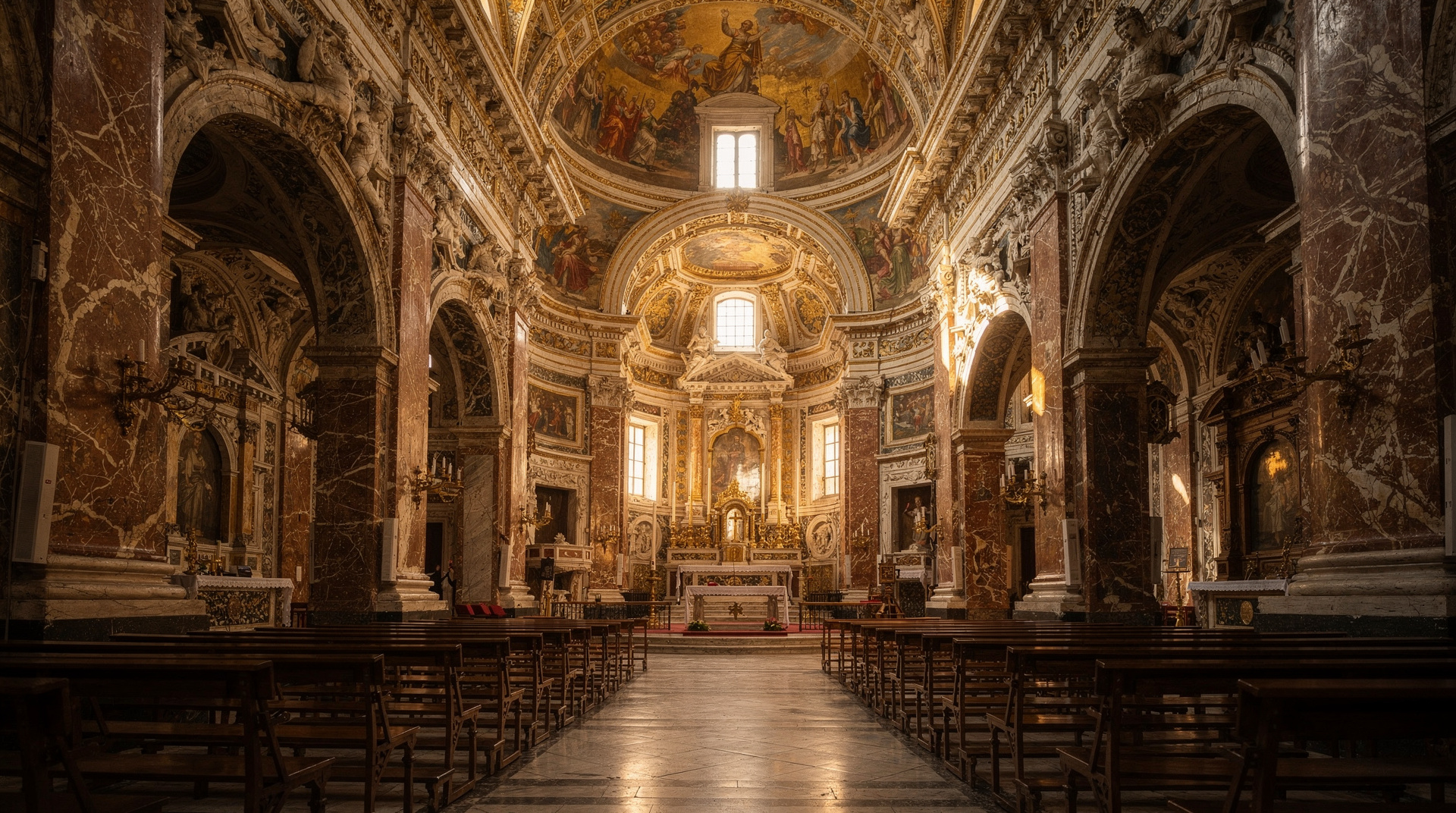
Churches across the city display their historic presepi from December 8 onward. San Martino charterhouse museum, Santa Chiara, and the Gesù Nuovo all have significant displays. Entry to most churches is free; San Martino charges museum admission (around 6 €).
Epiphany (January 6) marks the end of the Christmas season in Italy. The Befana — a benevolent witch who delivers gifts and coal to children — is celebrated with particular warmth in Naples. The night of January 5 into January 6 sees street events in several neighbourhoods. After Epiphany, the city transitions into its quietest period of the year.
See naples-at-christmas-presepi for a practical guide to the presepi trail, church opening times, and the Via San Gregorio Armeno artisans.
Food in winter: the honest answer
Winter is not a bad time for Naples food — it is arguably the best time. The city’s cold-weather culinary identity is distinct and undervalued.
Ragù napoletano is a Sunday institution and a slow-cooked dish — pork ribs, sausage, and meatballs simmered for at least four hours in tomato sauce. The authentic version appears at lunch in family-run trattorie in the Quartieri Spagnoli, Sanità, and Forcella neighbourhoods. It is rarely on menus in tourist restaurants; you need to look for hand-written boards and places with no English translation.
Pizza in winter is marginally better than summer because the wood-fired ovens make the dining room warm and the dough behaves differently in cooler ambient conditions (many pizzaioli will quietly admit this). A margherita at a serious pizzeria in January costs 5–8 €. The same pizza in July in a tourist-facing location in the centre can cost 12–15 €. The fundamentals are unchanged; the atmosphere is calmer.
Pizza fritta deserves its own mention. The fried pizza variant — dough folded around ricotta, cicoli (cured pork fat), and provola, then deep-fried — is the street food to eat on a cold rainy afternoon. The best-known vendor is Antica Pizza Fritta da Zia Esterina Sorbillo on Via dei Tribunali (around 3–4 €), but smaller stands throughout Spaccanapoli serve it. Eat standing up, immediately.
Sfogliatella riccia — the ridged, flaky pastry filled with semolina cream and citrus — is produced and sold warm from 07:00 onward. It is available year-round but feels specifically right eaten on a cold winter morning with a standing espresso. Pasticceria Attanasio near the central station (open from 06:30, 1.50–2 € per sfogliatella) is the standard recommendation.
A Taste of Napoli: Food Walking Tour with Local Tour GuideThe naples-street-food-guide has a practical map of the historic centre vendors.
Pompeii in winter: comfortable but brief
The archaeological site at Pompeii is genuinely pleasant to visit from November to March. The reasons are simple: temperatures are comfortable, the site is uncrowded, the light in winter has a low-angle quality that makes the stone and fresco colours look richer, and the absence of summer haze often means Vesuvius is visible from inside the site with unusual clarity.
The constraint is daylight. The Pompeii site closes at 17:00 in winter (last entry 15:30). Sunrise is around 07:15 in December and 07:00 in February, so you have a workable window of 09:00–15:30 — roughly six hours of exploring. That is enough for the essential circuit (Forum, House of the Faun, House of the Tragic Poet, Villa of the Mysteries, Via dell’Abbondanza) without rushing.
The Circumvesuviana from Napoli Garibaldi to Pompei Scavi takes about 40 minutes; trains run roughly every 30 minutes. The Campania Express (a separate service running April–October with fewer stops and less risk of pickpocketing) does not operate in winter, so use the Circumvesuviana and keep your bag in front of you. Entry to Pompeii: 18 €.
Herculaneum (Ercolano on the Circumvesuviana, 20 minutes from Naples) is more compact and partially covered, making it a better choice than Pompeii if the weather is uncertain. It is also exceptional — smaller but arguably better-preserved than Pompeii for individual houses and frescoes.
The Amalfi Coast and islands in winter: honest assessment
This section requires directness because some travel content presents winter coast visits as an attractive secret. The reality is more nuanced.
Amalfi Coast: The stretch from Positano to Ravello and Amalfi operates at reduced capacity from November to Easter. Many of the most photographed hotels in Positano are closed from November through March. Restaurants that cater to tourists operate on irregular hours or are shuttered. The public buses run, the roads are drivable (without summer traffic restrictions), and the scenery is unchanged — but you will be visiting a partial version of the destination.
If you want the Amalfi Coast in winter, Ravello (inland, above Amalfi town) and Amalfi town itself have more year-round activity than Positano. Sorrento, though technically outside the Amalfi Coast, is the most reliably open base in the area in winter — with hotels, restaurants, and ferry connections operational throughout.
Capri: Ferry services continue in winter but run less frequently (typically 3–5 round trips per day vs. 20+ in summer). The island’s tourist economy essentially closes from November through March. Walking the island in winter calm has its own appeal, but check that your accommodation and intended restaurants are open before committing to a winter Capri trip.
Ischia and Procida: Both retain more local life year-round than Capri. Ischia’s thermal parks operate in winter (reduced hours). Procida is a working fishing community and feels genuinely authentic in the off-season.
The sea temperature in winter (13–15 °C) rules out casual swimming. The coast is not a beach destination from December to February.
What to wear: the practical kit
Naples in winter does not require heavy winter gear, but waterproofing is non-negotiable.
- A compact packable waterproof jacket or an umbrella: essential. The rain is not always foreseeable from the morning sky.
- Mid-weight layers: a fleece or a wool jumper under the waterproof is sufficient for most days.
- Waterproof walking shoes or ankle boots: the cobblestones of Spaccanapoli and the Quartieri Spagnoli become genuinely slippery in rain. Smooth-soled shoes are a minor hazard.
- A scarf: useful on the Lungomare, where the wind off the bay can be cutting on cold January days.
- A warm hat: optional but welcome in January–February evenings.
Heavy winter boots, ski-grade insulation, and thermal base layers are unnecessary and will overheat you in heated museums and cafés.
See naples-packing-essentials for a full gear list covering all seasons.
Who winter suits and who it does not
Winter is well-suited to:
- Travellers whose primary interest is art, archaeology, food, and urban culture rather than beaches.
- Visitors returning to Naples who have already seen the islands in summer and want the city’s deeper character.
- Budget travellers: January–February are the cheapest months of the year. Four-star hotels in Chiaia that cost 200 € in June drop to 90–110 €. Flights are significantly cheaper.
- Anyone who dislikes crowds: MANN, Capodimonte, and Pompeii are all transformed by the absence of summer tour groups.
- Visitors focused on December’s Christmas atmosphere and presepi culture specifically.
Winter is less well-suited to:
- Travellers who plan to base most time on the Amalfi Coast or Capri: you will encounter closures and reduced services that may frustrate the trip.
- Those requiring reliable beach and swimming time.
- Visitors with very young children who need reliable outdoor space and full resort infrastructure.
- Travellers who find short daylight hours (sunset 16:30 in December, 17:15 by late February) psychologically difficult.
The best-time-to-visit-naples guide compares all seasons across the key planning variables. If you are deciding between autumn and winter, see naples-in-autumn; for spring, naples-in-spring.
Winter month by month: quick comparison
| Factor | December | January | February |
|---|---|---|---|
| Average high | 12–14 °C | 10–12 °C | 10–13 °C |
| Prices | Rising toward spring near Christmas | Cheapest of the year | Cheapest of the year |
| Atmosphere | Christmas/presepi season | Quiet, local | Carnevale builds from late month |
| Amalfi Coast/islands | Reduced | Minimal | Minimal, reopening late Feb |
| Best focus | Presepi, Via San Gregorio Armeno | Museums, food | Museums, food, Carnevale |
A winter city day that doesn’t need good weather
Winter’s real advantage is that Naples’ best indoor attractions are strong enough to carry an entire day regardless of the forecast. A practical version: start at MANN at opening for the quietest hour of the week, walk through Spaccanapoli for lunch and a stop at Cappella Sansevero (booked ahead regardless of season), then head underground for the afternoon — Napoli Sotterranea or the Galleria Borbonica both hold a constant 15 °C no matter what’s happening above ground.
Finish with an early dinner built around ragù napoletano rather than trying to force an evening walk in the rain. This kind of day works in any winter weather and, unlike a summer version of the same plan, involves no queues.
Guided MANN tour — quietest time of year to visitFrequently asked questions about Naples in winter
Is Naples safe in winter?
Safety considerations do not change significantly by season. The standard advice applies year-round: keep bags in front of you on the Circumvesuviana, be alert near Napoli Garibaldi station and Via Toledo, and use official taxis or apps rather than unlicensed drivers. The tourist crowd that attracts opportunistic theft is smaller in winter, which marginally reduces pickpocket risk at the main sites. The neighbourhoods of Chiaia, Vomero, and Posillipo are safe year-round.
What events happen in Naples in winter?
December: Feast of the Immaculate Conception (December 8), opening of presepi displays, Christmas markets. December 31: New Year celebrations across the city, with fireworks visible from the Lungomare — a significant local event. January 6: Befana and Epiphany street events. Late January–February: Carnevale season, with celebrations in various neighbourhoods and zeppole di San Giuseppe appearing in the pasticcerie. See naples-events-calendar for confirmed dates.
How much cheaper is Naples in winter?
Substantially. Hotel rates in the centre and Chiaia drop 30–50% from summer peaks in January and February. December is more expensive, particularly in the week before Christmas and New Year (rates approach spring levels). Restaurant prices do not change significantly — Naples is not as aggressively seasonal in pricing as Capri or Positano — but lunch menus (menus del giorno) at 10–14 € become easier to find in winter as restaurants compete for lower foot traffic.
Can I see Vesuvius from Naples in winter?
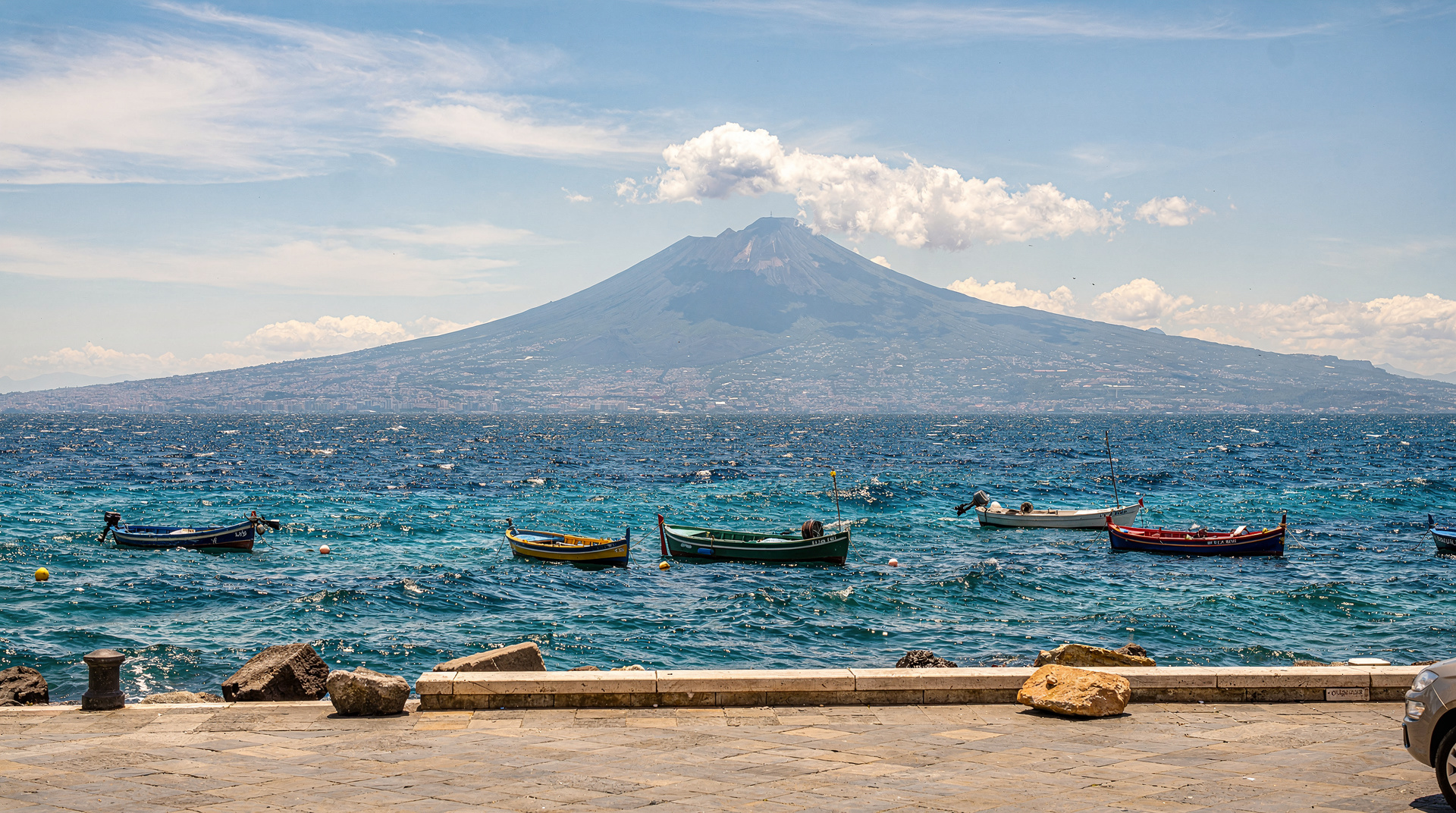
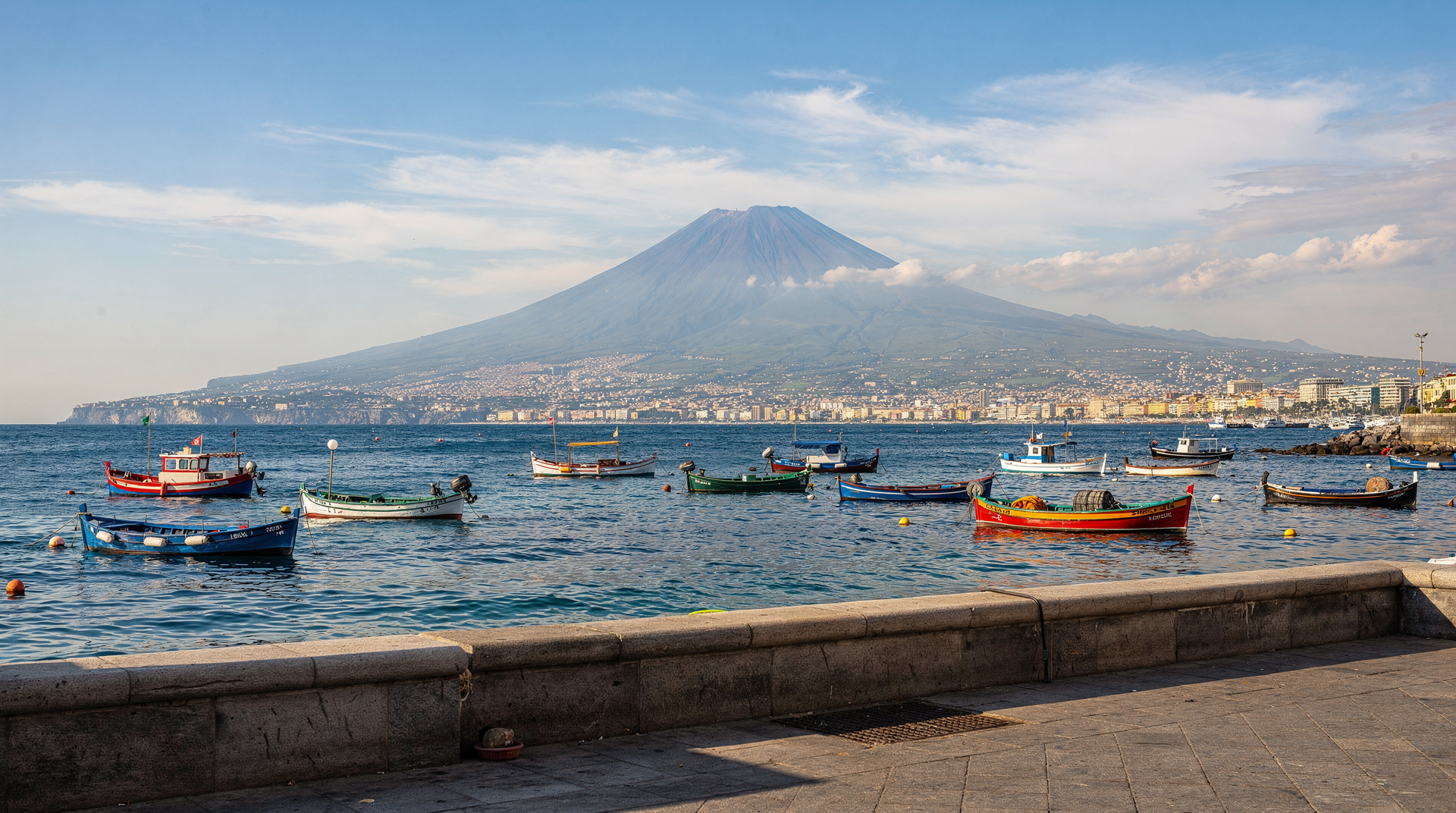
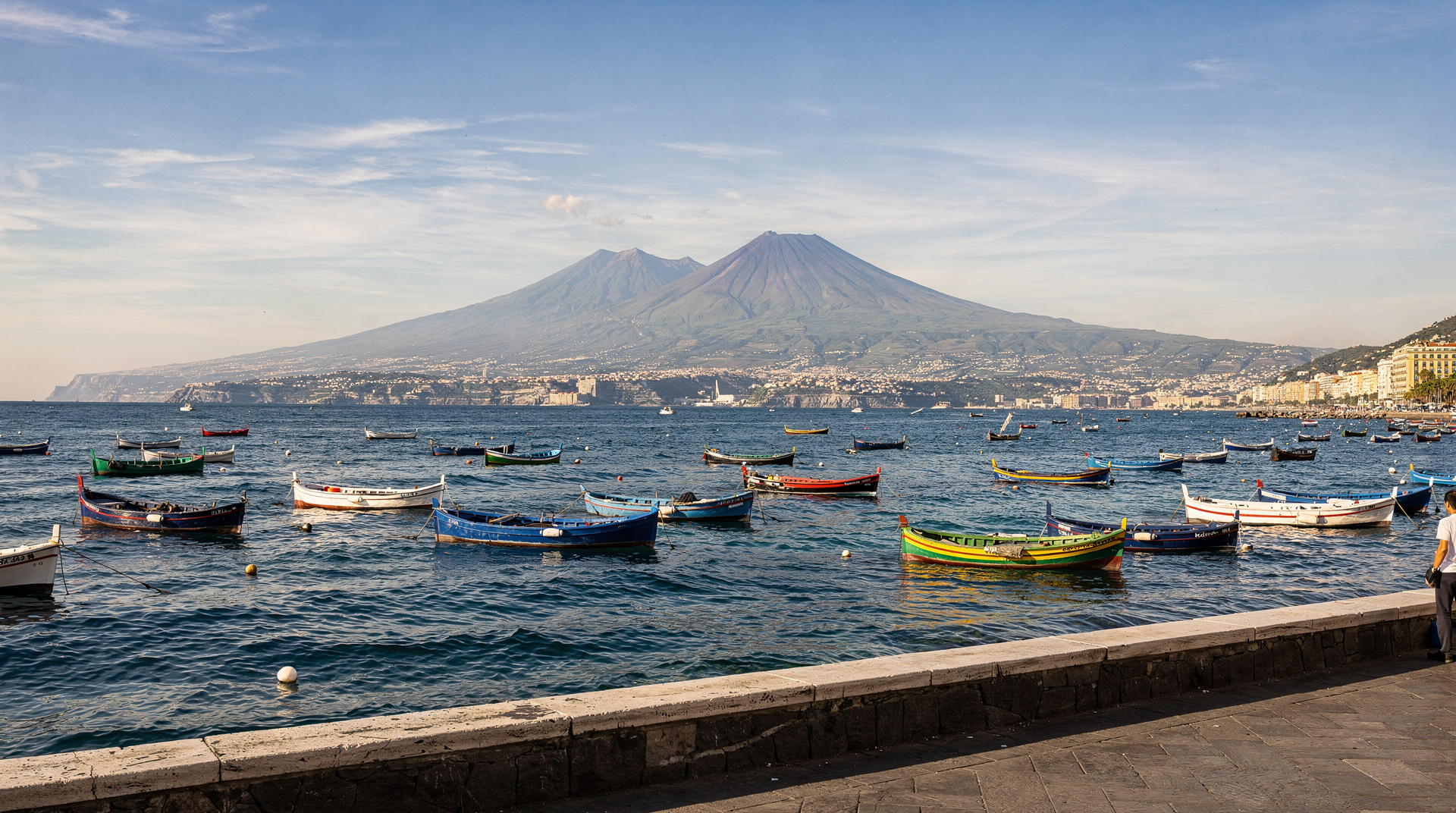
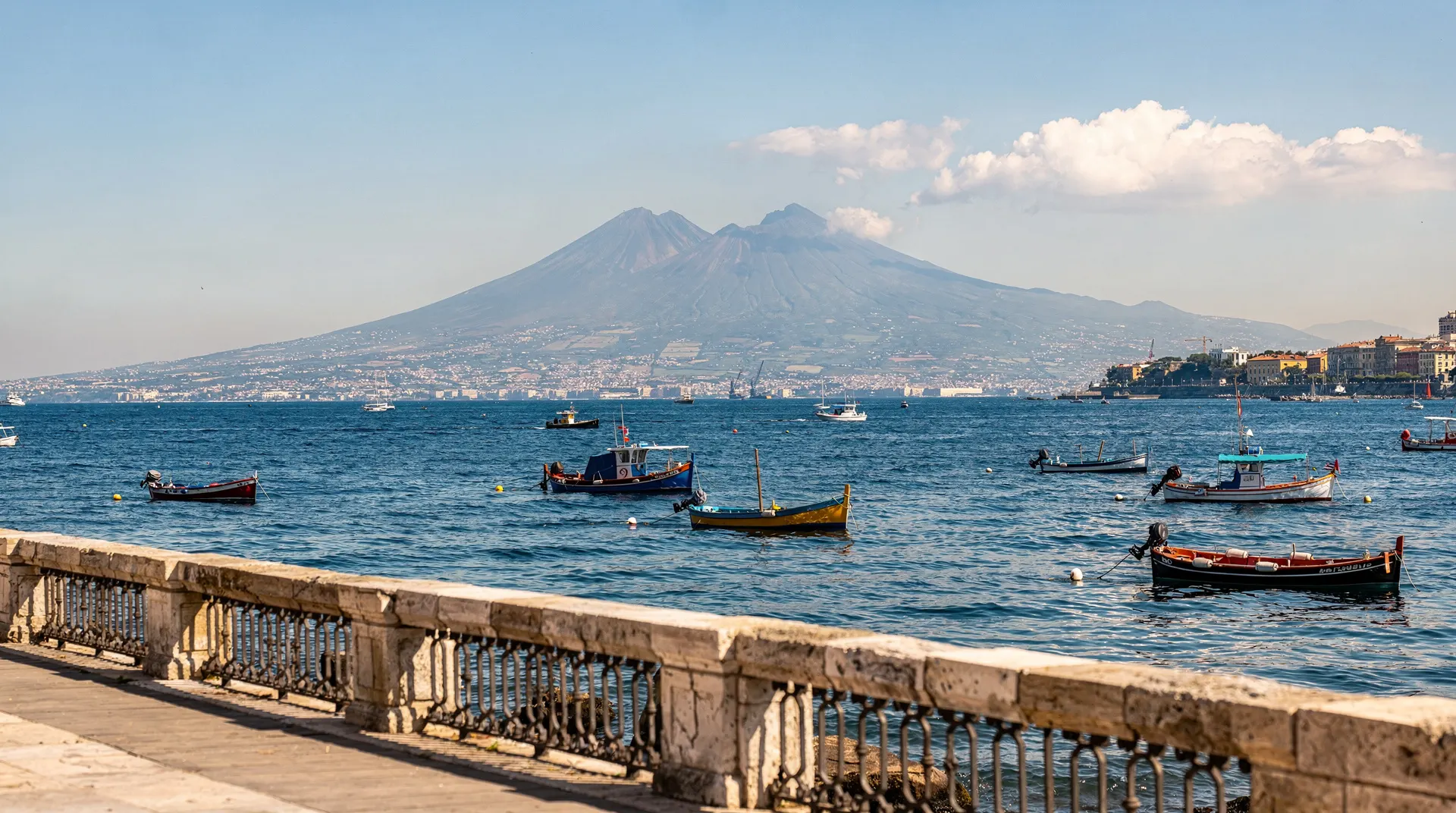
Yes, and often more clearly. The summer heat haze that softens Vesuvius from the Lungomare or Posillipo is absent in winter. Post-rain days in November through February produce some of the year’s sharpest views of the volcano. The summit of Vesuvius is walkable in winter (crater trail from the car park, around 10 €) but check conditions — it can be muddy after rain and the top can be cold and windy.
Is it worth visiting Naples underground in winter specifically?
The underground is equally rewarding year-round, but winter is when it makes most practical sense: it is an indoor, temperature-controlled activity that fills a rainy afternoon without compromise. The 15 °C inside the tunnels is noticeably warmer than a January street. Both Napoli Sotterranea and Galleria Borbonica run English-language tours daily throughout winter, typically with no booking wait. See naples-underground-guide for the full comparison.
What are the opening hours at Pompeii in winter?
The site opens at 09:00 and closes at 17:00 (last entry 15:30) from November through March. These hours are shorter than summer (09:00–19:00, last entry 17:30). Plan to arrive as early as possible to maximise your time. The site is cold and occasionally wet; a waterproof layer and sturdy shoes are more important than they are in summer. Entry: 18 €.