Naples bucket list — 20 experiences worth having
The Best of Naples Private Walking Tour
What are the essential bucket list experiences in Naples?
Standing in front of the Veiled Christ, eating a pizza margherita at da Michele, exploring the ancient underground, watching the sunset from the Lungomare, and taking a day trip to Pompeii are the five non-negotiables. A longer stay adds Capri, hiking Vesuvius, and a cooking class.
Quick answer: The five non-negotiables are the Veiled Christ, pizza at da Michele, exploring the underground, the Lungomare sunset, and Pompeii. A longer list follows.
| Non-negotiables | Veiled Christ, pizza at da Michele, underground, Lungomare sunset, Pompeii |
| Time needed | around 3 days for the core list, 7 for the full 20 |
| Cheapest wins | Lungomare walk, Spaccanapoli, Quartieri Spagnoli — all free |
| Book ahead | Cappella Sansevero, Pompeii (peak season) |
| Best season | spring or autumn for outdoor items (Vesuvius, Pompeii, Capri) |
What makes a Naples bucket list worth following
Most bucket lists are unrealistic compilations of everything the tourism industry wants you to spend money on. This one is different: these are experiences that have genuine staying power — things visitors actually remember and talk about years later, rather than attractions they checked off a list.
Some are free. Some cost money. All are worth the time.
1. Stand in front of the Veiled Christ
Cappella Sansevero — €10, book online in advance, 45 minutes.
Giuseppe Sanmartino’s 1753 marble sculpture of Christ under a veil remains, after almost 270 years, the most technically astonishing thing in a city full of technical astonishments. The marble veil is so delicately carved that it appears transparent — you see the face and body of Christ through what looks like wet fabric. It is not fabric. Standing in front of it in silence is one of the experiences that justifies an entire trip.
Guided Cappella Sansevero + historic centre tour2. Eat pizza at L’Antica Pizzeria da Michele
Via Cesare Sersale 1 — cash only, no reservations, 5 €.
Da Michele (founded 1870) serves only two varieties: margherita and marinara. The pizza takes 90 seconds in the wood-fired oven and arrives slightly charred at the edges, with a soft wet centre. The standard is rigorous — the dough, the San Marzano tomatoes, the fior di latte mozzarella. Lines before 12:30 are typically 20–30 minutes. Worth it.
If the queue is too long, the concept is replicable at dozens of other traditional pizzerias on Via dei Tribunali. Da Michele is not the only excellent pizza in Naples; it is the most historically weighted.
3. Eat pizza a portafoglio standing on the street
Any street stall near Via dei Tribunali or Porta Nolana — €2–3.
The folded-to-go format of Neapolitan pizza is not a tourist invention. It is the original working-person’s pizza — fold in four, eat in three bites, continue walking. The best version is the marinara (tomato, garlic, oregano, no cheese) which survives travel better. Eat standing. This is not a restaurant experience.
4. See the MANN’s Alexander Mosaic
MANN — €22, 2–3 hours.
The Alexander Mosaic (Room 61) is 5.82 metres wide and 3.13 metres tall, composed of approximately 1.5 million individual tesserae. It depicts the moment in the Battle of Issus (333 BCE) when Darius III of Persia turns to flee from Alexander the Great. The psychological detail — Darius’s expression, the dying soldier reflected in his own shield — is extraordinary. The original was on the floor of the House of the Faun in Pompeii. This is the original.
Guided MANN tour with skip-the-line entry5. Walk the Lungomare at sunset
Via Partenope to Via Francesco Caracciolo — free.
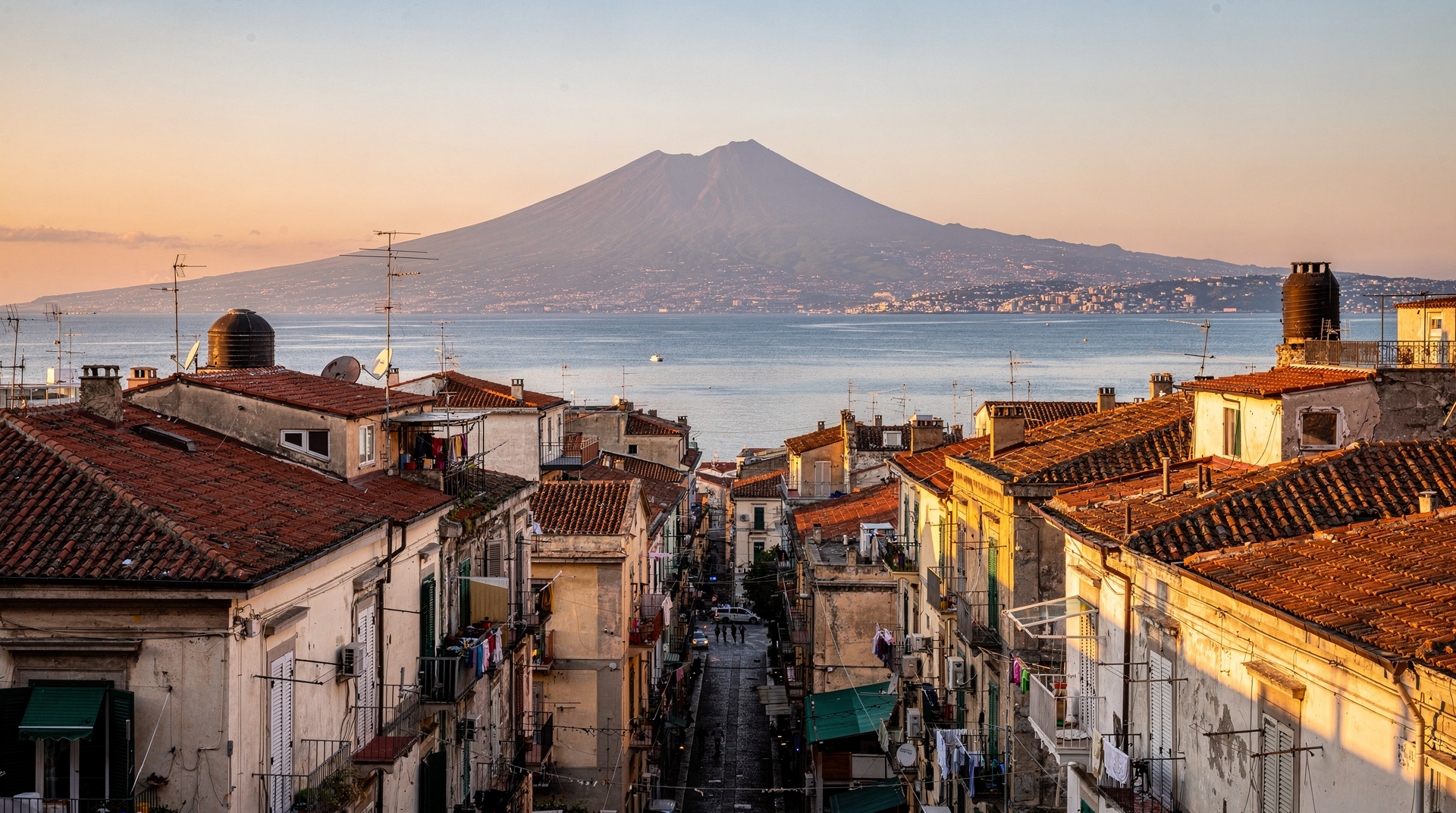
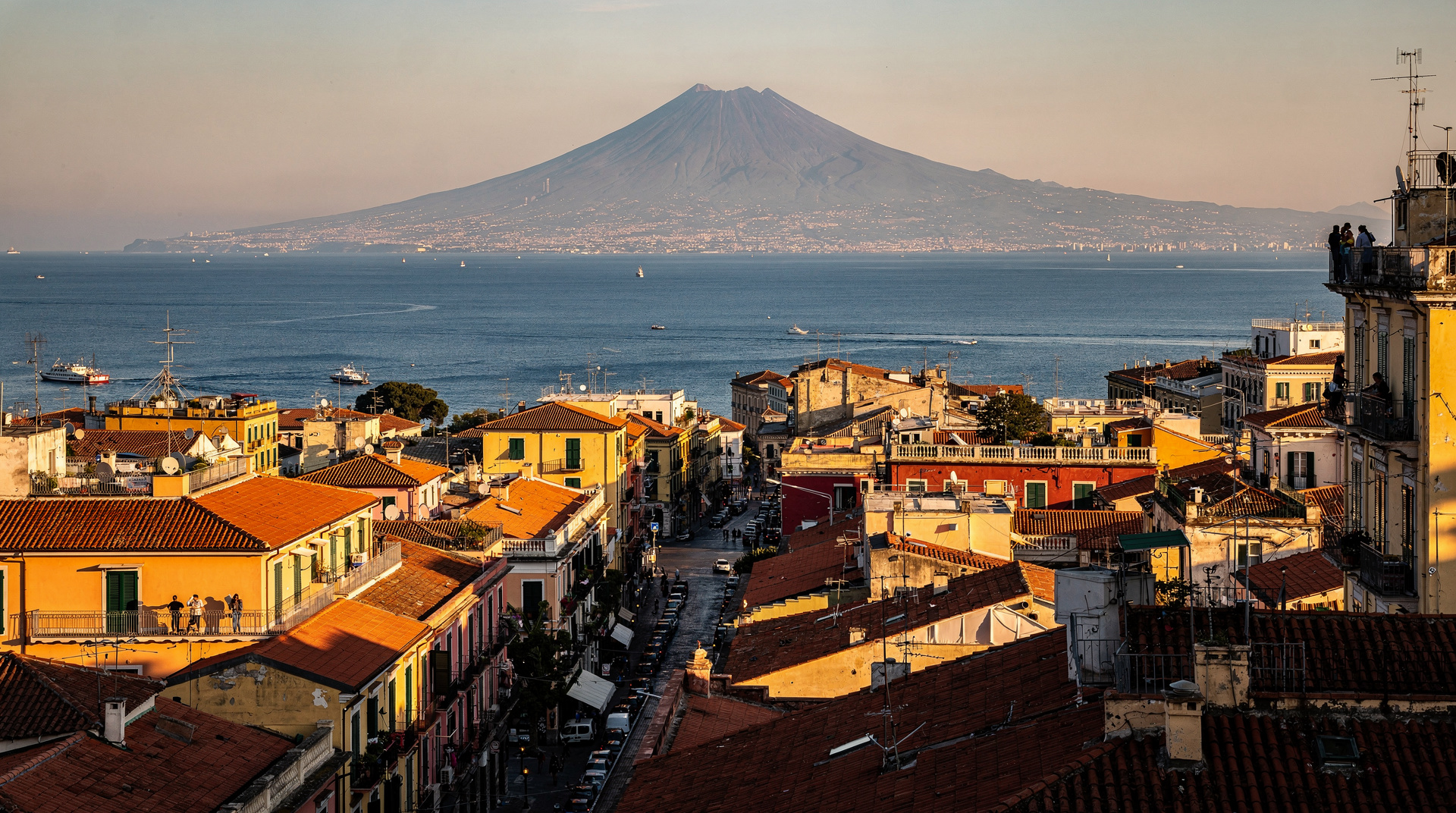
The seafront promenade from Castel dell’Ovo to Mergellina is 3 km of uninterrupted bay view. At sunset, with Vesuvius turning pink to the east and the lights of the city coming on, this is among the most memorable free experiences in southern Italy. Neapolitans use it as a nightly passeggiate — bring no agenda, walk slowly, buy a cuoppo from a stall.
6. Go underground
Napoli Sotterranea — ~€12, 90 minutes guided.
The network of Greek-era aqueducts under Via dei Tribunali descends about 40 metres below street level. At one point the passages narrow to 40 cm — you turn sideways and shuffle. At others, you are in Roman cisterns big enough to stand upright. The WWII shelter section has original graffiti from families who sheltered here during Allied bombing. Genuinely worth doing.
7. Take the funicular to the Vomero
From Piazza Fuga or Montesanto — €1.60 each way.
The three funiculars connecting the centro storico to the Vomero hill are functional transport, not tourist rides. But the Centrale funicular from Piazza Fuga gives views over the city on the ascent and is one of the best-value experiences in Naples. At the top: Certosa di San Martino (€8), Castel Sant’Elmo (€5), and panoramic views over the bay.
8. Walk Spaccanapoli end to end
From Piazza del Gesù Nuovo to Piazza della Borsa — free, 2–3 hours.
The ancient street that divides Naples is a continuous cultural experience: baroque churches, presepi workshops on Via San Gregorio Armeno, street food, street life, market stalls. Doing it slowly, stopping when something catches your attention, is one of the most authentic Naples experiences available without any planning. Details in the walking tour guide.
9. Visit Pompeii at opening time
Pompeii — €22, Circumvesuviana 30 minutes from Naples, arrive at 9:00.
Pompeii at 9:00 before the tour groups arrive is a different experience from Pompeii at 11:00. The site is vast — 44 hectares of Roman city. In the first hour, streets that will be crowded by noon are empty. The scale and the silence together create something not reproducible at any other time of day. Bring water, wear a hat, and go in spring or autumn rather than July–August.
Full visit planning at Pompeii complete guide.
10. Drink espresso at a bar counter for €1
Any traditional bar in the historic centre — €1–1.20.
Stand at the counter (al banco). Order an espresso. Drink it in 90 seconds. The caffè in Naples is typically stronger, more aromatic, and technically more precise than anywhere else in Italy. Sitting at a table (al tavolo) costs two to three times as much for the same coffee — the local experience is at the counter.
Bar Nilo (Piazza San Domenico Maggiore), Caffè Gambrinus (Piazza del Plebiscito — grander, more expensive, worth it for the atmosphere), and any neighbourhood bar are all valid.
11. Walk through the Quartieri Spagnoli
West of Via Toledo — free, 1 hour.
The Spanish Quarter sits directly behind the main shopping street but most tourists never enter. It is a tight grid of streets originally built for soldiers in the 16th century, now a dense working neighbourhood. The Maradona murals are here. Laundry is strung overhead. Children play in the streets. It is noisy, slightly chaotic, and specifically Neapolitan in a way that the tourist parts of the city are not.
12. See Vesuvius from above the crater
Mount Vesuvius — €10 park entry + transport, 30-minute hike.
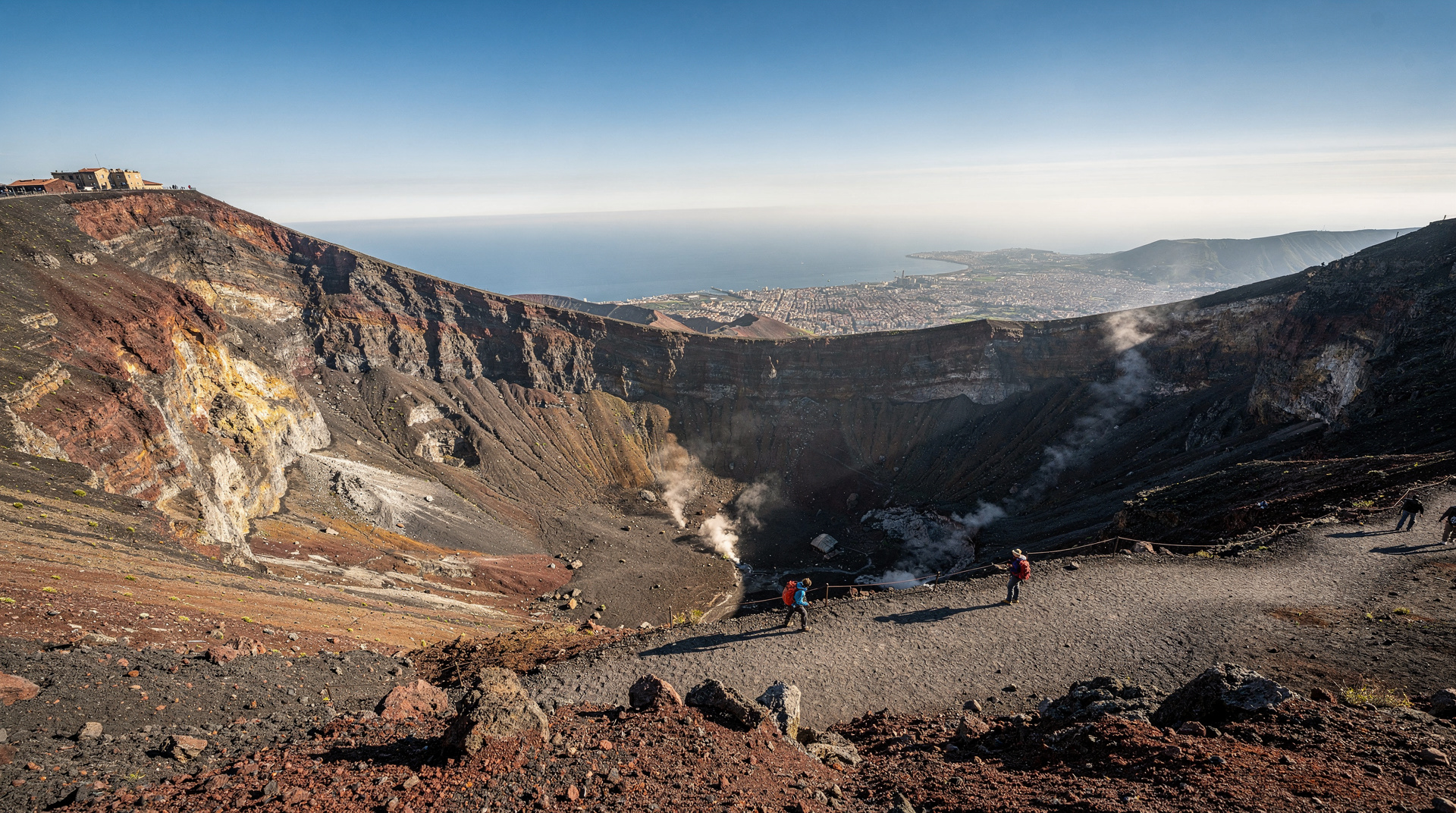
The volcano that buried Pompeii is still active (last eruption 1944, currently monitored as a Decade Volcano). Walking to the crater rim — a 30-minute ascent from the car park — and looking down into the steaming vent is genuinely impressive. The panorama over the bay, Naples, and the island chain is exceptional. Spring and autumn are the best times; summer heat makes the ascent difficult and the guides rush you. See Vesuvius guide.
13. Do a day trip to Capri
Capri — ferry from Naples Molo Beverello, 50 minutes, €25–30 each way.
Capri is expensive, crowded in high season, and worth it anyway. The combination of limestone cliffs, transparent turquoise water, and the view from Monte Solaro chairlift is visually spectacular. Go in May or September to avoid the worst crowds. See Capri day trip guide for planning details.
14. Explore the Rione Sanità
Rione Sanità — free to walk, €9 for catacombs.
The neighbourhood in the valley north of the historic centre has baroque palaces with extraordinary staircases, the Fontanelle cemetery, the catacombs of San Gennaro, and zero tourist shops. This is Naples without the tourist overlay.
15. Watch the sunset from Castel Sant’Elmo
Vomero — €5 entry, funicular + short walk.
The star-shaped fortress on the Vomero hill has 360-degree panoramic views. At sunset the city below turns gold, Vesuvius appears as a silhouette, and the islands are visible in clear weather. Less crowded than the Certosa terraces. One of the better sunset spots accessible without transport.
16. Take a boat on the bay
Naples bay — prices vary.
Seeing Naples from the water — the waterfront, Castel dell’Ovo, Posillipo — gives a completely different perspective on the city. Even a short circuit of the bay is worthwhile. Full boat tour options covered at best boat tours Naples coast.
17. Eat sfogliatella from a real pastry shop
Any pasticceria open before 9:00 — €1.50–2.
Sfogliatella riccia is the flaky, ridged pastry filled with semolina-ricotta cream, flavoured with cinnamon and candied peel. It is at its best straight from the oven, too hot to hold comfortably. Pasticceria Attanasio (Via Ferrovia 1, near Napoli Centrale) opens early and has a constant crowd of locals. Scaturchio on Piazza San Domenico Maggiore is the classic address. Full context in the sfogliatella guide.
18. Stand at the intersection of the ancient Greek city
Piazza San Gaetano — free.
Where Via dei Tribunali crosses Via San Gregorio Armeno, you are standing at the exact intersection of the ancient Greek Decumanus Maximus and the main cardo. The urban grid of 5th-century BCE Neapolis is still under your feet. The street plan of modern Naples is the street plan of the ancient city. Stand still for a moment and think about 2,400 years of unbroken occupation.
19. See the Amalfi Coast from the water
Day trip from Naples, from Salerno, or from Sorrento.
The SS163 coast road is dramatic; the sea view looking back at it is more so. A boat tour along the Amalfi Coast — from Positano to Amalfi or vice versa — shows the cliffs, grottos, and villages from the only angle that does them full justice. Full planning at Amalfi Coast by boat.
20. Buy a presepe figure in a workshop
Via San Gregorio Armeno — €5 upward.
The hand-crafted nativity scene figures made in workshops on Via San Gregorio Armeno range from simple shepherds (€5–20) to elaborate portrait figures of politicians and celebrities (€50–200). The craft tradition dates to the 17th century. Even if you don’t buy, watching the craftspeople work on the figures is worth the time.
Planning how to fit these in
For a 3-day visit: items 1–4 (Veiled Christ, pizza, Lungomare sunset, MANN) on day 1; Pompeii on day 2; underground and Vomero on day 3.
For a 7-day visit: add Capri, Vesuvius, Amalfi Coast, and Rione Sanità.
For context and full itineraries see Naples in three days and perfect Campania week.
Hop-on hop-off bus — useful for day one orientation around the bayFrequently asked questions about the Naples bucket list
What is the most emotional thing to see in Naples?
Subjective, but the Veiled Christ is consistently reported as the most affecting. The Pompeii body casts — plaster impressions of people caught mid-action by the pyroclastic surge — are a close second.
What is the most underrated bucket list item in Naples?
Standing at Piazza San Gaetano and understanding you are on the original Greek street intersection. It costs nothing and has almost no tourist context — yet it connects you to 2,400 years of continuous urban history more directly than any museum.
How many bucket list items can I do in 3 days?
Items 1–9 comfortably, plus several from the second half of the list (funicular, espresso, sfogliatella, Rione Sanità). Pompeii takes a full day; everything else is in the city.
Is the Amalfi Coast a day trip or does it need more time?
A day trip from Naples covers one section of the coast adequately. To see Positano, Amalfi, and Ravello properly, 2–3 days based in the coast itself is better. See Amalfi Coast from Naples for day trip logistics.
What is the most overrated thing on most Naples bucket lists?
The hop-on hop-off bus as a primary way to see the city — it cannot enter the historic centre. Also: expensive waterfront restaurants in the Borgo Marinaro, which trade on location rather than quality.
Budgeting the full list
Most of these 20 items are cheap or free, which is part of why the list holds up. The Lungomare walk, Spaccanapoli, the Quartieri Spagnoli, the Greek intersection at Piazza San Gaetano, espresso at the counter, and the pizza a portafoglio together cost under €20 and fill a full day.
The paid attractions add up faster: Cappella Sansevero (€10), MANN (€22), Napoli Sotterranea (€12), Pompeii (€22), Vesuvius park entry plus transport (around €25 combined), and a Capri day trip (ferry alone is €50–60 round trip, more with a boat tour) push a full 7-day version of the list to roughly €150–200 per person in entry fees and transport, excluding meals and accommodation. Budgeting around €25–30 a day for attractions on top of food is realistic if you’re doing most of this list.
Where each item fits geographically
Items 1, 2, 6, 8, 10, 11, and 18 are all within the centro storico and walkable from each other in a single loop — this is the natural day-one cluster. Item 7 (funicular) and 15 (Castel Sant’Elmo) belong together on the Vomero. Items 9, 12, 13, 19, and 20 require leaving the city — Pompeii, Vesuvius, Capri, and the Amalfi Coast are all half-day-to-full-day excursions best planned with the day trips compared guide, which ranks them by time cost and payoff. Trying to combine two major excursions (say, Pompeii and Capri) in a single day is possible only with a very early start and a private driver — most visitors are better served treating each as its own day.
Pompeii guided tour with an archaeologistFrequently asked questions about Naples bucket list — 20 experiences worth having
What is the single most impressive thing to see in Naples?
Is eating pizza at da Michele a bucket list experience?
Is the Circumvesuviana train a bucket list experience?
What is the best viewpoint for a Naples bucket list photo?
Should the Amalfi Coast be on a Naples bucket list?
What is the best bucket list food experience beyond pizza?
Top experiences
Bookable activities with verified prices and instant confirmation on GetYourGuide.